Gun Nuts 2015 in review!

It’s time for our annual look back at the top posts,

  • links and content of 2015 on Gun Nuts! This was a bit of a weird year for us as it saw me take an extended hiatus to go through Air Force BMT and tech school, an experience that I blogged about here. So let’s get down to the top lists!

    Top 5 Posts of 2015

    1. 9mm NATO vs. 9mm Luger
    2. Naval Special Warfare to adopt Glock 19
    3. 1911 ratings list
    4. 5 signs you take CCW too seriously
    5. Top 5 AR optics under $500

    Top Five Searches of 2015

    1. “gun nuts media” and variations of “gun nuts”
    2. “h&k vp9”
    3. best 1911 pistol
    4. hk p30sk
    5. taurus curve for sale

    Top 5 referrers of 2015

    1. Facebook
    2. saysuncle.com
    3. Twitter
    4. View from the Porch
    5. Reddit

    Thanks to everyone who stuck around through the hiatus! It’s good to be back doing what I do best, and I can’t wait to roll into 2016 with all new awesome content for you guys.

    5 Gun Nuts New Year’s Resolutions

    It’s that time of the year! Where people make resolutions that they’ll fail to keep after about three weeks of the new year, but hey it’s worth it as a thought exercise, right? So here are 5 resolutions specifically for gun nuts to take into 2016 that will improve your life as a shooter, a person, and your chances to survive in a critical incident that is also dynamic.

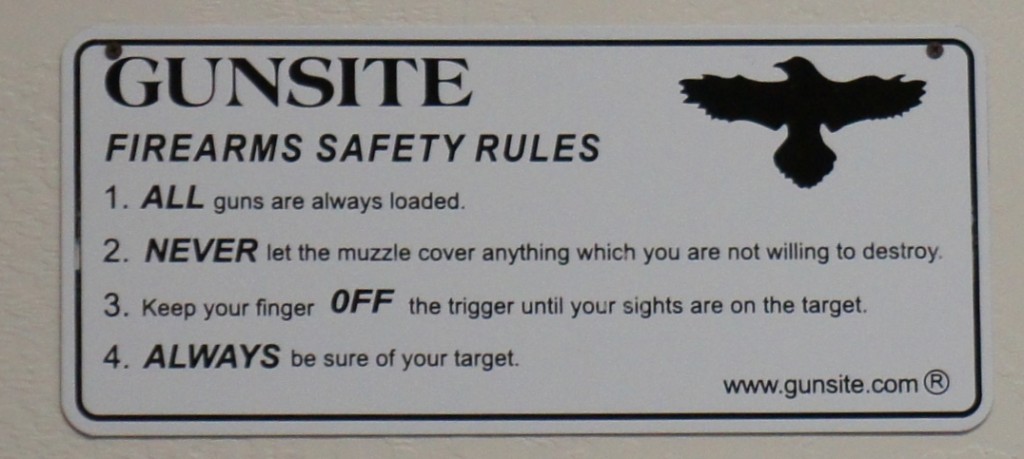
    gunsite four rules

    1. Take at least one class from a reputable instructor
    Even if you’re already good at shooting (you’re not) we can all stand to take some classes from quality instructors. I’ve used classes to tune up for the season, to learn new skills, and generally just improve myself as a shooter. So for 2016, I personally plan on taking at least one class, hopefully more than that time and resources allowing. Just remember: vet your instructor first! You don’t want to end up in a class where some fool with an AK shoots the dirt in front of your face.

    2. Practice at least once a week
    I know my serious USPSA guys will read “once a week” and laugh, because that’s hardly any practice time. But most people aren’t serious USPSA shooters, and spending 20-60 minutes a week working on skills like draws, reloads, and actual shooting is going to make a huge difference to a lot of people. Huge. So once you take that class and your mind is full of sweet, sticky information, put it to use and actual train on it. Dry fire. Hit the range and work on timed fundamentals. Get faster.

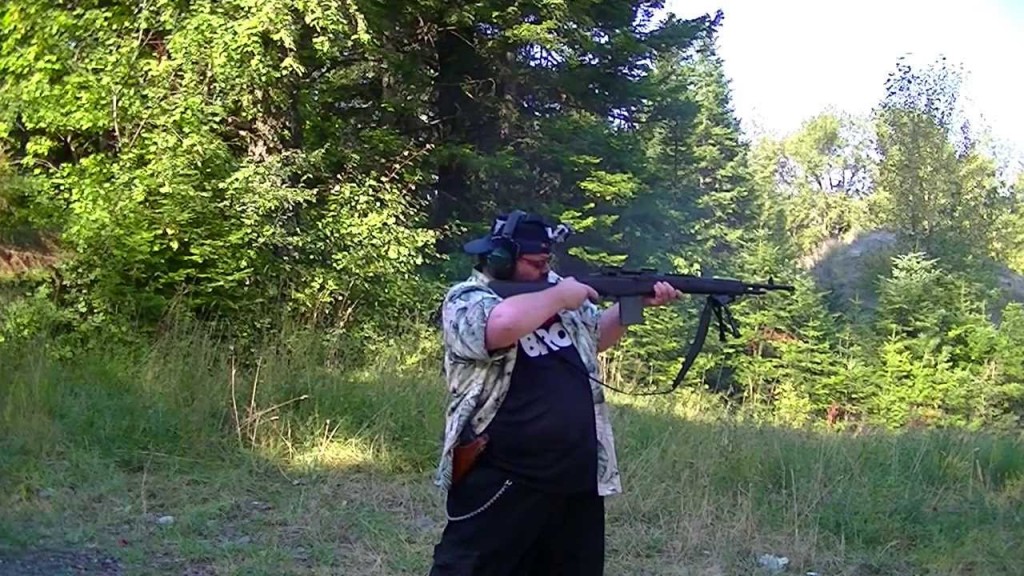
    3. Be less fat
    Awwww yiss you know this was coming. It wouldn’t be a Caleb Giddings post if I didn’t poke at that one special group we have among our number. You know who they are: the guy who’s “prepared” for a self-defense encounter but can’t run a block because he’s morbidly obese.

    fatguy m14

    Sorry bigun, but you’re way more likely to die from a heart attack than you are a gunfight. I’m not saying you have to do what I did over 2015 and lose 40 pounds and get under 12% bodyfat (humblebrag), but maybe do like…a pushup? Walk a mile? All I know is that fit people are harder to kill, and since our goal as self-defense minded people is to be harder to kill, well it seems like a good idea.

    4. Say no to derp
    Hey, you’ve got that one friend right? He doesn’t know anything about guns, but he’s decided he wants to buy one. Don’t let him go buy some 3rd world POS pistol when the Glock 19 and Smith & Wesson M&P exist. Say no to product derp, buy good guns. Quality products from reputable manufacturers are the way to go.

    On the same note, say no to derp in all aspects of your shooting life. Don’t take derpy classes from derpy people, don’t buy silly holsters that do nothing for you, and stop buying gimmicky ammo. It’s not 1988 any more, Glaser Safety Slugs aren’t cool (unless you’re blowing up watermelons, then they’re totally awesome).

    Lastly, I’d like to end on a positive note, so here’s number 5
    5. Promote excellence in the community
    This is actually really important to me, because it’s an area I could really stand to work on as well. We spend a lot of time calling out derp for what it is, and that’s fine. We do it because 1) it’s important to police ourselves, and 2) it makes dem pageviews roll. However, I think it’s even more valuable for us to promote excellence in our community. Do you see someone doing a good job of getting women into the shooting sports without pandering? Let people know about that guy! New training shop open up that offers sensible curriculum within their lane? Yes! A major brand launches a new product with accessories immediately available? Awesome.

    In summary, let’s make 2016 an all-around more excellent year for the shooting community. Let’s shoot more, train better, get harder, police the fools, and be excellent to one another.

    Also, I’m going to keep shooting budget 1911s this year because you people seem to love that.

    First Time Competitor Mistakes

    In my last article I mentioned I was humbled at my first match. Here are three simple and common errors I made that you can learn from. I am referencing the IDPA target, since my first match was IDPA. The same principles apply to USPSA.

    My draw to first shot times were slow!

    Slooow! I mean glacially slow! In practice, using my Shot Timer App, I could nail a 0.80 second draw (or so I thought, click here to learn how the app was misleading); but in the match, not so much. Even at my first match I quickly identified opportunities for improvement, thus I took a photo of the score sheet for evaluation later on.

    The first the three strings of the IDPA Classifier are Mozambique drills, also known as two to the body and one to the head. My times were 3.37, 3.00 and 3.01 respectively. That sucks!  My first “body” shot was slow and my “head” shot (third shot) was pathetic. My second shot was also comical as it was a true double tap, meaning two shots off of one sight picture. It was sheer luck I got -0 on all three targets. In short, I was staring at the front sight in bulls-eye mode.

    I have since discovered THIS IS NOT UNCOMMON! If you have only shot at a square range, you will very likely perform the same! You can learn to draw fast with dry fire, but to truly learn how fast you can draw and make a good shot you must practice it in live fire.

    Find a place you can both draw from a holster and get close to the target. With the target at 3 yards draw and put one round into the -0 zone. Go as fast as possible! Let it all hang out! Go until you are shooting misses then slow down a bit. In less than 50 rounds you will see real improvements and you will be instantly better. In the words of Princess Elsa, Let It Go.

    After the first shot, I lost my front sight focus!

    Mel-gibson1

    For all the time I wasted staring at the front sight before the first shot, I would instantly shift focus to the target afterwards and for the remaining shots. For my first match this was a combination of training and garbage sights. I was using the stock 3 dot sights on my XD Tactical. I have learned to hate three dot sights and thick front sights in general. Even so, I wasn’t even trying to watch the front sight. Target focus works if you are close, don’t fall into the trap of using it at long distances. It leads to FAIL. Again, get up close at the 3 yard line. Don’t use a target at all, aim and put 50 rounds into the backstop or berm with the sole goal being to see as much of the front sight as possible for each shot. This can be fast or slow, just make sure you see what YOU need to see.

    Over-compensating on transitions!
    This is an error with a seemingly simple solution that takes dry fire practice to actually reinforce. When transitioning from left to right (or right to left) you must lead with your eyes. If you move your eyes and the gun in unison you will pass the intended target. If you notice it and come back onto the target, you have a monumental time waste on your hands. If you don’t recognize it you will place shots soundly into the -1 or -3 zone or worse, you’ll miss! That’ll help your score. To work this in dry fire set up a few scale targets and practice the transitions, going whatever speed your eyesight requires.

    So there you have it; three mistakes that are easily corrected once identified. Ironically correcting each of these mistakes will help those that CCW as well.

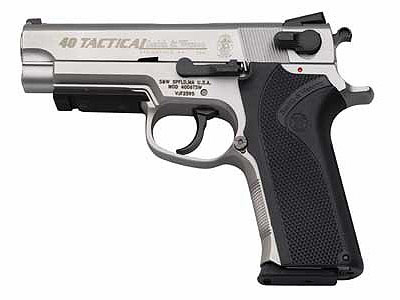
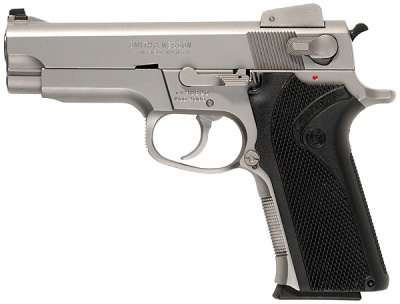
    Still soldiering on: The California Highway Patrol’s S&W 4006

    A million years ago, while the earth was still cooling, the California Highway Patrol made the decision to switch away from their .357 Magnum caliber revolvers to a modern semi-automatic pistol. In mid-1990, CHP officially selected the 4006 from Smith & Wesson as their duty, and 25 years later it’s still soldiering on in the holsters of over 7,500 sworn personnel.

    400px-S&W_4006

    As recently as 2009, CHP authorized officers to switch over to the 4006 TSW variant, which incorporates a rail under the frame of the gun to mount a weapon-light. All of the 4006s feature fixed Novak night sights, a DA/SA trigger, and an 11+1 capacity. Smith & Wesson still manufactured new 4006s until as recently as 2011, presumably to support the CHP’s need for pistols. The last time I spoke with Smith about the CHP contract, back in 2012 they indicated that they also still produced small runs of parts to support CHP’s guns.

    model4006tsw

    There are quite a few factors that have contributed to the 4006’s long service life with the California Highway Patrol. For me, I find the 4006 is one of very few pistols chambered in .40 S&W that I actually enjoy shooting. The all metal construction goes a long way towards mitigating the annoying recoil impulse associated with .40s in polymer pistols, and as a fan of the DA/SA system, I find that the triggers tend to “shoot in” very well. They are one of the most shootable .40s on the market, which is part of why I think CHP has stayed with them over the years.

    They’re also incredibly durable and reliable. One of the reasons 3rd Gen S&W pistols are popular among a certain set of enthusiasts is because they’re built like friggin’ tanks. You can beat on these guns for days and they’ll just keep running along. In my experience with the 3rd Generation Smiths, they just work. That’s an excellent reason to stick with a duty gun, especially one that’s going to be exposed to climates that can vary as widely as California. One officer could have his gun exposed to salt spray from the ocean, another to mud and rocks in the mountains.

    Lastly, I’d be remiss if I didn’t mention cost. California really doesn’t like to spend money at the state level on LE, and switching 7,500 cops over from one platform to another would involve an enormous expense, which would likely only be driven up by California’s noxious professional bureaucracy. Since that isn’t an expense they’re going to want to incur, it’s probably a good thing that the 4006 is an excellent pistol.

    25 years of service with one agency is an impressive record, but the Smith & Wesson 4006 is an impressive pistol that has proven its worth time and again in the service of the nation’s largest state police agency. With it’s reliability and durability well established, we can expect to see the 4006 riding in CHP holsters for some time to come.

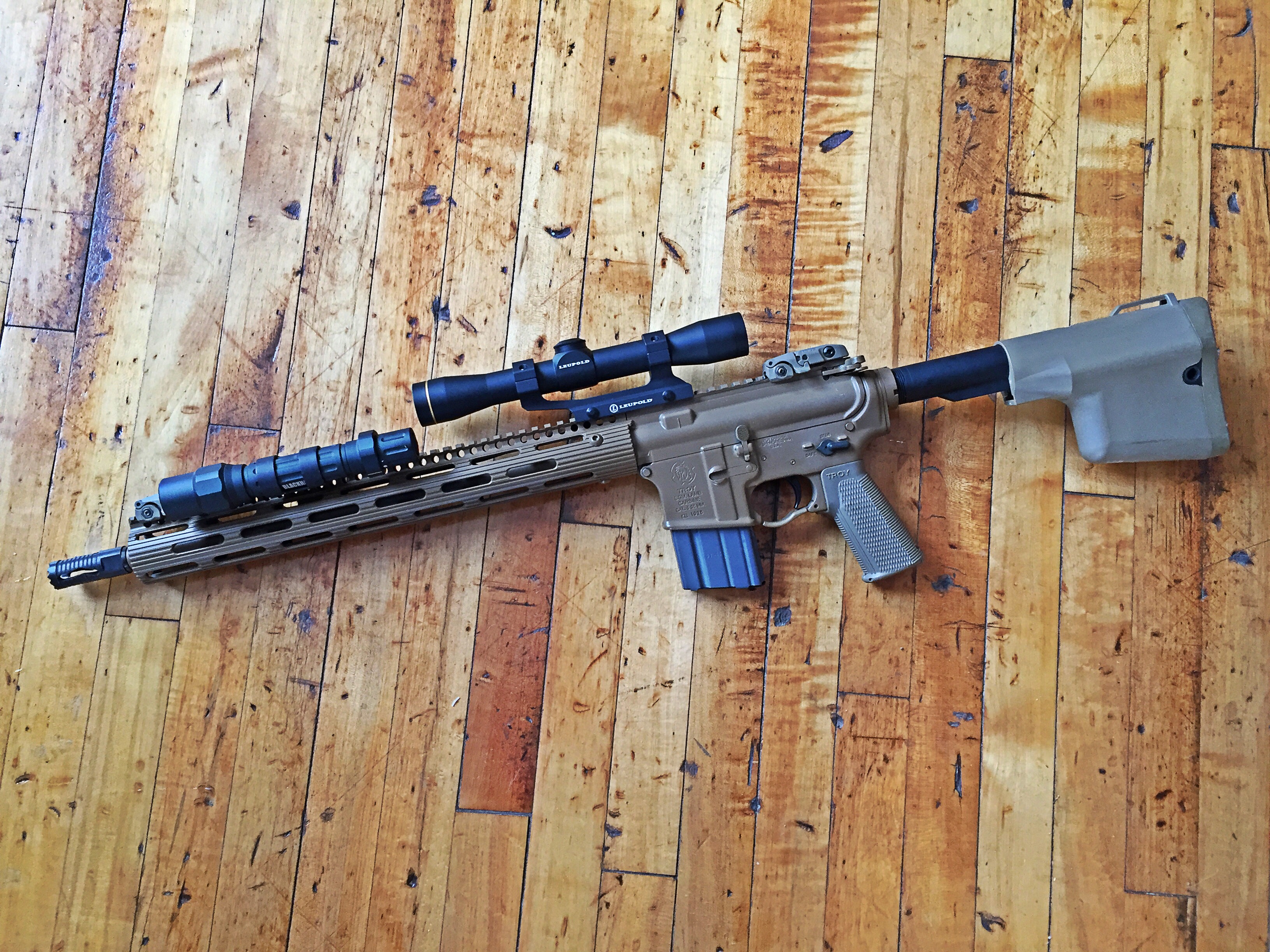
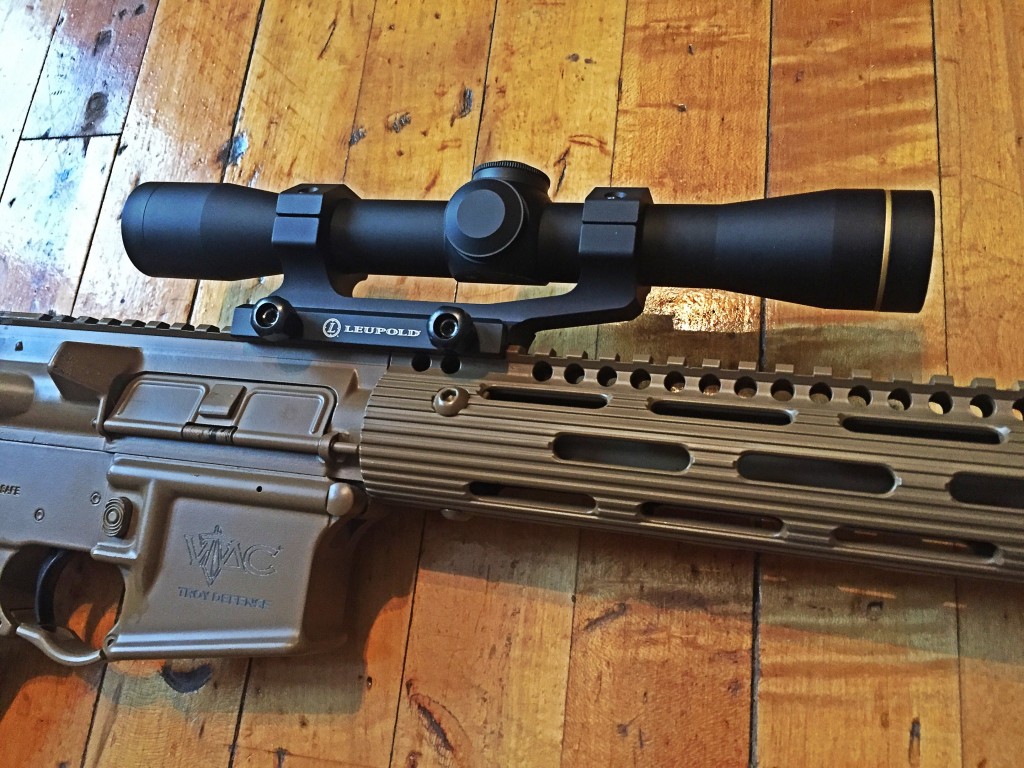
    Scout scope on an AR15? Why not?

    Leupold Scout Scope

    Doing this is something I’ve talked about before, and I have a couple of friends who have kicked the idea around as well. Why not mount a scout scope on an AR15 pattern rifle? Luckily, I happened to have a Leupold mount sitting around, and a Leupold FX-II Scout so I naturally paired them on my Troy Defense rifle. So why put a scout scope on an AR?
    Continue reading →

    Your First Match

    I often recommend competitive shooting – specifically action pistol type matches – to anyone with a CCW.  Even so, there is always apprehension in people’s eyes.  What will they encounter?  Are they good enough?  Will they be laughed at?  Judged?  Yelled at?  With that in mind, here is a brief synopsis about what you can expect at your first match.

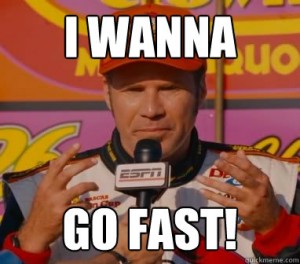
    ricky bobby i want to go fast

    First things first, you should show up early, find a range officer/safety officer or the match director and let them know this is your first match.  Expect them to give you a safety briefing.  In fact, most sanctioning bodies, such as IDPA or USPSA, have specific requirements for such safety briefings.  While safety is paramount at any match it should be your only concern at your first match.  You will have fun, I promise; but safety first.  You will likely be doing task and maneuvers that are new to you, all while holding a loaded hand gun.  Ensure you do it safely.

    Don’t worry too much about gear; you can shoot what you have, provided you own a holster.  The mags can go in your back pocket.  I am planning on writing a post on beginner gear just too illustrate how cheaply you can get started.

    Your first match experience will likely be similar to everyone else – mine was.  I showed up cocky and confident and left humbled and craving more.  If you have never shot a match before you might be surprised how quick some of the other competitors can be!  Don’t try to equal their skills, you will only do worse.

    For example; my first match was an IDPA Classifier and I was supremely confident I would burn it down.  When it was all said and done, I had rushed, made stupid mistakes and even had a few misses.  I finished as SSP (and ESP) Sharpshooter which wasn’t bad but I was less than 2 seconds from Expert; had I shot to my skill level the misses likely wouldn’t have happened and that alone would have gotten me to Expert.  My cockiness got in the way; the experienced guys went fast, I wanted to go fast!

    Even with my mistakes, I did some things correct.

    As I mentioned above, I arrived early and immediately let everyone know I was a new shooter.  Doing so allowed me to quickly identify the proper people to talk with and ask questions.  There were 3 other new shooters that night and after completing registration, they pulled us aside for a 30 minute safety briefing.  If you read the rule book(s), none of what they say will be new or shocking.  Muzzle awareness, keeping your finger off the trigger during reloads, keep the gun in the holster unless directed to Load and Make Ready, where is the safe area and what is it for, etc.  It is all basic stuff, but they take it seriously!

    After we got our assignments I began to load mags while waiting my turn.  Being an IDPA Classifier I knew the course of fire and had dry fired it once or twice, thus I felt prepared. What I wasn’t prepared for was jitters as it came closer to my time to shoot.  I became nervous because of match pressure.  I have written about it before and I feel it is worth repeating.  Match pressure is real and it brings stressors into your shooting you just don’t get on a square range.  If you want to read more about it, I suggest you give this a quick read: match pressure.

    When the night was through and we were tearing down the stages I realized how much I had learned in a few hours and how much fun I had.  I was able to identify specific areas to improve on and came to terms with my own short comings.  It was a pivotal experience in becoming a better shooter.  It was FUN!

    We can always improve our skills, but first we must identify those areas that need improvement.  A match is a perfect way to identify weaknesses and improve.  I recommend everyone go shoot a match, especially if you possess a CCW and chose to carry a gun for self-defense.  Even just one match will open your eyes to weaknesses and just how much fun you can have with a handgun.

    Oh, and for those worried about being made fun of – Fuhgeddaboudit!  No one laughed at me, and short of a club composed of nothing but assholes, no one will laugh at you either.

    Lethal force is a last resort

    In the last couple of weeks a few instances of…well, idiocy is the best description I can proffer at the moment…made semi-national news. They are excellent examples of what The Tactical Professor would call “Negative Outcomes” that result from people who made the decision to keep a firearm handy but apparently did not bother to make the same effort to educate themselves about the law. Or, one could argue, apply any common sense.

    Firearms are lethal force. The law in every state and territory in our Union regards the firearm as a deadly instrument. Because when used properly or improperly, it can kill people.

    As a society we generally regard the act of justifiably killing another human being to be a last resort. An extreme action warrantable in answer to only the most serious of criminal threats.


    Multiple armed men forcibly entering your home is one of those serious criminal threats. Had the residents of that house opened fire on the armed men busting through the front door and killed every one, it would have been a justifiable homicide in every jurisdiction in the United States. The threat to life is clear, as the unfortunate outcome of this criminal assault makes plain.

    One cannot say the same for shoplifting. In Michigan a woman in a Home Depot parking lot saw a man running with a cart full of stolen power tools. As he got into a getaway car, she opened fire on the car.

    According to officials, Duva-Rodriguez wasn’t trying to hit or kill the shoplifters, but rather to disable their car. But that didn’t stop prosecutors from filing the misdemeanor charge against her. The Auburn Hills Police Department suggested Duva-Rodriguez could face 90 days in jail or a fine.

    If you do not intend to kill someone, a firearm is the wrong tool to have in your hand.

    Guns are lethal force. Period. Police do sometimes shoot at vehicles but only in the most extreme of circumstances where there is a continuing threat to the community…not when the car has unarmed shoplifters in it. Even when the police shoot to disable the car of a fleeing armed felon it is a use of lethal force.

    To justifiably use your firearm you have to be faced with a circumstance where a criminal assault is placing someone (You, for instance) at significant risk of death or grievous injury. (Broken bones, paralysis, maimed for life, etc) Two dudes stealing a grand worth of Home Depot’s power tools does not place anyone in immediate danger of death or grievous injury…therefore your handgun is absolutely the wrong tool for that job. The smart phone in your pocket or purse is a much better tool for that situation.

    Then, of course, we have the incident in Waco where a woman fired a shot at a fleeing purse snatcher. Here again we see no immediate danger to life or limb, but she’s got her gun out and when the bad guy takes off running with no evidence of armed aggression toward anyone she pops a shot at the guy.

    You need not be a Harvard Law alumni to understand this. Common sense (which may not actually be all that common, when you think about it…) would dictate that since guns kill, it is only justifiable to use them when we are prepared to actually end another human being on the spot.

    Guns are not magic. They are a relatively simple machine that launches a projectile. Pulling one out in inappropriate circumstances will not make the situation better for you. Quite the opposite, I’m afraid.

    Feeling the sensation of fear is not enough to justify pulling your gun or actually firing it. You cannot be unsure about the threat when you pull the trigger. It cannot be a situation of “I’m afraid of what this guy might do!” The time to pull the trigger is when you know that you or some other innocent person is likely to die or be seriously injured if you don’t. It’s a last resort, when other reasonable options are no longer available to you.

    Respond to Violence with Violence

    Christmas is upon us.  A joyous time with hopes of peace and goodwill to all men; unfortunately that sentiment isn’t shared with everyone.  Criminals still abound during the Christmas Season.  So with that in mind I thought I would give everyone something to remember if the worse happens and you are confronted with evil.

    Action beats reaction.  This is a common motto spouted by countless trainers and commenters on the interwebs.  But there seems to be a misconception about the meaning.  A misconception that leads some people to believe the criminal actor pulling a gun on you is the “action” and you are left in the “reaction” mode and are likely beat.  Yes, you are reacting in the broadest sense, but if we break down the event to the second, we will see this thinking is faulty.

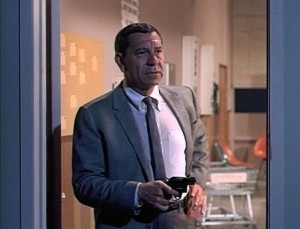
    Say "Hello!" to Joe Friday's little friend...

    The criminal (I am not talking a terrorist or other mass murder sociopath, just the local smash and grab thug) picked you because he views you as safe bet.  It could be a multitude of reasons.  Maybe you looked timid.  Perhaps you were not paying attention to your surroundings.  But in this holiday season a very real possibility is you have your hands full of bags with gifts as you walk out of a store.  No matter the reason, you were a safe, there was not doubt in the actors mind.  The criminal proceeds with a narrative in his head that has you yielding to his demands.

    If confronted with a life or death situation, you must respond with extreme and instantaneous violence!

    The bad guy won’t expect an immediate, violent response.  Such a response will break his concentration and shatter his narrative.  His OODA (Observe, Orient, Decide, Attack) Loop will be thrown off track.

    Yes, action beats reaction and in those few precious seconds you have made the criminal the reactor.  As you drop your items, step off his center-line and draw your weapon, he will waste 1-2 seconds mentally questioning the events unfolding before he can react.  You can use his confusion to gain an unfair advantage.

    But an extreme violence response doesn’t necessarily mean you have to shoot or even use a weapon.  It means you have responded to the threat as required to make nullify said threat.  The response you take will be yours alone to decide, in the moment.

    This just another brief reason you should be dry firing your draw stroke with your carry gear.  Especially using strong hand only as you might be carrying something in your weak hand too precious to drop.  I wager that no one wants to be working out your draw stroke while some piece of shit has a Davis Industries P380 pointed at their face.

    It is my hope that no one reading this is ever forced to use violence against another human being – especially at Christmas – but if the balloon goes up, we must be prepared.

    Until next time, thank God for what you have and ensure your family and friends know what they mean to you.

    I personally wish you and yours a very Merry Christmas and Happy Hanukkah.