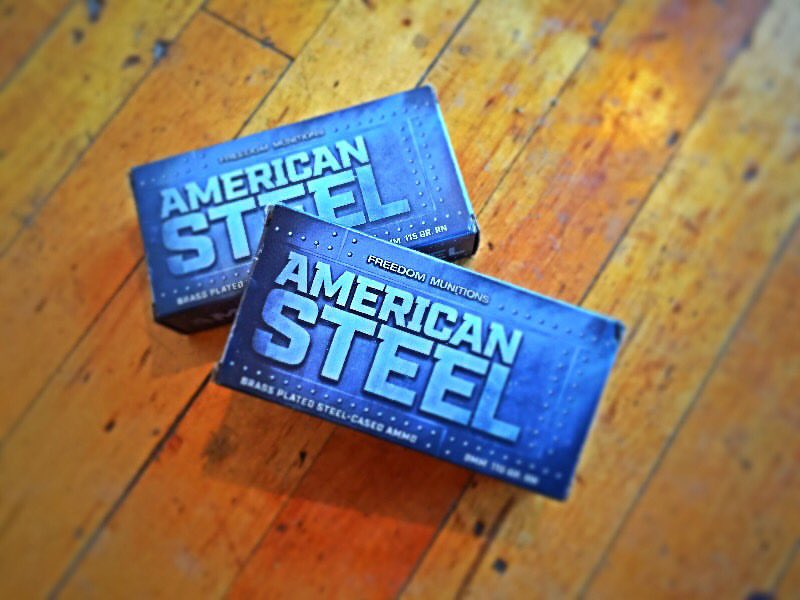
New product today from the awesome bros at Freedom Munitions: American Steel. Made in the USA, steel-cased brass coated 9mm ammo. I’ll let their product description say the rest:
Unlike foreign made and imported steel cased ammunition, American Steel is made from the highest quality brass plated steel cases combined with dependable primers and powder. The American Steel line is not only accurate and reliable ammunition but also offered at a more economical price point than traditional brass cased ammunition; setting a new standard for range ammunition.
Featuring a copper plated, lead projectile from X-Treme Bullets, American Steel is loaded to the same performance standards and with the same powder and primers as Freedom Munitions traditional line of new and remanufactured ammunition.
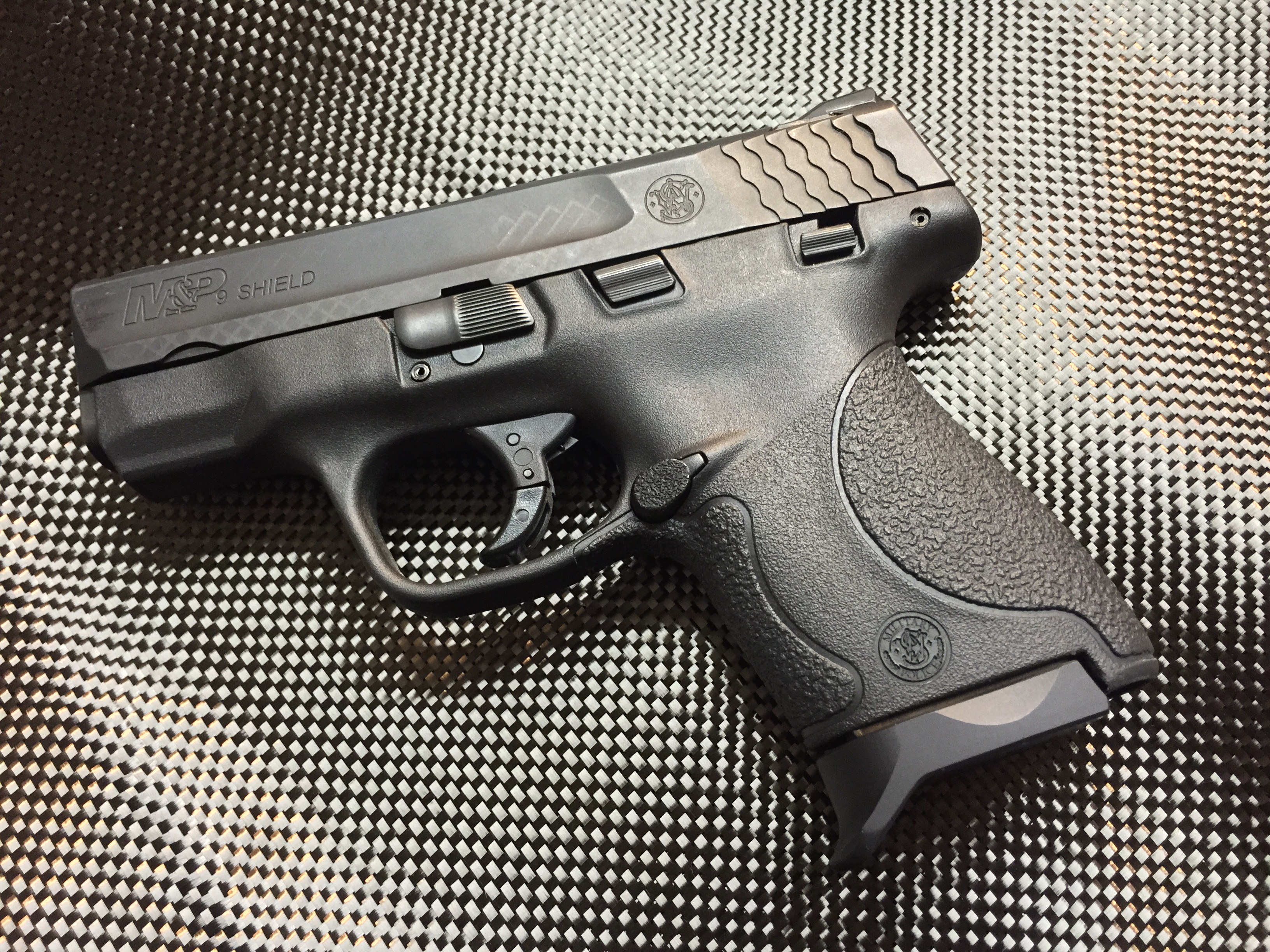
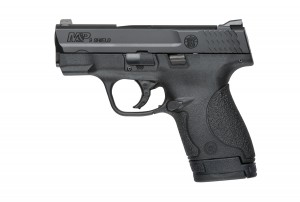
The Smith and Wesson Shield. By all accounts it is a home run and one of the best guns you can buy in that size range. In my household we have two of them; but in spite of my love for the gun, I was less than impressed with the 7 round magazine’s base pad. I really dislike wrapping my pinky finger back under the gun; I briefly entertained the thought of holding that finger straight out, but I didn’t want to look like a Duchess when I fired the gun. Ultimately it became a background issue since I seldom carried with the 7 round mag inserted.
I will stop right here and quell the calls for the Pearce Grip Extension. I had a Pearce Mag Extension. ONCE! It was a +2 on a Glock 17 mag and it failed with the gun in the holster, barfing the contents onto the ground behind me. Luckily I was just burning powder at a square range and not at a competition, or worse, in a self-defense situation. Since then, Pearce anything is a no-go for me.
As I tell me kids, “you get what you get, and you don’t throw a fit”, so I just dealt with the factory base pad and got on with life; then I saw the NDZ Performance Extension. It had a location for my pinky and it was solid billet aluminum goodness so I immediately bought one. Now having carried and shot the gun with it; I thought I would share my experiences, both good and bad.
First, this thing is built like a tank! As I mentioned before it is machined from a billet of aluminum and even includes reliefs to help with mag extraction which work rather well, considering the size restrictions they had to work around. It has a rather nice finish and the overall quality was superb. There was only one thing that bothered me.
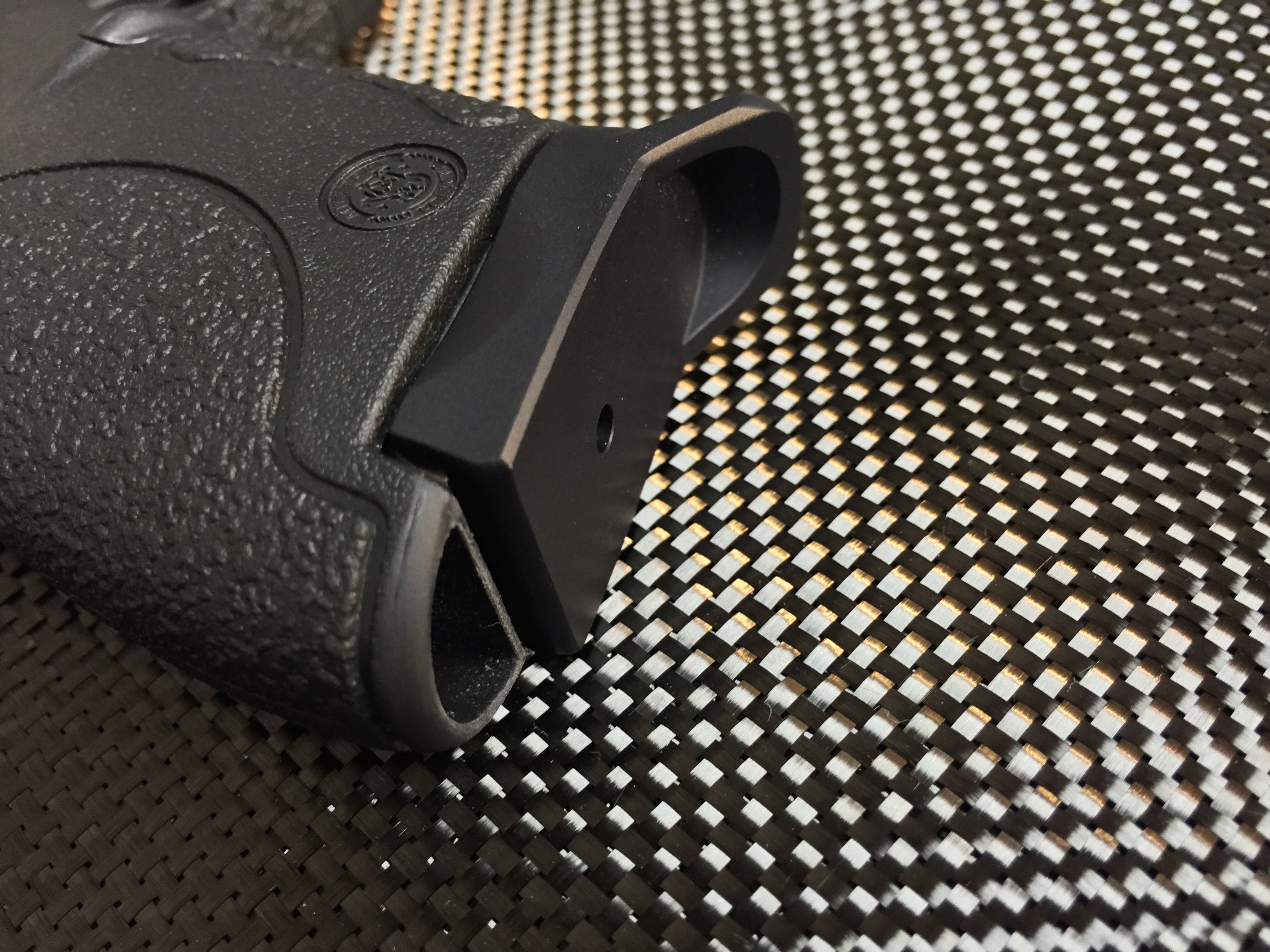
The rear of the base pad isn’t machined to match the contour of the grip. That lack of contour causes a protrusion that digs into your strong hand, which is only exacerbated by recoil and becomes rather annoying after 100 rounds. Of course this base pad was designed (and purchased) for carry, so this isn’t as much of a serious issue as an area for product improvement. I am seriously considering performing surgery to mine once I determine the best (read: cheapest) way to refinish it.
Here you can see the offending protrusion
In all fairness NDZ Performance makes a model with an extended rear portion that might mitigate this issue, but I haven’t tried it and I can’t find the will to purchase it, at least not until I murder the one I own.
If you are in the market for a mag extension for your Shield’s 7 round magazine, you should give the NDZ Performance Extension a look.
Euric Cain, a convicted felon, tries to fire a fatal shot into the head of Tulane medical student Peter Gold
If you haven’t heard about this incident, you can read more about it here.
Peter Gold found himself facing TheUnthinkable when he tried to help a woman that was being dragged down the street by this violent criminal.
Coming face to face with the worst sort of violent criminal while unarmed or minimally armed is not the sort of thing people like to talk about at parties. When it is discussed, it’s usually in a rather dismissive manner. A phrase I saw over and over again as this incident made rounds on the web was “There’s not much you can do.”
Yes there is.
Let’s consider some facts. Firstly, most people who are shot by handguns survive the ordeal. This is partially due to the relative weakness of handguns and partially due to the inability of most who are using handguns to put a bullet where it will shut down the human machine. I’ll reiterate here something Tom Givens shared with us in his Intensive Pistol Skills class:
“One hospital in Memphis treated more than 3,100 gunshot wounds in a single year. Only 74 of those 3,100 plus GSWs were fatal, and the vast majority of victims were out of the hospital within 48 hours. Handguns, regardless of caliber, are not death rays.”
Nobody wants to be shot, but being shot isn’t the same thing as being dead…but if you don’t contest the bad guy’s efforts to end you, it can very well turn into being dead. Be like Jared Reston: “This sumbitch is not going to sit here and kill me at all!”
Let’s also consider that many criminal actors are carrying weapons that don’t work terribly well. Greg Ellifritz over at Active Response Training actually did a detailed analysis of guns his department took off of criminals and found that a significant percentage of them were not in proper functional order, meaning that they couldn’t fire more than a round or two without a stoppage. Some were entirely unloaded or loaded with ammunition that wouldn’t work in the weapon.
Fighting isn’t just your only option…it’s got a much higher chance of success than you might believe. Say you have the foresight to carry a small knife on your person (an item legal to have on you in most jurisdictions) and you find yourself shot in the gut with this dude trying to fix his gun so he can execute you on the street. I guarantee you that opening a few of that bastard’s favorite arteries is going to screw with his game plan something fierce. Killing a person offering no resistance is one thing. Killing a person determined to fight to their last breath as they busy themselves working a knife into your anatomy like a Singer sewing machine is another thing altogether.
To have a hope of fighting that hard, though, you have to create that mental parking spot to employ the level of violence necessary to prevail. Like ol’ Josey says:
The person who can get “plumb mad-dog mean” when attacked is very dangerous. The dangerous person is often able to win fights that on paper they should lose, usually because the person who picked the fight with them wasn’t expecting to encounter the kind of violent tenacity that the dangerous man/woman can summon. Bad guys want victims, not opponents.
As the good guy you don’t usually get a say in whether or not some catch-and-release felon tries to make you a victim…but you do get to decide that there’s going to be a fight. You do get to decide that if this bastard wants to end you, he’s going to have to earn it. There’s a time for deescalation and even for running away as fast as possible. There is also a time to fight. A time to summon every ounce of malevolence you can muster and unleash hell on the bastard that is trying to harm you and yours.
“You are fundamentally a bio-machine shaped by 17,000 ‘stupendous bad-asses’, as Neal Stephenson once said. Seventeen thousand times, your ancestor survived the famine that killed his neighbor, survived the wolf attack, survived the battle, survived the fall, the injury, the disease, the conflict. Seventeen thousand times, your ancestors survived to reproduce. You may feel like a weakling as you sit in your bean bag chair and play Candy Crush Saga, but you are an apex predator by birth.”
Here’s something we’ve worked on in the past, but never spent a significant amount of pixels on. However, with the addition of USPSA’s Production Optics division there’s finally a place where you can take your slide mounted red dot pistol and pressure test your skills. While I think the PO division rules are a little wonky, it’s still better than nothing.
I’ve been beating the slide mounted red dot drum for a while, and spent a decent amount of time and effort campaigning for IDPA to have a Carry Optics division created. That unfortunately failed, as IDPA choice to add the Glock 19 division CCP division instead. Then in a curious development, USPSA went ahead and approved Production Optics. That was also odd, because what, 2 years ago IPSC killed Modified, which would have been a great place for these guns to play, but that’s a different post for a different time.
But if we want to do this red dot thing right, we need some test platforms. Here’s what we currently have in the stable:
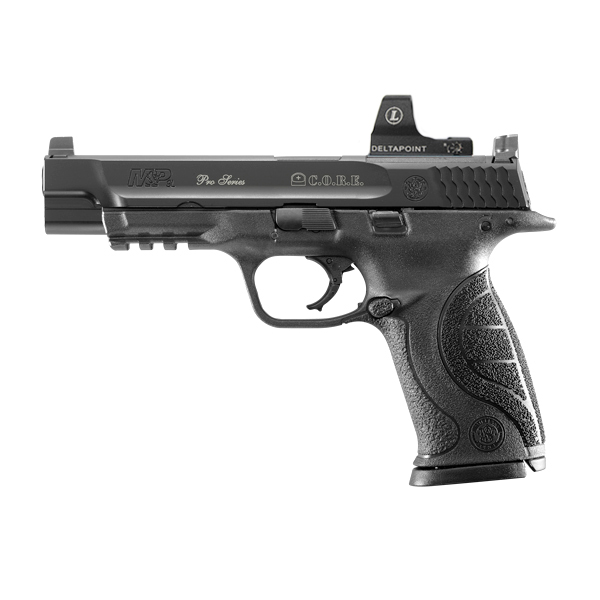
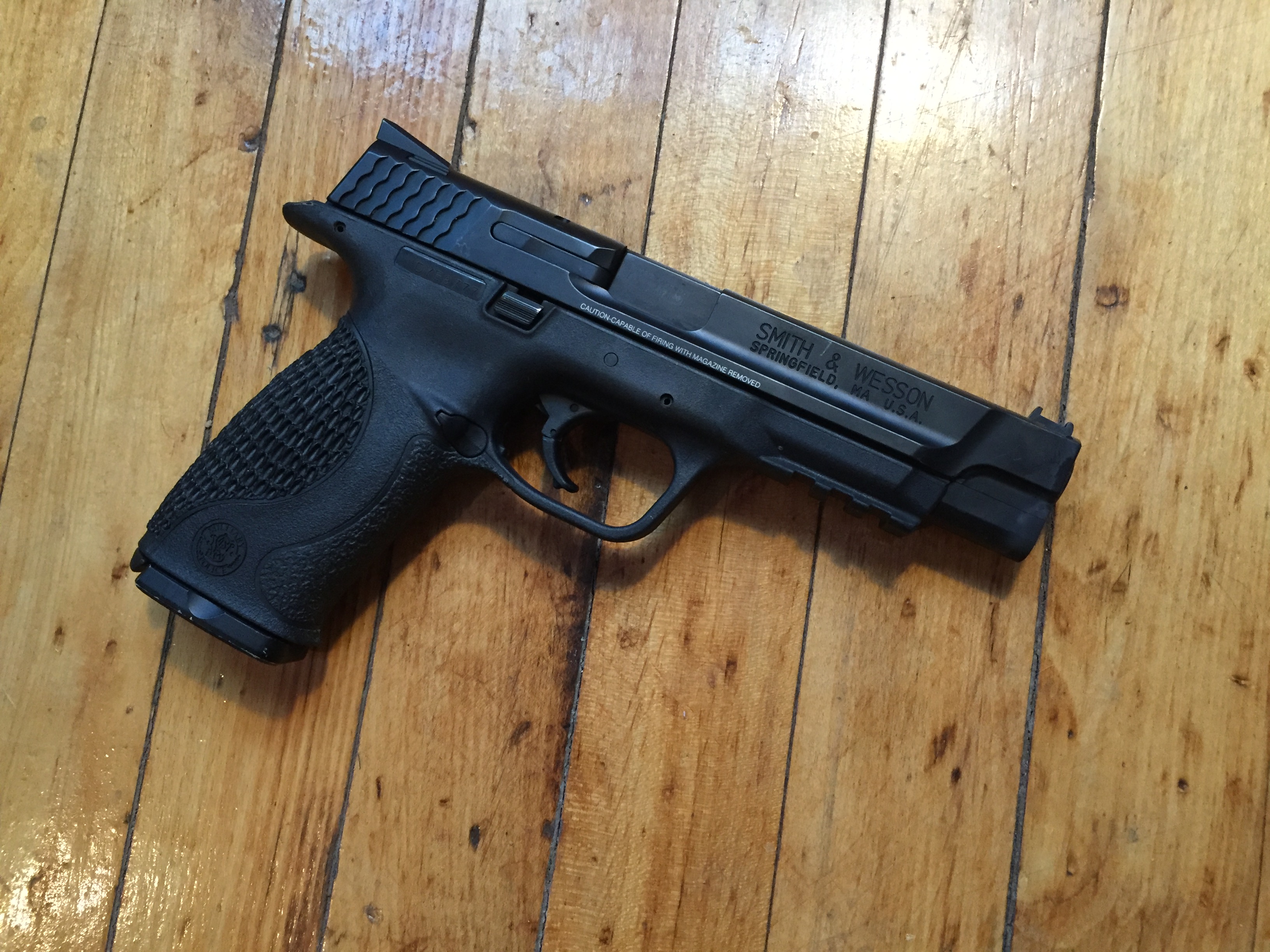
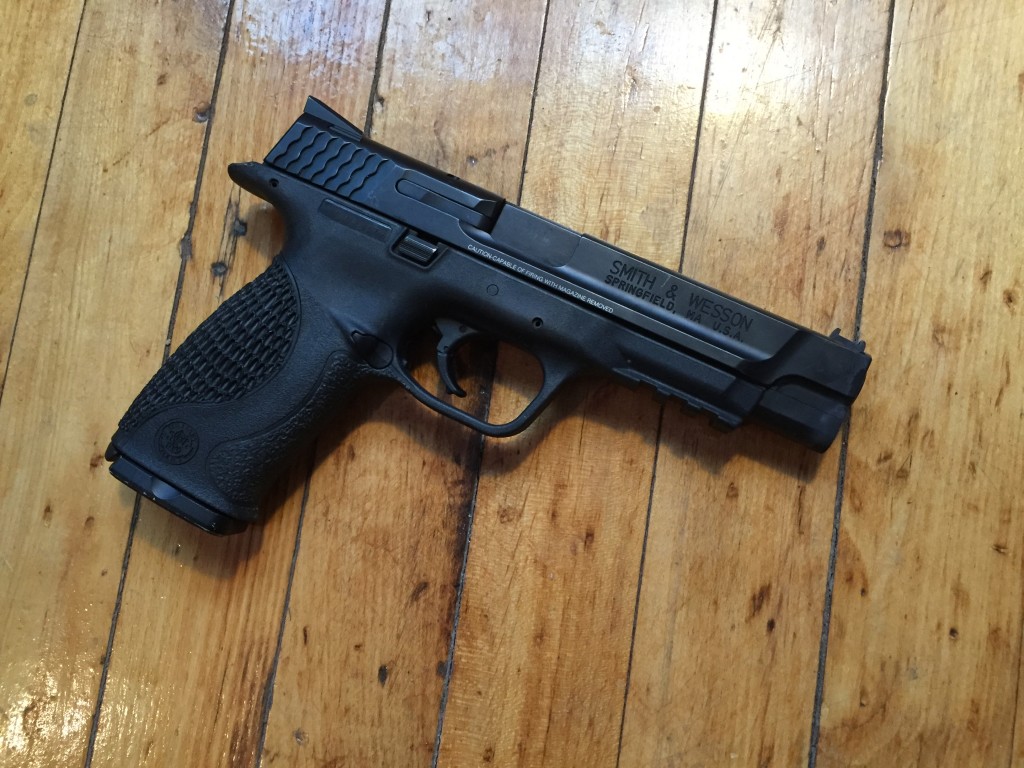
M&P9L Pro CORE – 5 inch M&P equipped with a Leupold Deltapoint
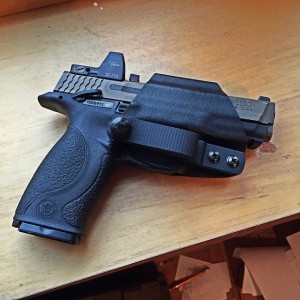
M&P9 with thumb safety – currently the gun I’m carrying, equipped with an RMR02
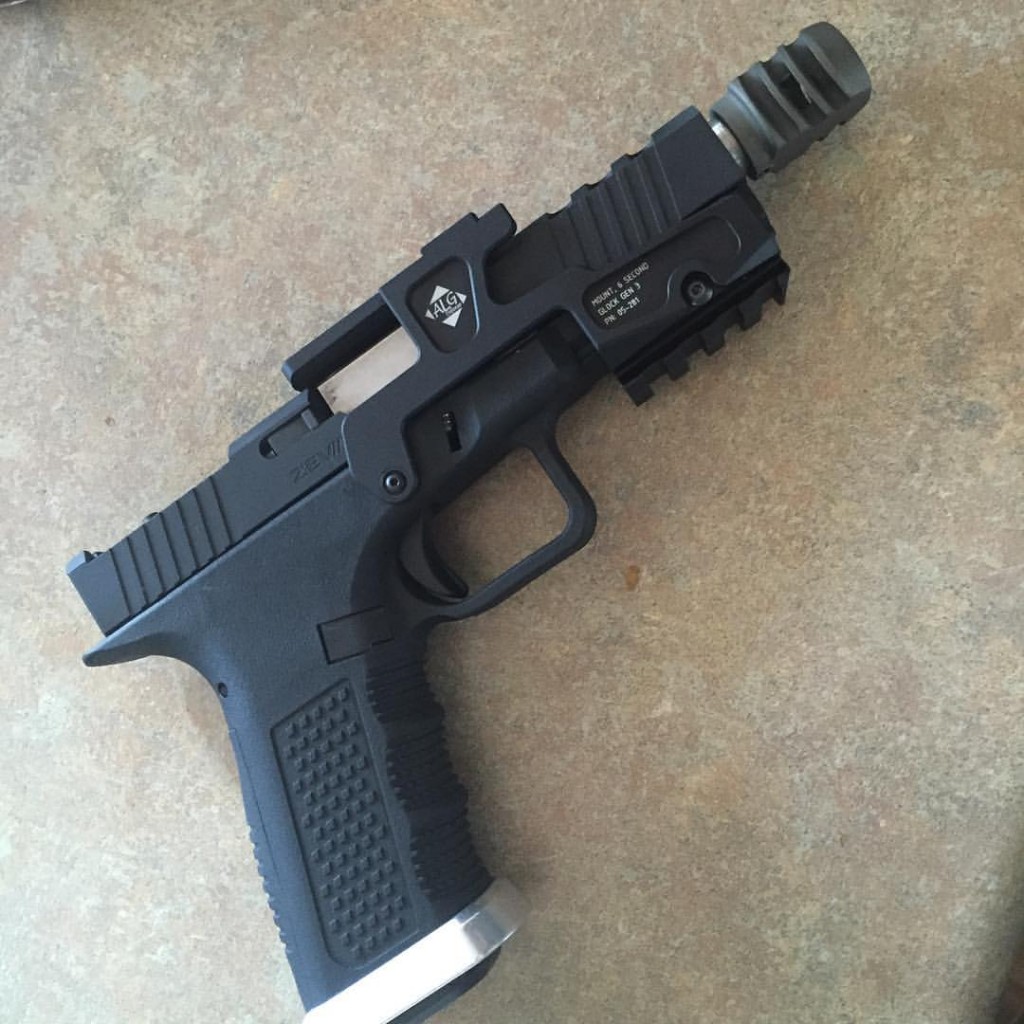
Lone Wolf TimberWolf 9mm with ALG 6 Second Mount – This gun does not have a slide mounted optic, it’s set up for an Aimpoint Micro or similar optics, more on why we’re rolling this later.
Coming soon: Timberwolf Compact with RM06
Before Production Optics came around, the only place where you could really compete with these guns was in Open division, where you’d get trashed by race guns with fixed optics. The reciprocating dot isn’t competitive with a fixed dot, it just isn’t. But now, if you’re willing to stay within the limitations of the division, you can compete with your gun heads up. And lots of companies are now offering pre-cut guns for dots. Glock and Smith & Wesson both have factory guns set up for a slide mounted optic, and at NRAAM this year Kahr got into the game as well. There are also loads of shops doing slide cuts now as well. There’s never been a better time to play with red dot equipped carry guns, and it’s a subject I’m personally fascinated with.
What are the advantages of a red dot equipped pistol? While they are slower for me in rapid fire, it’s also easier to be accurate out of the gate with them, and it’s much easier for new shooters to learn to shoot with two eyes open with a dot equipped gun. There are drawbacks, of course. Batteries, and the potential for your optic to lose zero from getting battered around at 1 billion Gs when the slide flies around from regular shooting. However, because the trend of dot mounted pistols has been growing, manufacturers are taking that kind of abuse into account when they build their dots.
Of course the real reason I want to run red dot guns? I think they’re cool. Yes, there is a lot of good data we can get from this project, and I’m glad that I finally have the time and resources to do it right, but ultimately? I’m doing it because if I learned one thing from taking 8 months off, it’s that there’s no time for shooting projects that don’t interest me. Red dot equipped pistols are interesting.
Irony – a state of affairs or an event that seems deliberately contrary to what one expects and is often amusing as a result.
The day after I wrote my last post, Student or Dry Fire Hero, I went to the range with nothing but my two carry guns and requisite concealment holsters. Since discovering competition in August 2014 I have been directing all of my practice towards that, so I felt I was past due getting in some reps and drills with my carry gear. I wasn’t really expecting much and when I was finished I had realized even less.
I set out with the goal of shooting Bill Wilson’s 5×5 drill. I had never shot it before and wanted to run it with my S&W Shield from 4 o’clock IWB and my new to me CZ PCR also from 4 o’clock, but OWB. I ran it twice with each gun, alternating Shield – PCR – Shield – PCR. The second time I shot both guns was obviously better, but still shockingly slow. In the end I got mid 28 second times with both guns. I had good hits, but my draws could have been timed with a sun dial.
For reasons unknown, I found this shocking. After all, I can rip 0.8 second dry fire draws and realize 0.9 second live fire draws at 5 yards using my USPSA rig.
Prepare yourself readers, here comes a DUH moment.
I had discovered how glaringly different drawing from concealment is compared to my competition rig. I had issues with my cover garment getting caught in my hand and I couldn’t get a decent grip at any sort of speed. My concealment draws were beginner slow. In a word: pathetic!
The overall experience was as eye opening as it was humbling. Clearly I need to take my own advice and practice with my concealed carry rig. The take-away is simple; everyone needs practice with their carry gear, lest they get killed in the streets.
As I generally don’t have the time to compete during the holidays I have set the goal to improve my concealed (real concealment, not a fishing vest) draw between now and January. I am using my mistake as a stepping stone to improve my CCW fundamentals.
How about you? When did you last draw from your concealment holster?
Now, someone please pass the salt; I’ve got to eat my shoe.
After taking (now) 8 months off from any sort of shooting sports training, over the holiday weekend I finally sacked up, loaded up some guns and ammo and went to the new Badlands Gun Range here in Sioux Falls. A quick note on the range itself, which I’m going to talk about later on, it is by far one of the nicest facilities I’ve ever had the pleasure to shoot at. Right up there with the NRA HQ range or West Coast Armory in Bellevue. But anyway, back to training.
I took two guns, my M&P9 with RMR that I’ve been using as an EDC, and an M&P9L Pro. I had a couple of specific training goals: check the zero on my RMR, and then use the Pro to work on draws to a low percentage target and reloads. Zero on the RMR gun is fine, and it functioned well with a magazine of carry ammo, so it basically got loaded up and sent back into its holster for the duration of the session. The reason I had the Pro out is because it’s the only gun I currently own that’s legal for IDPA SSP and ESP both; and we also have a CORE version of it if I wanted to get silly and play Production Optics (I want to get silly and play Production optics).
So let’s look at the actual training. 8 months off is a long time, so I needed to set some baselines first to see where I was at. First drill was straightforward, shoot Dot Torture at 5 yards. 49/50, and the only reason I dropped a point was because the first shot out of the holster I wasn’t quite aware of the gun’s POA/POI, so the first round went low. Everything after that was where I wanted it to be. Not bad.
Up next was 2 shots to a 3×5 card at 7 yards. I set the par time to a generous 3.00 seconds to start with, which I was able to beat pretty easily. I’ve always like the way the 9mm M&P Pros return in recoil, which makes running this drill a bit simpler. I dropped the par to 2.5, then 2.25, and finally 2.00, all working from an open top holster without concealment. I struggled a bit around 2.00, which isn’t too surprising, given how much time I’ve taken off. But honestly, I was feeling pretty good. I was getting my hits, my draw was nice and smooth, everything felt awesome.
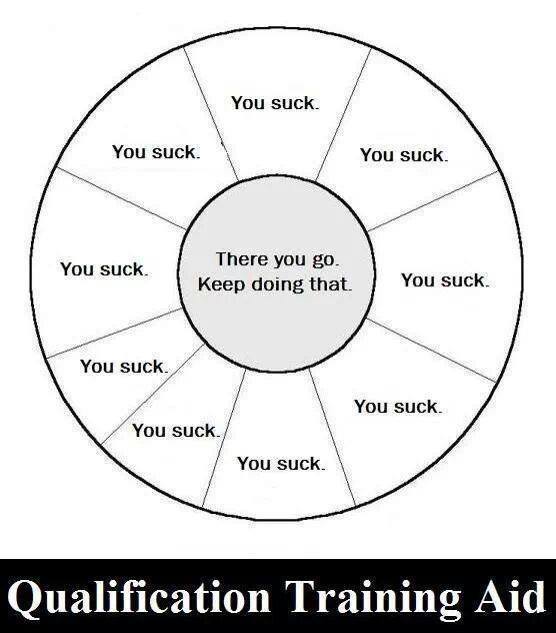
Then I started working on reloads. Oh my dear giddy aunt, I suck so bad. Sure, I can reload the gun smoothly…but quickly? Nope. My shot to shot reloads were all over 2.00 seconds, and try as I might I couldn’t get there. I was actually starting to get really frustrated with myself, because my reloads sucked pretty hard. I know how to fix it though…lots and lots of dry fire. In fact, dry fire is the best place to fix reloads, because you can remove a lot of the distractions and focus entirely on the fundamentals.
My first training session coming back from months off definitely showed me a lot. My accuracy, the fundamental of my marksmanship hasn’t degraded. I can still shoot itty-bitty groups really slow, which is nice I guess. I can still run the gun itself pretty quick, I turned in a 1.88 bill drill as my last exercise of the day. But I can’t reload the gun worth two bags of dog crap, and that’s a big problem. If you’re shooting Production or IDPA, reloads are important. You’ve only got 10 rounds in the gun, which means almost every IDPA stage will involve a reload, and most USPSA stages will have an average of 3 per stage.
Guess that means I’ll be doing some dry fire today. The point of the story? Downtime was good for me, it really was. I needed it, but if I want to get back to where I was and even get better, I’m going to need to hit the dry fire pretty hard.
Dry Fire. It is both proven to work and often misunderstood. It applies to competition and to concealed carry skills. Many swear by it and some (foolishly) scoff at it. Many times we hear people mention dry fire without actually explaining what it means so let’s get on the same page with regards to what dry fire is and isn’t.
Simply put, anything you can do to practice with your firearm that doesn’t require live ammo can be performed in dry fire. Dry fire is NOT aiming at the TV and pulling the trigger. It is not lying in your bed and aiming at the ceiling. You can use dry fire to improve your trigger with the proper regime. Check out the White Wall Drill for more information.
Want to get your draws smoother – practice in dry fire.
Want to speed up your reloads – practice in dry fire.
Want to improve transitions – practice in dry fire.
Want to improve recoil control – LIVE FIRE, NOT DRY FIRE!
Dry fire allows us to work on a great many skills without expending any ammo or driving to the range. However, dry fire is not a replacement for live fire.
I dry fire roughly 4 times a week for 30-40 minutes per session. Some will see that as a lot and some will see that as too little. In all honesty, I should be dry firing more to achieve my personal goals in competition. Although with those dry fire sessions, I try to get in one live fire session a week. This isn’t always possible but it is important. It keeps your dry fire honest. It is really easy to fall into the trap of dry firing exclusively and becoming a dry fire hero. In all likelihood, you go to the range and realize the skills are not as polished as you thought.
You might have a sub 1.0 second draw time in dry fire but if you have never got up on the 3 yard line and actually practiced it with live ammo and a timer, you don’t really know. Likely, you won’t be as fast; your conscious mind (see, there it is again) will take too long getting the perfect sight picture vs an acceptable sight picture.
It is easy to dry fire your way to speed, but you must still look for every weakness in live fire and find a way to execute it better. If not, you will be quick in your dry fire dojo but in live fire and/or a match, you will be stuck at your current level.
Don’t mistake this to mean dry fire isn’t important; because it is. Dry fire without live fire confirmation, in the form of mini-drills against a timer, will not take you to the level you desire.
Are you a competitive student that looks for ways to improve using both dry fire and live fire or are you a dry fire hero; burning down drill after drill in your basement but never verifying a thing at the range?
Are you overlooking some easy improvement in the name of a quick dry fire par time?
Today’s subject is a brief discussion about match pressure. If you shoot competition, you already know match pressure is real. So how can we control it?
You dry fire frequently on a regular schedule. You exercise before live fire to get your heart rate up. You feel prepared to handle the match stress. However when you get to the starting box and the RO says “Shooter ready”, you get nervous, jittery and fall apart. Your heart rate quickens and your palms sweat. Unless you are a top shooter and/or have years (decades?) of experience under your belt, it will happen to you. So what are we to do?
The reason is simple to diagnosis and hard to correct. You are over thinking and your conscious mind is tripping you up. Yes, the physical effects are caused by adrenaline and body alarm response but those are driven by your brain. You are your own worst enemy at the start of a stage. You work through different scenarios in your head; the “what ifs”, the good and bad from your last stage, how you are going to attack the stage and then you heard the magic words: “Load and make ready”.
“The consciousness of self is the greatest hindrance to the proper execution of all physical action” – Bruce Lee
It is my hope that most of you will find nothing new about this phenomenon. If you are a member of the Brian Enos Forum (and you should be), then you are likely aware of Mr. Enos’ competition beliefs but he is not alone. USPSA Grand Master, Steve Anderson, has a wonderful podcast that is almost exclusively about the mental game. Let us not can’t forget Olympic Gold Medalist Lanny Bassham and his book, With Winning in Mind.
Of course reading their works, their “Zen” if you will, won’t do much on its own. You need something to drive your focus when you are in the shooters box. Something you can take with you to both dry and live fire practice. What that “something” is will be up to the shooter. For instance, I focus on my breathing and try to listen to the surrounding noises and activity when awaiting the glorious sound of “Shooter ready – Standby”. If at an outdoor match, are there birds chirping? Are there leaves rustling? Try to focus on something that YOU can use to help calm the conscience mind.
I will admit that this is not as easy to do as it is to talk about. When I manage it effectively, my speed and accuracy are at their peak; but when I fail to manage it, my times suffer and I make mistakes. Those mistakes are not a negative as long as you recognize each failure and learn from it. That is the key! Anyone can recognize they made an error but those who can use that recognition to learn will get better and ultimately quicker. You must never see your errors as a failure but as declaration of a weakness. An identification of where you need to practice. Ironically, this applies to life in general and not just shooting.
Another thing a person can do, which I have used with success during the stage, is to view each shot as the only shot. “Issha Zetsumei” is a Japanese phrase that literally means “one shot and expire”. It points to the fact that each shot should stand alone. Do not worry about your score! Focus on the front sight. Press the trigger. Watch the front sight rise. Repeat. Don’t shoot faster than you can see, but at the same time, only see what you need to see.
So there you have it. If you want to control match pressure you have to learn to control yourself. Shoot your game and let everything else go. The score will take care of itself based on your level of skill. Don’t shoot faster than your ability and don’t shoot slower than you need. Shoot your game, shoot at your level and have fun.
And most important, remember to have fun. After all, it’s just a game.
On Friday, I published a list of The Five Worst Guns for Self-Defense. I didn’t list specific makes and models, because I wanted to focus on types of guns that are poor choices for as primary guns for self-defense. I like derringers and I think they’re cool, but it certainly wouldn’t be my first choice for an SD gun. Today I want to flip the script and focus on the five types of guns I do recommend for self-defense, starting with my top choice.
1. A compact semi-automatic 9mm handgun
Examples: Glock 19, M&P Compact, Sig P229
My first and most frequent recommendation for carry guns fall into this category. Usually the question sounds like this: “Caleb, I want a gun for self-defense, what should I get?” I almost always recommend one of these four guns, based entirely on what the end user wants. Why? Because the compact segment of guns offers the best in terms of ease of carry/concealability, ammo capacity, and shootability. I recommend a 9mm because it’s the most common service cartridge on the planet, it’s cheap to train with, and quality defensive ammo is widely available from a variety of manufacturers. Accessories like holsters, sights, lasers, and lights are widely available for these common types of guns, meaning when you decide to upgrade your game it’s easy. Don’t be a special snowflake and buy something that there’s no aftermarket support for.
2. Sub-compact single-stack 9mm pistol
Examples: Smith & Wesson M&P Shield, Glock 43, Walther PPS
A lot of time, people will say that guns in the compact segment, Glock 19/P229 sized guns are too difficult to conceal for EDC in certain types of clothes. I get that, because not everyone has the luxury of picking clothes to dress around a good-sized pistol like an M&P Compact. That’s why my second recommendation skips all the way down to the smallest reliable class of pistols chambered in a service cartridge. These guns go hard in the paint for concealability, while still retaining enough good features to make them shootable. You can take an M&P Shield through a 500 round class and you won’t hate yourself at the end of it (ask me how I know), and then stick the short magazine in it and make it completely disappear under the tightest of extra-smedium t-shirts. Again, stick with reputable, mainstream brands and you’ll be in good shape.
3. Full-sized service pistols in 9mm
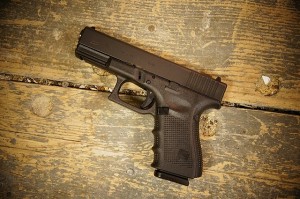
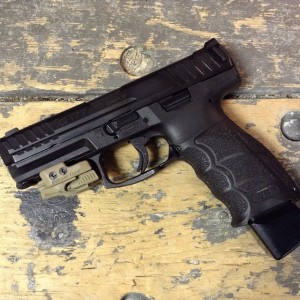
Examples: Beretta 92FS, M&P fullsize, Glock 17, Sig P226, HK VP9, HK P30L
Some people on the other hand aren’t all that concerned about concealability, so the first two recommendations aren’t their cup of tea. They want the gun that holds the most rounds and is the easiest to shoot well, and for these guys we have full size service pistols. You want a gun that holds a lot of BBs, and is easy to shoot well? Here’s your category. In fact, if you really want to go hard in the paint in the segment, you could even carry one of the “competition” models, like an M&P9L, or a Glock 34. Guns in the full-size segment require more thought to carry and conceal on a daily basis, which means you may need to make some fashion concessions to tote around a full size M&P with an RMR mounted on it (ask me how I know…). But these are by far the best guns if your primary goal is shootability in your carry platform.
4. Compact revolvers in .357/.38 Special
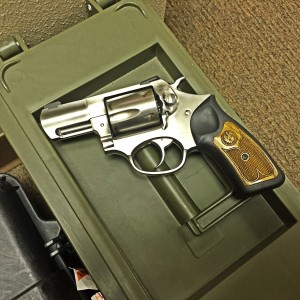
Examples: Smith & Wesson j-frames (so many flavors), Ruger SP101, Ruger LCR
For an admitted fan of revolvers, they’re also pretty low on my list. The reason is that these guns are probably the hardest to shoot well of any gun on this list, including #5, they don’t hold a lot of ammo, and some of them have terrible sights that you can’t replace. However, a big favor for all of them is that they all have Crimson Trace grips available, which ameliorate the “sights” issue. The best thing about these guns is they occupy a unique place in the casual gun owner’s psyche of “guns for self-defense”; which means that people who buy them are actually likely to carry them. And I’ll be the first person to say that none of the guns I’ve listed before this are worth a crap if they’re not on your body when you need them. At the lighter end of the small revolver spectrum, a Ruger LCR simply disappears when you carry it, and then on the heavy end you can shoot full house .357s out of a Ruger SP101 and probably finish an entire box before you hate yourself.
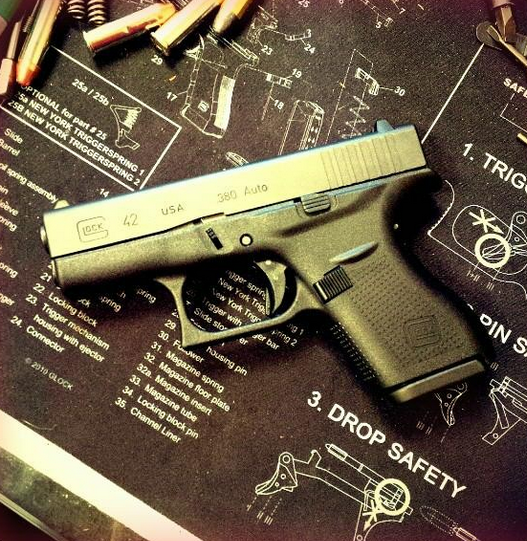
There’s a reason I recommend these last on the list, behind more difficult to shoot compact revolvers. With the current quality of single stack 9mm pistols on the market, I don’t really see the point of these wee little .380s any more. But some people really don’t want a 9mm in this size, they don’t want a wheelgun, so a .380 makes the most sense. These guns frequently are difficult to really shoot well, and their truly compact size sometimes can compromise reliability, but they satisfy the first actual rule of gunfights: have a gun. I think that a j-frame is a preferable choice, but not everyone wants to get down with a DA revolver trigger. Also, don’t ever let people tell you that these pocket blasters aren’t accurate:
There you have it. The top 5 categories of guns that I recommend as primaries for concealed carry, in order from my favorite choice to my least favorite choice. Savvy readers will probably notice a couple of classes of guns missing from this list, if you think you’ve spotted it, let me know in the comments.
We use cookies to optimize our website and our service.
Functional
Always active
The technical storage or access is strictly necessary for the legitimate purpose of enabling the use of a specific service explicitly requested by the subscriber or user, or for the sole purpose of carrying out the transmission of a communication over an electronic communications network.
Preferences
The technical storage or access is necessary for the legitimate purpose of storing preferences that are not requested by the subscriber or user.
Statistics
The technical storage or access that is used exclusively for statistical purposes.The technical storage or access that is used exclusively for anonymous statistical purposes. Without a subpoena, voluntary compliance on the part of your Internet Service Provider, or additional records from a third party, information stored or retrieved for this purpose alone cannot usually be used to identify you.
Marketing
The technical storage or access is required to create user profiles to send advertising, or to track the user on a website or across several websites for similar marketing purposes.