At least once a month I’ll get an email or FB message from someone who wants to know why I hate Taurus so much. The fact is that I don’t. I actually really want to like Taurus. I want their guns to be good, because the idea of affordable, reliable 1911s or metal framed revolvers is awesome.
Why Is It Always The AK Guys?

“I’m like father for my students: I love you all, but do not mistake my generosity for weakness…
Bottom line, you will learn!
@Safety Nazis – just STFU. This was 100% controlled environment and at no time students were at any risk.”
This video has been making the rounds and it’s emblematic of the kind of stupid, dangerous antics that make some firearms training unnecessarily hazardous and unserious. Somehow it’s always the AK guys doing this crap.
Concealed Carry: Vehicle Environment Skills by FPF Training
In the United States the car plays a central role in the life of most citizens…likely moreso in the United States than in any other country on earth. Getting your driver’s license at 16/17 years old is considered an important milestone. Having one’s own car is such a symbol of independence that teenagers work entry level jobs to save up enough money to buy one. It’s considered such a crucial part of life in most of the country that we even allow people who have been convicted of drunk driving, one of the most lethally negligent activities you can engage in, to continue driving under some restrictions because it is believed that completely banning them from the roads would cause undue hardship.
The vehicle likely features prominently in your life…but does it feature prominently in your self defense preparations? A great deal of crime takes place in close proximity to vehicles. Robberies in transitional spaces like parking lots are extremely common in some areas. Gas stations are always a popular target for criminals looking for a score:
These things happen because people are typically extremely vulnerable when they are in close proximity to their car. When people are heading to or away from their vehicle their attention is usually not on the immediate environment. They are almost always in possession of valuable items like cell phones, cash, purchases from stores, prescription drugs, and the keys to the car itself. When you combine the visible presence of valuables, a fixed location, and a lack of attention by potential victims it’s bound to draw criminal interest.
Knowing that bad guys see opportunities when you are in close proximity to your vehicle, what do you do about it?
FPF Training has put together a course on Vehicle Environment Skills to help you address vulnerabilities and deal with the potential worst-case scenarios involving a vehicle. Our instructor for the class was “Chris” who brought a lot of valuable insight from his decade and a half of active duty service in a SOF unit to the class. The focus was entirely relevant to the concerns of the average citizen or police officer functioning largely on his/her own in the vehicle environment.
We started with the basics: Awareness and avoidance. People have a tendency to head directly to their car when they leave a building, often in a direct and completely predictable path. They also tend to use the ubiquitous car key fob devices to unlock or start their cars from a considerable distance away, giving any predator on the prowl plenty of time to set up an attack. Instead of doing this, “Chris” recommended applying a counter-surveillance technique of taking an indirect path to the car that allows you to note anyone changing their movements to follow yours. Something as simple as heading a couple of rows over from your car and then making a turn to get there will often reveal who is paying too much attention to you. Not activating your car’s controls until you are right on it also avoids telegraphing your destination to bad people. I’ve used this technique a time or two myself, appearing to go to a vehicle that wasn’t mine to reveal a couple of ne’er-do-wells who probably weren’t interested in talking to me about Jesus at 12:30 AM in a Wal-Mart parking lot.
 When it comes time to actually get into the car, “Chris” encouraged actually looking around the car first. It sounds simple, I know, but almost nobody actually does it. I encourage you to look again at the first video I posted and notice how the bad guys were using the victim’s own vehicle to obscure their presence and intentions. Think about actually getting into your car…how often do you actually take a look around before opening the door and starting to get in? There are plenty of examples of criminals hiding on the far side of a vehicle and then maneuvering on the victim as they enter the car. Then the next thing the victim knows, there’s a bad guy between them and their open door when they are ready to close it…and now they’re trapped in a severely disadvantaged position.
You’re still vulnerable once you are in the car if the car isn’t moving. I routinely see people get in the car who will then fiddle with their belongings or look at their cell phone for an extended period of time. Head down, doors unlocked, and the rolling weapon they could use to escape a problem is in a completely immobile condition, turning a potential defensive asset into a big metal cage-like liability. Instead, once you are in the car get the doors locked and the engine started and be ready to move immediately. You are much harder to hurt if your door is locked and you can use the skinny pedal on the right to move a minimum of a ton and a half of metal instantaneously.
I occasionally have to use a drive-up ATM and on those occasions I will actually leave my car in gear the whole time. If somebody pops out with an intention to do any mischief, they’re going to have a dickens of a time accomplishing it when I’m driving away.
The worst case scenario, of course, is being stuck in the car while it’s immobile. We trained for that, too:
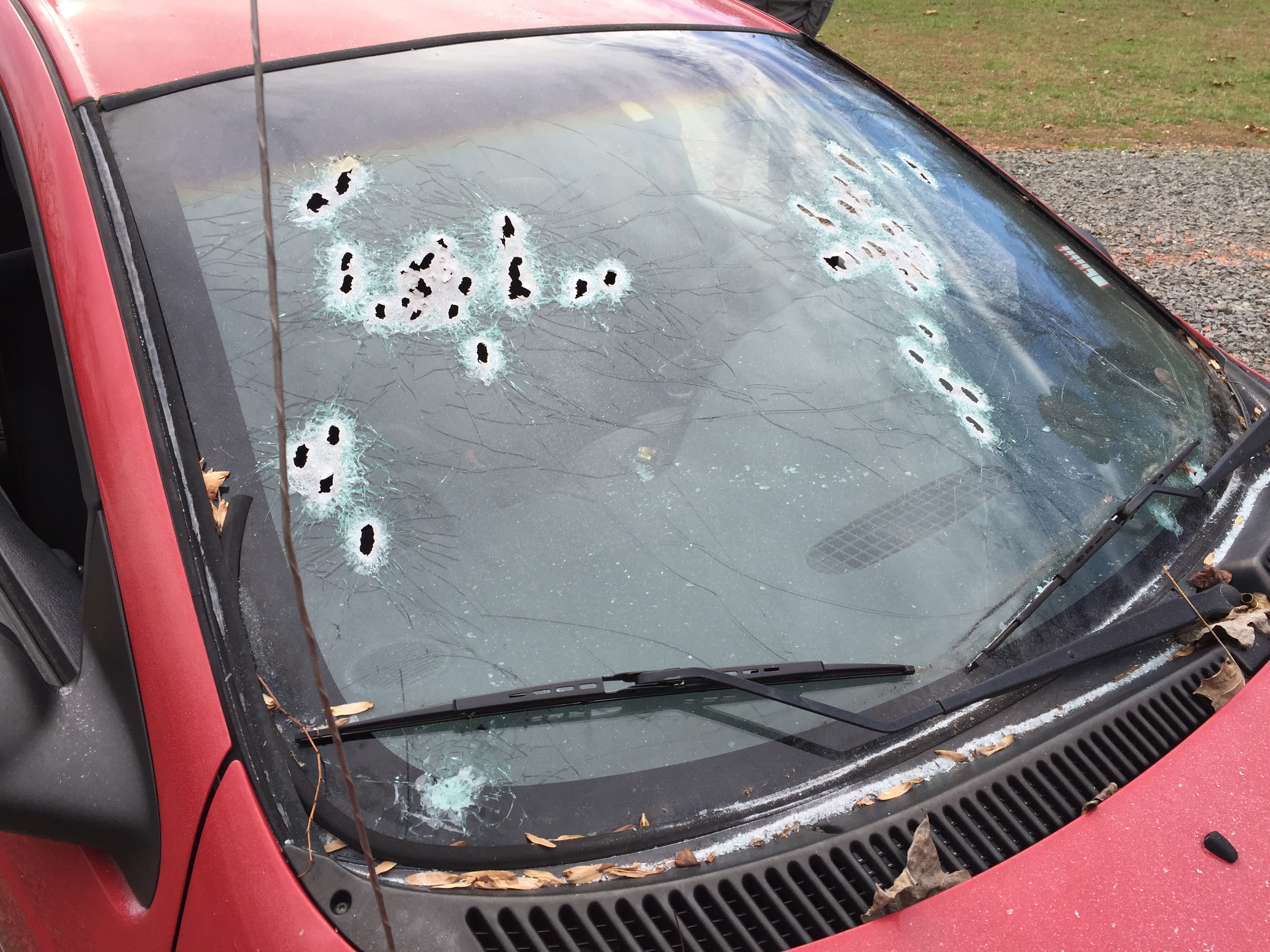
Note a couple of things: Firstly, that it is possible to successfully engage someone through the intermediate barrier of windshield glass. Secondly that doing so will profoundly impact the trajectory of the bullet. The round you are using, the exact makeup of the windshield, and the angle it’s at all play a role in how much deflection you will get. As a general rule, expect that attempting to engage through the windshield beyond the end of your hood is likely to result in a complete miss…unless you put multiple rounds through the same hole:
Side windows are much less problematic:
The tempered glass usually shatters readily when a bullet hits unless there is some sort of window-tint film to contend with. It doesn’t usually have much impact on a bullet going either way. We spent a good deal of time rehearsing the recognition of a threat, maneuvering to get the pistol into play, shooting in the awkward positions seen in the videos, and safely exiting the car without giving the bad guy any advantages in the process.
Shooting is, of course, the last resort for the worst case scenario. Learning to recognize vulnerability around vehicles and minimize your potential for being caught unaware was the most valuable part of the course, in my view. In my experience even most police officers do not receive much (if any) training for the vehicle environment. It’s nice that there are companies like John Murphy’s FPF Training to make this kind of training available to police officers and law-abiding citizens from all walks of life.
Whether you take a course like this one or not, it’s worthwhile to critically examine your vulnerabilities around the vehicle and perhaps adopt some of the practices I’ve mentioned here to hopefully avoid ever having to draw your gun and shoot it out from your vehicle. Far better to avoid the problem altogether with attentiveness and common sense practices than to try to shoot your way out of the middle of it.
Besides…the glass ends up everywhere.
Trunk Gun Considerations, Part 1.
Just like the first snow of the season sends unprepared drivers to the mechanic for new wiper blades and snow tires, two dramatic episodes of Jihad in the West have ignited a renewed interest in the “Trunk Gun”. This is usually a long gun and some other ancillary gear kept in readiness in a personal vehicle meant as a supplement to our daily carry pistol.
It’s a popular and comforting idea, but like our patron saint kept needling us, “What is it for? How is it to be used?” Answering these questions leads to better and more frugal gear decisions and provides some focus for future training.
Let’s start with what it is not for. The trunk gun is not there to go and get, and then re-enter a situation to deal with the threat ourselves. If you have made it to your car, you can safely exit the area and that is our smartest plan. If you encounter jihad on your way to making an escape, by all means burn them down, but most of these events are over in moments and by the time you get to your car, get your big gun and get back to the fight, it will be over and you will be a target for the responding officers. We, the armed, non-sworn, civilians of this country, do not carry guns to be Junior G-Men. We do not have belt pistols and trunk guns to seek out and engage terrorists. That is the job of the professionals, and doing so may well see us get shot by police instead of terrorists. Shot is shot, and it sucks.
Rather, the trunk gun is there to give the citizen more capability over a handgun to cope with an elevated threat situation in their area. While we’re trying to get out of Dodge in a situation where we have advance warning of heightened danger, a long gun up front gives us more options.
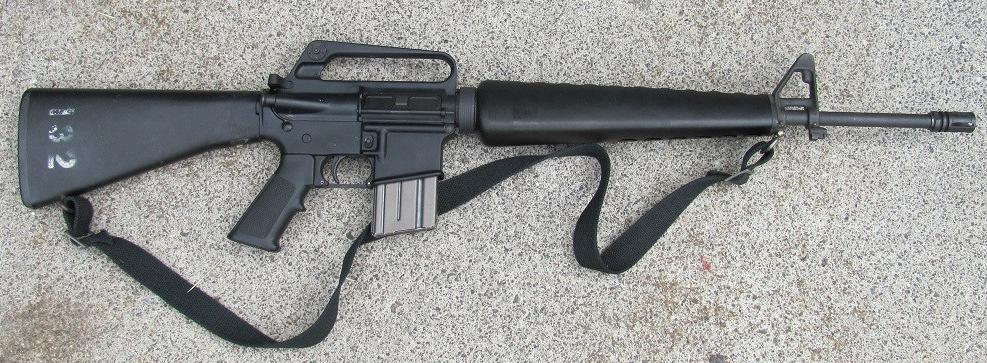
Hardware wise, this immediately suggests America’s Rifle. A reliable AR-15 type with a 16″ barrel and collapsible stock is lightweight and portable and can deal with just about anything man-sized at any distance at which we can identify a threat. An AR that lives in a trunk should absolutely have fixed iron sights. For this a permanently pinned front sight tower and if you’re using a flat top receiver, a fixed rear sight like the Daniel Defense 1.5 or the Troy unit are best. A red dot sight turns maintaining a sight picture into Easy Mode, but a trunk is a harsh environment for batteries and electronics. Hot and cold extremes, vibration, bumps and uncontrolled humidity all add up to a potentially dead dot when you need it the most. Sturdy iron sights that will keep a zero are a primary requirement, not a backup.
And let’s be honest. How many of us are eager to drop $500 on a quality red dot that will live most of it’s life in our trunk? The temptation to cheap out on a Chinese Fakepoint for your trunk gun is high, and should be avoided. Get a good set of irons first and learn to use them well until you can afford a real red dot and can get into the habit of checking it regularly.
Similarly, how many of us will commit to checking the batteries in our sights on a regular basis? For this reason, I think a flashlight, while indispensable on a home defense AR, is a low priority on a trunk gun. Better to have a small stub of rail already in place on the gun so you can throw on a flashlight like a Streamlight TLR-1 or similar if required.
A sling is to the rifle as the holster is to the pistol, and will make life easier if you have to abandon your car and move out on foot. A lightweight and compact chest rig that allows you to draw your carry pistol without interference is also a good idea, but simply stuffing some spare magazines into your pockets is better than nothing.
If you can’t afford an AR-15 for your trunk, there’s still good options that won’t break the bank.
Naval Special Warfare to adopt Glock 19
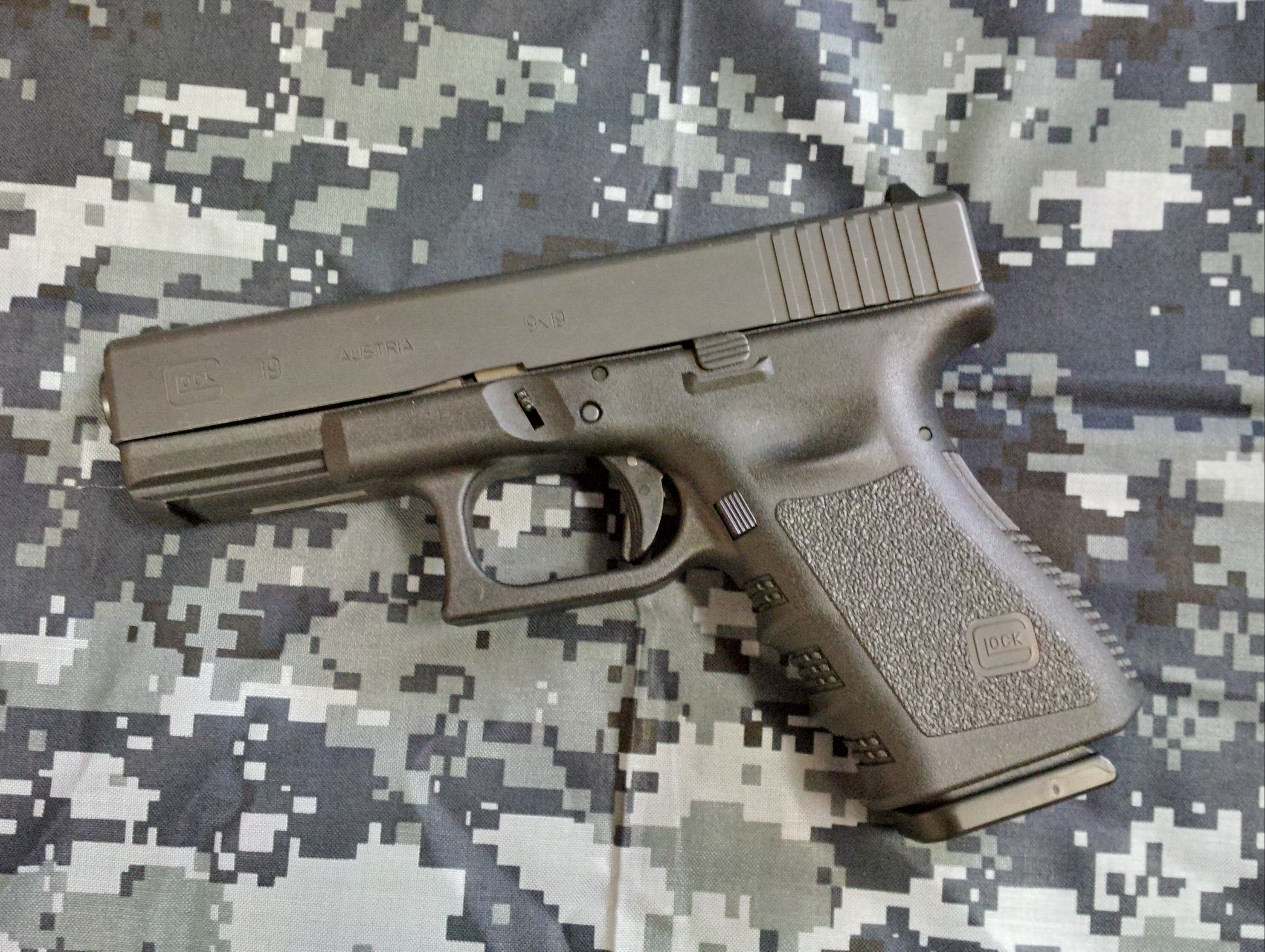
A verified SME on M4Carbine has posted that Naval Special Warfare (SEALs) will be switching away from the Sig P226 and adopting the Glock 19.
Looks like the Glock 19 will be the new 9mm pistol of Naval Special Warfare.
The SIG’s are still in service but are to be phased out in favor of the Glock Model 19.
I am not sure what generation, but based on those G19 already in service with SOF I’d say the Gen 3 is likely.
I will follow up when I get more issued than holsters et al.
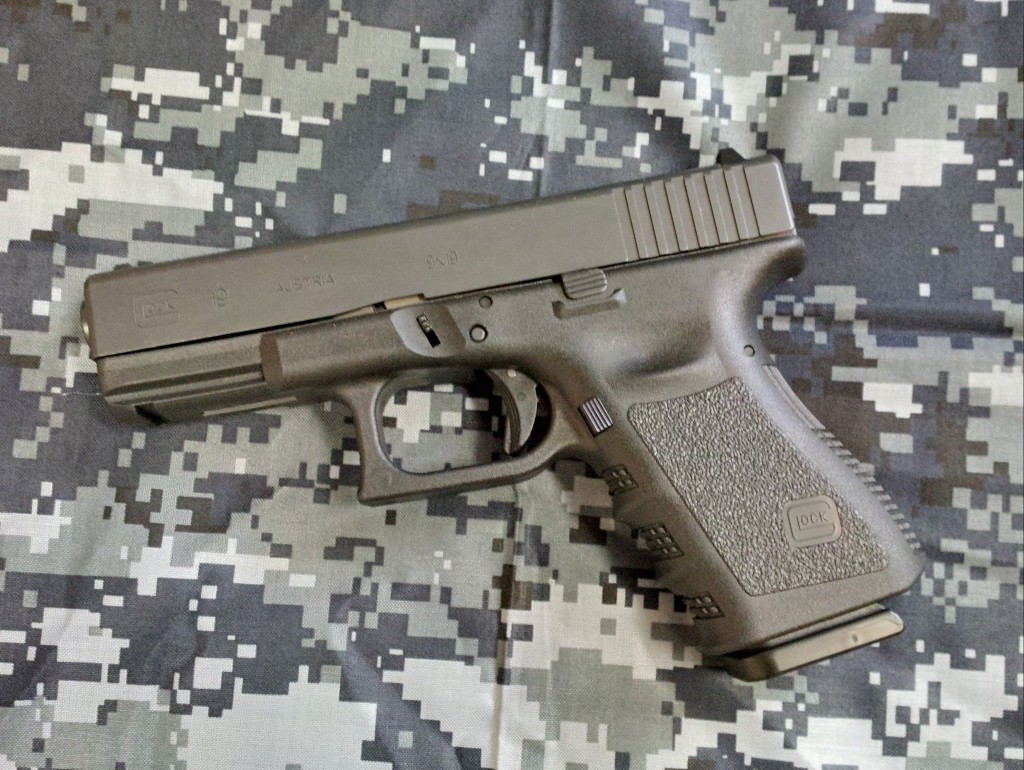
This choice makes a lot of sense for NSW, as the poster on M4C explains. The G19 has been in service with JSOC for quite some time now, so there’s already a precedent for that gun being used by operators. Additionally, the G19 offers the best compromise in terms of shootability and capability without taking up the same amount of space a “full sized” pistol would. It can be carried openly as a secondary weapon, but can also be easily concealed if the mission calls for it. I’ll let Rana on M4C explain:
The 19 can fill a lot more roles without taking up as much real estate on an operators kit. The move away from a traditional sized “duty pistol” and a move to an “operators pistol” has been a reason behind the popularity of the G19.
The G19 is perhaps the most efficiently sized pistol in its class without giving up the capacity of a “duty size” pistol. The G19 can be carried covertly as well as overt supplement to a primary (RE: Long Gun) without being unnecessarily large (duty size).
Keep in mind that the G19 is replacing both the P239 and P226 9mm.
Personally, I think this has been a long time coming. Don’t get me wrong, there are a lot of really good pistols out there these days, and I like the SIG’s. But when you start carrying a lot of gear, a pistol that does everything a 226 does in a lighter more efficient package is a huge step forward.
Like I said, I think this makes a ton of sense for NSW and for JSOC/SOCCOM at large. I think the G19 offers the best of all world in terms of size, shootability, and ease of carry. 15 rounds in a package that can be easily concealed or easily used as a “duty” weapon just makes sense to me. Make no mistake, I love Sigs, and I think the P226 is one of the all time great service pistols ever made. But for the mission of NSW, going to something like a G19 just seems like a really smart call.
Ruger Introduces the GP100 in .22 LR
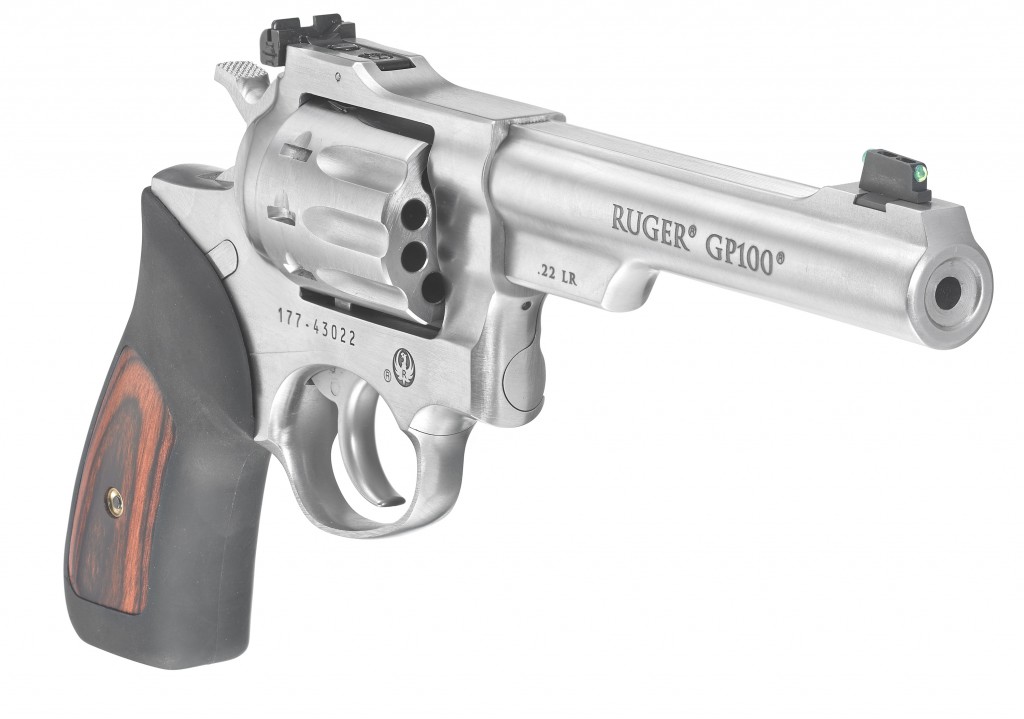
Sturm, Ruger & Co., Inc. (NYSE: RGR) is proud to introduce the new Ruger® GP100® chambered in .22 LR. This ten-round revolver offers an array of features designed for target shooting, small game hunting and recreational shooting.
People on the no-fly list should be allowed to buy guns #dosomething
In the wake of the terrorist attack in California, President Obama has called on Congress to “do something” about our “gun problem” – namely to make it so that people on the no-fly list would be barred from buying guns, presumably by failing a NICS check. The President even posted this image on Twitter, complete with the most passive and useless hashtag ever, which I’ve used in the post title. “#dosomething”
Congress can #DoSomething about this. pic.twitter.com/0dhwrGu7wf
— Barack Obama (@BarackObama) December 7, 2015
The problems with denying people on the no-fly list access to firearms are plentiful. The first, and obvious objection to such a measure would be that it’s completely and totally meaningless. Do you really think that a potential terrorist is going to pop down to their local Scheel’s and buy an AR15 off the rack? Of course not. We’ve been shown time and time again that people bent on illegal actions do not obtain their guns from legal, traditional sources. They use straw purchases, they steal them, or they simply buy them off the black market.
If preventing people on the no-fly list from buying guns wouldn’t deter any sort of crime, what would it do? At the risk of getting a little tin-foil beanie, what it would absolutely due is allow the government to use a secret list to deny people a Constitutional right. I imagine that most people understand the nature of the no-fly list pretty well, but I’ll expound a bit on it just in case. The federal no-fly list is a list maintained primarily by the Department of Homeland Security that has the names of everyone the government believes is too much of a risk to be allowed to board a commercial airline. On this list are the sort of people you’d expect, such as terrorists and people under investigation for terrorism. How the no-fly works is it matches the names of travelers to names on the list, and if your name is a match, no ticket for you. It is extremely problematic, because if your name is similar to someone on the no-fly list, you can get delayed or even denied access. A simple google search will show a number of issues with the no-fly, including barring decorated veterans, US Congressmen, and journalists from travel.
Further, there are documented instances of persons being placed on the no-fly list as reprisals for their political beliefs/opinions. When you’re placed on the list, you’re not given any warning or notice (for obvious reasons) and the only way you’d find out would be if you tried to buy an airline ticket. Getting yourself removed from the no-fly list is a difficult, expensive, and time consuming process. The end result is that if the average citizen is placed on the list, their options for redress are limited.
While I understand the necessity of keeping certain badguys off airlines, I also really like those silly little civil liberties. I don’t like secret government lists that deny people their rights without due process. That’s ultimately what you’d get by denying people on the no-fly access to legally purchase guns. A secret government list that you don’t know if you’re on that is used to deny you a civil right. Can you imagine the reaction the press would have if someone suggested that people on the no fly list shouldn’t be allowed to own computers because they might use them to plan terrorist attacks? It’d be madness. But because the 2nd Amendment gets treated like a second-class right by a lot of people, there’s no outcry from the press.
There’s one more reason why we shouldn’t bar people on the NFL from buying guns. In the past when this has been brought up, it has been opposed by federal law enforcement. You see, the feds have stated in the past that they don’t want suspects on the list to be tipped off that they might be on the list or under surveillance. But if recently radicalized Jimmy Jihad rolls into his local gun store, and despite having bought guns before suddenly gets a bounce on his NICS check, he might think that something’s up. That’s a simplified version of law enforcement’s objection to barring people on the list from purchasing firearms. When Sen. Lautenberg last tried to get this passed, LE objected because it could “compromise existing investigations.”
However, as advocates for 2nd Amendment and individual rights, we have a problem when it comes to opposing measures like this. You see, to successfully fight something like this, you have to explain to people with facts and reason what the problems with the no-fly list are, why law enforcement has opposed this measure in the past, and why violating people’s civil rights without due process is wrong. That takes time. It doesn’t condense well to a 10 second soundbite. However “don’t let people on the no-fly list have guns because terrorism duh” is an extremely effective emotional appeal. It’s the sort of simple appeal to emotion that plays well on the Today show, and that your average American would likely agree with, because on the surface it seems like it makes sense. It’s only when you peel back the onion a bit do you understand why closing off the NFL to firearms purchases would actually open a much larger and more dangerous can of worms.
But in the internet age, no one has time for that sort of thing. If you can’t fit it in a tweet or a snapchat, no one will pay attention. That’s tough, because trying to argue against an emotional appeal to a complex issue with facts is quite a challenge. But we’ll just keep pushing this rock up the hill because it’s the right thing to do.
The Folly of Chasing Gear – Competition Version
In the last 18 months I have changed my competition gun 3 times while chasing the elusive “perfect” pistol so allow me to spin you a yarn on what not to do.
First, I must note that I am FAR from the first person to write or talk about this subject. Ben Stoeger had a Podcast about it and the guys at Triangle Tactical have warned against this more times than I can count. But I can be stubborn and had to learn these lessons hard way. It is my hope that you are not as stubborn as I am, and that you won’t repeat my mistakes.
Oh the circuitous path I took.
When I started in competition I wanted a gun that would work for competition, but also work as a defensive weapon. With that fallacy firmly in mind I went out and bought a Glock 34 – a fine competition gun by the way – then I sold it almost immediately for the XD-9 Tactical I wrote about in “My Time With An XD”. With my “competition” gun on hand, I geared up with a Comp-Tac International Holster, a cheapo mag pouch and a 5.11 Belt from Bass Pro Shops. The gun worked fine (the cheap mag pouch – not so much) but after a few matches I had a nagging “what if”; a “what if” that was only fueled when I got to dry fire Ben Stoeger’s Stock II and then shoot both a Stock II and a SP-01 that belonged to other people.
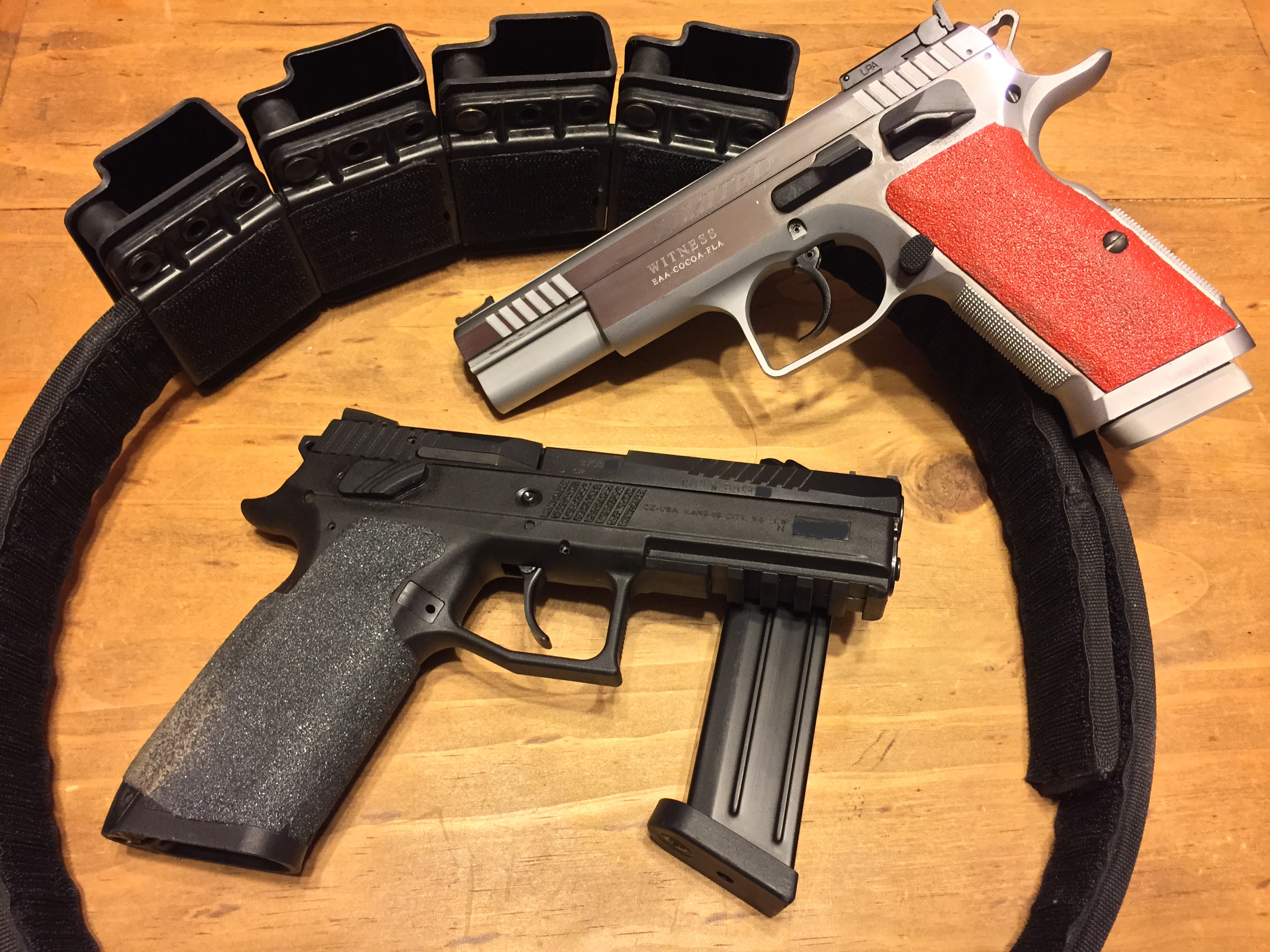 It was with dreams of greatness that I sold the XD and proceeded to buy a CZ P-09. (the one in the photo) I had decided that I “needed” a DA/SA competition gun and already owning a 2nd generation P-07 I knew of CZ P- series awesomeness. Truthfully, deep down I knew I would end up with a metal gun, but I wanted to prove the DA/SA was something I could master and compete with first. What better than the bigger brother of a gun I already owned, right? It didn’t take long to fall in love with DA/SA and prove to myself it was the way I wanted to go. Thoughts confirmed, I pulled the trigger (pun intended) on a Tanfoglio Limited Pro.
In all of that swapping and monkey motion I learned some valuable lessons.
Losing money (gun) – I liked the XD, but it was never going to be what I really wanted. I knew if I fell in love with competitive shooting I would want a metal gun. I should have bought the CZ P-09 first. That would have given me a chance to run a DA/SA at the high round count class with Ben Stoeger and I would have ultimately saved money. I don’t regret buying the P-09; but I do regret the money I spent “learning” the XD, only to part ways with it 9 months later.
Losing money – ancillary equipment – You just changed guns? Great! Now you can buy a new holster, spare parts, sights, trigger job, extra mags, and grip tape. If you are really lucky, your existing mag pouches won’t work (read: Tanfoglio Large Frame) and you get to modify what you have or order new ones. If there is a shining spot it is the fact you can re-coup some of that gear cost by including it in the sale of the gun.
Ammo “wasted”?– It is nice to say we learn from every round shot, but wouldn’t it be nice to do that learning on a platform you will keep? Then you gain both the knowledge, as well as trust in the platform. I put about 1k through the P-09 before I moved to the Lim Pro and while I love the P-09 and plan on keeping it, it would be nice to have that ammo back to live fire practice with the Lim Pro. This desire to have the ammo back is an order of magnitude greater when thinking of the XD.
Tracking Improvement – I am better now than a year ago, but I know it is not all the gear. I will proudly admit a 44 ounce gun with a 2.5# trigger is amazing and make for easy controlled pairs, but I must also admit that much of my improvement has been due to a refined trigger control, more efficient movements, and seeing what I need to see.
To better illustrate, you can’t go back and start over with your beginner skill level every time you change gear. As you run and learn your new gear you are also adding to your current skill level. The simple fact is the improvement you realize from the gear change is over-stated in your mind.
Rebooting, again and again – Oh, you have your mag changes down to 1 second? Great! Now change platforms and tell me what happens! Every time you change gear, you back up some and have to relearn draws, mag changes, transitions, and on, and on. Sometimes it is small – like going from the P-09 trigger to the Lim Pro and sometimes it is brutal.
Pick a gun and stick with it – It seems that in most cases this is the best bet. But as with most things in life, there are concessions to be made. If you are starting out with a Ruger P89, you would probably benefit more from a gear change (update?) than someone starting out with a Glock G17. Similarly, if all you own is a G27 then by all means shoot it while planning for an upgrade; but I suggest staying with a G22 or G35 so the familiarity remains.
Are there gains to be made by changing gear? Sometimes; but, first you need to evaluate your current skill level against the gains you will realistically see in the near term. I have dry fired an awful lot this year, likely enough to be a high A class in USPSA, but I am not because most of my dry fire time was spent learning new gear and not refining a specific skill.
My advise? Decide if what you currently own will work and be realistic about it. A Glock 17 will take you to Grand Master in USPSA and Distinguished Master in IDPA, where as a Hi-Point probably won’t. If you want something better that’s fine, but I suggest you shoot what you have and save up to get what you really want the first time to minimize the re-learning. Bouncing around only waste time and money.
If you don’t want to listen to my experience, that is also fine; I just ask you withhold your shock when you look back and realize the money and/or ammo spent.
Lest anyone think this applies only to competition shooters, I have done CCW swapping as well; but that is a story for another day.
Publishing in the Firearms Industry is Fundamentally Broken: A (Comedic?) Tragedy
I have recently jokingly begun to refer to myself as the tragic embodiment of the downfall of the print industry. That’s not (entirely) true of course, but it makes me laugh. Now that I’ve found a new home and a new family at Badlands Pawn I have been able to detach myself from the publishing world I have been engaged in and fueling for the past years. I have a few observations from my time steeped in this truly unique working environment: there are a lot of AMAZING people behind the scenes of your favorite blogs and magazines, there are a couple terrible ones, and the whole entire thing is a broken mess and it’s really not their fault.
Making money in the publishing industry is a difficult, daily uphill battle. What GunUp almost was and frankly should have been was a true anomaly in this day and age. Even the big companies are coming out with more and more print titles – essentially throwing spaghetti at the wall – in an effort to regain and retain consumer’s attention in a rapidly changing demographic of firearms owners and an infinitely adaptable digital world. With this understanding, there are a few behind-the-scenes practices I feel you, as readers, should understand that I hope will not only help you understand why a majority of the reviews you read are essentially useless and what we have been trying to do here at Gun Nuts to be as functionally independent as possible.
What I want to unpack is how different large firearms manufacturers deal with the press. I’m not going to name any names, because some manufacturers already get my verbal endorsement on a daily basis and others I do everything I can to steer people away from, even ones whose products don’t totally (totally) suck, simply because you shouldn’t be allowed to be a whiny little jerk toward ad sales people and get editorial reviews pulled and words changed around because your feelings were hurt.
My first example of the brokenness of firearms publishing comes from an experience with one of my favorite manufacturers. They are not very open with the press, but invited a select group out to see one of their longest-awaited releases early and opened their doors to their US factory. We were thrilled, signed NDAs with relish, and lined up to get a first look at the new product. We had a very specific release date, and I guarded the knowledge carefully.
It was leaked. Not by anyone in the editorial world, but by someone out of the shipping house of one of our at-the-time competitors.
If it was just the shipping house, why am I even bringing it up? Because it’s a problem. It should NEVER have happened and now that manufacturer will be hard pressed to open their doors even to a select group of press again.
So how do we stop it? I’ll be honest, I don’t know, I’ve never run a shipping house, but maybe ask Vanity Fair. You see, I don’t care how you feel about the Caitlyn Jenner story, but one of the most sought after stories of 2015 (love it or hate it you know it’s true) was kept safe until its release date, yet our industry gets a leak out of a shipping house? This is a mild, mild example of where we’re… They’re… Going wrong.
Then there’s the example of manufacturer number two who I have – at times markedly – avoided mentioning throughout much of my writing career. This is where you, dear readers, must understand what is really really going on behind the scenes. You see, once someone I know quite well suggested that another gun was a better tool for one job than this manufacturer’s, so naturally they’re out for blood. So much so that when another manufacturer’s firearm was called “laughably bad” (it is, you can’t fire me anymore publishing industry, I can enjoy my machine guns and probable alcohol problem in peace now) they called THE PERSON HANDLING THEIR ADS and had the phrase pulled.
You read that right. Welcome to firearms publishing, where ad sales managers like to call all the shots.
Could you imagine if Chrysler pulled advertising from Jalopnik for slighting their interior?! (Bad example, Chrysler has nice interiors, but you get my point.) What if Apple stopped talking to Tech Crunch because they ran a story about the bending iPhones? The thought is nearly laughable.
Money talks. Money will always talk. But when ad sales “professionals” and company marketers are calling editorial shots there’s a problem, a real problem. Ire is oft raised toward editors and writers, but it’s not their fault every single review you read is positive – they WANT to bring you the truth. What’s really broken is hidden behind the scenes, and can really only be fixed there.
Which brings me back around full circle: welcome to Gun Nuts. Yes, Caleb’s run a Kickstarter to go independent, yes, we are talking to some of our very favorite companies whose products we trust about sponsorship, because we want to get away from this, we want to bring you the truth. Readers who are familiar with us know we have always tried, and being in a position where we are hindered makes us uncomfortable. So bear with us, and maybe call for some behind-the-scenes change from the rest of the industry, because you deserve to know what’s crap (a lot of it is) and what’s not (I probably carry it).
Editor’s note: as of December, the kickstarter campaign has been cancelled, and refunds are being issued to donors
CCW Dry Fire?
 There is a common misconception about dry fire and what it can do for CCW holders; a misconception only compounded by gross misunderstandings of what dry fire is. It seems many CCW holders believe dry fire is nothing more than cocking their unloaded gun and firing it at a light switch or the TV.
Dry fire can include that, but it is so much more!
With the belief that all CCW holders should be ever increasing in skill level, I decided to write this as an example of how quickly tangible gains can be made.
In my post “When Reality Hits Back”, I wrote about my concealed carry draw being ridiculously slow and my desire to improve it. That post was actually written on November 25th, the Wednesday before Thanksgiving. I started dry fire practicing draws using my concealed carry rig the following Saturday, and made it back to the range on Thursday, December 3rd. During that week I practiced roughly 15 minutes a day for five days.
Folk’s that’s only an hour and fifteen minutes of practice over the course of a week; even with a family and full time job everyone can find that much time in a week.
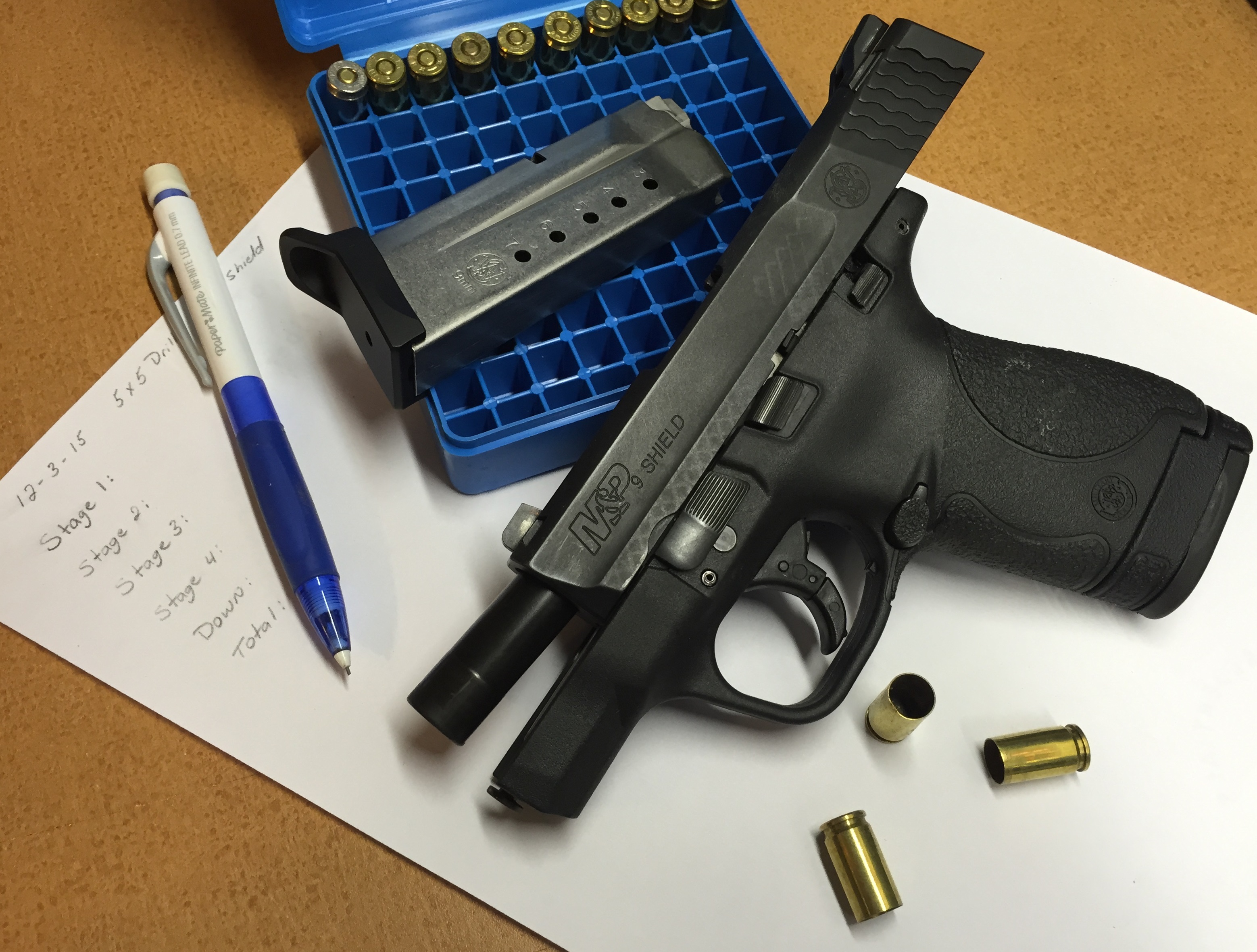
So what happened on my second attempt at the Wilson 5X5 Drill? A measurable improvement is what happened! I used the S&W Shield, configured the same as when I had ran it the week before. I ran it three times to get an average and when I was done I had dropped my time by about 2.2 seconds. I am still a long way away from where I want to be, but I didn’t expect perfection from only an hour and half of dry fire. As you digest this, keep in mind that I did not practice mag changes or trigger presses; I only practiced the draw stroke! In the 5X5 drill the gun is drawn from the holster four times, that means I improved my draw stroke roughly 0.5 seconds.
If you were faced with an attacker, what would you give for a half second quicker draw?
My suggestion, turn off Netflix for 20 minutes this week and practice some draws with your concealment rig. Who knows, you might learn something.