Dear Washington: I’m sorry, but you’re going to lose

Washington State is probably going to lose a big piece of the gun rights battle soon, because it looks like Initiative I-594 is going to pass. Now, I hope I’m wrong. I hope the polling data is wildly incorrect, and that the initiative doesn’t pass. But things aren’t looking good for Washington right now, and it’s because at least in that state, they’ve lost the language battle around background checks.

375px-Washington_state_hub

The problem with background check initiatives is that the language is really hard to control. “Background checks on all gun sales” sounds really good, especially if you’re swinging Paul Allen levels of money at low information voters. Yes, we know that internet sales and face to face sales are perfectly legal and actually aren’t a giant black market for felons, but how do you message that when the opposite side is dropping millions of dollars to sway low-information voters?

And make no mistake, that’s what will win or lose this ballot fight. It won’t be the dedicated pro or anti-gun people hitting the polls, it’ll be the Soccer Moms with their lattes and Ugg boots who vote for this. The media campaign I’ve seen for I-594 has been really good, which makes sense because the anti-gun groups have piled a ton of money into it. Just…all the money. This is how the fight is going to look now, and that’s unfortunate because it’s harder to fight at that level for us.

The NRA, and the pro-gun people always win when the argument comes down to facts. That’s why SAF wins in courts, that’s why we win when we fight legislative battles. But ballot initiatives are like winning elections, and they’re decided by the people. As it turns out, most people are pretty stupid and easily swayed by emotion arguments, and there’s nothing our opponents are better at than emotional arguments. I do have to hand it to those guys, they did a good job of picking targets this time. A ballot initiative in a state with a notoriously ignorant electorate about an issue that’s easy to disguise and mislead on? Well played, fuckers.

I hope in two months time I’m writing a post about how wrong I was.

Ammo review: Federal American Eagle .38 Special 130 grain FMJ

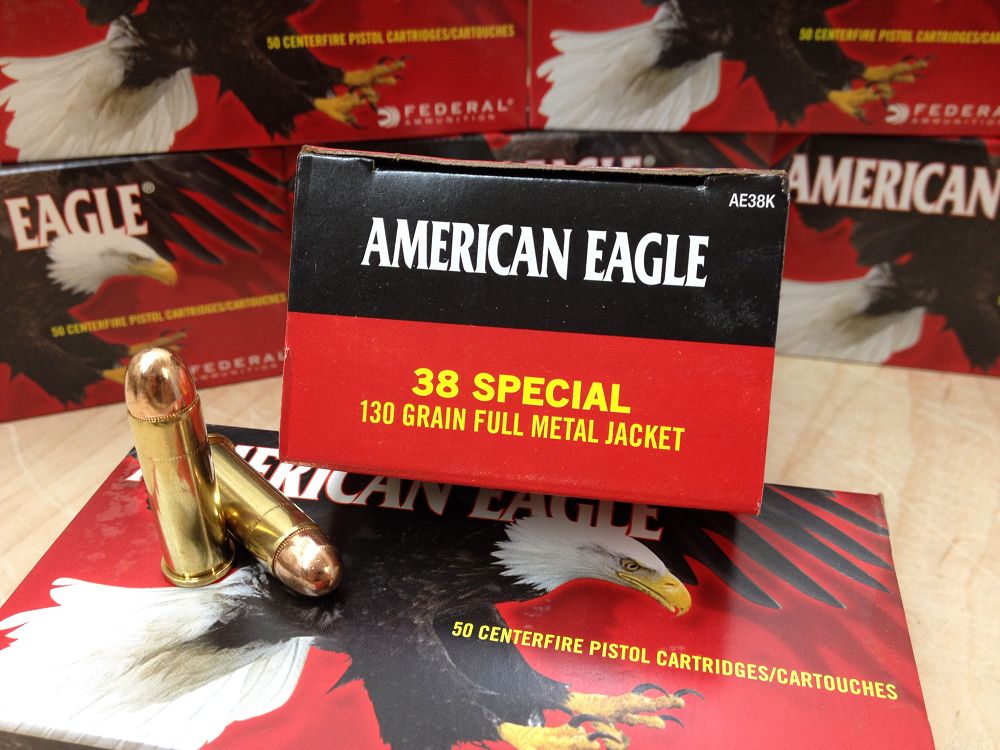
This is the perfect round for IDPA SSR. I know that’s a bold statement, but if you’re not going to handload for IDPA SSR, you need a bullet that does three things: works with a lightened action, is easy to reload, and makes power factor. The 130 grain FMJ load from Federal does all three of those things.

Photo by Ammo Supply Warehouse

Let’s start with the most important thing your IDPA Stock Service Revolver ammo should do: make power factor. In IDPA, the PF for SSR is set at 105,000, which we’ll shorten to just 105. For those not familiar with the shooting sports, the formula for power factor is bullet weight times velocity, then divided by 1000 to make a three digit number. So for example, a bullet that weighs 130 grains would need to be going at least 807.7 FPS to make power factor. Weather affects bullet velocity, on a cold day the air is more dense making your rounds slower. Hot days are good for chrono checks; unfortunately when my rounds were chrono’d at the IDPA Nationals, it was about 40 degrees. Three rounds are shot over the chrono, and the American Eagle produced an 820, 820, and 817. That’s…pretty consistent, actually. And what I’ve come to expect from Federal’s products. That put my power factor at a comfortable 106.5, giving me plenty of confidence in using these rounds again.

The next thing that your rounds need to do, and honestly it could be argued that this should have been the first thing, is work. Revolver shooters love to lighten the trigger pulls on their guns. Most wheelguns come with barely shootable 334 pound trigger pulls from the factory, but some judicious tuning can get a good wheelgun like a S&W or Ruger down to the 8 pound range easily. A really good gunsmith can get S&W wheelguns lower than that, even. But all this lightening comes at a cost, and that cost is reliability. A lighter trigger pull transfers less energy to the primer, which means your chances of a click instead of a bang go up. There are some gear solutions, like using extending firing pins on S&W revolvers, but the most common solution is “use federal primers.” Federal primers are the softest on the market, meaning they require the least amount of energy to detonate. Hey, guess what primers this ammo has in it?

Finally, there’s ease of reloading. No joke, reloading one of these ancient spinny-middle guns isn’t easy. It’s not like reloading a semi-auto pistol, where you only have to stick one thing in one hole (hur hur). No, reloading a wheelgun means you have to simultaneously stick it in six holes. If you’re off by a little bit, you crash into the metal inbetween the charge holes, and can really hang up your load. That’s where two things are important: chamfered cylinders and round bullet profile. Chamfered charge holes mean there’s a slight bevel on the edge of the cylinder’s holes to help catch the tip of the round and guide it in. Bullet profile is important because the perfectly round nose of the Federal 130s is going to be less likely to catch on anything. Unlike flat nose or JHP rounds, it just slides right in. It’s also better than lead because I’ve seen soft lead bullets catch and leave wee little bits of themselves on the shoulder of the charge hole if it’s sharp enough.

So there you have it. If you’re looking to shoot IDPA SSR and you need off the shelf ammo, get Federal American Eagle 130 grain FMJ. The product code is AE38K.

USPSA Statement on the suspense account

To the membership of USPSA,

The Officers and Directors of the US Practical Shooting Association became aware yesterday of an allegation that a significant number of expenditures were persisting on a “suspense” listing because they had not yet been reconciled against receipts. Our current understanding is that the receipts are available and that there had been a plan in place to reconcile these items as soon as the Nationals were completed. Sadly, what should have remained an administrative task at USPSA HQ has now become a public controversy, damaging the reputation of our organization despite there being no evidence that any funds were lost or misused.

Standing policy requires that the headquarters office comply with generally accepted accounting practices, and we note that both a 3rd-party accounting firm and a periodic 3rd-party review are already included in the normal headquarters process. We take these allegations very seriously, and will be asking the accounting firm to oversee the reconciliation process and provide guidance on how this situation should have been addressed. We expect a “clean” suspense report when that reconciliation process is complete, and will publish that report in order to address member concerns.

Sincerely,

USPSA Board of Directors

Treat home invaders like…well…invaders

If you read this space regularly, you have probably deduced that I have a special sort of hatred for people who offer bad advice on self defense. Doesn’t matter much to me whether it’s some ridiculous gunstore lawyer telling people they can’t take aggressive action against a carjacker or a doddering old fool in political office telling people to fire “warning shots” to scare away bad guys, it really urinates in my Cheerios when feckless idiots shotgun unforgivable ignorance into the public consciousness. In the moment where someone is facing a grave threat to themselves and their family, they need clarity and solid information…not the vapid pontifications of gasbags who lack the experience or intellect to avoid beclowning themselves every time they open their benighted suck.

That leads me to the Today show’s recent foray into offering advice on dealing with a home invasion. It was, without exaggeration, one of the dumbest bits of “journalism” I have encountered on my years walking this planet. It was that extra special kind of stupid that makes you feel slightly light-headed to the point where you start to question whether you’re awake or not. Highlights of this advice included keeping a can of wasp spray…wasp spray…next to the bed to spray presumably at the eyes of a home intruder. I can’t really see any of the smiling idiots on the Today show encouraging you to, you know, shoot a home invader, but apparently they don’t have any reservations about advising you to soak someone’s face with a cocktail of potentially lethal chemicals.

The other unforgivably stupid bit of advice was to cooperate fully with the home invader, including telling him/them where all your valuables are. In the story a victim of a home invasion, Susan Dawson, recounted being on the floor bleeding while tied up and wondering how, exactly, the man who invaded her home was going to kill her. After presumably interviewing a woman who contemplated the method of her execution at the hands of a violent felon, these dumbclucks went on to tell honest citizens to cooperate fully with these people. It takes a special type of blinkered idiot to reach such a conclusion.

Yes, yes, I know the root of the advice: Be nice to the violent felon who has kicked in your door and assaulted you in the hopes he won’t kill you. That’s **CENSORED** stupid. In a 4 minute story about home invasions they manage to find time to talk about using car alarms (because we all know EVERYBODY pays careful attention when one of those goes off, right?) and wasp spray, but they utter not a single word about useful measures to harden your home against an intruder. Instead it’s 4 minutes of improbable dumb-cluckery and the cherry on top of the stupid sundae is an admonition to be nice and rely on the moral recognizance of a violent felon to keep you and your family alive.

I want you to do me a favor. Click on this link, and fast forward to the 33:00 mark. At that mark you’re going to hear William Aprill discuss an interview he did with a violent felon who murdered a man by stabbing him and skinning him alive. I’m not using hyperbole, folks. He literally took a knife and peeled another man’s skin off. Why? Because, and I quote:

“I had some time, and he was there.”

The smiling idiots on TV presume that violence is rational. In other words, that criminals are after material gain and that if you don’t obstruct their efforts to take your stuff that they will leave you unharmed. Mr. Aprill gives the account of a thief who had successfully completed his crime without any interference from the sleeping home owner, and yet decided to gruesomely murder the man anyway because “He was there.” A couple of weeks ago I wrote a little something about opportunism in bad guys and I used the murders of Jennifer, Micheala, and Haley Petit to try and illustrate that “opportunity” is not confined to financial gain. I want you to read this next line very carefully, and burn it into your mind:

Helpless victims bring out the worst in bad men.

Good people like to believe that criminal offenders think like they do. That if you don’t give the bad guys a reason to hurt you, then they won’t hurt you. After all, you don’t hurt people because they give you no reason to. The sort of man who busts into another’s home in the middle of the night is not like you. He doesn’t think like you. He’s not going to perceive helplessness and find his conscience. His instinct won’t be mercy. 11 year old Michaela Petit was utterly helpless against the two men who busted into her home and tied her to a bed. Their response to her helplessness was to sexually assault her, then douse her in gasoline and burn her alive. Stop for a minute and imagine the scene…there’s a battered little 11 year old girl tied to a bed, and a couple of home invaders start pouring gasoline all over her. Think of the terror she must have been in at that moment. Ponder the sight of an 11 year old girl becoming aware that she’s about to die in a horrifically brutal fashion.

If you are a normal person and you go through that exercise you’ll either be on the verge of tears or physically ill as every cell in your body reacts in moral revulsion. Probably both.

But not the bad men. No, they caused that scene. They witnessed the terror of that helpless little girl…and then they flicked their Bic.

I’m going to take a radically different tac to the geniuses at the Today Show. I don’t think you should treat home invaders like royalty. I think you should treat them like invaders. This means hardening your home against intrusion in the first place, having a plan for your loved ones should those measures eventually be defeated, and having an effective defensive tool to use as a last resort.

Don’t allow yourself to be helpless. Don’t let bad men tie you or your loved ones up. Fight. Fight because your odds of survival do not improve when bad guys have complete control of the situation. To hell with all this wasp spray, treat-them-like-royalty nonsense. If someone means to harm you or your loved ones, mean to harm them first. Harden your home and harden your mind.

Helpless victims bring out the worst in bad men. Those willing and able to fight, on the other hand, usually put them to flight.

Contrast the Today Show’s wasp spray idiocy with the coursework of someone like Tom Givens. Over sixty of his students have successfully used lethal force to defend themselves from attack. I asked him once how many of his students had pulled a gun but not had to use it because the bad guy buggered off when confronted by someone who had the means and mindset to kill them on the spot…and he basically said there were too many to count. How many success stories do you think Mr. Wasp Spray has on his side?

If you could go back in time to early Sunday afternoon in Cheshire Conneticut, would you tell Mr. Petit that two men were coming to rape and murder the women in his life and then give him a bottle of wasp spray and tell him to use his car alarm? Or would you give him a shotgun?


USPSA’s accountant resigns over un-accounted for expenditures

The following was provided to me by an anonymous source, and has since then been posted on the Area 6 FB page as well as other forums. USPSA’s accountant resigned from USPSA, with an effective final day of September 30th because corporate funds were not being properly accounted for. Here is the entire text of her resignation letter:

September 16, 2014

Dear USPSA BOD members:

Each year I work closely with out accounting company and bookkeeper to ensure that the accounting records are in order. At the end of last year I started to notice charges on a company credit card issued to Kim (Williams, USPSA Executive Director – ed) for which there were no receipts. I have requested the receipts but she has not provided them. The bookkeeper comes in every month to balance the bank statement. Each time she comes in she finds a charge on the bank statement for the credit card payment must put the item into the suspense account. She has expressed concern that this is not being handled properly. The suspense account is now at $144,632.18.

Kim has become quite defensive about this issue. I contacted my attorney some time ago and he advised me to send a letter to the BOD with my concerns. I have documented everything concerning the missing receipts, and my attempts to resolve this issue. I have attached a copy of the suspense account for 2014.

I’ve enjoyed serving the membership of USPSA for the last 21 years. I am just trying to do the right thing. Therefore, my last day will be September 30, 2014.

If you have any questions or would like copies of the documentation I have in my possession, please contact me at your convenience.

Sincerely,

Barbara Kennedy
Accounting Specialist, USPSA/IPSC Inc.

Essentially, what’s happening is that there are charges on the corporate card that are being made without receipts provided to accounting, and when the bill for the corporate card is paid each month, the money must be filed into the suspense account. Wikipedia has an excellent summary of what a suspense account is used for in accounting practice: “A suspense account is an account used temporarily to carry doubtful receipts and disbursements or discrepancies pending their analysis and permanent classification.

For those interested, here is a pdf copy of the letter of resignation as well as a current look at the suspense account – no account numbers or damaging financial information is contained in this.

Kim Williams had recently come under fire when two members of the Board of Directors put forward a motion in a recent BOD meeting calling for her immediate resignation. The motion failed, and the members immediately resigned.

As of press time, we have contacted Phil Strader, USPSA President via email for a statement on this matter.

Shooting question: when you should get on the trigger?

Photo by Shelley Rae

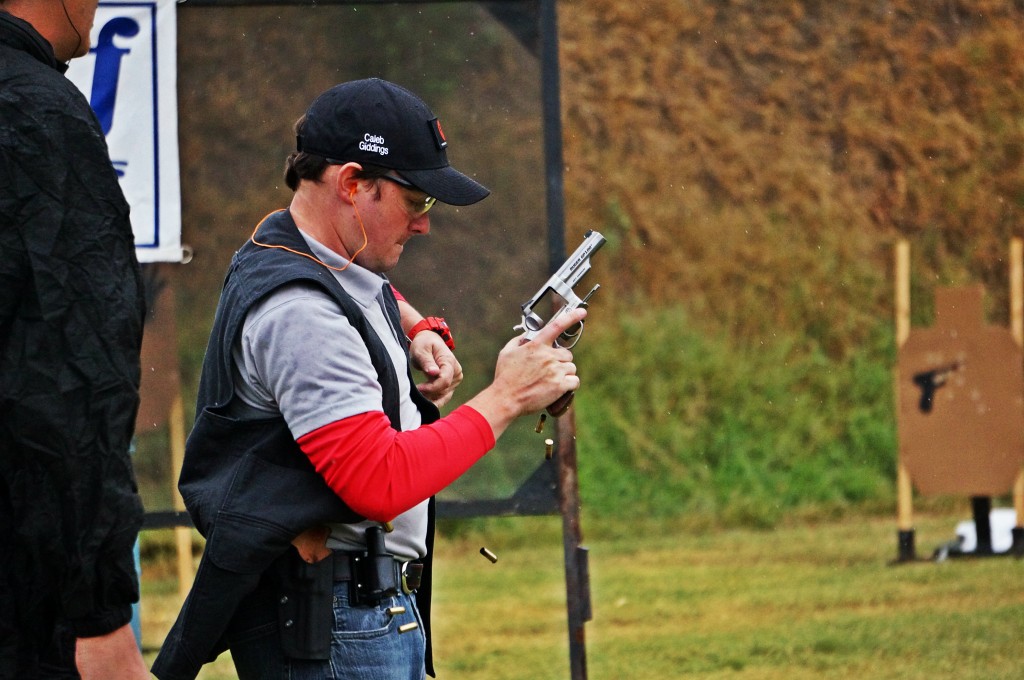
We all know what the 4 Rules say. Rule 3: Keep your finger off the trigger until your sights are on the target. In the photo above, my sights aren’t on the target in a way that I could verify. But my muzzle is in a safe direction, and I’m sure of what’s beyond my target. I’m willing to subject myself to the Internet Safety Nazis in order to have a conversation: when is it too early to get on the trigger?

Continue reading →

The case for fault lines in IDPA

Yesterday, I mentioned that it was time for fault lines in IDPA. I opened up this discussion on my facebook page with some interesting results. If you participated in that Facebook thread, I want to flesh the idea out here and explain how we could use fault lines in IDPA while preserving the spirit of cover.

To understand the need for fault lines, we first have to establish that there is a problem with the existing system. For those not familiar with IDPA, the spirit of the game calls for shooters to use cover to shield their body from the threat targets. All of the shooter’s lower body and 50% of the shooter’s upper body must be concealed when engaging a threat target. Failure to maintain this level of cover will result in a 3 second penalty added to the shooter’s time. Currently, this penalty is enforced by the Safety Officer’s running the stage, who will generally look at the shooter’s foot placement relative to an invisible “cover line” and then make a judgement call as to whether or not the shooter was appropriately using cover.

2014 IDPA Nationals 852

The reason this is a problem is that it is an entirely subjective decision on the part of the safety officer; and the degree with which its enforced can vary from SO to SO, and in the case of this year’s nationals, from bay to bay. I am not trying to bag on the SOs at Nationals, or the match itself; I thought the SOs did a good job and each bay applied the rules in the same fashion to every shooter that came through their bay, however there were variances in how the rules were applied from bay to bay. You see variances like this at Nationals because the SO staff is pulled from across the country, meaning different clubs with different club cultures and ideas about what really defines cover will be running various stages. As a side note, I generally see less variance in cover calls at the S&W Indoor Nationals, which is likely because the SO staff for that match largely comes from the North East region and is fairly homogeneous.

Ultimately, this subjectivity is why it’s time for IDPA to begin using fault lines. The dirty little secret that no one talks about is that IDPA already uses fault lines it’s just that they’re currently invisible. Subjectivity in any sporting endeavor is a bad thing. If you look at the NFL or MLB, all of the major advancements in officiating have come in the name of removing subjectivity from important calls. Do referees and umpires still make mistakes? Certainly. Fault lines won’t prevent mistakes either, but it will make the job of judging a shooter’s use of cover much easier. “Your toe was clearly over the line” is a lot easier call to make than “your toe was past the edge of this barrel which is the invisible line of cover” – and it’s much harder for shooters to argue about objective calls than it is subjective cover calls.

Now, there are some objections to using fault lines, and I want to take the time to address those here. First, is the obvious and simplistic “there are no fault lines in the real world.” Yes, you’re correct, there are no fault lines in the world. Here’s another related fact: IDPA “cover” isn’t very real world either. As a community of IDPA shooters, we need to get over the notion that IDPA is tactical and accept that it is a game. Yes, it is more practical than USPSA or steel challenge, but it is ultimately just a game. Once we accept that, we can actually have a real conversation about improving the game.

It is possible within the framework of the game to use fault lines and yet preserve the intent of the rules; the utilization of cover, shielding your body from fire, etc. Fault lines allow for great creativity on the part of a stage designer. Whenever the conversation of fault lines comes up, everyone automatically assumes that they would be huge, generous lines that would completely eliminate the concept of cover. But that doesn’t have to be the case. It also ignores the reality of IDPA cover – if I’m using IDPA cover appropriately for a three target array, I can quite frequently see the entire array and engage it from the first “cover” position. Sometimes I have to shift my foot a few inches for the last target, but that’s rarely the case. So using fault lines becomes and exercise in stage design creativity, as mentioned above. For a three target array that you want to keep simple, you could place the fault line somewhere in the middle – making the first target slightly easier, and the rest fairly normal. Or, if you want to force a tight shot around cover, place the fault line close in to the shooter, making them using a more more “real world” style of cover by leaning as little of their body around the barrier as possible.

Here is the point, after over 800 words. You can absolutely use fault lines in IDPA and preserve the spirit of the game to use cover. A creative stage designer could even place forward fault lines in stages to prevent shooters from crowding cover. That’s really what I’m driving at here. The current system of cover limits both shooters and stage designers. Adding fault lines removes a huge part of the subjective nature of cover, and creates nearly endless possibilities for creative stage designers to challenge shooters’ abilities to get in and out of positions of cover. It allows SOs on the stage to focus on shooter safety, instead of watching them shuffle step around seeking the invisible cover line.

I understand there are objections to fault lines. And I know shooters will have comments on this post, and I welcome them. I want to start a real conversation about using fault lines in IDPA and how to successfully implement them, what objections people may have that I’ve not thought of. Please post your thoughts in the comments section.