
The October issue of GunUp the Magazine is out, and you can get it today by downloading the iOS app and subscribing for only 99 cents a month!
The October issue of GunUp the Magazine is out, and you can get it today by downloading the iOS app and subscribing for only 99 cents a month!
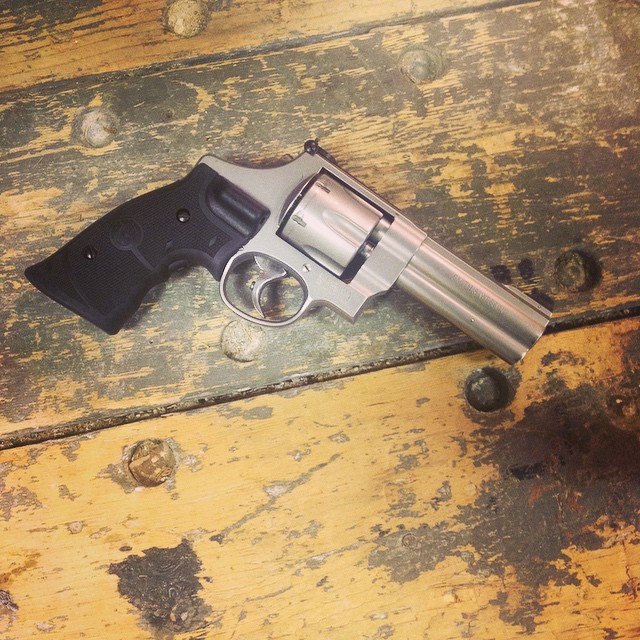
Fans of Larry Correia’s Monster Hunter International series will know that the best character in the books, Earl Harbinger carries a Smith & Wesson 625 revolver as his go-to sidearm, usually accompanied by a Thompson SMG as his primary. I don’t know if Earl has Crimson Trace lasers on his 625…but he should.
Our friends at Umarex sent us a care package the other day, their new NXG-APX. It’s a pump-action air rifle that shoots pellets or BBs, and it harkens me back to my old Crossman Pumpmaster that I had when I was a child. Except now it’s all polymer and awesome looking, and made by the German wizards in Arnsberg. Nothing kills office productivity faster than a care package that you can safely shoot indoors.
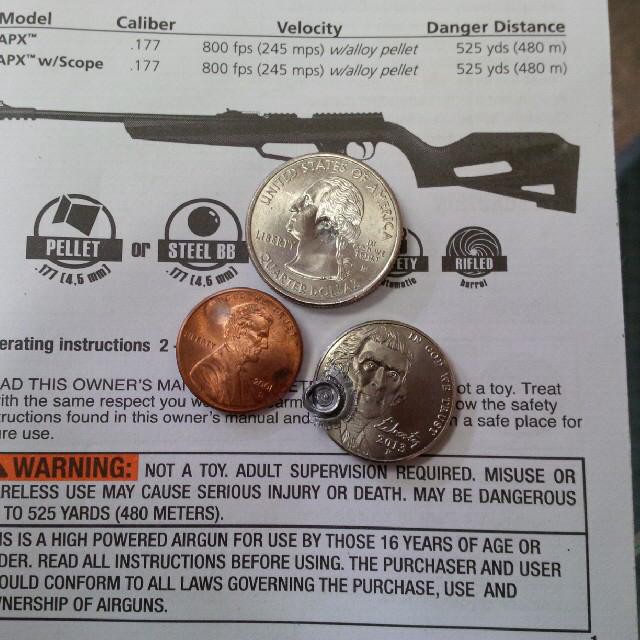
First we shot some change. George got it the worst, with a perfect, dead center hit. Lincoln just can’t catch a break, getting shot in the back of the head…again.
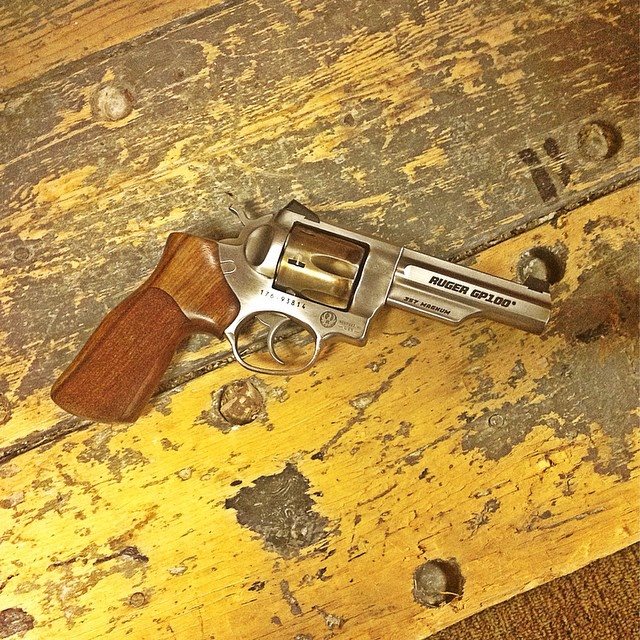
There is a huge market for small guns, and it makes sense. There are entire sections of the internet dedicated to telling people how difficult it is to carry a full size gun. A few weeks ago, I decided to conduct a science experiment by carrying a full size Ruger GP100 with a four inch barrel in an OWB leather concealment holster.
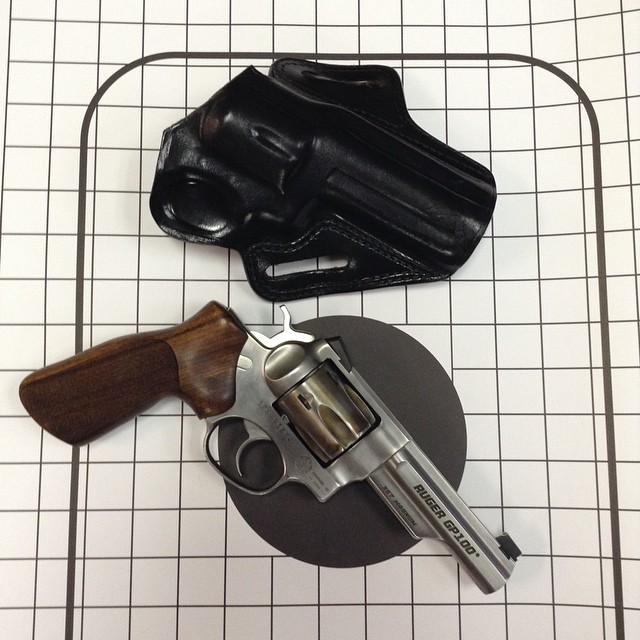
The holster I chose is a Galco Fletch, which normally has a thumb break, but has been…”customized” by removing the thumb break and snap with a pair of kitchen shears. Classy, I know. I’ve had that holster for a long time, and I figured it would be a perfect choice for my experiment. After selecting the gun and the holster, it was time to select various concealment garments. Over the course of the experiment I used the following: t-shirts over the gun, zip-up hoodies over the gun, and my beloved (and now discontinued) Woolrich fleece tactical vest. All of these worked just fine. I was initially concerned with printing when concealing the whole holster under an untucked shirt, but after wearing that rig in the summer for a while, I remembered that NO ONE IS PAYING ATTENTION.
It was interesting, because to me, to the people in my office, the lumpy bulge under my shirt was Obviously a Gun. But to people walking down the street? I was just a dude in an ill-fitting t-shirt. Plus, I do live in a pretty permissive state when it comes to guns, so if the tip of my holster peeks out in the grocery store, no one is going to bat an eye.
One of the difficult things about carrying a full size gun was that it made dressing like an adult a little bit more difficult. Owning a business, I get to wear whatever I want, but I don’t always want to wear an untucked t-shirt. An un-tucked polo is a good choice, especially if it’s fitted correctly so that it’s tighter across the chest and shoulders and then baggier near the waist. I used that method to conceal a gun in an OWB holster. Probably the best concealment garment I’ve seen so far is a zip-up hooded sweatshirt. Zip-ups, for whatever reason, look nicer than regular hoodies, and don’t seem to scream “I’m going to the gym/I hate laundry” as much. For me they’re a great choice, especially with fall weather hitting us now in DTSF.
This week, I switched holsters. After carrying in a full size OWB holster, I’ve moved to an IWB. Also a Galco, this time a Summer Comfort which was featured on the blog yesterday. It’s even easier to conceal. The but of the gun rides high enough that with my arms hanging naturally at my sides it hides the gun effectively, and the bulge is even less pronounced than it was with the OWB. The biggest problem with the OWB rig is that the bottom of the holster would pop out pretty frequently. The IWB obviously solves that.
So, the moral of the story? You can carry a full size gun. People won’t notice. Of course, if you’re in an NPE or somewhere where people noticing would have big time negative consequences, make sure your concealment is on lock-down. No untucked t-shirts for NPEs.
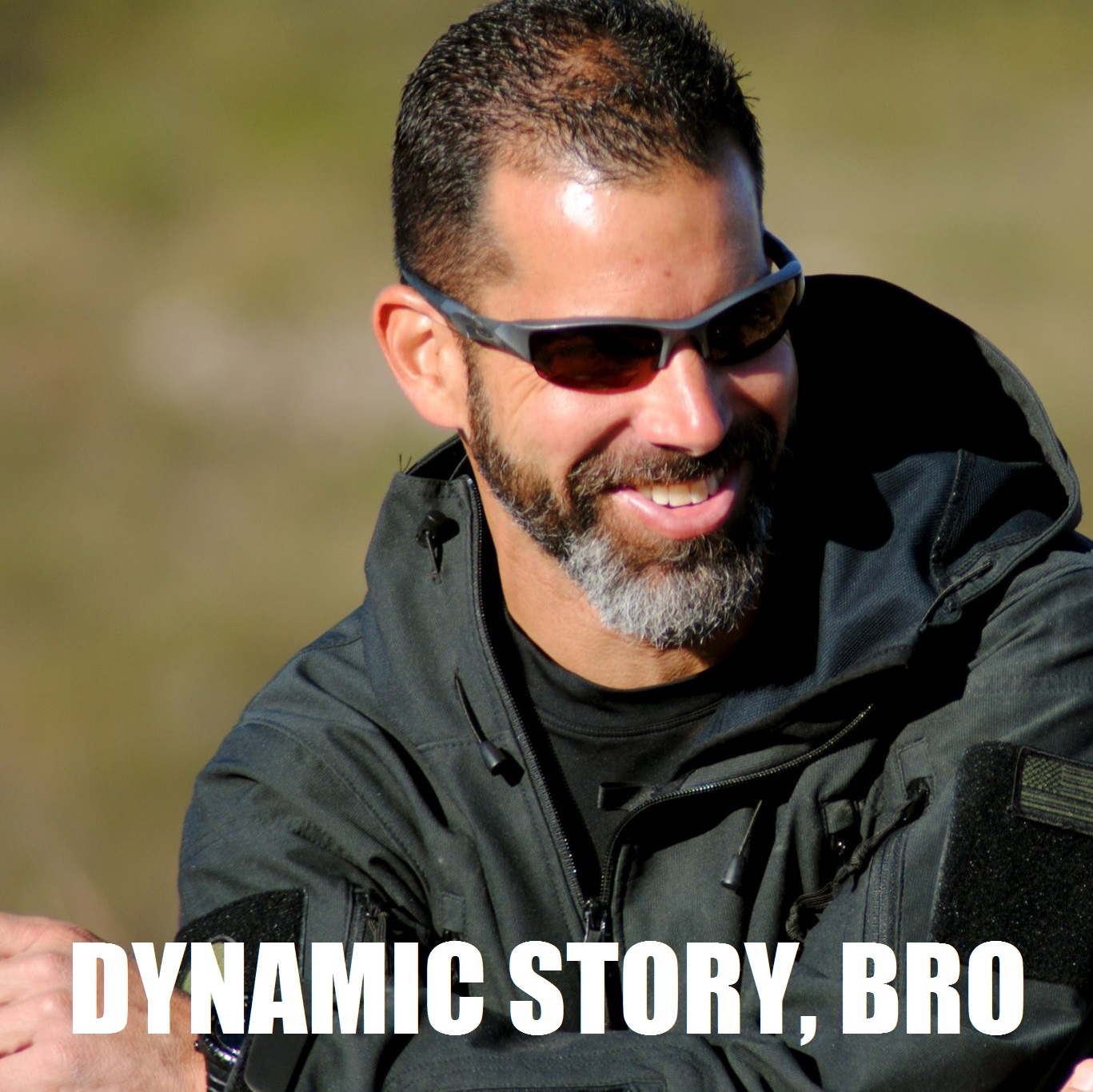
You’ve seen it before. A guy who only “trains” like he would fight. I used to be that guy after I left the Corps (Honorable, infantry for those interested). In a way, it’s easier to simply go take a carbine/handgun “tactical” class than it is to decipher UPSA/IDPA rules, match times, and more importantly to find a match local to you and to set aside the hours needed in order to attend a match and shoot for seconds.
There’s a lot of pluses to “tactical” training classes.
So, if you want to progress as a shooter…don’t get hung up on being tactical. It’s OK to have fun shooting. It really is. I know that serious folks like serious training but I’m the self deprecating type so I’ll go out and get my ass kicked at USPSA. I’ll follow that up with another Pat Rogers class. Why another tactical class? Because I go to where the great instructors are. I’ll happily admit that the tactical and competitive shooting worlds can overlap. Also….Pat Rogers classes are fun. Some of the students are serious people doing serious training but the instructor (Pat) somehow makes being professional yet humorous and positive a better way of learning how to be a better tactical shooter.
One real world example is the infamous “Rangetime with Cory and Ericka” debacle. Cliffnotes: Cory and his wife Ericka had a nice little business providing “tactical” style training with pistols and carbines. Cory lied and said he was an 11B (Army infantry rifleman). He was disproven of this very publicly (never made it through Basic). Now both of their names are mud and rightly so. Imagine if Cory had withstood the allure of camouflage, being tactical, and so on; perhaps focused on say…..shooting. He might be in a very different place today as say, a 3-gun or pistol champion with no pretensions and no lies to his name.
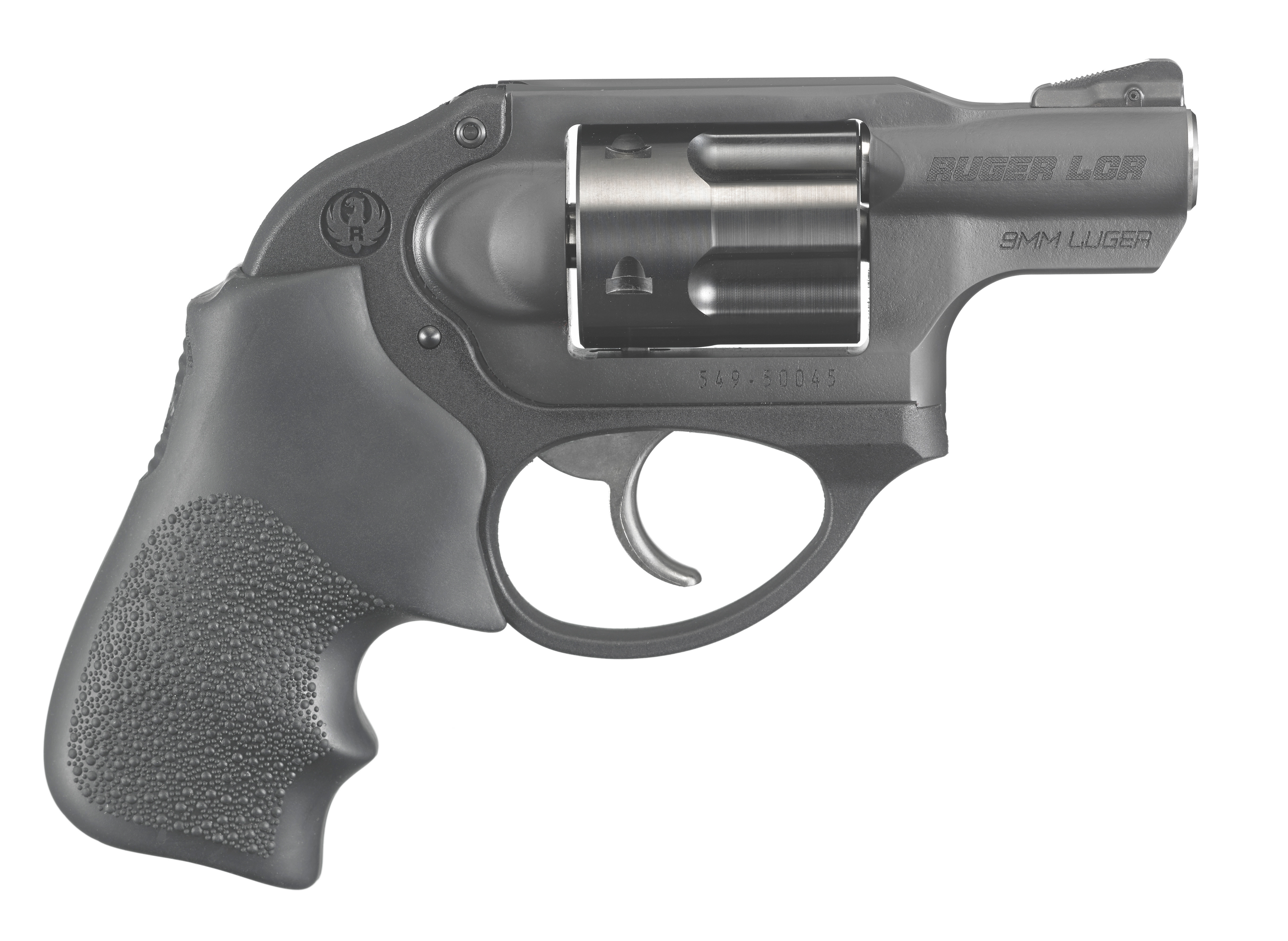
Sturm, Ruger & Company, Inc. (NYSE-RGR) announces the introduction of the 9mm LCR®, the newest variation of the revolutionary Lightweight Compact Revolver (LCR).
“Since its introduction in 2009, the LCR has become extremely popular with conceal carry customers seeking the simplicity of a revolver,” said Chris Killoy, Ruger President and Chief Operating Officer. “Customers have been asking for a 9mm version due to ammo availability and compatibility with pistols. We were listening and have added a 9mm version of the LCR,” he concluded.
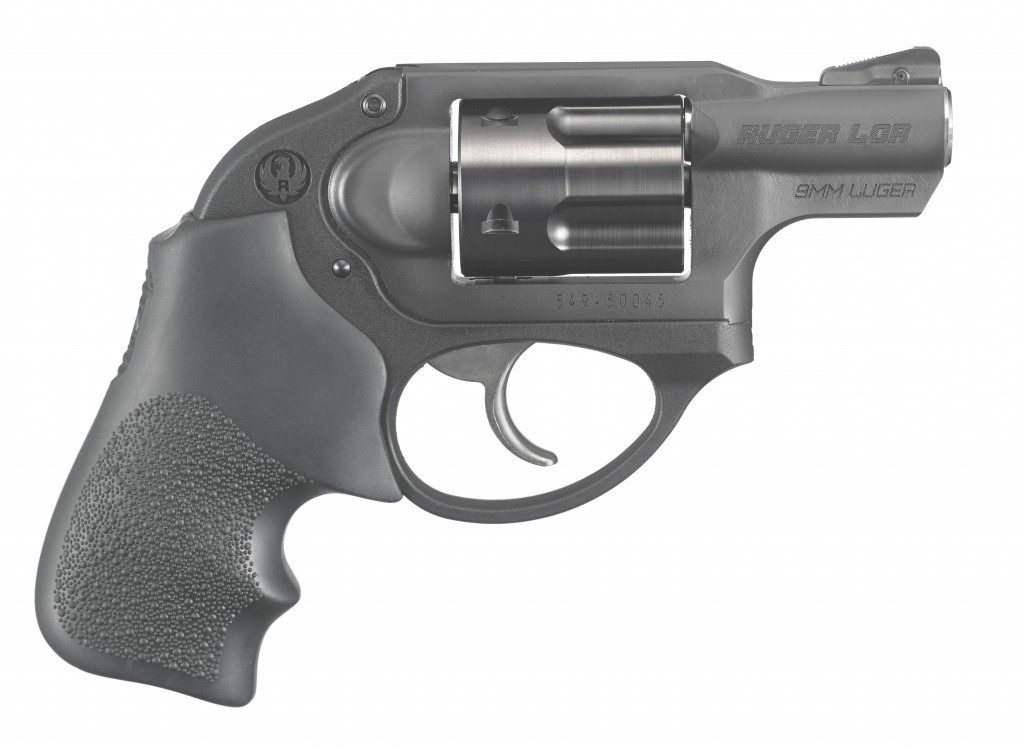
The newest LCR retains all the features of the critically acclaimed original LCR. Its double-action-only trigger pull is uniquely engineered with a patented Ruger® friction reducing cam fire control system. The trigger pull force on the LCR builds gradually and peaks later in the trigger stroke, resulting in a trigger pull that feels much lighter than it actually is. This results in more controllable double-action shooting, even among those who find traditional double-action-only triggers difficult to operate. The LCR is elegantly designed with three main components: a polymer fire control housing, monolithic frame, and an extensively fluted stainless steel cylinder. When originally introduced, the Ruger LCR revolver was one of the most significant new revolver designs in over a century and it has since been awarded three patents.
In addition to 9mm Luger, the LCR double-action-only model also is available in .38 Spl. +P, .357 Mag., .22 WMR. and .22 LR. The exposed hammer LCRx™, which can be fired in double- or single-action modes, is available in .38 Spl. +P. All LCR models feature replaceable ramp front sights with white bar, and a fixed U-notch rear sight. Some models are available with Crimson Trace® Lasergrips® instead of the Hogue® Tamer™ Monogrip®, which comes standard.
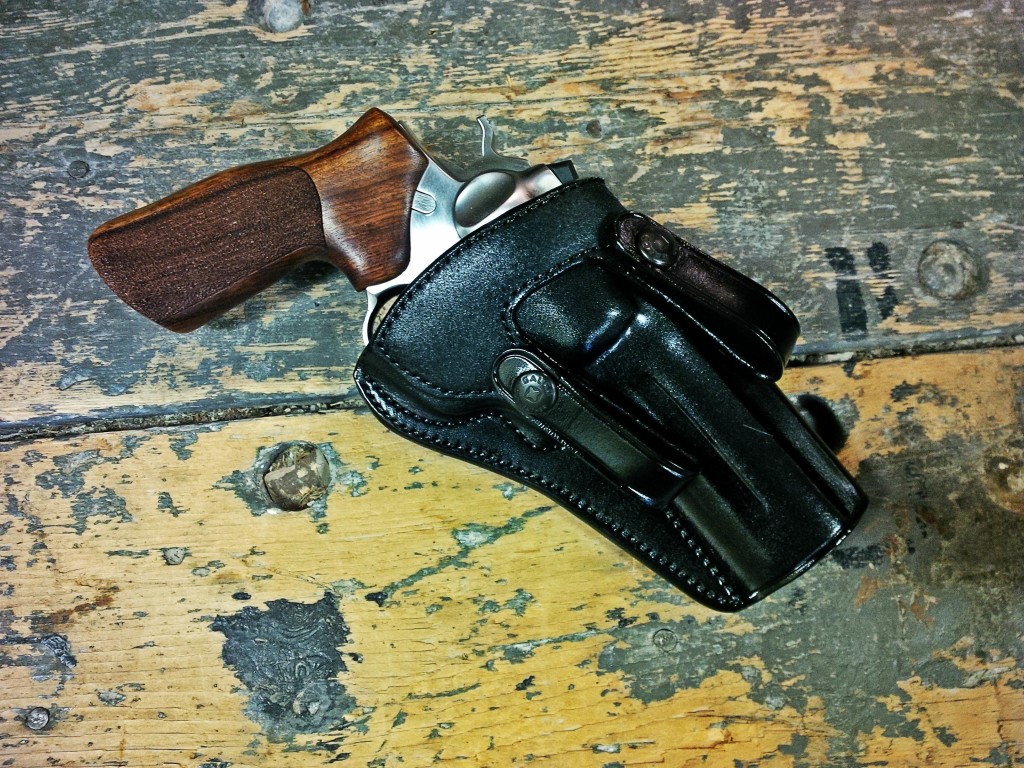
Ruger GP100 in .357 Magnum, wood stocks, Galco Summer Comfort IWB holster. A self defense combo that’s been around for 30 years, and works just as well today as it did in the 1985.
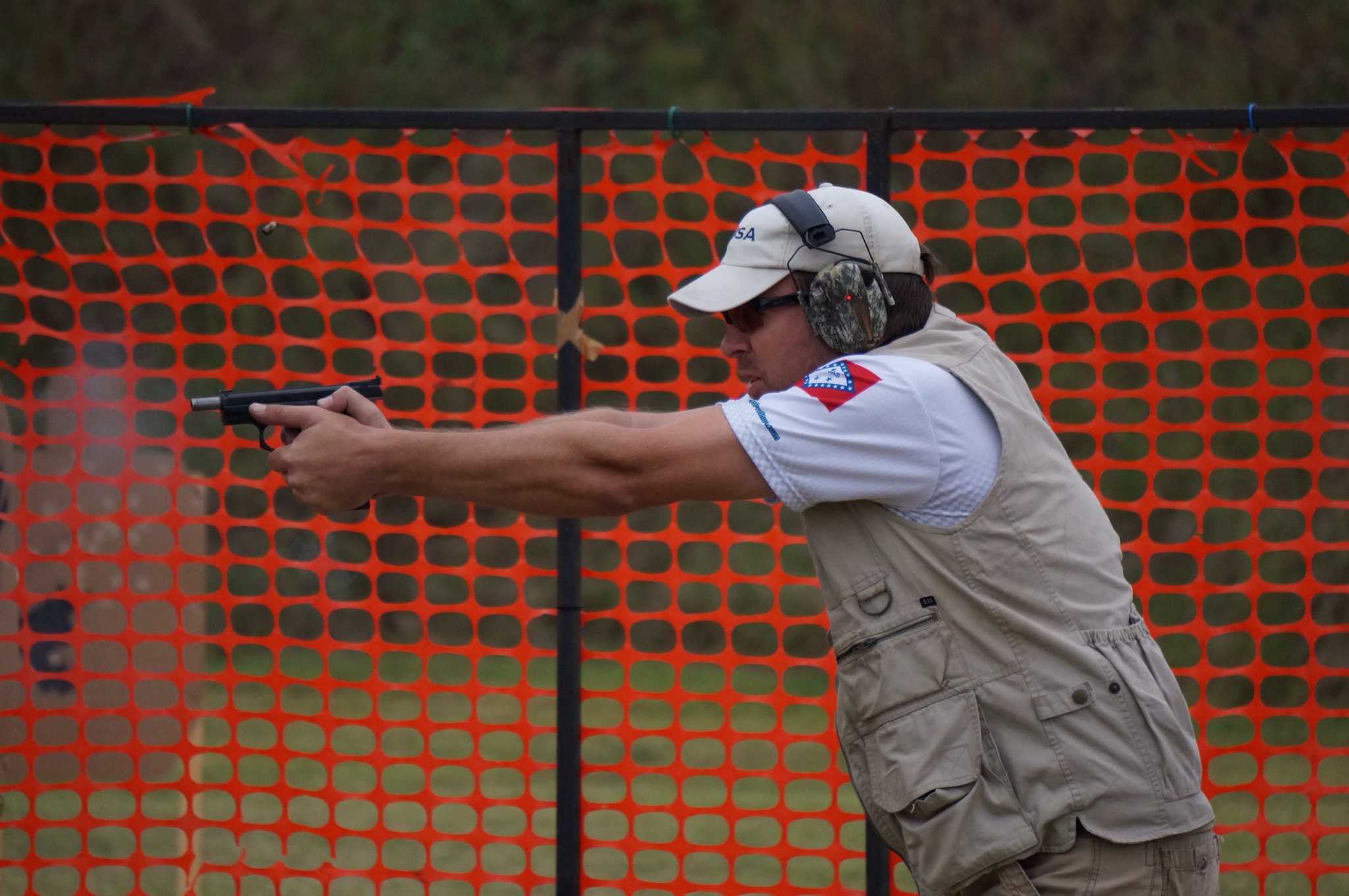
Over on pistol-forum, there is a thread discussing the concept of the “command shot/break” with regard to pistol shooting. This is based around the idea that there are times when you want to make the gun go off RIGHT NOW as opposed to the more classic “surprise break.” An example of this would be shooting a swinger in USPSA, there will be a point where the target has an optimal presentation, and you need to shoot it when it’s there.
The surprise break is one of the fundamental concepts of marksmanship – it’s how we teach new shooters to shoot without a flinch, for example. It works best with SFA or SAO pistols, but can be able to TDA and DAO guns as well. The idea is that you pull the trigger with constant, steady pressure until the gun goes off. There shouldn’t be a conscious decision to shoot RIGHT NOW with a surprise break, as with most new shooters this is the sort of the thing that will induce flinch and trigger jerk.
But what about more advanced shooters? The idea of a command break, where you do want to shoot the gun right freakin’ now is actually valuable, and it’s an important skill to develop. It builds on the fundamentals of the surprise break, in that you’ve ideally gotten to the point where you can pull a trigger smoothly without disturbing the sights. The big difference between a surprise break and a command break is that you’re making a choice to fire the pistol immediately at an available target, and must pull the trigger as quickly as possible to the rear, without disturbing the sights.
This is a skill that can be practiced extensively in dry fire, and is especially important if you’re shooting a DA revolver, for example. The drill to practice this is simple: aim the unloaded gun at a target of fixed size. Pull the trigger as fast as you can without disturbing the sights off the target zone. Do that same speed for five reps. Now do it faster for five more reps. Repeat until awesomeness achieved. It’s also fairly easy to work on at the range. I don’t normally advocate shooting on a cadence, but for this drill it helps to count in your head: “1…2…3…shoot…1…2…3…shoot” based on whatever pace you’re looking for.
Mastering command fire is an important skill for competition shooters and self-defense shooters alike. I’ve had many situations in matches where I’ve needed to hit a target before it went away; as I’ve gotten better at this drill my ability to make those shots has increased. Give a try at the range and in dry fire when you can.
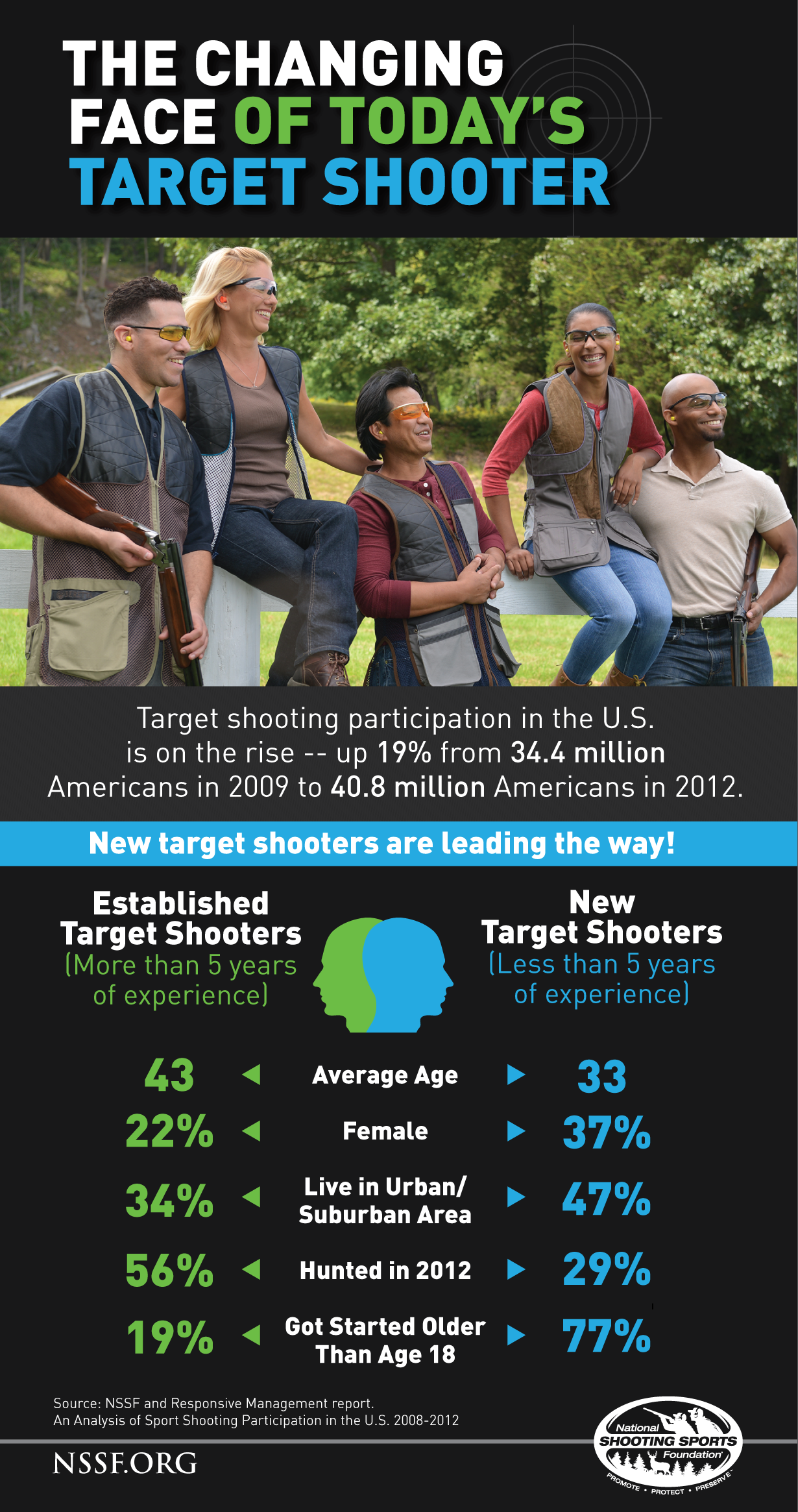
The NSSF has produced an infographic that looks at the changing face of the American target shooter. Click the image to go full size:
I like to fix speedloaders the same way I fix broken magazines.