Having iMovie makes me giddy with power.
The answer to the circles
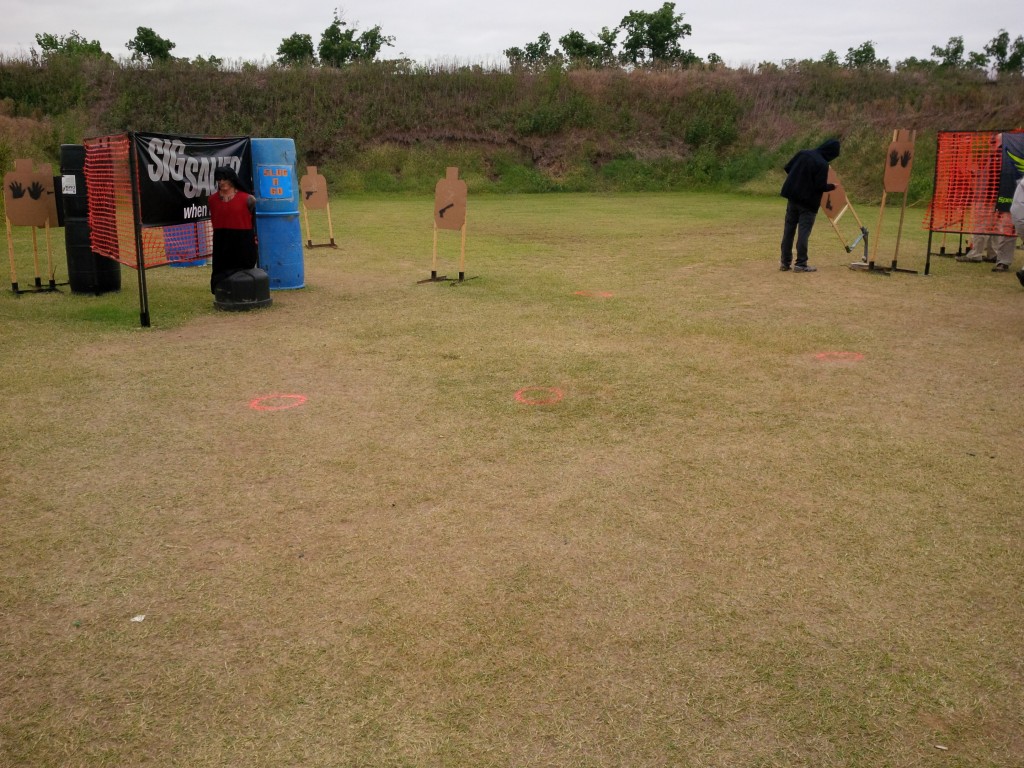
These circles are where the stage Safety Officers would stand to monitor your usage of cover on their stages. This only happened on one bay.
I do not think very highly of this practice.
Guns look better when you shoot them
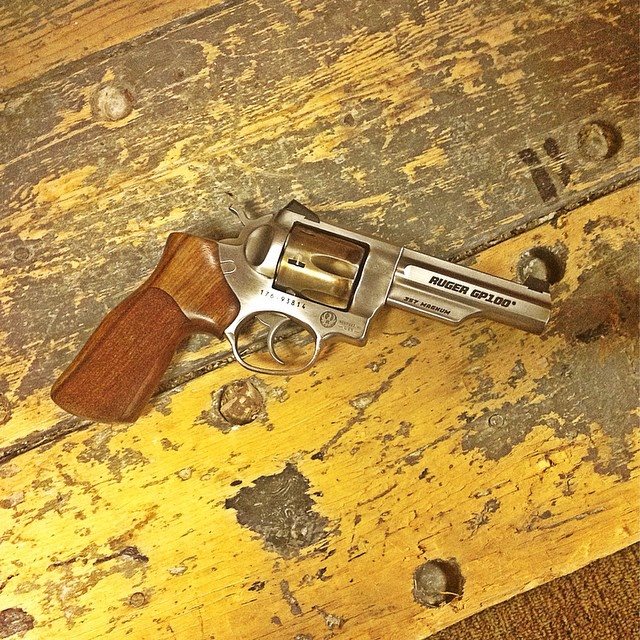
I love how the cylinder discoloration looks on the GP100 when I shoot it a bunch.
Thoughts on the 2014 IDPA Nationals
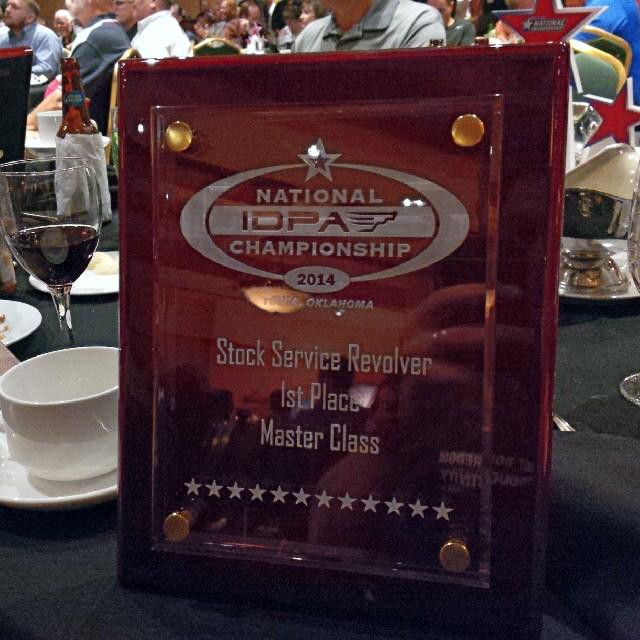
This post isn’t going to be particularly well laid out, because I wanted to create a place that I could collect all of my thoughts on the 2014 IDPA Nationals. I actually spent more time thinking about this match than I usually do, probably because I tend to get introspective when I’m trying to stay warm. Which actually brings me to my first thought:
The Weather
Holy mother the weather was weird. The day we showed up it was hot and muggy, then Thursday it was cold, Friday it was cold and raining, and then Saturday was pretty pleasant. We went through three seasons in three days, and that was kind of adventurous, especially if you’d used Siri’s weather forecast to pack. If you’d done that, you were probably woefully under-prepared for the cold, and had to go to Target three or four times to buy gear. Speaking of Target, and Oklahoma in general, did you know that you can’t buy real beer anywhere but a liquor store in OK? The only “alcohol” they can sell in grocery stores/gas stations is “low point beer” which has to be 3.2% alcohol by weight or lower. And they close the liquor stores at 9pm. This is what happens when you let puritans run a state.
The Stages
I honestly don’t think the stages at this year’s nationals were as good as 2013’s stages. There just weren’t a lot of hard shots, as partly evidenced by Bob Vogel only dropping 10 points the entire match. The points down this year were lower across the board for most shooters it seemed. But that’s not to say that the stages were bad, they just weren’t particularly hard. Nothing as epic and difficult as 2013’s prison bars stage or 2012’s running drop turners. The stages were fun, they just seemed kind of simplistic. However, that does present an interesting trap of its own; namely that it was easy on some stages to try and hose them, when the targets really required a bit more precision. So the stages were nothing fancy, but you still had to actually shoot them well to win.
The Officiating
It’s time for fault lines in IDPA. It just is. The new rule book made a valiant effort to eliminate subjectivity in cover calls. It didn’t work. Can we just accept that we’re all playing a game here, and in order for the game to be fair for all participants, the rules must be enforced the same by all the officials? I’m not saying that any of the officials did a poor job either, I’m just saying that everyone has their own idea of when and how to call cover. It’s time to get rid of that, we need fault lines so that there is quite literally a line on the ground for shooters to know not to cross. It doesn’t need to be raised like in USPSA, it can just be spray paint.
My shooting
I shot okay. Nothing great, I didn’t win SSR, but I shot a respectable Master-class time and finished 1st Master. I got beat by a couple of Experts who shot even better Master-class times and should get match bumps but won’t because there aren’t enough revo shooters to warrant that. But that got me thinking about my shooting, and how important winning a National is. The problem is that it’s not important…right up until it is. Basically, for 10 months of the year I don’t even really think about IDPA Nats, but then for 2 months I do. As it turns out, 6 weeks of training isn’t enough to win the match, but the amount I shoot and train each year is enough to keep my skills from degrading. That leaves me with a question: do I really care enough to put in the effort necessary to win the match?
It turns out the answer right now is “I don’t know.” If you’d asked me the night of the awards ceremony, when I accepted my second “1st Master” plaque this year, I would have said yes. But right now, on Monday morning, when I’m back in the office and I have articles to write, ads to sell, and employees to pay? I don’t know.
Quick photo: 2014 IDPA Nationals, Circles on the ground
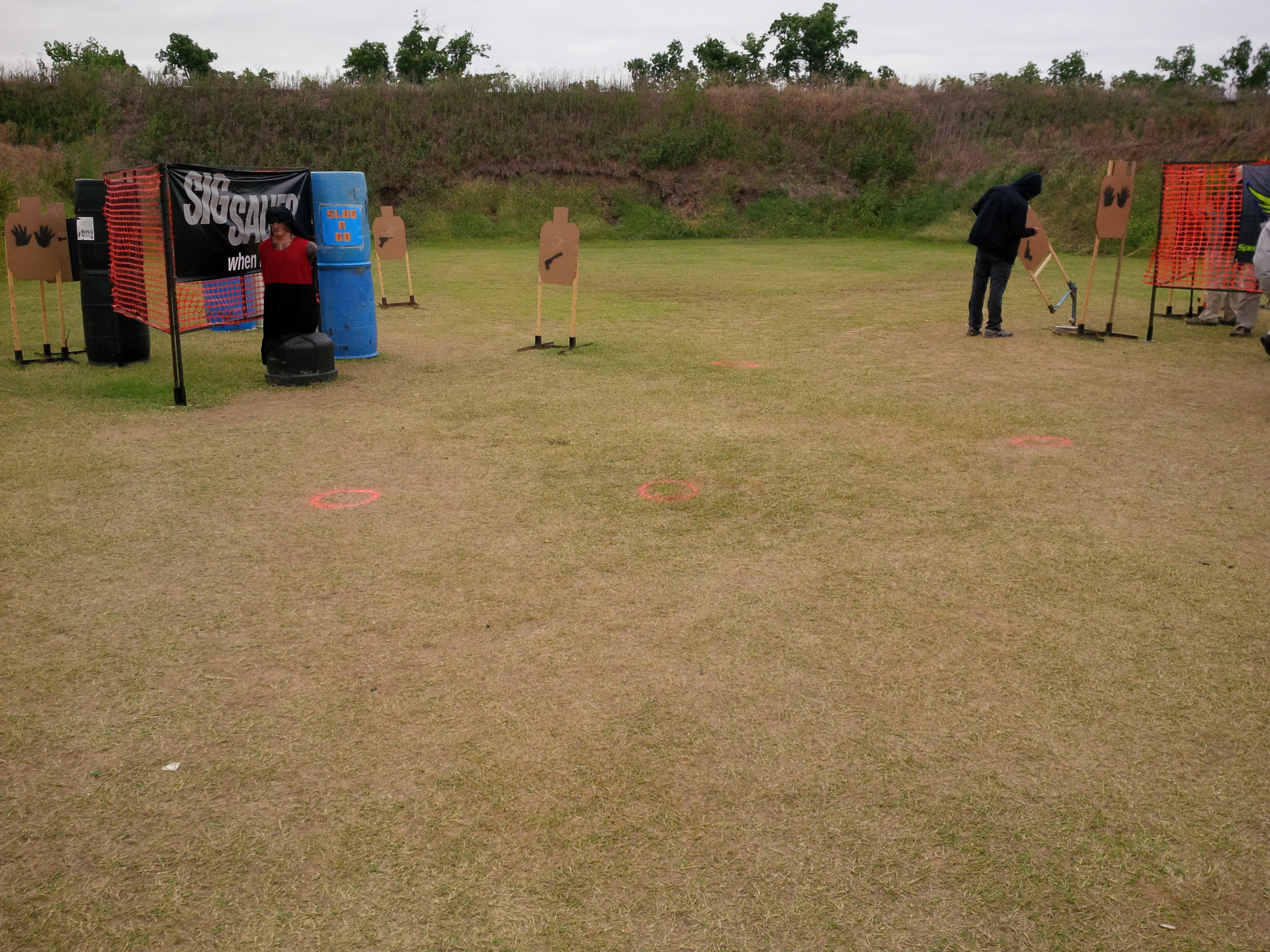
Anyone care to take a stab at what those little spray painted circles on the ground are for? For shooters at the match, don’t ruin it. I’m going to elaborate later in a future post. To see the image full size, give it a click.
IDPA Nationals Day 2: your current leaders
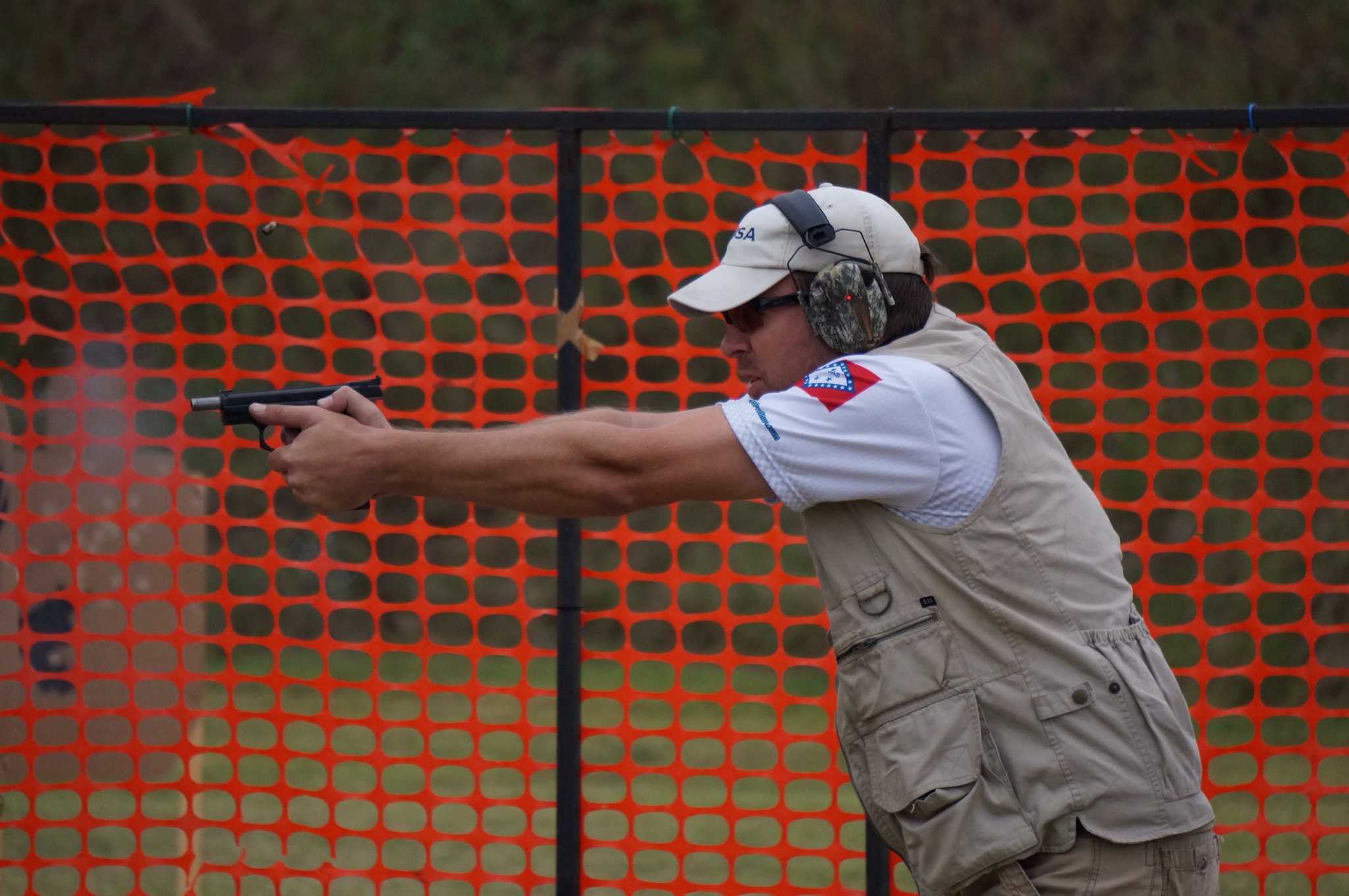
Here are the current leaders for each division at the 2014 IDPA Nationals:
- SSP: Bob Vogel (duh)
- ESP: Mike Seeklander
- CDP: Matt Sims
- ESR: Robert Briggs
- SSR: Rhett Crutchfield
Of those scores, I suspect that Bob’s will hold up just fine, as there’s no one left to shoot SSP that can really offer a challenge to him. ESP has a fairly deep field this year, with remaining shooters that include DM Brandon Wright and USPSA Grandmaster Nils Jonasson. I suspect Nils will be the first shooter in some time to be able to give Bob a run for the fastest overall, a title which doesn’t formally exist…but all the top shooters care about.
In revolver divisions, the lone master shooter ESR begins today. With Jerry Miculek attending the Trijicon World Shoot, and having one this match like a hundred times already, ESR will crown it’s first new Distinguished Master since the invention of the title. Similarly, SSR will also crown a new DM after the next two days of shooting. It will either be current leader, Rhett Crutchfield (who has a great name, by the way) or some peasant blogger from South Dakota named Caleb.
On that note, I’m going to go check my gear.
Speaking of small revolvers…
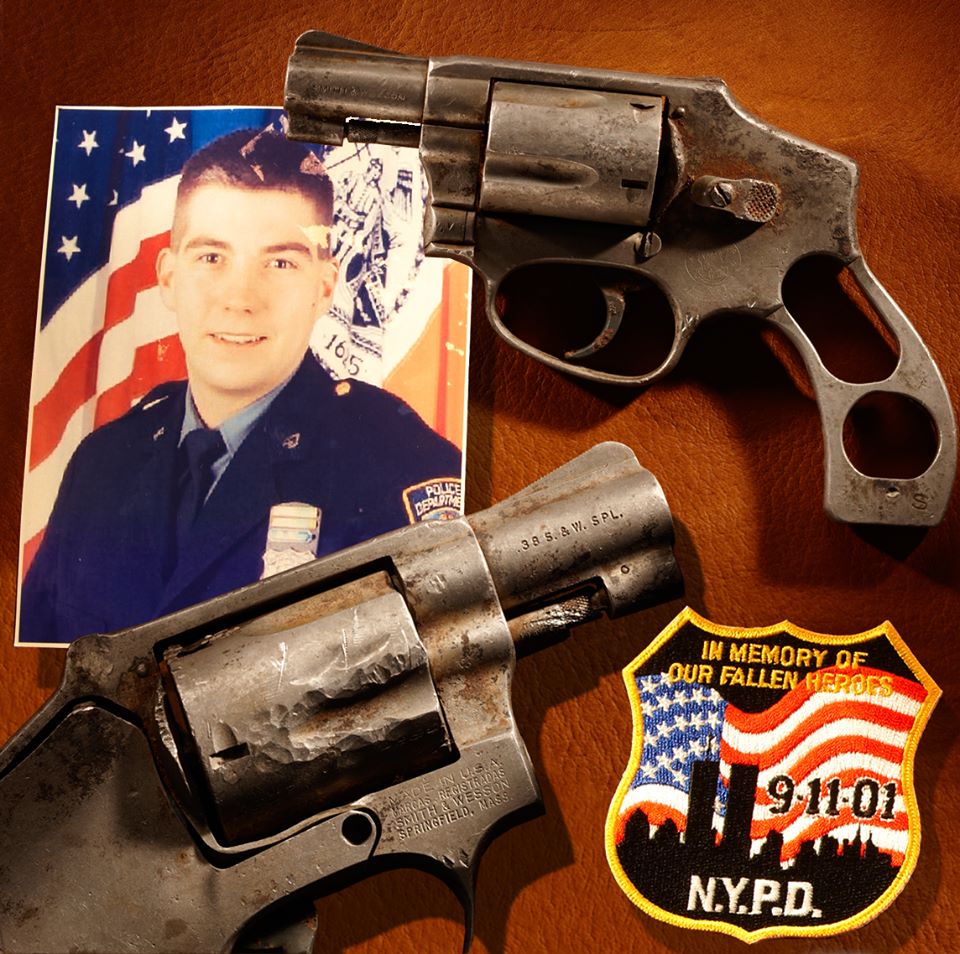
The NRA Museum has a unique S&W model 642 on display. It’s the model 642 carried by NYPD police officer Walter Weaver as he went into the North Tower of the World Trade Center on September 11, 2001. Officer Weaver died trying to evacuate citizens trapped in a burning hell unleashed by vile bastards intent on the destruction of Western Civilization. Much gets said on the internet about the militarization of police and use of force issues, but none of the rioters or complainers ever seem to mention the Walter Weavers out there who will literally run into a burning building to try and save the lives of innocents.
Officer Weaver didn’t make it out of the World Trade Center alive, but his scarred, charred little J frame made it out to serve as a marker of what separates the protectors from the predators. The nitwits looting stores and claiming the police are worse than terrorists are contradicted by the silent testimony of this little gun. Some men want to set fire to the world. Some men will brave the fire to stand for what’s right…even if it costs them everything.
If you can visit this little revolver in person, I encourage you to do so. And say a little prayer of thanks for the man who carried it into harm’s way.
Choosing the right revolver for concealed carry

A couple of weeks ago I talked a bit about the ubiquity and utility of the small revolver and mentioned that I’d purchased one for myself. Today I want to talk about the options on the market and why I made the selection that I did. First, my requirements: A durable, reliable revolver in a minimum chambering of .38 SPL (rated to handle +P ammunition) that is small and light enough to carry in the pocket of a pair of gym shorts.
If you look on gunstore shelves you will see a number of different options for small revolvers. The cheapest are typically the revolvers made by Taurus and Rossi…and I find neither brand appealing. Because I’m a shameless brand snob? No, because Taurus has a pretty dreadful track record for quality control and reliability of their products and their customer support has been pretty horrible, too. I have not personally encountered a single happy long term Taurus owner who bought a gun from them manufactured after the early 1990’s. I’ve seen scores of guns sent back and I know of some stores who outright refuse to carry Taurus products because of angry customers bringing back broken guns. There are other options on the market that don’t come with all that baggage, so I’d rather just buy one of those.
That pretty much leaves Smith & Wesson and Ruger. This isn’t a bad thing as both manufacturers make a pretty good range of revolvers intended for concealed carry. Ruger’s flagship snubby has been the SP101, a very durable revolver. Unfortunately the bit of extra heft and size that makes it pleasant to shoot with hot loads also makes it difficult to fit inside a pants pocket, so I had to rule it out. The Ruger LCR seems like a decent little revolver with a nice trigger, but unfortunately it’s also just a tad bulkier than what I’m looking for in a small revolver. That left me looking at Smith & Wesson revolvers.
This doesn’t really narrow things down too much as Smith & Wesson makes quite a few small revolvers. They’ve been making J frames for a long time and over the years they’ve offered so many different configurations I couldn’t even begin to list them all. The most recent innovation in small revolvers from Smith & Wesson is their “Bodyguard” series of revolvers. When those were introduced I was quite excited because the J frame, as good as they are at what they do, could definitely stand to be improved. The triggers on them are quite heavy and the deplorable gutter sights are difficult to use even under ideal range conditions…much more so on moving targets in low light. The prospect of a modernized J frame with a replaceable front sight, a better trigger, and a more ambidextrous cylinder latch had me out hunting for one to handle in person. When I did finally get to touch one, my enthusiasm drained almost immediately. The internal lock work of the “Bodyguard” revolvers is completely different than that of a traditional J frame. The trigger may have been a tad lighter, but it was worlds rougher. I was also completely underwhelmed with the laser they included on the revolvers. The original lasers that came on the guns were made by Insight, and they were awful. The laser itself was weak, and the controls were so awkwardly placed I wondered aloud if anyone who designed that thing had ever actually tried to draw this revolver from a holster, activate the laser, and then fire an accurate shot with it under any form of stress. I’m betting they didn’t. The newer production guns are apparently shipping with laser modules from Crimson Trace which probably offer a much brighter and more visible laser, but from the looks of things they still have the same useless controls.
Handling “Bodyguard” revolvers again before my latest purchase, all the same drawbacks were immediately apparent. I stood there with one of the “Bodyguard” revolvers in one hand and the S&W 638 I eventually bought in the other hand and thought “Why couldn’t they just put a replaceable front sight and a decent rear sight on the 638?” The “Bodyguard” is not, in my opinion, the way forward for the small revolver. The S&W model 640 “Pro” is much closer to what I think an improved J frame should be thanks to the better sights and improved trigger pull with the reliable and proven J frame internals. Sadly it’s also rather heavy and rather rare, so it wasn’t a realistic option for my needs.
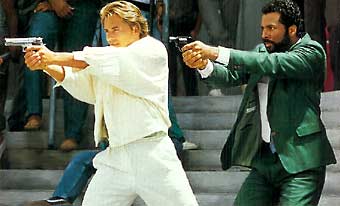
I ended up purchasing the S&W 638. For most of my years on the planet a J frame with a shrouded hammer was referred to as the “Bodyguard.” If you asked a gun nerd what revolver Ricardo Tubbs was packing in Miami Vice, he/she would tell you that Rico packed a S&W Bodyguard. Why S&W decided to name their new gun “Bodyguard” despite having nothing in common with the original, I’ll never know. To me the appeal of the original Bodyguard was having a useful hammer that wouldn’t snag in the pocket. Generally speaking one shouldn’t depend on the single-action function of a small revolver but a part of me has always liked the idea of having the ability to use it should I want to. With the shrouded hammer you can get that without any worries that the revolver will hang up in your pocket as you attempt to draw. I’ve also owned “Centennial” style revolvers like the S&W 442 and had good service from them, but the original Bodyguard has been on my brain for a long time and it was actually cheaper on the shelf than the “Centennial” revolvers…so I went with it.
It’s not a perfect handgun, certainly, but the 638 fills my requirements for a small revolver better than just about anything else at the pricepoint where I snagged it. The store I bought it from actually had the gun on sale, discounted from the already reasonable price S&W’s Airweight revolvers sell for anyway. When I did the Hi-Point test a while back I mentioned that if I had a bare minimum of cash to spend on a handgun for personal defense that the Hi-Point would be my absolute last choice. One of S&W’s Airweight revolvers, on the other hand, would be among my first. The compact size, relatively light weight, and reasonable price point make them a very attractive option for concealed carry. There’s a pretty sizeable aftermarket for these little revolvers, too, so some of the imperfections can be ameliorated somewhat with intelligent modifications…which we will get into later.
Quick photo: IDPA Nationals Gear
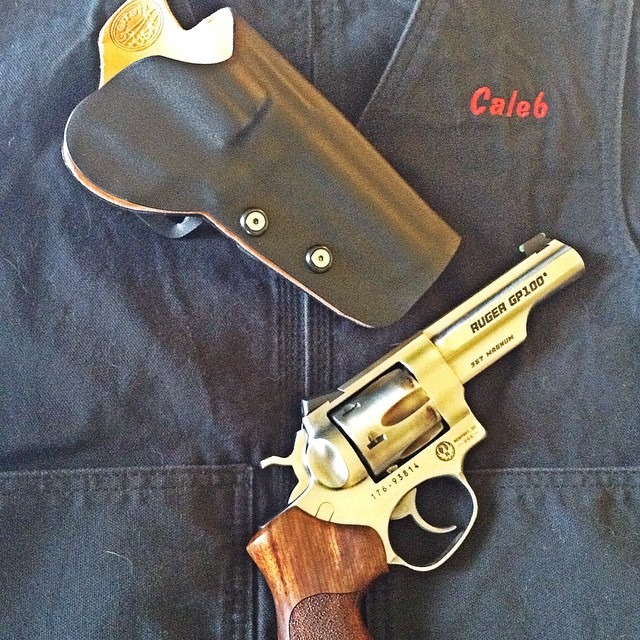
Gun: Ruger GP100 Match Champion
Vest: Armadillo Concealment
Holster: Garrett Industries Silent Thunder
I’m also rocking my 4Wheelguns speedloader holders and Safariland Comp-III loaders.
More on the IDPA ban of the CZ Accu-Shadow

Yesterday, the day before IDPA Nationals kicked off, IDPA announced via email to members and a post on their facebook page that the CZ Accu-Shadow was not legal for SSP. The internet reacted predictably, with at least one shooter affected by the decision voicing his displeasure here in the comments. Many other shooters not affected by the decision, or even shooting IDPA Nationals, also voiced their objections. Objections to the decision fall along two fairly broad lines. 1st, the timing of the announcement by IDPA, and 2nd that the ruling banning the Accu-Shadow is not consistent with IDPA’s other rulings. Let’s take a look at both of those.
Timing
IDPA released the ruling in social media on Monday, and via email to their members on Tuesday. We published it on Tuesday to make sure that any affected shooters would have access to the information prior to leaving for the match. The timing of the ruling is undoubtedly terrible. It leaves affected shooters in the position of needing to find a new gun and possibly magazines to compete with in the match, or to use one of the loaner guns provided by IDPA. I have argument with anyone who objects to the ruling based on the timing of it.
However, let’s look at the options. Option 1 would be to say “screw it, the Accu-Shadow is legal for this match, we’ll ban it afterward.” That would have been better in my opinion, but would have created the inevitable push-back from shooters that would used the Accu-Shadow’s legality at Nationals as a reason to keep it legal in SSP forever. Alternatively, IDPA could have simply DQ’d every shooter who showed up with an Accu-Shadow. I think we can all agree that would have been the worst choice of all.
The question raised by this is “why does it matter?” Well, it matters because a strict reading of the IDPA rules would actually make the Accu-Shadow illegal for SSP. That’s the second part of this, the consistency of the ruling.
Consistency
To understand why the Accu-Shadow is illegal for SSP, you have to understand what the Accu-Shadow is. It is a custom variant of the CZ75 Shadow, which has an external barrel bushing fitting to it in order to improve accuracy. Barrel bushings are on the list of prohibited modifications in SSP.The Accu-Shadow is made by CZ Custom. CZ Custom is not a division of CZ-USA, but is in fact an independent company. CZ-USA may list the Accu-Shadow on their website, but because the bushing is not an OEM part made by CZ and fitted by CZ, the modifications to the Accu-Shadow make it illegal for SSP, and by default then illegal for IDPA. It’s the difference between a Roush Mustang, which is modified by a third party, and a Mopar Challenger. Dodge owns Mopar, Ford doesn’t own Roush.
Some of the objections have noted that IDPA allowed guns from the Performance Center which have illegal modifications to play, specifically, the PC 1911s with the cool slide cuts are legal for CDP. The reasoning behind this ruling is that those slides are OEM, they’re made by S&W and if you want to buy one, you order it from Smith, not a custom shop. Those slide cuts are functionally the same as the hogged out slides on Glock 34s and XDm 5.25 pistols – factory original equipment placed there by the manufacturer.
That’s the big difference here – the bushing modification to the Accu-Shadow isn’t OEM. Yes, it’s in the CZ Catalog, but just because a thing is listed in a catalog doesn’t make it OEM. As a sharp commenter pointed out yesterday, you can frequently buy Roush Mustangs from the Ford Dealer, that doesn’t mean that Ford offers those parts.
This is a frustrating issue for many shooters, and I believe that the timing makes it worse. I honestly feel that if this ruling had been made after the match, and the affected shooters allowed to shoot in SSP with their Accu-Shadows, that would have been the best choice. As it is, there are at least four people affected by this ruling who will now need to bring alternate guns to the match.