Ruger SR-1911

Don’t get too excited, 1911 fanboys.  I’m just postulating a name for a 1911 if Ruger were to make one.  It’s not secret that a lot of trigger time on the SR9c has turned me in to a fan of Ruger firearms, and I’m thinking that now that the Ruger SR40 is out, a 1911 makes perfect sense.  So, put it in the SR series with the SR-556 and SR9/40, make one in .45 ACP, and give it some advanced features.  I guarantee that if it was priced right, it would slaughter Taurus.

Update on 18 April 2011: The new Ruger SR-1911 is here!

Chicks and guns

Gunsite Ladies Pistol 250 class.  The 250 class for the longest time was the Gold Standard of defensive pistol classes, and in my opinion every legit defensive firearms trainer owes a little bit to Gunsite.  It’s cool to see them running a ladies’ only version of the 250 class, and that more people are getting serious about their defensive shooting.

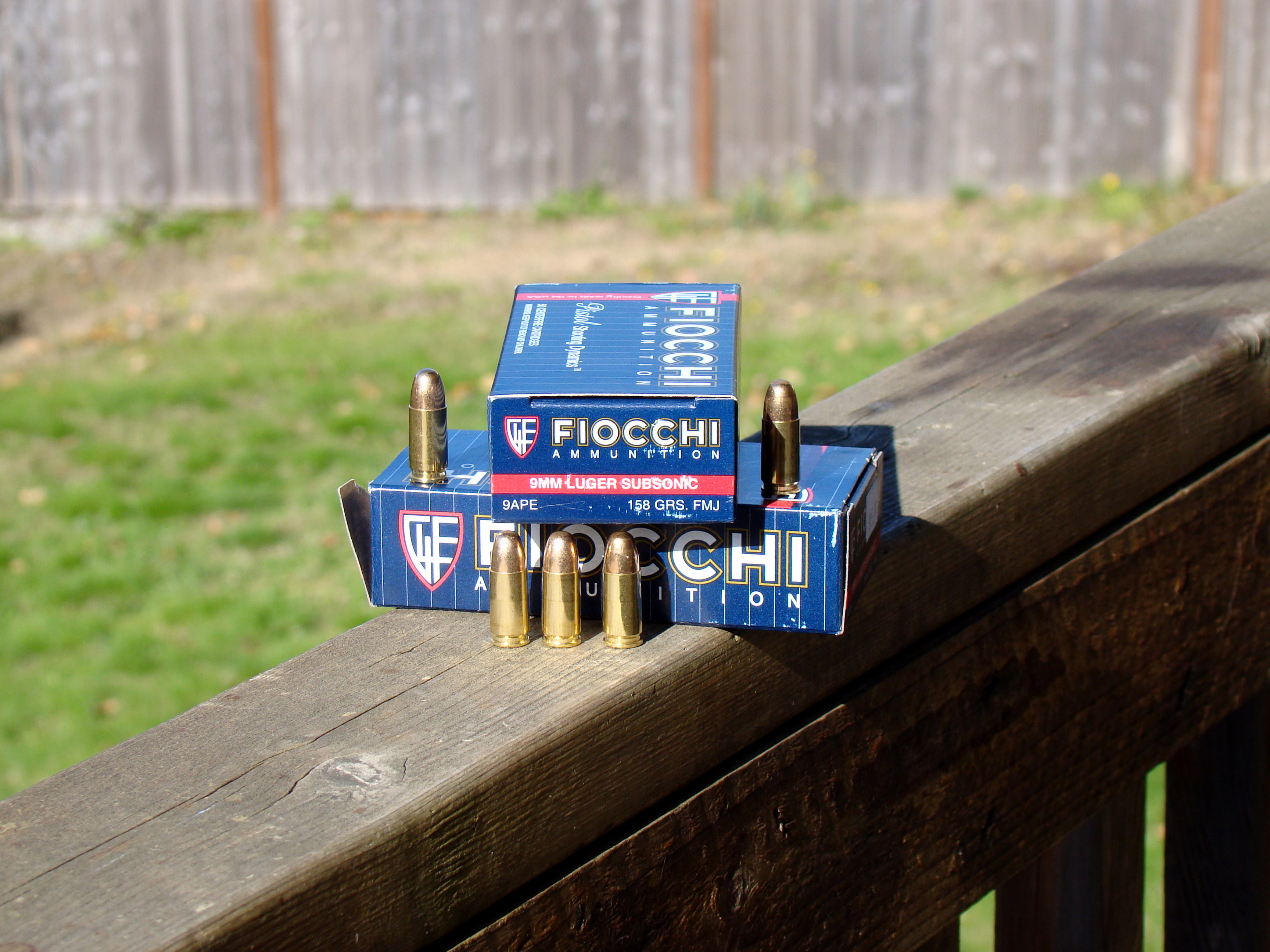
Fiocchi 158 grain FMJ 9mm

I really enjoy shooting 147gr 9mm ammo – most competitive shooters agree that it has a much softer recoil impulse than 115 grain 9mm ammo and it’s generally the preferred bullet weight for competitors.  Knowing that I’ve been curious about Fiocchi’s 158 grain round in the past, and despite hearing mixed reviews, I decided to that we should take them and run them through the Ruger SR9c that is getting shot in the Quest for Master Class.

I’ve had good experience with Fiocchi ammo in the past, their .38 Special ammo is actually loaded hot enough to make power factor in IDPA, which is unusual for factory .38 Special ammo.  The specs say that the 9mm ammo is loaded to 950 FPS, which with a 158 grain bullet gives us a power factor of 150, well over the 125 needed to make minor in USPSA.  Of course, as usual the factory specs for the round were higher than what I recorded, with an average muzzle velocity of 884 for 10 rounds.  Assuming everything performs to that muzzle velocity, with a 158 grain bullet you’re looking at 139 power factor, again still good to go for USPSA.  Of course, the real question is “how well do they shoot”?  The best way to find out is to load up and hit the range; as usual I took the trusty Ruger SR9c that has fired thousands of rounds in the pursuit for Stock Service Pistol master.

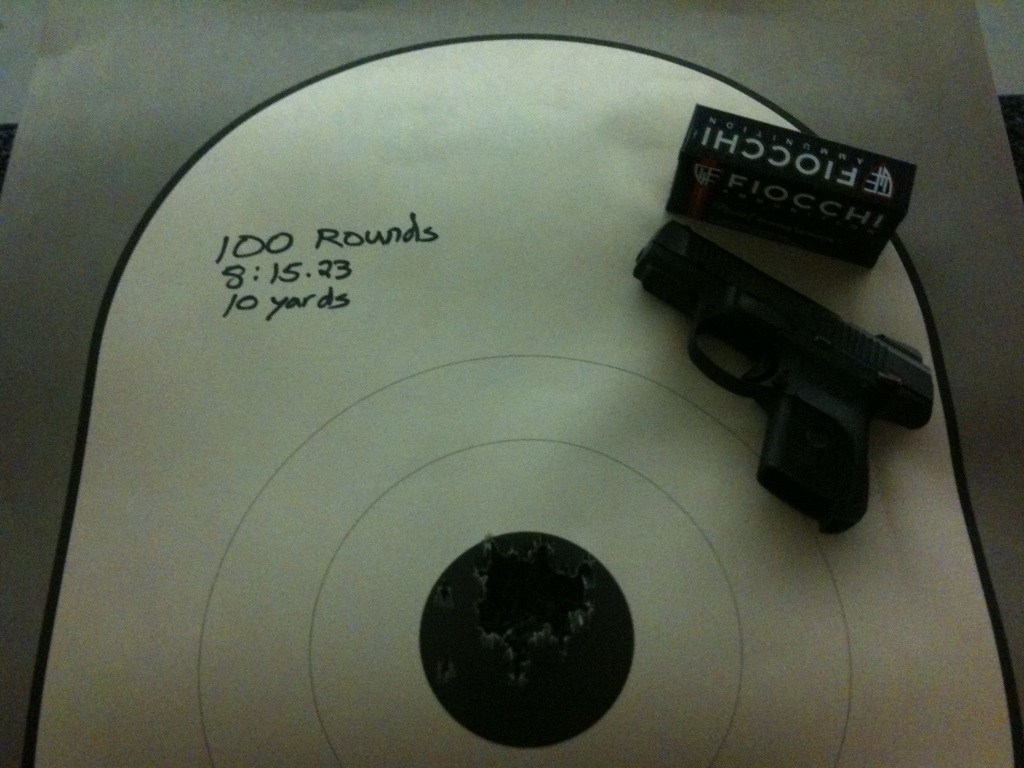
For comparison, I fired some 147 grain Winchester FMJ ammo; the 147 loads are my favorite for competition as the recoil impulse is much more of a “shove” than the usual snap you receive from 115 and some 125 grain 9mm loadings.  When compared to the 147, I couldn’t tell a difference in the recoil impulse for the 158 grain Fiocchi load; it felt light and there was very little muzzle flip, which is generally what I’m looking for in a competition round.  Accuracy was excellent – again, no surprises here.  The Fiocchi was capable of putting 98 rounds in the same hole, and while I didn’t bench rest the gun (because that’s just silly) I have no reason to doubt that this would make an excellent load for weekend IDPA or USPSA matches.

Which brings me to the competition aspect of this round; i.e. would I use this instead of 147 grain ammo.  The answer is “yes”; absolutely.  There’s a reason there is a case of it sitting in my Subaru in fact.  One of the issues with competing with the sub-compact Ruger SR9c is making power factor out of the short barrel.  At the Indiana USPSA Section Championship, I almost didn’t make Minor due to the loss of velocity.  As mentioned above, Fiocchi claims it’s loaded to 950 FPS, experience tells me I’ll lose up to 100 FPS from factory specs when I’m getting chrony’d under match conditions; the nice thing about using a 158 grain bullet is that I only need 792 FPS to make Minor in USPSA.

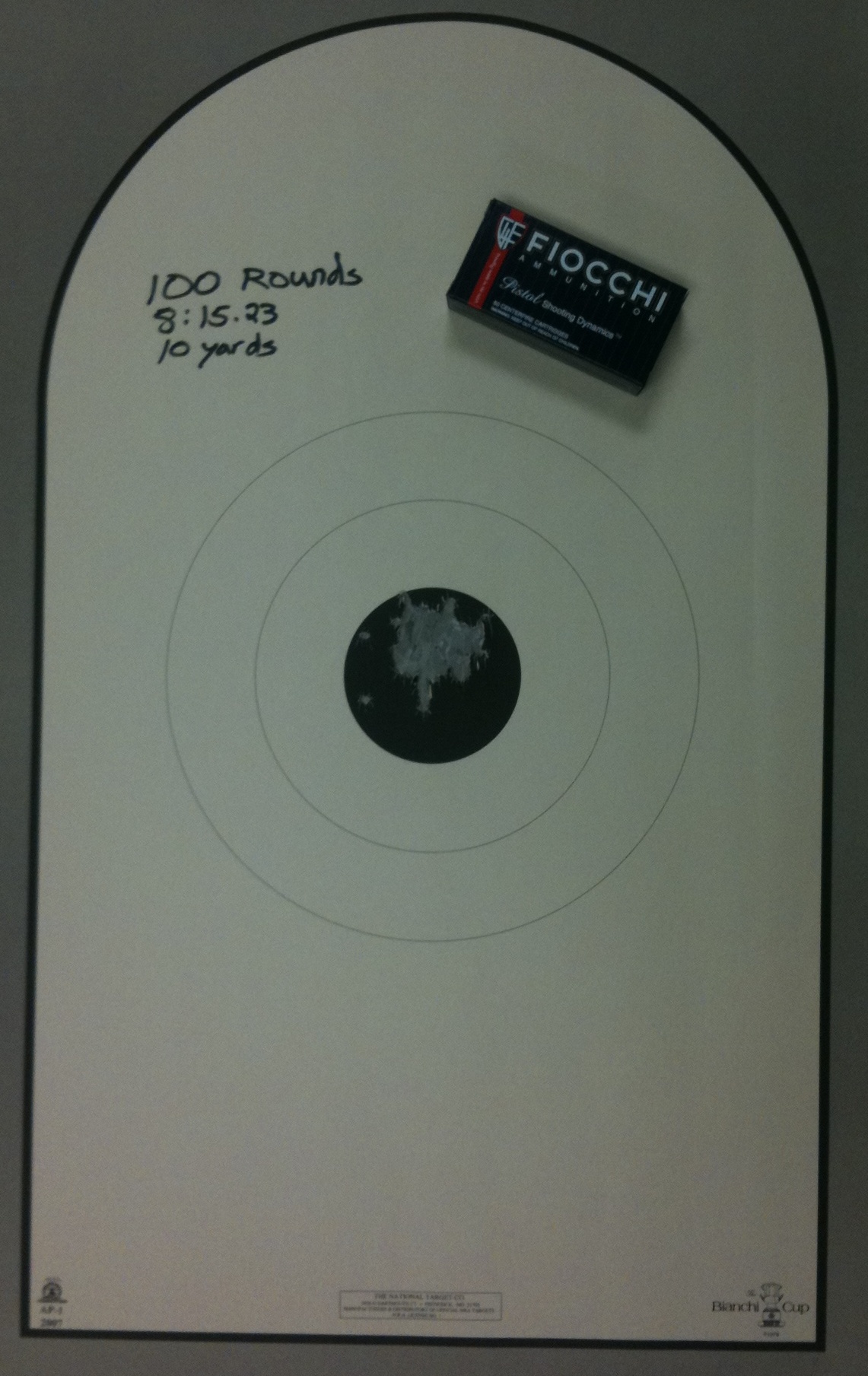
If you’re in the Seattle Metro area, you can purchase the Fiocchi 158 grain ammo from West Coast Armory in Bellevue otherwise it’s available online from our friends at LuckyGunner.Com in 50 round boxes or 1000 round cases.  I was really impressed with how this ammo performed out of my sub-compact Ruger SR9c, shooting this group under time constraints at 10 yards was not easy.  I doubt I could have pulled this off if I was using harder recoiling ammo like 115 grain FMJ – the soft recoil impulse of the 158 grain ammo really made it easy to stay on target while shooting the 100/10/10 Drill.

If you’re looking to mix up your ammo selection and thinking about trying some subsonic stuff, give the Fiocchi 158 grain FMJ a look.  You might just like it!

Things that should not be

I have now been shooting the Ruger SR9c for over 4 months, and have several thousand rounds downrange through the gun in practice and competition.  As I’ve mentioned, I’m quite fond of this gun – when I first started shooting it I didn’t know what to expect, having had negative experiences with similarly sized polymer 9mm pistols in the past.  However, the SR9c has exceeded my expectations and proves to be an excellent carry gun, and even well suited for competition, with one caveat.

That caveat is what I’m currently trying to fix – one of the things that makes the SR9c so great for concealed carry is the slimness of the grips.  The grip is incredibly thin, making the gun very easy to conceal and for shooters with small hands to get a hold of.  However, because the grip is so thin, there isn’t enough material to create a large magwell opening like you see on competitor’s polymer pistols.

Enter The Wile E. Coyote School Of Gunsmithing.  That’s a Dawson ICE Magwell, originally designed for a Para P16.  Now, I’ve not quite figured out yet how to solidify the mount, but preliminary tests are show that magazines will seat and function with the magwell attached.  Doing this to the gun would make it eligible for Enhanced Service Pistol in IDPA, as magwells are illegal in Stock Service Pistol, which is why the magwell must be easily removed from the gun as well.  So far I have no idea how to do make this work and be durable enough for competition; but I had the part sitting around so I figured “might as well try it”.  Of course, it remains to be seen whether or not I’ll be able to get it to work.

In all seriousness though, the small grip/magwell of the SR9c is great for concealed carry.  We’ve been evaluating this pistol through the lens of competition shooting, and I don’t think anyone would be fooled in to thinking this is a competition pistol.  But for being a concealed carry pistol, I’ve been getting remarkable results from it in competition shooting, finishing well in local and major matches, as well as posting excellent times on the IDPA classifier.  While I’d like a larger magwell on a gun that I was only going to shoot for competition, the small grip of the Ruger is very easy to conceal even under a fitted polo shirt.

Continue reading →

Entry level 1911s

So you want to buy a 1911 to start competition shooting, but you don’t know which one to get.  Assuming for the moment that you’ve got less than $1000 to spend, you do still have some options available to get started in IDPA Custom Defensive Pistol or USPSA Single Stack.  First off, you have to pick a gun.  There are lots of options out there, and we’ll look at 3 of them that seem to pop up a lot.  One thing that we’re avoiding is any “GI” type guns – guns with spur hammers and no beavertail grip safeties are going to require modification to be “competition ready”, the goal here is to buy a gun, buy some mags and get shooting.

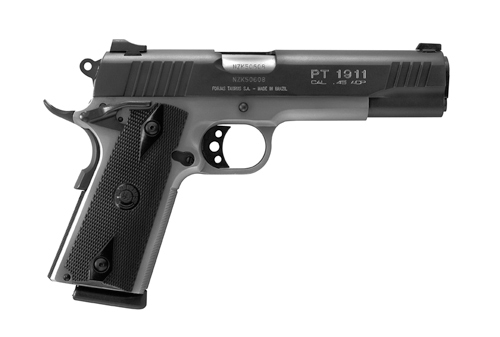
Taurus PT-1911 – Our first entrant is the 1911 from Taurus.  These usually come with a street price around $500-$650, and have a good number of the features that you’ll want on a gun.   The big pros with the Taurus are the forged frame and slide.  The cons are that some aftermarket parts such as magwells, grips, and some internals that would be “drop in” on other models may require some extensive fitting to work with the Taurus.  The Taurus also comes from the factory with either Heinie or Novak sights, which is a major improvement over most “factory” guns.  The Taurus PT-1911 is available in .45 ACP, .38 Super, and 9mm.

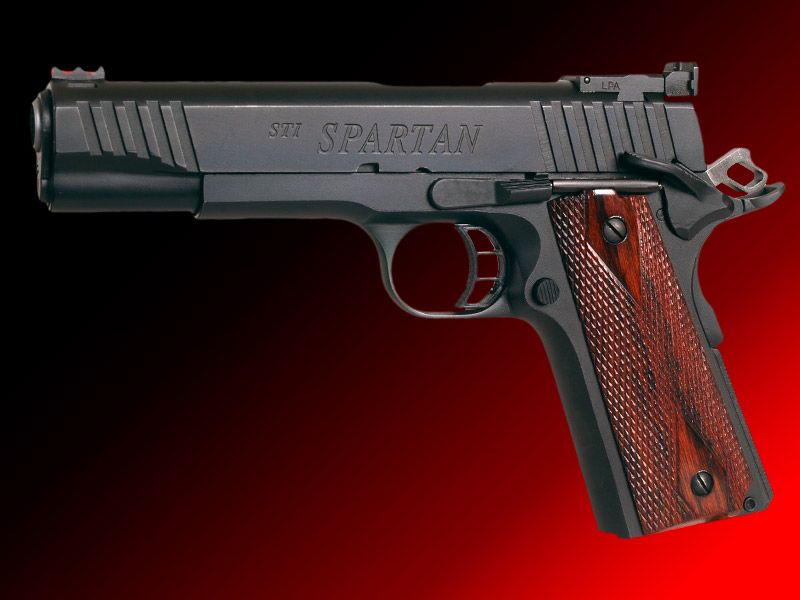
STI Spartan – Next up is the STI Spartan.  This is STI’s “entry level” 1911, available in .45 ACP or 9mm.  The STI Spartan features STI’s BoMar style adjustable rear sight and a fiber optic front sight, making it the winner in terms of “quality sights out of the box”.  The Spartan’s slide, frame and barrel are all made by Armscor, and the gun’s internals and other parts are all STI parts.  This gives you a 1911 full of reliable internal parts for a fraction of the price of the STI Trojan.  Retailing for right around $650, the Spartan is also backed by STI’s excellent customer service, which is another point in its favor.  Also, most aftermarket parts will fit the STI Spartan, including magwells, which are basically required to be competitive in IDPA and USPSA.

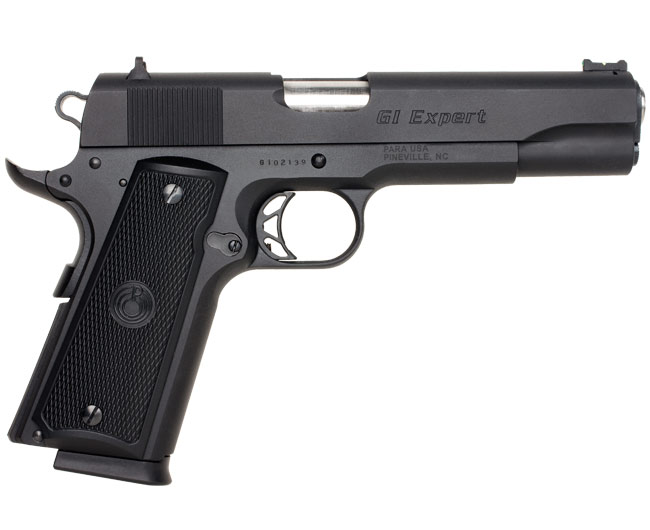
Lastly, we have the ParaUSA GI Expert ESP.  This is a step up from Para’s base level GI Expert, and includes some additional features to make it more competition friendly.  The white dot front sight is replaced with a fiber optic, and the grip safety is now a true beavertail grip safety allowing for a higher hold on the pistol to mitigate recoil.  The GI Expert ESP is available only in .45 ACP, however it can be had for less than $600, which is a steal.  Also, unlike both of the other guns on this list, the ParaUSA GI Expert ESP is produced entirely in the US at Para’s facility in North Carolina.

There are a lot of factors that go in to picking an entry level 1911.  Some people will say to not buy one for less than a thousand dollars, because you’re going to end up spending that much anyway.  Personally, I like the entry level guns.  It gives you something to shoot without breaking the bank, and it’s a good way to try on the 1911 platform for size.  If you end up not liking them, you’re not out $1500, which would be a hard pill for anyone to swallow.

My order of personal preference for the guns above would go like this:

  1. STI Spartan – the Spartan’s biggest “go” point is that it’s backed by STI.  They have a reputation for excellent customer service, and I do not hesitate to recommend their guns to anyone.
  2. ParaUSA GI Expert ESP – While this lacks some of the advanced features of Para’s other guns such as the Power Extractor, LDA trigger, or double stack magazine; there is something to be said for a well built 1911 that works and is made in the USA.  I’ve had great experiences with my ParaUSA LTC, and would definitely shoot this gun.
  3. Taurus PT1911 – For an entry level 1911, you can definitely do worse.  There are a lot of people that will bash the Taurus, and while it finished 3rd behind the STI and the Para on my list, I have seen a lot of PT1911s during IDPA matches, and they all had one thing in common – they all worked.  I’ve seen stoppages in high end Kimbers more than I’ve seen Taurus PT1911s barf, so for an entry level gun I’d not be uncomfortable recommending one of these.

One caveat to add though, and anyone that’s shot 1911s will realize this.  You may buy an entry level gun to avoid spending a ton of money on 1911s, but if you end liking the platform…well let’s just say you should be prepared, because this rabbit hole goes a long way down.  The 1911 platform is a great way to get in to competition shooting, and the guns we’ve listed above will all serve you well as starter pistols, but eventually you’ll start craving a little bit more.

Later, we’ll look at accessories to go with your new Single Stack Gun!

Speed and accuracy

I had the opportunity to get some practice time in this weekend using while testing Fiocchi’s 158 grain 9mm load (review coming on Tuesday), and for fun near the end of my practice session (and also because someone bet me I couldn’t do it) I decided to see if I could fire a 100 round group in less than 10 minutes at 10 yards and keep every single round in the 4 inch x-ring of a Bianchi Cup target.

Sorry for the crappy image quality, all I had on me at the time was my iPhone camera.  I actually had a lot of fun doing this drill, and I’ve decided I’m going to make it a regular occurrence here on Gun Nuts.  I’ll call it the 100/10/10 Drill for lack of a creative name, and here are the test parameters:

Set up a Bianchi Cup target at 10 yards (or 25 feet depending on your range) start from the holster.  On the buzzer, draw and fire 100 rounds with all reloads on the clock at the Bianchi Cup target.  All shots must be inside the 4 inch x-ring for the run to count.  My time just running it cold was 8 minutes, 15.23 seconds.  I had to do 8 magazine changes, and it was all fired with the Ruger SR9c.

What’s the point of this drill?  Patience, mostly.  There were a couple of times I had to back off from taking a shot I knew I was going to throw outside of the x-ring, but also knowing that I had a limited amount of time to get my shots off was constantly in the back of my mind.  Make no mistake, this an accuracy drill first and foremost.  Speed isn’t nearly as much a factor here as it is in other drills, but accuracy and endurance are very important here.  When I started the drill I was feeling pretty good, but by the time I fired the 100th round, I was glad to be done.  Near round 65-75 I really wanted to just start cranking the trigger and getting the rounds downrange, which had I given in to that temptation would have caused me to fail the drill.

Once again, I continue to be impressed with the SR9c.  This is an incredibly easy to shoot gun, and being able to hold that kind of accuracy with sub-compact gun really speaks to the shootability of this pistol.

So if you’ve got a timer and some free time, give the 100/10/10 a try.  I have no doubt that someone out there in Gun Nuts land can beat my time, and I’d love to see the pictures and the gun when you do.