I need to add those to my daily routine. You can’t do them with an AR15, because everyone knows that the Mattel parts on the AR will break off under mild stress. If you do this with an M14, the pulse of awesomeness travels back in time and kills a VC in 1968.
Everytown for Gun Safety doesn’t know how guns work
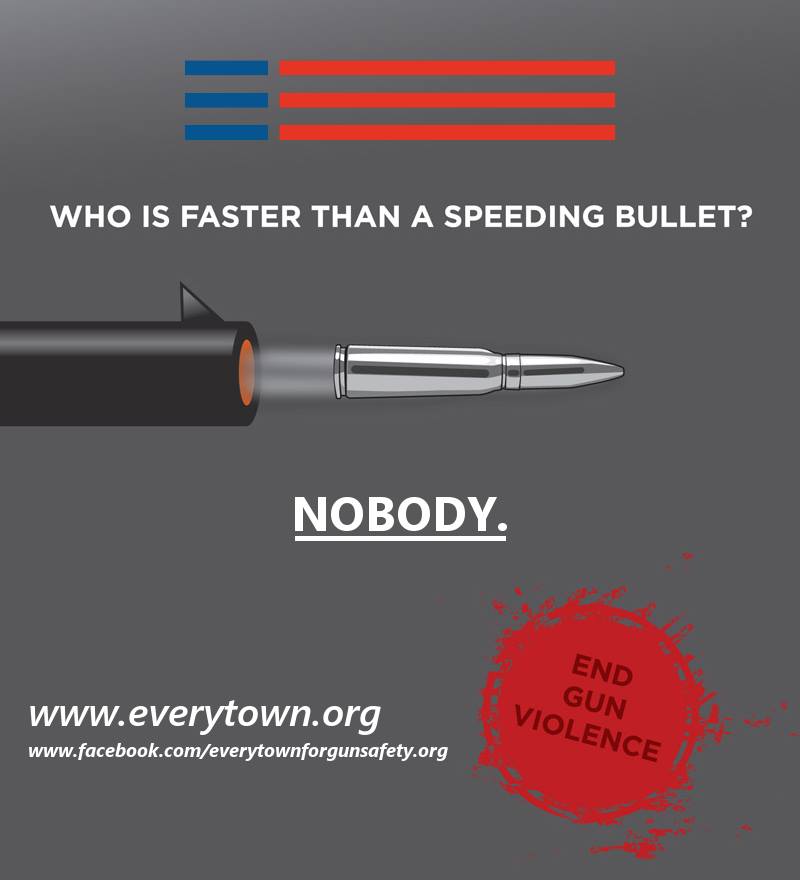
This is just classic. By now you’ve heard that Mayor Bloomberg, who thinks that everyone loves him and that his actions for gun control have guaranteed him a spot in heaven, rebranded his gun control groups as Everytown for Gun Safety. You also probably know that the prime FB page for that name got jumped by a pro-gun group, leaving Bloomie & Co with the less desirable “Everytown For Gun Safety.Org” in their FB url. The other day, they posted the above image on Facebook.
Top 5 Complaints of gun newbies
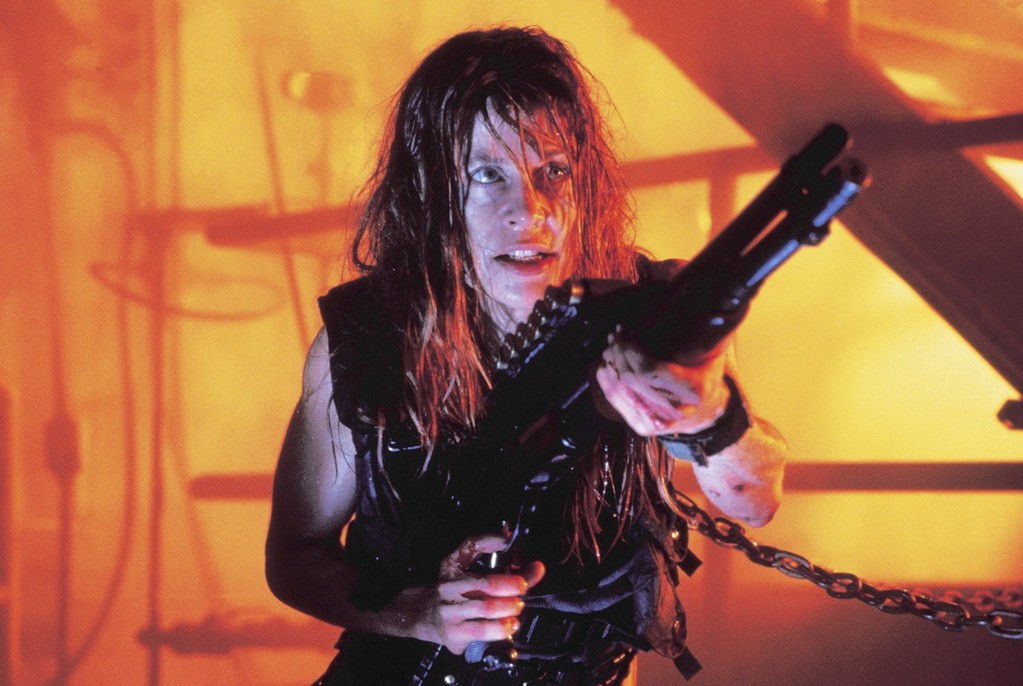
Were were all noobs once. We’ve all made terrible decisions about what guns to carry, thought we couldn’t carry a gun because it was too big, and bought cheap guns because we wanted something more expensive that we couldn’t afford.
1. The grip angle on this Glock doesn’t feel good in my hand!
This is a lot like a virgin complaining that he doesn’t like how boobs feel in his hand. Shut up, you don’t even know what it’s supposed to feel like. You hear this one a lot, and especially about Glocks. “It doesn’t feel good” is a silly complaint, because frequently your feelings are wrong and incorrect. There’s nothing wrong with the grip angle of a Glock, you should just HTFU, hold the gun correctly, and then go get good hits.
2. Should I carry my Taurus in a SERPA or an Uncle Mike’s holster today?
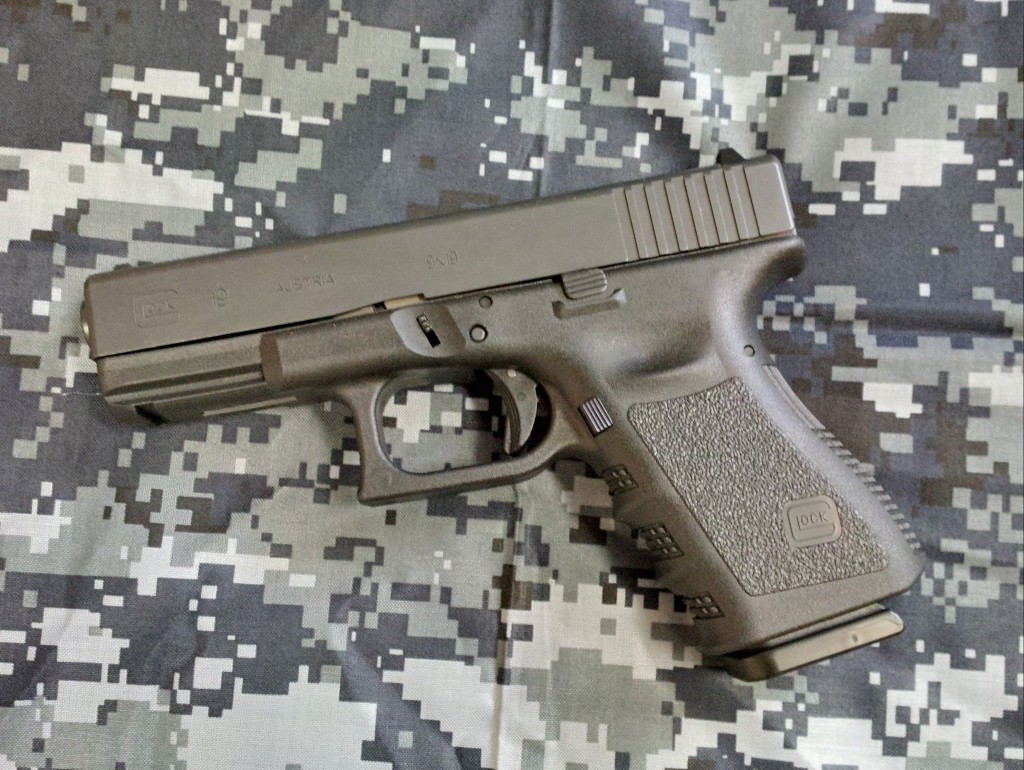
I’m personally guilty of this one. One of the first guns I bought was a Taurus PT92, because, and I quote my idiot self here “It’s just like a Beretta, but cheaper!” I didn’t know why cheap holster were cheap, so I bought a 10 dollar nylon sausage sack and a SERPA and used them in my “carry rotation.” It was terrible and stupid, because those holster suck for actual concealed carry. I wish I could go back in time and get rid of every shitty holster I ever bought, and then whenever I bought a gun just go buy a Galco, a Blade-Tech, or a Comp-Tac for it. I’d have saved THOUSANDS of dollars.
3. 9mm doesn’t have enough stopping power, that’s why I carry a .40
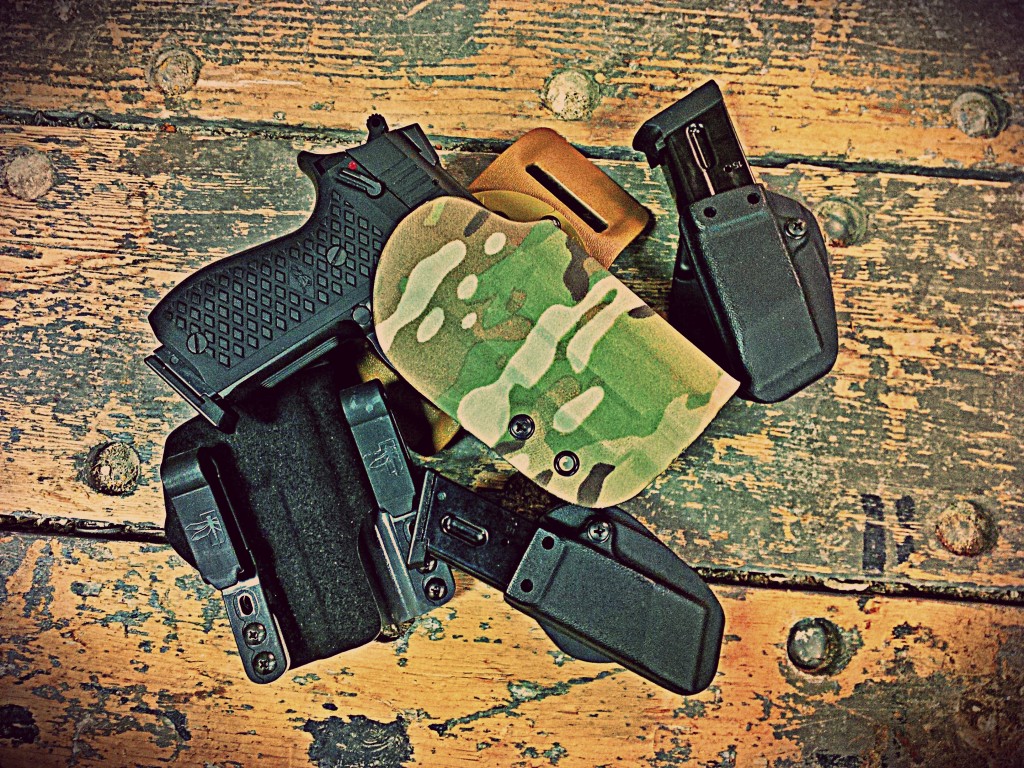
This one comes from reading too many forums where the clue-factor is pretty low. You hear it in gunshops: “I don’t want a 9mm, I read (where?) that it’ll just go through a badguy. The .40 has more knockdown power.” It makes blood shoot out of my eyes whenever I hear this, because it’s just nonsense. It’s nonsense that keeps on living thanks to people on the internet who don’t understand that pistol ballistics are all garbage. If you’re using FMJ rounds, you’re going to make a tiny hole that penetrates a lot, regardless of caliber. If you’re using modern JHP rounds, you’re going to make a slightly less tiny hole that doesn’t penetrate as much, regardless of caliber. They all suck. If you want actual stopping power, get a 12 gauge shotgun.
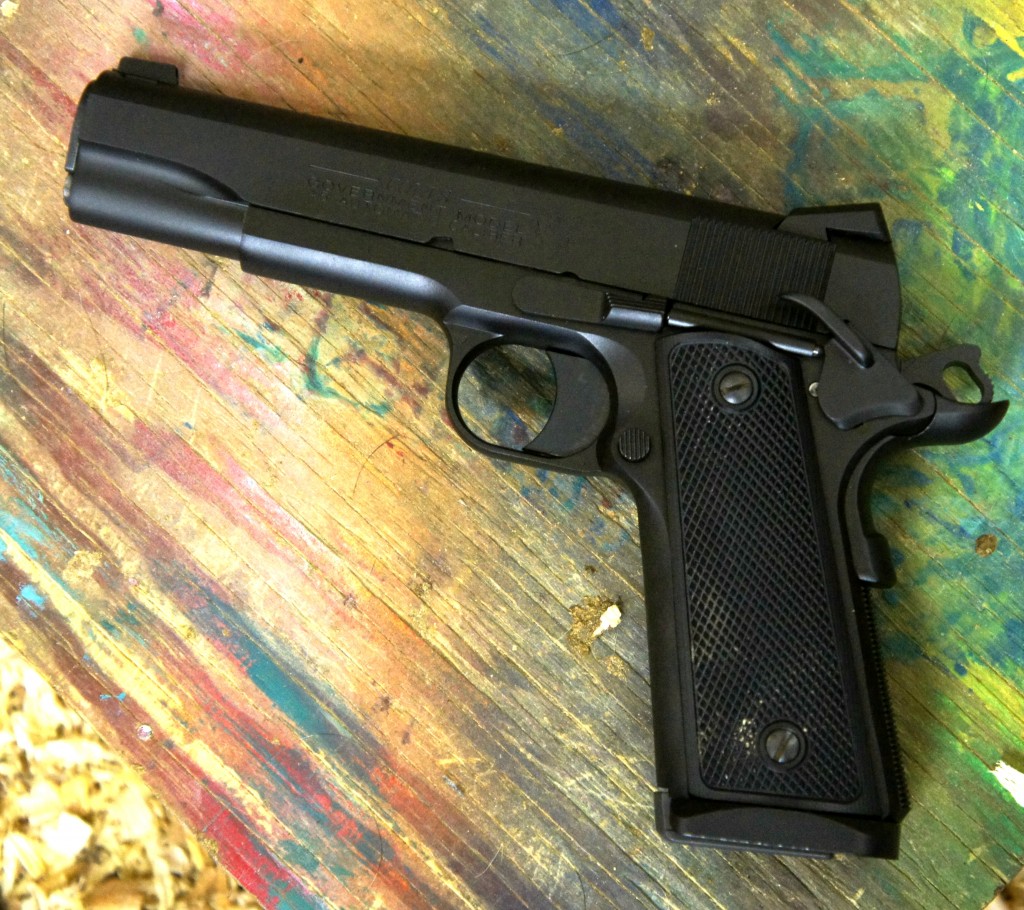
4. A Colt or a Springfield 1911 is too expensive! This Turkish 1911 is only 300 dollars and it’s just as good!
Oh the cheap gun that’s a stand-in for the gun we really want. You want a Colt 6920? That’s like a thousand dollars, and you’re a poor 20-something. I’m sure a Moore’s Machine Co. AR is just as nice. Except the truth is we all know it’s not. I bought a Taurus PT92 because I wanted a Beretta. It wasn’t as good as the real thing. People want a 1911, but they can’t afford a quality 1911 from Colt, S&W, or Springfield (and those are just the entry level guns) for $1,000 so they compromise and buy slag-metal $350 guns. Don’t do that. Save your money.
5. I can’t carry a full size gun, it prints too much!
Did this one too! When I first got my carry permit, I thought I couldn’t carry a gun the size of a Glock 19 because it prints too much. Turns out it was printing because I was trying to carry in a garbage holster on a garbage belt in a t-shirt that I probably bought from baby Gap back when I had abdominal muscles that were nice to look at. The truth is you can carry a proper gun, you just need to understand how to conceal it. Get a good belt, a proper holster, and clothes designed to dress around the gun, and you’re in good shape. Or just do what I do, and carry a smaller gun so you can still wear those sweet, extra smedium t-shirts.
“How Did They Get That Gun?” A Terrifying Question

 When a tragedy occurs, it is human nature to attempt to reason our way through it. We have all sorts of questions, and everyone of them is valid and reasonable to the mind of their creator. Yet, when I asked, last week, that we assess how the perpetrator of the Overlandpark, KS shootings procured his guns, the response was a virtual sock stuffed in my mouth. Don’t misunderstand, my feelings weren’t hurt, but it got me thinking, did I just elicit a fear-response? Do we gun owners, literally, fear the question, “How did that criminal get that gun?”
Photo of the day: Problem solver
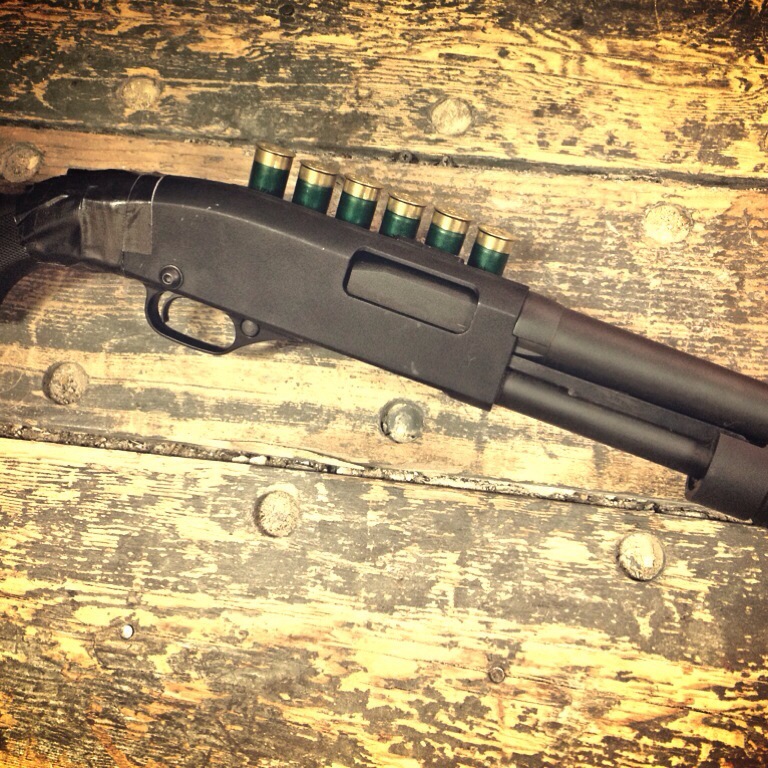
Some problems have simpler solutions than others.
General training vs. match specific training
Your goals as a shooter are going to influence how you train; at least they should if you’re training smartly. For example, a person whose only interest is self-defense will train differently than someone whose interest is IDPA; an IDPA only shooter will train differently from a Bianchi Cup shooter, etc. There are ways to cross over your training though so that training for X directly benefits Y.
Let’s first look at two “specialist” matches, Bianchi Cup and Steel Challenge. The top shooters in these matches all agree: the best way to train for them is to get “knee deep in brass” shooting the stages over and over again. For Bianchi Cup, add in a healthy dose of shooting 2, 4, and 6 shot strings for maximum accuracy against various par times. Training for Steel Challenge is very sport specific, it places a greater emphasis on the draw and transitions than any other shooting sport. Training for Steel Challenge can offer benefits across disciplines in those two areas. The same goes for Bianchi Cup, where the extreme emphasis on accuracy can absolute benefit your shooting skills in other sports. If you can hit a four inch dot at 25 yards, you probably won’t struggle with the accuracy requirements of an IDPA match.
Training for USPSA will absolutely make you a better IDPA shooter. In general, USPSA places higher demands on a shooter’s technical skills than an IDPA match will, and while IDPA ad the element of a concealment garment to the game, the transition from USPSA to IDPA is not difficult. If you focus your skill building on USPSA and then go shoot an IDPA match, you’ll do fine as long as you remember the rules.
All of the shooting sports will improve your skills as a defensive shooter. IDPA gives you the chance to practice with concealment garments, and of course USPSA, Bianchi Cup, and Steel Challenge all improve various aspects of your shooting skill. No, none of these games will teach you tactics, but they will help you ingrain your gun handling skills so that under stress you don’t stand there like a duck in thunder trying to get your gun out. Of course, we haven’t even touched on 3-Gun, which is probably the best bang for your buck in pressure testing your skills; training for 3-Gun just makes you into a gun toting superman. To be really successful you have to incorporate training for three guns, and physical fitness.
Match specific training is important if you’re prepping for a serious match like Steel Challenge or Bianchi Cup. But don’t worry too much about it if you can’t shoot all the specific stages. It’s never a bad idea to train to be faster and more accurate in general.
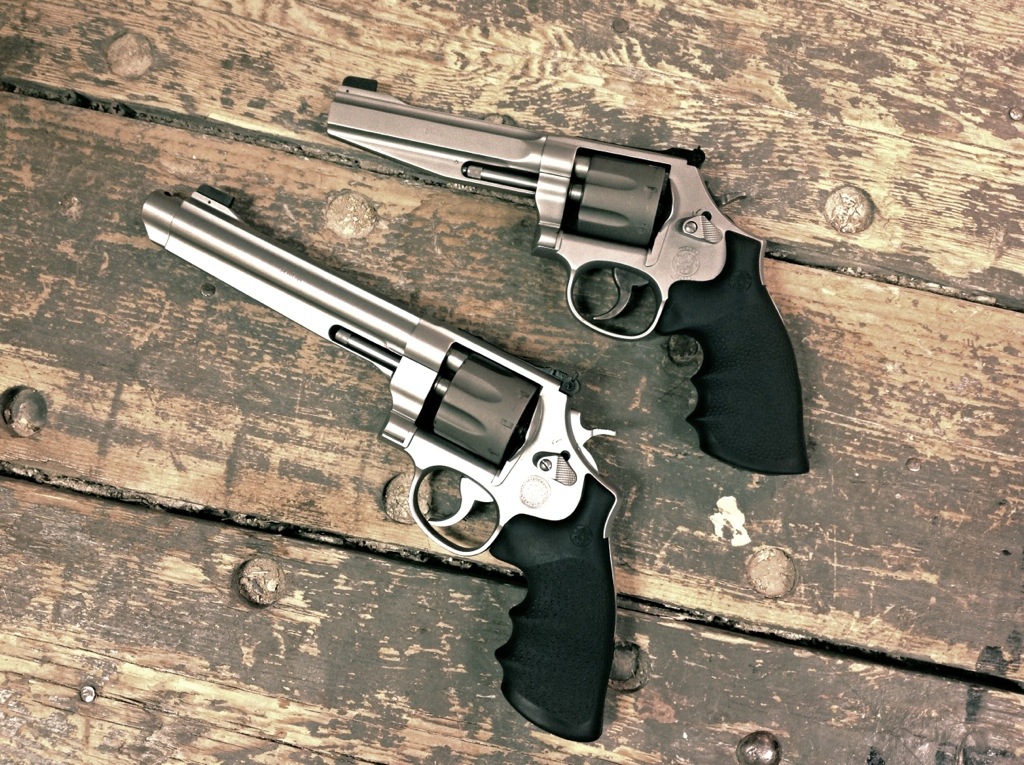
9mm Competition Revolvers
At the 2014 SHOT Show, S&W announced two revolvers aimed squarely at the competition market: the 929 and the 986.
The 5 Greatest Military Pistols
The dawn of the semi-automatic pistol era changed the service handgun landscape forever. Up until the Mauser became the first self-loader to be widely used in combat, the handguns of the battlefield were revolvers. There were some great revolvers that served nations, from the Colt SAA to the Webley and the S&W Russian. But semi-autos were easier to shoot, could hold more ammunition, and were easier to reload. There have been many great semi-auto service pistols, but these five stand atop the list. Starting with number five and working our way to number one, here are The 5 Greatest Military Pistols.
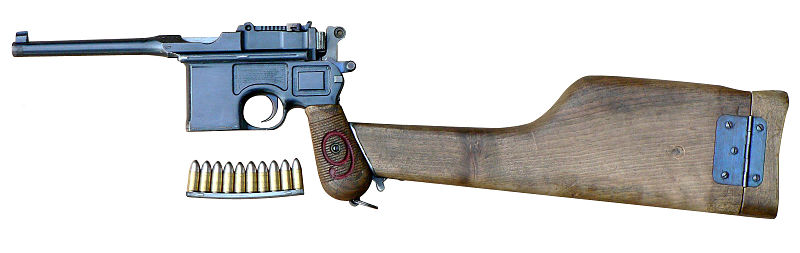
5. The Broomhandle Mauser
Aside from serving as the basis for Han Solo’s DL-44 in the Star Wars trilogy, the Broomhandle Mauser’s second greatest claim to fame is that it was the first semi-automatic pistol to be widely used in combat operations. Its first military contract was issued in 1899, and it continued to serve through WW2, where the Luftwaffe issued it in limited numbers to pilots.
4. The M1911 and variants
In the beginning of the 20th century, as the semi-automatic pistols began to dominate on the European continent, the US Army made the decision to switch back to a .45 caliber sidearm, having deemed the .38 Colt revolvers underpowered for serious work. Eventually, the John Moses Browning designed 1911 was selected, and from 1911 until the 1980s it served America as the standard service sidearm. WW1, WW2, Korea, Vietnam, and countless other operations and actions saw the 1911 carried into battle. It still continues to serve the country today with various special mission units, most recently as the M45 CQBP used by Marine Corps Force Recon and MARSOC.

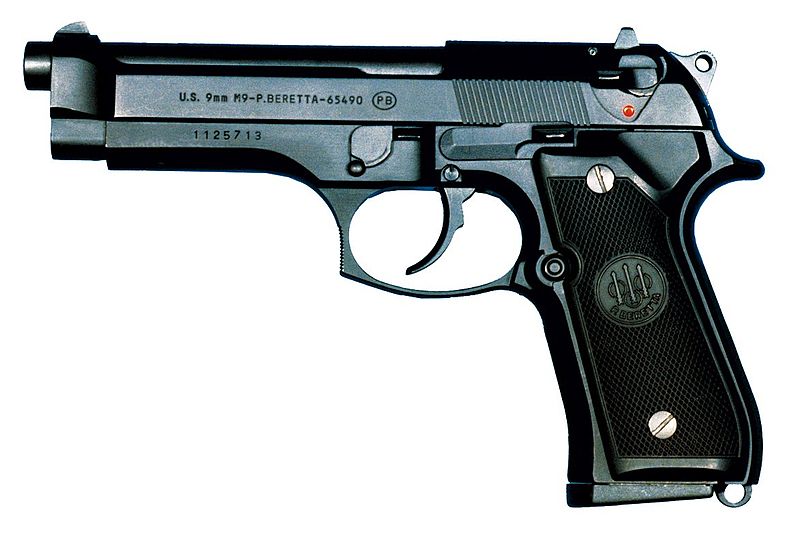
3. The Beretta M9 and variants
The Beretta M9 is significant in its difference. It replaced the venerated M1911 as the standard service pistol of the US Military, and despite its ability to still generate frothing rage among some, it has served the country for nearly 30 years and has been exposed to constant warfare for over a decade now in Afghanistan and Iraq. It’s notable as well for being the first double stack pistol adopted by the United States, the first 9mm pistol, and the first DA/SA. It set a trend across the nation of police departments abandoning their faithful revolvers, and truly kickstarted the Wondernine Era of the early 90s.
2. The Walther P38/P1
For all the Beretta’s accomplishments, it is in many ways a spiritual successor to the Walther P38 and P1. The P38 uses a similar action, safety, and was the first DA/SA pistol in a service caliber to be adopted by a major military. After its use in WW2 by the forces of the Third Reich, it was redesigned with an alloy frame and designated the P1, where it served the West German Army during the Cold War. It is truly a historically significant pistol, and while it lacks some of the combat chops that other pistols on this list have, it is notable like the Broomhandle Mauser for a number of firsts.

1. The Browning Hi-Power
The Hi-Power is perhaps the greatest of John Moses Browning’s pistol designs – while there are certain aspects that definitely bear the fingerprints of his European co-designer, the gun’s service record more the speaks for itself. It was one of the first double stack pistols to see wide military issue – at one time over 50 nations issued the BHP as their standard pistol. It was nearly the de facto sidearm of NATO, with the US being the only hold-out. It was the sidearm of every nation in the British Commonwealth for a considerable time, and is still issued as the standard sidearm to a number of nations to this day. It has seen service in military conflicts from WW2 dating to the wars in Afghanistan and Iraq. While the 1911 may be the beloved American service pistol, the Browning Hi-Power deserves the top spot on this list for being the service pistol of the rest of the free world.

Photo of the day: Taking Shots
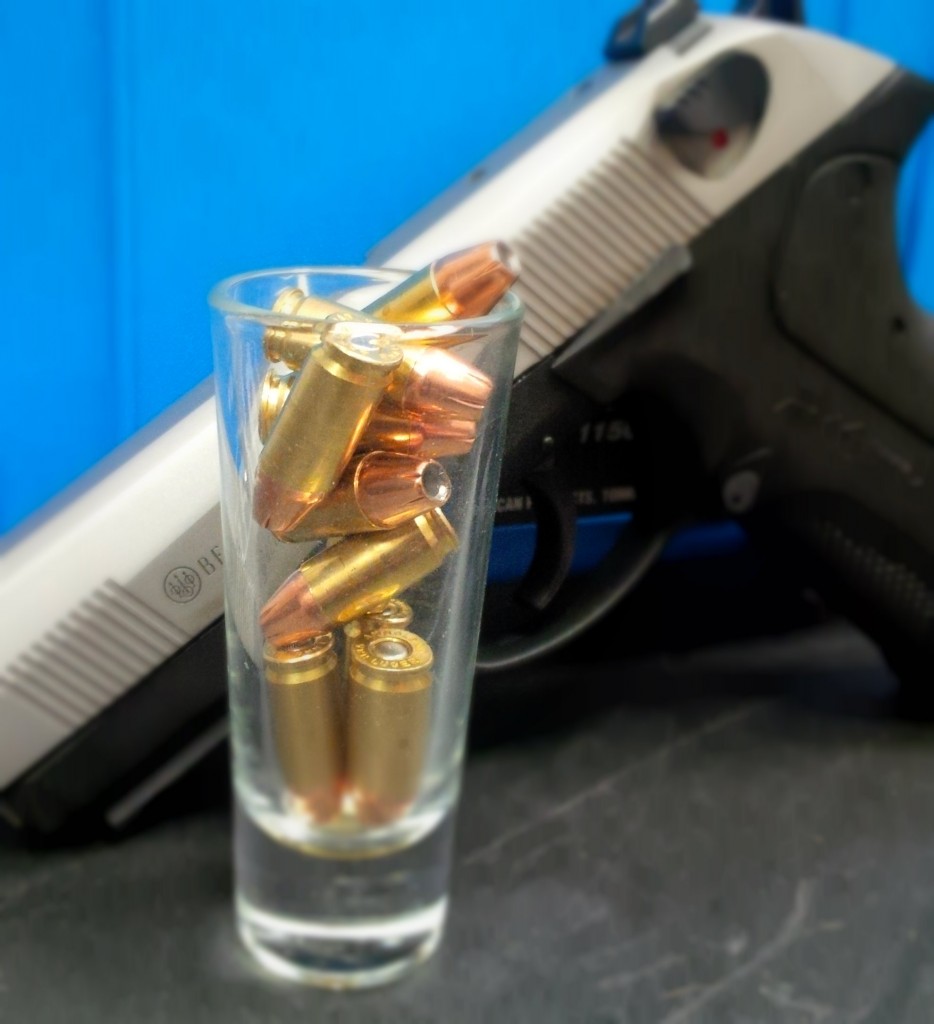
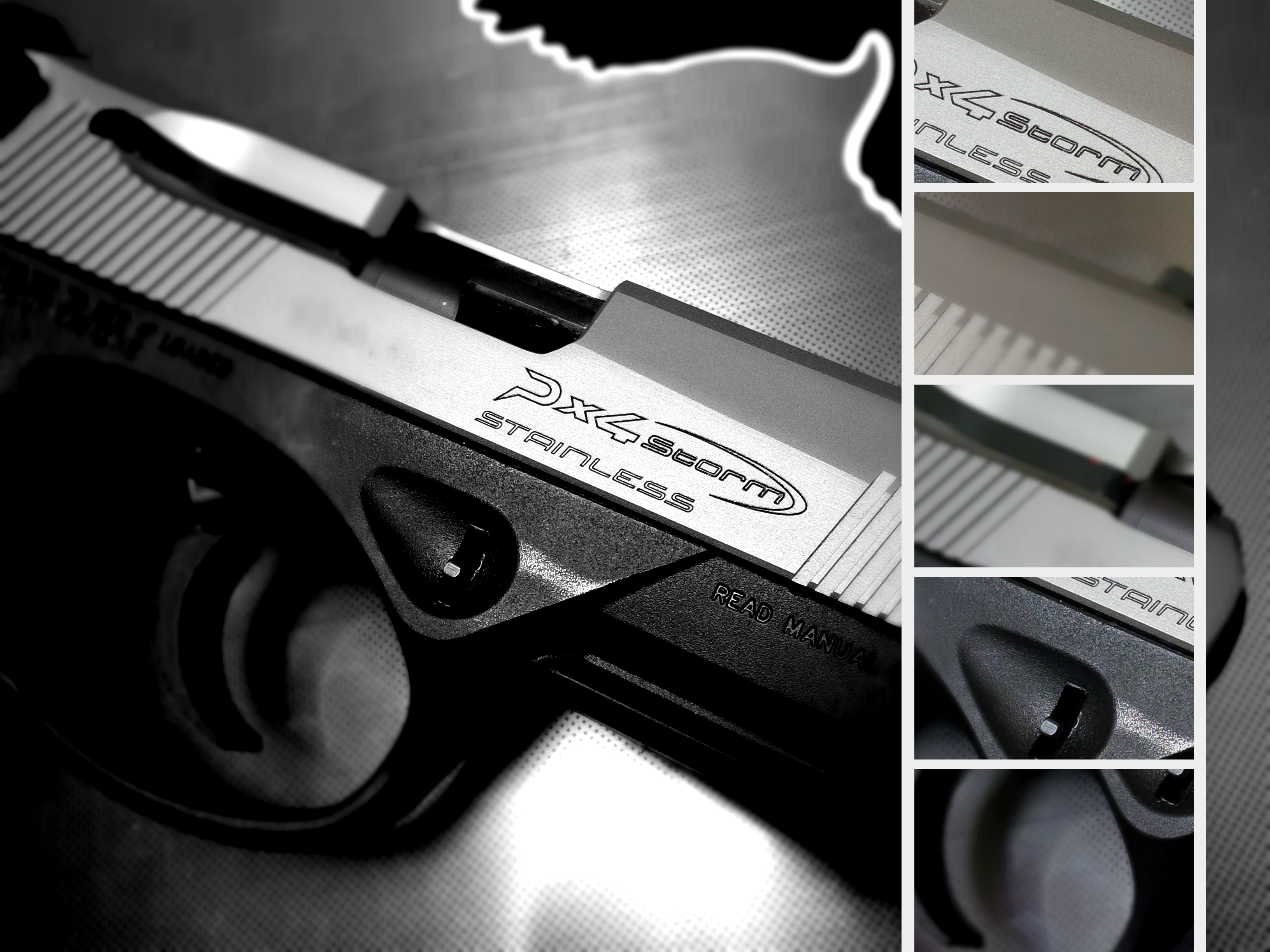
Px4 Storm, ready to toss back some shots.
Modified Px4 Storm Reliability Report
On Tuesday, I took the modified Px4 Storm to the range to test the reliability. You’ve seen the results of the accuracy testing, so now let’s talk reliability. I was concerned that putting the D-spring from a Cougar might compromise ignition reliability with hard primers. As it turns out, my fears were completely unfounded.
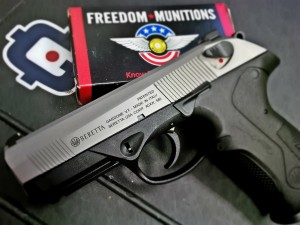
Here’s the full report of how the gun functioned:
- Freedom Munitions 115gr XTP – 45 rounds no issues
- Freedom Munitions 147gr FMJ – 50 rounds, no issues*
- Hornady Critical Defense 115gr FTX, 42 rounds no issues
- Assorted 115gr FMJ (Blazer Brass, Remington, random reloads) 52 rounds no issues
- Winchester NATO 124gr FMJ, 50 rounds no issues
*The 147 grain FMJ from Freedom Munitions had a badly underloaded round in the box. During a string of fire, the report was noticeably quieter and the gun failed to complete its cycle of operation. The report was so quiet that I initially assumed I had a squib, and checked the bore for obstruction before continuing. Because this was clearly an ammo issue, I won’t count it against the gun.
The total round count for the testing session was 239 rounds, all of which went off when the firing pin hit the primer. The concern about reliable ignition was fairly conclusively settled. I do wish I’d had some really hard primered stuff like S&B or Armscor, but at the same time knowing that it will crack the hard NATO primers in the Winchester loads puts me at ease. The light loaded FM round was a small concern, but not something I’m going to worry too much about. Their ammo has been very reliable in the past, and this is the first real issue I’ve encountered with despite shooting it frequently. I figure one round out of 10,000 or so is worth a mulligan.
Right now, I’m still carrying the Lionheart LH9 as my primary gun. It holds two less rounds than the Storm, but it’s smaller and easier to conceal. The enormous butt of the Px4 makes concealment under anything other than a sweatshirt somewhat problematic, unless I decide to switch back to strong side IWB carry away from appendix. Still, the Px4 is growing on me the more I run it.