The Case for the Pistol Caliber Carbine

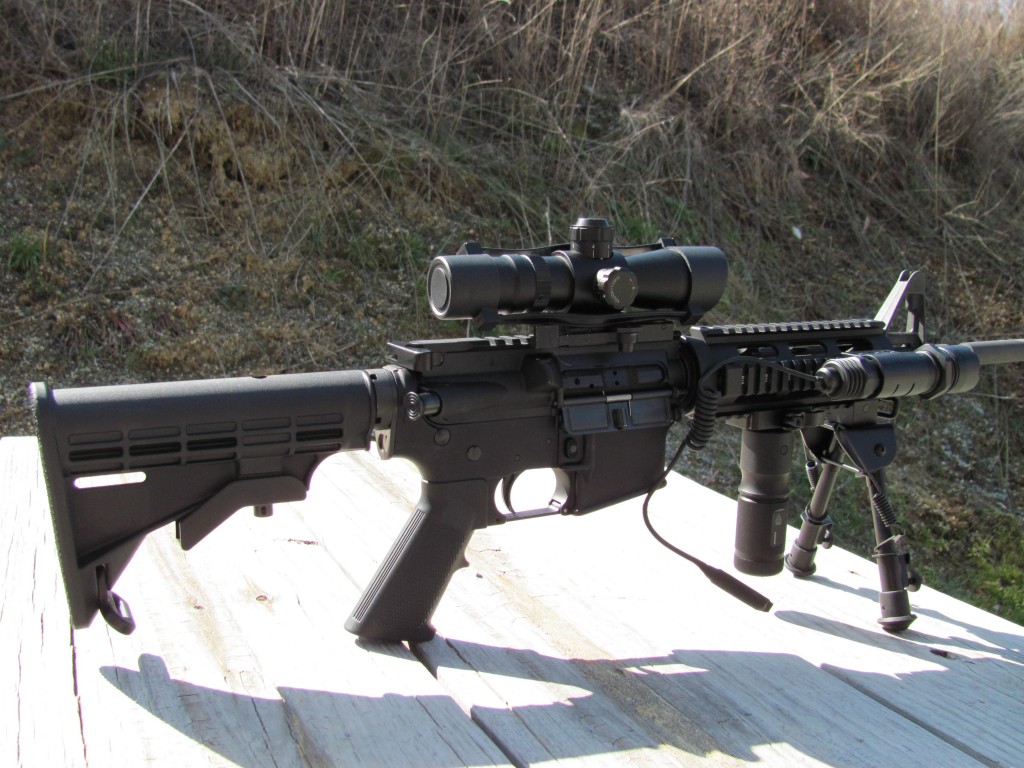
U.S. involvement in the Global War On Terror, the expiration of a pointless and stupid federal “assault weapons” ban, and greater interest in gun ownership has all combined to push development on the AR15 family of weapons to new heights. Today the AR15 can be had in a highly refined, specialized form suitable for just about any shooting task you can conceive of. One of the areas of greatest benefit has been shrinking the size and weight of the weapon (while maintaining excellent reliability) to the point where it has now supplanted the previous king of compact, shoulder-fired weapons: The sub-machinegun.
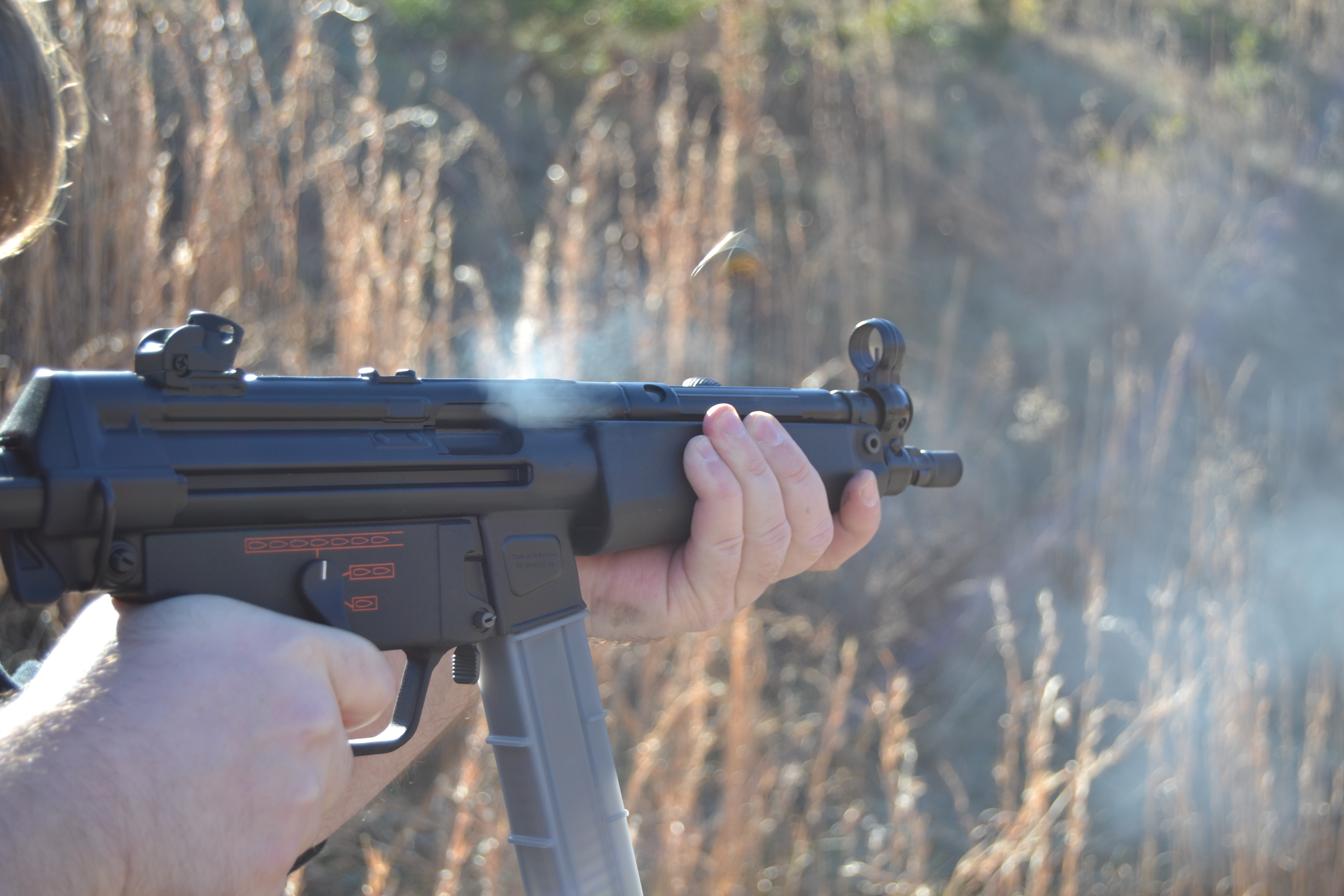
The H&K MP5 chambered in .40 S&W is accurate, controllable, has almost no recoil, and would be superb for home defense.

In a world where you can order a MK18 from Daniel Defense and load it with ammunition developed for optimal performance against bad guys it can seem that there’s not much point to the SMG or her kissing cousin, the pistol caliber carbine. It would be easy to think that progress has made them irrelevant, but I don’t think we’re quite there yet. If you are in a job where body armor and a firearm are standard issue equipment you should certainly be seeking out the numerous advantages provided by the compact, reliable AR15 pattern carbines with all their terminal ballistics wizardry and modular goodness. Those who don’t find themselves regularly needing to shoot armored bad guys at ranges which vary from 5 feet out to 300 yards might find that the pistol caliber carbine fills a niche that other guns don’t quite fit.

For starters, the pistol caliber carbine (PCC) is extremely easy to shoot. Putting a pistol caliber in a shoulder fired weapon typically results in very soft recoil with minimal, if any, muzzle rise from shot to shot. While the AR15 isn’t really known for having beastly recoil, the short guns do move around on you and tend to be pretty loud. The combination can be intimidating. Those challenges can certainly be overcome with proper training and practice, but that’s not always an option. I’ve seen quite a few members of the fairer sex at the range shooting their husband’s/boyfriend’s/fiancée’s/brother’s/dad’s/friend’s AR15 rifles, struggling with the experience due to the noise and recoil. In contrast, I’ve watched a ~ 12 year old girl who had never handled an MP5 before pick one up and give the center of a silhouette target absolute hell while a great big grin spread across her face. When I cleared a plate rack with the MP5/.40 in the picture I was grinning, too. The PCC is just plain fun to shoot, especially on steel. A shoulder-fired weapon with Ruger 10/22 levels of intimidation and ease of accuracy for new or small shooters, only shooting a bigger bullet that’s proven very effective against bad guys is a winner.
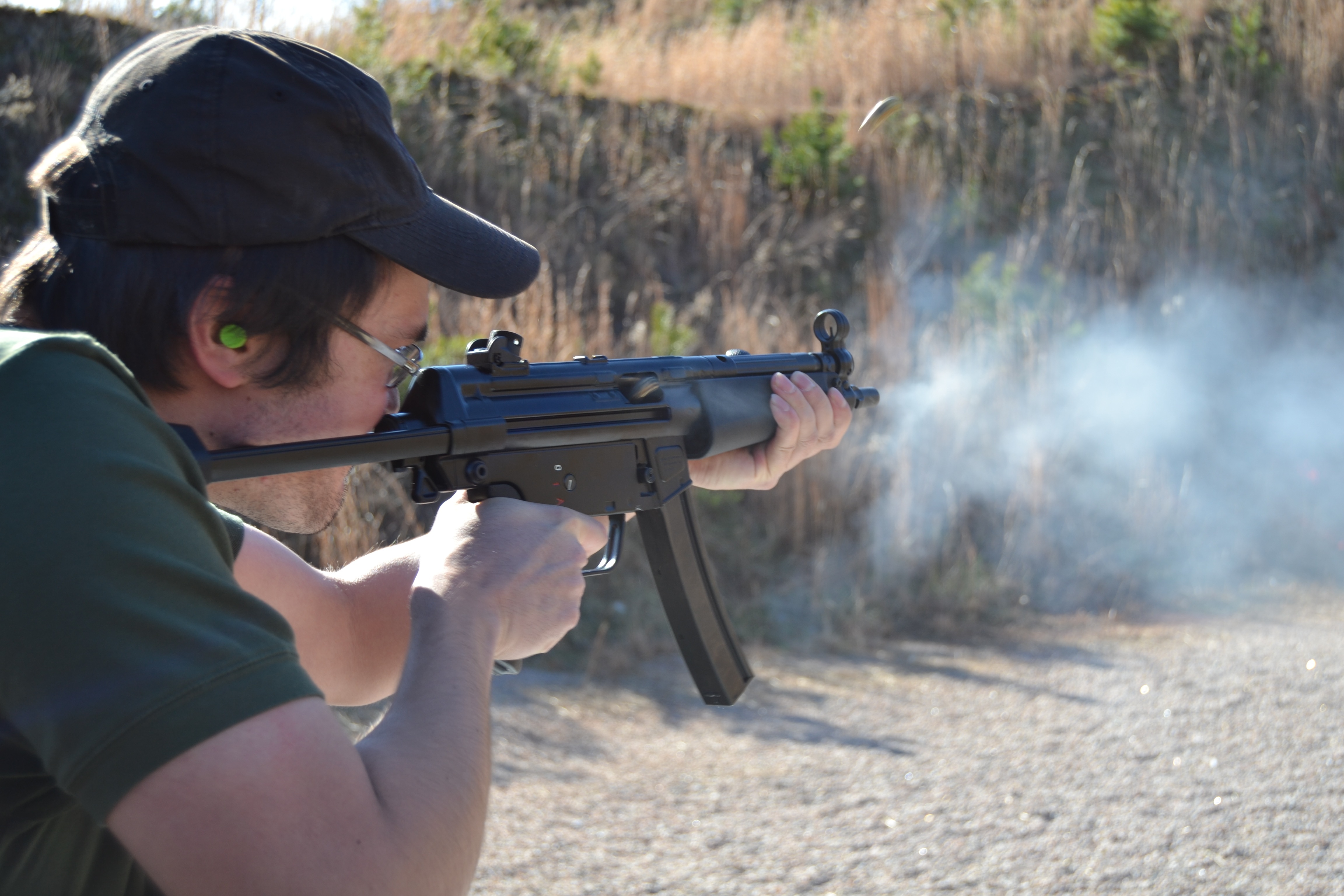
The MP5 caught in the middle of a burst. Lack of muzzle rise gives a clue as to how easy it is to control this weapon, even on full-auto.

The better PCCs on the market today like the Beretta CX4 Storm allow mounting all the accessories you could reasonably want on a home defense weapon like red dot sights, white lights, and slings. It’s a very light, handy little rifle. I had the chance to use the CX4 Storm doing some low light  training and even with iron sights and a white light it was exceptionally easy to hit the head box of an IDPA target at speed. With controls that closely mimic those on the Beretta 92 family of pistols and magazine commonality, it’s an excellent choice for someone who owns a Beretta and wants a good home defense gun.

There are other options out there, of course. The Ruger PC9, the Marlin Camp Carbine, and even the M1 carbine are all floating around out there in addition to the still-in-production carbines like the CX4 Storm and the Kriss. My personal favorite, of course, would be the H&K family. Ideally an HK94 with an MP5 sized barrel on it. Thanks to the 1989 import ban and the 1986 machinegun ban they’ve become quite expensive and a tad out of the reach of the average pocketbook. There’s still something quite special about handling and shooting one, though. If you shop carefully you should be able to get a good PCC for less money (excluding the H&K route) than a good 5.56 AR15 carbine would cost, leaving more money for quality optics, a light, and maybe some ammo.

The PCC isn’t as versatile as a 5.56 carbine and the terminal ballistics of a good 5.56 load will be superior to what you can get out of what amounts to a big, easy to shoot pistol…nevertheless, there are situations where a big, easy to shoot pistol will work splendidly. I would argue that serving as a home defense gun that’s also fun to use at the range is the niche that the PCC fills perhaps better than anything else on the market. It may not be the first choice of elite counterterrorism units these days (although many still have the old reliable MP5 in inventory and still use them on occasion) but it’s worth remembering that those units used shoulder-fired, pistol caliber weapons to great effect for a long time…and maybe the average shooter will find that it does a pretty good job for him/her, too.

Jews, Ready to Take Up Arms Yet?

20140417-094644.jpgI’ve just returned from another visit to New York City. I was there to celebrate with my family, the holiday of Passover, the redemption of the Hebrews from slavery in ancient Egypt. The night before we were to begin the festivities, breaking news came over the air waves. Jews had been targeted outside Kansas City. Many questions can now be raised about the man who perpetrated these crimes; Since he had been previously indicted on weapons charges, in 1987, how did he get the guns used in these crimes? As a known white supremacist in the area, why was no one able to prepare for and stop the suspect, prior to his attacks. But as we watched the details unfold, these were not my questions.
Continue reading →

Beretta Storm Accuracy Testing

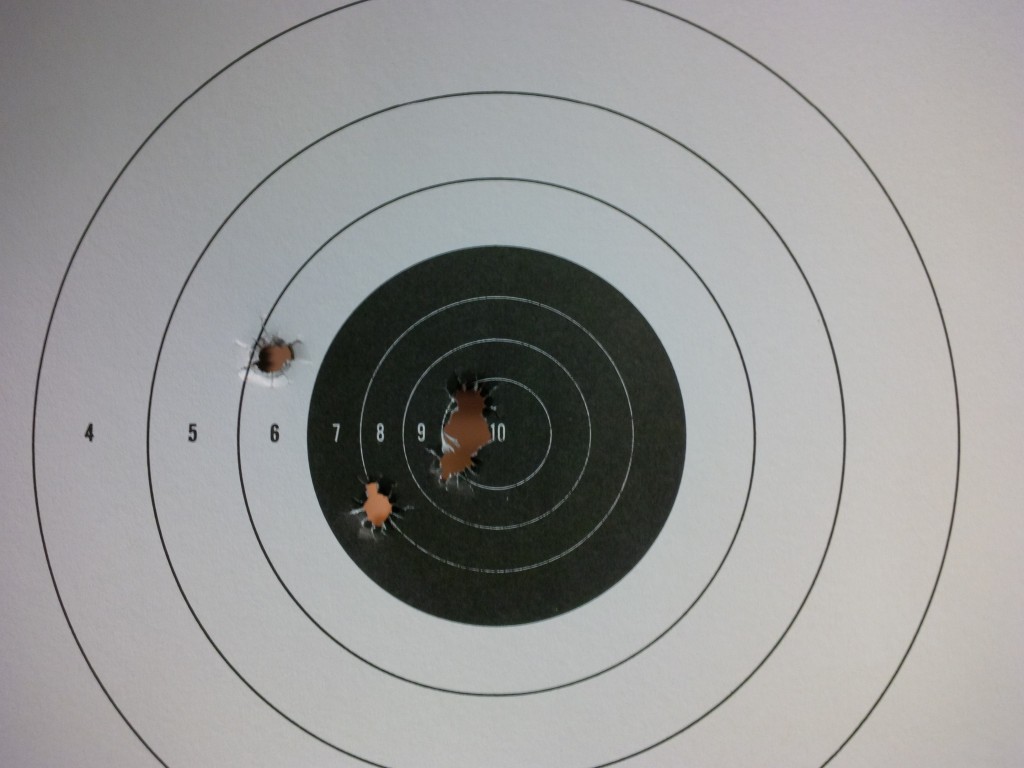
On Monday, I put a Cougar D-spring in my Beretta Px4 Storm. On Tuesday, I took it to the range for testing. The first good news is that it ran 100%, cracked every primer I could put through it, even the rock-hard Winchester NATO ammo primers. The second bit of good news is that it’s quite accurate. Here’s a 25 yard group, shot off a rest using 115 grain Hornady Critical Defense.

D-spring 026

The group measures out to about 1.9 inches, which is right where I’d like it to be for Critical Defense. It’s been my experience with that particular round that it tends to be extremely accurate, very reliable, and pleasant to shoot. Hornady Critical Defense feeds well, it’s accurate, and Hornady are good people. It’s everything I want in a pistol cartridge.

Continue reading →

Where are all these high round count Hi-Points?

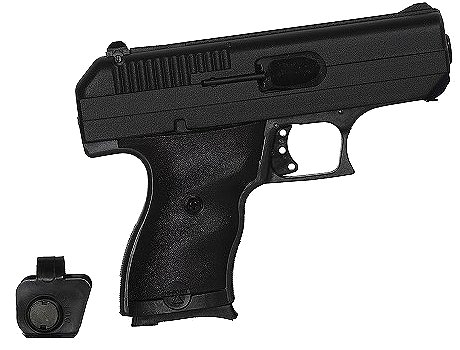
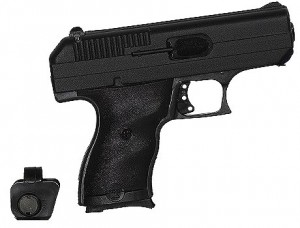
Yesterday I wrote a post about five terrible guns you should never buy; noticeably absent from the list were Hi-Points. While I’m not a big fan of the Hi-Point, I do believe that they serve a valuable purpose in the gun market: if you absolutely need a gun for self-defense right now and only have 100 bucks, a Hi-Point will probably get through an entire magazine. I’d recommend a Hi-Point over a Taurus or a Kel-Tec, because those guns cost 300 bucks, and for 300 bucks you could buy a real gun. But that’s neither here nor there, because in yesterday’s post, despite it not mentioning Hi-Points in a negative light, one of the Knights of Ohio showed up to defend Hi-Point pistols.

Steve – I have got to say, Hi Points are cheap and ugly, but the damn things seem to function over and over. I watched a dude win 3 consecutive steel matches with a 9mm hi point. I won’t personally buy one, but I have to say, they go bang when asked to…

hi point

That got me to thinking: where are all these high round count Hi-Points? Every time there’s a Hi-Point thread, someone will pipe up that they have upteen bajillion rounds on their Hi-Point, or that some guy just ran his at a match and did ok. That’s all well and good, but I’ve seriously never seen a Hi-Point in the wild at a match, or even at a gun range (except for ironic use by gun hipsters). Even our own test gun went just 2000ish rounds and had numerous failures during that cycle.

A brief conversation with Shelley Rae reveals that during her time as a range manager, she saw more than a few Hi-Points through the range, but at the same time, not nearly enough to account for all these reports of incredibly high round count guns.

So here’s my challenge: Do you own a Hi-Point? Have you shot it a lot? If you have an actual documented record of the rounds you’ve shot through your Hi-Point, send it to me at [email protected] and I’ll post here on Gun Nuts. I want to see these high round count guns!

Giving my Storm the D

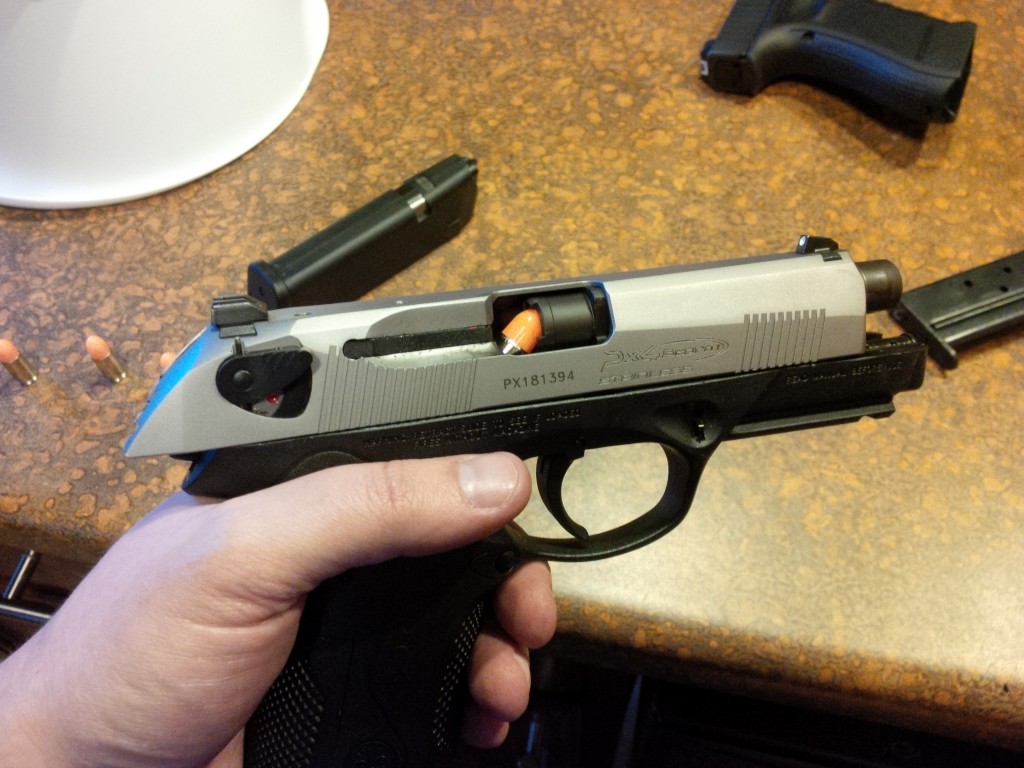
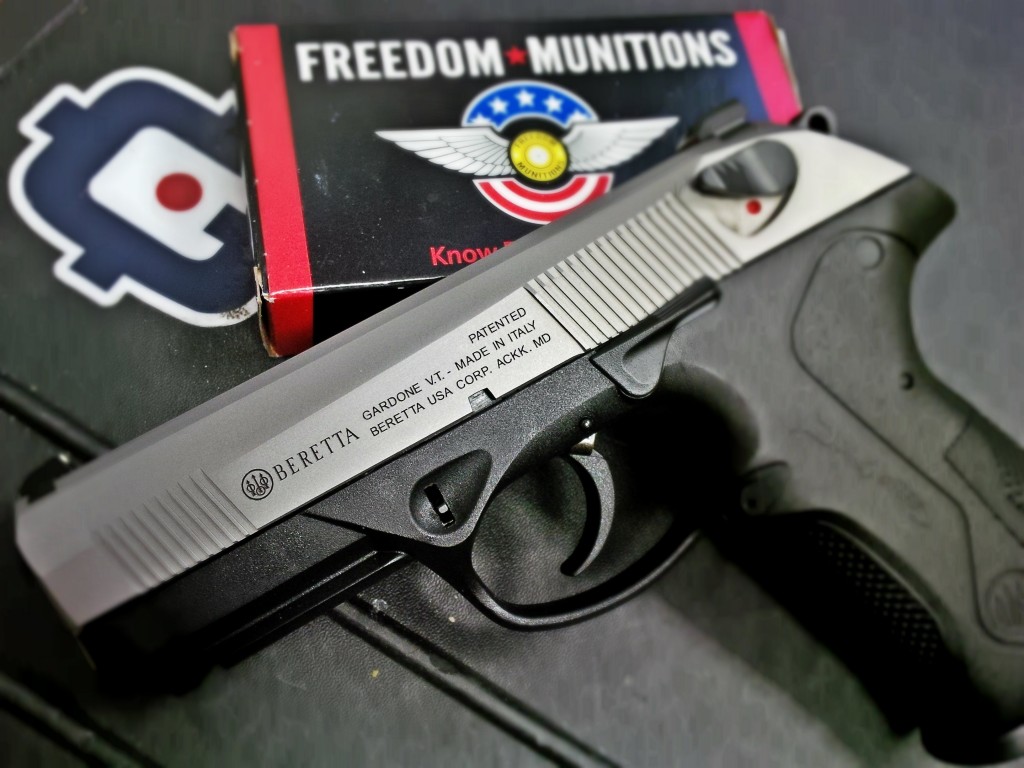
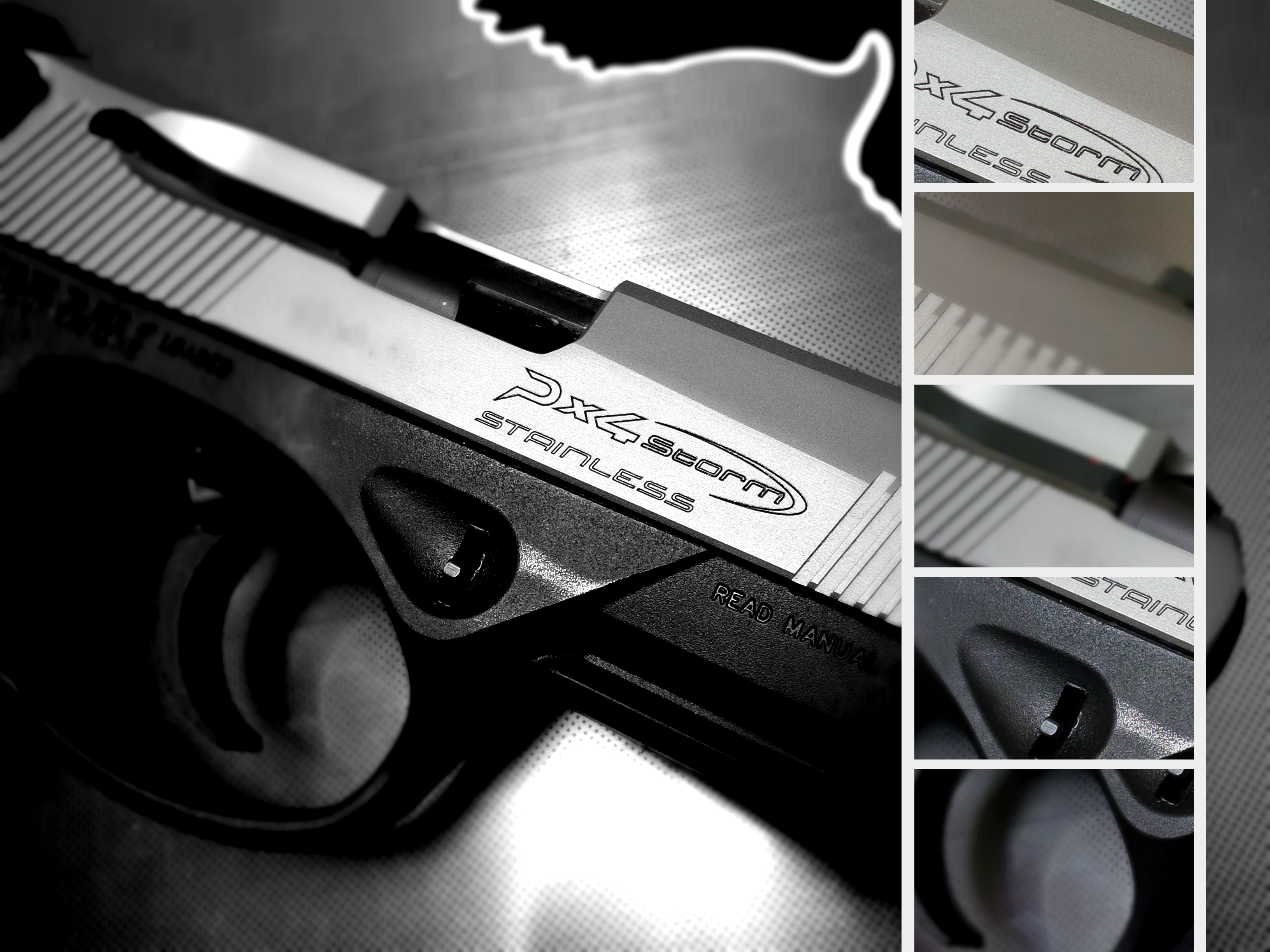
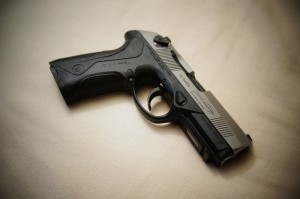
I have a Px4 Storm. It is a very nice gun, chambered in 9mm, and I think it just looks great. It’s also a very easy gun to shoot, with a pleasant recoil impulse and an excellent DA/SA trigger right out of the box. However, what if it was possible to make the Storm’s trigger even better?

Beretta Px4 Storm

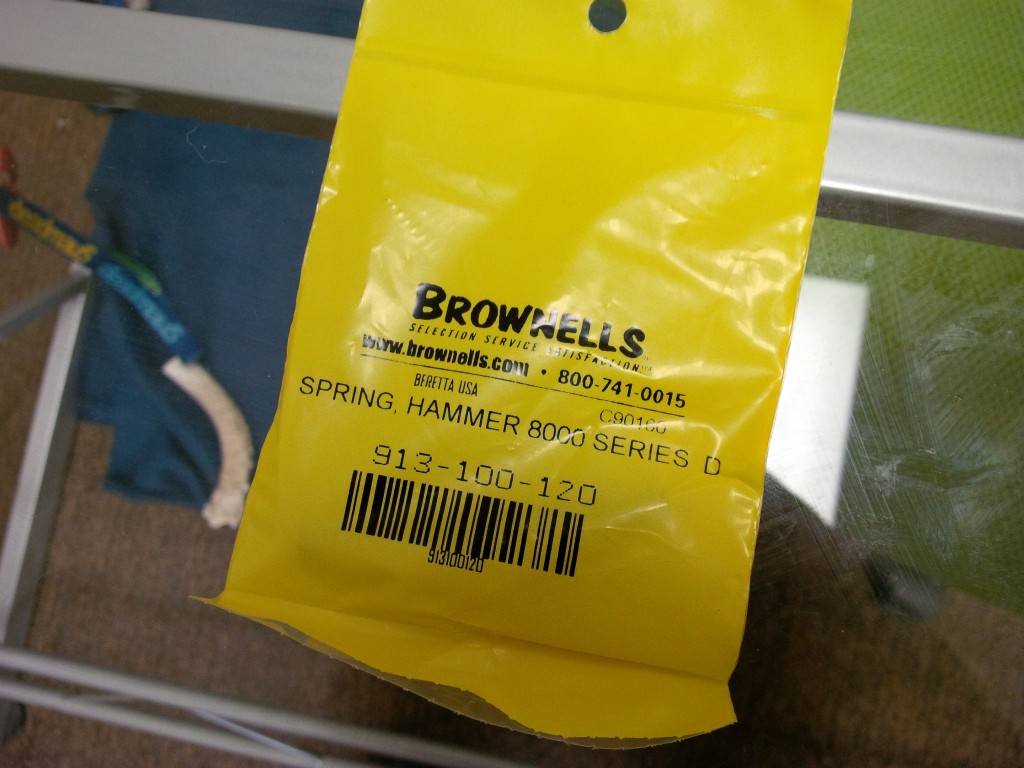
Beretta afficionados have long known that the quickest way to improve the trigger pull on a Beretta 92/M9 series gun is to pull the factory mainspring and replacing it with one of the springs from the DAO Beretta 92, referred to as “the D spring.” That plan doesn’t work on a Px4 Storm, because all of the models share the same mainspring. It doesn’t matter if you get a G, F, D, or C model – same mainspring in a Storm. However, there’s a possible solution, and that lies in the spiritual predecessor to the Storm: the Beretta 8000 series. The Cougar guns never really caught on, but importantly for our purposes, they did make a 8000 D series. After reading reports of other shooters swapping the D springs from Cougars into their Px4 Storms, I decided to give it a try.

Part 1: the spring change
After discovering that Brownells stocks D springs for Beretta Cougars, I ordered…several. Whenever attempting a new procedure on a firearm, I’ve found it’s best to order a few redundant parts just in case I decide to send one flying across the room. I once shot a guide rod out of a 92FS hard enough to break a plate, and if you’ve seen my Ruger GP100 Trigger Job video you know that I don’t always get along well with springs.

Actually changing the spring on the Storm is fairly easy.

  1. Take the slide off the gun – not actually necessary, but it makes everything a wee bit safer.
  2. Remove the backstrap
  3. Drive out the silver pin under the backstrap
  4. Cock the hammer and remove the backstrap plug
  5. Using a hook or something, pull out the factory mainspring. This will require a considerable amount of force.
  6. Put the new hammer spring over the strut, and then put everything together in reverse order.

A note on step 5. I’m not kidding when I say “considerable” amount of force. I was pulling on the spring at the point where internal force-meter was screaming “it’s going to break or something” but I just kept yanking and it came out. So, yeah that’s a fun a experience.

Part 2. Dry fire a bunch
After the spring change, it’s time for a bunch of dry fire to make sure everything’s all settled in correctly. After changing the spring to the Cougar D spring, I noticed an immediate reduction in trigger pull weight. The weight of the DA stroke fell to somewhere between 8 and 9 pounds, and the SA is now under 4 pounds. The trigger feels really great in dry fire.

The danger of swapping a spring like this is that it may not crack primers, and because it’s not a part that is spec’d for the Storm, the wear cycle might be different than what I’d like to see with a factory part. This afternoon I’ll be heading to the gun range to actually test the Storm and see if it can light off the primers on various types of ammo. Come back tomorrow for the range report!

5 terrible guns you should never buy

There are a lot of great, wonderful guns in the world. Some guns are works of art, handcrafted over countless hours to perform the simple task of tossing a bullet as accurately as possible. Other guns are basic machines, designed to protect and defend. Regardless of their intent and design, those guns are great. The guns on this list however, are not. These are five of the worst guns ever made.

1. Moores Machine Co. AR-15
The AR15 is a great design. It is quite possible to build a terrible AR15, and this entry is the only one on the list that we haven’t personally shot. However, good friend PDB did, and it was a pile of turds. Read his epic takedown here.

photo courtesy pdb
photo courtesy pdb

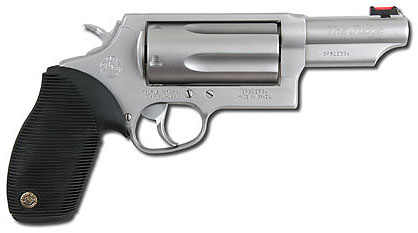
2. The Taurus Judge (in all its flavors)
The Taurus Judge was never anything other than a gimmick. A five shot revolver that accepts .45 Colt and .410 shotshells suffers from being a jack of all trades and yet master of none. Had it been a well executed gimmick, we could have laughed and moved on. But it isn’t well executed, and there’s nothing worse than a bad joke. Production models have trigger pulls that require the strength of 10 men, and samples I’ve personally handled have been out of time from the factory, had misaligned sights, poor finishes, and a host of manufacturing and production issues. The end result is a bloated, overweight handgun that is both a terrible shotgun and a mediocre revolver. Sure it’s good at killing snakes, but so is a shovel.

taurus_judge

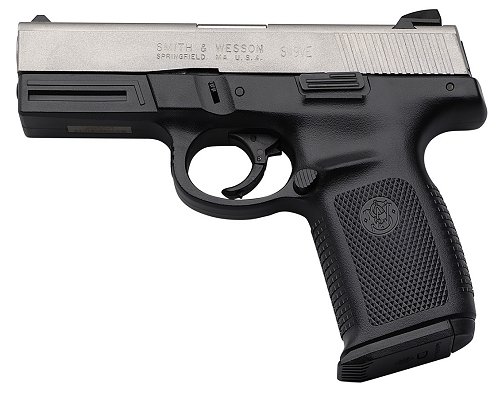
3. The S&W Sigma
Proving that not even great companies are exempt from making stinkers, we have the S&W Sigma. In the dark days before the M&P pistol came about and brought S&W to the forefront of the polymer gun game, the Sigma was a hastily executed attempt to get some of that sweet, sweet Glock marketshare. Needless to say, it didn’t work. Referred to as the “Smegma” by some enthusiasts, early production Sigmas were plagued with reliability problems, terrible triggers, and an actual lawsuit from Glock. While there are reports that later production Sigmas have improved, I wouldn’t know. The greatest sin of the Sigma though is that S&W had the audacity to offer it as an alternative to their excellent 3rd Gen autos.

sigma

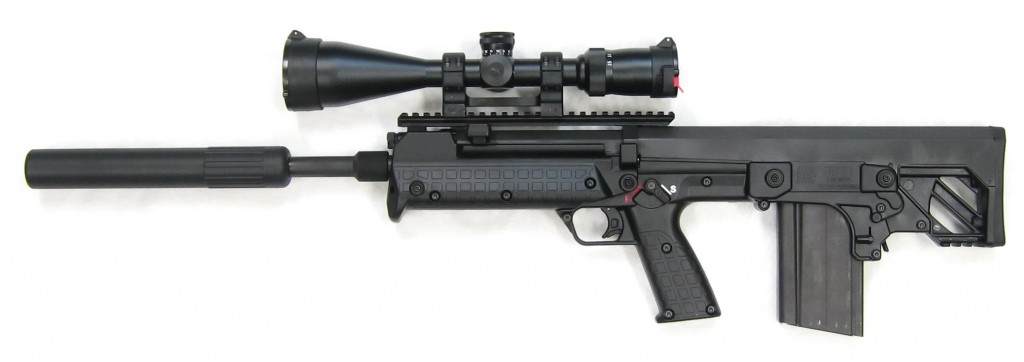
4. The Kel-Tec RFB
“Truth or dare: George Kelgren wants to set off a .308 next to your head.” Yeah, I’d pick truth in that situation too, the dare is just too risky. And yet, the Kel-Tec RFB actually exists. Well, it exists as much as any Kel-Tec product does, which means that the only ones in existence are the photo samples provided to Oleg Volk. In all seriousness though, production guns that have made it out to the general populace are awful. Fit and finish are terrible, some of the guns have epic levels of primer wipe, and one sample I saw decided to forcibly reject some of its trigger parts. If you want a bullpup .308 (why?) you don’t want this one.

Photo courtesy battlefield.wikia.com/wiki/RFB

5. The COP Derringer
I guarantee you’ve seen this gun in a movie. Perhaps the original Bad Boys, in the hands of the villain before getting shot repeatedly in the chest by Will Smith. Or in the execrable Matrix 2, wielded by the ridiculously hot Monica Bellucci. There are a ton of other films and TV shows this gun has made an appearance in, and as a result it’s one of the most famous terrible guns ever. And it really is terrible. The trigger pull is usually measured on a fish scale, the sights are basically pointless because each of the four barrels has a different point of impact, and when firing the .357 Magnum it was designed for the gun has been known to disassemble itself. It has some value as a historical curiosity, which is like saying that getting polio would be an interesting historical experience. But here’s a photo of Monica Bellucci with it, because the gun is so terrible we need something good to end this article on.

500px-2003_the_matrix_reloaded_029-1-