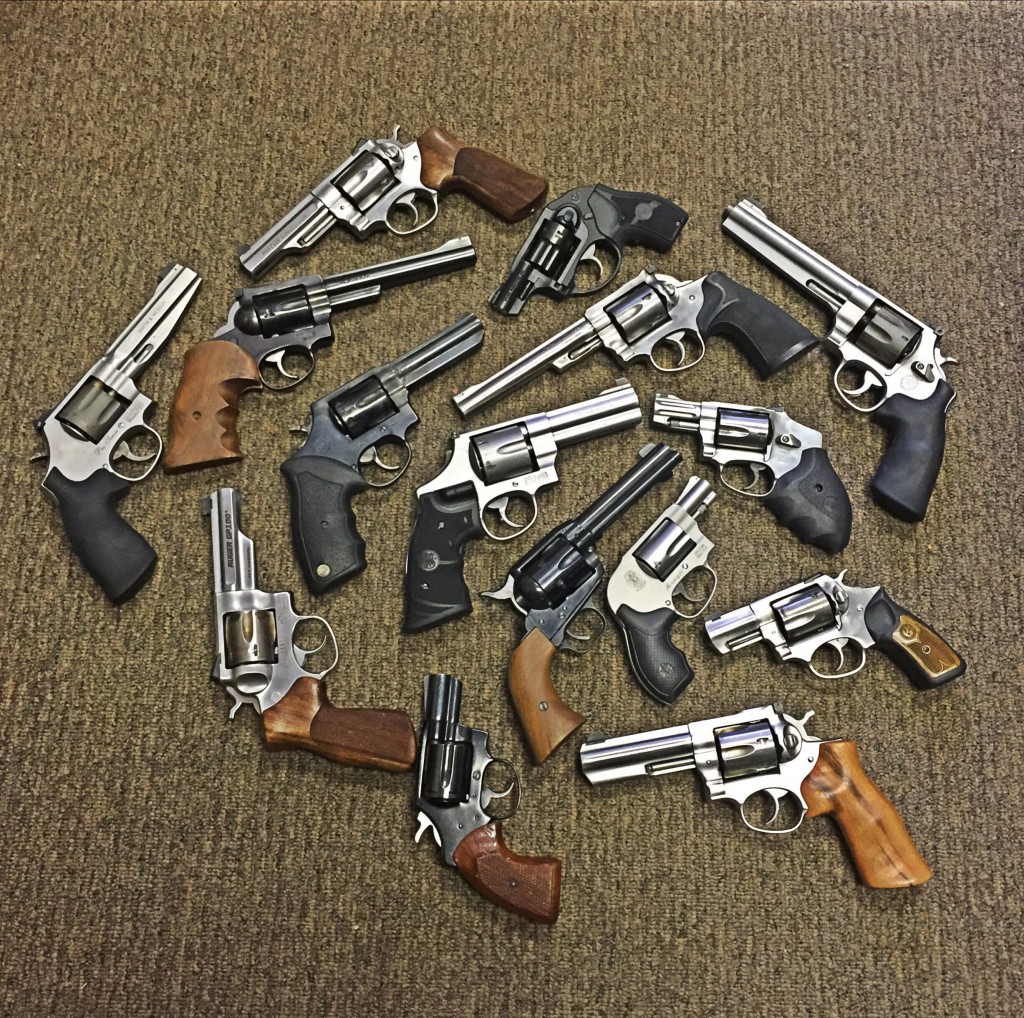
I like wheelguns. You might have guessed that from reading the blog, but I hadn’t really thought about the scope of it until yesterday when a reader asked me on FB to post a photo of the round gun collection.
I like wheelguns. You might have guessed that from reading the blog, but I hadn’t really thought about the scope of it until yesterday when a reader asked me on FB to post a photo of the round gun collection.

In case you live under a rock, SHOT Show starts in less than 2 weeks. In case that rock you live under is huge, SHOT is the biggest and best trade show for the firearms industry. I noticed this week as I was prepping for the show that my feelings about the show have changed over time as my position in the industry has changed. I went to my first SHOT in 2008, in Las Vegas. I was there again in 2009, skipped it in 2010, was back in 2011 and haven’t missed a year since. This show will be my 7th SHOT, and it’s actually pretty fun for me to look back and see how different things are now.
In 2008, I was just a peasant blogger. I had no business going to SHOT, I was barely pulling down 50k pageviews a month, I hadn’t even rebranded the site as Gun Nuts. But a friend made a call to a friend, and BOOM next thing I knew I had a press pass to the show. It was awesome. It was like being an Ethiopian in a grocery store for the first time. Acres and acres of guns in the Las Vegas convention center, and here I was with a media badge that basically gave me unfettered access to EVERYTHING. It was awesome, and I was in heaven. I still had a real job at the time, so I think I was only there for a couple of days. I made a couple of important contacts at that show, which would serve me very well in years to come.
Between the ’08 and ’09 shows, I started freelancing a lot more for various publications. I had bylines in Outdoor Life, a lot of the Harris pubs, and of course was still blogging my little heart out. So I went to the ’09 show in Orlando (which by the way is a way better venue than the Sands) with an actual mission. Unlike 2008, where I was just “kid in a candy store” gawking at things, in 2009 I actually wanted to see some guns, meet some people and get good coverage. Again, the blogging and writing was still mostly a hobby, but I had an inkling that I could make some coin doing it, and I figured “get good content” was probably the best way to do that. 08-09 had also been when I started attending writer’s events, thanks in a large part to the contacts I made at the 2008 and 2009 shows. So my attitude in 2009 was different – I was looking to keep expanding the professional side of what I was doing. 2009 is also when I rebranded everything to Gun Nuts, and started getting serious about competitive shooting and bringing in sponsors and advertisers.
2011 was a whole new SHOT Show experience for me. I was now a full time writer, blogger, working for GunUp, a sponsored shooter – it was all quite mad, and it marked a real transition point for me. It was the first time I was at SHOT to really conduct business; getting good content was secondary to meeting with marketers and advertisers and wrapping up ad contracts for Gun Nuts and GunUp. It was also the first show I brought an additional person to, which seems to have worked out pretty well for me so far. I would say in 2011 I was about 60/40 split between selling ads and getting content.
That trend has continued for the next three years, from 2012’s show all the way to last year’s show. Yes, I’m still media, and I do take photos and put up blog posts, but now days I go to SHOT for two things: sell ads, and see friends. That’s really what the show has become for me, a great time to sit down and shake hands with some awesome people I only get to see a few times a year. And you know what? That’s awesome. Going to SHOT helps keep me in business, doing something that very few people ever get the opportunity to do. Sure, I’ve gotten burned out on competition shooting (except for Bianchi Cup), and sometimes being your own boss can be frustrating. But every year, despite the dread, despite the hard work and aching feet, SHOT Show reminds me that the best part of this industry are the people who work here.
If you see me at SHOT, please stop me and say hi. I can’t promise I’ll have a lot of time to chat, but I genuinely enjoy meeting readers. I’ll be the midget in the natty sport coat and jeans.
One second you’re rolling up on what appears to be a motorist with a car that’s having mechanical trouble, and the next you’re on the ground with multiple gunshot wounds, anchored there by a broken femur and trying to reload your handgun with a broken wrist…because the mag’s worth of knock-it-off you’ve already sent in the bad guy’s direction didn’t penetrate the vehicle he’s hiding in and as far as you know he still has his gun and it’s still got bullets in it.
The general public misunderstands a great deal about the use of lethal force, but I find that one of the hardest aspects to get them to realize is the sheer speed of life and death. When a pre-teen with an airsoft gun was shot by police in Cleveland someone asked me how on earth police could “kill” a “child” two seconds after encountering him. “TWO SECONDS!!!”, she emphasized.
If you watch the video closely you’ll notice that it took about two seconds for approaching a disabled vehicle to turn into a fight for Officer Golsun’s life. Two seconds. Count that to yourself…one, one thousand, two, one thousand…that’s it. That’s all you get to notice that something is happening, recognize what it is, decide on a response, and carry it through.
Of course, many who make such statements are not really interested in learning the dynamics of lethal force situations. They’re unhappy with the outcome and want to find fault with the process that led up to it…and they are usually full of reasons why it should have gone different despite not having many actual facts about what took place or any understanding of what it’s like to actually be in the situation or indeed any situation that’s even remotely similar. If you suggest that perhaps they don’t really understand what they’re talking about, you get accused of blindly supporting some sort of nefarious agenda designed to oppress somebody.
It’s stupid, frankly. Stupidity is, of course, the ultimate luxury. Idiocy is an indulgence available to those who are comfortably insulated from the consequences of their stated preferences and opinions. It’s really easy to think that two seconds is plenty of time to make a life or death decision when you have never had to even ponder the possibility of making such a decision yourself. It’s really easy to scream “HANDS UP, DON’T SHOOT!” at people you are pretty sure aren’t going to shoot you.
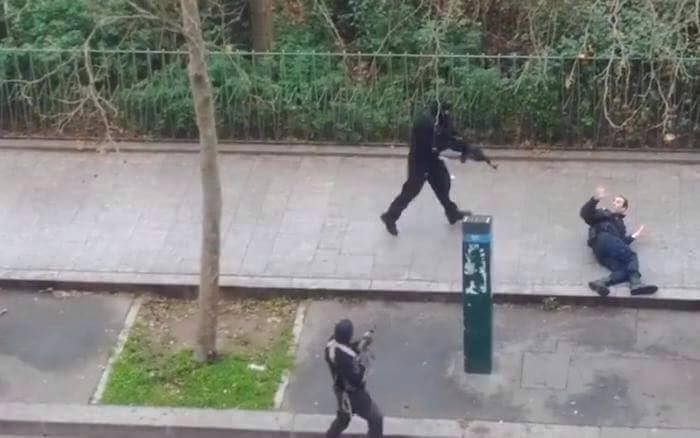
Look at the picture immediately to the left. The man on the ground is a French police officer with his hands up. A couple of frames later the terrorist put the rifle right at his head and executed him. I can’t see the “HANDS UP, DON’T SHOOT!” types trying their chant with the islamists who executed him. Sure, they make a big deal about oppression and how awful our police are but if we’re really honest with ourselves we know that they’re really just doing what they know they can get away with.
Their nonsense has a cost, though. There are a lot of good police officers out there who are noticing that the job increasingly places them in completely no-win situations. Facing the possibility of death or injury from violent thugs on one hand and the ire of an uninformed public whipped into a frenzy by professional agitators on the other, many are asking themselves why they should continue to risk their future and their family’s future on what sure looks like a sucker’s bet.
Of course, some of you may not see a problem with fewer police. It’s not really a numbers thing, though. We will always have police but it’s not a guarantee that we will always have quality people serving as police officers. The people who have good judgment and families and who try to do the right thing are the folks having these thoughts…and they’re the ones we absolutely need in the profession. You have no idea how many real problems and how much bloodshed has been avoided because of the influence of police officers who exhibit good judgement and sound ethics on the street and inside the walls of police headquarters.
A number of folks I know in law enforcement have retired recently, several within the last 12 months. A number of them have fathers and grandfathers who were police officers…but they warn their sons and daughters to go do something else. A number of them are leaving a hole in their organization that nobody is going to really fill and the organization will be poorer for it. So will the public.
We need good people serving as police officers. We’re not going to get them or keep them with the crap we’ve seen lately.
Naturally someone will accuse me of blindly supporting the police, but that’s not the case. I don’t blindly support anyone, especially not agents of the government. There’s a lot to dislike about our criminal justice system as a whole and that includes the way policing happens in America…but it’s also true that at the root of a lot of the stuff that makes headlines is a decent human being trying to deal with a truly awful situation.
Our entire system of government is based on the idea that the people who show up to the polls are reasonable adults. If We The People act like a bunch of spoiled kids it descends into chaos and madness pretty quick. Reasonable adults require facts before making judgements, recognize the difference between good and evil, and are inclined to give good guys the benefit of the doubt. Spoiled kids whip out the pitchforks and torches entirely on the basis of ridiculous allegations by liars and thugs.
This pattern cannot continue consequence free. You can’t keep spitting on the people who keep the barbarians at bay and still enjoy the safety and comfort of a barbarian-free existence. Yes, folks, there are barbarians among us. Ugly, savage brutes for whom unjustified violence is as reflexive as drawing breath. Get pissed off at the description if you want and call me “intolerant” if it makes you feel better, but I’ll remind you I wasn’t the one murdering cartoonists yesterday or gunning down police officers in New York a couple of weeks ago.
There really are good guys and bad guys in this world and increasingly elements of our society are insisting on persecuting the good guys and giving the bad ones the benefit of every doubt. The cost of that stupidity is too high, folks.
Addendum:
I encourage you all to go and watch the video found here where a civil rights activist who protested police actually goes through use of force training:
Note that the civil rights activist who protested the shooting of an “unarmed” man, shot an unarmed man himself. The activist had the luxury of knowing the scenario wasn’t real…but when you are in a force on force evolution it sure as heck feels real. Kudos to him for having an open enough mind to go through such an exercise in the first place. Many wouldn’t dare put their world view to the test like that.
As my friend Todd pointed out in his blog post the world looks mighty different to those who have actually had to simulate solving these kinds of problems.

By now you’ve likely heard of the horrid terrorist attack in Paris that claimed the lives of 12 people, including two police officers. The perpetrators are still at large, having escaped after a brief gunbattle with the outgunned Paris police. If you’re not up to speed, today in Paris at least two gunmen armed with AK variants and yelling “Allah Akbar” attacked the offices of a satirical French newspaper, killing 10 employees and two police officers. You can see brief footage of the attack here, which I should warn you is graphic and includes the execution of a wounded cop.
Here’s what 12 people lost their lives over today:
A cartoon. Think about that for a second. Just sit and think about it. Imagine in the United States, if someone were to say, depict Jesus Christ as a sleezy con-artist who lies to women to get laid. Oh wait, what’s that? Someone did that just recently? It was on Family Guy’s Christmas episode a month or so ago? And yet no one burned Seth Macfarlane’s house down, no one got killed. Sure, some people got angry on twitter, but no one grabbed automatic weapons.
I need to be clear before we continue that there are plenty of rational, peaceful followers of Islams that do not support, condone, or encourage this kind of violence. I wish there were more of those people. The reason I wish there were more of those people is because Islam is largely represented by its worst members, the radical factions that do support and practice violence. The closest example I can think of would be if the Westboro Baptist Church was what people across the world thought of when they thought about Christians (and if the Westboro Baptist Church chopped people’s heads off on the internet). But the western world does a pretty good job of condemning our own extremists, people like McVeigh and Westboro. Why don’t I see the moderate Muslims doing the same thing in the wake of attacks like this?
I’m frustrated. I’m angry. I’m tired. I know that there are people who absolutely want to bring this kind of violence to our shores. Murdering people over cartoons. But, and this is important, that’s generally not here yet. We’re still America. We still have freedom of religion and we should continue to do allow people to practice whatever religion they see fit, including Islam. Maybe Islam won’t ever have a reformation, and will continue for another 1200 years trying to cut a bloody swatch of domination across the globe. But I do know one thing. Unless everyone agrees to stand up to radicals who terrorize in the name of Mohammed, the peaceful moderate Muslims will never even have a chance to become the voice of their religion.
The M16 series has been in service with the US military longer than any other individual rifle not due to conspiracy, complacence, incompetence or frugality – but because collectively it still represents the state of the art in portable lethality.
Ranger Up has an excellent article about the “problems” with the M16/M4 platform. Their article is written in response to a piece written in the Atlantic about how terrible the M4 is.

If you’re one of the lucky people that lives in a state that experiences this thing called “winter” you’ve probably faced the same dilemma that I face every winter. What to do about training? Let’s face facts, no one wants to go to the range when it’s -22 F outside, setting aside the fact that going outside when it’s that cold can be quite dangerous. But you don’t want to not train, you don’t want to be lazy, so what to do?
The pat answer is “dry fire” because everyone knows that dry fire is totally awesome, right? That’s fine, and if that’s what you want to devote your training time to, knock yourself out. I however am going to suggest an alternate option for your winter training time: use the winter as an opportunity to up your physical game. “What? Work out? MADNESS! This is a gun blog, not a fitness blog!” I know, I know, but bear with me here. What if I told you that being fitter would make you better at whatever your shooting goal is? Because it will.
For example, say the only reason you carry a gun and shoot a gun is to defend your life in a violent encounter. You don’t shoot matches, but you regularly attend classes as ways to benchmark your skill and improvement. Your goal when carrying a gun is to be able to win a fight. That’s awesome. Fit people are harder to kill than unhealthy people. None of us carry guns because we’re optimists. I don’t buckle on a pistol or revolver every day because I think that the world is a wonderful place full of sunshine and ponies, I do it because the world is full of awful people who might want to hurt me for no good reason. I don’t think that’s going to happen…but it could. So I might as well be ready. I also should be ready if the best solution to avoid getting hurt by a bad man is to be able to run away very quickly. It wouldn’t hurt me to be physically strong enough to shove someone away and create space, or to know how to throw a good jab/cross combo, either.
What if your goal is to win at pistol shooting competitions? Yes, you need to be able to shoot well, but you can train those skills on the range during the 7-8 months of the year where the weather is good. In the off-season, why not build an explosive sprint for those long field stages? Or make your upper body stronger so you can hold your rifle steadier on three-gun long shots? Those seem like good things to me, and they probably will have additional benefits in other areas of your life as well.
I’m not trying to say you need to become some kind of elite athlete like Rich Froning. You don’t even need to be as fit as JJ Racaza or Jordan Miller, but those would be great goals if you wanted to do that.
One of the big reasons people get discouraged about getting into shape is that they feel like they need to be able to perform at a high level right away. “I can’t do 100 pushups, why bother?” Or even “I can’t do 10 pushups, why bother?” You don’t need to do that right away. That’s a goal, something you can hit later. Can’t run 3 miles? Walk. Then walk a little bit faster the next time. Experts say that it takes 21 days of a routine to form a habit – try it for three weeks. Go for a walk. Do a pushup, or do five.
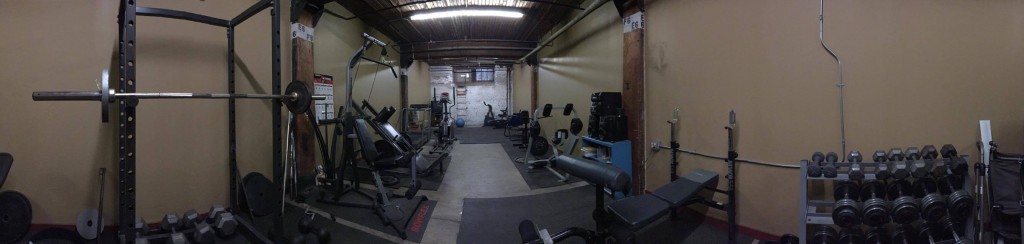
No matter what your current fitness level is, winter is a great time to up your game. It’s already cold outside, you don’t want to go to the range, so you might as well hit the iron. This is where I’ll be spending my winter.
Also, a note: if you want some inspiration, I suggest two things. First, watching Pumping Iron on Netflix, and second go follow The Rock on Instagram.
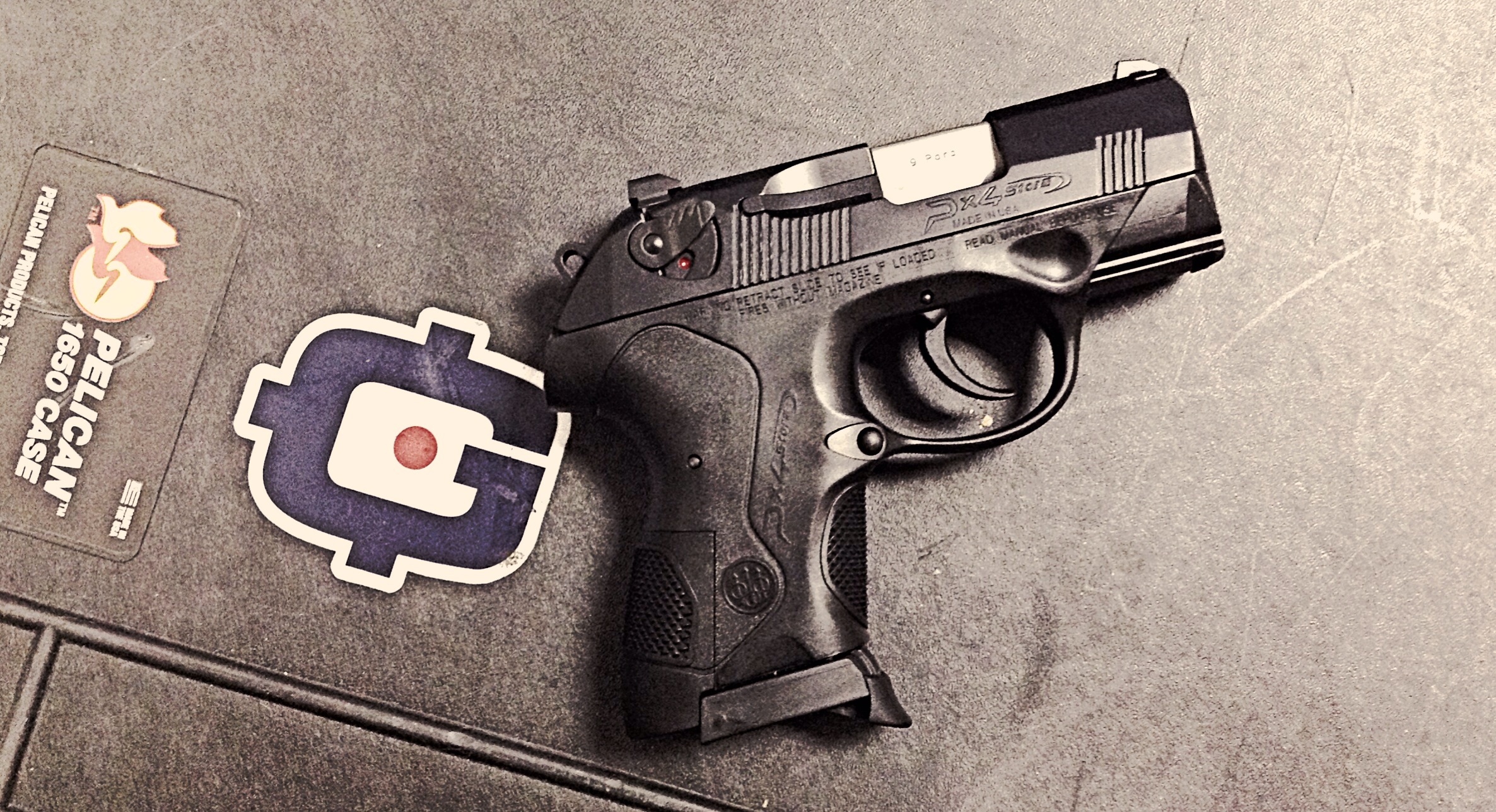
In 2014, I spent a decent amount of time shooting the Beretta Px4 Storm. I didn’t shoot much in 2014, probably only 7,000 rounds of pistol or so; of that about 2,000 was through the Px4 Storm. I had three posts that covered using the gun, including a review of the Px4 Storm. I shot it in several action pistol matches and at Bianchi Cup, I learned that you can put the “D” spring from a Beretta 8000 series in the Storm to greatly improve the trigger, I discovered that the rotating barrel makes the gun unusually accurate, and that the recoil system is about the most pleasant 9mm I’ve ever shot. In short, I learned that it’s a pretty good gun…and not a lot of people like it.
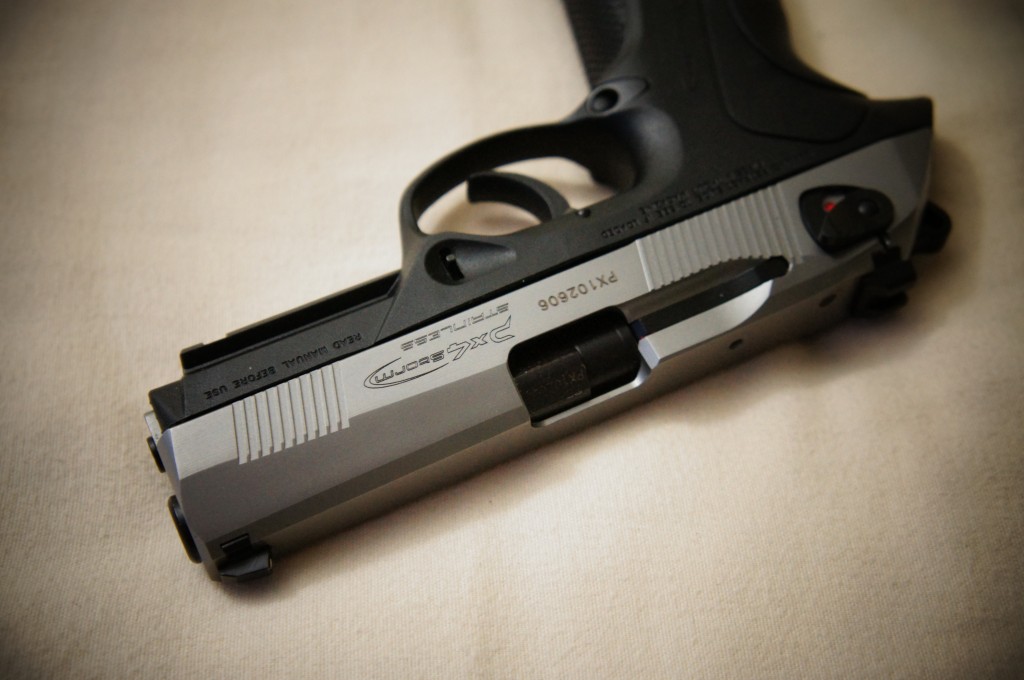
I understand that in the early going, there were problems with some of the Storms. I’ve heard reports of cop guns locking up and having various issues, but it’s something I’ve never seen. Plus, that was a rather long time ago, because while people tend to think of the Storm as a “new” design, it’s been with us for a decade now. It hasn’t always had the easiest time in government service either, having been adopted by a handful of police departments. It’s hard to call that a failure of the gun itself, because with the exception of big sales in the LA metro area in the 80s, Beretta has never really gone hard in the paint after domestic LE contracts. It has enjoyed success in foreign markets, with buyers in South Africa, Peru, Portugal, Canada, and a bunch of other countries that US readers don’t care about.
But is it really fair to judge a gun based on how many soldiers and cops carry one? Or is that a judgement of the efficacy of the parent company’s sales strategy? An example of that would be the Springfield XD, which has been adopted by even fewer militaries and LE agencies than the Storm, but is widely popular in the US consumer market thanks to an incredibly effective marketing campaign in the United States since Springfield acquired the importation rights to the HS2000. It becomes difficult to separate the gun from its company’s marketing efforts, which can lead to quality guns like the Storm not getting the love they deserve, while guns like the XD become popular because of effective marketing.
Make no mistake, I genuinely believe the Storm is a good gun. It’s made by a reputable manufacturer that has a solid history of quality control; the various Storms I’ve had have all proven to be accurate and reliable, and it’s a genuinely easy to shoot well. It’s also quite reasonably priced, frequently available for less than $500 brand new. But it doesn’t get the love, and I think that’s too bad.
If I had to really think about it, I’d say the Px4 never caught on for two reason:
Now at the end of 2014 and 2015, Beretta has once again started pushing the 92 line-up hard. New models like the M9A3 are coming out in 2015, the G-model has been brought back, and they’ve even collaborated with Wilson Combat to offer a Production/IDPA ready 92 for competition and serious shooters. Make no mistake, I love the 92. I think it is easily one of the top 5 greatest handguns ever produced, and has earned it’s place alongside the Glock 17 and 1911 as icons.
But in all the hoopla, I hope the little Storm doesn’t get blown away. I think it’s a great gun, and at the current market prices of less than $500 delivers a ton of value for what you pay.
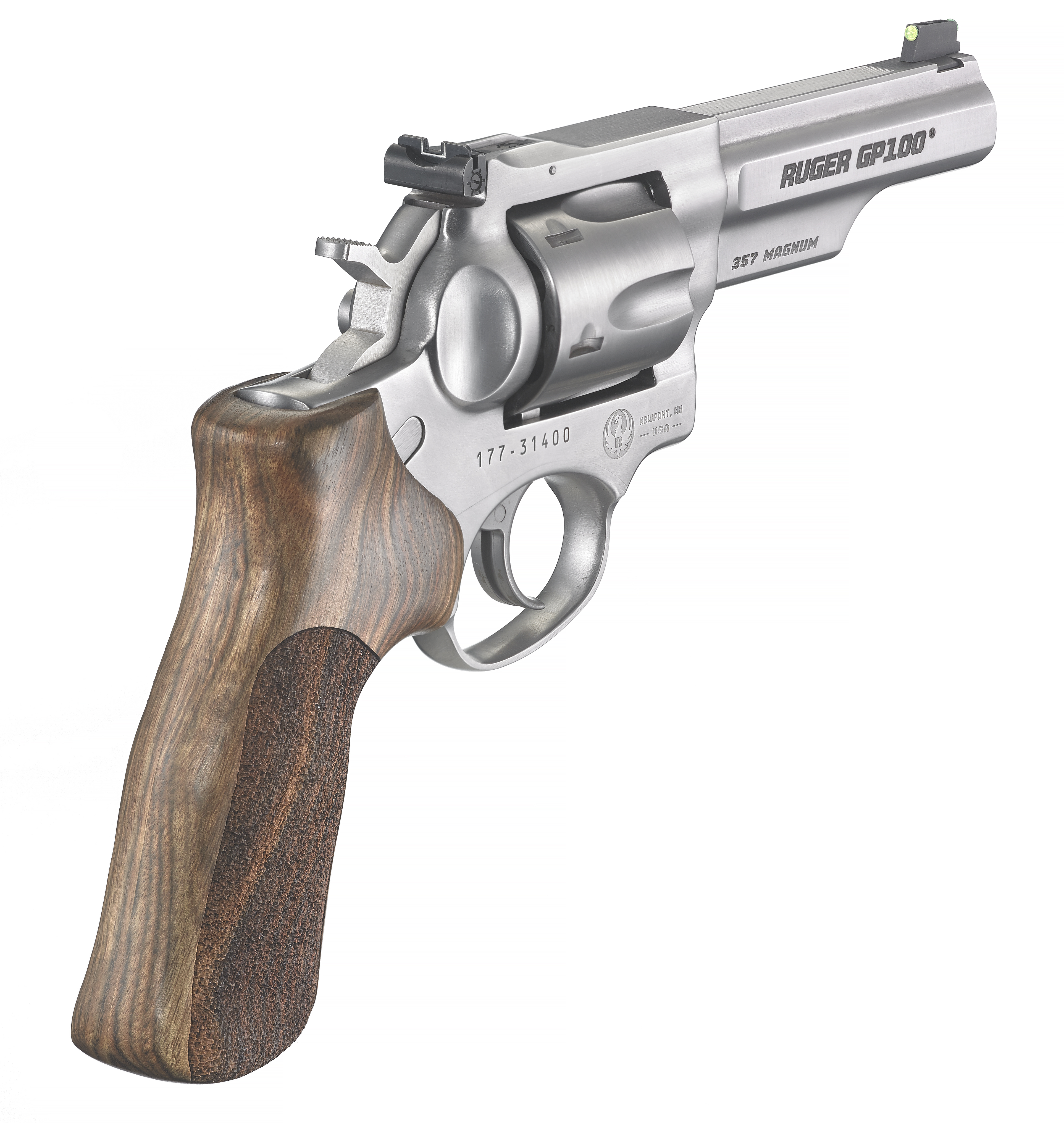
Sturm, Ruger & Company, Inc. (NYSE-RGR) is proud to announce the new Ruger® GP100® Match Champion™ with adjustable rear sight. This new model shares all of the same great features of the original fixed sight model, but now includes a white outline, windage and elevation adjustable rear sight which, when combined with the fiber-optic front sight, creates a great sight picture that can adjusted based on the type of ammunition being shot.
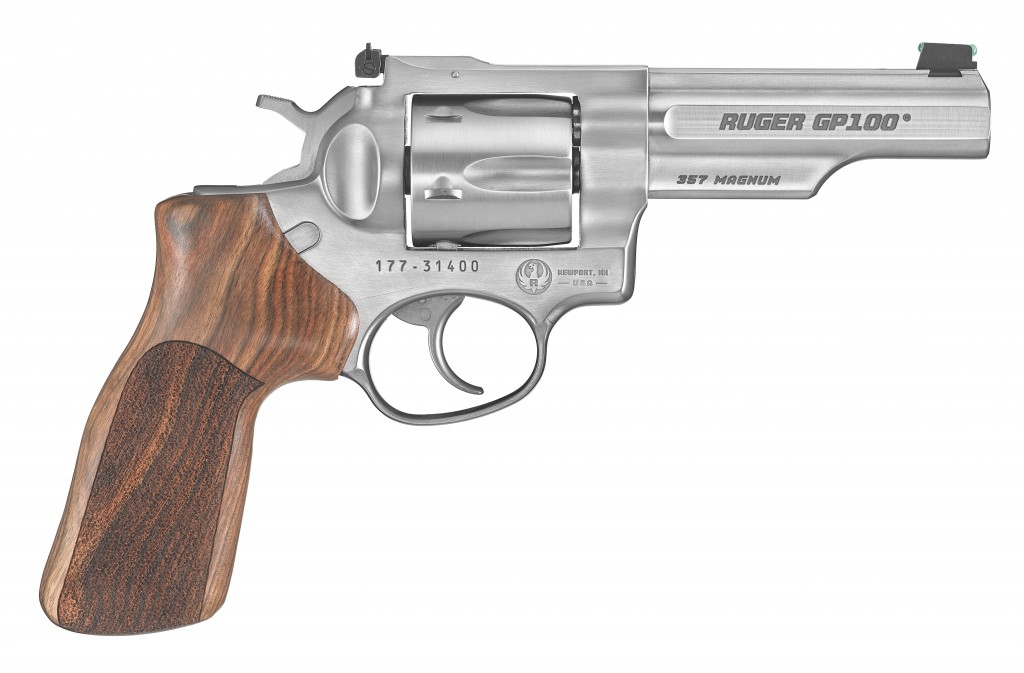
The GP100 Match Champion is a six-shot revolver chambered in .357 Magnum that is designed for the competitive shooter, with a 4.2-inch slab-sided, half-lug barrel with an 11-degree target crown for competition accuracy. The polished springs and hammer strut, combined with the trigger and hammer shims, provide an exceptional match-tuned action that produces a smooth, double-action pull with a crisp and consistent let-off. A chamfered cylinder and custom Hogue® stippled hardwood grip with dual speed loader cuts enable quick reloads, making the Match Champion ideal for personal protection, competition, and IDPA matches in particular.
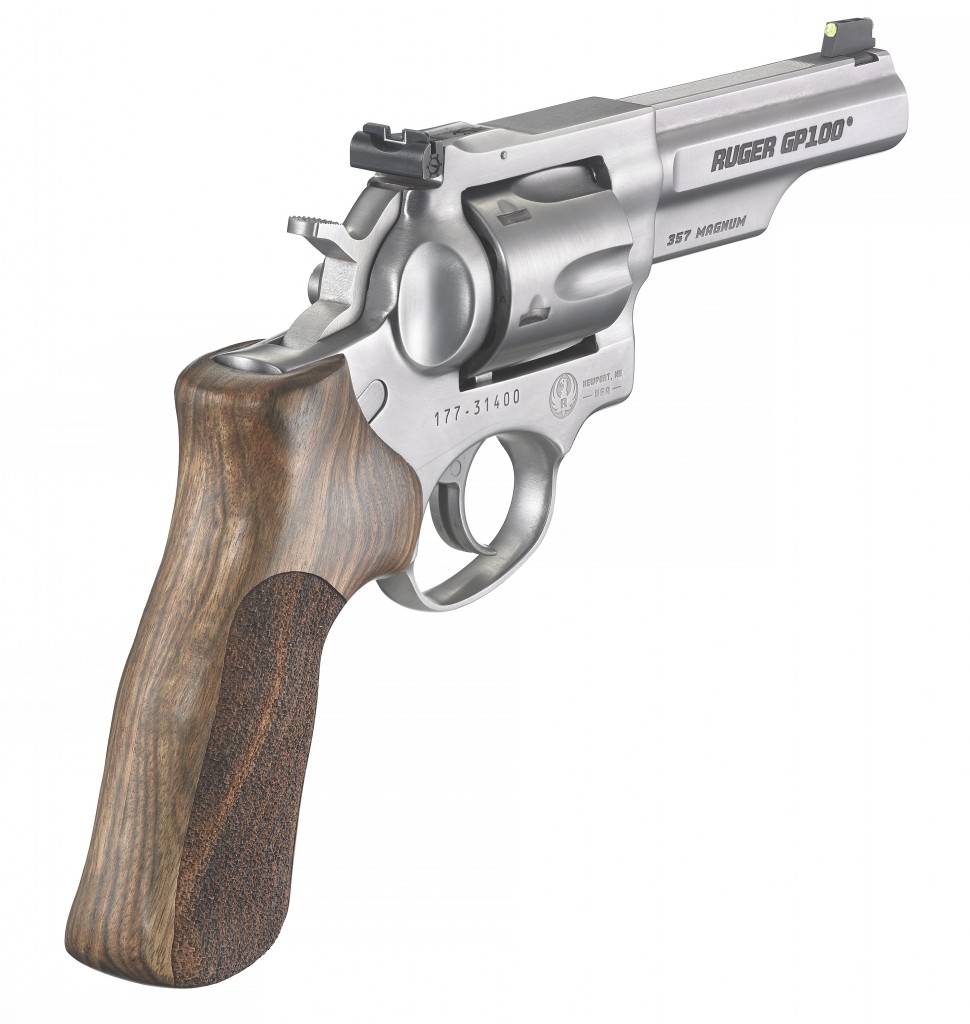
“Since the introduction of the original fixed sight Match Champion, customers have been asking for a revolver with all the same great features and fully adjustable sights”, said Chris Killoy, Ruger President and COO. “Our goal in building this revolver was to allow the use of a wide variety of ammunition for the competitive shooter while maintaining all of the great custom features in a factory produced firearm,” Killoy continued.
After World War II the US military had so many 1911 pistols in inventory that they saw no need to buy any more. Ever. (Although the USMC very recently did buy a small quantity of 1911 pistols from Colt) The wartime production had pretty much flooded the market with 1911 pistols and post-war prosperity made surplus guns relatively cheap and readily available. Market prices for a good do not always reflect the quality or costs of producing the good in question. If you happened to be the guy who bought a Gibson Les Paul in 1956 or a 1971 Hemi-Cuda in the Maliase era days, you’re quite happy about that.
People bought the 1911 pistols but they often wanted the guns to have better sights, better accuracy, and maybe not draw blood when you shot them. NRA bullseye pistol competitions led to modifications of the 1911 pistol in an effort to wring more accuracy out of the guns. The fit of the slide, frame, and barrel within the slide is crucial to producing superior accuracy…but the original 1911 wasn’t originally manufactured with that in mind. Because the pistols were made out of high quality steel, though, they took to modification quite well. There are a number of different processes involved in improving the fit between a 1911’s parts to eliminate extra play, but to give you an idea of the work involved here’s a quick video showing one of the ways to modify the fit between the slide and the frame:
Jim Clark, Jim Hoag, Armand Swenson, Bill Wilson and other talented gunsmiths rose to prominence by modifying 1911 pistols to make them more accurate, more reliable with different types of ammunition, or more ergonomically friendly. The work they did was often quite labor intensive. To give you some idea of what “labor intensive” means, Jim Clark had been experimenting with the idea of longer barrels in 1911 to give better accuracy and ran across a barrel full of 1911 slides that had been “de-commissioned” by being sawn in half. He bought the entire lot of what was probably intended to be scrap metal and would use them to manufacture his “long-slide” conversion guns. He would actually take another 1911 slide and then very carefully weld the end of a chopped slide onto it. The resulting joint would be ground down and polished until it looked like the slide had been made that way in the first place.
In the earliest days of customizing the 1911 there was no big Brownell’s catalog full of drop-in parts for the 1911. Parts had to be manufactured one at a time through labor-intensive processes and then carefully fitted to a customer’s gun to have it work properly. When you actually stop and think about it, it’s amazing what those guys managed to achieve with lathes and welders as their primary tools.
This work wasn’t cheap. It was understood that custom work was labor intensive and, as a result, expensive. Folks who wanted it paid and folks who didn’t think it worth the cost didn’t. The explosion of practical handgun competitions and the seemingly endless features on custom 1911 pistols in gun magazines (not to mention Jeff Cooper) created a desire in the market for custom 1911’s beyond those who had identified a specific need for one. Anybody who spent time reading American Handgunner prior to 1995 probably has visions of custom 1911 pistols dancing in their head…but when you actually found out how much it cost to have that kind of custom work done it was a shock to the system. I distinctly remember being in a gunshop when someone was taking delivery of a custom 1911 pistol and another patron asked the impolite cost question. The owner answered truthfully. His questioner, utterly shocked, blurted out “I could buy a good used car for that kind of money!”
With the utterly awful and completely useless Clinton Assault Weapons Ban in effect limiting magazine capacities, suddenly the 1911’s single stack capacity wasn’t so bad. Springfield and Kimber burst onto the scene purporting to give custom 1911 features at production 1911 prices. Others followed and now there are more 1911 pattern pistols on the market than you can shake a stick at. Brownell’s has an entire catalog dedicated to just 1911 parts…so the uninformed consumer might see the price tag on a truly custom 1911 pistol and think it’s insane.
In truth it’s no different today than it has ever been with custom 1911 pistols. A great deal of what smiths like Clark, Hoag, Swenson and Wilson did with customer guns was fix or improve what the factory put out. Sure, there’s a whole catalog full of 1911 parts but those parts vary wildly in quality and even if you buy the very best quality parts to assemble into a 1911 they don’t all play together nicely. Frame rails still have to be peened, (in some cases even welded) barrels still have to be fitted, feed ramps and barrel throats still have to be set up right, etc. Correcting factory shortcomings or mistakes is as labor intensive today as it was when Jim Clark or Jim Hoag were welding slides together or having frames and slides welded to tighten the fit.
In isolation the price tag on that kind of work seems astronomical, but when you realize just how much labor is going into the end product it suddenly makes a lot more sense. The good gunsmith isn’t charging an arm and a leg because he’s trying to get rich…he’s trying to cover the cost of the time he’s put into making the gun right. I encourage you to go take a look at Heirloom Precision’s Facebook page sometime. From time to time Jason Burton will post pictures of in-progress builds. He’s done a number of square trigger-guard guns lately which involves basically chopping the trigger guard off of a frame, welding on a 90 degree piece of steel, and then carefully shaping and contouring that piece of metal until it looks like the frame was originally made that way…and that doesn’t even touch the other work he does to the frame to improve the fit, the cosmetic appearance, or usability of the pistol. The process of putting out an Heirloom gun is as labor intensive today as producing a good custom 1911 ever was. The tools of the trade are more precise these days and some of the parts available are better than the make-do stuff the old school guys had to use, but in the end the final product still depends on a skilled smith getting everything right. That isn’t cheap.
…but with the wide availability of 1911 pattern pistols today, does anyone really need a custom 1911? Does anyone really need to pay that premium? Isn’t it all pretty much the same?
More on that next time.
Justified is one of my all time favorite TV shows, and it’s a favorite of gun nuts everywhere. The writing and gunplay are on point, and it seems that’s there is something for everyone in the show. We like it so much that we featured The Guns of Justified in the December issue of GunUp the Magazine, which you can download on your iPad at this link. But now let’s get to my five favorite moments from the series. Oh, spoilers for people who’ve never seen the show, duh.
5. “I hope I got that right”

In Season 4’s Outlaw, Raylan gets in a fast and dirty shootout with an assassin disguised as a county deputy. What’s great about this scene is that Raylan acts on nearly pure instinct, as he has no reason other than his gut to believe that the person he shoots isn’t a real cop; but he reacts fast, bullets fly, and he finishes the scene with a simple line: “I hope I got that right.”
4. Pretty much all of Boyd Crowder
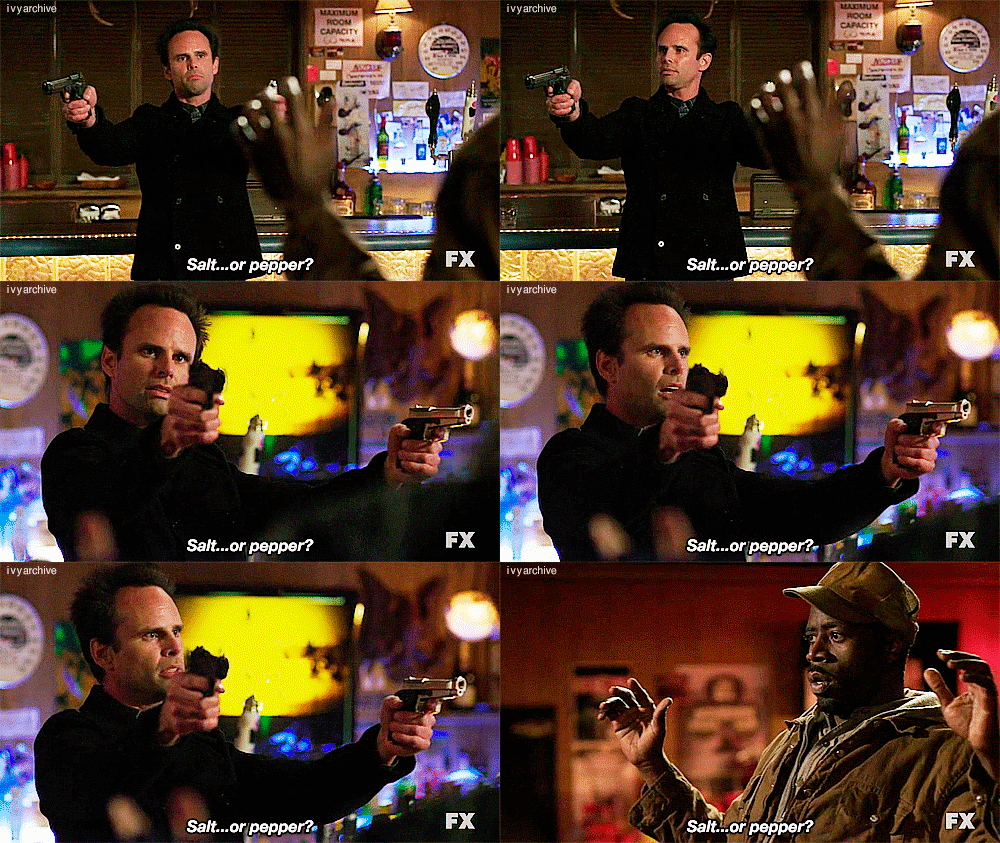
It’s hard to pick a favorite Boyd Crowder moment in the show, because he plays such a great foil to Raylan. One minute he’s helping Raylan, the next working against him. Season 5, the most recent season as a nice return to form for Boyd, as he started dropping bodies all over the place again in order to get what he wanted from the system. I particularly enjoyed the finale of Season 5, where he set up some cartel hitman to get killed by the US Marshall service in order to accomplish his objectives. Oh Boyd, you scamp.
3. Tim shoots Colton in church
Tim Gutterson is one of the supporting characters on Justified, and one who I don’t think gets enough screen time or character development. However, in Season 4 we do get a look into his backstory a bit, and he ends up wrapping up one of the season’s important plot lines and dealing with one of that season’s main villains. In typical Justified fashion, he deals with said baddie, one Colton Rhodes, by shooting him repeatedly in the chest. In Tim’s defense, Colton tried to draw on him. (note; I couldn’t find a clip of this on youtube, sorry)
2. “You’ll pay to find out”
In season 1, in the very first episode, Boyd Crowder asks Raylan what gun he’s carrying. Raylan responds with what would become one of my favorite one liners of the show when he simply says “you’ll pay to find out.” Boyd decides to pay the toll, and finds out first hand exactly what Raylan is carrying, which in that scene was Colt Officer’s Model. That also marks the only time in the series you see Raylan with a 1911 variant, as for the rest of the show he carries a Glock.
1. “Next one’s coming faster”
This scene is probably everyone’s favorite, and is by far one of the most badass things to happen on television. Watch the video above, and if I have to explain why that’s so great, you’re a bad person and you should feel bad. It’s a genuinely great moment from what I feel was the show’s most uneven season – Season 3 had some really great moments, but on the balance I felt like it was cluttered and busy, trying to do too much. But this moment is just fantastic.
It’s New Year’s Eve, we’re taking a light day, but what are your favorite moments from Justified?