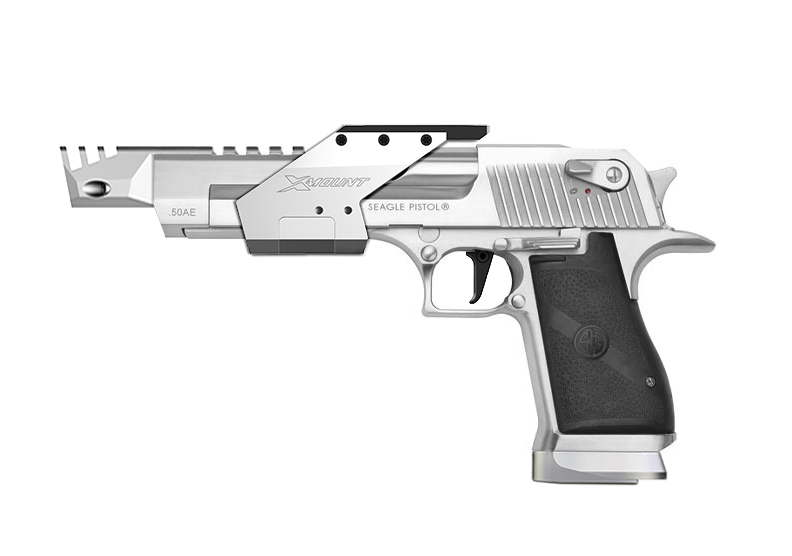
EXETER, NH (January 18, 2015) – SIG SAUER, Inc. is proud to announce its collaboration with renowned manufacturer Magnum Research to create a first in its class firearm, the SEAGle® .50. Designed specifically for Naval Special Warfare (SEAL) units, the SEAGle combines the legendary firepower of the Desert Eagle in .50 AE with the reputation for quality and reliability of SIG SAUER® firearms.
The SEAGle incorporates a proprietary optics mount giving the warfighter the ability to dominate the battlespace with the speed and accuracy of an optics equipped rifle in a much more compact package. The compensator, developed by captain of Sig Sauer’s shooting team, competition shooter Max Michel, makes the gun return to target fast in recoil.
The SEAGle brings together the best of two great firearms manufacturers to create the first truly offensive handgun.
MSRP: $3,999
Capacity: 8+1
Weight: 5.3 pounds (without optic)
Trigger pull: 3 pounds
Finish: Stainless Steel or OD green Cerakote
The folks at Raven Concealment sent me one of their brand new Eidolon holsters for T&E. The holster was unveiled to the public yesterday and I haven’t had enough time with the holster to give a full review. (I will serve no swine before its time…err, I will review no holster before it’s kosher) Expect a full review very soon…
This open letter was just posted by the ATF regarding the Sig SB-15 brace. You can read the PDF here, but because I’m a bro I have copied the entire thing for our readers. Full text follows:
OPEN LETTER ON THE REDESIGN OF “STABILIZING BRACES”
The Firearms and Ammunition Technology Division (FATD), Bureau of Alcohol, Tobacco, Firearms and Explosives (ATF) has received inquiries from the public concerning the proper use of devices recently marketed as “stabilizing braces.” These devices are described as “a shooter’s aid that is designed to improve the single-handed shooting performance of buffer tube equipped pistols.” The device claims to enhance accuracy and reduce felt recoil when using an AR-style pistol.
These items are intended to improve accuracy by using the operator’s forearm to provide stable support for the AR-type pistol. ATF has previously determined that attaching the brace to a firearm does not alter the classification of the firearm or subject the firearm to National Firearms Act (NFA) control. However, this classification is based upon the use of the device as designed. When the device is redesigned for use as a shoulder stock on a handgun with a rifled barrel under 16 inches in length, the firearm is properly classified as a firearm under the NFA.
The NFA, 26 USCS § 5845, defines “firearm,” in relevant part, as “a shotgun having a barrel or barrels of less than 18 inches in length” and “a rifle having a barrel or barrels of less than 16 inches in length.” That section defines both “rifle” and “shotgun” as “a weapon designed or redesigned, made or remade, and intended to be fired from the shoulder….” (Emphasis added). Pursuant to the plain language of the statute, ATF and its predecessor agency have long held that a pistol with a barrel less than 16 inches in length and an attached shoulder stock is a NFA “firearm.” For example, in Revenue Ruling 61-45, Luger and Mauser pistols “having a barrel of less than 16 inches in length with an attachable shoulder stock affixed” were each classified as a “short barrel rifle…within the purview of the National Firearms Act.”
In classifying the originally submitted design, ATF considered the objective design of the item as well as the stated purpose of the item. In submitting this device for classification, the designer noted that: “The intent of the buffer tube forearm brace is to facilitate one handed firing of the AR15 pistol for those with limited strength or mobility due to a handicap. It also performs the function of sufficiently padding the buffer tube in order to reduce bruising to the forearm while firing with one hand. Sliding and securing the brace onto ones forearm and latching the Velcro straps, distributes the weight of the weapon evenly and assures a snug fit. Therefore, it is no longer necessary to dangerously “muscle” this large pistol during the one handed aiming process, and recoil is dispersed significantly, resulting in more accurate shooting without compromising safety or comfort.”
In the classification letter of November 26, 2012, ATF noted that a “shooter would insert his or her forearm into the device while gripping the pistol’s handgrip-then tighten the Velcro straps for additional support and retention. Thus configured, the device provides the shooter with additional support of a firearm while it is still held and operated with one hand.” When strapped to the wrist and used as designed, it is clear the device does not allow the firearm to be fired from the shoulder. Therefore, ATF concluded that, pursuant to the information provided, “the device is not designed or intended to fire a weapon from the shoulder.” In making the classification ATF determined that the objective design characteristics of the stabilizing brace supported the stated intent.
ATF hereby confirms that if used as designed—to assist shooters in stabilizing a handgun while shooting with a single hand—the device is not considered a shoulder stock and therefore may be attached to a handgun without making a NFA firearm. However, ATF has received numerous inquiries regarding alternate uses for this device, including use as a shoulder stock. Because the NFA defines both rifle and shotgun to include any “weapon designed or redesigned, made or remade, and intended to be fired from the shoulder,” any person who redesigns a stabilizing brace for use as a shoulder stock makes a NFA firearm when attached to a pistol with a rifled barrel under 16 inches in length or a handgun with a smooth bore under 18 inches in length.
The GCA does not define the term “redesign” and therefore ATF applies the common meaning. “Redesign” is defined as “to alter the appearance or function of.” See e.g. Webster’s II New College Dictionary, Third Ed. (2005). This is not a novel interpretation. For example ATF has previously advised that an individual possesses a destructive device when possessing antipersonnel ammunition with an otherwise unregulated 37/38mm flare launcher. See ATF Ruling 95-3. Further, ATF has advised that even use of an unregulated flare and flare launcher as a weapon results in the making of a NFA weapon. Similarly, ATF has advised that, although otherwise unregulated, the use of certain nail guns as weapons may result in classification as an “any other weapon.”
The pistol stabilizing brace was neither “designed” nor approved to be used as a shoulder stock, and therefore use as a shoulder stock constitutes a “redesign” of the device because a possessor has changed the very function of the item. Any individual letters stating otherwise are contrary to the plain language of the NFA, misapply Federal law, and are hereby revoked. Any person who intends to use a handgun stabilizing brace as a shoulder stock on a pistol (having a rifled barrel under 16 inches in length or a smooth bore firearm with a barrel under 18 inches in length) must first file an ATF Form 1 and pay the applicable tax because the resulting firearm will be subject to all provisions of the NFA.
If you have any questions about the issues addressed in this letter, you may contact the Firearms and Ammunition Technology Division at [email protected] or by phone at (304) 616-4300.
Max M. Kingery
Acting Chief
Firearms Technology Criminal Branch
Firearms and Ammunition Technology Division
So, that’s the letter. Now I’m going to editorialize here for a minute, because I have some thoughts. I want to be mad at the ATF for this, but I can’t. This was the inevitable result of all of those sh*tsippers who wrote idiotic “Mother May I Letters” to the ATF about your “pistol” builds that were very clearly an attempt to end-run the NFA. You idiots couldn’t leave well enough alone and had to keep poking the bear in his f*cking cave, and now you get to reap what you’ve sown. Thanks, morons. This is why we can’t have nice things. You couldn’t have just said “oh hey that’s cool” bought your AR pistols and happily shouldered the braces without saying anything, no you had to push the envelope. What did you think was going to happen?
The worst thing is that a small community of toolbags has ruined a good thing for the rest of us. The vast majority of people who bought AR pistols with a Sig brace, myself included, were perfectly happy to take the original letter at face value and just go about our business shooting stuff with our guns. But no. That wasn’t good enough. You idiots had to put them on shotguns. You had to keep writing letters. Needle needle needle, push push push. Well thanks, because of your hard work and diligence spitting in the eye of the ATF, you’ve ruined things for a large community of gun owners.
“Begin at the beginning,” the King said, very gravely, “and go on till you come to the end: then stop.”
― Lewis Carroll, Alice in Wonderland
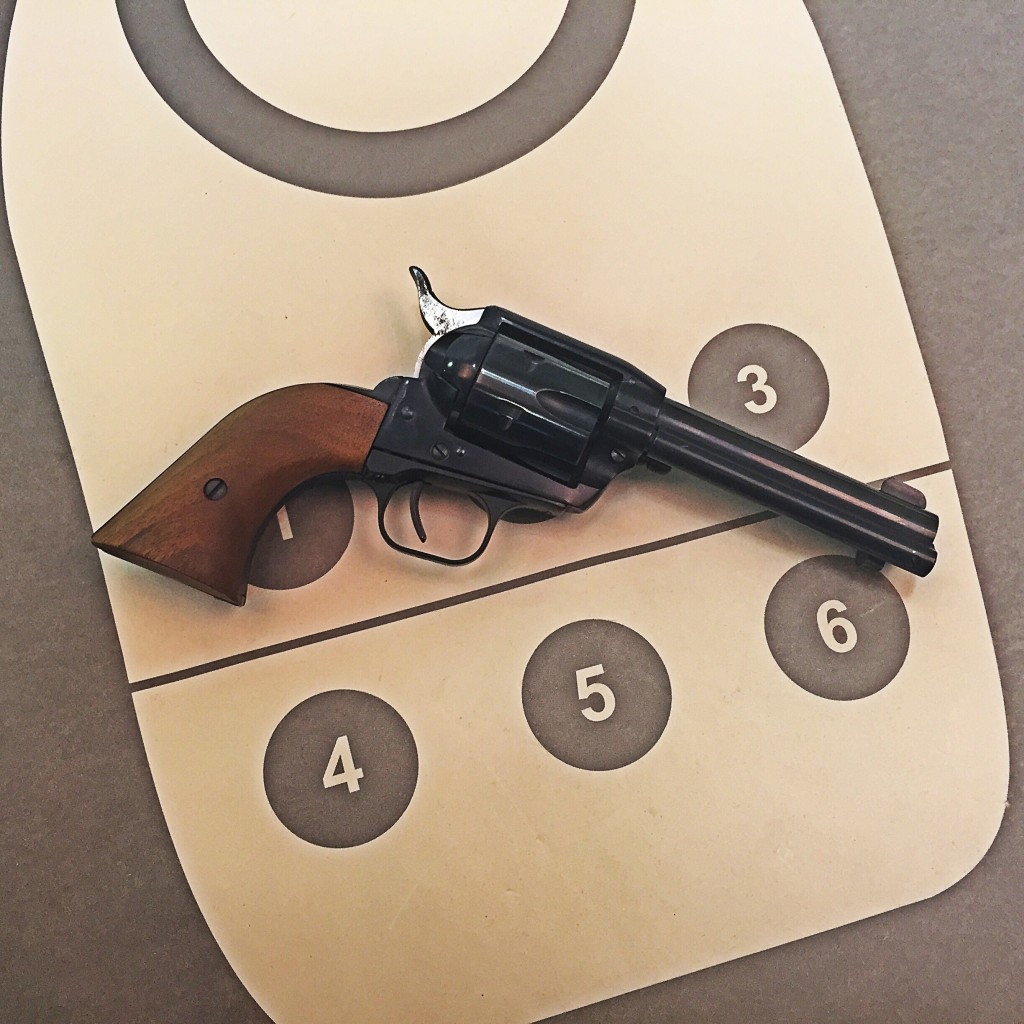
Everyone has to start somewhere. This is my revolver Genesis, the first wheelgun I ever owned, and one of two guns I’ll never sell, no matter what. It’s not an heirloom, or a priceless piece of history. It’s a humble .22 WMR revolver made by Weihrauch in Germany an imported by EAA in the states. But it’s special to me.
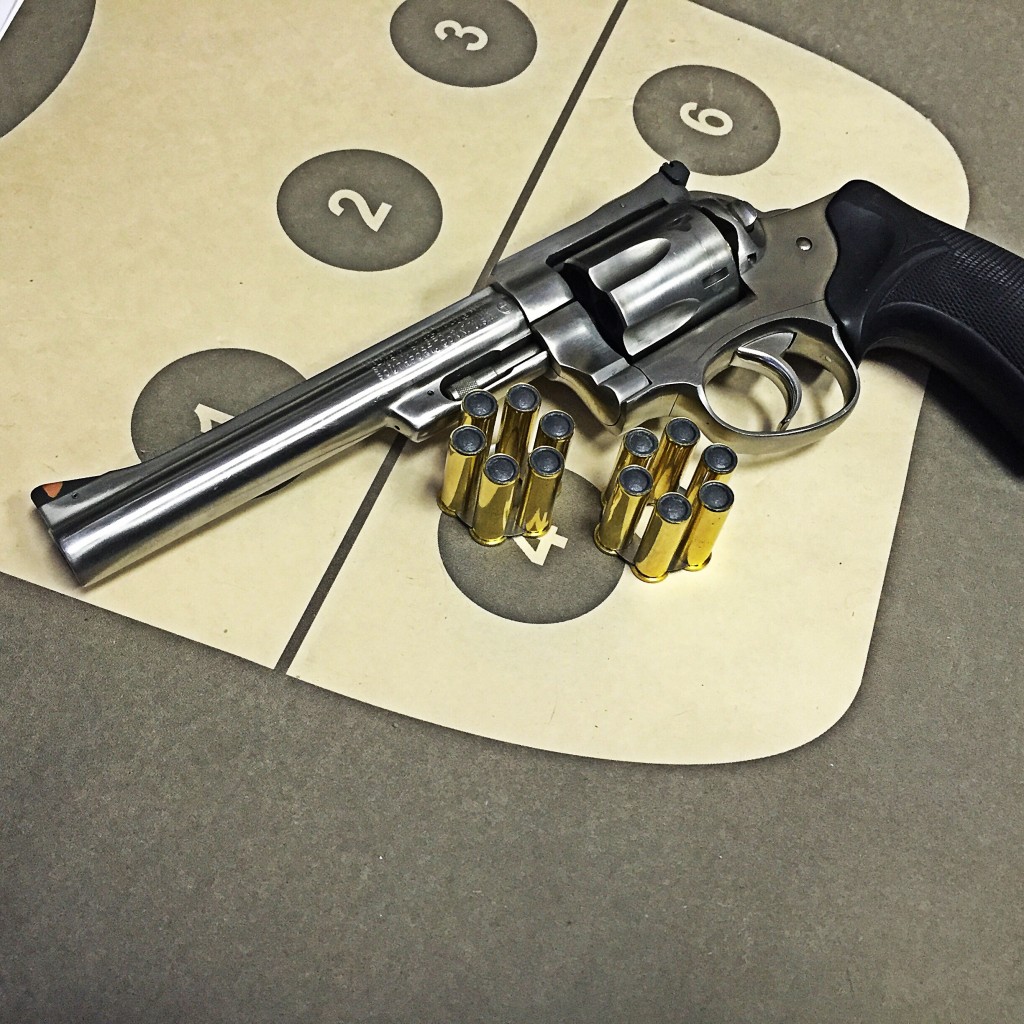
The 70s and 80s were a great time to be a revolver aficionado. Thankfully, now is also a great time to be a revolver fan, because the great guns that were built in that era are still mostly alive and kicking, and if you’re smart can be had for a great price. For example, the Ruger Security Six – Ruger’s direct competitor to S&W’s K-frame in the LE/Security market of the 70s and 80s. Overbuilt by the standards of the day, the Six-series (Security Six, Speed Six, Service Six) could withstand a steady diet of magnum ammunition with little wear and tear. They were the standard issue firearm for US Border Patrol, the Postal Inspectors, and many other LE agencies.
We’ve covered previously how the 1911 no longer exists and discussed why. While the original 1911 was very durable and reliable it wasn’t a stupendously accurate or ergonomic sidearm. Talented gunsmiths like Hoag, Clark, Swenson, Wilson and others brought a number of innovative parts and modifications out for the 1911 which made the pistol more accurate, more usable, and more desirable.
They did most of this work on 1911 pistols manufactured by Colt. Colt has been selling 1911 pattern handguns on the commercial market since it came to be, and were selling the predecessors of the 1911 pistol before that. Colt has tinkered with the basics of the pistol over the years, offering some mild variations on the original 1911 pattern designed to offer more accuracy or more utility. Growing up I always had a thing for Colt Gold Cup pistols partially because of the name, partially because of how pretty they are, and partially because of the level of hand-fitting and attention those guns received at the factory. For the most part, though, Colt still made 1911 pattern pistols for commercial sale with the same basic parts…and thus flaws…of the original 1911. They still did the basics pretty much the same way that they always had, though…using quality materials that made for a very durable pistol that was an excellent starting point for a custom build.
As the world progressed and inflation made everything more expensive, the cost of building a 1911 skyrocketed. The 1911 wasn’t alone, of course. Just about any firearm made entirely of quality metal became more and more expensive to manufacture. To give you some idea of why, take a look at this video that Caleb took a while back at the S&W factory:
Forging high quality steel as you see in the video is expensive and time consuming. The raw frames you see as the end product of that process will then need to have much of their material carefully removed to produce a finished 1911 frame. In the Colt factory they accomplish that with a series of machines that have been in use for decades, each station performing a particular operation or two to bring the frame closer to the finished product. Other manufacturers might accomplish the same goal with a CNC machine. Either way, it takes a lot of time (which is the same as money) and effort to turn that frame-shaped forging into a finished frame. It’s an expensive process…and that’s why so few manufacturers use it.
Colt and S&W are one of the few manufacturers who make the major parts (like the slide and the frame) of their 1911 from high quality forgings. Most of the more inexpensively priced 1911’s you see on the gunstore shelves are made with major parts that come from casting. Casting isn’t evil in and of itself, but when it comes to long term durability forged components tend to hold up better than cast components. If you’re looking for a 1911 that you use for occasional plinking at the range the difference between a cast frame and a forged one may never be important to you, but on a duty/carry gun you will live with for daily use for years? You probably want a quality forged frame and slide like Colt still uses in the 1911 pistols they manufacture.
Even though Colt still forges the major components of their pistols the old fashioned way, they’ve found ways to save money in other areas of the pistol. Colt has been using polymer mainspring housings on some of their 1911 pistols since at least the mid 1980’s. (I had a 1986 vintage MKIV that came with one, for example) Small internal parts like the sear and the disconnector are now made by the metal injection molding (MIM) process which is more economical than the old fashioned way of carefully whittling a sear or a disconnector out of tool steel. Colt has had its ups and downs over the years, but these days the 1911 pistols they are putting out are really nice. I’ve had the chance to handle and inspect quite a few of the “New Roll-Marked” Colt pistols and they’ve all been very well made pistols…and all the ones I’ve fired have worked splendidly. Colt manages to turn out a solid 1911 pattern pistol that I wouldn’t have any reservations about buying. They’re certainly not the cheapest 1911 pattern pistol on the shelf, but they’re made to a reasonable quality standard with quality materials and will hold their value over the long term. You can’t really say the same about many of the cheaper guns on the shelf made from castings and poorer-quality MIM processes with spotty quality control.
Still, it’s possible to build a 1911 pattern pistol better than the NRM 1991 pistols that Colt is producing. Imagine that somebody had the crazy idea to build a 1911 pattern pistol as good as it could be built from the ground up. Imagine that they decided to eschew any of the cost saving steps above and instead decided to make every single part of the pistol using either high quality forgings or bar stock. Imagine that every slide, frame, and barrel was machined in house to very strict tolerances and designed with very tight clearances so that the amount of time necessary at the gunsmith’s bench to get a superior fit was minimized. Imagine that every small part like safeties, disconnectors, and sears were machined out of high quality tool steel and then heat treated for strength and durability. Imagine that all these parts were carefully assembled by a team of experienced gunsmiths with years of experience.
That would be a pretty darn expensive way to make a 1911, wouldn’t it?
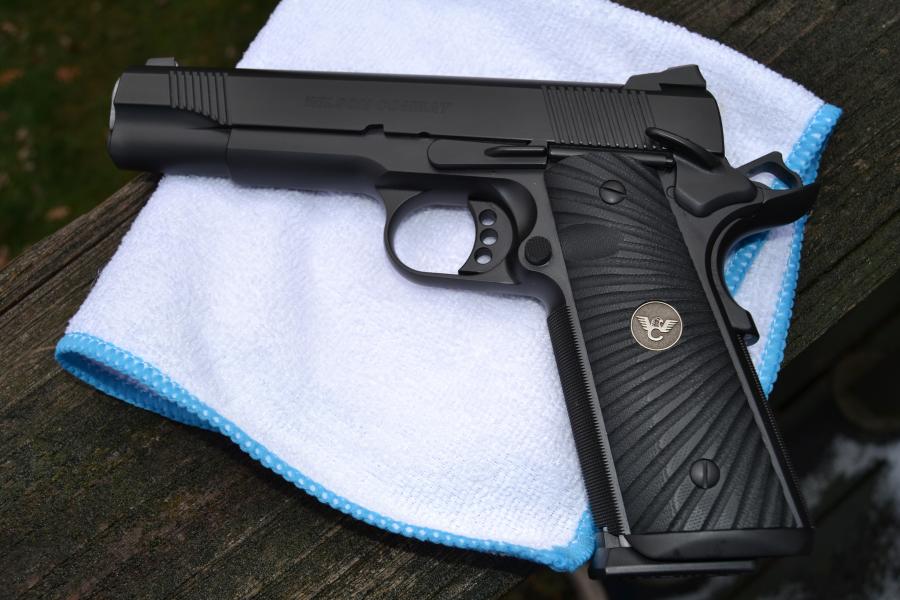
A Wilson Combat “CQB” chambered in 9mm
…and now you know why a pistol from Wilson Combat is priced the way it is. When you really think about what goes into the gun, though, the price tag looks pretty darn reasonable. Take, for example, my friend Todd’s new 9mm 1911. I’m sure in the relatively near future he’ll post something outlining all the work that master pistolsmith Jason Burton put into making that pistol, but the quick and dirty version is that it was the result of hundreds of hours of work, over 100 hours (that’s 2.5 average work weeks, folks) just at the bench. Taking a pile of parts from different manufacturers, even good ones, and getting them all fitted together correctly so that they all play nicely takes a lot of time and skill.
Wilson Combat produces their guns using frames, slides, barrels, and small parts that they make in-house to their own specifications…all designed to play nicely with each other from the getgo. There’s certainly a good deal of work and skill put into the assembly of the final pistols, but they don’t have to spend as much time on labor-intensive processes like fitting the slide and frame together properly when both are machined for a proper fit in the first place.
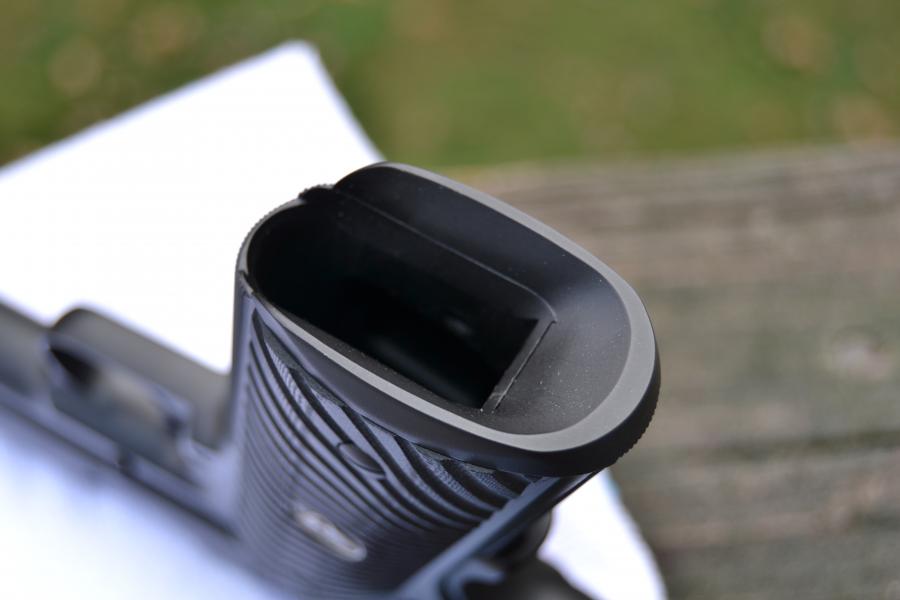
Gratuitous mag well in the fading sunlight shot…
While there’s only one company making Glock pistols, everybody and his second cousin seems like they are making a “1911” pattern pistol these days. You can find a “1911” pistol starting at about $400 and ranging all the way up to holy-crap-you-can-buy-a-new-car-for-that-price range if you go nuts and splurge on an engraved, fire-blued gun with genuine ivory stocks. Most folks, I find, don’t really understand why there is so much difference in the price of what they assume is the same gun. The truth is that the $400 dollar 1911 made from entirely cast parts in the Philipines really has very little in common with a Colt or a Wilson or an Heirloom gun other than being based on the same original design. Sure, it’s a “1911” but when you look under the hood at how the gun is made it’s pretty clear that the person putting down the purchase price for the Colt or the Wilson or the Heirloom isn’t just burning money.
In the same vein, you often see folks who take one of the cheaper 1911 pistols and install some aftermarket parts like a new barrel or some Wilson “Bullet-Proof” internals to upgrade the gun and misunderstand the result. There’s certainly considerable benefit to performing those kind of modifications but the end result it is not, as I’ve seen alleged a few times, the same as buying a complete Wilson gun.
The goal with these articles is basically consumer advice. I find that lots of folks like the idea of a 1911 and really want one, but they’re often confused by the sheer number of options on the market…and often when they turn to the internet to do research they are hip deep in utter nonsense faster than you can say John Moses Browning. The key to a happy experience with 1911 pattern pistols is to know what you want. If you want a casual plinker so you get some of that old 1911 flavor on an occasional range trip, or a gun you can take apart and beat on without worrying too much about it then shopping at the low end of the price spectrum will likely give you exactly what you want. If you want a good quality gun that will be reasonably accurate, reliable, and is likely to survive many years of use and carry…and maybe you’d like to have some light customization done to make it suit you a bit better…then go buy yourself an NRM Colt. If you want a 1911 pistol made as good as it can be and to your exact specifications, bite the bullet and get on Wilson’s waiting list. (This goes double if you want said 1911 in a heretic caliber like 9mm) If you want a one of a kind custom masterpiece that’s as much a work of art as it is a functional firearm, talk to Jason Burton and figure out when he can spare a couple of hundred hours to build you one.
If you understand the 1911 and what you’re really looking at on the gunstore shelves, you have a much better chance of getting the gun that suits your purposes. Most of the disappointment folks encounter, at least in my experience, is when their purchase doesn’t meet their purpose. The person looking for a solid carry gun where all the major components will go for a six figure round count without breaking a sweat probably isn’t going to get that from the $400 cast RIA sitting on the shelf. The Colt next to it for twice the price, though, has a much better shot at achieving that result.
There are some goods in this world where the differences in prices between brands is entirely a function of branding and marketing, but in the world of the 1911 pistol that’s not the case. The price differences really do reflect significant differences in the way the guns are manufactured. Some of those differences may be very important to you, but then again some of them may not be. At least if you know what those differences are you can make an intelligent decision for your needs. I would never suggest that somebody who wants a fun plinker has to spend $3,500 bucks on a Wilson CQB with some custom touches, nor would I suggest that someone in Todd’s situation who needs a reliable carry gun with a light trigger buy themselves a Taurus 1911.
…ok, to be fair I wouldn’t suggest that anyone ever buy a Taurus 1911 unless I hated them with a purple passion and wanted to see them suffer…but you get what I’m driving at. It’s entirely possible to have a happy 1911 ownership experience if you do a little bit of research and if you’re honest with yourself about what your budgeted price really buys.
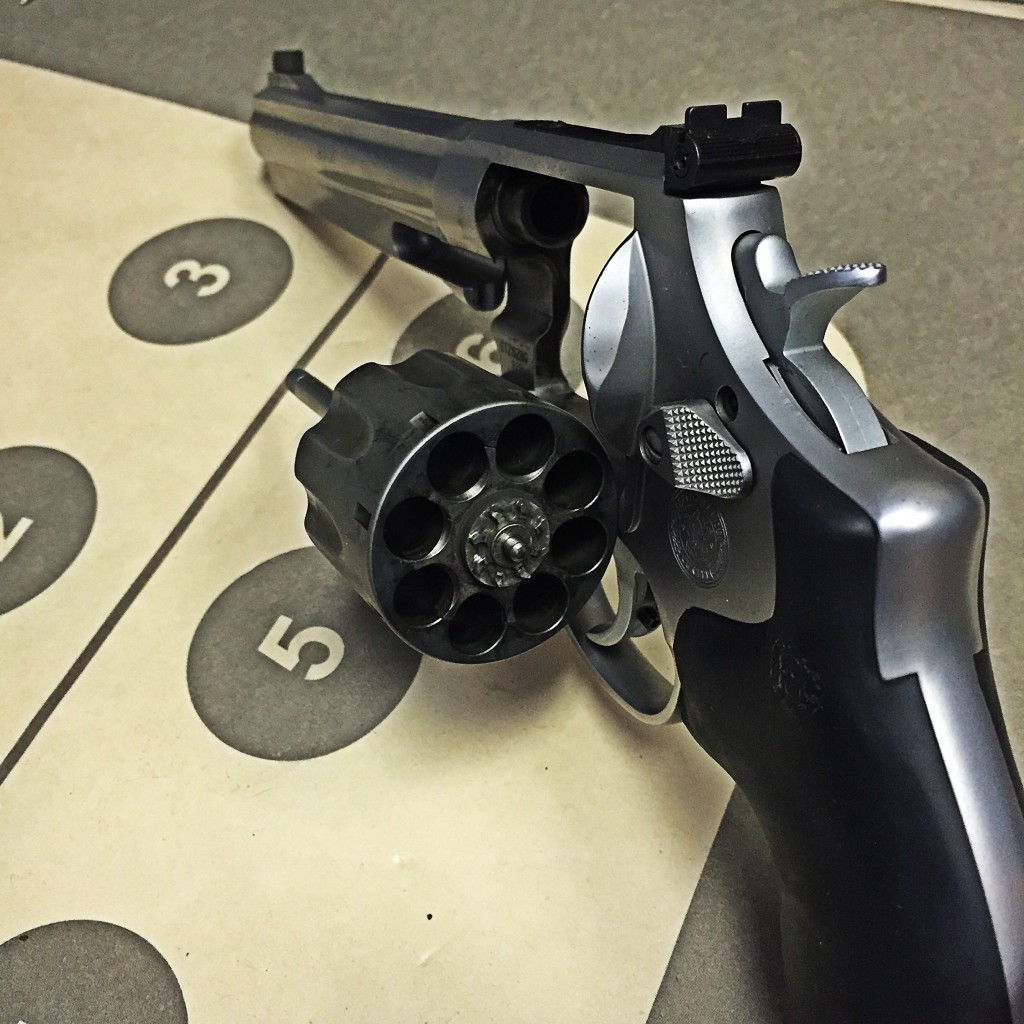
Unicorns are mythical beasts, and even though some (crazy) people claim to have seen one, they probably don’t exist. For quite some time after it was announced, the Smith & Wesson 929 occupied the same place as a unicorn: pure myth. But then the myth became reality, and for me that reality was awesome.
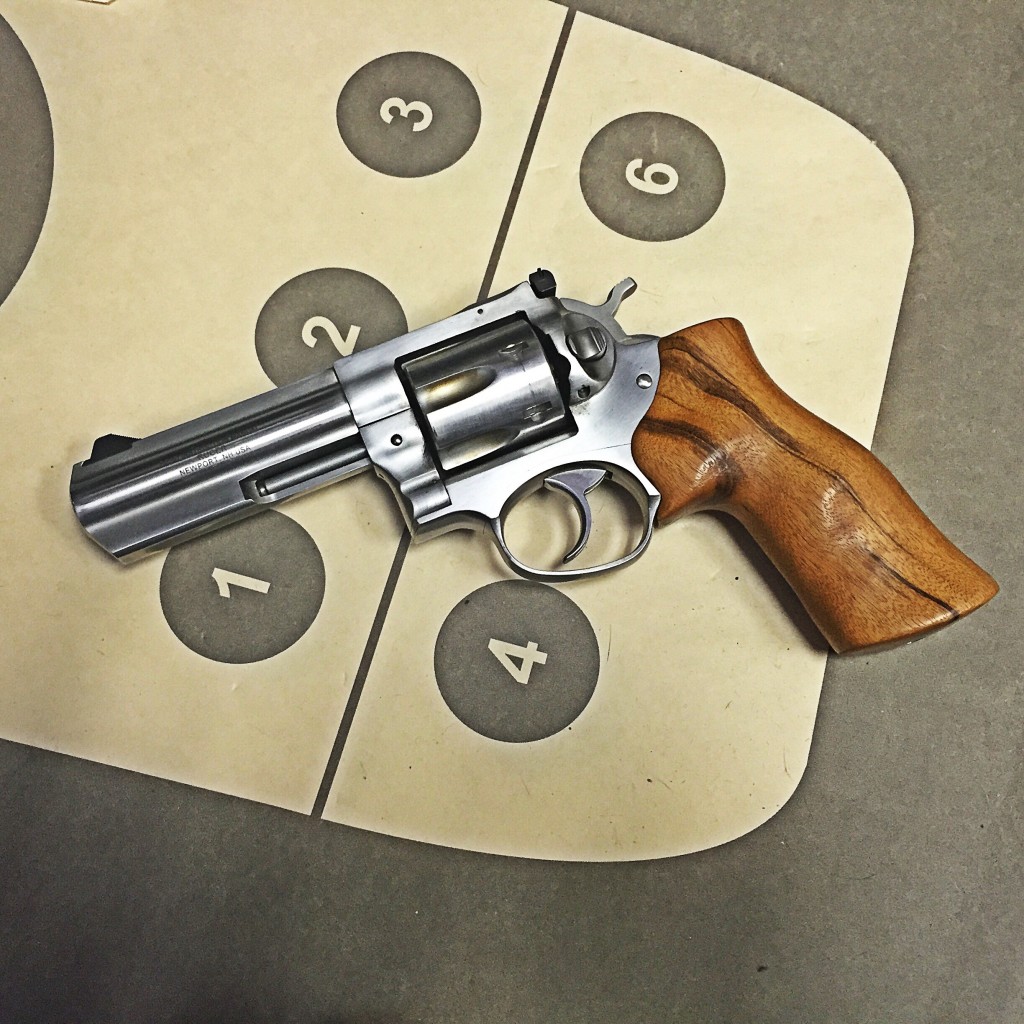
During this week, I’m going to be taking you guys through a tour of some of the various wheelguns I own. This started from a photo I posted on my fan page, which turned into a short post here on Gun Nuts simply titled “I like wheelguns.” We’ll start this series of posts with one of the guns that I’m most often associated with, the Ruger GP100.
NEWINGTON, N.H. (January 12, 2015) — SIG SAUER, Inc., introduces the classic P220® single-stack pistol chambered in the powerful 10mm Auto cartridge.
The SIG P220 has now been paired with 10mm ammunition to deliver increased energy, longer-range capability in a proven hunting round.
“A 10mm version of the legendary P220 is at the top of the list of ‘most requested products’ from fans of our products,” said Jeff Creamer, Executive Director and General Merchandise Manager for SIG SAUER, Inc. “We heard the demand, and created a P220 that will make full use of the cartridge’s potential.”
Four different models of 10mm P220 will be offered, each featuring a 5˝ barrel to maximize the internal ballistics of the 10mm round. From duty carry to self-defense to wild game hunting, the P220 10mm delivers the ballistic performance fans of the cartridge need in a pistol.
The Match Elite Reverse Two-Tone P220 features the Elite Beavertail, a stainless finish with front cocking serrations. Black G-10 Piranha grips and adjustable match sights round out the package. This is the DA/SA model of the 10mm series.
The Stainless Elite P220 and Stainless Elite Nitron® P220 are single-action only P220 pistols, and also feature the Elite Beavertail. SIGLITE® night sights and front cocking serrations come standard. The Stainless Elite is done up with a natural stainless finish and Rosewood grips, while the Stainless Elite Nitron features a durable Nitron finish and black G-10 Piranha grips.
The Hunt Ready P220 is a single-action only pistol, also features the Elite Beavertail and front cocking serrations. The Hunt Ready P220 comes ready for the field with the SIG SAUER Romeo1 mini red-dot sight installed, black G-10 Piranha grips and a Kryptek® Highlander camo pattern finish.
All 10mm P220 pistols feature the rugged design and premier quality that elite military units, top law enforcement agencies, and demanding shooters worldwide have come to expect from SIG SAUER.
This weekend while I was out, I received what is possibly the strangest comment I’ve ever gotten. It was left on the “Team Gun Nuts page”; people will sometimes post comments there when the post they wanted to comment on has had its comments section closed. Here is the comment in its full glory:
From Biker Bob: I think Caleb Giddings is one of the worst writers I have ever read, also he seems to be a bigot. To top that off I would guess he is one of those brain dead liberal sheep that only knows what his liberal gun control bigot handlers has told him to know. The good old US of A was a much better place before we had trash like Caleb around spouting his garbage.
Dear Biker Bob,
Hi, I’m Caleb Giddings. I’ll admit, I’m not a very good writer. I don’t really have any formal training beyond what I studied in high school and a few writing classes in college. Mostly I just get on by occasionally picking my knuckles up off the ground and hammering out some words on the keyboard. It’s not much of a living, but it’ll do for now. Hell, anymore I’m not even really that much of a writer; I mostly sell ads. I guess I’m pretty good at that.
I don’t know about this whole “bigot” thing. I mean, I could accept that description so long as we’re sticking with a textbook definition, which is “a person who is intolerant to other people’s opinions.” That’s 100% true, I am absolutely intolerant of some people’s opinions. I’m intolerant of people who show up on my blog saying that we should kill all Muslims, I’m intolerant of people who advocate for the violent overthrow of the US government, and I’m intolerant of people who use my blog as a vehicle to promote their own stupid ideas about stuff. But the great thing about the internet, because if you’re intolerant of my opinions, you can always start your own blog and be a bigot there. Hell, by that definition, everyone’s a bigot. I mean have you ever actually met a person who’s 100% tolerant of all opinions? Of course not.
Now, I have to admit I’m honestly confused by this next bit, because I’ve been called a lot of names, but liberal? Brain-dead for sure, I’ve definitely spent a lot of time and effort killing my brain with booze and video games, but liberal? I’m not sure where you’d get that idea. I mean, I feel like my conservative pro-gun bona fides are pretty legit. I used to work for the NRA-ILA, I’ve worked with different state legislators to get pro-gun bills passed, I even debated the Brady Campaign on Fox News once. I did a little detective work (okay, I plugged your IP into google) and I can see that you’re from North Mexico Texas, so I’m going to guess that you’re upset because I’ve poked a little fun at Texas Open Carry. Which is why you think I’m a liberal, and a bigot.
You know what though? I do agree with one thing: I do spout a lot of garbage. But that’s the beautiful thing about this modern technological age we live in. I mentioned a bit of it above; if you don’t like me, or don’t like what I have to say, you can start your own blog and try to rebut it. Sure, it’ll take a few years of hard work to get up to the level of traffic I get, and for the first couple of years no one who matters is going to read what you write, but it’s all worth it in the end. I mean, look where nearly a decade of hard work has gotten me! I used to be a nobody, now I get hate mail from strangers on the internet.
If that’s not the American dream, I don’t know what is.
We use cookies to optimize our website and our service.
Functional
Always active
The technical storage or access is strictly necessary for the legitimate purpose of enabling the use of a specific service explicitly requested by the subscriber or user, or for the sole purpose of carrying out the transmission of a communication over an electronic communications network.
Preferences
The technical storage or access is necessary for the legitimate purpose of storing preferences that are not requested by the subscriber or user.
Statistics
The technical storage or access that is used exclusively for statistical purposes.The technical storage or access that is used exclusively for anonymous statistical purposes. Without a subpoena, voluntary compliance on the part of your Internet Service Provider, or additional records from a third party, information stored or retrieved for this purpose alone cannot usually be used to identify you.
Marketing
The technical storage or access is required to create user profiles to send advertising, or to track the user on a website or across several websites for similar marketing purposes.