
Checkpoint Charlie. There is a museum located on site right next to Checkpoint Charlie’s location. It’s an interesting visit, although I’d have to say of the places I’ve visited this week it was by far the most disappointing.
Checkpoint Charlie. There is a museum located on site right next to Checkpoint Charlie’s location. It’s an interesting visit, although I’d have to say of the places I’ve visited this week it was by far the most disappointing.
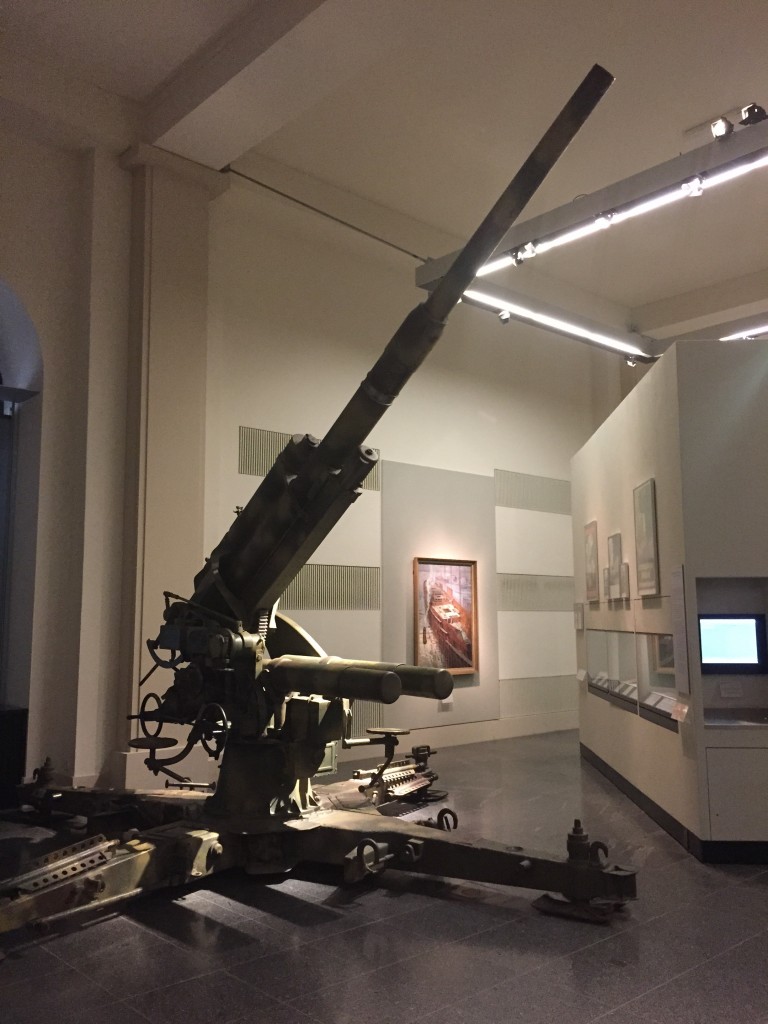
88mm German anti-aircraft gun, used during various air raids in WW2.
I don’t enjoy competition shooting that much these days. Sure, I still like to shoot matches, but for me the juice isn’t really worth the squeeze. See, the problem is that I like winning more than I like getting better. You’d think those two things would go hand in hand, but they really don’t. Sadly, it’s an easy trap to fall into.
When I first started shooting action pistol matches, it wasn’t long before I was one of the better shooters at my local club in Indiana. Then I discovered that if I shot revolver, I could pretty easily win my class or division. Didn’t matter to me that I only beat one or two or four guys, because I won. I got addicted to that feeling of being the best. When I moved to Seattle, it was easy to continue doing that, because my sponsors provided me with guns that didn’t really fit well into a division other than Limited-10, so I kept shooting that and kept winning club matches. I’d shoot occasional majors and do alright, but never came close to winning, except for revolver divisions at IDPA nationals. The major match finish I’m most proud of is 4th in CDP at the 2012 Indoor Nats. That was a real division with legit masters, and I shot a good match to get there.
As time passed, winning club matches didn’t really do it for me anymore. I wanted something bigger, something better. I wanted to win my class at a major. I had a shot to win B-Class at Single Stack Nationals but I choked. 6th or 7th in my class. I finally won 1st Master at a couple of IDPA national level matches in revolver, but I hadn’t heated any of the past national champs to get it, so what’s the point?
This then is the problem: I like shooting, and I enjoy shooting matches. But the part I enjoy isn’t the process of becoming a better shooter. I hate dry fire, and I don’t even particularly enjoyed structured live fire practice sessions. But those are exactly what I need to spend more time doing if I ever want to be more than a state level champion.
I don’t really know why I’m writing this. It’s 2:39 am where I am, and I can sleep. Maybe I’ve got stuff on my mind. Maybe I’m reflecting on a shooting career that looks great on paper but has largely left me unfulfilled and wondering what I spent all that time and effort on. What’s really interesting to me is that in other areas, I’m more than willing to put in the work. Running, lifting, pt – or working on ad sales and running he company. There I don’t mind the “little things” or the progressive measures that I need to take to become a better ad salesman or a better running. But with the shooting sports…I do. I just want to win, I want that high of winning, but I don’t want to win high press or something else meaningless. The more of those pointless plaques I piled up, the less they mattered to me.
Maybe I just need to take some off from the shooting sports. Keep blogging, of course. Maybe I’ll take up bullseye. I loved bullseye.

The term “1911” gets used a lot to describe a particular style of firearm that is nominally similar to the handgun designed by a collaboration of John Moses Browning and the U.S. War department for military adoption in 1911. It’s really an inaccurate term because the 1911, the gun that the US military adopted back then was a highly specific spec for a pistol made to very exacting standards and doesn’t really exist anymore. Today US military small arms are made according to what is known as a Technical Data Package that dictates the manufacture with highly specific requirements in materials, tolerances, and quality control measures that weapons have to meet in order to be accepted on the contract between the DOD and the manufacturer. The same sort of thing applied back when the 1911 was being manufactured for the US military. The War department had a very detailed spec that the pistols and the ammunition had to meet.
Folks often talk about loose “tolerances” on the old 1911 pistols but they are usually confusing the concept of manufacturing tolerances with designed clearance between parts in the final product. Tolerance has to do with variations in the dimensions and performance of manufactured parts/final products and back in the day the tolerances for manufacture of a 1911 pistol were very strict. (Just as they are with current weapons like the M9 and the M4) Consider that 1911 pistols manufactured by Colt, Remington-Rand, Ithaca, Singer, and Union Switch and Signal all had to work with the specified ammunition and, even more importantly, work with spare parts regardless of manufacture. You could take a gun from each manufacturer, completely disassemble them, mix all the parts up, and then reassemble all the parts into perfectly functional weapons again regardless of who originally made them. You do not achieve that with loose tolerances. When you consider that a GI in the Pacific could be issued a pistol from any of the contracted manufacturers and that he could be stuck with a broken gun if it could only work with parts from the original manufacturer, the strict tolerances used on the military 1911 pistols makes sense.
The 1911 was made with forged steel frames and slides, high quality tool-steel internal parts (like the sear and disconnector) and all of this manufactured to extremely strict tolerances…and parts that failed to make that standard were scrapped. In the days when the 1911 was being produced for the military contracts, that’s how most firearms were manufactured…and even by the standards of the day it was an expensive way to make guns. The resource constraints of WWII pushed engineers and manufacturers to experiment with new materials like stamped steel in the production of firearms in an effort to save manufacturing time, precious materials, and money.
That was the world of the 1911. It was relatively expensive and involved to manufacture, it had some ergonomic issues, tiny sights, and wouldn’t necessarily shoot very tight groups…but by gum it worked and if something broke you could drop in a replacement with hardly any tools and it would be right back up and running. If we leave out that whole “expensive and involved to manufacture” part, doesn’t that list of features sound familiar? Doesn’t it sound an awful lot like the benefits listed for the polymer pistols everybody is buying today?
Think about it: The 1911 was the Glock of its day. More rugged, reliable, and sensible to use than the Luger or the C96 or other semi-automatic pistols of the time. It was made of relatively few parts and could be disassembled entirely and reassembled easily in the field. It worked in humid jungles and nearly arctic cold, in deserts and rain forests alike. Remember that in the original 1911 trials Mr. Browning’s creation fired 6,000 rounds without malfunction while only being cleaned and lubricated every 1,000 rounds. Literally no other semi-automatic handgun on the planet at that time could touch that kind of performance.
So how is it that when we talk about “the 1911″ today nobody is picturing the gold standard of reliability and durability in a handgun that the 1911 once was? That returns us to the first sentence of this piece…”the 1911” we know today isn’t really a whole lot like the gun that the War Department adopted. The 1911 doesn’t exist in production anymore. Instead we have a lot of 1911-pattern pistols from a number of different manufacturers that are made to wildly different specifications, tolerances, clearances, and unfortunately standards. The market today expects 1911 pattern pistols to function with ammunition and even chamberings that didn’t exist when the 1911 specs were laid down. We also expect several ergonomic improvements to the pistol that weren’t really contemplated when John Moses was at his drafting table.
A company could certainly manufacture a run of pistols identical to the original 1911 in every respect, but that pistol would be just like the original: a hand-pinching handgun with almost useless sights shooting large-ish groups that is dead-nuts reliable with hardball ammo and excellent long term durability. Oh, and thanks to inflation, the price of steel, and the cost of machining high quality parts it will cost between double (extremely optimistic) and triple (probably more likely) the cost of a Glock. Few want a pistol with those kinds of features at that kind of pricepoint.
That brings us to one of the biggest issues with the 1911 pattern pistol and why the term 1911 is no longer synonymous with reliability…namely the pricepoint. More on that later.
These are some of the last words of Alwyn C. Cashe; an African-American cut down in the prime of his life. He died in 2005, and outside of a very small community, very few people have heard of him. That’s because Alwyn wasn’t just a man, he was Sergeant First Class Cashe of the United States Army, and he gave his life in the service of his country. When he asked “how are my boys” in the hospital, he was asking about his men, the soldiers he pulled from a burning vehicle. As a result of the burns he suffered rescuing his men, SFC Cashe died in November of 2005. He was awarded the Silver Star posthumously for his actions, and there is currently a campaign to get his medal upgraded to the Medal of Honor, which I believe he justly deserves.
Wenjian Liu and Rafael Ramos
Again, many people don’t know these names. However, if you follow the news, you may have heard of the two NYPD officers that were brutally murdered this past week. Their names were Wenjian Liu and Rafael Ramos. I doubt that we’ll see vigils in their honor, and there will be no Twitter hashtags of #asianlivesmatter or #hispaniclivesmatter – because Liu and Ramos were cops.
This is the awful hypocrisy of #blacklivesmatter and the surrounding protests. Because it would seem that Orwell was right – some animals are more equal than others. I want to be very clear here though – racism is still a problem in this country, and it is something that needs to be addressed. But in many ways, hashtag activism has ruined the real activism. By focusing the protests and the outrage on isolated incidents it glosses over the larger problem of racism in America and at the same time diminishes the contributions of Americans who also happen to be minorities.

Not too long ago in Sioux Falls, some of our locals held a protest about Black Lives Matter. Aside from the obvious irony of a bunch of middle-class white people protesting racism, what boggles the mind is the short sightedness of all of this. 19 people showed up for 45 minutes on a Saturday, and then went back to their lives. There’s no effort there, no real work to affect change. That’s the symptom of hashtag activism and the problem. It’s about feelings instead of doing. It’s writing on Twitter about how bad poverty is, but not volunteering to work in a soup kitchen. It’s complaining about rape culture, but being anti-gun.
I want to bring this back to SFC Cashe. He gave his life to save his men, and to the end his thoughts were on the well being of his soldiers. He didn’t care if they were black, white, Hispanic, or any other race. Simply that they were his soldiers, his responsibility. We could all stand to learn from the example of a man who paid the ultimate price for others.
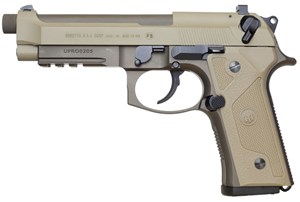
Yesterday, much to the joy of Beretta fanboys (like me) Beretta USA announced the latest update to the venerable M9 pistol line, the M9A3. This pistol represents Beretta’s answer to the requirements for the Army’s proposed Modular Handgun System (or whatever they’re calling it this time around) and I am willing to bet that the Beretta M9A3 will absolutely be our nation’s next service pistol. But first, here’s what Beretta has to say about the new gun:
After delivering over 600,000 M9 pistols to the DOD and on the heels of being awarded a new contract for up to 100,000 M9s, Beretta USA announced today the presentation of the M9A3 to the US Army. The M9A3 introduces major improvements to the M9 that will increase the operational effectiveness and operational suitability of the weapon. The improvements include design and material enhancements resulting in increased modularity, reliability, durability, and ergonomics. They are being submitted via an Engineering Change Proposal (ECP) in accordance with the terms of the current M9 contract.
Made in the U.S.A. by an American workforce since 1987, the M9 has been the sidearm of the U.S. Armed Forces for nearly 30 years; serving with U.S. service men and women in training and combat operations throughout the world. The M9A3 is designed for the next 30 years – delivering 21st century capability and features while increasing usability and reliability.
“The M9A3 represents the next generation military handgun utilizing the best of the legacy M9 combined with proven COTS modifications that increase performance and durability” stated Gabriele de Plano, Vice President of Military Marketing and Sales for Beretta USA. Mr. de Plano added, “After listening closely to the needs of U.S. Army and other Service small arms representatives, we determined the M9, much like its counterpart legacy weapon systems (M4, M16, M240, etc.), was capable of being upgraded through material and design changes. The resulting M9A3 we are offering to the DOD will likely cost less than the current M9 and answer almost all of the Services’ enhanced handgun requirements.”
The M9A3 features a thin grip with a removable, modular wrap-around grip, MIL-STD-1913 accessory rail, removable front and rear tritium sights, extended and threaded barrel for suppressor use, 17-round sand resistant magazine, and numerous improved small components to increase durability and ergonomics, all in an earth tone finish.
“Furthermore, the M9A3 benefits from having a law enforcement and commercial variant that will be launched at S.H.O.T. Show 2015 in Las Vegas, NV” stated Rafe Bennett, Vice President of Product Marketing for Beretta USA. Mr. Bennett added, “The M9A3 offered to the DOD is the exact gun that consumers will be able to purchase in the second quarter of 2015.”
The M9A3 follows on the heels of Beretta and Wilson Combat’s collaboration, and represents a lot of the features that end users have been asking for in their Beretta pistols. The backstrap will allow users to switch from a traditional Beretta profile grip to the smaller and easier to manage Vertec style, the sights are replaceable, and the safety is convertable to a G-style decock only model. With this feature set, here are five reasons why the Beretta M9A3 is going to be the US service pistol for a long time.
1. Money
Hey, did you know that the military is currently undergoing all kinds of budget cuts? The Air Force (for example) by the end of FY 2015 will be at its smallest size since its creation in 1947, the Army is cutting costs wherever it can (despite getting new uniforms) so when Beretta presents a solution to the DoD’s desire for a new toy that doesn’t involve wholesale replacement of holsters, magazines, and small parts, the odds are that they’re going to go for it. Unless Sig nails the baksheesh.
2. Seriously, the money
Beretta did a smart thing: they submitted the M9A3 to the Army as an ECP, and engineering change proposal. What that means is that the M9A3 is part of the existing M9 contract now, assuming that the DoD accepts the ECP, which they will because follow the money.
In the Modular Handgun System proposal, the Army asked for a certain set of features on the new gun. The M9A3 has all of those features, which means that some bean counter in the Pentagon is going to look at this ECP vs the cost of an entire new handgun and go “well, this is a no-brainer.” Essentially, the M9A3 is presented to the Army as fait accompli by Beretta. “Oh, you want all these features in a gun? No problem Holmes, let’s just make that for you as part of the existing contract.”
3. We are not going away from 9mm any time soon
There are entire graveyards full of dudes that have been killed with 9mm ball ammo. Despite what the Warriors of the Keys will tell you, we don’t really need to switch up to .40 or .45, because in the FMJ form our line troops would be required to use, they still suck. To get serious though, we’re not ditching the NATO standard round any time soon. Everyone uses 9mm, and we are going to keep using 9mm as long as we’re the Big Kid at the North Atlantic Treaty Table.
If anything, the trend in rounds is towards smaller rounds. It wouldn’t surprise me if when I’m getting ready to retire in 30 years for the military to be issuing pistols that fire 5mm tungsten core beads to pierce power armor or something.
4. The M9 is fine
The big problem with the M9 (and the M4) isn’t the gun. It’s the way the military trains people to “maintain” their weapons. But that’s a post for another time. Fastidious attention to cleanliness at the expense of lubrication isn’t good for guns.
5. Logistics
All those mags. All those small parts.
Conclusion
There are circumstances where the M9A3 might not make it. The Army could, for reasons that are unfathomable to me, reject the ECP and force the MHS competition to go forward, and then pick a different gun. Sometimes they do things like that because of reasons, none of which make any kind of sense. But like I said above, I’m willing to make a considerable wager that in 2017, when the Army is supposed to pick its new handgun, the M9A3 will already be riding in frontline holsters, and doing just fine. Then it will be “this gun gives us what we wanted, so let’s just keep it.”
What do you think? Will the M9A3 effectively end-run the MHS competition?

As we wrap up 2014’s publishing season, we’re looking back at some of the guns, events, and other things that made this such an interesting year. We saw gun sales and ammo prices finally return to normal levels, much to the consternation of some manufacturers. We had political wins and loses, and great debate around some of those events. Today we’re talking politics, looking at the biggest win and loss for gun rights in 2014. It was an interesting year, and there were no shortage of candidates to choose from. The GOP taking a majority in the House and the Senate are “wins” for gun rights, there were numerous state level wins as well. In the loss column, we had some choice ones to look at, with I-594 in Washington fresh in everyone’s minds. We’re going to look a two winners and losers each – one for state level wins and losses and one for national level wins and loses. Here we go, starting first with the wins.
The Biggest State Level Gun Rights Win of 2014
Shall issue carry in Illinois.
While similar actions are in progress right now in DC and California as well, winning the concealed carry fight in Illinois is huge, if for no other reason than it stands as a marker of how far we’ve come. If you’d told me in 2004 that a decade from now we’d have shall-issue carry in IL, I’d have laughed in your face, because there’s “no way” you could get that past the Chicago machine. And yet here we are. Is it perfect? No. Are typical Chicago politics at play still trying to deny people their rights? Of course, that’s the Chicago way. But the fact is that, holy crap people, we have largely shall issue carry in Illinois for Pete’s sake. That’s no joke, and it’s paving the road for similar work in California and DC.
This is part of a larger phenomenon that could be referred to as the Concealed Carry Revolution. As much as the media wants to paint a picture of a diminishing gun culture, it’s hard to argue with facts: more people than ever are getting their carry permits. It’s not just middle aged white dudes getting permits either, the fastest growing demographic getting their carry permits are…women. Mothers, single women – while they’re not the dominating factor, women are getting permits to carry concealed weapons in numbers never before seen. Now that’s feminine empowerment if I’ve ever seen it.
As more people get their carry permits and become part of the CCW culture, we can hope to see more wins in this area. California and DC, as mentioned, are poised to fall next. After that, the last holdout will be Bloomberg’s personal stronghold of New York. If we could get carry in NYC…well that would be something, now wouldn’t it? However, that could be 10 years off. Regardless, shall issue carry in Illinois is a huge win, and something we should all be proud of.
The Biggest National Gun Rights Win of 2014
The popular explosion of the AR15 “pistols” & suppressors
Bear with me on this one. All our regular readers know that that the Sig SB15 and SBX pistol arm braces have exploded in popularity over the last year, leading to an explosion in the AR pistol market. This came in the wake of the ATF issuing a letter that essentially says “yes we know it looks like a stock, but we can’t control what you do with it.” All of a sudden, there are AR pistols all over the place, and that’s a good thing for our gun rights. Additionally, while the majority of the gun market fell off this year after three years of strong sales, suppressor sales continued to hold strong. That’s despite the ATF backlog for NFA items being approximately 3 Why? Because it’s not a terribly difficult logical stretch to use this tiny chink in the ATF’s armor to attack the NFA and start the process of removing SBRs and suppressors from the NFA.
Unfortunately, 2014 wasn’t all roses and expansion of gun rights. Selecting the loss was actually more difficult, because of multiple high profile events that happened. In the end, I decided to take the chicken’s route and call it a tie. Here are the two biggest losses of 2014 for the gun rights movement.
The Biggest State Level Loss
Washington State Ballot Initiative 594
This year in the general election, gun rights got a hard spanking in Washington, losing a ballot initiative by 20% of the vote. That’s a huge, ugly margin, and I-594 made the law of the state so convoluted that it became a felony to pass a gun to my friend for him to check out and dry fire. I wish that was hyperbole, but it’s not. I-594 is so bad that it almost won the national category, because the ripples from this loss are going to be felt nationwide. Bloomberg and his cronies are absolutely going to use this as a blueprint for how to jam up gun rights in every state that has the ballot. They’re already moving in Nevada, where it’s likely to pass because the Nevada electorate is quite possibly even dumber than the WA electorate, which is saying something, because WA elected Patty Murray to office like 5 times or something.
The biggest national loss of 2014
Open Carry Walks/Starbucks/Texas Open Carry
The worst thing that happened to our gun rights on the national level was Texas Open Carry, the Starbucks Carry Walks, and all of the associated shenanigans. I don’t really care if a person wants to OC or not, that’s fine. Whatever floats your boat, just don’t be an a-hole. The problem is that the big “LOOK AT ME LOOK AT ME” demonstrations gave Mom’s Demand Hot Action a very convenient target that they could go after and get easy PR wins. It’s an absolute no brainer for a company like Starbucks to say “yeah uh pls don’t bring your guns in here” when they’re being blasted in the national media by an advocacy group that loses more money than the NRA makes in a year. Remember, the dollars behind the current generation of Gun Control are bigger than anything – a guy like Bloomberg, who is worth literally billions, can sneeze 20 million into a PR campaign to make it look like Starbucks and other major retailers are banning guns. It doesn’t even matter what Starbucks’ actual policy is, because all that needs to happen is for it to make the Today Show as “Starbucks Bans Guns” and that’s the national narrative.
But instead of playing smart ball, these Open Carry assholes decided to skyline themselves against a foe with pretty good targeting, and managed to singlehandedly inflict multiple, serious, PR losses on the national gun rights issue.
There you have it, the biggest wins and losses of 2014 for gun rights! What did I get right, what did I get wrong, and what do you think should have made the list?
When I use the term “good guy” what picture pops into your mind? In my brain those words bring a couple of pictures to mind, either a Gary Cooper type figure facing down a pack of hardened criminals or Superman facing down a major threat to mankind. I’d wager that you probably have similar pictures in your mind when you hear the term “good guy” and for similar reasons. Every story you’ve ever heard in your life has a “good guy” as the foundation of it. The “good guy” could be a cowboy armed only with a six gun against a pack of thugs, a moisture-farming orphan who turns out to be the last of an ancient order of warriors who can move things with their mind, the product of a radioactive bug bite, you name it. The archetype is sufficiently broad to comfortably house George Bailey using kindness and honesty to make a major difference in the lives of people in his community and Hit Girl using swords and machine guns to shred mobbed up gangsters into kibble. The story is always pretty much the same: The “good guy” is confronted by some evil or injustice, fights it, and prevails. The “good guy” may suffer quite a bit in the fight and may even lose his/her life in the process, but in the end their sacrifice is recognized and they are venerated as heroes.
Whether we realize it or not, we come to expect this to be the end result of trying to do the right thing, the brave thing…standing up to evil and fighting the good fight. And you know what? Sometimes it happens exactly like that.
This being the real world, though, sometimes it doesn’t. We’re usually the “good guy” in our own understanding of our life and if we find ourselves being assaulted by a criminal we tend to take for granted that we will be seen as the “good guy” in the situation and that the usual “good guy” treatment will be afforded to us by friends, acquaintances, the authorities and the press.
Officer Darren Wilson was unquestionably the “good guy”. I have yet to meet a police officer who got into the profession because they were interested in oppressing somebody. Sure, it’s possible for malevolent narcissists to end up with a badge and a uniform but the vast majority of police officers I know as friends, I’ve met at functions, or that I have interacted with in any capacity have been good people largely interested in helping others. I’ve watched police officers try to comfort crying children at an accident or crime scene, try to help rescue animals in some sort of trouble, and I’ve seen them insert themselves into dangerous situations to try and protect vulnerable people from harm. Hell, just prior to the incident that shattered his life Officer Wilson was trying to render whatever assistance he could to a child in medical distress while ensuring that proper EMS would arrive to take care of the little tike. People who busy themselves helping a little 2 year old girl with difficulty breathing aren’t out on the street looking to commit murder ten minutes later.
…and yet that’s exactly what was alleged about Officer Wilson.
I want you to take a few minutes to follow the link below and listen to the podcast found there.
http://massadayoobgroup.com/armed-american-radio-george-zimmerman-calls-talk-mas-ayoob/
It was apparently originally intended to be an interview with Massad Ayoob but it took an unexpected turn when George Zimmerman called in. Mr. Zimmerman has become the default cautionary tale of how badly a case of self defense can go wrong, but there’s a lot in the call that I’d wager you haven’t heard before, especially in regards to the consequences to even his extended family in the aftermath. Whatever your feelings on Mr. Zimmerman you should listen very carefully to the phone call linked above because I’ll wager you will learn some things you didn’t know.
The Zimmerman experience, thankfully, isn’t typical for self defense cases…yet. I say “yet” because there’s clearly a pattern emerging here where “community activists” and members of the press start spinning a “narrative” about what happened while the proper authorities are still investigating and not really saying anything. The “narrative” ends up all over the news and all over social media and the mob incitement begins in earnest without much hunger for the facts of the ongoing investigation. By the time facts do begin to trickle out the wildly incorrect “narrative” has ossified to the point where the actual fact of what took place is irrelevant. The original allegations against Mr. Zimmerman and Officer Wilson turned out to have been completely unsupported by any of the facts on the ground, but in the end the facts of what actually took place proved to be an ineffectual defense against the utter fertilizer spun as the original “narrative”.
Anyone reading this…or even the dude writing this…could end up on the business end of that sequence of events just as easily. Predators who use politics as their primary weapon are no less opportunistic or ruthless than predators who use knives, guns, or even fists. The weapon of politics may not be instantly lethal but as the examples of Officer Wilson and Mr. Zimmerman show, it can still utterly ruin you.
It would behoove every police officer and law abiding citizen to re-frame their thinking away from the typical “good guy” story and to prepare instead to be treated like the villain. If you know you stand a good chance of being the villain, does it make you more or less likely to intervene on behalf of a third party? Does it make you think about the language you might use in a tense situation?
To be clear, here, I’m not advocating living in fear of being railroaded to the point of simply surrendering to whatever violence some criminal screwhead is intent on subjecting you or other innocents to. I’m simply saying that we have to realize good intentions do not guarantee good outcomes and that if we’re smart we should take all reasonable measures to avoid being in a situation where we have to use force in the first place, and to minimize the impact to our life should we find ourselves forced to act when cornered by criminal violence. It’s to our benefit to understand well ahead of time what is at stake so that we have a clear understanding of how to best act in the moment to give us the best outcome.
Say you’re at a restaurant having lunch with a friend and you notice a couple of guys getting out of a car and pulling ski-masks over their faces. You note one has what appears to be a gun he quickly stuffs into his waistband. What do you do? Draw your legally carried concealed weapon and act quickly and decisively to ward off the would-be robbers? That certainly sounds noble, but are you really willing to put your life, your financial future, and even the lives and financial futures of your family members on the line to stop these guys?
These are not comfortable questions to ask yourself, but thinking these things through well in advance of the moment where you have to make a choice helps condition your response in the moment. In that moment you need to act without hesitation to fight or to get the hell out of there to have the best outcome possible.
Do not expect a ticker tape parade for doing the right thing. Understand the possibility that despite acting well within the boundaries of the law and any moral code that’s worth a damn you might still end up being the bad guy…and with that understanding think carefully about what you’re willing to risk. Take every possible precaution to minimize the damage done should it all go wrong for you. It’s a decidedly unpleasant process but if you undertake it I believe you will come out the other side with better odds of avoiding a tragic outcome.

Sturm, Ruger & Company, Inc. (NYSE-RGR) announces that the popular Gunsite Scout Rifle is now available with a lightweight, black composite stock. The composite stock reduces the rifle weight to 6.25 pounds, ¾ pounds less than the popular laminate wood stock version. This new version features a forward aluminum bedding block and rear aluminum pillar that positively locate the receiver and free float the 16.1″ barrel for outstanding accuracy.
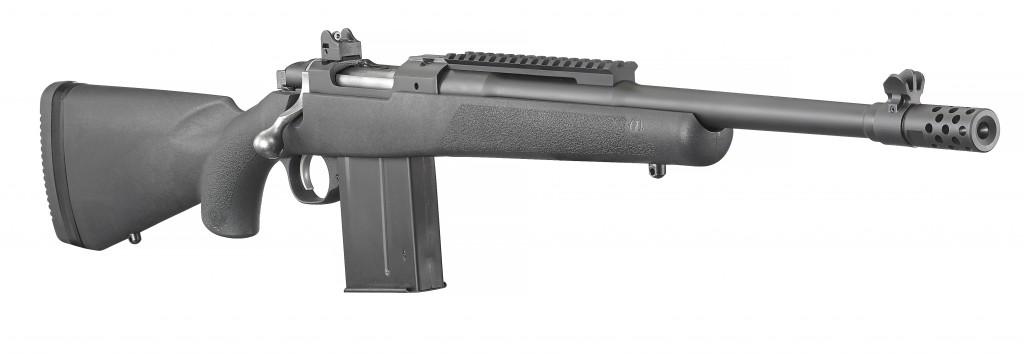
The new composite stock, available on right-hand rifles chambered in .308 Win., contains the versatile adjustable length of pull found on all models of the current Gunsite Scout Rifle. Recognizing the importance of a proper fitting rifle, Ruger developed this adjustable system, which allows the shooter to change the length of pull to fit their individual needs. The length of pull can be adjusted from 12.75″ to 14.25″ to give the shooter the proper fit with outerwear or defensive gear of varying thickness, or properly fit the rifle to different shooters.
A swivel stud boss is molded into the stock immediately in front of the magazine well. This allows the stock to be drilled and a third swivel stud installed for use with the popular three-point “Ching” Slings.
Developed in conjunction with Gunsite Academy, America’s oldest private firearms training facility, the Gunsite Scout Rifle is a relatively lightweight, do-all rifle, consistent with Col. Jeff Cooper’s Scout Rifle concept. Based on the Ruger® M77® family, the Gunsite Scout Rifle has M77 features such as controlled round feed and integral scope mounts (scope rings included) and is supplied with a 10-round detachable steel box magazine. The rifle’s trigger guard and magazine well are formed with glass-reinforced nylon. The magazine release is a push-forward Mini-14-style paddle just ahead of the trigger guard.
Given the lighter weight of the composite stock, these new models are equipped with a radial port muzzle brake fitted on 5/8″-24 muzzle threads. A thread protector is shipped with each rifle and can be used to protect the muzzle threads if the installed muzzle brake is removed.
The Ruger Gunsite Scout Rifle contains a medium contour, cold hammer-forged 16.1″ barrel with a protected non-glare post front sight and receiver mounted, adjustable ghost ring rear sight. A forward-mounted Picatinny rail offers options in mounting an assortment of optics – including Scout Scopes, reflex sights and red dots for “both eyes open” sighting and super-fast target acquisition.
Polymer magazines also are available for the Gunsite Scout Rifle and are available at ShopRuger.com in 10-, 5- and 3-round capacities. These rugged, smooth-feeding magazines are durable, easy to load and feed smoothly. The 3-round magazine is near flush-fitting and is a great accessory to have when hunting. These polymer magazines can be readily disassembled and reassembled for cleaning and have been function and drop tested at extreme temperatures ranging from -30° F to +140° F. A snap-on dust cover, included with each magazine, keeps the internals of the magazine clean and allows long-term storage of a loaded magazine without risk of deforming the magazine feed lips.
For more information on the Ruger Gunsite Scout Rifle with composite stock, or to learn more about the extensive line of award-winning Ruger firearms, visit Ruger.com or Facebook.com/Ruger. To find accessories for the Gunsite Scout Rifle or other Ruger firearms, visit ShopRuger.com.
We see a lot of guns here in the office every year. Guns come through here for T&E all the time, some are great, some are okay, and some are terrible. A few each year are really good and interesting, but fail to catch the attention of the market at large. An example of a great, underrated gun would be the Walther PPQ. When the HK VP9 launched this year to all the fanfare, PPQ owners were over in the corner going “hey, that gun looks really familiar.”
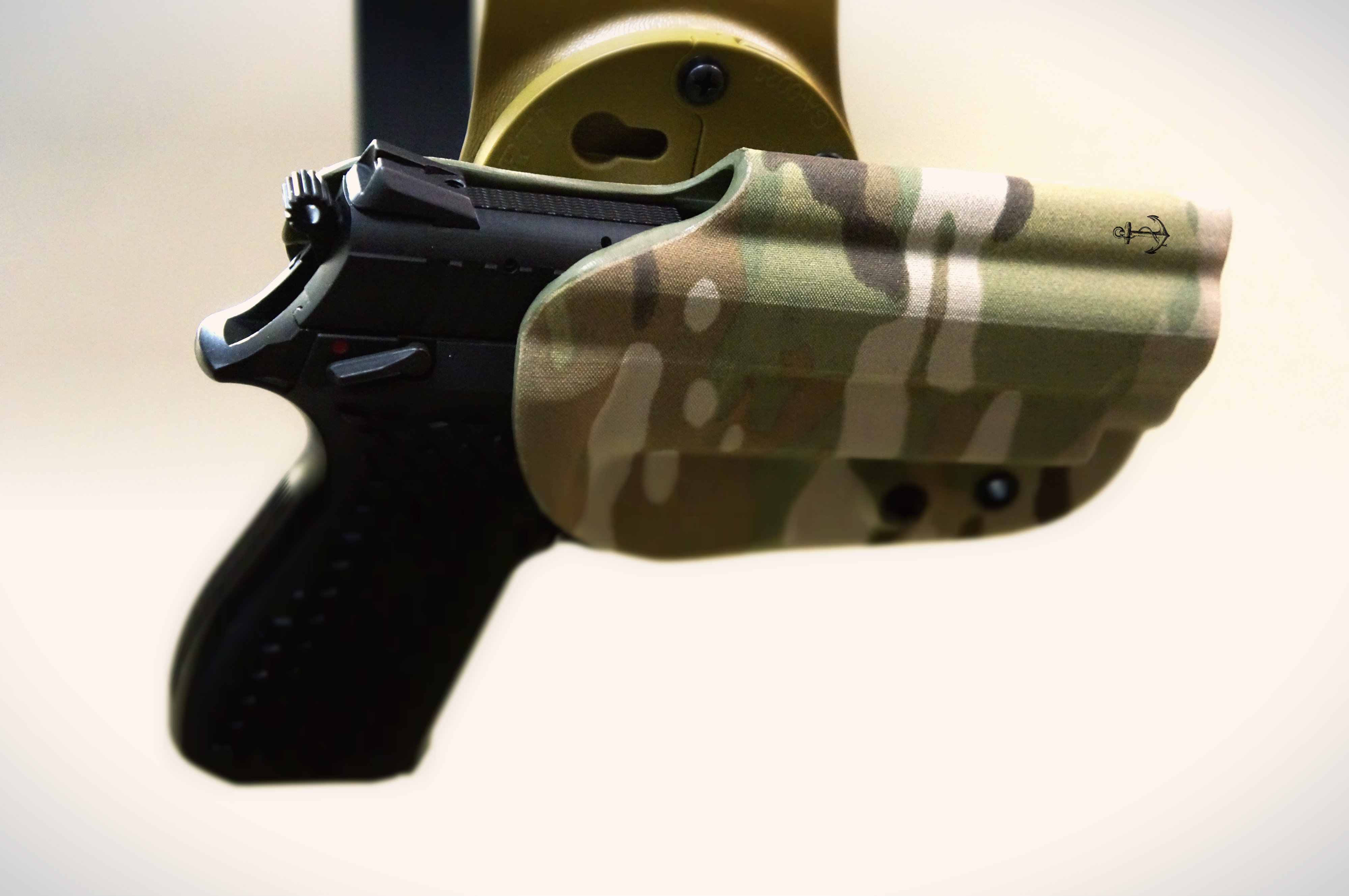
For me though, the most underrated gun of 2014 was an easy choice: the Lionheart LH9. When I reviewed the LH9 I liked it, and it’s grown on me since then. It hit big on the scene around late April, early May. Everyone was doing reviews and talking about how they really liked it; the team on guys working to bring it to the States were smart and likable as well. It’s a nice gun to shoot, it has great features, comes from the factory with all kinds of extras, and even takes common 3rd Gen Smif mags.
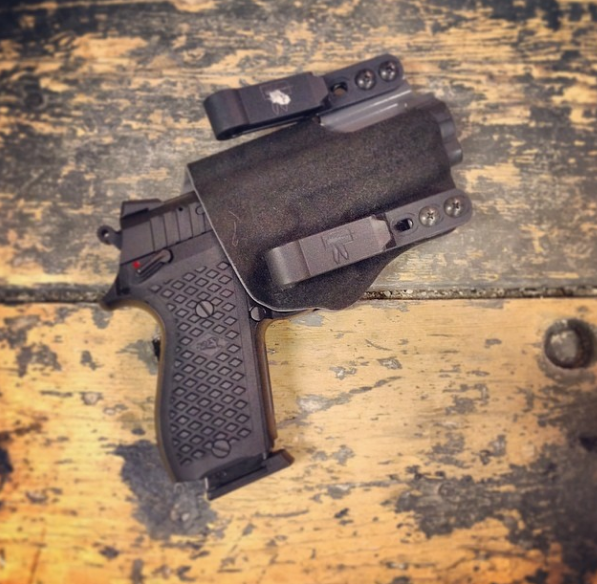
So why didn’t the LH9 catch on better? I think it’s a combo of two factors, the first being price. I’m not sure what they’re going for right now, but back in April a new LH9 fully loaded would have set you back 700 bucks or so. That’s more than a Glock or Beretta and pushing into Sig/HK territory. I believe they’re less expensive now, which is good.
The other thing that I believe hurt the LH9 wasn’t their fault at all, but rather the fact that the American gun buying public at large aren’t big fans of DA/SA guns. We’re just not. Sure, there are people, myself included that prefer DA/SA, but we’re largely in the minority. Most people are obsessed with “light” triggers, not knowing that a good trigger doesn’t have to be light. It is what it is, and I genuinely believe that DA/SA guns will continue to be specialist niche basically forever. The tepid reception that the new Berettas have received outside of serious shooting circles has reinforced that.
But back to the LH9. I really do think it’s a great little gun. It’s small enough for easy EDC, shoots well, has a great trigger, comes with good sights, a metal frame, and can be carried cocked and locked. It’s like a product improved 5906, and that’s a good thing. I still recommend people check it out!