Practical Small Knife Skills with Chris Fry

How many of you out there in reader-land have a knife on you right now? Carrying a knife every day as a normal part of life has been pretty common behavior for a significant chunk of human history. Think about it: Your grandfather’s grandfather probably had a small knife on him most of the time…and so did his grandfather. They are incredibly useful tools that always seem to be in demand. I can’t tell you how many times I’ve been in a situation and heard someone say “Anyone have a knife?”

Most of you probably aren’t carrying a Case pocketknife like my grandfather, though. You’re likely carrying some sort of “tactical” folder. It’s probably a tool for mundane chores most of the time but I’m willing to bet you figure it could be employed as a defensive implement in a pinch…but have you ever actually tried to draw that knife and deploy it in a hurry with somebody pressuring you?

I’ve done a number of classes in firearms but, like most of you, I’ve had next to zero training on the defensive deployment of an edged weapon. That being said, I do have enough sense to know that there’s a ton of goofy stuff out there labeled as knife training. For starters, I have yet to see or hear of a knife deployment on the street that looked anything like, well, this:


So where does one go to get instruction that isn’t goofy Hollywood-dojo crap?

Chris Fry would be a good start. You may remember Chris’s name as one of the forces behind the RCS Pocket Shield I reviewed last year. At the Tactical Conference this year Chris taught an exceptionally useful block of instruction on small knives. As with the other blocks of instruction I’ve covered, this was a distillation of Chris’ program into a bite-sized chunk of learning where people could walk away with some very useful information about small knives and how to use them. It wasn’t going to make any of us experts with a small edged weapon, but you’d be amazed how much folks learned just by having access to some trainers and Chris’ common sense approach.
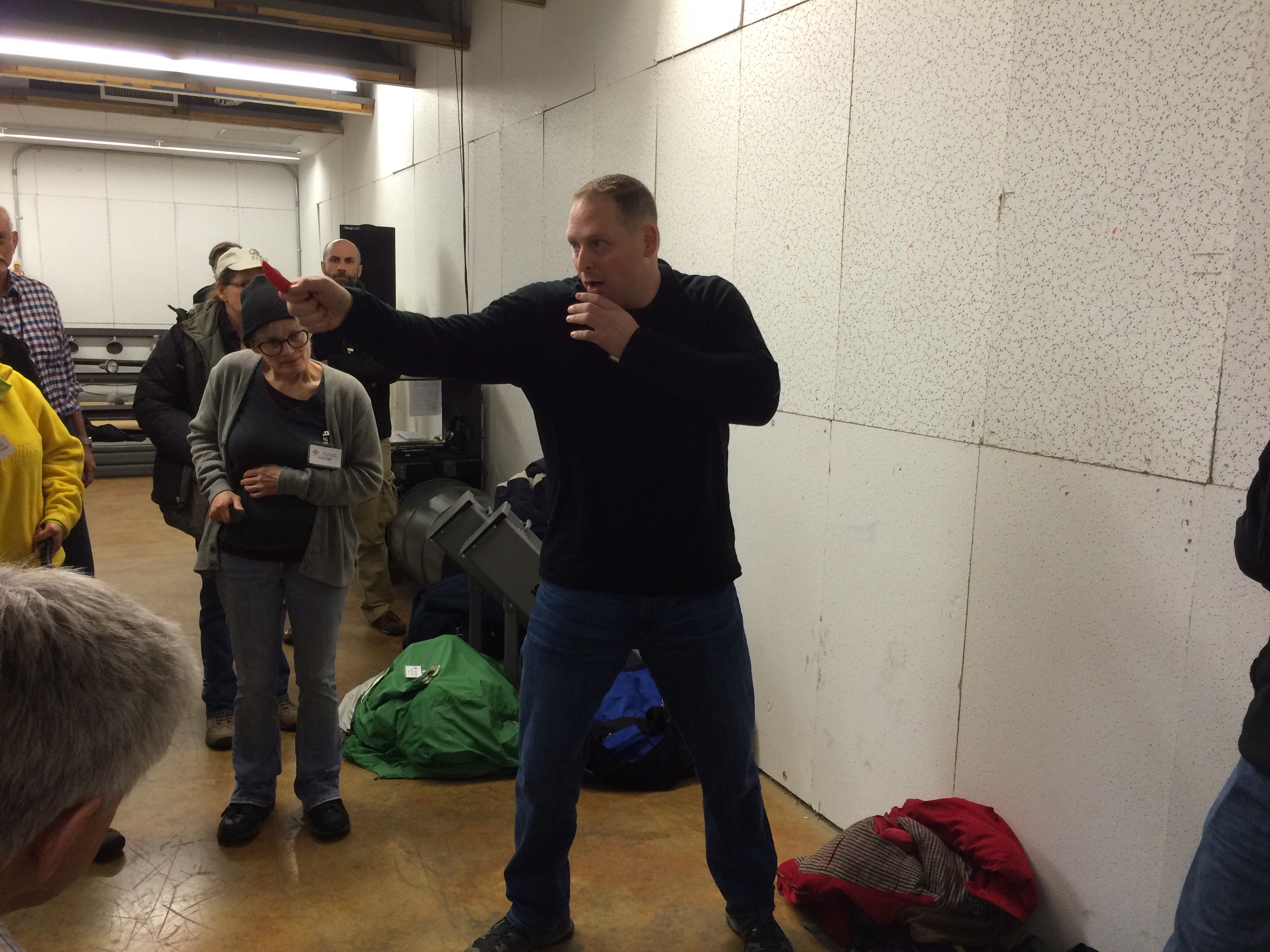
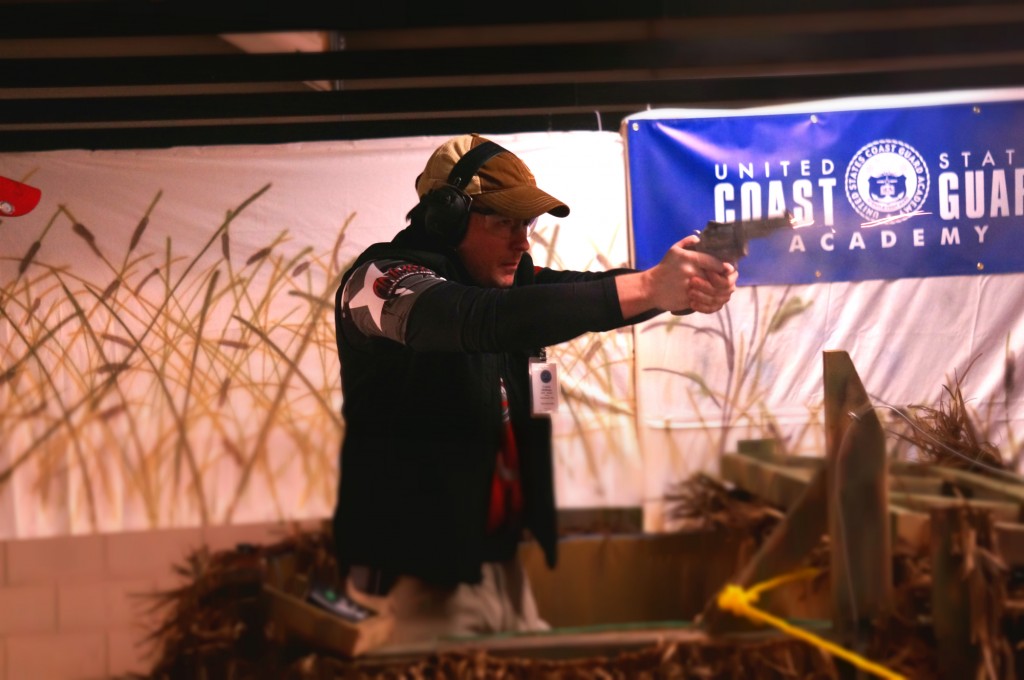
Chris Fry demonstrates achieving maximum range with a small knife to keep bad guys at bay.

The first great big plus of training with Chris is that he rolls in with a number of trainers for popular knife styles that students get to play with. One of the first lessons you learn is that any folding knife that carries tip-down is a pain in the neck to actually deploy one handed. (And given that one hand will be busy trying to keep some violent brute off of you, plan on needing to get the knife in play using only one hand) Chris had some tip-down trainers as well as tip-up trainers and experience using both while I was wrestling around with John Murphy (my partner in Chris’ class) convinced me that I would never carry a tip-down knife again. I also discovered that I greatly preferred having a knife that opens with an ambidextrous stud as opposed to the hole that Spyderco tends to use on their knives. The stud is just easier to reliably index and open when I’m using one hand to hold off an angry-looking Marine.

Chris talked a good bit about how the knife is carried for access, pointing out that the traditional practice of carrying it in the back pocket is far from ideal as it makes drawing with either hand difficult (if not impossible) and tends to make the strong arm vulnerable during the draw attempt. Odds are when you reach back to get a knife carried on the strong side you do so with your elbow pointing out, making a nice hole that someone with even a little bit of skill can use to get a better position on you at best and perhaps completely disable your strong arm at worst. Carrying more toward the centerline, however, makes access by either hand much easier and allows a draw that doesn’t leave your strong arm a ripe target for somebody with a couple of month’s worth of BJJ under their belt.

Chris spent a good bit of time working through the draw and deployment of the knife step-by-step and then having the students work with their partners to work through the process with some opposing pressure. (Always a sign of quality instruction) In working through the drills he put us through you begin to see the value of Chris’ approach. The people we were working against were similarly normal folks doing what came naturally…not carefully selected acolytes providing best-case resistance to make some goofy technique look plausible. Chris’ stuff just flat worked time and time again.

When it comes to the topic of knives, I know a lot of us are stuck thinking something like this:

Unfortunately that’s not how it works in the real world. It’s not like the game of rock, paper, huge-knife that ol’ Mick Dundee played there. (And in real life you don’t win the attractive blonde either…bummer.) A small blade can maim or kill you very easily, and perhaps do so without you even realizing it at the time. More on that another time…

On the plus side, though, with intelligent gear selection and a little bit of knowledge you can defend yourself very effectively against a number of serious assaults with a small knife. A small female being assaulted by a guy my size doesn’t have much hope of winning through sheer physical strength and would need considerable skill as a fighter to overcome the size and strength deficit I have on her…but arm that same small female with even a small knife and Chris’ instruction in the use of it and a bad man my size or bigger would be in serious trouble. As would any accomplices.

Do not underestimate the power of a small knife. If I took nothing else away from this course I learned how dangerous a small knife could be in close quarters. Look at Chris’ schedule and find a date and location that works for you and learn how to effectively employ that practical tool you carry every day as a last-ditch defensive implement. Don’t just get the tool, get the knowledge to go with it.



Dialog

Good against watermelons is one thing. Good against the living? That’s something else.

You don’t believe in the Judge, do you?

Kid, I’ve flown from one side of this galaxy to the other, and I’ve seen a lot of strange stuff, but I’ve never seen *anything* to make me believe that one “all-powerful” revolver/shotgun hybrid is ever going to be anything but marginal. Marketing hype doesn’t control my purchases. It’s all bunch of simple tricks and nonsense.

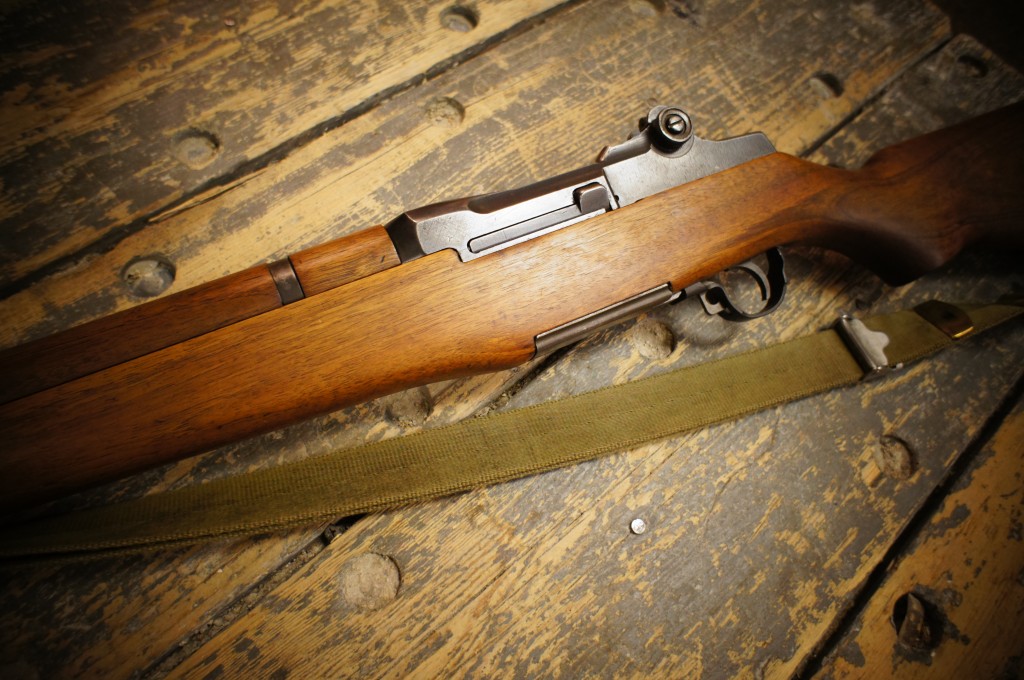
Overrated guns of history: the M1 Garand

M1 Garand

Let’s get one thing straight, first and foremost. I love the M1 Garand. They are fun to shoot, great to own, and are an incredibly important piece of our national history, and our pop culture landscape. Thanks to the early Call of Duty games (remember when Call of Duty was about killing Nazis? Pepperidge Farm remembers), Band of Brothers, and Saving Private Ryan, even kids with no family connection to the war can identify the M1 Garand and it’s distinct “ping” when it runs out of ammo. But was it really as great a gun as we seem to think it was?

Continue reading →

Getting a FAST coin with a revolver

Caleb Indoor Nats

An idea I’ve toyed around with for a while has been getting a FAST coin with a revolver. Now that someone is going to be preserving the test and the coin in Todd’s absence, it’s once again something that’s on the table. The FAST test/drill is a relatively simple drill – draw from concealment, fire two shots at a 3×5 head box, reload from slidelock/empty, fire four shots at the 8 inch body. To get a coin you’ve got to get 2 out of 3 runs under 5 seconds, clean. Hits outside of the head and body carry enormous penalties, so for the sake of this post “clean” is the only real option.

Continue reading →

Weapon Retention/Disarms with Paul Sharp

The second block of instruction I attended at the 2015 Tactical Conference was on weapon retention and disarms as taught by Paul Sharp of Sharp Defense. As a police officer, Paul has found himself in a scrape or two with bad men and has had to defend against weapon snatch attempts. Police departments these days usually mandate some sort of security holster but at least in my experience people often misunderstand the point of such a holster. It’s not a hip-carried bank vault that prevents unauthorized access. A good security holster (and there are certainly bad ones out there) buys the officer time. Hopefully enough time to do something significant and useful in their own defense.

This week a weapon grab made national headlines in Los Angeles as all the hash-tagging “social justice” numbskulls got up in arms about video of the LAPD shooting a “homeless” man. This despite the fact that it was pretty darn clear from the video that the “homeless man” (who, in reality, was a fugitive wanted for violent crime) tried to snatch an officer’s weapon.

A combative subject tries to take the sidearm of an LAPD officer trying to subdue him without using lethal force.

In this case thankfully the officer had other officers on scene backing him up and they were able to protect him. Unfortunately that’s not always going to be the case for a police officer…or for a private citizen. A lot of folks openly carry a firearm these days but it’s rare that I encounter someone who has undergone any sort of training in how to defend their firearm from a grab attempt. Worse, a number of open carriers I’ve met hold the silly idea that openly carrying a handgun will somehow magically prevent any weapon grab attempt like a gris-gris wards off bullets or evil spirits. That’s just not the case. Remember that George Zimmerman, a guy carrying concealed, found himself in a fight for his pistol after he’d been blindsided by his assailant.

Paul’s presentation at the Conference was aimed at giving folks who don’t have his years of martial arts or policing experience some effective techniques for preventing a weapon snatch…and, alternately, for successfully pulling one off.

When you look at how criminal assaults like armed robbery and the like go down, you see a pattern: Bad guy likes to get close, pull out a weapon, and invade your personal space. Having some effective techniques to deal with that kind of situation is a much better alternative to just hoping you don’t get shot.

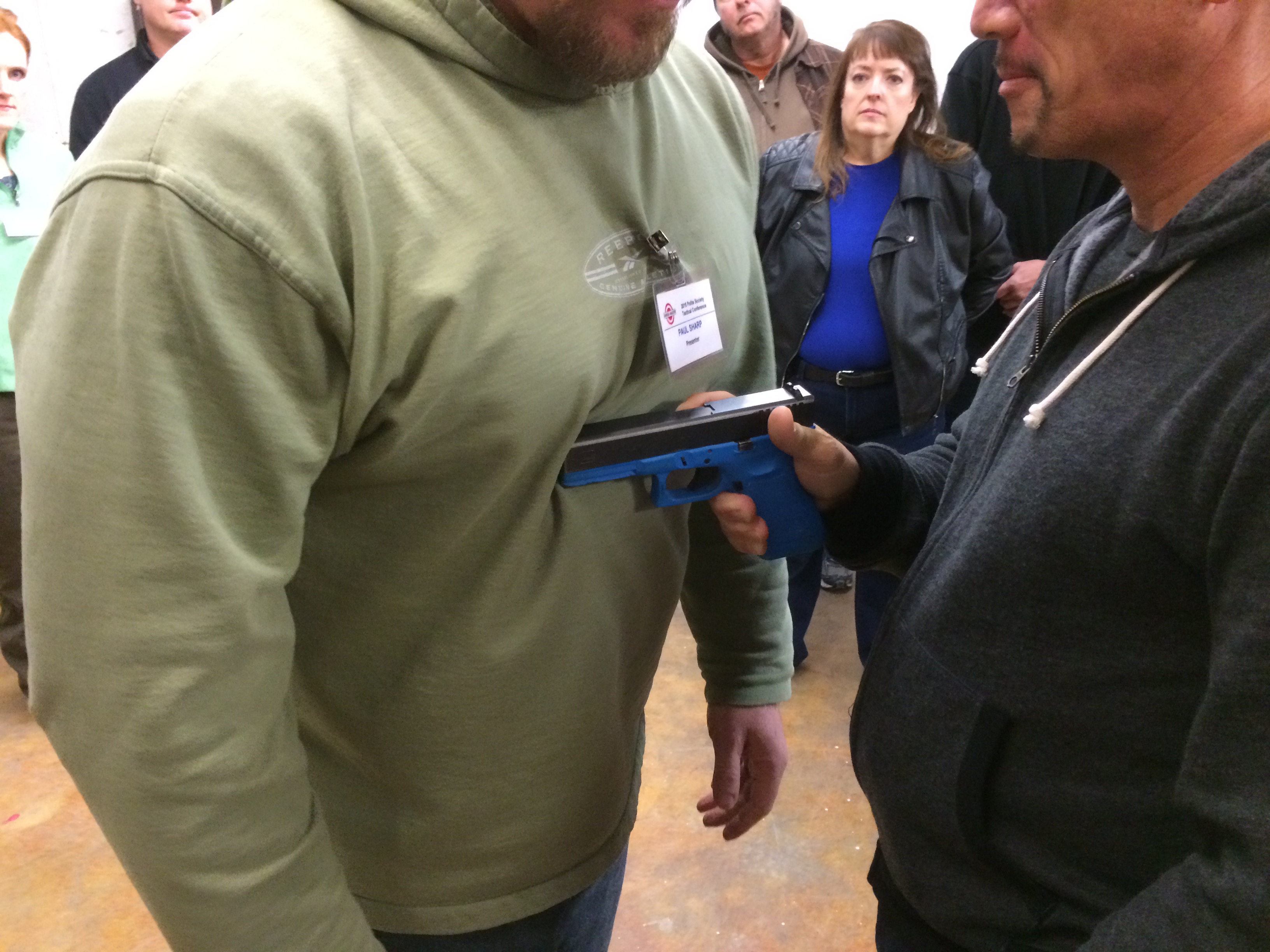
Paul Sharp explains averting the muzzle away from your anatomy in the initial stages of a defensive weapon grab.

Paul mentioned the concept of “tool fixation” as both a danger and an opportunity. To explain it simply, if you’re pointing a pistol at me at close range and I suddenly try to grab that pistol (after averting the muzzle away from my anatomy) then odds are you’ll be pretty darn focused on getting your gun back…even if, in doing so, you open yourself up to other avenues of attack or miss opportunities to attack me. It would be bad for you, the police officer or law abiding good guy, to be so fixated on your handgun that you gave the bad guy opportunities to do significant damage while you’re worried about your pistol.

On the other hand, the bad guy is probably going to be very tool fixated which can give you an opportunity to successfully defend yourself even in an extremely close range muzzle-in-your-chest situation.

Here again the concept of time is important. If you spend 5 seconds in a tug of war over the gun odds are that the other guy is going to figure out he needs to try something else. It’s much better to be working on that something else while he’s still thinking “Holy crap, this guy is trying to take my gun!” The more savvy among the readership may recognize this as getting “inside” the other guy’s OODA Loop…and that is indeed the plan. When you avoid tool fixation and maintain a flexible mindset and you’ve managed to use a few useful techniques to put yourself in an advantageous position you can press the fight and force the other guy to react to you. That will almost always work out in your favor.

Apart from teaching specific techniques and warning about tool fixation, Paul’s block was peppered with exhortations about mindset, specifically the need to get as violent as you can possibly get when you are in a close range fight over a gun. You have to win.

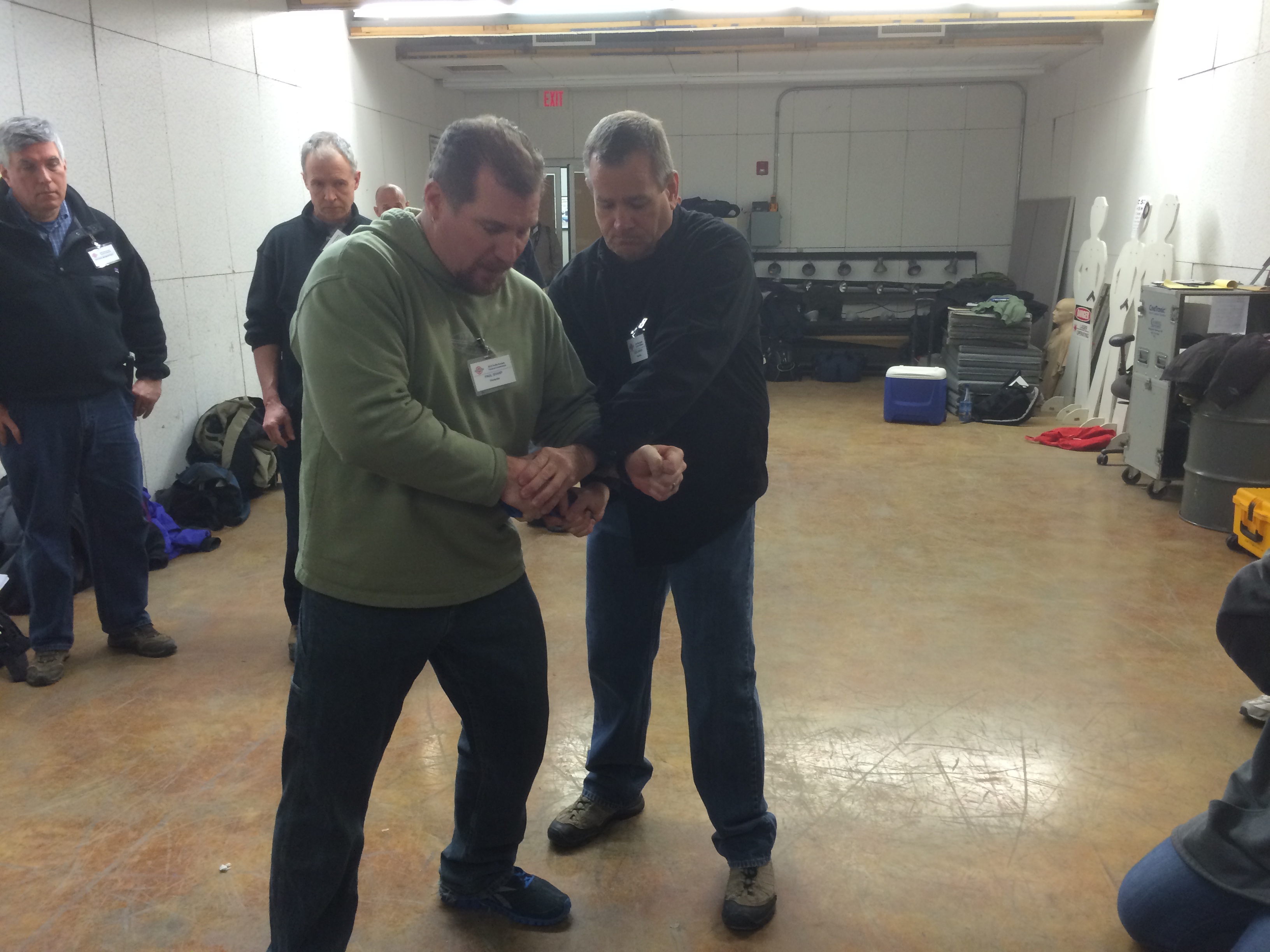
Paul demonstrates a technique for breaking a 2 handed hold.
Paul demonstrates a technique for breaking a 2 handed hold on your weapon.

There’s only so much an instructor can cover in a 3 hour block, but within that 3 hours Paul managed to cram in a lot more material than I thought possible. By the end of the block he had folks working weapon grabs and defense even in a 2 on 1 scenario and looking around I saw a room full of people with little or no exposure to this kind of training before actually doing a pretty good job of it.

…so imagine how much you could learn if you did a full couple of days in one of Paul’s classes.

It was clear from even this limited block of instruction that Paul knows his material well and that he has the ability to relate critical information in an easily understandable way. If you show up for one of his classes you will learn something useful and effective that might just make all the difference in a terrible moment.


3-Gun is the Crossfit of the shooting sports

If you have an internet connection and have seen the inside of a gym at least once, you’ve heard of Crossfit. If you’ve never heard of Crossfit and exercise scares you, this post probably isn’t going to be for you, because it’s going to be heavy (unlike Crossfit lifts) on exercise metaphors. Similar to Crossfit, if you have an internet connection and own a shotgun, you’ve probably heard of 3-gun.

Caleb's Research Assistant
Caleb’s Research Assistant

I was talking to my research assistant the other day, when I had an epiphany. That epiphany became the title of this post, which is that in many ways, 3-Gun is to the shooting sports as Crossfit is to the fitness community. On the surface there are some obvious similarities, both sports/activities have enjoyed a sudden, recent, and meteoric rise in popularity, they use gear/lifts that you don’t see in other fitness/shooting activities, the people who are “in” the respective communities have a smug sense of superiority, and we all have that one friend who’s constantly telling us “go try Crossfit/3Gun” like he’s going to convert you to the faith. Now, before you crossfitters/3-gunners get your torches and frankenstein rakes out, there is a pro and con element to this. So chill out as I alternate back and forth.

Pro
Raising awareness of the general activity. One of the interesting similarities between Crossfit and 3-Gun is that they both have shows/events on cable TV. Crossfit has the Crossfit Games, and 3-Gun has 3-Gun Nation. What these have accomplished is raising awareness of the general activity. Crossfit has helped promote the idea that fitness for its own sake is a perfectly legitimate reason to work out. Before Crossfit, most people who set foot in the gym had a reason to be there beyond “I just want to work out.” The same effect is true for 3-Gun in many ways – it’s an action shooting sport whose only purpose is to entertain people and be a sport. Even USPSA has its roots in self-defense, regardless of where it is now. 3-gun is a sport simply for sport’s sake, and that’s also a good thing.

Con
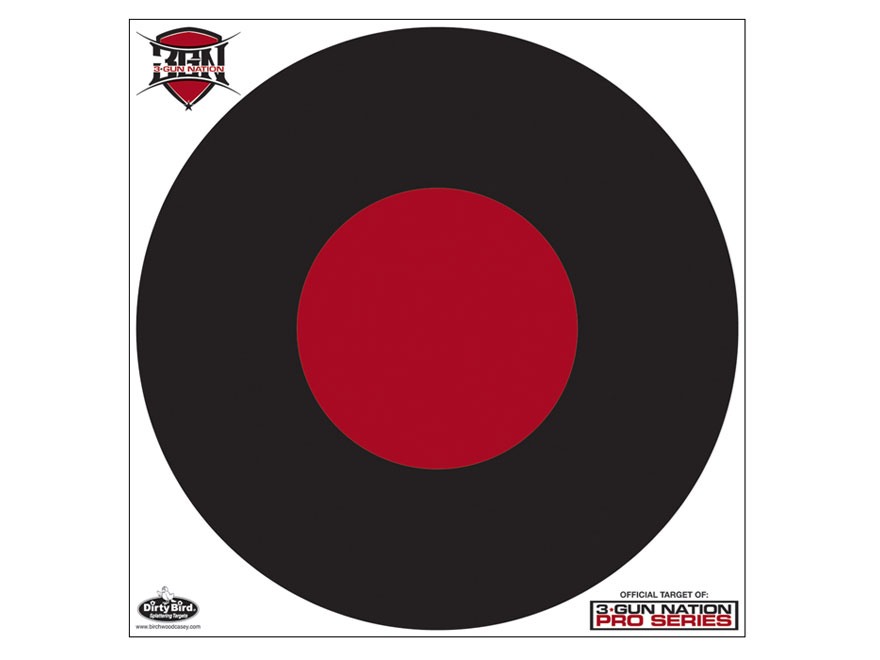
Glossing over the fundamentals. One of the greatest, and legitimate criticisms of Crossfit is that many of the trainers are not qualified to teach Olympic lifts, and that doing light weight Olympic lifts for high reps can greatly increase the chance of injury. Serious body builders and powerlifters are especially critical of this aspect of Crossfit. Similarly, have you seen a 3-Gun Nation paper target? They’re huge. How huge? 17.25 inches in diameter, and all you have to do is hit it twice, anywhere in its enormous 233 square inch area. Fundamental accuracy is sacrificed for “go-fast look cool”, just like good form is sacrificed for high reps.

3 gun nation target

Pro
Major industry support. Reebok sponsors the Crossfit games, and in fact have launched their own line of “pure fitness” gear. Last year their big marketing push was “The Sport of Fitness.” That’s pretty awesome. 3-Gun has picked up industry support and sponsorship like no other action shooting sport, people are THROWING money at 3-Gun Nation. Cash prizes for winning a shooting match? What madness is this, good sir?

Con
High bar for entry. I suspect here is where I’m going to get the most stick, but it’s true. Just to play in 3-gun you need the rifle, the pistol, the shotgun, you need a good holster, spare mags, something to carry shotgun shells, probably a cart, and a youtube account to post dryfire shotgun loading videos. The same is true for Crossfit – not because you need to bring your own gear, but the average Crossfit gym (it’s a gym, not a f***ing “box” you nitwits) charges approximately $1,000,000 to sign up and then an additional $500 per class.

Pro
It really is a community. We make joke around about Crossfit being a cult, but having a sense of community is never a bad thing. We all like hanging out with like minded bros and ladybros, and knowing that you can walk into any Crossfit gym in the country and get that familiar stank of hot sweat and musk while being affirmed by people who share your interests is actually pretty awesome. 3-Gun? Same thing. Holy s*** everyone in the 3-Gun community knows each other, and it’s a very close knit group.

Con
If you start doing Crossfit because you think you’re going to be the next Rich Froning, you’re wrong. If you started shooting 3-Gun because you think you’re going to be the next Danny Horner, you’re wrong again. Both Crossfit and 3-Gun sell you the image of elite participants, but the reality is the guys on TV flipping tractor tires or shooting 100 yard plate racks are the 1% of the 1% of their respective sports. Everyone else is a doughy, middle aged accountant looking for an hour away from his harridan wife and annoying kids.

Pro
Dude, it’s actually a lot of fun. I have done more Crossfit than I’ve done 3-Gun, and here’s the dirty secret. They’re both a pretty good time. It turns out that if you like working hard and sweating, Crossfit is a good way to get there. If you like running around and shooting guns…3-gun will scratch that itch in a pretty effective way. Plus, if you’re a specialist in a different sport like triathlons or power lifting, it’s a nice change of pace to do something out of your wheelhouse. Similarly, if you’re a Bianchi Cup specialist, it’s nice to not have to aim for the duration of an entire match.

Con
And now, for our final line: incessant social media activity. STOP POSTING YOUR WOD VIDEOS NO ONE CARES. STOP POSTING YOUR SHOTGUN DRYFIRE LOADING VIDEOS, NO ONE CARES.

If you’ve made it to the bottom of this post, congratulations. Now you can get your torches and frankenstein rakes.

Wadcutter carry: why I do it

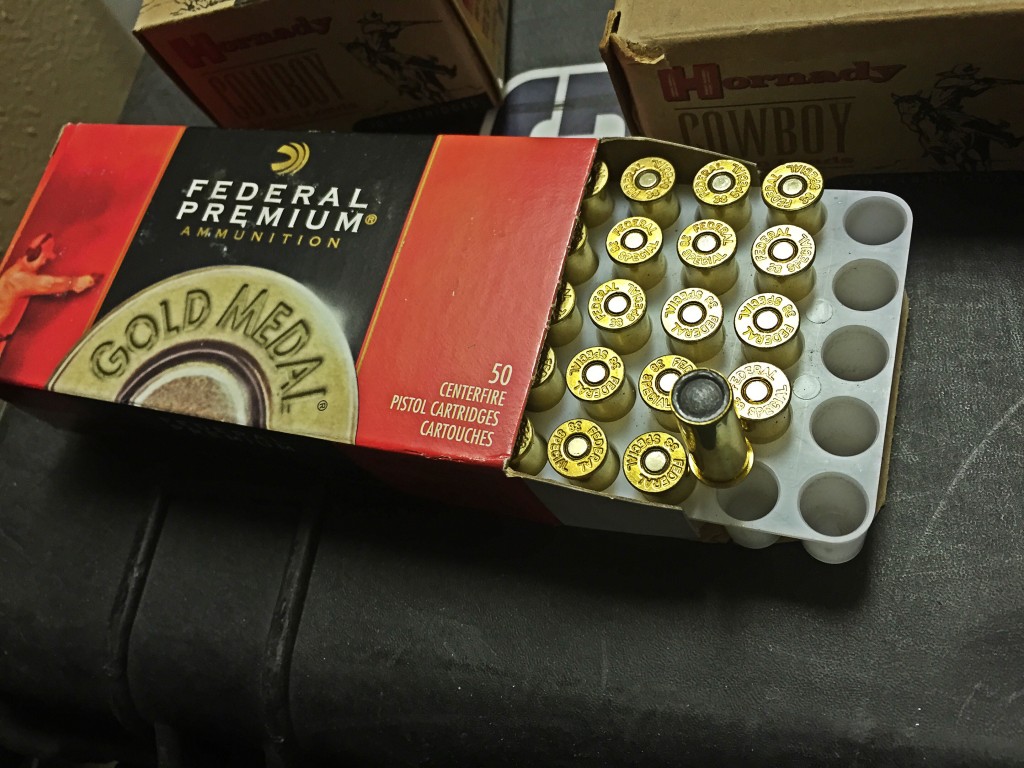
If you’ve seen my EDC pocket dump video, you’ve probably figured out that it does actually contain my regular EDC items. The Spyderco knife and the S&W 640 Pro Series go everywhere I go, so long as the latter is legal. In the video, I mention that I carry 148 grain target wadcutters in the j-frame, which has lead some people to ask if I actually do that.

Federal 148 grain wadcutters

Continue reading →