
Breaking: ATF Director B. Todd Jones announces resignation

From NSSF:
Bureau of Alcohol, Tobacco, Firearms and Explosives (ATF) Director B. Todd Jones today announced that he is resigning.
Jones was nominated by President Barack Obama for the position of ATF director on Jan. 24, 2013. On July 31, 2013, Jones became the first ATF director in history to receive Senate confirmation. Prior to becoming ATF’s permanent Director, Jones served as the acting ATF Director starting Aug. 31, 2011. While serving as the acting director of ATF, Jones was also the U. S. Attorney for the District of Minnesota, a post he held from Aug. 7, 2009, until his confirmation as ATF Director.
ATF Deputy Director Thomas E. Brandon will serve as Acting Director after Jones departs. Brandon was appointed Deputy Director of ATF in October 2011. Brandon has more than 26 years of experience with ATF. Prior to his appointment as Deputy Director, Brandon served as the special agent in charge of the Phoenix field division beginning in March 2011, and special agent in charge of the Detroit field division from January 2008 until his assignment to Phoenix.
And Attorney General Holder’s statement:
WASHINGTON, D.C. – “Throughout his tenure as Director of the Bureau of Alcohol, Tobacco, Firearms and Explosives, Todd Jones has cemented his reputation as an exemplary leader, a consummate professional, and an outstanding public servant. Since 2011, when I asked Todd to serve as Acting Director of ATF, he has made bold changes, advanced forward-looking policies, and taken innovative steps to strengthen ATF’s investigative capabilities—including ballistic imaging technology that recently played a critical role in the investigation of the shooting of two police officers. With his guidance, ATF has implemented its Frontline business model—a data-driven approach designed to ensure the agency can focus its resources to achieve maximum impact. The agency has developed groundbreaking law enforcement initiatives across the country to combat violent crime and bring dangerous criminals to justice. And as a result of Todd’s leadership, ATF has built a proactive, creative, and effective team that is well-prepared to drive the agency into the future.
“As a former officer in the United States Marine Corps, a highly talented prosecutor, and a proven leader who has been named a U.S. Attorney by two different presidents, Todd Jones has never hesitated to answer the call to serve his community and his country with exceptional integrity and uncommon distinction. As the first ever Senate-confirmed Director of ATF, his indelible legacy will serve as an inspiring example for all those who follow him. On behalf of the Department of Justice, I thank him for his extraordinary service and wish him all the best as he takes the next steps in his already remarkable career.”
This is a sudden and unusual development, as Director Jones had been the first confirmed director of the ATF in some time. This raises a couple of questions, to which we will likely never have answers. Was Jones “asked” to resign as punishment from President Obama’s administration for failing to back-door ammo bans through? Or did he see the direction the ship is going and decide to get while the getting is good?
The best all-around gun I ever had
I imagine that if you did a google search for “the best gun for x” you could spend days and days wandering forums and blogs reading thousands of different opinions and ideas on what the best gun for a given task is. But what if you only want one gun? What if you want the best all around gun that will be good for concealed carry, competition, home defense, hiking, and just be as good at everything as it can be. Good luck with that. However, here’s the best all around gun I’ve ever had.
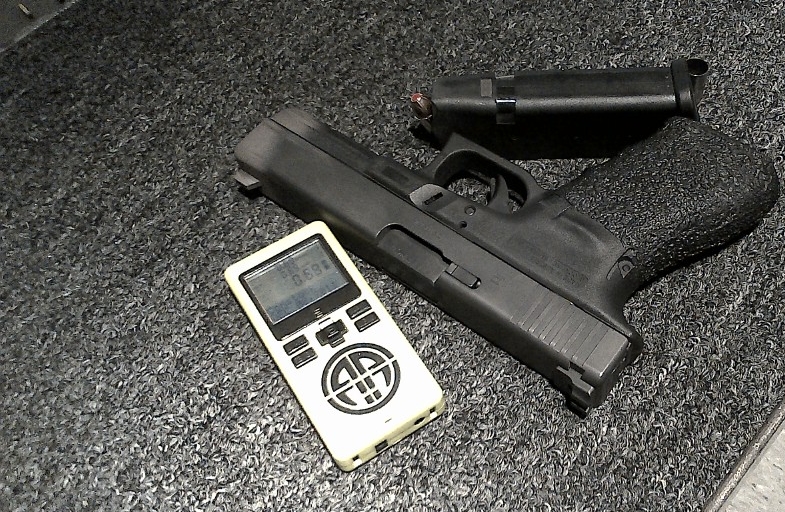
Surprise! It’s a Glock, but it’s not a 9mm. It’s a Glock 21 Gen4, which I think is the best .45 Glock has ever made and is definitely the best “all around” gun I’ve ever owned.
Experiential Learning Laboratory with Craig “SouthNarc” Douglas – The stuff you don’t learn in gun school
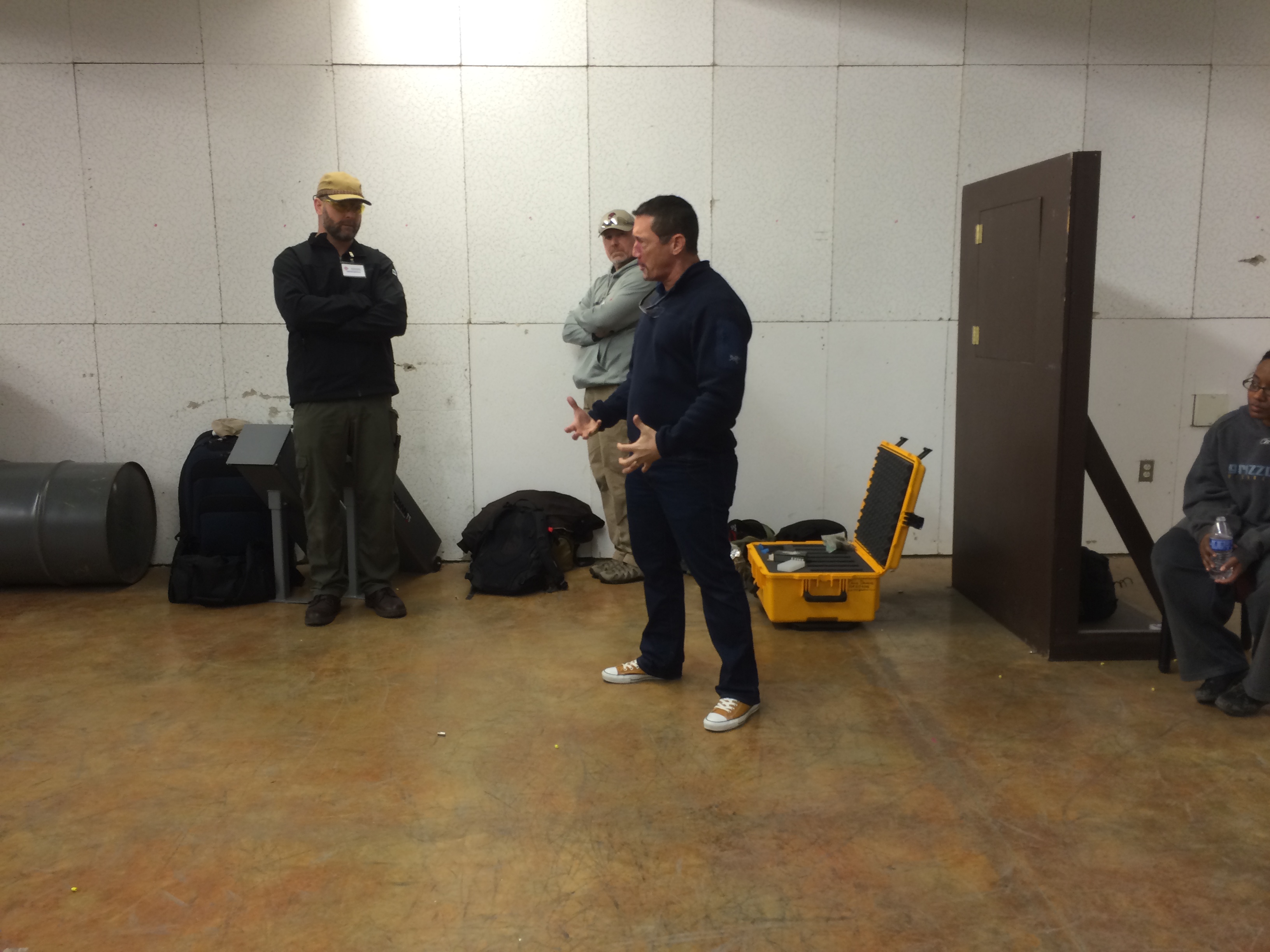
If you have been interested in the topic of self defense for a while you have likely heard the term “Force on Force” used before, and you likely have a rough idea of what it involves. For those who don’t, FOF at its most basic involves at least two people using “weapons” that fire non-lethal projectiles trying to shoot one another.Simunitions or similar type systems are the most professional FOF tools because they use real weapons specially modified to fire only a marking cartridge instead of a live round. Glock, for instance, makes a dedicated “FX” pistol with a distinctive bright blue frame that won’t chamber or a live cartridge but otherwise feels and operates exactly like a full sized Glock pistol.
When you train in boxing or Brazilian Jiu-Jitsu, you spend significant amounts of time working against a live opponent at various levels of intensity. The firearms training that most citizens (and even law enforcement officers) receive doesn’t involve dealing with a living, breathing, thinking opponent who can shoot back. There are, of course, good reasons for this. Firearms are lethal weapons that can kill or maim with a single hit and so it’s impossible to use them on one another due to the certainty of death and serious injury that would result. This limits firearms training to paper or steel targets that don’t move, don’t think, and don’t shoot back…and this leaves trainees with some significant deficits.
Properly structured FOF training attempts to expose (and hopefully remedy) those deficits by judicious application of stress. When you are holding a Glock 17 FX pistol in your hand that looks like a real Glock, feels like a real Glock, operates like a real Glock, and will fling projectiles like a real Glock your limbic system thinks it’s a real Glock. Your conscious mind has the intellectual knowledge that it’s not a real weapon and won’t really kill or maim, but the bits of the human brain that control emotional response, adrenaline flow, and survival instinct do not. This is particularly true when someone else is holding that Glock 17 FX and is pointing or shooting it at you. With a Sims gun in play, the whole thing feels very real. In these kinds of situations you learn pretty quickly that the typical marksmanship and manipulation training you get with firearms only gets you so far.
One of the best sections available at the Tactical Conference this year was Craig “SouthNarc” Douglas‘ Experiential Learning Laboratory. The setup was very simple: Craig invented a scenario and then ran about a dozen people through that scenario while the rest of the folks watched. The dozen or so primary role players were sent to another part of the building and fetched one at a time to go through the situation blindly. When you were summoned Craig handed you a Glock 17 FX and said “You came to Wal-Mart to pick something up, couldn’t find what you were looking for, and now you’re going to leave through those doors, walk through the ‘Wal-Mart’ parking lot, get in your car and go home.”
In the following moments you get a very visceral lesson in just how fast such a mundane outing can turn into the worst day of your life. I won’t go into the details of the scenario because they aren’t really the important bits of the ELL and doing so tends to invite coulda/shoulda/woulda conversations that utterly miss the point. The point of the ELL was to put people into an ambiguous situation with a lot of options and possible outcomes to see how they would react and so that others could see how they would react. I’m going to try to quantify my big takeaways from the experience.
1. The situation looks very different from the inside than it does from the outside
I was involved in the ELL both as a primary role player and as an observer of others who were put through the scenario. I don’t have the rhetorical skill necessary to explain to you how much different it is mentally and physically to be the guy stuck in the middle of the situation versus being an observer of the situation…even one who is just feet from the action. When you are in the situation your brain is so incredibly busy trying to manage and make sense of what is going on in front of you that what an outsider might regard to be obvious is completely invisible to you. In the scenario I missed a number of crucial things that were readily observable from the outside of the scenario. Part of it could be explained by positioning (it’s much harder to see all you need to see when you are in the middle of the situation versus having some distance on it) but the lion’s share was just due to the demand of trying to process a rapidly evolving situation.
2. Options disappear rapidly
I mentioned earlier that the scenario was deliberately ambiguous, designed to have many different options and possible outcomes. Going through the scenario and watching others go through it, though, you realize that while there are theoretically many different ways to handle the problem put in front of you most people were quickly overwhelmed by the circumstances and sucked into an unsatisfactory ending by events. The more complex the situation got, the more difficult the mental load and pretty quickly the primary role players were stuck reacting to what was going on in front of them instead of truly managing the situation. As the primary role player I thought I was doing a pretty good job of keeping some semblance of control of the situation right up until a critical moment when it all went straight to hell so fast that I completely missed a hugely important event. From that point I was stuck in a completely reactive mode. After that point events dictated my actions rather than my actions dictating events. This is never good.
In that mode your ability to process possibilities is so limited that the blatantly obvious passes you by entirely. After my scenario was over, Craig asked a few questions. One of them was “Did it ever cross your mind to just walk back into the store and get away from this freakshow?” I stared blankly for a moment as the synapses in my brain slowly sparked to life again. The option of just walking the hell away was there, but when the ideal time to just walk away from the freakshow presented itself I was so gobsmacked by what I was seeing that my brain didn’t even recognize going back inside the store as a possibility. If I had thought about it as an option and rejected it for whatever reason that would be one thing, but I realized that it was utterly beyond the realm of my comprehension in that moment. The door behind me might as well have been the edge of the known universe because in my head, inside the moment, it simply didn’t exist.
Now in the scenario I wasn’t standing there for five minutes with a blank look on my face. The window of opportunity there was 1/4 to 1/2 a second to realize that I had the perfect opportunity to disentangle myself from this mess and get the hell out of there…but my brain was so overloaded that I could not recognize that opportunity and act on it. From that point on it was like falling into a hole. The conscious part of my brain got further and further behind the 8 ball until the point that I was reacting purely on survival instinct.
I wasn’t alone in that. I watched the majority of the role players experience the same phenomenon. Some of them were so stressed by even being in the scenario that they went into a complete mental lock at the very earliest stages of the scenario. Some, like me, managed to do OK up to a point and then it all went pear-shaped on them. A couple managed to keep control of the whole thing, usually by acting decisively instantly. You’ve heard the old saying about an OK plan executed right now is always better than a perfect plan executed later, right? The ELL was a master class on the validity of that approach.
3. You didn’t do what you think you did
In the scenario I had certain thoughts running through my head about what I was trying to do. In the aftermath, being debriefed by Craig, I verbalized those thoughts. Craig and the rest of the observers informed me that my actions in certain parts of the situation were not at all consistent with what I was thinking. I was thinking that I wanted to be completely away from the freakshow evolving in front of me, and yet at one crucial point in the scenario when I was thinking of distance I actually aggressively moved into the situation without conscious thought. I saw what I believed to be a vulnerable person being attacked and while my conscious brain was thinking “get away from this and call 911” I was actually physically inserting myself into the middle of it and using verbal aggression to try and stop the assault. It was a purely instinctual response with not a trace of conscious thought involved.
I was not alone in this either. I watched other role players give a verbal description of their actions in the aftermath that wasn’t at all consistent with their actions in the moment. Under stress and experiencing the mental lockup described earlier, they simply had no idea what they had actually done.
4. You are missing big pieces of the puzzle
Out of all the people to run through the scenario, I think maybe two or three had perfect recall of what happened and what order it happened in. Everyone else (including me) had difficulty recalling events that had just transpired. To use myself as an example, when thinking back on the scenario in the aftermath I could not recall why, exactly, I drew my gun. If my memory of the situation was a video tape then there would be some stuff happening and then a blank spot and then when the footage picked up again my gun was in my hand…with no indication of how it got there or what prompted that action. It wasn’t until I was watching the next scenario at least 10 minutes later that I remembered, and even then imperfectly.
Imperfect recall while under the effects of adrenaline and stress is one of the reasons those with experience in the criminal justice system advise you not to be too chatty in the aftermath of a shooting. You can very easily say something that is inaccurate and that can dramatically complicate your life.
…and I could go on all day. I think the best summary of what kind of eye opening experience this was came from someone who watched every scenario as an observer. “Having watched all these people go through this situation I cannot imagine sitting on a jury to decide someone’s fate without having experienced something like this.” People experiencing extreme stress often do strange things because normal thought processes simply aren’t available to them. Seeing it first hand over and over again in person after person left an impact on everyone at the ELL.
That’s stuff you typically don’t see or experience in the typical gun school…and that’s why Craig’s coursework is so valuable. If you have the opportunity to train with him, do it. I like having a high level of shooting skill but even world-class skill is no substitute for being a competent tactician when the chips are down. Craig’s approach to instruction has a better shot at giving you the tools to become that competent tactician than most of the other options on the market.
Glock 43 first look
Get a first look at the Glock 43 at GunUp the Magazine
Recommended holsters for concealed carry
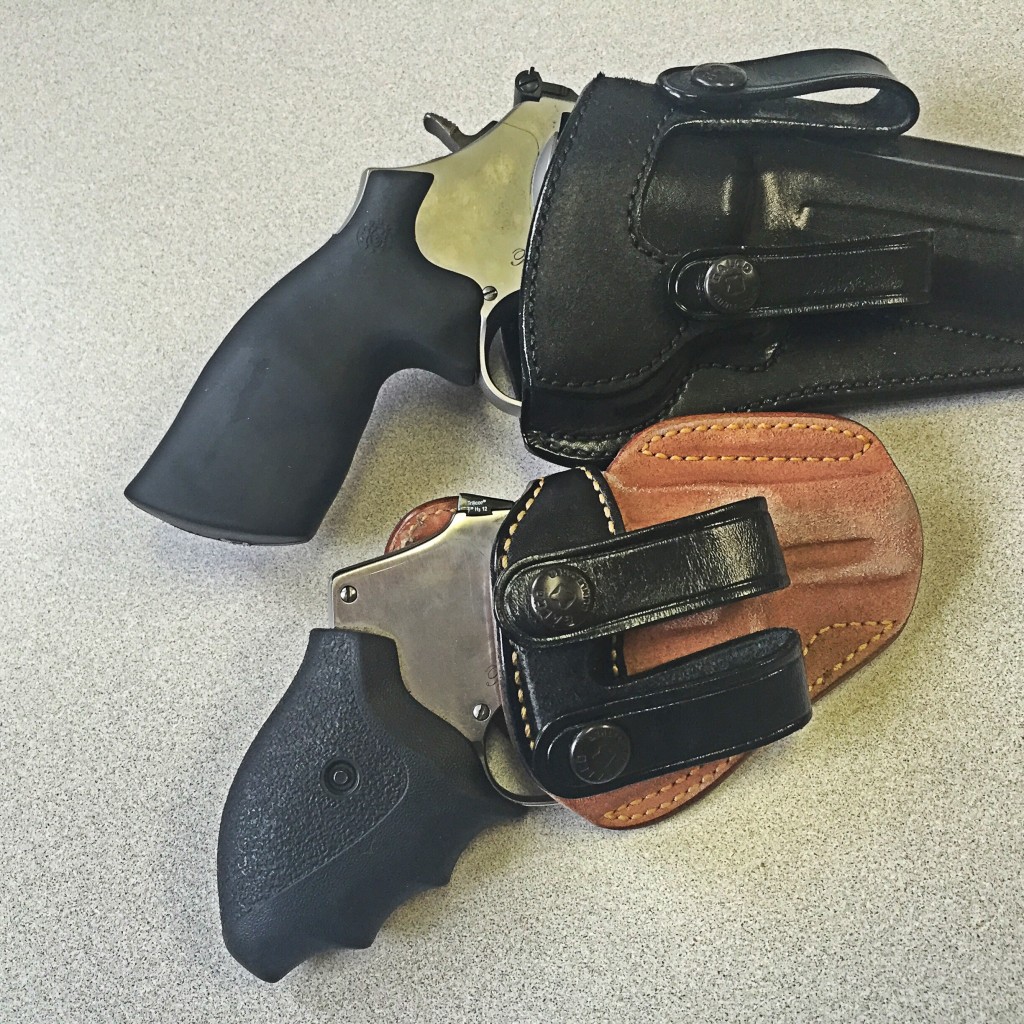
Ever since I abandoned AIWB carry, getting a good holster has become a lot easier. I just go to Galco’s website and order a Summer Comfort or a Royal Guard for whatever gun it is I need to carry. Problem solved, problem staying solved.
Weaver vs. Isosceles, revisited
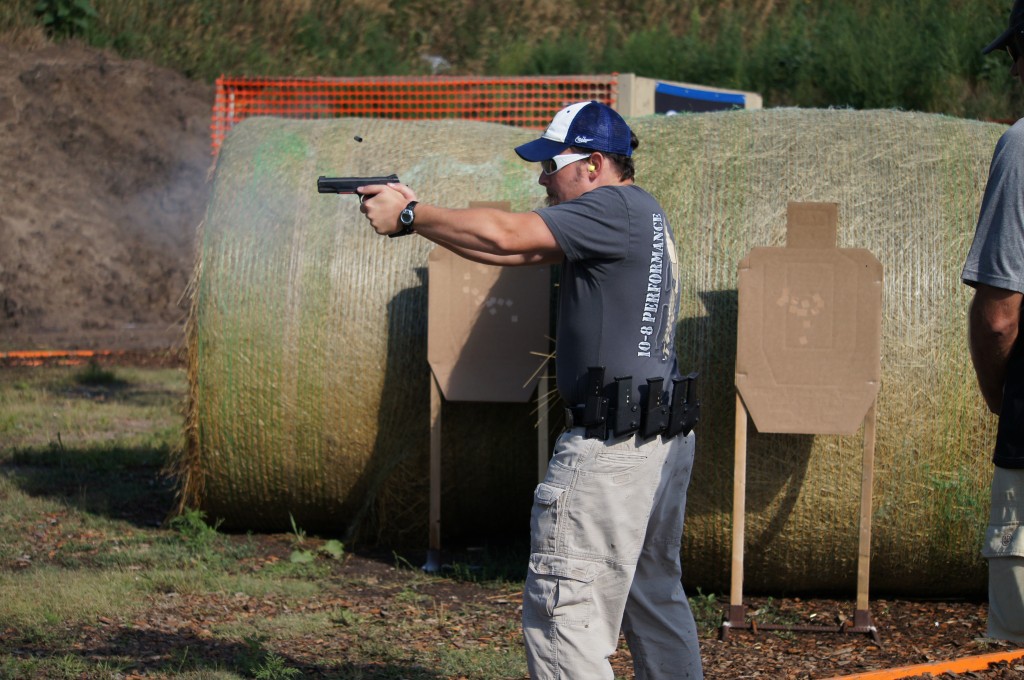
Now once upon a time not too long ago, a blogger like myself wrote a series of posts comparing the Weaver stance as associated with Jeff Cooper’s Modern Technique and the Modern Isosceles stance. Actually, pretty much everyone has fought this battle over and over again. Back in the day, I was a staunch defender of the Modern Iso that’s used by literally every top competition shooter in the game. These days? I don’t think it matters at all for 99% of shooters.
Why bullseye is the most popular pistol shooting sport
If I asked you, dear reader, what you thought the most popular pistol-based shooting sport in America was based on participation, what would you say? IDPA? USPSA? GSSF? Well, if you picked any of those, you’d be dead wrong, because the answer is bullseye.
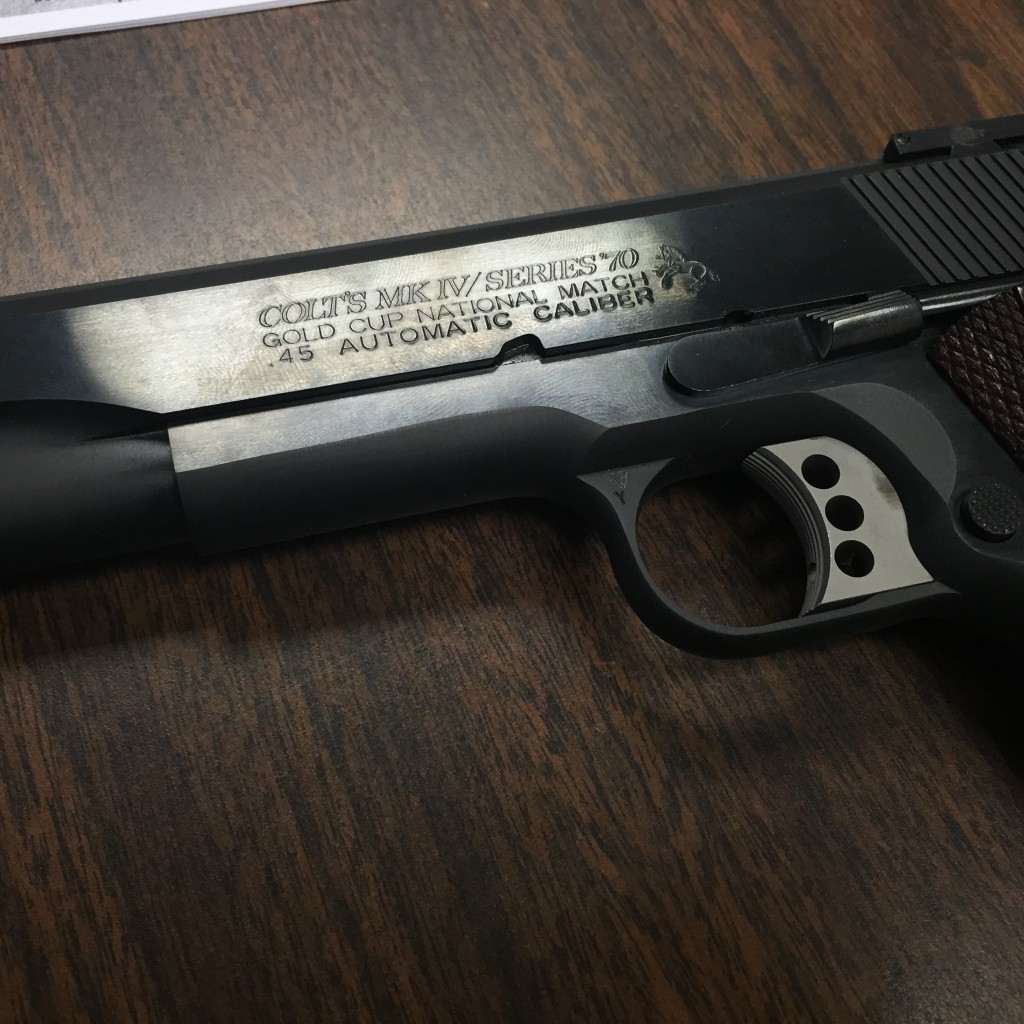
Yep, good old fashioned boring bullseye. Why is that? Is just because of tradition? Or is there something more to the fact that the Camp Perry Nationals had over 600 shooters last year?
Pros and cons of carrying a moonclip revolver
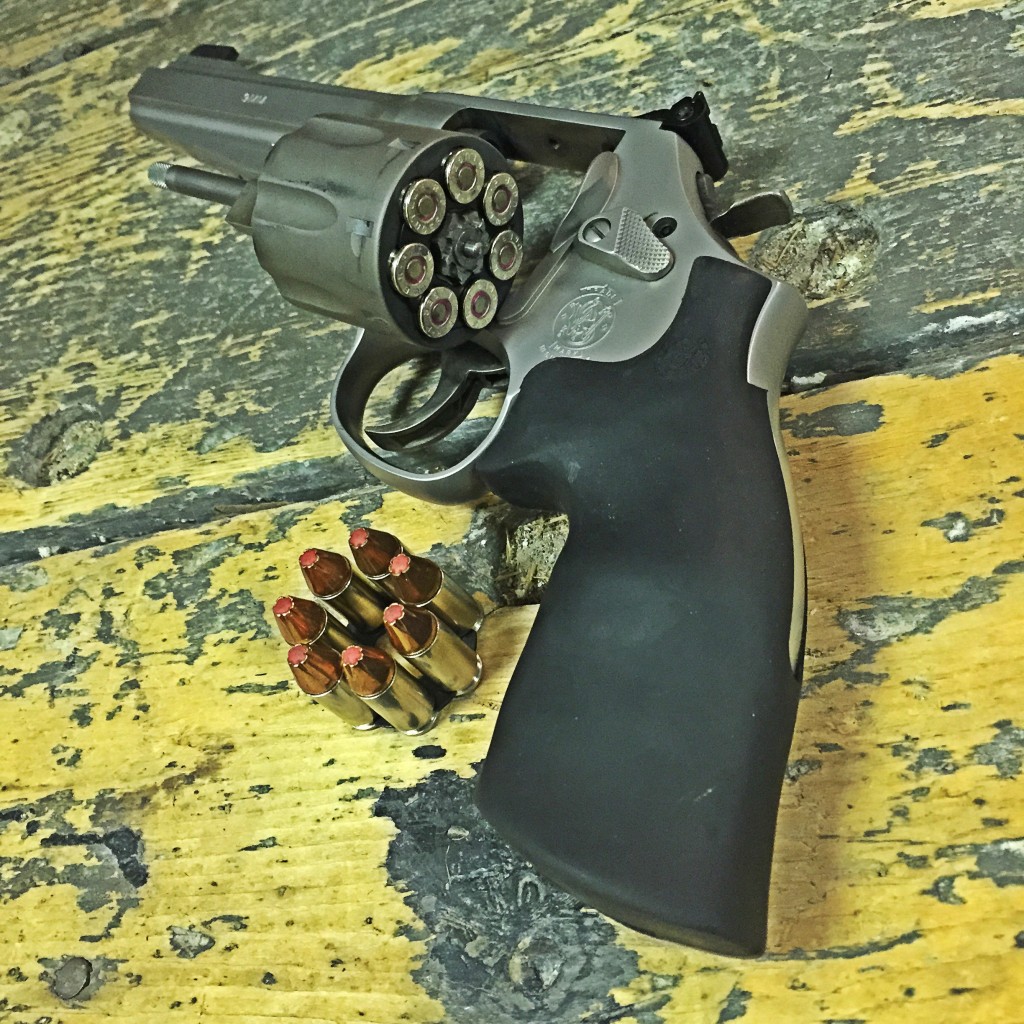
There has been an uptick lately in the number of revolvers available that are chambered in traditional “semi-auto” cartridges. While some of them aren’t great, like the Rhino in .40, the recent offerings from S&W are pretty awesome. Especially the L-frame 986 pictured above. People have been asking me about carrying that gun, so here’s a quick look at some of the pros and cons of carrying a gun that uses moonclips.
Small revolvers for concealed carry
I actually did a serious video this time. Taking a look at the revolvers I carry, and I why I carry them.