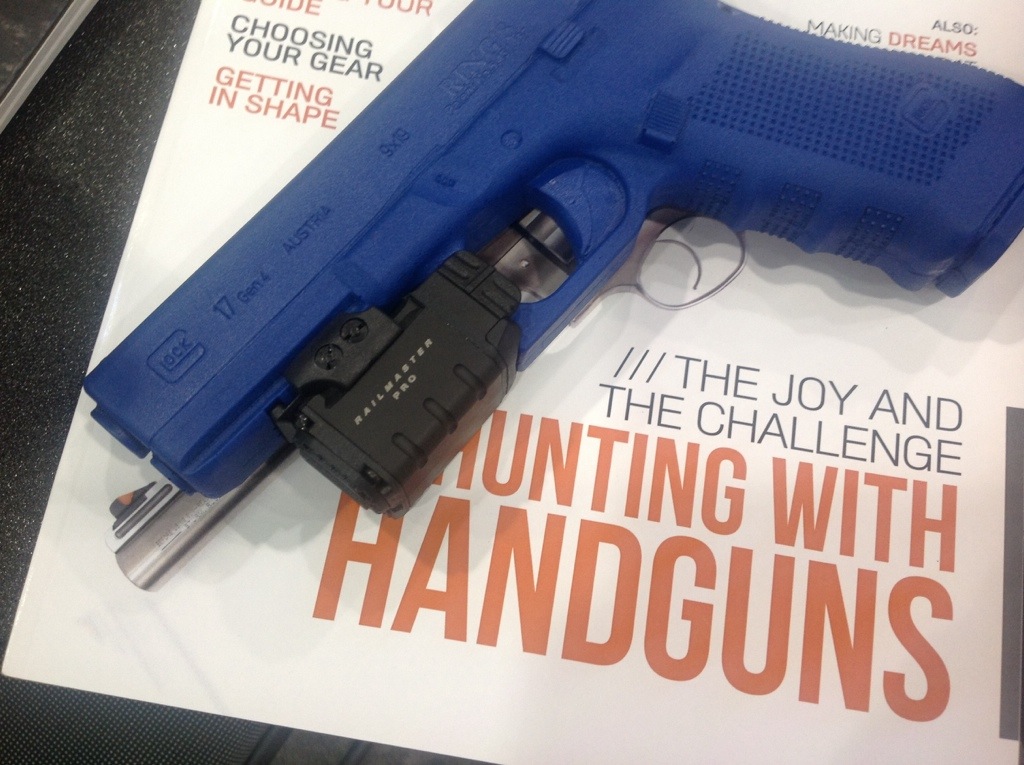
Why don’t more “tactical” trainers advocate hunting? I remember growing up and reading Jeff Cooper’s column in the back of Guns and Ammo; Jeff Cooper was a huge advocate of hunting. He espoused the idea that for the average law abiding citizen, hunting an animal was the only place outside of a real shooting where you could fire your guns with the intent to kill. He believed that was a good piece of mental training for anyone who carried a gun seriously.
Now, I’ll admit that I haven’t done a lot of hunting. I recently went on my first pheasant hunt, and I’ve shot a lot of coyotes, but I wouldn’t call what I did to coyotes “hunting” in any sense of the word. But I have seen things in the field that would directly apply to self defense. For example, on my recent pheasant hunt, I had expended a volume of shells at some fast moving birds. During what I thought was a lull in the action, I attempted to top off my shotgun, only to miss a golden opportunity when a rooster flushed right at my feet. If I’d had my gun loaded, I would have hit that thing.
Tactical lesson: you can only identify a lull in the fight when you’re examining the fight in hindsight three or four hours later. Second tactical lesson: a faster reload is better.
An observation from shooting coyotes also comes to mind: once I hit a coyote with a kind of marginal shot with a 7.62×39. The dog ran 200 yards, laid down and just sort of went to sleep and died. Once, I shot a dog in the perfect “kill” spot behind the foreleg and through the lungs with a 125 grain JHP .357 Magnum. It ran 200 yards, laid down and died.
Tactical lesson: don’t bet your life on one shot stops. If someone’s trying to kill you, shoot them a bunch.
Interestingly, I’ve had a lot of experienced old-school guys (who still shoot weaver) espouse this same theory that hunting is good for people interested in self-defense. So the question then becomes, why doesn’t the modern tactical training community tell people to get their ARs and go hog hunting with them?
First among them is this simple fact: We do not know what it will take to actually stop a violent attacker. People often make the mistake of believing that somehow a gunfight or a shooting is going to happen on their terms. Think logically about that for a second: We’re talking about a situation which has spun so far out of control that your last option to resolve it without ending up in a wheelchair or a body bag is to aim a firearm at another human being and shoot them. If you’re at this point, fate isn’t smiling on you…she’s spitting right in your face. It is somewhat silly, then, to believe that suddenly things are going to go your way once you clear leather.
We’ve discussed terminal ballistics at length in some previous posts, so I won’t attempt to rehash the whole shebang here. Nevertheless, when we’re thinking about capacity it would behoove us to think carefully about what we can glean from the study of terminal ballistics and what actual gunfights tell us about human behavior when they’ve taken a bullet. Earlier this week I wrote a little bit about the 1986 Miami shootout, inspired by noted Miami shootout researcher John Hearne’s appearance on Ballistic Radio. The interview was very informative, and I found the sections where Mr. Hearne discussed the shooting problems faced by the FBI agents in the fight particularly useful. He notes that the agents were left trying to thread shots through very tight openings between bits of car as the primary aggressor, Platt, maneuvered with his rifle.
When I see discussions of what is “needed” in a gunfight, be it a discussion about accuracy or capacity, I get the feeling that most of the people having the conversation are picturing things in terms of silhouette targets. Not people. Human beings do not stand broad-side with squared shoulders when bullets are flying. They do not stand still and let you take your time to shoot at them. Once again we’ll turn to the bounty of Youtube for some gunfight footage that illustrates the point:
Note how people move when the bullets are going both ways. Note how even dead-enders holding up a stop-n-rob don’t require any special training to try and present as small a target as possible when there are bullets coming at them. In a real fight, opportunities to actually hit are fleeting. Generally speaking, you’ll only be shooting at a sliver of bad guy that’s only there for a very brief period of time (perhaps even a fraction of a second) and even with the highest skill level you can present it’s possible for a person to actually move enough under those circumstances to turn what was a solid hit into a minor wound or even a narrow miss between the time the trigger is pulled and when the bullet gets there.
Even if you manage to make a good hit, there’s no guarantee it’s going to stop the bad guy. It certainly didn’t stop Platt. In the aftermath of the FBI shootout coroners found that Platt was dealt what would prove to be a mortal wound in the very early moments of the fight, but he went on to kill two FBI agents and wound five more. Mattix was hit in the head in the early moments of the fight and was knocked unconscious, but came to later on and continued to function and move. It took another head shot from FBI agent Ed Morales dealt to Platt and Mattix at relatively close range to knock both of them out long enough to bleed out from the multiple gunshot wounds they’d sustained during the fight.
A couple of officers from a police department in Pennsylvania ended up in a hellacious fight where they fired over 100 rounds in an effort to stop one thug armed with just a .45 ACP semi-auto pistol using a pickup truck as cover. The man sustained multiple fatal wounds but kept fighting until a 180 grain hollowpoint from one of the officer’s handguns hit him in the arm holding the gun, breaking it and causing him to drop the weapon. Even having been shot 16 times, even having been mortally wounded, the officers still had to fight to cuff him. Shortly after, of course, he expired.
We’ve discussed expressing capacity as time, but here it’s important that we also see capacity as opportunity. More opportunity to make a tough shot against a hostile moving and using cover. More opportunity to get a fight-stopping round on target, ending the bad guy’s hostile actions. More opportunity to win. When the bullets are going both ways, more opportunities to fire at the threat is always superior to fewer ones. If you’ve got ample time, a wide open target, and nobody’s trying to kill you it’s pretty easy to hit what you intend to hit…but that’s not a description of an event where you’re pulling the trigger to save your life.
Even if you’re a superb shot. Even if you’re the best shot with a handgun in the world…you might need that capacity to get the job done.
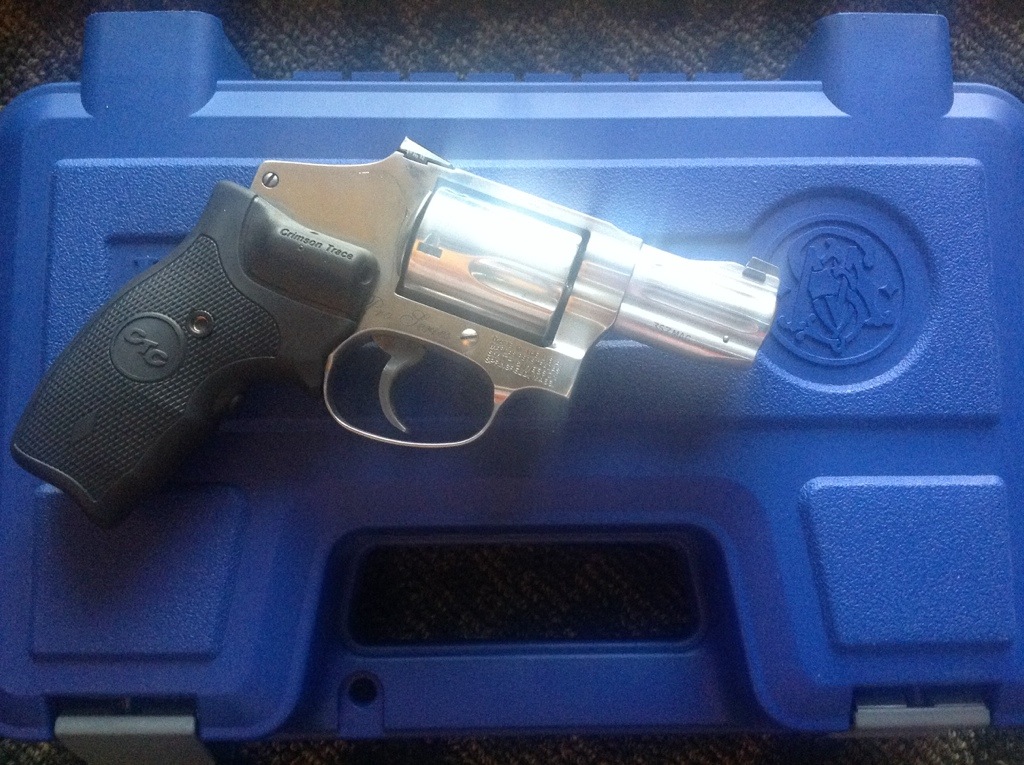
Recently, I’ve been excoriating the sacred cow of “revolvers don’t jam,” because it’s utter nonsense. That being said, I love wheelguns and I still carry one, simply because my enjoyment of the platform means I’m more likely to actually go shoot the gun. Which leads me to the story of why my carry gun, a S&W 640 Pro Series, is currently a paperweight.
On Tuesday, I had the chance to head out to the range with Stephen Pineau of M3 Strategies and the guys from Lionheart Industries to shoot the LH9 pistols. While there, I also sighted in the CTC lasergrips on my j-frame for my carry load, the Double-Tap 158 grain LSWC +P. Because it’s a cool gun and I was planning on shooting it, I ran 2 boxes of ammo through it, also letting the other attendees shoot it a little. At the end of the day, I noticed that the cylinder was a little sluggish when out of the frame, but the gun worked fine. So I loaded it back up, holstered it, and carried it for the remainder of Tuesday and all day Wednesday.
Last night, I wanted to do some dry fire reload training, so I pulled out the dummy rounds and some speed speeds, unloaded the gun, and did a reload. I noticed that the cylinder wasn’t rotating at all, and had a hard time going back into battery. If the cylinder won’t freewheel when out of the frame, that indicates there’s fouling in a place that’s hard to clean without tools. Once the cylinder is back in the frame, the trigger pull is increased by about double to get the thing to move.
My theory is the reason the gun was fine while I was shooting it was everything was nice and hot, and still fairly loose. After the gun had time to cool, the combination of +P and lead bullets meant that a lot of fouling has deposited in a part of my gun that I can’t clean without tools. It could also be an internal parts breakage, but I doubt that. A huge collection of fouling is a lot more likely. Unfortunately, because I’m on the road and not for a match, I didn’t think to bring a cleaning kit with me, so until I can get home, my gun is an expensive paperweight.
I’m considering walking over to Bass Pro Shop next door to my hotel room and picking up a cheapo cleaning kit just to pour solvent down the thing and hope it breaks up some of the crud. The moral of the story is revolvers are just as sensitive as semi-autos, and no amount of “just pull the trigger again” (the common refrain of fools) will fix this gun. I was going to shoot this gun and ammo at IDPA Bug Gun Nats, but now I might shoot Shelley’s Colt Cobra instead.
Earlier this week I posted about my trip to Chicago, IL and my plans for self protection while there. Many of you had recommendations for every day carry items that I might use to keep myself safe, and I am grateful. However, Illinois recently passed concealed carry legislation that will change the self defense opportunities for Chicago residents, and I wanted to take a look at what these new laws have to say.
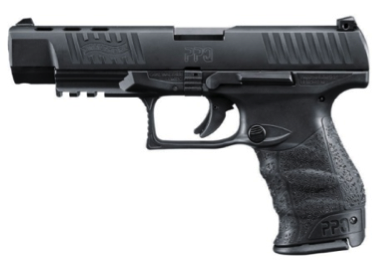
FORT SMITH, Arkansas (October 29, 2013) Building on the great heritage of the original PPQ, Walther Firearms introduces its new 5-inch barrel version of the PPQ M2. Chambered in either 9mm or .40 S&W, the PPQ M2 5” is a striker fired action pistol with a smooth Quick Defense® Trigger. It’s pre-cocked with a constant trigger pull of 5.6 pounds for greater control, accuracy and reset.Continue reading →
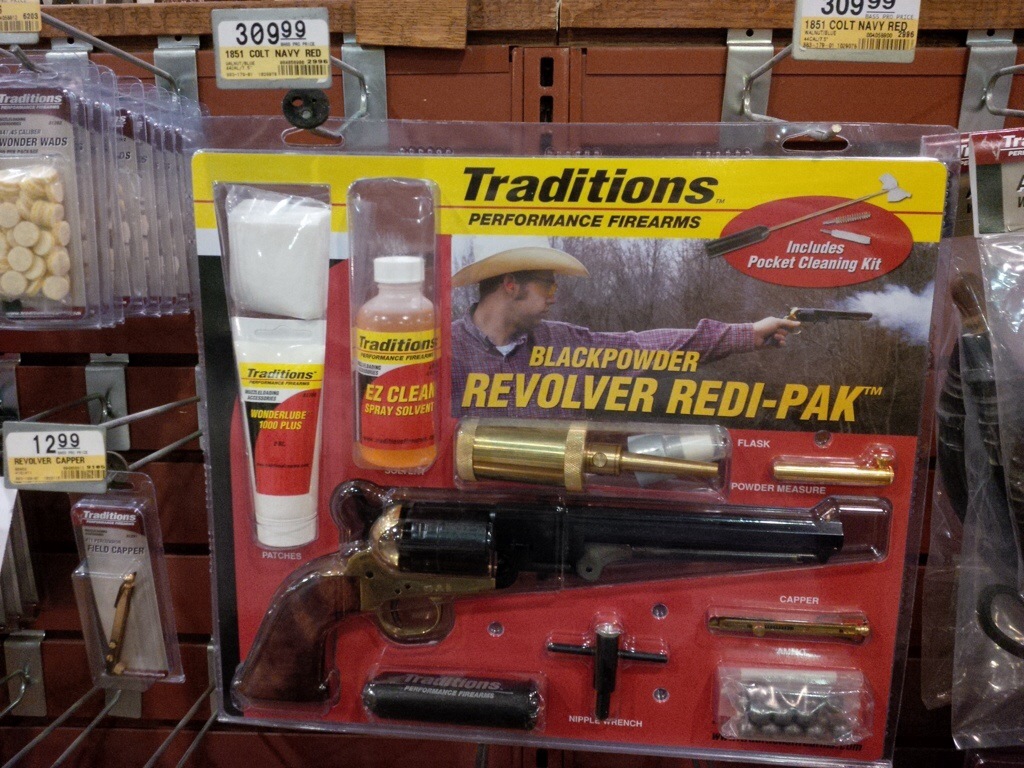
I had a couple of thoughts when I saw this blister pack black powder revolver in Bass Pro the other day. The first was “inflation sucks” because I remember when that exact same kit was selling for $179.99.
My next thought was how awesome it is to see this sort of thing. I mean stop (collaborate and listen) for just a second about what you’re looking at. It’s a blister pack with a gun in it. Yes, it’s a black powder firearm which isn’t regulated as a “firearm” but the government, but that’s just semantics. That’s a gun, and everything you need to fire it except for powder and percussion caps, which by the way were conveniently located right next to the blister pack.
It does suck that the kit is now going for $300+ though. It was a pretty screaming deal back when I was heavy into black powder, and with the price point just south of a decent .22 pistol, it’s hard to see the appeal of this as a starter gun. However, if you’re looking to get in to BP revolvers, this would be the route I’d recommend. Yes, the gun is brass framed, so you’ll never be able to convert it to a cartridge gun, but for an entry level BP kit that provides you with everything you need it’s actually pretty good. Just get some good Goex powder and Number 11 caps and you’ll be having the best old-school fun possible.
April 11, 1986 was an important date for gun nuts. On that date a unit of FBI agents were involved in a hellacious firefight with two military-trained armed robbers, Michael Platt and William Mattix. When the smoke cleared FBI agents Ben Grogan and Jerry Dove had been killed, and five other FBI agents had been wounded in the firefight. Platt and Mattix each sustained multiple gunshot wounds (some very solid hits) but continued to fight and managed to do an extraordinary amount of damage.
The shootout was a high-profile event, grabbing headlines and spawning incredible amounts of myth and legend that persists to this day. Books were written based on it, and you couldn’t read any of the gun magazines for more than a couple of months without seeing the Miami shootout referenced somewhere. Hollywood got involved too, producing movies and TV shows with references to the fight and at least one attempt at a dramatic recreation of it:
While myth and legend persist about the Miami shootout, it’s actually one of the most thoroughly documented and studied shooting incidents in history. There are plenty of facts available to someone who is interested in research, but as is the case with high profile events people often prefer to take third-hand legend away from it rather than carefully search for the facts.
If you’re looking for the facts, our friends at Ballistic Radio did an interview with John Hearne, who is widely recognized as one of the leading experts on the Miami shootout. It’s not exhaustive, by any means, but that interview will give you a good grasp on what happened in the fight and some of the lessons we can learn from it.
Our equipment has certainly benefitted from the lessons learned in the aftermath of the Miami shootout. That incident is widely recognized as the turning point in the study of terminal ballistics when a well-funded organization with access to experts in many fields (one of the FBI’s strengths) applied hard science to the question of terminal ballistics, resulting in a better understanding of bullet wounding factors and some testing protocols which allowed an assessment of a particular round’s likely performance in the field and a process by which ammunition could be designed for better performance. As a result, today we have ammunition choices in any of the common service calibers that perform brilliantly and offer the best possible chance of stopping a threat.
The Miami shootout happened at a time when drug trafficking and related gang crime were hitting a peak, and police departments like the LAPD were encountering a breed of thug that harkened back to the motorized bandits of the depression era. There was mounting pressure to upgrade from the police standard 6 shot revolver to one of the higher capacity “Wonder Nine” semi-autos like the Beretta 92. Derided as “crunchentickers” by Jeff Cooper, this new breed of double-action first shot, single action followup semi-automatic pistols with a double-stack magazine gave the user more than double the capacity of ammunition on tap and a much faster, much less fiddly reload. In the aftermath of the shootout, the FBI transitioned to semi-automatic pistols and that burst the dam, ending the reign of the revolver as the police sidearm of choice.
If you want to really understand the history of firearms, you have to understand the Miami shootout and the general tenor of the times when it occurred. There’s no better way to get a start on that than by listening to the interview over at Ballistic Radio. While you’re over there, check out some of the other great interviews they’ve done. I promise it’s worth your time.
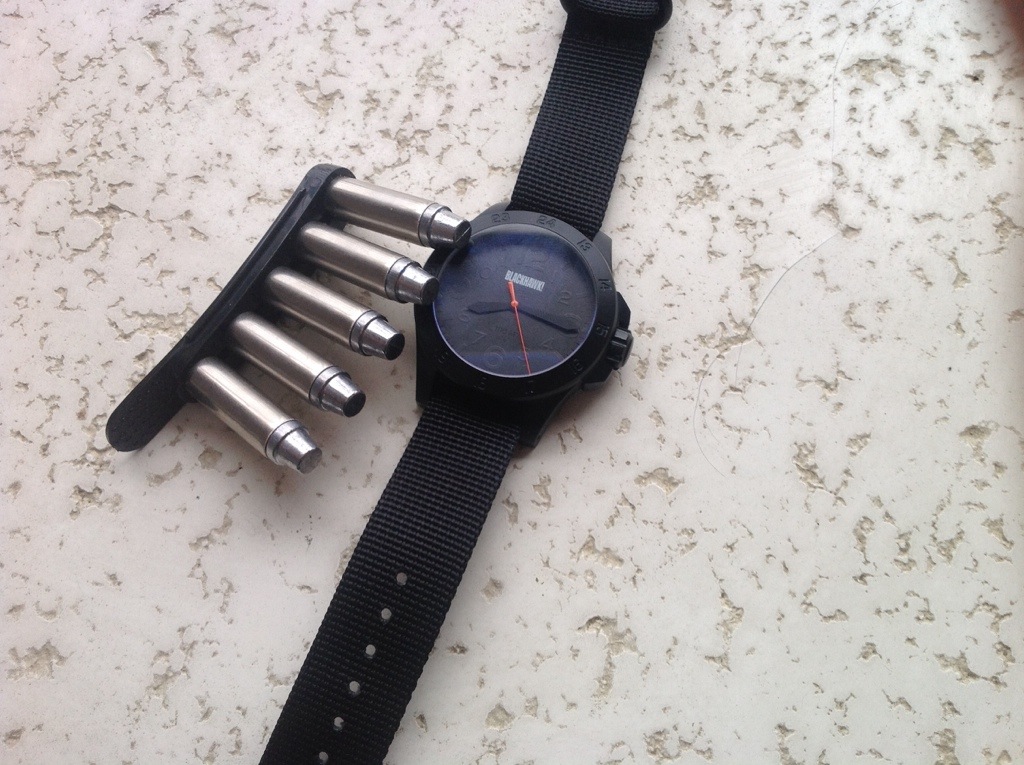
Pop quiz, hotshot: what’s the slowest way to reload a revolver? Trick question, they’re all slow! All kidding aside, reloading a wheelgun isn’t a quick exercise. Other than manually putting single rounds in the chambers, by far the slowest way to reload a wheelgun is with a Speed Strip.
So if they’re so slow, why do I carry one? There are a couple of good reasons to carry a speed strip, and the first is that it’s not a bad idea to have extra rounds. If you do need to use your revolver in a defensive situation, topping the gun off might be a smart decision. Carrying loose rounds in your pocket would be a pain, but the Speed Strip lets you keep five rounds in one handy location.
It lays nice and flat in your pocket, doesn’t weigh much, and holds the rounds securely. It is faster than loading loose rounds from your pocket, and about equally as fast as loading two at a time from cartridge loops on a belt. Unfortunately, cartridge loops on your belt is a little out of style these days, which really is too bad.
I didn’t always carry a speed strip, but recently I’ve realized that if I’m willing to carry the gun itself, I should really make sure to have at least one reload on hand. I accept the likelihood that if I get in the sort of fight where I need to reload my j-frame I’m probably going to get killed anyway, but I figure I’d rather die trying than not.
I suppose it would be smarter to just carry a Glock 19, but that’s so mainstream.
We use cookies to optimize our website and our service.
Functional
Always active
The technical storage or access is strictly necessary for the legitimate purpose of enabling the use of a specific service explicitly requested by the subscriber or user, or for the sole purpose of carrying out the transmission of a communication over an electronic communications network.
Preferences
The technical storage or access is necessary for the legitimate purpose of storing preferences that are not requested by the subscriber or user.
Statistics
The technical storage or access that is used exclusively for statistical purposes.The technical storage or access that is used exclusively for anonymous statistical purposes. Without a subpoena, voluntary compliance on the part of your Internet Service Provider, or additional records from a third party, information stored or retrieved for this purpose alone cannot usually be used to identify you.
Marketing
The technical storage or access is required to create user profiles to send advertising, or to track the user on a website or across several websites for similar marketing purposes.