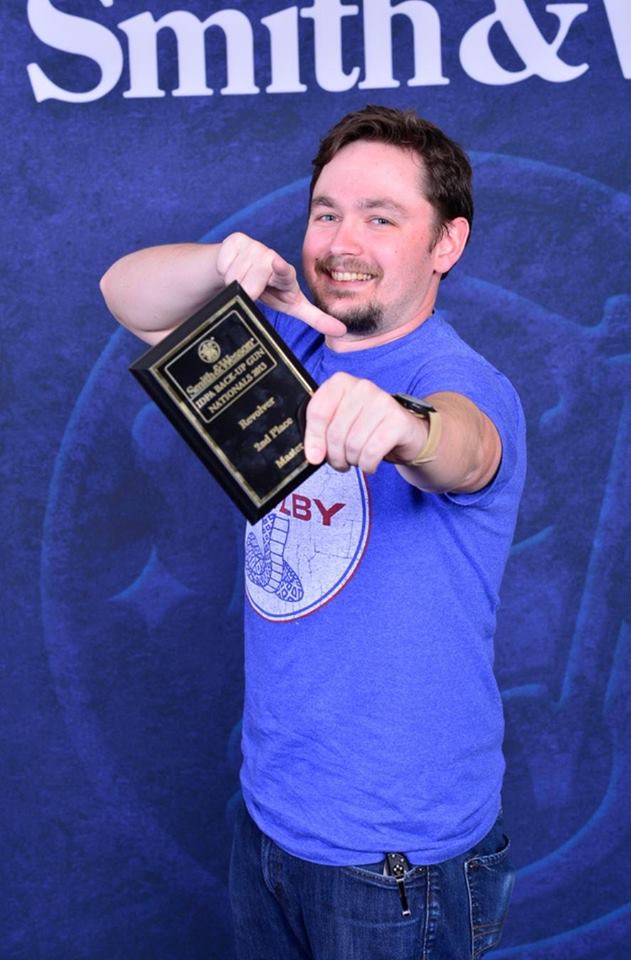
This is how you pose for award photos! None of that silly formal “Here is my plaque and my generic smile” stuff. Photo by the inestimably awesome Yamil Sued.
This is how you pose for award photos! None of that silly formal “Here is my plaque and my generic smile” stuff. Photo by the inestimably awesome Yamil Sued.
Using a one power optic on your AR15 has become the official hotness for serious HSLD broperators everywhere. Most shooters seem to gravitate towards the Aimpoint optics for their rifles, however there is another great option out there. I’ve been using a Trijicon RMR as a primary optic on AR15 and AK47 rifles for several years now, and have tested it in match conditions with great success.
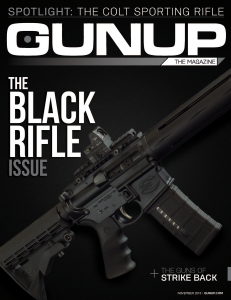
If you read the November issue of GunUp the Magazine, then you’ve seen the setup I’m currently running on my AR. Just one lonely RMR on the top of the rifle…and it’s absolutely TOP. The current RMR design is rugged enough for serious field use, and has great battery life. On my AR I’m running the RMR02, which doesn’t have manual brightness adjustments for the dot and uses a 6.5 MOA dot. I also have an RMR06 with adjustable brightness and the 3.25 MOA dot that I’m considering putting on my Ruger Scout Rifle as part of the optic test of magnified optic vs. non-magnified optic.
Now, with an RMR you’re not going to be shooting sub-MOA groups at 100 yards off the bench. But if you need to hit an IPSC B/C target at 100 standing offhand, you absolutely can. It adds almost no weight to the gun, and has all the obvious benefits of a red dot optic. While it may not be for everyone, if you’re looking for a rugged, effective 1 power optic for your rifle, think about the RMR. Right now I’d recommend the RMR01 or 02 models, and will be testing the 06 later next year on a .308.
One of the most hotly debated topics in the discussion of self defense is the nature of the threat the average person is likely to face. Some argue that if you aren’t a cop, bad guys you deal with are typically very stupid and will typically run away rather than engage you in a fight. There’s some evidence to back that up, as it’s pretty clear that merely presenting a firearm will indeed cause a lot of bad guys to immediately beat feet. “A lot” is not all, however, and I contend that the bad guy you’re most likely to have to pull the trigger on is neither as stupid nor weak as we might like to think. To expand on that idea I’m going to do a sort of a mini case-study on a particular bad guy who tried to murder an average CCW holder during a holdup, hopefully illustrating that maybe some of our assumptions about bad guys don’t really hold up in the real world.
A little while ago, our friends at Ballistic Radio did an outstanding interview with Justin Schneiders, a regular guy who found himself in the path of a violent predator. I strongly encourage you to listen to the interview because I think Justin’s experience serves as an excellent touchstone for discussing some of the realities of self defense. The predator who chose Justin as his victim also has a lot to tell us about the criminal actors we’re most likely to have to engage with lethal force.
I first became aware of Justin’s experience because he posted a thread on AR15.com detailing what happened to him that made rounds on the various gun forums. It’s a very long thread, but worth a read from beginning to end because it contains a great deal of information that you might find useful. Before the incident Justin’s background was pretty similar to the background of most folks who carry concealed. To the best of my knowledge he wasn’t in law enforcement or in any military position that included significant combat training. He was just your average good dude with a good job, a good family, and some good friends and so would be typical of your “average” CCW holder and exemplar of how “average joes” do not always face “average” threats.
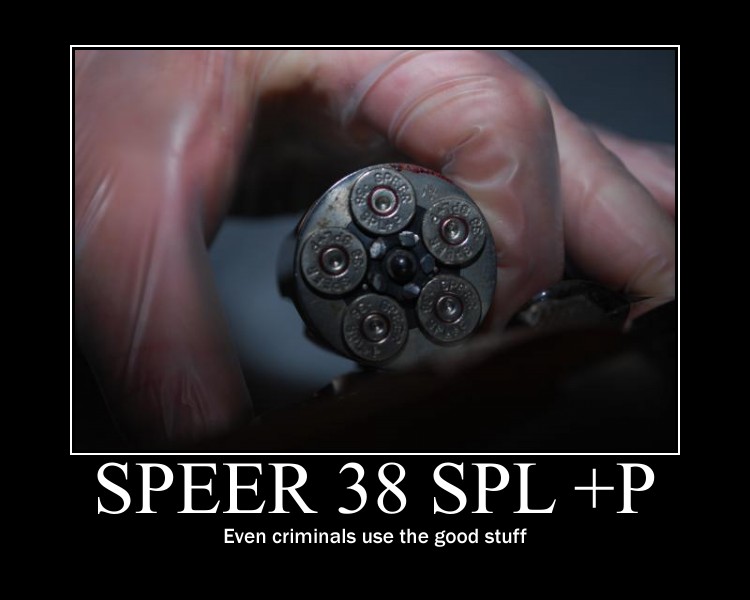
Bad guys aren’t “random”
Justin had a regular get together with some friends of his at a buddy’s law office. What Justin didn’t know that his regular get-together with his friends was being watched carefully. Specifically a woman who worked in food service at a near-by prison. She wasn’t a prisoner, mind you, but an actual employee of the corrections department. It turns out she had a thing for one of the inmates, a guy with an already pretty extensive rap sheet who was hungry for a score once he got out of the prison for his last offense. The woman directed him to Justin’s regular get together with friends as a potential target.
We often assume that bad guys are low order predators who attack targets of opportunity, and it’s certainly true that some of them operate exactly like that. Some is not all. In this case, Justin and his friends were targeted by an experienced predator. Some bad guys are total losers with no real social skills, that’s true. If you actually go through prisons looking at the worst offenders, however, you’ll often find that a number of them are actually fairly adept judges of human character. Predators have to be astute judges of their prey or they go hungry. In this case, the predator was apparently able to spot an opportunity in this commissary worker and could muster enough charm to work up a relationship with her that led to a place to stay and a score once he got out. You don’t often hear bad guys discussed as being manipulative and calculating, but the fact is that those who make their living preying on others have to develop the ability to think strategically and manipulate others to be successful.
We also don’t typically think of bad guys as being planners, but if you look at the operation of criminals ranging from street criminals pulling hold up jobs to those who sexually abuse children, you’ll often see them employing strategies in the selection of victims, the locations where they perpetrate attacks, and the way they approach victims. When you look through their history you often find evidence that they’ve actually honed tactics and skills, learning from failures and making adjustments to ensure future success.
The plan may be centered on a particular location where the bad guy notices a good profit potential and low chances of getting caught, or it could be centered on an individual or group that the bad guy thinks is vulnerable to attack. Either way, though, there’s planning and strategy at work.
People often confuse being opportunistic with being random or unsophisticated. As if the criminal act is more in line with someone who has poor impulse control. You often hear victims of crime state that the event took place “out of the blue” and that contributes to the idea that these things happen like lightning strikes. When you dig deeper, however, you often find that while it seemed completely out of the blue to the victim, the bad guy was employing strategy. A while ago the bank that my church uses was robbed at gunpoint. It happened fast and seemingly out of the blue to the victims inside the bank, but it turns out that the perp lived close to the bank, was familiar with the physical layout and patterns of the bank’s business, and had actually been watching the place for a bit before finally storming through the doors with his gun.
Bad guys are opportunists, but this doesn’t mean that they are exclusively impulsive. They actively look for opportunities and often gather intelligence and plan based on what they know about their intended target. Justin’s experience (and many other crimes on top of that) teaches us that most of the time when the “average joe” meets up with the criminal predator, it’s because the criminal has a plan. Most citizens busy leading their lives don’t.
Yeah, bad guys usually aren’t rocket scientists. That doesn’t mean, however, that they are unfamiliar with strategy or gathering intelligence on a potential target.
What we can learn from this aspect of the case study is this: Since bad guys usually have a plan, we’d better have one too.
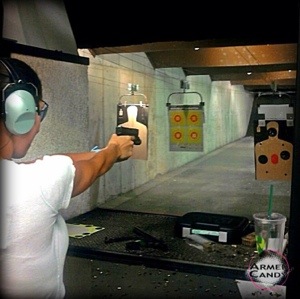 Have you ever dreamt of your ideal gun range? If you could design it in anyway you desired, what would you do? I have embarked on just such an endeavor and I wanted share a few of my ideas and hear your thoughts as well. The building will house both gun sales and indoor shooting range facilities and have a comfy family environment. However, this is where the stipulations end. Now it is up to us to build the most awesome complex ever.
SMYRNA, GA (November 2013) -With his placement at the 2012 and 2013 qualifier matches, GASTON J. GLOCK style LP sponsored shooter Dave Sevigny of the Sevigny Performance Team earned the #1 USA Team position for the International Practical Shooting Confederation (IPSC) World Shoot XVII. Sevigny will lead the USA Men’s Standard Division Team at the triennial Level V IPSC World Championship October 12th through 19th, 2014 in Frostproof, Florida.
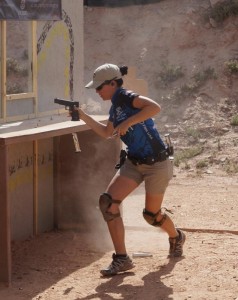
A points system taken from IPSC and United States Practical Shooting Association (USPSA) qualifier events finalized the four-person Team USA rosters for IPSC World Shoot XVII. The USA Men’s Standard team consists of the three highest ranked USPSA members, plus one alternate member selected by USPSA Team Manager, John Amidon.
With more than 18,000 members, USPSA is the largest of 94 IPSC regions around the globe. Match organizers expect more than 1,000 worldwide entries among the four equipment divisions of competition at World Shoot XVII. Each division is home to different types of guns ranging from near stock pistols to heavily modified race-guns.
In 2012, Dave Sevigny won the IPSC Nationals and added two high-percentage runner-up finishes at the 2013 qualifier matches to secure first place in Standard Division Team points. “IPSC and USPSA are the two best leagues in practical shooting. It is an honor to represent the USA on the world stage again. There are a lot of great shooters who will be there,” remarked Dave Sevigny.
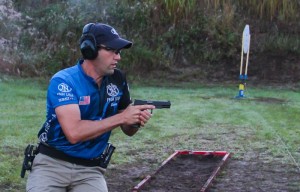
As an 11-time USPSA National Champion with over 200 major tournament wins, including an IPSC World Shoot win to his credit, Sevigny will be in solid contention to win IPSC World Shoot XVII and lead the USA Standard Division Team to the Gold medal.
GASTON J. GLOCK style LP shooter Brooke Sevigny earned a position for the USA Ladies Standard Division Team by placing well in the qualifier events in 2012 and 2013. IPSC World Shoot XVII will be Brooke’s first appearance at an IPSC Level V Championship. In 2013, Brooke won several titles, including the USPSA Area 4 and Area 5 Ladies Championships in Limited Division, which is the USPSA equivalent of IPSC Standard Division.
“To be able to compete at the World Shoot is something I never dreamed of two years ago. I’ve learned a lot and plan to work hard in training with my husband in 2014,” commented Brooke Sevigny.
“Over the past two years, the United States Practical Shooting Association has been holding qualifier matches to select teams to represent the USA in the IPSC World Shoot to be held in Frostproof, FL in 2014. Some of the best shooters in the world have made the teams; we have father and sons, husband and wives representing our country. Dave Sevigny and his wife Brooke, are among the 48 competitors selected by their skills and experience. Congratulations to all, you earned it,” said John Amidon, VP of USPSA, Director NROI and WSXVII Team Manager.
GASTON J. GLOCK style LP is a large supporter of the shooting sports and is a major sponsor for the IPSC World Shoot XVII. Beate Arnold, CEO of GASTON J. GLOCK style LP, said “We are very excited to sponsor the IPSC World Shoot XVII in 2014 and for Dave and Brooke Sevigny to represent us there.”
Visit http://www.facebook.com/GASTONGLOCKstyle to get the latest news on GASTON J. GLOCK style LP and their sponsored Sevigny Performance Team.
For more information on GASTON J. GLOCK style LP visit www.gastonglockstyle.com
To learn more about IPSC and USPSA shooting visit www.ipsc.org and www.uspsa.org
Stage 2 was four strings of five shots each. String 1: seated, pick up gun and shoot. String was standing, same target. String 3, start and remain seated and shoot, string 4 was standing behind the bar and shoot 5 rounds past the no-shoot. On string 4, a bent moonclip caused some epic trigger freeze.
Score: 17.07, down 2.
Place: 3rd Master, 6th overall.
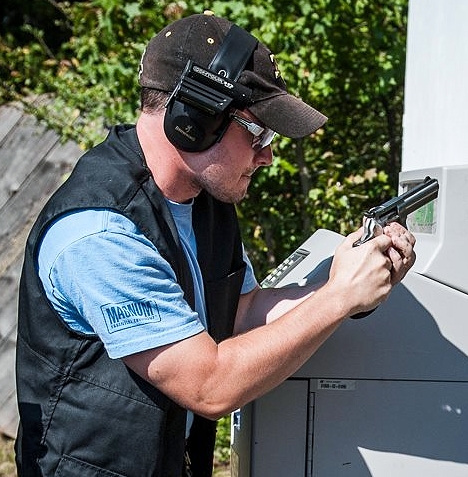
If you read yesterday’s 2013 Shooting Season Recap, you know that 2013 was a somewhat frustrating season for me. On the gear front, the Colt CCG was (and still is) an amazing gun, but my performance left a bit to be desired in multiple matches. Big disappointments in Bianchi Cup and at IDPA Nationals left me feeling a little frustrated. Now that winter has officially set in for South Dakota, it’s a good time to take some downtime from shooting, and look at what I want to do with my 2014 season.
One of the big reasons this is important is because the off-season, which really runs from mid-November through mid-March is a perfect time to train up dry-fire skills. It’s also a great time to work on strength and conditioning, because Always Be Bulking, Bro. But back to shooting, here’s a look at major matches I plan on attending in 2014.
There are always quite a few matches that I’m “maybe” about, such as Steel Challenge or the ProAm. I’d also really like to get qualified and get out to the ICORE Nationals in 2014, if for no other reason than to visit the central coast of California. Of course, a lot of that will depend on how busy things are with the company.
Now, with regards to off-season training, it would seem that if I want to move up the ladder in IDPA and actually win a national championship in SSR, I need to step my revolver game up across the board. Looking at scores from the 2013 IDPA Nationals, I finished with a raw time 33 seconds slower than the 1st Master and 43 seconds slower than the Division Champion. My accuracy is good for a Master class shooter, I only dropped 2 more points than the 1st Master, but it’s not going to cut it to win DC, who dropped 30 points less than me. So if I want to win an IDPA National, I need to be faster and more accurate.
My goal for Bianchi Cup is to finish in the top 15 and shoot an 1800 or better. That means being more accurate. Trigger control, trigger control, trigger control, and a bit of sight alignment. I can work on that in dry-fire by just dry firing my wheelguns until my fingers fall off. It will probably help, and I can work in some range time as I’ve outlined in my Bianchi Cup training plan.
The IDPA goal will be tougher. There are a couple of ways I can pick up some extra time right off the bat, and the first eliminate gear issues. I had a persistent issue with my reloads where occasionally the speedloader would bind on the grip and thus the cartridges wouldn’t insert fully. I know for a fact that cost me 3-5 seconds at Nationals. I also threw away a ton of points on the standards stage, which I should have shot a lot better, so there again is the accuracy issue.
Based on that, the best way to train in the off season for me looks like: tons of reloading drills, and tons of dry fire at reduced targets focusing on sight alignment and trigger control. It would seem that there really is no such thing as an “advanced shooting technique,” just the basics executed quicker and with more accuracy than your opponent.
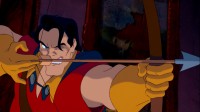
“Oh no, you can’t shoot Bambi!”
Everyone who has ever done so much as intimated an interest in deer hunting has probably heard that phrase. Thanks to the classic Disney film, the name Bambi is functionally synonymous with all deer, regardless of whether it’s a huge red deer in Europe or a white-tailed corn rat in Indiana. Bambi is just the tip of the iceberg, as many other Disney films portray game animals as noble, majestic creatures while simultaneously portraying all hunters as cruel, evil monsters interested only in killing.
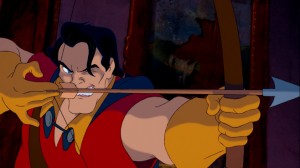
You don’t have to look any further than the recent incident with professional hunter and conservationist Melissa Bachman. She has been thoroughly excoriated on the internet for killing a “pretty lion”; reading some of the comments I’ve also seen multiple mentions of characters from, you guessed it, The Lion King. Now, I’m not saying that The Lion King, Bambi, The Fox and the Hound, or any of the Disney “animal” movies are bad films, but rather I want to talk about the culture it creates. What we end up as a direct result of mass media portrayals of certain animals as majestic and noble is the mindset of Disney Conservation, where people are only concerned about the plight and well-being of pretty animals.
This leads to unbalanced conservation efforts which are detrimental to animal populations everywhere. We’ll stick to lions as an example. In every African country where it is illegal to hunt lions, their population numbers are in danger and dwindling. In every African nation where it is legal to hunt lions, their population numbers are strong and not at all in danger. White tail deer are another great example. There are approximately 30 million white tail deer in the country, so many in fact that in some areas their numbers exceed the land’s ability to support them. The simple fact is that to support a healthy deer population, many deer must die each year. A .308 bullet through the lungs is a far more humane death than being torn apart by coyotes or starving to death during the winter. But Disney Conservationists don’t care about that, because movies don’t show you the unrelenting horror-machine that nature really is.
Really, the problem isn’t that people want to protect animals. The problem is that many people’s understanding of how nature works comes from pop culture. In pop culture, the biggest threat to pretty deer or noble elephants are evil hunters with their guns. There’s no mention of chronic wasting disease, predation by other animals, starvation, or any of the many awful ways that “mother nature” likes to brutally kill all her little forest children. And let’s not even worry about protecting animals that aren’t pretty, because if it wasn’t in a talking Disney movie, no one cares about it.
This article is largely preaching to the choir, as many of our readers here at Gun Nuts are avid hunters and conservationists; however hopefully some of you will read it, share it with your non-hunting friends, and help them understand the importance of human hunting in conservation.
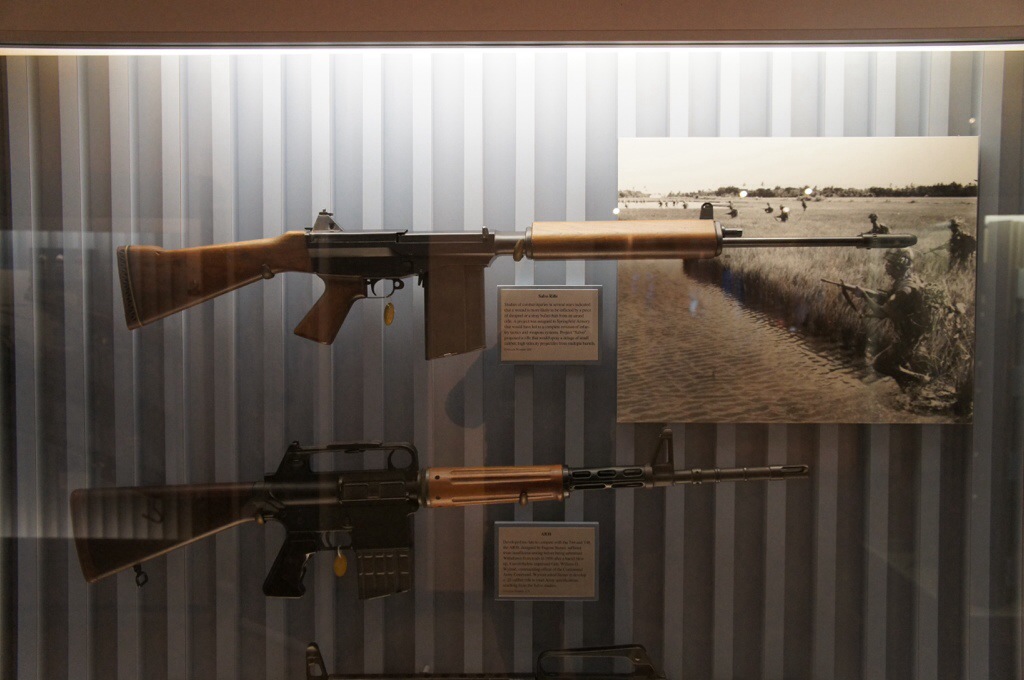
If you were to just glance at it, the gun on top looks like a fairly normal FAL rifle. Turns it isn’t. What it is however is an interesting historical example of the military’s constant quest for greater firepower.
 As I fly back to Atlanta after a weekend visiting the folks in New York City, I consider why I have, once again, felt like the odd duck of the family. How many times have they asked me why I am so passionate about firearms, self protection and emergency preparedness. These concepts may not have been part of my upbringing, but they are part of me now. Then again, are they really new to me?