Finally got the stocks for the Ruger Security Six I’ll be running at the 2014 Bianchi Cup.
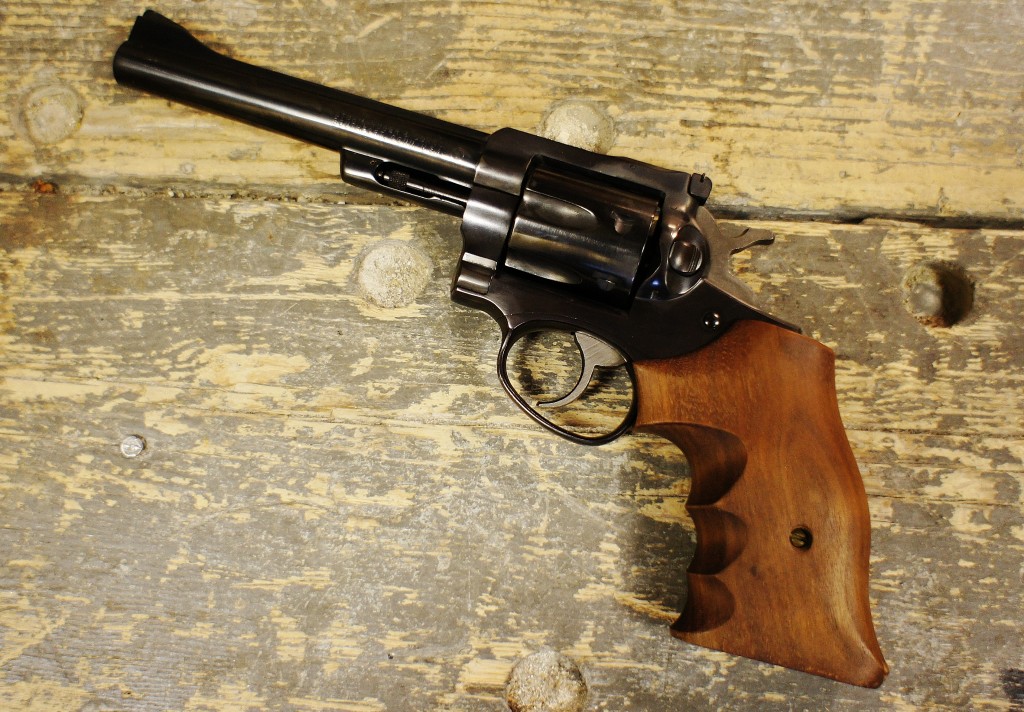
The stocks are vintage Mustang stocks, likely from the late 70s. It’s fitting that they’re on the gun, because the gun is also from the 70s.
Finally got the stocks for the Ruger Security Six I’ll be running at the 2014 Bianchi Cup.
The stocks are vintage Mustang stocks, likely from the late 70s. It’s fitting that they’re on the gun, because the gun is also from the 70s.
I recently had a chance to chat with Scott Folk of Apex Tactical about some revolver related questions I’d had kicking around in my head. Just some simple questions and answers. Everything is summarized from my notes, so don’t consider these exact quotes from Scott.
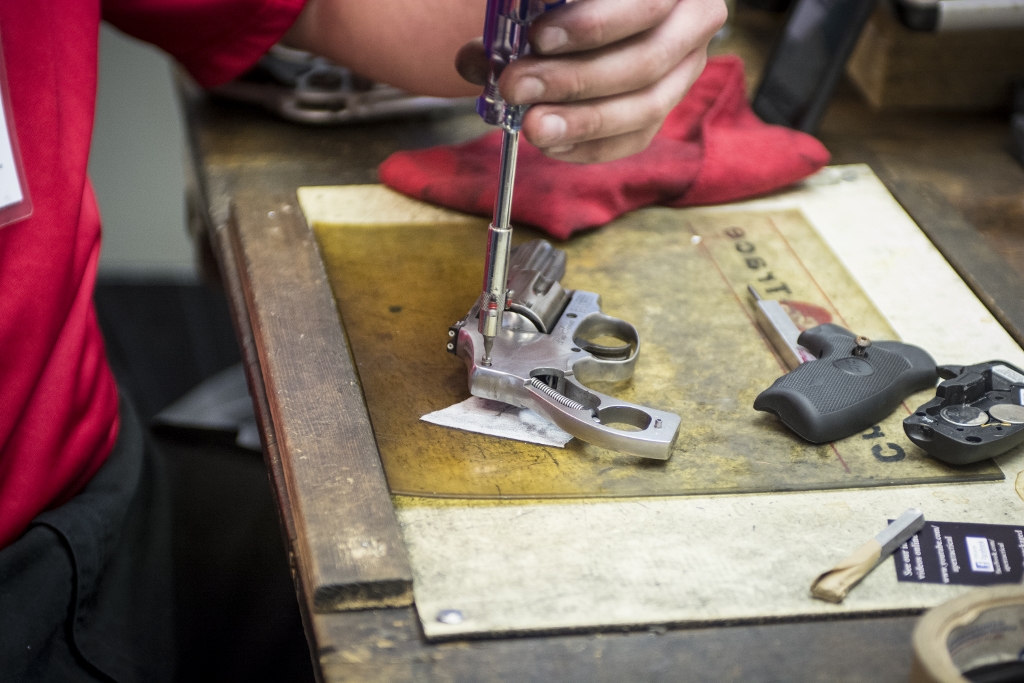
Question 1: Which is more important for reliable ignition, the mass of the hammer or the velocity of the hammer in a DA revolver?
Answer: Velocity, but only if we’re talking about centerfire guns. A spring of a given weight will accelerate a lighter hammer faster, giving it more velocity when it strikes the firing pin, which gives better ignition.
Question 2: Why does this apply to centerfire guns?
Answer: For various reasons, rimfire guns require a lot of mass to get reliable ignition which is why Apex recommends the mass driver hammer for competition rimfire revolvers.
Those were my only two real questions, the rest of the conversation centered around the incredibly boring physics of reliable revolver ignition. For example, Apex uses a shorter firing pin than S&W, and it’s also sharper. This allows the pin to get more of a run-up in the channel, and the sharper head is more likely to detonate the primer reliably than the factory S&W firing pin. Hammer velocity can also be negatively affected if the sides of the hammer contact the frame of the gun ever so slightly. Removing the single action notch on the hammer also allows the hammer just a bit more travel in DA mode, which also means more velocity.
Another fun revolver fact: your revolver has as many different trigger pulls as it has chambers. Pulling the trigger each time engages different bearing surfaces six times. I’ve actually seen this in factory guns, where 5 trigger pulls would be smooth and awesome, and then one you’d swear you could feel the parts dragging on each other.
So, remember this: if you’re looking for more reliable ignition in your revolver and you’re running fairly light springs, lighten that hammer up. Get more velocity, and you’ll increase your chances of getting reliable ignition.
The gunternet is ablaze with news of how “The NFL rejected Daniel Defense’s Superbowl commercial” which has of course sparked the usual suspects to call for a boycott of the NFL to show them…something. Here’s the actual commercial that DD submitted:
First things first, I really like Daniel Defense. Way back in the aughts, they were an early sponsor of Gun Nuts Radio, and I think their rifles are absolutely top notch. If you’re looking for an AR15 and you want quality out of the box, you won’t go wrong with a Daniel Defense. That being said, this isn’t a very good commercial. I have no idea what they’re trying to sell me until the last few seconds of the commercial, and the political messaging of “no one has the right to tell me how to defend my family” comes off as hackneyed and forced.
Now, here’s the part where I get hate mail: I don’t think Daniel Defense had any intention of this commercial being accepted by the NFL to be broadcast during the Superbowl. I think that this is actually a pretty cagey marketing strategy on their part. They make a commercial that they’re going to use in traditional broadcast venues, like the Outdoor Channel etc, and submit it to the NFL with no expectation of getting accepted. Then when the commercial is rejected, a simple FB post about how the NFL rejected their commercial and then just surf the wave of free publicity generated by internet hurt butts. I’m not saying that’s what they did, but in a way I kind of hope it was their plan all along, because I admire crafty marketing like that.
The other side of this coin are all the people saying we should boycott the NFL, which is generally predictable when this sort of thing happens. We are very fond of subjecting all facets of our life to purity tests, and for some reason our entertainment especially so. However, if I only consumed entertainment from groups/companies/actors/organizations that were fully supportive of my gun rights, then I’d be pretty bored most of the time.
There is actually a very interesting parallel in the gun community to the evangelical Christian community. When I was growing up, we were instructed to not listen to secular music, and to consume entertainment that was Christian or Christian-friendly. I can recall adults going to great lengths to justify certain mainstream movies as Christian-Friendly because said movie contained a generic good-vs-evil message that could, if you turned your head sideways and squinted a bunch, be construed as a Christian metaphor. In the gun community, we do pretty much the same thing a lot of the time, and it’s just as silly for us to do it as it is for the evangelical community to do it.
I’d like to think that Daniel Defense pulled off an incredibly cagey marketing stunt with this commercial, and if that is the case, than I doff my cap to them in respect of a masterful maneuver. For the people calling for a boycott of the NFL and the Superbowl, well I wish you good luck with that. Don’t force your purity tests on those of us who still enjoy sports and don’t particularly care about the NFL’s politics. We just want to watch football and be entertained.
Let’s face it, most of us are never going to need to draw our guns as civilians. You don’t need a gun. You don’t need professional firearms training if you do get a gun.
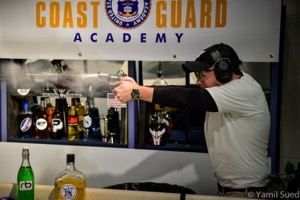
You also don’t need to take defensive driving classes. You don’t need to keep a fire extinguisher in the house. You don’t need to monitor your credit report for signs of fraudulent activity. But you do those things because it’s the responsible thing to do, because you want to protect yourself from bad drivers, fires, and identity thieves. Carrying a gun is the same idea – most of you won’t ever need it, but if you do you’ll really, really need it.
That’s why taking professional training is important, because it’s the responsible thing to do. Carrying a gun in public comes with a burden of responsibility that doesn’t exist when you’re keeping a gun at home. It has much the same burden of responsibility that comes with driving a 2-ton wheeled missile down the freeway at 60 mph. Just because the majority of people chose to ignore the responsibility of driving a car doesn’t mean that you should ignore the responsibility of carrying a gun in public.
The two major things we should seek training on if we do chose to carry our guns are simple: how to shoot well, and when to shoot. The first is important not just to maximize our own effectiveness at stopping a threat, but also to minimize the danger to any bystanders and to allow us to stop threats that we’d be otherwise unable to stop. We tend to focus a lot on how to shoot, because that’s the sexy, fun part of firearms training. Shooting is fun. Seminars on the legality of shooting a dude aren’t as much fun. In fact, let’s be honest: whenever you get lawyers involved, the fun factor has a tendency to dip towards zero.
But knowing when to shoot, when you’re justified to use deadly force is important. Mas Ayoob covers a lot of this in his classes, and it’s also covered during the excellent Gunsite 250 handgun course. InSights Training Center in Seattle does a good job of covering the basics during their General Defensive Handgun, and goes into further detail in their more advanced classes like Street and Vehicle Tactics.
Honestly, the longer I’m in this industry, the more I believe that every new handgun owner should save up their pennies and just take the Gunsite 250 course before they do anything else. No, they won’t teach you the most whizzbang operator techniques, but they have a proven curriculum and excellent instructors. Besides, I’m fairly certain that Johnny Scumbag won’t notice you were using Weaver when you shoot him in the chest.
The bottom line on all of this is simple: You don’t need professional firearms training. But if you’re carrying your gun in public, or plan on using your gun to defend any human beings other than just yourself, getting training is the responsible thing to do.
Starting in late 2010, I started using a lot of products from Lone Wolf; this developed into a full-fledged sponsorship in 2011 and a continued working relationship to this day. Unfortunately, a lot of the reviews I wrote covering their gear got eaten when the site crashed earlier this year, so I wanted to create a place for all those products to be covered in a simple, straightforward format.
1. Lone Wolf Timberwolf Frame
At the time, I was also sponsored by Cheaper than Dirt. I’m sorry about that, I really am. Click the jump for the rest of the post.

Get GunUp the Magazine for 12 months at the crazy price of $4.99! Just enter the code GUNUP308 in your cart at checkout to save $13 off the cover price. This deal is only good for today, so get it now.

 A few weeks ago, I heard an instructor advise a begining shooting class that if they wished to conduct a private sale with a person they didn’t know, they should meet that person at an FFL holding facility and have the gun transferred to that person by use of a 4473.
Last night, I was watching The Pacific on my iPad. For those not aware, it’s a sort of follow-up to Band of Brothers that focuses on the Pacific theatre of World War 2 and the various island hopping campaigns of the 1st Marine Division. If you haven’t seen it, it’s worth watching, but it’s definitely not as good as Band of Brothers. So don’t get your hopes too high. But, back to the point. In episode for, young Eugene Sledge receives a care package from his father that includes a S&W revolver, apparently chambered in .45 of some sort. One of his friends says something to the extent of “don’t ever trade that, because a hit from a .45 will put a Jap down faster than a whole clip from your [M1] Carbine. Hit him in the hand and it’ll take his whole arm off.”
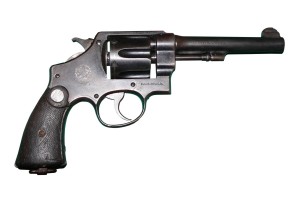
It’s supposed to be a meaningful scene where an experienced combat solider explains to the green recruit “how things really are”, but I couldn’t help but laugh at the lines about stopping power. The gun given to Sledge is quite likely a Model 1917 S&W, which was chambered in .45 ACP and used half-moon clips to retain the rounds. It’s a great design, and one that served as a substitute standard for 1911s in both World Wars. But, we all know very well that no .45 ACP on earth will take a man’s arm off, and while that can be ascribed to hyperbole what’s far more interesting to me is the statement about the .30 Carbine round.
For years, the .30 Carbine has endured a somewhat checkered reputation. It seems that in World War 2, there were exactly two mindsets about the M1 Carbine: people either loved the light, handy little rifle or they absolutely hated it. The later Korean conflict would spawn rumors about the .30 Carbine not having sufficient stopping power, which was likely a result of using an FMJ projectile at a relatively low velocity. That would produce a very small wound channel, not like a modern .223 round or the .30’06 rifles of the day. But was the M1 really all that bad? The answer, as it is to many things is “maybe.” Like many ideas, it was a compromise.
20 years later, the military would get the rifle they didn’t know they wanted when they spec’d out the M1 Carbine; it happened to be the M16 and it has become our longest serving military rifle ever. As it turns out, the problem with the M1 was its ammo. When the “rules” of war restrict you to FMJ or non-expanding bullets, the M1 Carbine is like a really big .32 caliber pistol. Today, with modern JHP and softpoint ammo, an M1 could easily fill a niche as a home defense rifle.
You know, I personally am thankful for my readers whose continued support allows me to do this for a living. You guys are all rad, and I am deeply in your debt. Here is a cat picture as my way of saying thanks:
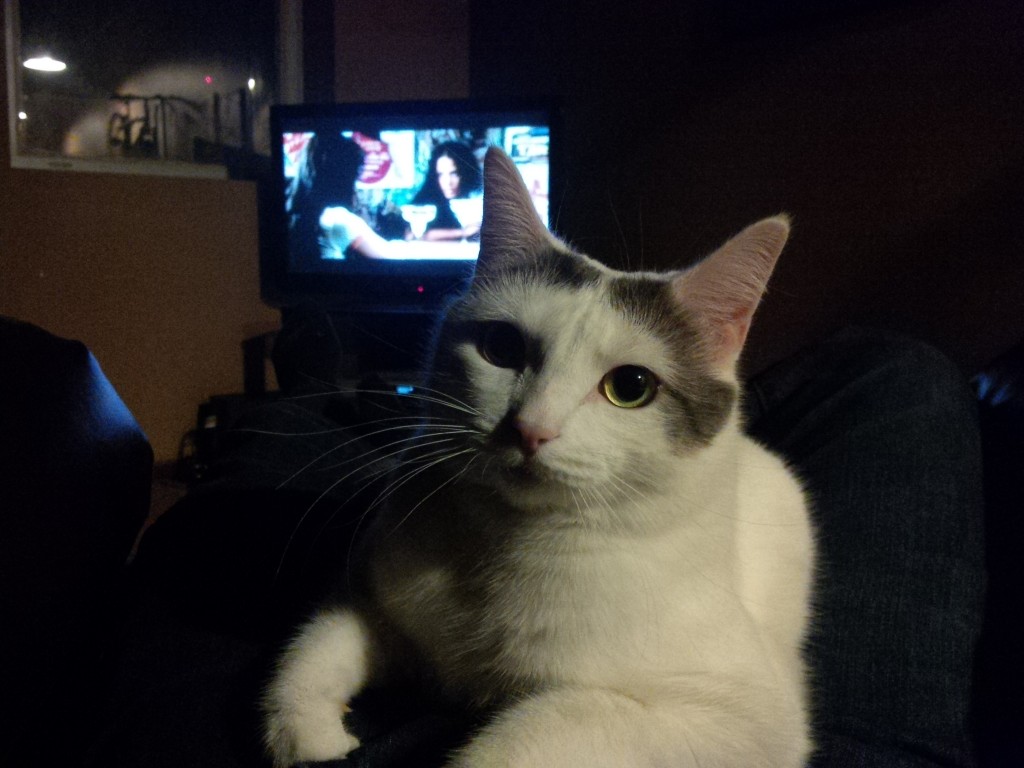
The internet loves cats.
Okay, here’s a gun picture too.
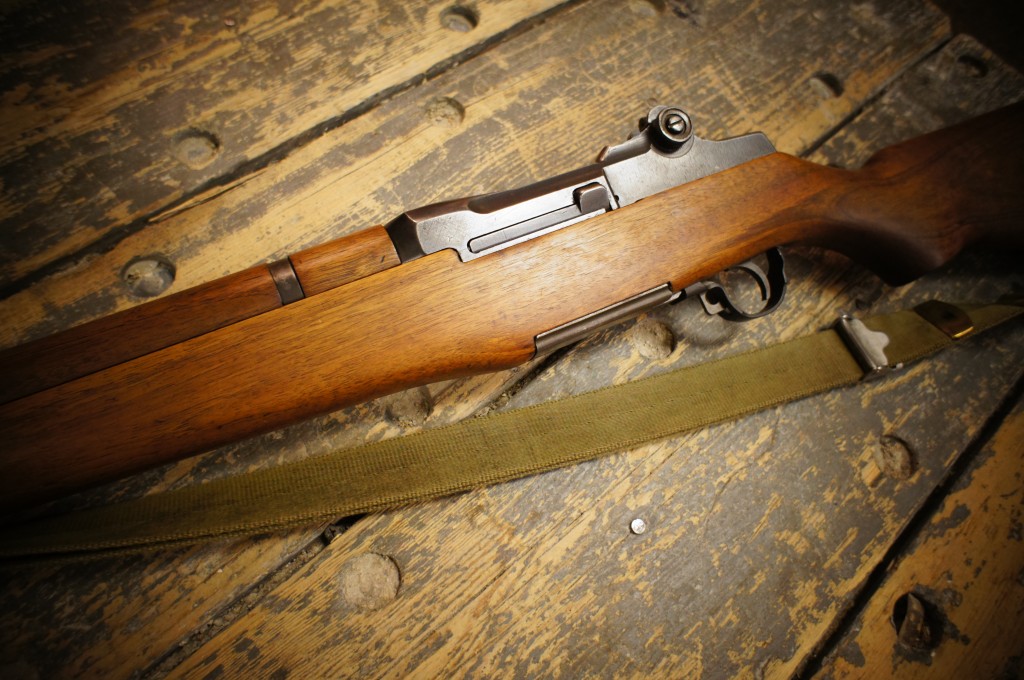
On this day, we hope that you’re able to take with family and reflect on whatever it is you may be thankful for.
Now stop reading blogs and go! We’ll be back tomorrow.
happy thanksgiving