Follow the money: A look at USPSA’s tax returns part 1

Because USPSA is a 501c3 corporation, their annual tax return is available for public inspection. This is the form 990. It is available by requesting from the IRS, and USPSA should post them on their website, however I wasn’t able to find them. Fortunately, the USPSA Area 6 website has posted all of the available tax returns which you can view here. There is a lot of information in the USPSA tax return. We’ll start with the 2008 tax return, which is for the actual year 2007 and finish with 2013’s tax return, which is for actual year 2012. There are several items in each report that we’ll discuss, starting (of course) with gross revenue, expenses, program revenue, and program revenue per member. Program revenue is especially important, because that’s revenue directly derived from member dues, classifier fees, and entries in USPSA National Championship matches. Revenue per member isn’t a metric that is directly in the report. We’re interested in it because per member revenue growth is an important indicator of a healthy organization.

The 10,000 Foot view of the numbers
When reading the reports, it’s important to remember that all the reports are for the year prior. So the 2013 return is actual year 2012, 2012 is for 2011, etc. In part 1, we’ll focus on the big picture of USPSA’s numbers. We’ll continue the series next Monday.

2008 Return

  • Total Revenue: $1,637,944
  • Program revenue: $1,478,203
  • Total Expenses: $1,667,548
  • Members: 17,000
  • Program revenue per member: $86.95

Each return lists the membership of USPSA, some with greater degrees of detail. For example, the 2008 report lists “17,000” members where later reports will list a more detailed number. Program revenue per member is calculated by dividing program revenue by members, and rounding off to the nearest cent.

2009 Return

  • Total revenue: $1,613,118
  • Program revenue: $1,500,673
  • Total expenses: $1,792,813
  • Members: 17,000
  • PrRev/Member: $88.27

This report again lists “17,000” members. This report also reflects the beginning of the period of rapid growth in the shooting sports/gun industry at large, due to the massive upswing in gun ownership. This is also the second straight tax return where USPSA posted a loss.

2010 Return

  • Total revenue: $1,687,580
  • Program revenue: $1,592,729
  • Total expenses: $1,766,221
  • Members: 17,000
  • PrRev/Member: $93.69

Three reports which list USPSA with stagnant membership growth lead me to believe that the particular section of the report where that’s reported was simply copy/pasted for three straight years.

2011 Return

  • Total revenue: $1,825,700
  • Program revenue: $1,723,250
  • Total expenses: $2,000,020
  • Members: 17,000
  • PrRev/Member: $101.37

Come on. 17,000 members four years in a row? That’s just lazy reporting.

2012 Return

  • Total revenue: $1,807,750
  • Program revenue: $1,777,716
  • Total expenses: $1,749,744
  • Members: 20,725
  • PrRev/Member: $85.78

The 2012 return is interesting in that it was prepared by both the outgoing ED, Dave Thomas, and the incoming ED, Kim Williams. It also reflects a more accurate picture of membership than previous reports, which accounts for the sudden, dramatic drop in per member revenue.

2013 Return

  • Total revenue: $1,885,787
  • Program revenue: $1,776,477
  • Total expenses: $1,693,017
  • Members: $25,664
  • PrRev/Member: $69.22

Interestingly, the 2012 and 2013 returns reflect greater net revenue than expenses. They also show a two year continuing decrease in program revenue per shooter, and along with the 2011 return show a relatively flat line for program revenue, all around 1.7 MM dollars. Since 2008’s return, USPSA’s gross revenue has increased by $247,843, or about $41,307 per year.

Looking at those numbers, we get a pretty good picture of USPSA’s growth over the past 6 years. Both categories of revenue have increased, and membership has increased. While the per member revenue has dropped, that’s likely due in part to the relative lack of price increases in national championship match fees.

On Monday, in Part 2 we’ll take a look at where USPSA’s revenue streams come from and how that breaks down. Part 3 will focus on how USPSA spends its money, and finally part 4 will tie the revenue stream and expenses conversation to hopefully answer the question of whether or not USPSA is using your membership dues and match fees responsibly to grow the sport.
Tourniquets are a good thing

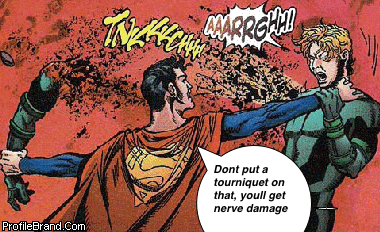
I often use this space to give vent to annoyances that accumulate in my brain over a period of time because eventually the buildup reaches such a state that it interferes with my ability to write coherently on other topics. I fully intend to write about subject A, but three paragraphs in I’ve somehow morphed into a rant on annoyance B and it just goes downhill from there. Today is going to be one of those days. I need to rant a little bit about tourniquets.

Let’s start with some basic anatomy: The average human being has four limbs. Each of these four limbs is sustained by a network of arteries and veins which carry blood to the cells that make up the limb. The network of arteries and veins in the limb is hooked into a larger circulatory system by a major blood vessel. Each arm has a brachial artery, and each leg has a femoral artery. These arteries are fairly large and because they supply the blood that feeds an entire limb they contain a lot of blood under considerable pressure. If one of these arteries is severed, massive blood loss will result. Loss of more than 15% of total blood volume will severely impair your ability to function. (Loss of consciousness may result) Losing more than 30% of your total blood volume is most likely to prove fatal. With a major arterial bleed it is possible to lose a fatal amount of blood volume in seconds. The human body fights the loss of blood through a clotting mechanism, but with a major arterial bleed the loss is too big and happening too fast for this clotting mechanism to do any good. To prevent loss of life the bleeding has to be stopped by some sort of emergency intervention.

Hence the invention of the tourniquet. The brachial and femoral arteries are nestled beneath layers of muscle tissue, fat tissue, and skin to protect them from damage. This arrangement also tends to make it difficult to get at them should some form of penetrating trauma sever one of the arteries. Where application of direct pressure might stop the bleeding if you cut your hand preparing dinner, the same may not be possible with a femoral or brachial artery that’s been torn open by a bullet. Getting a proper tourniquet upstream of the wound can stop or at least dramatically slow the loss of blood through the ruptured artery, buying the victim more time to receive life saving medical treatment.superrip

Simple stuff, right? For many years first aid instruction has eschewed the use of tourniquets because of worries about the potential dangers of misapplying one. If properly used the tourniquet is essentially cutting off blood flow to a limb, which can indeed result in all sorts of nasty side effects…especially if it is left in place for an extended period of time. That’s why the American Red Cross, the largest provider of first aid training in the United States, says:

Because of the potential for adverse effects, a tourniquet should be used only as a last resort in cases of delayed care or situations where response from emergency medical services (EMS) is delayed, when direct pressure does not stop the bleeding, or you are not able to apply direct pressure. 

As a result of this sort of concern and the boilerplate warnings that Red Cross trained first aid teachers have been giving for years, when someone asks about getting a tourniquet to keep handy in case of emergency there’s no shortage of people coming out of the woodwork to warn about the dangers from misapplying a tourniquet. Gun Nuts isn’t a medical site and I’m not a doctor. I am, however, a dude with eyes and ears and I’ve noticed that there are a whole bunch of people alive and kicking today with no nerve damage or limb loss after having a tourniquet used on them. People who would have been dead if somebody had stood around waiting for EMS to show up before applying the damn tourniquet.

The thing about the nasty side effects I mentioned earlier is that it typically takes an extended period of time for them to manifest. If you leave a tourniquet in place for more than a couple of hours there can be significant complications that require sophisticated medical intervention to treat…but if you are in Albuquerque New Mexico dealing with a sheriff’s deputy bleeding badly from a gunshot wound sustained in the effort to try and stop an active shooter, worries about what might happen to her leg if the tourniquet is left on for 6 hours are irrelevant.

Let’s be absolutely clear on this: The point of a tourniquet is to stop or significantly slow a bleed in an extremity that will be fatal in a matter of seconds. We’re not talking about a scraped shin, here. We’re talking about some sort of penetrating trauma (or, as in the Boston marathon perhaps even traumatic amputation) that’s torn or severed major blood vessels that normally live fairly deep in the body. Good luck applying direct pressure to that. While I suppose it’s probable that somewhere there’s a person stupid enough to apply a tourniquet on an injury where only a couple of drops of blood are evident, I think it’s much more likely that there are a bunch of people who will hesitate to buy or use a tourniquet when it’s the proper tool for the job due to all the fear mongering…which can lead to an unnecessary loss of life.

Just as there are times where a firearm is the proper defensive tool to use and occasions when drawing said firearm and shooting another human being in the vital organs is the appropriate and necessary response to a situation, there are occasions where the tourniquet is the proper tool for the job and getting it cinched on a wounded person is the first thing you should do. There is a reason why every infantryman in the military has an individual first aid kit (IFAK) that includes a tourniquet. There is a reason why more and more fire departments, police departments, and other emergency services are purchasing tourniquets for their personnel.

The thinking that applying a tourniquet is something that you do under the rarest of circumstances is outdated. The medical community here in the states has been slow to integrate some of the learning from the emergency response lessons learned in Iraq and Afghanistan into their thinking, but after events like Albuquerque and the Boston Marathon bombing it’s becoming pretty clear that the tourniquet saves lives and should be a part of any medical response kit.

Don’t be dissuaded from buying a tourniquet by well meaning people repeating outdated first aid mantras about them. By all means, buy one or a kit that comes with one. The SOF-T from Tactical Medical Solutions is widely regarded as the best on the market if you’re wondering which one you should get. Then follow that up with a decent medical response training course that will teach you how and when to use the tourniquet as a life saving tool.

Tourniquets are a good thing. As a side effect of war we have extremely effective, simple to use options on the market like the SOF-T. There are quality courses teaching the proper use of these items from Dark Angel Medical, Active Response, and other quality outfits popping up all over the country. Take advantage of it, folks. Contrary to what some politicians might wish you to believe, the world is not becoming a calmer, more placid place anytime soon.


Mossberg 930 SPX Tactical Review

Dropping another video review today; we have the Mossberg 930 SPX tactical on the range. I really enjoy shooting this gun; like most shotguns it provides a very rewarding sense of accomplishment. There’s something delightfully tactile about the “chunk-chunk-chunk” of sending 12 gauge downrange and feeling the gun drive back into your shoulder in recoil. It’s a primal feeling, right up there with the emotional reaction I have to hearing a V8 turn over.

Tales From a 3 Gun Beginning: First Stage

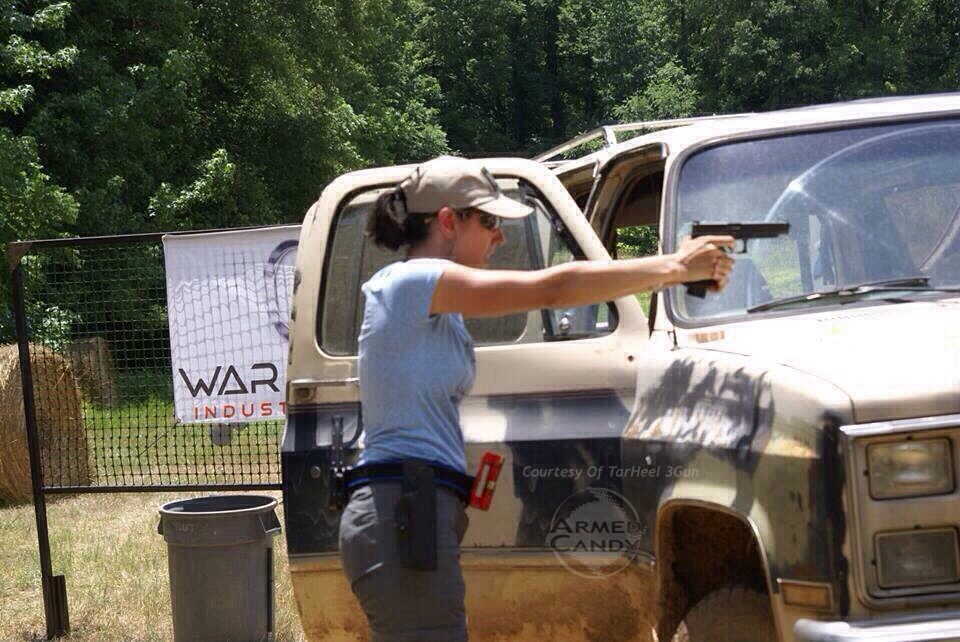
20140702-111523-40523012.jpgThough I have been practicing in my coaches’ backyard range, which includes an abandoned horse barn, a chicken coop and a rusty horse walker, the first stage I encountered at the Freedom Munitions Memorial match at Clinton Plantation was more complicated than any I had ever tried. It began with a pistol draw from the belt and shots at a dueling tree from behind the hood of an old suburban. The pistol dump bucket was in the back seat of the vehicle and my shotgun was staged in the front seat. Once I complete a few pistol shots from behind the truck, I will grab my shotgun and clear a steel spinning star with birdshot, load slugs and shoot distant steel gongs. Upon finishing the shotgun portion of the stage, I should run to a ladder and climb to the bed of a large truck on which my rifle has been staged (and has been soaking up the noon sun). Lastly, I should engage six steel gongs at a distance of between 200 and 350 yards.
Continue reading →

Target says “no” to Open Carry

From Target’s statement on Open Carry: [S]tarting today we will also respectfully request that guests not bring firearms to Target – even in communities where it is permitted by law.

Looks like another “win” for Open Carry Texas! Good job “educating” the public and “normalizing guns”, guys. If we keep this up, pretty soon we’ll have nationwide CCW reciprocity thanks to people working hard to defend our rights, but won’t be able to open carry into any private business because you f***sticks keep screwing it up for the rest of us.

5 tips to getting good firearms advice on the internet

The internet is a great place to learn. It’s also a very efficient at spreading bad information, half-truths, and lies. I’m sure that this applies to any niche community, but let’s look at the gun community because, well, this site is called “Gun Nuts” not “Mopar nuts.” When you do need help from the internet, no matter what question you ask and where, you’re going to get good answers and bad answers. Here are five ways to make sure you sort the wheat from the chaff.

jason steiner

1. Avoid confirmation bias
This one is first because it’s the most important, and the toughest. For the new readers out there, confirmation bias means that you’re going to be more inclined to believe people who agree with your biases. In gun terms, let’s say you’re selecting a shotgun for home defense, and in your heart you’re lusting after a Remington 870 Magpul FDE, but you decide to ask the question “what’s the best shotgun for home defense”. Confirmation bias means that you’re more likely to listen to answers that say “get an 870” instead of people who say “get a Nova/590/etc.” It’s tough to fight this, and I believe that 95% of “what gun should I get” questions are driven by people looking to justify a purchase they’ve already made in their mind.

2. Learn to recognize fanboys
Fanboys are the worst. Any advice they give is immediately suspect, because they’re recommending gear not based on your mission requirements, but on their own personal preference. The best way to ID a fanboy is to look at their history. Are they always saying “buy this brand” regardless of whether or not it’s even appropriate? To continue our shotgun discussion, a fanboy might well answer that question with “You don’t need a shotgun, what you need is a Taurus Judge.” Then go look and see if they recommend the Judge for everything, and that’s a clue.

3. Don’t phrase your questions as x vs. y
We like to make categories. It does legitimately make sorting information easier, so when we ask for advice, especially around product, we want to phrase it as “x vs. y.” Continuing the shotgun example: “Should I get a Mossberg 590 or a Remington 870 for home defense” isn’t a great way to ask the question, because it limits your options. Someone might make a legitimately good case for a Benelli Nova or used Winchester 1300; if you’re locked into two choices you might just ignore their points. That’s why I much prefer open ended questions.

4. Don’t get dragged into debates
Invariably, when you ask for advice on the internet, two or more people will respond initially to you, then get in a slapfight with each other over what’s better. They are frequently fanboys, and if you let them they’ll drag you down into their pool of muddy suck. If you’re looking for information, avoid interacting with the people who are more interested in scoring rhetorical internet argument points than actually answering your question.

5. Vet your sources
Last but not least, vet your source. Sometimes online this can be difficult, as people often like to hide behind their usernames. However, some people use the same username in multiple places, and have built up a pattern of behavior. It’s important to know if the guy telling you about the best breacher muzzle device for your shotgun has ever actually breached a door, or if he’s a fedora wearing neckbeard in a my little pony shirt. Experience does come in all flavors though – a seasoned 3-gun competitor will likely have good answers on what makes a shotgun more shootable, and an experienced pig hunter can weigh in on important topics like bug vs. slugs.

Bonus: Don’t get advice on any site where people care about their post count
Just don’t.

Hopefully, you’ll be able to arm yourself with these handy tips; disregard fanboys, know your biases, check your sources, and don’t let the trolls drag you down. It makes reading about guns on the internet a lot more fun!

2014 Steel Challenge Results and numbers

Steel Challenge wrapped up over the weekend, and the good news out of the gate is the match had much better attendance than I’d anticipated. It did well enough that we will likely see a 2015 match, which as I’ve said before is a good thing for the shooting sports. Here’s a by the numbers look at the divisions:

  • Open: 60 shooters
  • Limited: 32
  • Revolver: 13
  • Production: 18
  • Single Stack: 6
  • Total centerfire entries: 129

SteelChallenge2012_TopNav_01

The overall winner and Open champion was Max Michel, Dave Sevigny won Limited and Steel Master, Phil Strader won Production, and Jessie Duff won high lady.

In terms of attendance, this match was an improvement over 2013 in Frostproof; although it was a little bit behind 2012’s Frostproof match. For the sake of comparison, I’m only comparing centerfire entries. The 2014 match added rimfire rifles to the entry list (which is pretty cool, actually) so their number of rimfire entrants was reasonably impressive, 74 shooters across all rimfire categories.

To take a balanced look at the match, it’s good that attendance was up, although a savvy eye would note that not by much and that entry fees were cut drastically. There were complaints from the shooters that the targets weren’t reactive enough, and it was difficult to differentiate a hit on the steel target stand from an edge hit on the steel plate itself.

Not having been to the range myself, I can’t comment on the facilities or the awards ceremony, but I would welcome emails from anyone who was to [email protected] – or just leave a comment. I’m curious because I believe that “feel” is important to big matches, and that World and National matches should feel special.

The question behind all of this remains: is this enough to save Steel Challenge? I’ve been reading USPSA’s tax returns lately, and the National level matches are the biggest single thing they spend money each year, even more so than payroll. Is the juice worth the squeeze? Obviously, USPSA would never stop running the USPSA Handgun Nationals, but for only 130 shooters, does it make sense for them to keep putting on a World Steel Challenge every year? Or would it make more sense to move it to a bi-annual event, and let the Titusville Steel Nationals be the “big” annual steel match.

The sport of Steel Challenge likely isn’t going anywhere. Shooting steel is just too much fun. I’m glad to see that the WSSC improved attendance over last year, because if they’d had less than 100 shooters at this match, I would have put a nail in the match’s coffin. I think the match is on life support, and that the 2015 match will need to continue the pattern of growth. For my part, I’m going to do everything in my power to make it to Steel Challenge in 2015.