“Harder hitting” nonsense…

Unless you’ve been living under a rock, you’ve doubtless encountered this gem of a story from Fox News which covers the U.S. Army’s desire for a new handgun. The discussions about this tidbit of information online have generally been dominated by ignorance and soul-crushing idiocy. Let’s boil away all the nonsense and get a few facts straight on this.

1. The Beretta M9 has actually been a pretty good sidearm.

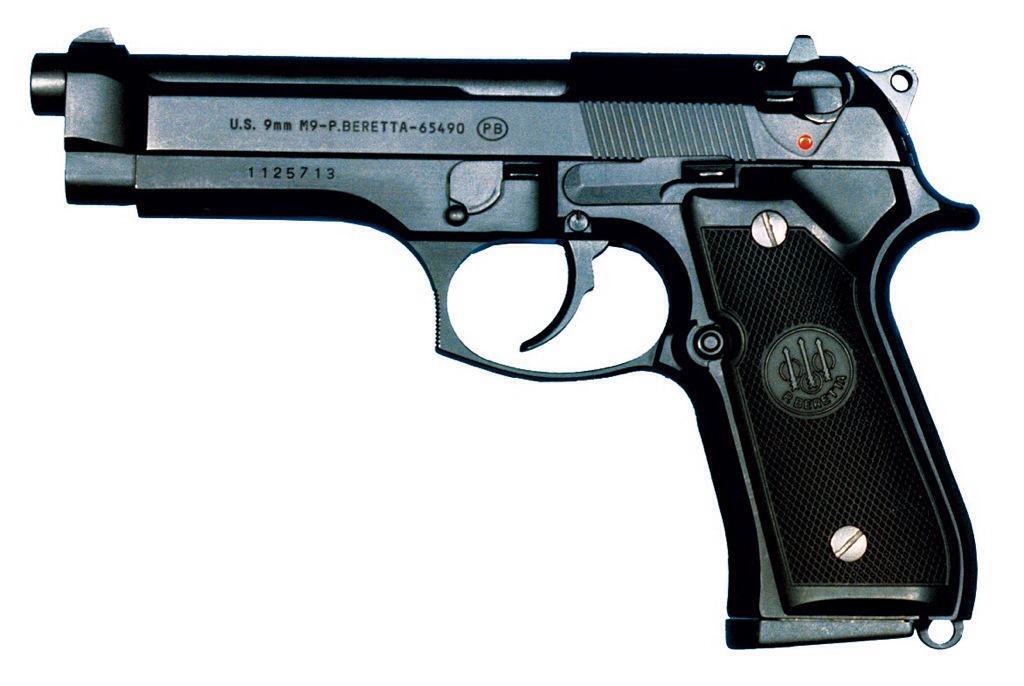
We’ve talked a bit about the Beretta 92/M9’s track record as an issued sidearm for the military and law enforcement before, but it’s worth reemphasizing here that the biggest problem the Beretta has had in military service is bad maintenance practices by the military itself. Springs don’t get replaced, parts that aren’t supposed to be reused get reused, and the military went out and bought a bunch of cheap magazines for them that didn’t work well. Remember that this is the same organization which preached minimal or no lube on carbines like Jimmy Swaggart on cocaine and then seemed somewhat stunned by the fact that guns shut down when used in combat. When you talk to people from units who took maintaining their issued M9 sidearms seriously, and who bothered to actually lubricate them properly, you hear that they were pretty darn reliable. The most annoying issue is probably breakage of the trigger return spring, but for some reason the military never followed the lead of the U.S. Border Patrol by buying the Wolff TCU to fix that.
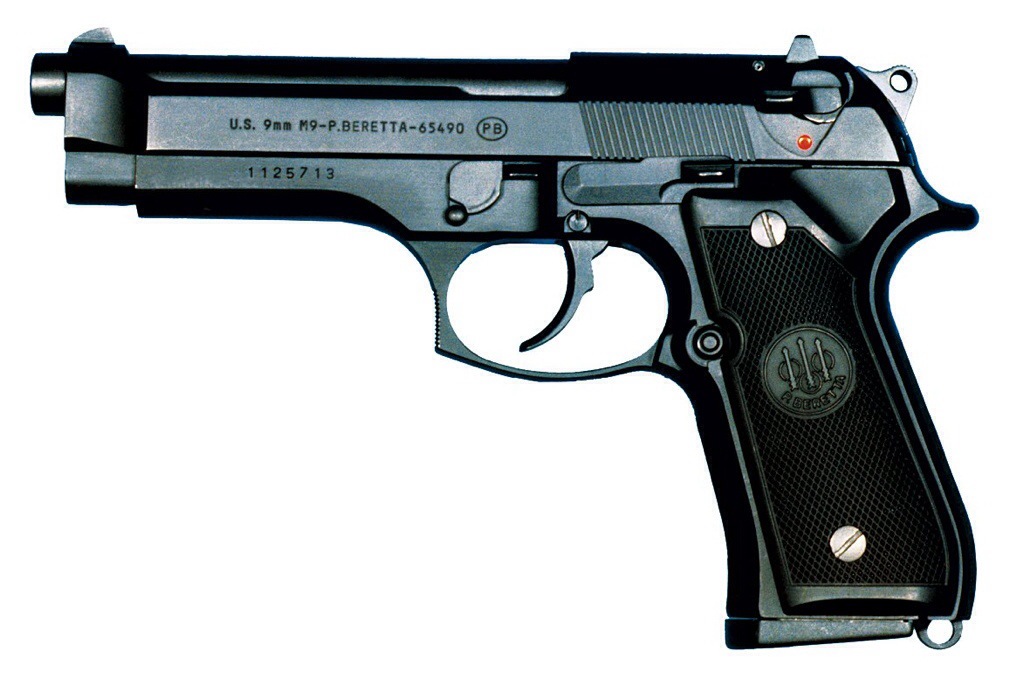
The M9's service in the military has been better than many would have you believe.
The M9’s service in the military has been better than many would have you believe.

When the GWOT kicked off there were a ton of news stories about how bad the M4 was too, if you’ll remember. Turns out the M4 was just fine provided you lubricated the darn thing, kept up with maintenance, and used decent magazines rather than handing down worn beat to hell magazines like they were the frickin’ family silver. When you read these articles and the statements by somebody who knows somebody who was in unit X who said that the M9 sucked horribly, remember that not too long ago the same sort of doofuses (doofi? What’s the proper plural of that word?) were saying the M4 sucked and were pushing the need for a new rifle like the XM-8. The XM-8 which was based on the spectacularly awesome G36 which has never had any problems ever.

2. .40 S&W ball ammo, .45 ACP ball ammo, or .357 sig ball ammo is going to suck about the same as 9mm ball ammo.

One of the stated reasons for pursuing a new handgun is to get one that’s in a chambering with better terminal ballistics. That’s really a non-starter unless the military is willing to start using ammunition with expanding bullets. It’s particularly amusing to see the .357 sig in the list of considerations because the .357 sig is a .40 S&W case necked down to take a 9mm bullet…as if a .355 FMJ from a .357 sig is going to perform better than a .355 FMJ from a 9mm. If the Army wants better terminal ballistics, start issuing Gold Dots. No, dear reader, we’re not prohibited from using JHP ammunition by the Hague convention…and to paraphrase an exceptionally astute comment from a forum discussion on the topic, it’s patently absurd to issue hand grenades and shoulder-launched missiles and then wring our hands and fret over whether hollowpoints for handguns are “humane”. It’s ridiculous that in our society a police officer can shoot another American citizen with JHP ammo without any human rights concerns but somehow there’s a big problem if a Marine shoots some foreign dirtbag with the exact same ammo. You know, shooting him with a handgun rather than calling in an airstrike or blowing the whole structure the dude is hiding in to kingdom come with an Abrams tank. Derp.

The .40 S&W and .45 ACP hardball loads do bring some advantages to the table, but those advantages aren’t free. They bring with them costs in packaging, capacity, ease of use, and reliability that tend to negate any marginal terminal ballistics advantage you get from an extra .10″ of bullet diameter. These are not insignificant considerations when you’re issuing sidearms to small-statured males and females, and it’s one of the reasons why large organizations like the FBI have been issuing 9mm handguns pretty freely to those who struggle with the standard issue .40 caliber weapons.

3. The military does not take handgun training seriously.

Those who have never been in the military often make the mistake of assuming that everyone within the organization is extensively trained in the use of small arms. This is not true. The unpleasant reality is that a large chunk of the people in uniform (be that a police or military uniform) are extremely poorly trained with small arms. I know a number of people who did multiple tours in the military without ever once touching a weapon. The handgun training that does happen is very rudimentary, happens infrequently, isn’t sustained by any ongoing practice, and generally results in somebody who it is hoped will be at least intelligent enough to know which end of the tube the bullet comes out of. That’s it. Even infantrymen who are supposed to be the warfighters get minimal handgun training that doesn’t leave them remotely prepared to use the weapon under combat conditions. Some units within the military do take training seriously, and guys like “Super” Dave Harrington and Ernie Langdon spent a chunk of their career working on programs designed to teach necessary weapons skills to people going into harm’s way, but places like Range 37 and program’s like the USMC’s High Risk Personnel program are the exceptions rather than the rule.

If you’re fielding troops that are poorly trained with a handgun, it doesn’t bloody matter what size bullet you give them because they’re not going to put the bullet where it counts in the first place. The Fox News reporter who wrote the original story probably knows how to use Google and so he managed to stumble on Ernie Langdon who summed up the terminal ballistics situation nicely in the article by saying “…handgun bullets suck. You have to shoot people a lot with a handgun.” That’s an accurate summation of the many years of law enforcement shooting data that’s been collected here in the US.

The military doesn’t need to buy a bigger bullet and bet on magic, they need to actually take handgun training seriously. Even if a soldier is stuck with 9mm FMJ ammunition, if he/she is able to put a few of those FMJs in an Al Quaeda aorta it’s going to work. Handing a poorly trained troop a larger, heavier, lower capacity handgun with more recoil and hoping that the bigger bullet will make up for training shortfalls is lunacy. Police departments blessed with solid personnel have figured that stuff out and have made efforts to up their training game with excellent results on the street. Tools aren’t unimportant, but the military’s biggest handgun problem isn’t the quality of the tool, it’s the dearth of proper training on how to use the tool. Until that’s fixed the results won’t change no matter what shiny new thing they buy.

You might get the impression that I’m dead-set against the Army adopting a new handgun, but I’m not. I’m against making purchase decisions based on faulty assumptions and belief in the ballistic equivalent of voodoo. I’m especially against spending a bunch of money on equipment that doesn’t matter instead of channeling those resources to the training which does.

I’ll talk about where I think a new handgun makes sense next time…
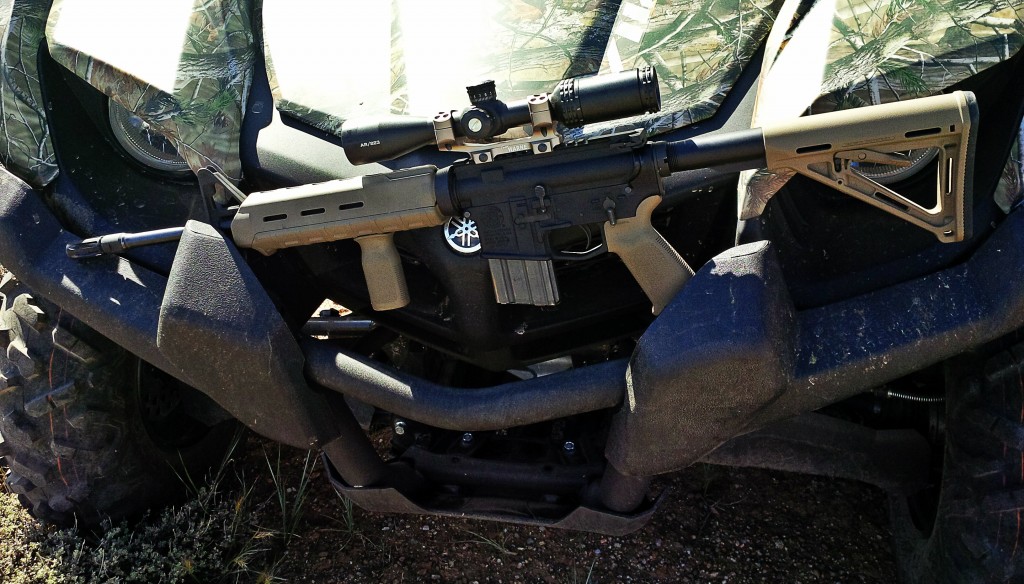
 

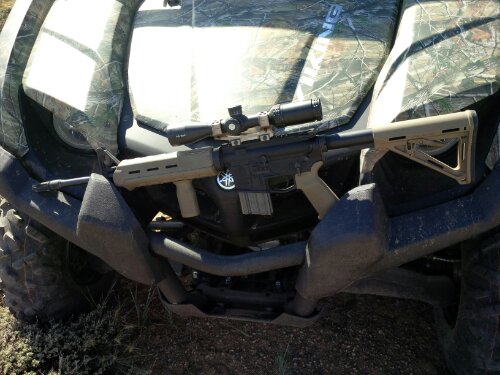
Photo of the day: Smith & Wesson M&P15 MOE

M&P15 MOE - yamaha viking

Gun: Smith & Wesson M&P15 MOE with 20 round GI magazine. Magpul equipment in FDE.
Vehicle: Yamaha Viking VI
Scope: Bushnell AR223 3-9x40mm

This was a really great set-up for knocking around the backcountry of Wyoming looking for prairie dogs and jackrabbits to shoot. The short, 16 inch carbine was perfect for on the vehicle, easily accurate for shots on dogs at 200 yards, and with the scope dialed up to 9x you could actually see prairie dogs out to 400 yards…although hitting them at that distance was a little tough.

Tales From a 3 Gun Beginning: 2 Stages Complete

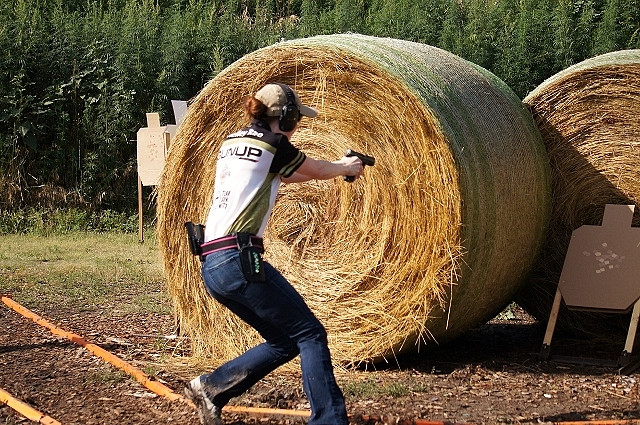
20140707-114051-42051407.jpgIn my second stage of the Freedom Munitions Memorial match there was no rifle work, only shotgun and then pistol. There was some running down stairs after ditching ones shotgun. I wondered, “Whats’s with this stage designer?” Ladders (see my post about the first stage of this match), stairs… What’s next? Rappelling??!? To add to the issue of the stairs, we had to turn 180 degrees from the stage, in order to run down them. This inspired the fear of breaking the 180 degree rule. Fortunately we should have grounded our shotguns prior to turning around and were not to draw our pistols until we had passed a specific tree root, er, fault line. After that it was a lot of pistol shots, first to paper, then to steel. I felt confident with these two guns and had a plan that took into consideration my inability to move and fire at the same time.

Continue reading →

A look at USPSA’s finances part 2, revenue streams

In part 1 of our examination of USPSA’s finances, I took a 10,000 foot view of the financial picture of USPSA. Today we’re going to get into the details of where USPSA’s money comes from.

USPSA_Logo

On their 2013 tax return, USPSA lists six streams of revenue. Two of those are are from investments, and are not included in program service revenue. Program service revenue is confined to these four categories, and is where USPSA generates the vast majority of it’s revenue. On the 2013 return, USPSA lists total program service revenue of $1,776,477. Here are there four categories of revenue:

  1. Membership dues: $770,844
  2. Entry fees: $751,913
  3. Advertising: $214,753
  4. Range Officer Seminars: $38,967

2012

  1. Entry fees: $750,667
  2. Membership dues: $732,191
  3. Advertising: $256,947
  4. RO Seminars: $37,911

2011

  1. Entry fees: $753,085
  2. Membership dues: $687,914
  3. Advertising: $247,175
  4. RO Seminars: $35,076

2010

  1. Entry fees: $693,157
  2. Membership dues: $625,981
  3. Advertising: $249,250
  4. RO Seminars: $24,341

2009

  1. Entry fees: $665,014
  2. Membership dues: $582,137
  3. Advertising: $224,737
  4. RO Seminars: $28,785

2008

  1. Entry fees: $689,606
  2. Membership dues: $544,886
  3. Advertising: $218,526
  4. RO Seminars: $25,185

The first trend that jumps out immediately at me is entry fees. In 2013-2011’s returns, it’s basically flat at $750,000. No significant increases or decreases. In 2010-2008’s returns, it’s almost as flat, with a slight dip on 2009’s return. For the most part though it stays right at the high 600k mark. I wonder if the dip in entry fees in 2009 corresponds to the ammo shortage in 2008. Did shooters not attend national matches in as large numbers, or is there another reason? Update: Entry fees also include activity fees that clubs have to pay on a per shooter basis whenever they run a USPSA classifier stage, or classifier match.

Also interesting is the revenue spike from the 2010 return to the 2011 return. USPSA went up 50k, without a significant increase in match fees. Possible theories include rolling the revenue from Steel Challenge into the “match fees” category. Unfortunately, there is no breakdown on which matches are revenue generators. It is safe to assume however that the USPSA Multi-Gun Nationals, and the L/L10/Open/Prod/Revo/SS nationals are all included in that category.

The next trend on the list is good news: revenue via membership dues has been steadily increasing over time. This shows that new members are joining the organization and that existing members are renewing their memberships. You can also note that the increase is relatively stable – around 40k per year in membership growth. Because USPSA increased the cost of a membership to $40 recently, I would expect on the 2014 return to see that number push even higher than the usual ~40k increase.

Advertising revenue is going to be revenue generated primarily by ads in Front Sight, and a much smaller amount from digital ads placed on USPSA’s website. There was about a 40k loss from actual year 2011 to 2012. There were a couple of major changes in USPSA’s administrative section that year, long time Executive Director Dave Thomas retired and was replaced by Kim Williams, and long time editor of Front Sight Robin Taylor also departed the magazine. It’s quite possible that the inevitable turmoil of a leadership change caused some advertisers to shy off; whether this was because of uncertainty on their part or a failure to aggressively pursue ad sales on USPSA’s fault we cannot know. In fact, the revenue generated by advertising on the 2013 return is the lowest since the 2008 return. Revenues peaked on 2012’s return at 256k after steadily climbing since 2008.

Today in part 2 we’ve established three important facts: Revenue from entry fees has been relatively stagnant – there was jump from one level of stagnation to a higher level, but no pattern of consistent increases. Secondly, membership revenue has been increasingly steadily since 2008’s return, at the rate of about $40,000 per year, which works out to slightly over 1000 new members a year, assuming everyone pays for a single yearly membership. Finally, revenue for Front Sight was steadily increasing until 2013, where it fell off to levels not seen since the 2008 return.

The reason we want to look at where USPSA gets its money is so that tomorrow, we can effectively analyze how it spends that same money. You, the shooters, paid over $1.5 million dollars in 2013 in entry fees and membership dues, so an accounting of where that money goes is important.

FBI Shooting for Survival

I love these old training films. It feels like the guys who filmed Adam-12 made a PSA about the dangers of getting shot at. What is interesting to me is that the techniques in this video would work just fine today. Sure, they’re probably not the fastest and most effective ways to get bullets into badguys anymore, but I’d imagine that if you trained using these techniques on the reg, you’d be in good shape to win a gunfight.

UTVS + AR15 + Prairie dogs = maximum fun

image

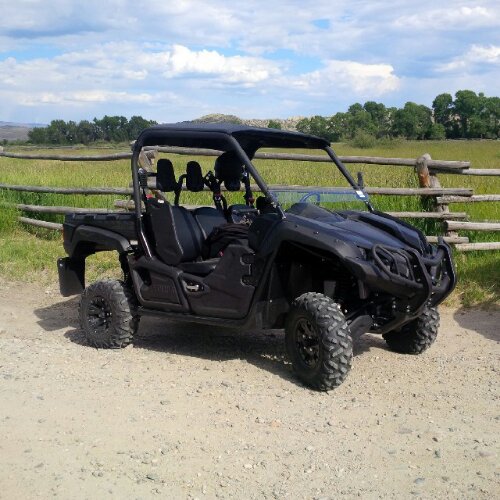
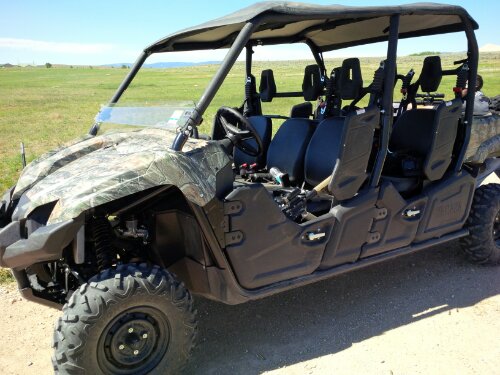
That is the Yamaha Viking SE Tactical. It’s a UTV, which I learned this week stands for “Utility task vehicle.” Other phrases for this class of vehicle are “side-by-side” referencing that the drive and passenger sit…side by side. The class of vehicle has evolved from a farm/working vehicle into a capable off-roader, ready to handle all kinds of terrain. I spent two days in Yamaha’s Viking UTV, the tactical version above and the six seat version below.

image

Generally speaking, it’s not legal to operate a UTV on a paved road. That wasn’t a problem for us, because we used the Yamaha vehicles to bump around the back country on single-track trails. Doing this turned into a game of prairie dog whackamole. We’d drive down a track, spot some dogs, blast one or two from the vehicles, then bail and set up more stable shooting positions and then really do some work. The Vikings handled all the terrain we threw at them with no issues. Everything from deep sand to thigh high water (it was thigh high on me, so probably ankle high on a normal sized person), muddy fields, no problems.

What’s the perfect companion for a tactical off-road vehicle? A Modern Sporting Rifle, of course.

image

I spent the most productive days of the trip with a Smith & Wesson M&P15 MOE wearing a Bushnell AR223. With up to 9x magnification, you could see and shoot dogs up to 300 yards, and contrary to what the internet may have told you, a 16 inch AR is capable of reaching out that far with accuracy. Despite how most people train, an AR is not a big, long, shoulder fired pistol and can be shot past 25 or even 50 yards.

But back to the gun itself: the MOE rifle ran just fine in the desert, despite being coated in a fine layer of dust and bouncing around next to my leg in the Viking. The scope held zero despite some rough treatment, and the prairie dogs? Well, the prairie dogs died.

If you’ve never been prairie dog hunting, it’s fun like nothing else. It’s not even really hunting, it’s more like target practice on extremely reactive targets. But that’s what makes it fun. Prairie dogs are wretched vermin: they carry the actual black plague, cattle break their legs in prairie dog holes, they destroy crops and generally just the worst sorts of things. So when you blast one with a Hornady V-Max and watch it’s body come apart, you don’t feel bad.

image

In fact, you should feel pretty good. You’re doing a public service, killing zombies. I saw a prairie dog that been shot multiple times with a .22 trying to drag itself towards the rat car, probably to attempt to bite us and turn us into zombies. I’ve also seen prairie dogs eat their own dead.

Of course, the real moral of the story is that hunting prairie dogs is a hell of a lot of a lot of fun. Blasting when you put ARs and badass UTVs in the mix, it turns into the most fun I’ve had with a gun in my hands since I learned how to shoot.

Kahr Arms to offer purple pistols

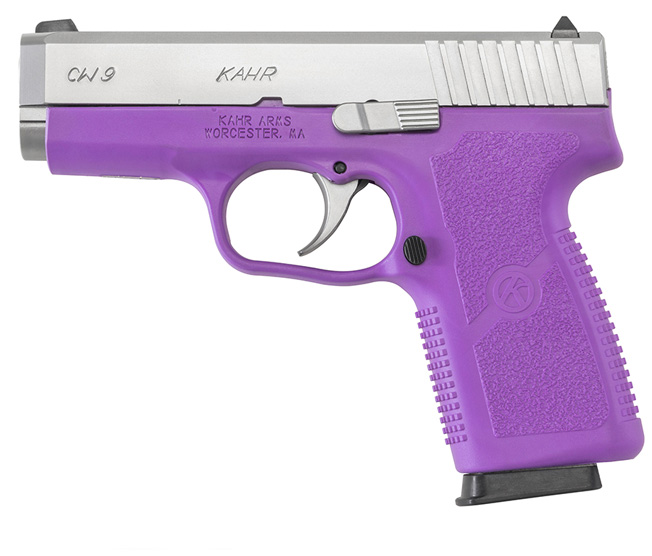
Pomona, NY – Kahr Arms is once again brightening up their product line by introducing another new color; purple. Following the success of their Cobalt Blue Kahr CW9, Black and Orange Auto Ordnance 1911, Burnt Bronze Desert Eagle and the popular Kahr PM9 in Robin Eggshell Blue, Kahr Firearms Group has partnered this time with Davidson’s, Inc., one of the largest and most progressive firearms wholesalers in America, to introduce a purple version in either the CW9 or CW380.Continue reading →

Improvement over time

It’s been a long time since I’ve shot a club match, or any kind of USPSA match for that matter, but yesterday I got up early and went out to the Big Sioux Rifle & Pistol Club for their monthly club match. I haven’t shot a lot this year, but since Bianchi Cup I have been trying to get out to the range more. I didn’t expect any kind of improvement, but at the end of the day I was happy with how I did.Continue reading →

Operation Jackrabbit

Time and location classified

It had already been a long patrol when we finally spotted him. We’d been riding for hours in the new Yamaha Viking patrol vehicle. We’d had some contact, a few hotspots here and there. Those were always over quick, we’d bail out of the vehicles, engage the targets, and confirm our kills when possible.

Near the end of our patrol, things got exciting. Our driver called out that he’d spotted a fast-mover to our right in the sage. It was hard to see, but I saw just as the target went to cover behind a bush. I put a round from my M&P into the bush, then we exited the vehicles and went into pursuit with just out handguns. My driver and I split wide, left and right and approached the target’s last known position so we had clear fields of fire. Right as I was about to call it off, he popped up and started running. Since he was clearly still a threat, we both engaged with handguns, dropping the target after 10 rounds at about five yards. The target took multiple hits from our 5mm pistols to drop. The one that finally dropped him took out his spine.

IMG_20140706_163510

It was a bad day to be a bunny.