What your carry holster says about you

Two years ago I wrote a pair of humor posts called “What your Carry Gun says about you” which were fairly well received. Mostly because I like jokes. There’s nothing quite like hauling a reliable old joke out of the barn for another ride.

What your carry holster says about you

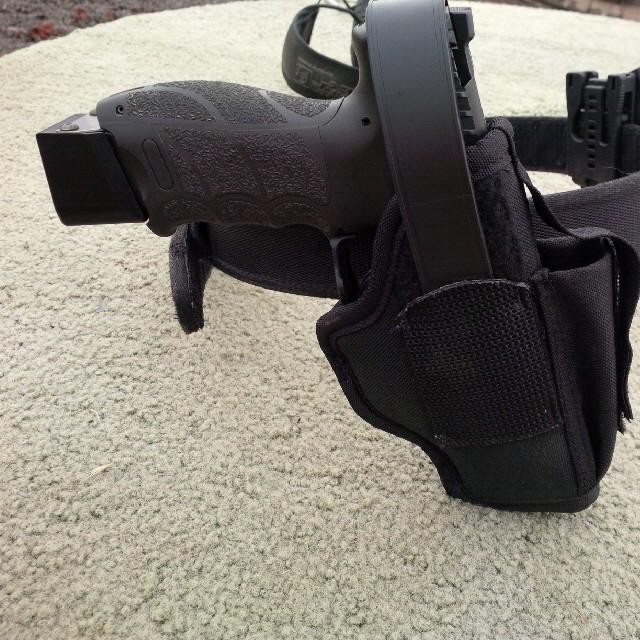
Traditional leather OWB belt holster
What you think it says: “I am a man of taste and distinction. I dress around the gun, and only carry my ivory-stocked 1911 in the finest handcrafted gun leather, made by Serbian pistol-fighting monks one at a time.”

What it actually says: “I think it’s 1957, I hate all pop music, and these damn kids won’t get off my damn lawn. Also, AR15s are Terrorist Rifles.”
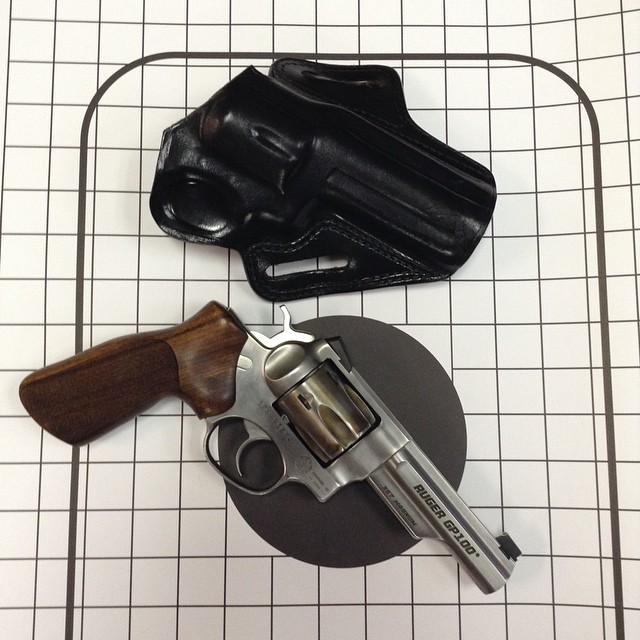
ruger gp100 with galco

Strongside leather IWB holster/Summer Comfort
What you think it says: “I am a sensible adult who has purchased a no-nonsense, no gimmicks, carry holster. This style of holster has worked for years.”

What it actually says: “I have basically no imagination, and have chosen the most bland, nondescript holster in the world. I drive a Toyota Camry and eat plain oatmeal.”

Appendix carry IWB
What you think it says: “I’m on the cutting edge of modern carry methods. The top trainers use AIWB because it’s faster to get into the fight, offers better weapon retention, and superior dynamic deployability in a critical incident.”

What it actually says: “I am a mindless follower of trends, completely incapable of evaluating decisions based on need. I bought a .300 BLK when Travis Haley said they were cool, and I put an RDS on my Glock 26 because Gabe Suarez said it was the future of fighting handguns. Also, I will likely shoot my wiener.”

Crossdraw holster
What you think it says: “While not as popular these days, crossdraw holsters are a legitimate option for my carry lifestyle. I have easy access to the gun from a seated position, and with smart wardrobe choices can easily conceal a full size handgun.”

What it actually says: “Oh god Danny Glover was the coolest character in Leathal Weapon. Dat k-frame in dat leather holster tho”

Shoulder Holster
What you think it says: “I use a shoulder holster because it’s a real world option for concealing a full size handgun. Everyday CCW is different from the square range training classes, and I need to be able to conceal a gun in business attire.”

What it actually says: “I wish Miami Vice had never gone off the air. Also, do you know where I can get some Bren 10 mags?”

Kydex pancake light bearing OWB holster
What you think it says: “I need a modern holster to carry my modern firearm. The threat dynamic of the 21st century requires a tactical gunfighter equipped to handle himself when the balloon goes up, no matter the time of the day.”

What it actually says: “I spent 120 dollars on a knock-off of Raven Concealment because I’m not patient enough to wait for the real deal. Also, I ran out of lotion watching Magpul videos.”
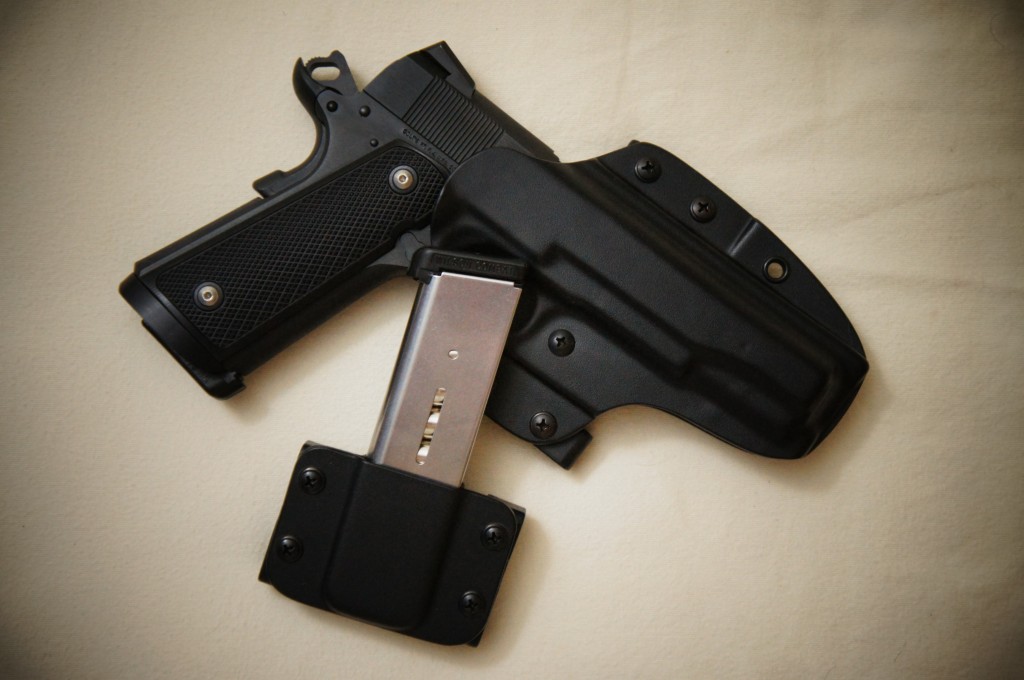
Praetor Defense Holster

Blackhawk SERPA!
What you think it says: “As a responsible practitioner of Open Carry, I need a retention holster to protect my gun from criminal surprise attackers playing the Knockout Game.”

What it actually says: “They don’t make an ALS holster for my Taurus Judge, so I bought this SERPA. Plus I can match the grips on my Judge to my fedora!”

$5.00 nylon sausage sack
What you think it says: “I need a holster that is functional, and I am on a budget. As a price conscious shopper it’s important for me to squeeze my dollar as far as it goes.”

What it actually says: “I’m poor and I own a Hi-Point.”

That’s it for our first installment, let me know your suggestions and thoughts in the comments.

Sons of Guns cancelled, Will Hayden arrested again for child molestation

Several weeks ago, reports circulated that reality TV show star Will Hayden of Discovery Channel’s Sons of Guns had been arrested on charges of child molestation. He was released on bail, only to be arrested again, this time on charges of aggravated rape.

Hayden is accused of raping a minor “almost daily” since March 2013 and taking her virginity when she was 11 years old. TMZ reports the girl is Hayden’s daughter.

will hayden mugshot

Discovery channel has halted all future production of Sons of Guns due to the “serious and horrific nature of the charges” which is a pretty impressive statement from a PR flak. Additionally, Red Jacket Firearms has severed all ties with Hayden, likely because having a dude on staff accused of constant child rape is bad for business. Of course, I must now pay lip service to innocent until proven guilty, because these are just charges at this point. But it’s worth noting that the cops decided that they didn’t want him running around in the wild anymore, so they locked him up again.

Quick recap of the facts: Will Hayden has been arrested again for molesting a child, Red Jacket has cut all ties with him, and Discovery has cancelled Sons of Guns. Regardless of Will’s eventual guilt or innocence, it looks like Sons of Guns is (finally) done.

Regarding Dr. J (frame)…

Let me ask you a question: What, do you suppose, is the most popular, most prolific, most widely produced repeating firearm intended for personal defense in history?

I don’t have solid numbers on this, but I’m betting that if we did do a solid tally the undisputed champion would be the small revolver. Consider the 1849 Colt “Pocket” revolver. Colt apparently produced 325,000 of them, making them Colt’s most widely produced percussion revolver. When you think about Colt’s cap ‘n ball revolvers you probably think of the big Walker Colts or the .44 caliber Dragoons, maybe even the 1851 Navy, but it turns out that the buying public put more money down on Mr. Colt’s smaller, lighter, and more concealable offerings than anything else. They were used by just about everybody who needed a gun in those days ranging from urban gentlemen who required something small and tote-able for personal defense to soldiers who wanted a little more up their sleeve than a rifle and bayonet. They were even issued to the newfangled urban police forces that were springing up in 19th century America. Back in those days many were carried concealed as having a visibly armed police force organized in paramilitary fashion was somewhat controversial. Sound familiar?

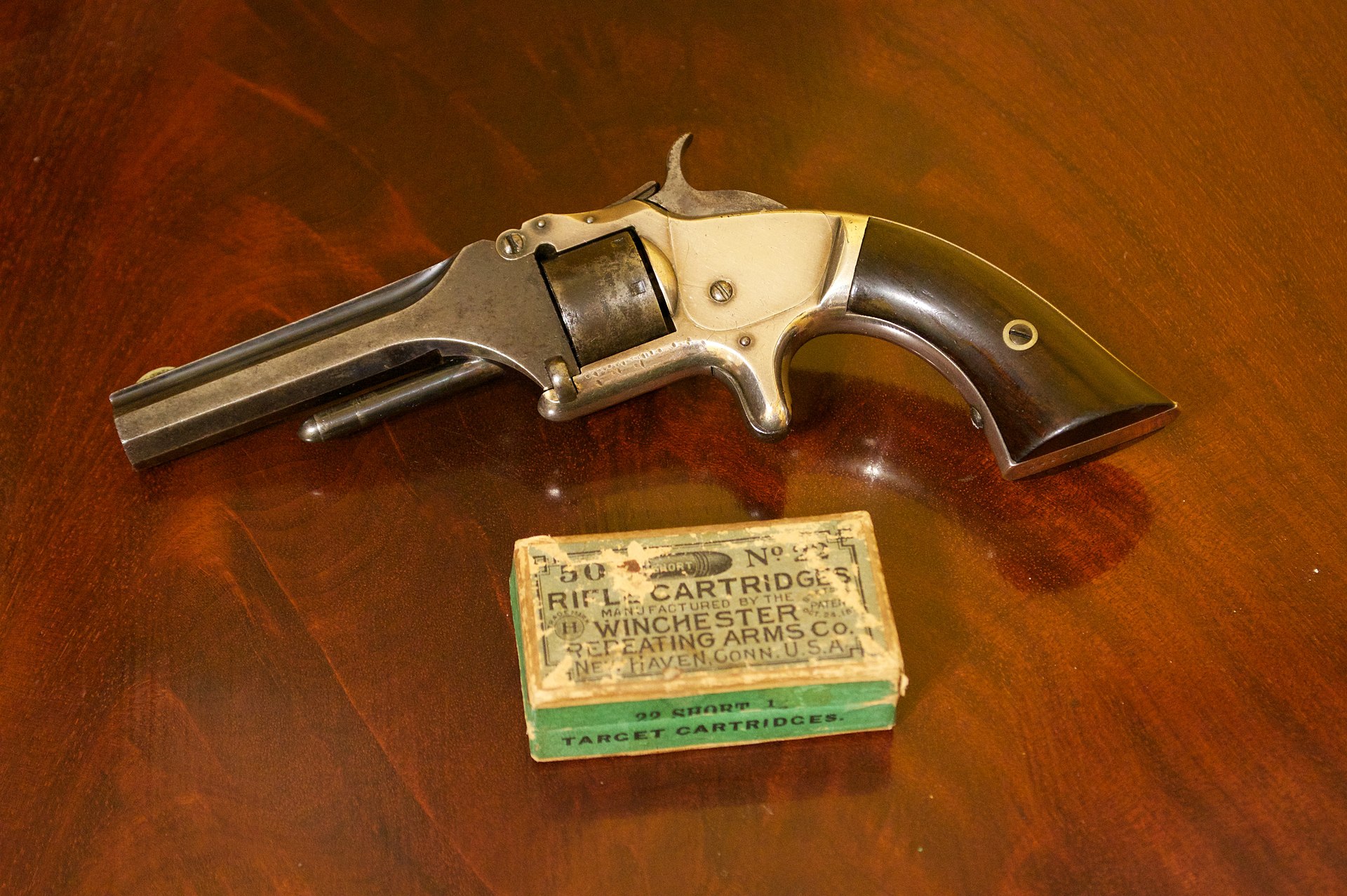
Smith & Wesson has been selling small revolvers from the very beginning.

Horace Smith and Daniel B. Wesson debuted their new metallic self-contained cartridge in: A small revolver. Smith and Wesson would go on to sell a boatload of small cartridge-firing revolvers, as would Colt, Iver Johnson, Webley and a plethora of other manufacturers. Even after John Moses Browning delivered practical, reliable semi-automatic handguns that could be easily concealed the popularity of the small revolver continued. The semi-automatics were certainly nice, but it was difficult to beat the blend of size, power, reliability, and affordability available from the small revolver. Handguns like S&W’s J frame and Colt’s various snub nose offerings were carried concealed for personal defense in the street and/or placed in the drawer of the bedside table to defend the home. Detectives carried them. Shopkeepers kept them under the counter. Bank managers kept them in a desk drawer. Police officers on patrol had them strapped to an ankle or stuffed in a pocket as a backup piece.

The small revolver, AKA the J frame or the “snub nose” revolver, has been getting the job done for a very long time. They aren’t what I would call ideal handguns by any stretch. There are some significant drawbacks to a small revolver, but despite all of that millions of good guys have managed to put them to good use in defense of themselves and others over the past century and a half. It’s tough to ignore a record like that.

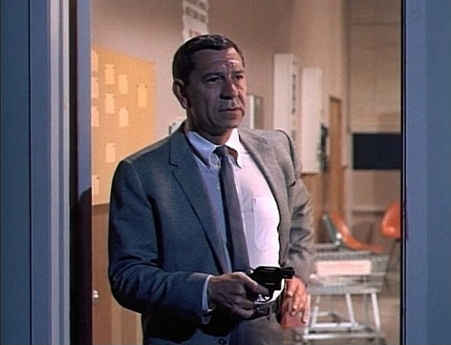
Say "Hello!" to Joe Friday's little friend...
Say “Hello!” to Joe Friday’s little friend…

I carried a small revolver for a number of years as a secondary handgun or, on rarer occasions, as my only handgun. The blend of size, power, reliability, and price made the small revolver difficult to beat. Some time ago I handed that gun to a relative to keep in their pocket while we were in a bad neighborhood and they’ve been carrying it ever since. I’ve been pondering replacing that revolver for a while and the other day I ran across a deal that was too good to pass up. The purchase of the new gun gives me a convenient excuse to take a fresh look at probably the most carried repeating handgun in history. In upcoming weeks I’ll be discussing the options on the market, why I made the selection that I did, and what I’m doing to customize the gun for my use and requirements.

It’s already proving to be more fun than I had originally anticipated…so stick around!

Are USPSA shooters better than IDPA shooters, part 2

For some reason, I decided it would be fun to try to an answer a question that has been the source of many forum slapfights. Yesterday I looked at both sport’s classification systems, and from that was able to determine…basically nothing. USPSA does a better job of breaking shooters down into tiers of skill, and it turns out that the top shooters in IDPA are almost always pretty good USPSA shooters as well. Today we’ll look at match performance and depth of competition.

USPSA_Logo

The first thing I want to address is a common argument in favor of USPSA shooters being “better” than IDPA shooters. It goes like this: “I took a USPSA shooter to a club level IDPA match and he smoked everyone, but then I took an IDPA shooter to a USPSA matched and he tripped over his own feet and cried lol IDPAsux.”

Now, I’ve observed and experienced IDPA shooters struggling with making the transition to USPSA, but it usually wasn’t a result of shooting related challenges. One of the fundamental differences between USPSA and IDPA are the non-shooting demands placed on the shooter. IDPA shooters generally “shoot on a rail” – that is they follow a proscribed course of fire, generally shooting everything from the same position as everyone else. Within a division, the majority of shooters will shoot the stages the same way, with the winners determined by who shoots the COF the fastest and most accurately. What that means is that stage planning isn’t as critical a skill in IDPA, because there’s usually only one acceptable way to shoot any given stage. It’s like traditional kata in martial arts – you’re following a pre-written series of steps.

USPSA on the other hand allows for shooters to come up with their own stage plans, and basically do whatever they want so long as it’s not against the rules. That means that stage planning and mental prep is hugely important in USPSA. What happens frequently in my experience is when people who start in IDPA make the jump over to USPSA, they struggle with the stage planning part of it worst of all. That leads to poor shooting performance, because if you’re trying to think about your stage plan while you’re shooting the stage, you’re going to have a bad time. Does that mean that USPSA shooters are better at shooting? At least in this instance, no it doesn’t. It does however mean that a shooter who primarily competes in USPSA will generally have an easier time crossing over sports because he or she has a better understanding of mental stage prep.

Let’s talk about match performance as an indicator of skill; because that’s a decent way to compare skill level of shooters. But to do that, we have to first talk about depth of competition in a given sport. USPSA has a much deeper field in terms of pure talent. A shooter who just got his GM card in USPSA is going to be better than a shooter who just got his M-card in IDPA. When you ratchet that up to the top of the field, the talent level in USPSA is deeper than IDPA as well; specifically because the top GM shooters with a few exceptions don’t play in IDPA. If you look at the results from 2013’s IDPA Nationals, the top five fastest shooters are all USPSA Grandmasters, with the fastest overall shooting being Bob Vogel. Brandon Wright, Matt Mink, Nils Johnassen, Morgan Allen, and Glenn Shelby are all GM level shooters in USPSA. That rounds out the top tier of IDPA shooters at the last nationals.

From that we can now add a 3rd conclusion to the two established yesterday: at the National championship level, USPSA has a deeper field than IDPA. But what about in individual classes? That’s much harder to calculate for, primarily because class winners aren’t generally household names. You know who Dave Sevigny is, but you don’t know who won C-class at the Production Nationals (Alex Larche, if you’re wondering). You know who Bob Vogel is, but you don’t know who won SSP Sharpshooter at IDPA Nationals (Phillip Bernard). Within individual classes and divisions at the National level, the depth of field is going to be largely the same. You’ll always have the higher skill guys competing to win their class, the middle tier guys, and the bottom third. That is true regardless of the class and division; so it’s difficult to make a straight comparison. Obviously, we’re not accounting for sandbaggers/grandbaggers here, because that’s an entirely different discussion.

At the end of all this, I’ve written over 1400 words in two posts about this topic. Now it’s time for the definite, forum slapfight ending answer to the ancient question: Are USPSA shooters better than IDPA shooters? Ready? “It depends.” There is nothing inherent in the actual shooting challenges presented by IDPA or USPSA that would make one shooter more or less skilled than another at the actual act of shooting. However, USPSA’s non-shooting challenges tend to make dedicated USPSA shooters better at adapting to IDPA than vice versa. Additionally, in my experience dedicated USPSA shooters seem to be, well, more dedicated to practicing on the reg, which does actually translate into getting better at shooting.

But here is some real talk for you. The answer to the question is simple: The average IDPA shooter and the average USPSA shooter are probably about equal in shooting skill. But the best IDPA shooters, the guys who win National championships are also serious, dedicated USPSA shooters.

100 round revolver practice session

One of the things I like to do is put together simple practice sessions for shooters who are on a time and money budget. Let’s face facts, ammo costs money, and range trips cost time, the most precious resource of all. But there has to be a way to practice the fundamentals of marksmanship in a fairly compressed time frame. Revolvers add a further complication w/regards to ammo management. Here’s a simple 100 round practice session you can do with just 100 rounds and one IDPA, Pistol-Training, or USPSA target.

wiley clapp feature revolver

You will need a 6 shot revolver, a holster, and at least two speedloaders with carriers. Start by loading the revo with only 2 rounds and have a loaded speedloader ready to go.

  1. Draw and fire 2 rounds at the head box, reload and fire two rounds at the body.
  2. Draw and fire 2 rounds at the head box.
  3. Repeat steps one and two until ammo is exhausted

A note: after your first 50 rounds, you’ll have to re-stage the gun with just two rounds again to finish the drills. I usually set this up at either 10 or 7 yards, depending on the target I’m using. With an IDPA target, because the head box is so big I’ll go with 10, with the PTC target and its 3×5 head box I move in to 7.

If your set up permits, I recommend adding a second target, you’ll fire on this one after completing your reload, adding a bit of target movement into the drill. An alternate version of the drill changes it to draw, shoot 2, reload, shoot 4 on two different targets. This burns up your ammo quicker, but then allows you to work a proper transition. You can also run these drills on steel targets or pretty much whatever you have handy. Concealment or open, depending on what you’re training for. To adapt it for a five shot revolver, only fire 1 round after the reload. This simple drill will allow you to get through 100 rounds, work on drawing to small targets, reloads, and possibly transitions. You can set it up on a single lane range or with as many targets as you’d like.

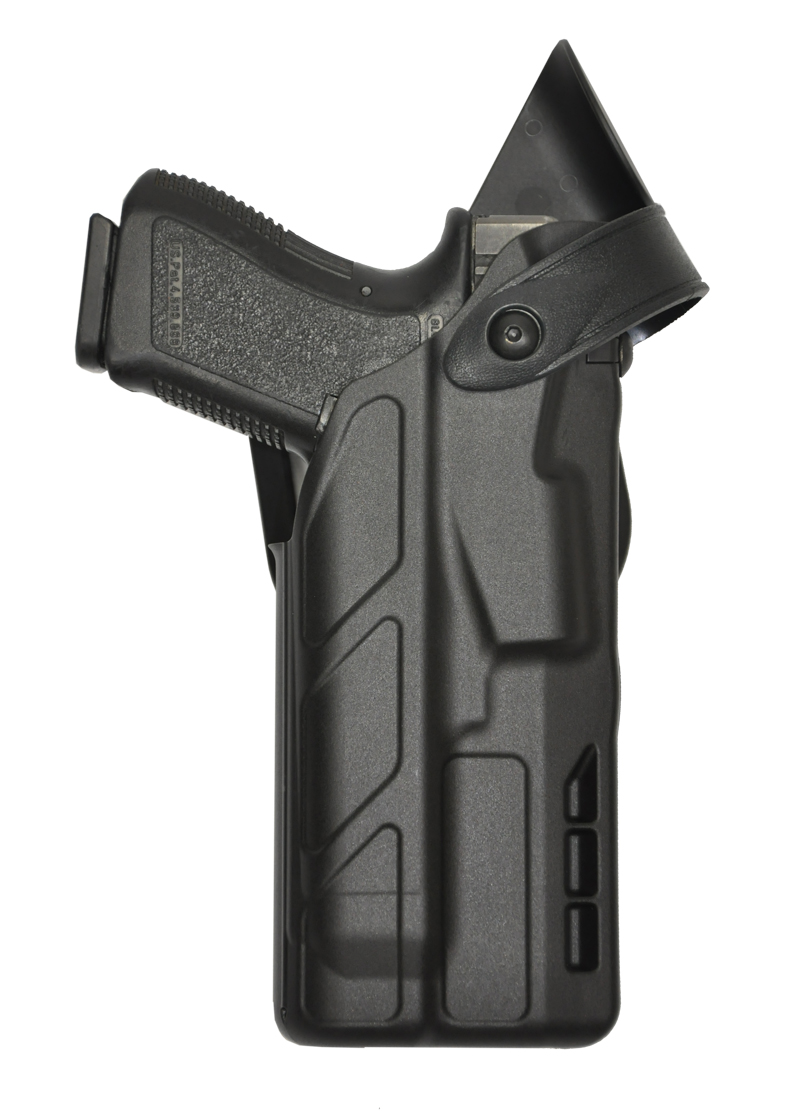
Safariland Adds 7TS Holster Fits for Glock and Sig Sauer Firearms

New 7TS fits also now available for light-mounted firearms

ONTARIO, California – Safariland® announced today the expansion of the 7TS™ Holster Series with new fits for the Glock 17/22 and 19/23 with the most popular lights, and new fits for the Sig Sauer P220R/P226R, P227 full-size/compact and the P229R. Quickly gaining popularity since they hit the market in 2013, 7TS holsters boast a proprietary nylon blend called SafariSeven™, which is impervious to extreme heat and cold, is non-abrasive to the firearm’s finish and features a special construction that strengthens the holster body. These new fits are offered in a variety of duty, tactical and concealment models.

7TS 7360 Holster with Light

“With the sales growth in this series since they made their debut last year, there has been an evident demand for 7TS models for firearms with lights,” said James Dawson, Category Director, Safariland Duty Gear. “We will be looking to satisfy the market with more fits for firearms with lights in the future.”

Six Safariland models available for Glock 17/22 and 19/23 accommodate the ITI M3, Streamlight TLR-1, and Surefire X200, X300, or X300U lights. These are the first fits to be introduced for firearms with lights in the 7TS series. Additionally, Safariland is releasing nineteen 7TS Series holster fits for the rail and non-railed Sig Sauer P220R/P226R, P227 full-size/compact and P229R firearms. These are offered in a variety of models with the ALS open-top, ALS/SLS, or SLS-only retention features. Safariland will continue to release fits for the H&K P2000 and P30, and will be available in the coming weeks.

Safariland patent-pending 7TS holsters are injection-molded, highly durable and are operational in extreme weather conditions from -50 degrees to +300 degrees, Fahrenheit. Constructed from a SafariSeven™ nylon blend, the 7TS is completely non-abrasive to the weapon’s finish. SafariSeven is also extremely lightweight and impact-resistant.

Gun Fit

Duty Models
Glock 17/22 w/Light
7280, 7285, 7287
7004, 7005

Tactical Models
7287, 7367, 7377, 7378, 7379
Glock 19/23 w/Light
7280, 7285, 7287
7004, 7005

Concealment Models
7287, 7367, 7377, 7378, 7379
Sig P220R/P226R/P229
7280, 7285, 7360, 7365, 7390, 7395
7004, 7005, 7304, 7305, 7354, 7355, 7384, 7385,
7287, 7367, 7377, 7378, 7379
Sig P227R3/P229R
7280, 7285, 7360, 7365, 7390, 7395
7004, 7005, 7304, 7305, 7354, 7355, 7384, 7385
7287, 7367, 7377, 7378, 7379

The 7TS holster models are priced from $49.50 – $199.00 and are available in Black and FDE Brown. For more information about Safariland holsters and other premium duty gear products, please visit www.safariland.com/dutygear.

About Safariland®
Established in 1964, Safariland® has earned worldwide renown and a leadership position in the industry for its technologically advanced holsters and other gear to the law enforcement, military, concealment and competitive sporting markets. Safariland holsters, belts and accessories provide users with high-quality tools to perform their jobs safely and effectively. Safariland is credited for developing the first Level III retention holster for the uniformed duty market. With a reputation for INNOVATION NOT IMITATION®, the Safariland brand continues its position as the worldwide leader in retention holsters. Safariland is a part of The Safariland Group family of brands. For more information, visit www.safariland.com/dutygear.

About The Safariland Group
The Safariland Group is a premier global provider of trusted, innovative, high-quality law enforcement and security products for the public safety, military and outdoor recreation/personal protection markets. Offering many of the world’s most recognizable names in these markets, principal brands include Safariland®, ABA®, Second Chance®, Bianchi®, Break Free® and Mustang Survival®. Forensics brands include Identicator® and NIK®. The Safariland Group’s mission, Together, We Save Lives™, is inherent in the lifesaving products it delivers. The Safariland Group has its headquarters in Jacksonville, FL.

Are USPSA shooters better than IDPA shooters?

One of the most common arguments among shooting sports enthusiasts is “who is better, IDPA shooters or USPSA shooters?” It’s a popular argument, because shockingly enough people that shoot competition seriously tend to be competitive. Generally speaking, USPSA matches tend to offer tougher shooting challenges to their shooters than IDPA matches, however the IDPA scoring system places a higher premium on accuracy in a given stage. To really analyze “who’s better” there are three important metrics to compare: classification systems, match performance, and directly related to match performance is depth of the match field.

idpa logo 2

First, let’s look at each sport’s classification system. Here are the various classifications in order from least skilled to most skilled:

IDPA

  • Novice – (anyone who shoots the classifier and fails to make at least Marksman is classified as Novice)
  • Marksman
  • Sharpshooter
  • Expert
  • Master
  • Distinguished Master – (only persons who win a National Championship or finish with 3% of the winner earn this title)

USPSA

  • D class: 39.9% or less (anyone who fails to shoot C-class classifiers is automatically D-class)
  • C-class: 40-59.9%
  • B-class: 60-74.9
  • A-class: 75.84.9%
  • Master: 85 – 94.9%
  • Grand Master: 95-100%

How USPSA and IDPA decide a shooter’s classification is different, and that’s important. IDPA uses a single classifier match, a 90 round course of fire consisting of three stages. Your score on the classifier determines your classification. Shooters who win their class/division at major matches can also be bumped to the next higher class, assuming that certain participation numbers are met.

USPSA determines your class by taking a running average of your scores on the sanctioned USPSA classifier stages, which are usually inserted into club matches as a single stage. You National Percent on an individual classifier is your hit factor (points per second) taken as a percentage of the “high hit factor” on that given stage. USPSA then takes an average of your most recent classifier scores, which determines your classification. Certain scores are dropped if they’re too low or too old.

To the uninitiated then it would appear that the ranks are roughly equal, right? Novice = D class, Marksman = C-class, etc. Unfortunately, experienced has proved that to not be the case. In generally, a mid-to-high level B-class shooter in USPSA would have a reasonable expectation of shooting the IDPA classifier and making Master. I made IDPA Master in all five divisions, and when I finally got classified in USPSA, I made it right in the middle of B-class. Now, where this argument usually goes off the rails on forums is that people make the assumption that because a B-class USPSA shooter should be able to make IDPA Master, that an A-class or higher USPSA shooter is automatically better than an IDPA Master.

The problem with that is that it fails to account for something that USPSA does fairly well with the classification system, which is filter shooters into tighter bands of ability. Looking at that B-class shooter for a moment – he or she has a very good handle of the fundamentals of marksmanship, understands manipulations, and generally knows how to shoot pretty well. USPSA will then take that skills and break it down into those increasingly smaller bands of talent with their A-GM classifications, where IDPA simply says “Master class.” What that leads to is a wild disparity of talent within IDPA’s Master class. Take a look at the scores from the 2013 IDPA Nationals, where the top Master in ESP finished with a time of 241.85. Compared to the bottom Master, who finished with a 358.72. That’s a difference of 116 seconds. To put it in USPSA terms, it would be like a GM shooting 48% of the winner at a major match. Comparatively, the last place Grandmaster at the 2013 Production Nationals finished 62% of the winner. Of course, drawing two single data points doesn’t really prove or disprove anything, as USPSA has a similar problem at the top end of shooters; there are obvious tiers of Grandmaster shooters within the classification.

IDPA attempted to address the issue of clutter in the top band of shooters by creating the Distinguished Master classification. As mentioned above, to become a DM a shooter must win a National/World Championship, or finish within 3% of the winner. There are currently 18 shooters in all of IDPA classified as Distinguished Masters, and of those 18 at least 50% are also USPSA Grandmasters.

From looking at the classification systems, we can draw two very simple conclusions. The 1st is that USPSA does a better job of stratifying its shooters according to skill level than IDPA. While the USPSA classification system isn’t perfect, there is at least in theory less clutter at the top end of it than in IDPA. The second conclusion is that a shooter who is an IDPA Master could fall anywhere on a fairly large scale of talent.

Both of those conclusions lead to the importance of match performance and depth of field to answer this question. We’ll look at that in part two, which will go up tomorrow.

Basic Pistol classes starting in South Dakota soon

After spending nearly a year looking for a host range we’ve finally found a range to host the classes that’s withing a reasonable driving distance of Sioux Falls. We’ll be teaching classes out at the Beacon Hill Club in Brookings; because of the time of the year there are only going to be a couple of classes, one in September and one in October. I’m working on getting the dates ironed out right now, but once I do I’ll have links posted to the signup page for each class.

Photo by Shawn Knight

Initially, I’m going to offer one class: Basic Pistol/Defensive Pistol 101. This is an entry level class for people looking to improve their skill with a concealed carry or home defense handgun. What will be covered in the class: the fundamentals of marksmanship, drawing from open and concealed holsters, reloading from open and concealed pouches, multiple shots on a single target and target transitions. Classes will be for a single, 8-9 hour day and will consume 300-400 rounds of pistol ammo. This is a shooting class, and will focus solely on manipulation and working the gun faster and more accurately.

What a student will need:

  • A functioning handgun (pistol or revolver)
  • Sufficient magazines or speedloaders to carry 30 rounds to the line
  • Earpro/eyepro, hats are optional but encouraged
  • Weather appropriate clothing
  • Ample water
  • Note taking device
  • 300-400 rounds of ammo
  • A holster that allows you to safely re-holster one handed (IWB or OWB)
  • Sufficient magazine pouches or speedloader holders
  • Concealment garment

A note on food – we will have a lunch break, however the range is a decent drive from any sort of fast food. I strongly recommend bringing a sack lunch, as well as de-lead wipes. Total cost for the full day class will be $150, which includes a $10 range use fee that goes directly to Beacon Hill.

If you’re interested in classes coming to Sioux Falls, shoot me an email at [email protected] to get on the mailing list for more information. I should be posting class dates and signups soon.

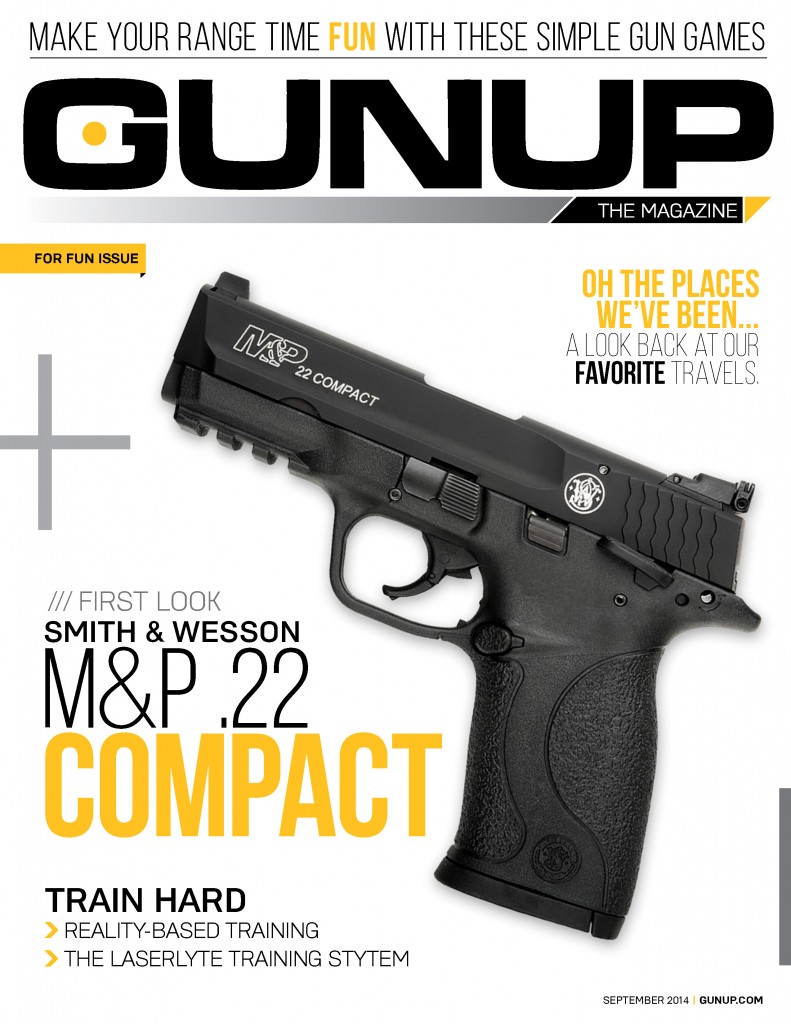
Get an exclusive first look at the S&W M&P22 Compact in GunUp the Magazine

Sept_2014_FINAL_Cover

You’ve probably heard about Smith & Wesson’s new M&P22 Compact by now. It’s kind of like an M&P Shield in .22 LR, and that’s pretty awesome to me. I had an opportunity to get some good trigger time with one, which turned into the first published review of the M&P22 Compact. You can read about it the latest edition of GunUp the Magazine, available first for iPad, iPhone, and Android.

iTunes Store link

Google Play