Apparently, when I went to Lackland for training, I entered a dimension portal, because six months later now that I’ve popped out, I’m in some alternate universe where Donald Trump is a Republican presidential front runner and Bloom County is politically relevant again. It’s pretty weird. What’s even weirder is the headlong rush some of my fellow conservative travelers have undergone to embrace Donald Trump and proclaim him as the savior of Republicans and of course, the 2nd Amendment. A lot of that 2A-fervor is based on his official position paper, which if you ask me is worth exactly the same as the paper it’s printed on. Or the electrons or whatever since you’re reading this online and no one has hard copies of anything anymore.
Right now, Trump is saying all the right words, touching all the right talking points, and generally doing an excellent job of looking like a pro-gun Republican candidate. And if you think he wouldn’t throw gun rights under the bus faster than one of his casino bouncers will kick you out for counting cards, you’re stupid. Actually, you might be terminally stupid. Let’s play out a hypothetical scenario for a bit, just to illustrate my point.
First, you have to operate from the assumption that Trump’s professed love for the 2nd Amendment is insincere and exists only to pander to the conservative base. So he somehow gets elected, and then bam, there’s a mass shooting. With a Republican majority in both houses of Congress and a Republican president, Trump feels compelled to act. He feels this way because he is in love with his own image, the Donald Trump of the People, and after someone shoots up another school, the People are upset. Something Must Be Done. So he sells us out, and next thing you know there’s a universal background check bill in Congress that he’s promised to sign. The NRA is playing defense because they have to convince members of the President’s own party to go against him, which is never easy nor a guaranteed thing.
Now take that same scenario and have it run under President Hillary Clinton instead. NRA is ALREADY primed for a fight, because there’s a Clinton in office, and they come out swinging the second she says “gun control” on TV. The bill dies in committee, and Hillary goes back to looking for a war to fight so she can prove she’s as tough as one of the boys or something.
Most of this goes back to an old phrase: better the devil you know than the devil you don’t. Hillary Clinton, for all her faults, is absolutely the devil we know. President Hillary Clinton could do a lot of damage this country for sure, but gun rights? Probably not. Anything she says or does that even smells a little bit like gun control is going to result in NRA and the entire gun owning internet losing their collective shit and blowing up every red-state Congressman’s phone for days. Which is exactly how it should be. But is the reverse of that true? If you get a squishy Republican who doesn’t really care about gun rights in office, and especially one like Trump, the odds of them selling us out for the sake of their image and getting away with it are a lot higher.
That’s the thing with Trump. Everyone seems so sure that he’s not full of shit, when every single thing about his record in business says that yeah, he’s totally full of shit. Ultimately, Trump would sell gun owners out in a heartbeat. Here’s why: like I mentioned above, Trump is in love with his own image. He’s a narcissist, or egoist or whatever you want to call him. People like that are dangerous, because they’ll act to preserve their own self-image at the cost of everything else.
The best case scenario for Trump as President is the same as the best case for Hillary: we keep the wolf away from the door for another four years. But the worse case for Trump is a lot worse than Hillary. Don’t fool yourself into thinking that Trump is any real kind of ally.
If you are serious about developing your shooting skill, at some point you have found yourself in an unhappy plateau. You have achieved a certain level of skill and you’re comfortable performing at that level but you know that you can do better…you just don’t know how, exactly, to get to that next level. One of the most efficient ways of bumping your performance capability is to get yourself on the range with a good coach.
Langdon is an exceptional instructor and coach.
Note that I use the term “coach” rather than instructor, there. In my experience being a good instructor and being a good coach are very different skillsets. Unfortunately every instructor is not necessarily a good coach…someone who can offer an intelligent, detailed, custom diagnosis of your performance issues and suggest specific techniques and approaches that will boost your performance.
Ernest Langdon is, in my opinion, one of the best combinations of instructor and coach teaching classes these days. If you are a regular reader you have seen a few articles on the site that mention Mr. Langdon so you may be somewhat familiar with his background. If you aren’t, the short version is that after spending time in the USMC’s High Risk Personnel program where he had the chance to train with just about everybody worth taking a class from, Ernest went on to work for Beretta, Sig, and Smith & Wesson. He is probably most famous for upsetting the dominance of single action and striker-fired guns in competition by winning a number of titles with a traditional double action gun like the Beretta 92 and the Sig P220. A number of people argued at the time that you simply couldn’t use a traditional double action gun well, but Ernest proved them wrong.
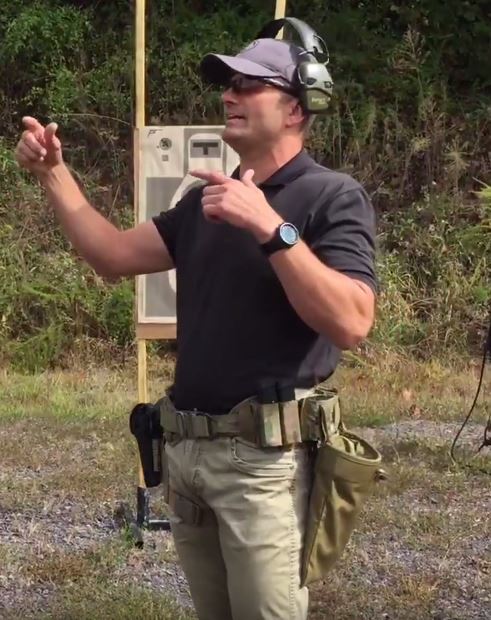
I find Langdon’s presentation to be close to the ideal mixture of the “tactical” and the competition side of shooting. He emphasizes a high level of skill that would serve you well in just about any match you could show up to, but the presentation is always grounded in the realities of using a firearm as a tool of personal defense. I know some instructors dismiss competition as irrelevant, but I think they’re off their bean. I can’t explain why any better than EL does himself in this snippet of his lecture from day one:
There is more to successful self defense than shooting skill, certainly, but the person who has deliberately cultivated a high level of skill with their firearm will find a number of benefits should they need it. In fact, as Ernest hints at towards the end of the video, one of the key benefits may be not having to use the gun at all. I’ll talk more about that in a future article.
After a relatively brief but insightful lecture (including a proper safety brief complete with a medical plan) we began the jog, run, sprint learning process. Having trained with Langdon before, I know he is able to take the temperature of the class and modify the course to fit the students. This particular class had a number of very skilled shooters in it (some of the best I’ve ever been on the range with…and I’ve been on the range with a lot of people) and as a result the pace of the class was challenging…hence the description of jog, run, sprint. The “advanced” label on this class was not merely an advertising term. To really benefit from the class you need to have gone through some quality training previously.
I think Langdon’s gifts as an instructor and coach are most evident on the line. While running through drills each student had individual attention and feedback based on what he was seeing in their shooting and on their target:
When you’re trying to bump your shooting up to the next level, seemingly little things can make a huge difference. Something as seemingly small as how you reset the trigger can make a huge difference in your performance:
Individual feedback and coaching is combined with challenging drills that push your ability to shoot fast and accurately, forcing you outside of your comfort zone and often showing that you have the capacity to perform better than you thought you could:
One of my favorites was a speed drill I had never shot before that happens so fast I knew I would need to capture it in slow motion so you, dear reader, could see what was going on:
I don’t remember the name of this drill, only that the standard was to shoot it clean in 3.5 seconds or less. “Clean” means keeping all rounds inside the white circle in the center of the target and keeping the head shots inside the grey 3×5 card in the head box. Done from the draw, this is a challenging drill that pushes your ability to drive the gun, manage recoil, and “see what you need to see” on the sights to make a hit…all under significant time pressure. I was quite pleased that I just managed to meet the standard, shooting the drill clean (while drawing from concealment) in 3.5 seconds. Not bad for never having done the drill before.
On the second day Ernest set up a moving target system and we spent a large chunk of the day shooting at moving targets and then shooting at moving targets while moving. This is notable because in my experience very few shooters ever get the opportunity to shoot on the move, and even fewer ever have the chance to shoot at a moving target while they themselves are moving. Nobody ever stands still in a gunfight, but most good guys never have the opportunity to actually practice shooting under the conditions everybody agrees will be present in a gunfight:
This is another area where competition can be enormously beneficial even if your only goals are personal defense. Most competitions involve some shooting on the move that you wouldn’t be allowed to do on the same range under any other circumstance.
Ernest offers a blend of performance, practicality, individual coaching and unusual shooting opportunities that you won’t find in many classes these days. About the only way the class could have been better is if we had the time and opportunity to do some low light and force-on-force training…but you can only cram so much into two days of instruction. If you’re looking to push your shooting skill to the next level, a pistol class with Langdon Tactical is as good an opportunity as you’ll find.
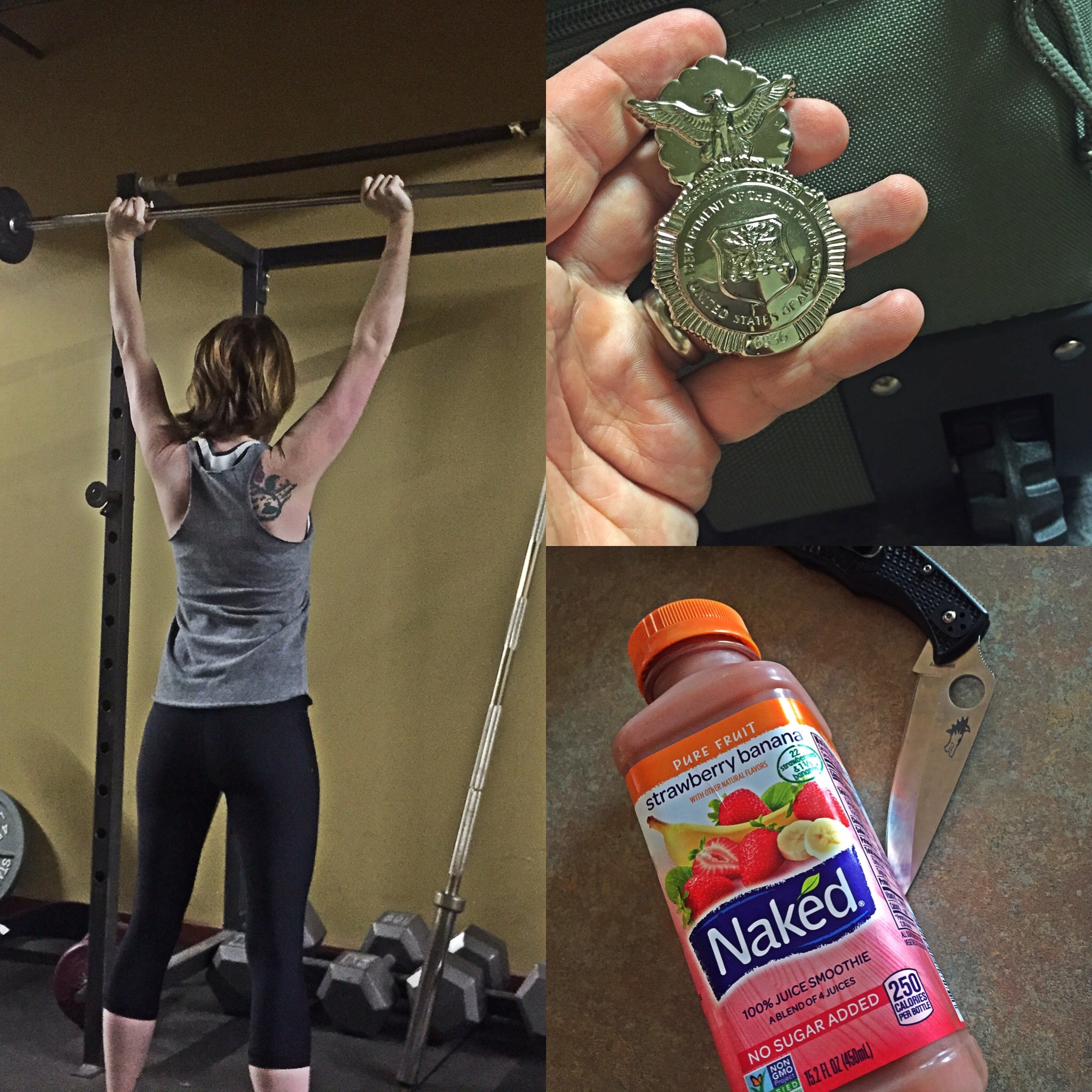
I mentioned earlier on my Facebook fan page that now that I’m back from training, I’m in the best shape of my adult life, including my teens. Or, as a comment on yesterday’s post put it, “reborn hard.” That’s true. To put it in perspective, when I left I was doing about 40 pushups in a minute, 30ish situps, and running a mile and a half in 12 and change. Now I’m doing 60+ of pushups and situps, and running my 1.5 in 10 flat.
There are other metrics, like weight loss and percent body fat, I’ve dropped about 35 pounds and I’m under 11% body fat. These are good things because they mean I’ll likely live longer and whatnot. However, what I want to talk about today is how they affect my ability to defend myself as a civilian. Because I’ve talked about fitness a lot in the past and how it’s important, but instead of just beating ya’ll up and saying “get in shape fatty mcfatterton” I want to talk about what being in good shape gives me.
It gives me options, and options are a good thing. Depending on the situation, I have the option available to simply flee, which is always pretty awesome from a civilian standpoint; you win every gunfight that never happens. Or, if I’m not carrying a gun for whatever reason, I have some training in going hands on; I’m not BJJ warrior but I’ve got a couple of good strikes and I can thrown down an Americana pretty well. I don’t really want to go hands on with people (that’s why I carry a gun) but it’s a good skill to have. Options are good. Of course, there’s always the deadly force option if I am carrying a gun.
As your fitness level decreases, your options go away. That’s not necessarily a condemnation, because a 65 year old woman with a dickey hip isn’t going to have the same self-defense options as a 25 year old triathlete. However, if you’re 33 and your only option is to basically go straight to deadly force because you can’t run 400 meters without dying and you lack the physical strength to create distance by pushing an attacker off, then you’ve put yourself in the relatively unfortunate situation of having to shoot someone who maybe didn’t need to catch a bullet. This goes even further back to something Tam was talking about last month, namely how to manage unknown contacts. That’s all about creating options, because unless you’re a psycho, you don’t actually WANT to shoot someone.
I don’t want this post to be another “get in shape blah blah” because people don’t listen to those. It tends to just fly in one ear and out the other. What I want is for people to take a hard look at your self-defense options. Are you limited to going straight to deadly force? If so, ask yourself “why?” If you are limited, and it’s because there are holes in your training and skill set, good news! You can fix that. If the holes are in your physicality and abilities, you can fix that too, but it’s a lot harder.
I learned a lot about blind spots in my self-defense strategy over the past six months. My ground game needs a ton of work, and so does my intermediate/striking distance game. It’s important that we recognize weak spots in our skill set; especially if you’re serious about self defense or do this kind of stuff for a living.
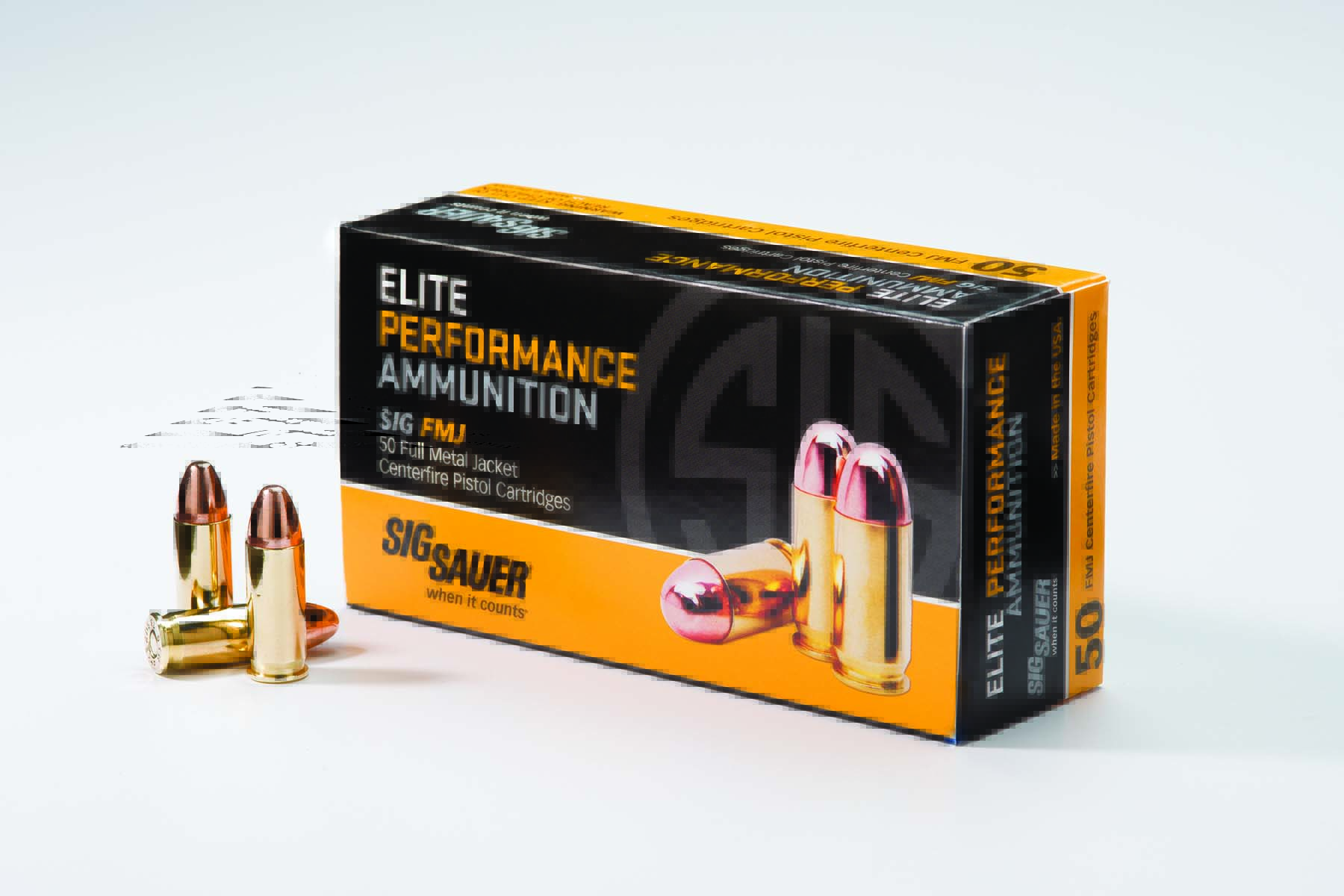
Newington, NH (October 7, 2015) – SIG SAUER, Inc., designer and manufacturer of the world’s most reliable firearms, silencers, optics, ammunition, airguns, and accessories is pleased to introduce 125gr .38 Super +P Elite Performance Ammunition in V-Crown™ jacketed hollow point (JHP) and SIG FMJ full metal jacket loads.
With a muzzle velocity of 1230 feet per second, the 125gr .38 Super +P ammunition delivers exceptional accuracy and reliability. The SIG V-Crown load features a proprietary stacked hollow point bullet for reliable, uniform expansion and optimal terminal performance. DUCTA–BRIGHT 7A™ coated brass cases also provide enhanced lubricity, offering superior corrosion resistance, and more reliable feeding and extraction in semi-automatic pistols.
The SIG FMJ premium target loads feature solid brass cases and durable, copper-jacketed bullets that remain intact on impact. The precise, uniform profile of the SIG FMJ bullets results in maximum accuracy and consistency. Dependable primers and clean-burning powders are used for reduced barrel fouling with more reliable functioning.
“With the introduction of the .38 Super +P ammunition, we now offer Elite Performance Ammunition for all SIG SAUER pistols,” said Dan Powers, president of the SIG SAUER Ammunition Division. “SIG FMJ ammunition is the perfect combination of affordability and performance in a premium target round. It is designed to approximate the performance of the corresponding SIG V-Crown jacketed hollow point rounds, giving our customers the advantage of a seamless transition from target ammo to carry ammo.”
All Elite Performance Ammunition is manufactured in the United States by SIG SAUER to the same exacting standards as the company’s premium pistols and rifles. For more information, visit www.sigsauer.com/ammunition.
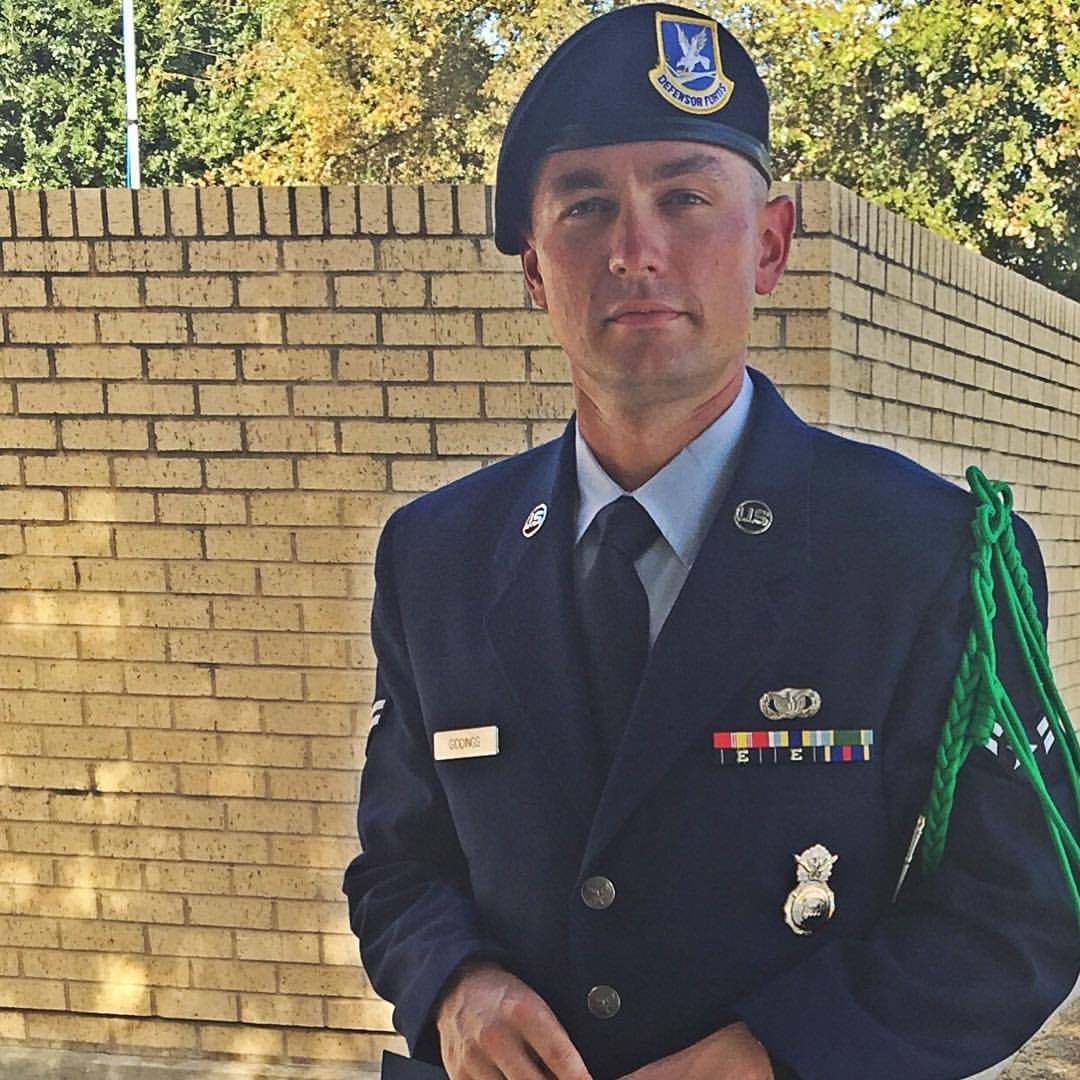
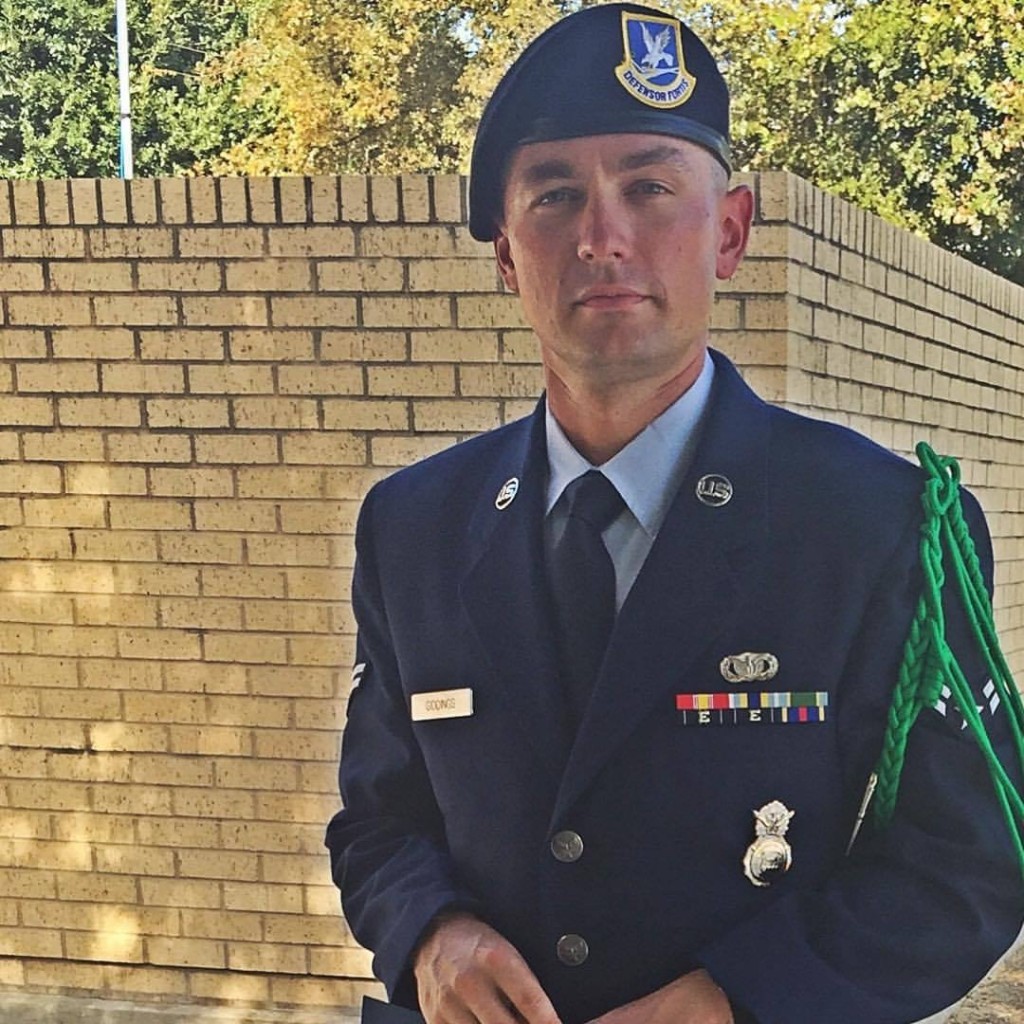
So, this happened. You have all probably noticed that I’ve been pretty scarce around these parts for the last six months. I’ve put out a couple of quick posts here and there, but my focus has been on training and my military work. I can’t really come back to blogging and not acknowledge that or talk about it, because regardless of whatever else I am, I am a teller of stories. And this is a pretty good one, at least I think.
What I think I’ll do first is answer some of the obvious questions that people tend to ask me now that I’m back. The first is “why?” I’m 33 years old, have a successful career, a marriage and a dog, why put that on pause to go back into the military? First and foremost, I had some deep personal reasons I wanted to go back. Those are mine, and maybe someday you can read about them if I get this book published. But suffice to say, they were and still are important. There are also pragmatic reasons as well: benefits. Even as a reservist, I have access to healthcare (at a hugely reduced cost compared to what I’d pay on open market) and if I do 20+ years I’ll bring in retirement pay. My career path has never been what you’d call “stable” – the life of a blogger/salesman/pro shooter doesn’t have built in retirement planning. So at the time it made a lot of pragmatic sense to go back and give myself and my family a safety net for the future. That pretty much covers the “why.”
Next questions are all job related: I’m in the Air Force Reserve, my AFSC (that’s Air Force for MOS) is 3P031, Security Forces. I get a cool hat. Why did I pick Security Forces? I wanted to do something physically challenging that would also have ties back into my civilian career. So, SF it is. I actually really enjoyed the training side of my tech school, which focused heavily on active shooter response. SF’s mission in the Air Force is a combination of law enforcement and ground defense/security. What you’ll end up doing depends on your unit/base/assignment. People also ask why did I join the AF instead of the other branches, and why reserve instead of Guard. To the first question: I actually shopped around. I knew I didn’t want to go into the Army, I’m too old for the Marines, so that left the Coast Guard, Navy, and AF. The Coast Guard recruiter basically said “lol sorry nope, no spots forever”, so then I started talking to a Navy Reserve recruiter and the AF Reserve recruiter. The Navy guy fell off the face of the earth, the Air Force offered me the job I wanted, a reasonable ship date, and a signing bonus. Woo. Interestingly, right up until I sewed on my stripes, I wasn’t really committed to staying in the AF, and had thoughts of transferring to the Navy after my first enlistment. But then I put those two silly little stripes on, and for some reason that affected me. I should sew on SrA soon. I joined the Reserve instead of the Guard because honestly, I just kind of forgot about the Guard. Sorry Guard friends.
What was basic training like? Honestly? Basic was pretty easy all things considered. Basic is hard for 19 year olds because they’re frequently not mature enough to shut the hell up and color when you’re told. At my age, I’m smart enough to do that, just barely, so I had a relatively easy time in BMT. The only thing that really made it challenging was I was made Dorm Chief. Dorm Chief is basically the focal point for the attention of the Military Training Instructors, and so I got yelled at a lot, usually when the flight was being crazy. Stuff happens, it’s no big deal. I earned the honor graduate ribbon from BMT and moved on to tech school.
What was tech school like? Honestly, tech school was pretty rad. There was a lot of stuff that went on at tech school that’s not really related to training, basically barracks life stuff; that was annoying, but the actual training? Pretty rad. My team, 036 was the first team to come through the new, totally revamped Apprentice Course. Being the validation team, we had a bit of a bumpy ride in places, but in general the training was solid, and a lot of times quite fun. I enjoyed the gun stuff the most (duh) and ground combat skills, but I also enjoyed getting my ass kicked in combatives and learning about LE procedures.
That covers about all the general questions I usually get asked, if you have another question leave it in the comments and I’ll do my best to reply!
The paradox of the handgun: Handguns are relatively weak weapons that are extremely difficult to shoot with precision. Yet in the United States the handgun is the primary player in the lion’s share of serious social interactions involving firearms. The United States did not invent the handgun, but it can be pretty successfully argued that the handgun’s design was “perfected” here. When a law enforcement officer has to defend themselves or the public against a criminal aggressor, odds are that they are doing so with the handgun that’s been issued to them. When a home owner wakes up to the sound of their door being kicked in, the odds are pretty good that they will reach for a handgun. When two dudes bust through the front door of a store wearing their t-shirts up over their face the store owner who fights back is likely doing so with a handgun. Elite military and law enforcement units who have access to weapons that can level entire buildings will obsess over the minutia of handguns that just poke little holes in things…because, handgun.
We love our handguns!
Unfortunately that love does not necessarily translate into knowing how to use them well. Even people that the general public thinks of as “trained” shooters are often not very well trained. Police officers are a good example of this. There are certainly some very progressive firearms training programs out there in law enforcement, but they are the exception rather than the rule. Often police training with firearms is minimal at best and qualifications take place on a B27 target. Note that this target was originally intended for shooting at 50 yards, but it is typically used at less than 25 yards in most LE qualifications…and even then there are a number of officers who struggle to qualify when the scoring zone of the target would only represent the vital organs of a dude as big as Andre the Giant.
I find that there are a lot of myths and misconceptions about using a handgun well…especially in regards to the most fundamental aspect of making shots with a handgun: Trigger control.
The trigger pull is the bedrock fundamental of using a handgun with any level of precision. You can have the most awkward grip in the world while using a pistol that has absolutely no sights and still put shots more or less where you want them if you can successfully press the trigger without disrupting the alignment of the gun on the target. If, however, you get everything else absolutely perfect and screw up the trigger pull, you ain’t hittin’ spit. Given that trigger control is the key to using a handgun well, you’d figure that it would be a well understood topic.
Again: When we press the trigger we are trying to operate the firing mechanism of the handgun without disrupting the alignment of the weapon with the target. How we think about performing this manipulation often sets us up for success or failure at the task. Kinesthetic concepts are difficult to communicate through text or even verbal interaction, so I find that using mental references most of us are familiar with helps.
Pedals and Triggers
Think about driving your car. If you smash the accelerator of your car to the floor in one violent motion, what happens? The engine RPM’s spike and assuming you’re driving something with more guts than a Prius you will feel the weight of the car shift to the rear and the car will basically lurch off the line. If you are a male I guarantee that at some point you’ve launched a car from a stop light…and if you’re female I guarantee you have been a passenger when a male launched a car from a stoplight. (This is a go-to mating ritual for the adolescent male)
In the clip you can see the weight shift manifested in the front wheels of the dragster leaving the ground. Most vehicles don’t have the power to actually levitate the front wheels, but it does demonstrate the weight shift that happens when you stomp the accelerator. If you aren’t driving on your learner’s permit I’m willing to bet that you have had to stomp the brakes on at least a couple of occasions and you’ve felt the precise opposite reaction…the weight shifts forward radically and anything you have unsecured in the car goes flying towards the front.
Note the language I’m using: Smash. Stomp. I’m trying to communicate the concept of basically attacking the pedal in one violent motion. You don’t do this in a car unless you are a lunatic because it’s uncomfortable and it makes the vehicle more difficult to control. When you learned to drive you learned to press the gas and brake pedals with a progressive, consistent motion to keep the car from lurching and to maintain control of the vehicle. (And to keep from bouncing your passenger’s faces on parts of the car’s interior) You have learned over time that you can press the pedals very quickly while still using a progressive, consistent motion to get immediate results.
A handgun works very similarly. If you attack the trigger with one sudden spike of force, you introduce all kinds of instability to the situation. Often the force intended to be delivered with the trigger finger ends up in a tensing of the entire hand, applying considerable torque on the gun as you try to fire the round. Even the force applied through the trigger finger alone can create lateral pressure that will drive the weapon off target.
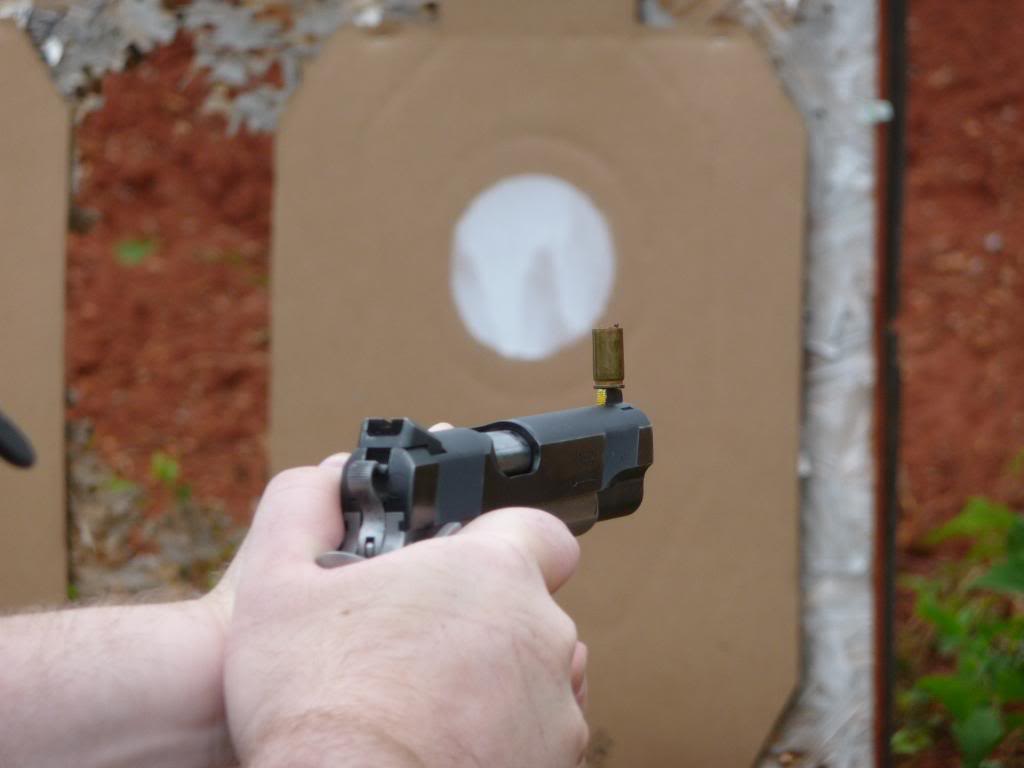
Balancing a case on the front sight magnifies any instability you introduce through an improper trigger pull.
If you want to hit anything, you need to approach the trigger pull the same way you would approach quickly decelerating your car without throwing the contents of the cabin against the windshield. Progressive, consistent pressure continually applied until you’ve fired the shot. Think of the difference between squeezing a marshmallow between your fingers and smashing one flat with a mallet.
The Perfect Trigger Press
One of the best ways to learn a proper trigger press is to take your unloaded pistol and balance an empty case on the front sight and learn to press the trigger to the rear using that progressive, consistent pressure without knocking the case off the front sight. Note that the goal here is not to see how slowly you can pull the trigger. You want to learn to aggressively apply that progressive, consistent pressure in a compressed time frame. When performing this drill you will very quickly learn that having the “slack” or “takeup” out of the trigger is key to getting a good trigger press in a compressed time frame.
Grip It Good
When you start to practice aggressively applying this progressive, consistent force to the handgun you will also find out the value of a solid grip. The harder you grip the gun, the more aggressively you can work the trigger without disrupting the sights. There are a lot of grip strength ratios thrown out there about how much pressure to apply with your strong hand and how much to apply with the weak hand, but I have a much simpler prescription that doesn’t require math: Grip the gun with your strong hand as hard as you possibly can…with all the force you can muster. Then dial back the amount of pressure you are applying until the gun is no longer shaking. Then do the same with your weak hand. Viola! There’s how much force you should be using to grip the gun.
You will likely find this uncomfortable at first. When I release my grip on the pistol the minute details of the handgun’s grip are often embedded into my skin. Sometimes you can see the manufacturer’s logo temporarily impressed into my hand. You may not be able to generate that much force, but the important thing is that you’re deliberately and aggressively gripping the gun to give maximum stability as you apply pressure to the trigger. Time and practice will help you learn to isolate the movement of your trigger finger from the rest of your hand.
No Surprises
New shooters are often taught that the gun should “surprise” them when it goes off because it helps prevent anticipation. Anticipation is trying to manage the recoil of the pistol before the weapon has actually fired. Anticipation is not the same thing as “jerking the trigger”, or attacking the trigger as one violent action as mentioned above. Anticipation is a separate phenomenon that often follows attacking the trigger with new and intermediate level shooters because in their mind the whole thing is happening….NOW! They see the sights momentarily aligned and think NOW! and violently attack the trigger and attempt to mitigate recoil all at the same time, pulling shots way off of the intended target. To remedy this, instructors often teach a very slow application of pressure to the trigger so that the shooter doesn’t know when, exactly, the gun is going to go off. This is the much discussed “surprise break” and it’s fine as a demonstration tool for a new shooter, but it is not an optimal method for operating the trigger.
Often the slow approach to the trigger press creates more problems than it solves because you’re actually building suspense in the mind of the shooter. “Not yet, not yet, not yet, oh it’s close, ohit’ssoclose, OMGOMGOMG NOW!” and they throw a shot even worse than before.
Teaching a progressive, consistent application of force through the entire trigger pull with no stops tends to do a good job of mitigating the severity of anticipation (very few shooters are entirely immune to anticipation…the very skilled shooter only anticipates a little where a newbie misses by feet) while allowing for excellent speed. I find that people who are taught the surprise break methodology are fine when they are shooting at a comfortable pace but the wheels come off once they’re required to perform to a demanding standard on a timer.
The Click of Fail
To fire more than one shot we have to reset the trigger, releasing the trigger to travel forward enough to re-engage the firing mechanism of the handgun. On a double action revolver resetting the trigger means letting the trigger come all the way forward again so you can fire the next shot. On most semi-automatic pistols it means letting the trigger move to a little beyond the reset point and then very quickly removing whatever slack is left so the next shot can be fired.
Unfortunately a lot of people get the reset wrong. Invariably when I’m on the range with Glock shooters I will encounter what I call The Click of Fail. The shooter will fire their pistol and then pin the trigger to the rear of the gun as the weapon cycles, waiting to reset until the gun has settled again. Then they will slowly let the trigger back out to the reset and fire the next shot. Usually the trigger reset is done more slowly than the actual trigger pull. That means I hear something like:
BANG……..*click*BANG…….*click*BANG……….*click*BANG
The results on target are usually pretty ugly.
Resetting the trigger is something we have to do before we can fire the next shot. That’s it, folks. It does absolutely nothing for us apart from that. There is absolutely no reason to reset the trigger in a slow and deliberate manner because it doesn’t mean a damn thing to actually firing the next shot. It’s like going to the airport. You don’t want to be in the airport, you just have to deal with that horrible place so you can get to your destination. Nobody wants to hang around the airport unless they are so lonely that they look forward to having TSA “agents” fondle their genitals. Belaboring the reset is even worse than hanging around the airport because there’s absolutely no chance of even a cheap thrill.
Learn to reset the trigger as the gun is cycling/recoiling. Doing so gives you more time to work the trigger properly and deliver the next shot with more precision. Waiting until the gun comes back to rest to reset the trigger and THEN trying to pull the trigger often contributes to attacking the trigger and anticipation, especially when a timer is involved.
I know there are some instructors out there who actively teach a slow reset of the trigger, but those people are wrong. Nobody shoots like that in any endeavor where time is of the essence, be that a competitive environment or a gunfight. I’m not in favor of teaching techniques that fall apart when the timer comes out or bullets start flying.
This is certainly not a comprehensive treatise on every important aspect of trigger control, but it hits most of the high notes and I’d imagine it’s about the upper limit of how much the average person can read on the topic in a single sitting without going blind. What are some myths and misconceptions you’ve encountered about trigger control? Let me know in the comments.
Much like FoxNews and their token liberals, the stridently anti-Second Amendment Huffington Post will occasionally publish pieces from time to time by a “gun guy.” That is literally how Mike Weisser self identifies to the world via his blog and his description at the HuffPo. He confidently claims that “I know as much about guns and hunting as anyone“ which is good if you are say an antigun HuffPo reader looking for an appeal to authority to include in a heated discussion on Facebook. However……it seems like an unsubstantiated statement. We shall circle back to that later. He also claims that guns are his “only hobby” which given the volume of his blog posts and articles seems misleading. Gun control seems to be his only hobby unless that is just a facet of his disappointment regarding the ever growing diversification of hunters and gun owners.
Weisser’s blog entries are not works of statistical analysis such as, the truly enlightening and well researched work of AmidstTheNoise on YouTube but rather they follow a constant drumbeat of the following:
Assault rifles are bad. No hunter needs them. Hunting is what rifles are good for. (Pay no mind to the troublesome fact that bolt action and lever action rifles were at one time cutting edge technology and used as……assault rifles. In fact, let us completely forget that muskets were once cutting edge and military issue.)
Several personal attacks on Dana Loesch. He appears to be obsessed with female gun rights spokespeople, more on that later as well.
He spends some time defending the oh-so altruistic nature of Mike Bloomberg and endorses Bloomberg’s other efforts to control what we put into our bodies.
He makes sure that you know he owns those guns that he does not like such as the evil AR15 and AK47. The logic of this assertion is lost upon all rational people.
Mr. Colion Noir, the articulate and informed black gun enthusiast is focused upon as well. I think I know why. Again, more later.
Any moderately informed Second Amendment supporter would have no problem deconstructing his views. The aforementioned “AmidstTheNoise” (Mr Billy Johnson) would crush “Mike the gun guy” handily in a debate. Actual debate is not Mike’s way of doing things. He does not want any debate, he simply wants guns gone. The common thread in his writing is “the gun is the problem.” Not “end the drug war” or “fix the inner city.” Nope. You will never hear a gun control activist speak about actually fixing the socio-cultural roots of violence because as Mr. Bloomberg reminds us, it is not about the people, it is about control. The state will protect you, it will tell you what you may consume, and settling a dispute with a blunt object where the physically stronger always win and keep the weaker in line, is far preferable than using a gun. I am not sure if it is moral cowardice or just a desire for more control in the lives of our populace but the gun control zealots never want to actually fix hotbeds of violence like Chicago or Oakland.
So yes, it is a depressing and dreary read when perusing Mr. Weisser’s literary body of work. The level to which he stoops with truly nasty personal attacks on people such as Julie Golob and Dana Loesch is something that makes you want to cleanse yourself afterwards.
Earlier this year, Weisser joined a growing contingent of antigun and antihunting writers that have one thing in common: they very much dislike the growing trend of outspoken non-white, non-male gunowners and hunters. I promised more on why he singles out Dana Loesch and Mr Colion Noir so here we go!
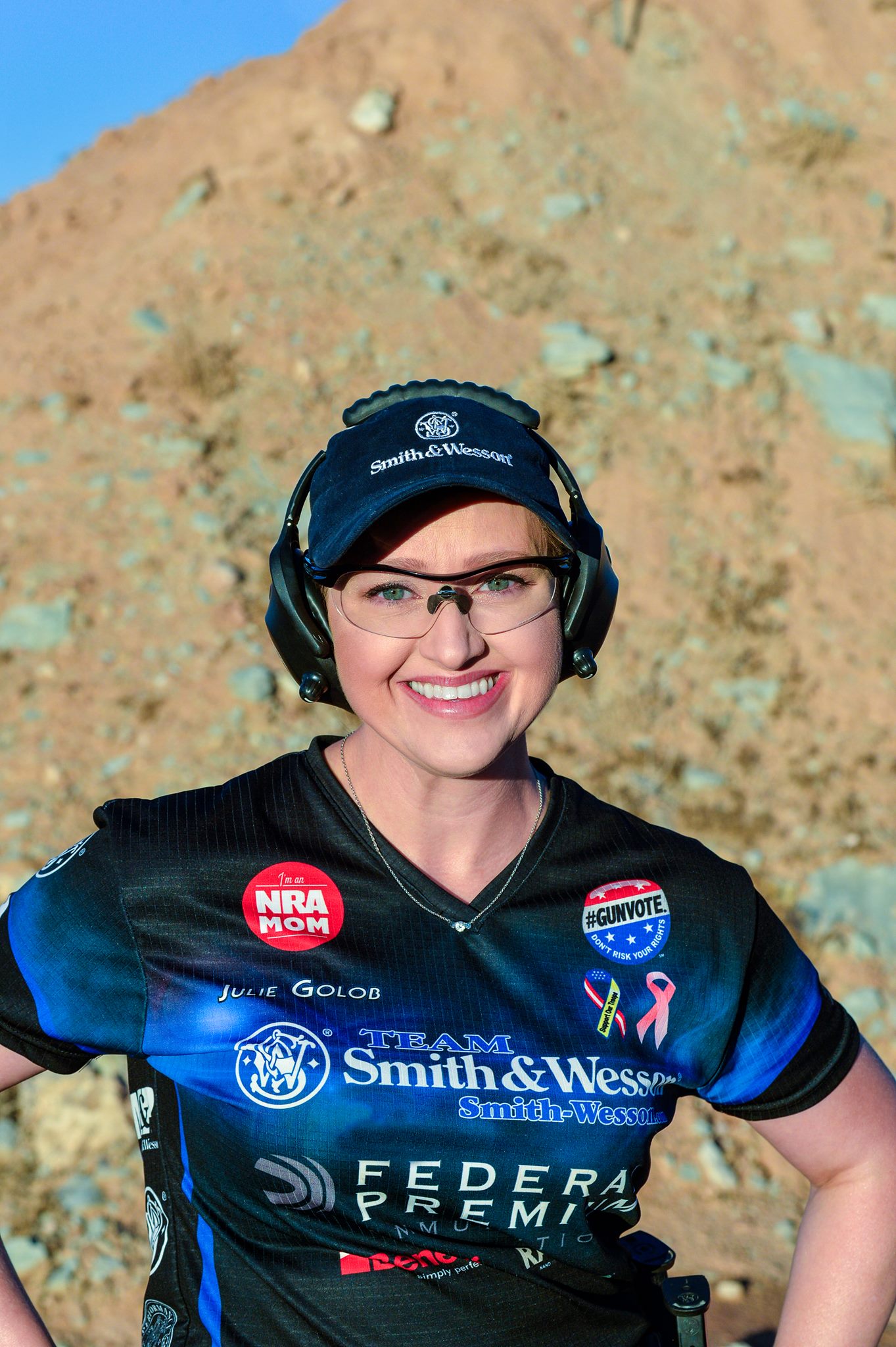
A friend sent me this “article” which was typical of Weisser. Weisser has a real problem with the NRA producing and disseminating gun safety media, particularly to children. Yes, the word “phony” is used. He is referring to this video that veteran, shooting champion, and mother Julie Golob starred in. Weisser is never one to simply debate facts, rather he complained that Julie’s message is “bouncy and joyful” along with complaining that the children’s testimonials in the video are “cutsey” and of course pointing out how the Eddie Eagle program’s message of “not touching the gun — leaving the area — telling an adult, which is then followed by a new lyric for the older kids involving telling them never to touch a gun unless being supervised by an adult, never point a gun at anyone and always assume that every gun is loaded” is “phony.”
One notes a pattern here. Why no cutting comments about Mr. Colion Noir’s appearance from Weisser? Weisser touches upon one female gun spokesperson’s appearance and obsess over Dana Loesch. “Why” is that the antigun and antihunting people detest seeing anyone other than a white male hunting or using a gun, period. “Why” is that the growing popularity across the sexes and races of hunting and gun ownership does not fit the narrative of those pursuits being the sole domain of the white male.
Witness the controversy over a teenage girl daring to hunt in Africa (actual death threats). Steve Rinella wrote a truly excellent article about the obvious sexism displayed by those “protesting” the hunt and I encourage you to read it here (and to watch his show and to buy his books). The antihunting and antigun people are seeing what they considered white male-only lifestyles actually transcend race and sex. Their reaction is of course to launch personal attacks and outright witch hunts. Happily, that has not stopped Julie Golob, Mr. Colion Noir, Beka Garris, Dana Loesch, or Eva Shockey from asserting themselves as self reliant individuals who understand things like “the Constitution,” “the right to self defense,” and “ethically harvesting your own food.”
I doubt that Mike Weisser will discontinue his attacks on the non traditional hunters and gunowners speaking up for our rights. I doubt that the Huffington Post will ever tackle the root causes of violence and I definitely do not foresee Shannon Watts noticing that outside of the inner city, America is less violent than the United Kingdom.
Is it a sign of hypocrisy to lament that the average gun owning household may own more than ten guns but then point out that he owns “41 or 42” guns (apparently one is “sitting around somewhere in the basement or out in the garage” which means someone did not pay attention to the NRA’s gun safety program. Please be a responsible gun owner and track your guns down and secure them, Mike.) I suppose that senility might also explain such travesties of logic and blatant hypocrisy, no?
Julie Golob’s book is ranked at #126,839 in Amazon’s sales rankings at the time of this article’s publishing. Mike’s last book is ranked at #3,332,186(source). I suppose that I should note that lower is better with regards to these numbers.
Claiming that “I know as much about guns and hunting as anyone. “ is not a good idea. Someone might challenge you on that one, Mike. Someone who actually hunts, who actually competes in the shooting sports, and is (gasp) female! Maybe Julie Golob, maybe not . Maybe Annette Wachter. Uh-oh, another non-white, non-male gunowner to attack? Quickly, off to the blog, Mike!
I also would not mind shooting against Weisser in a friendly contest. I would not allow such an obviously angry character around my dog or my kids though. Personal attacks show character, Mike. You do not have the wherewithal to truly discuss the roots of violence in America so you sling insults and single out women (Dana Loesch and Julie Golob) and minority gun spokespeople (Mr. Colion Noir). We get it, you feel threatened by guns and hunting going mainstream. Your character is known.
We all genuinely hope that you find that missing firearm that you misplaced.
News of the assault was beginning to spread via frantic phones calls, texts, and WhatsApp messages. Westgate is in the heart of a Kenyan-Indian part of the city, and the close-knit community there knew better than to rely on the authorities to send help. Instead, the call went out to the community’s own licensed gun holders, who were organized into self-appointed armed neighborhood watch units.
Harish Patel, a member of an outfit calling itself the Krisna Squad, was returning home from a morning spent volunteering at the nearby Hindu crematorium when he received a distress call: There was a robbery at the Nakumatt store in Westgate, with shooting going on. A couple of minutes later, the 43-year-old was within sight of the mall. He patted the pistol he wore on his hip and grabbed the spare magazine he kept in his car.
On the western side of town, Abdul Haji was in a business meeting at the Yaya Centre, another Nairobi shopping mall. The 38-year-old bitumen trader was sipping an Americano when his white iPhone chirruped. It was a text message from his brother: “Trapped in Westgate. Terrorist attack. Pray for me.”
Abdul abandoned the business meeting and rushed to his silver SUV in the basement. As he sped toward Westgate, swerving around cars and over sidewalks to cut through the traffic, he ran through a mental checklist: He had his gun, as always, a Ceska 9mm, but no spare magazine and no body armor.
He reached Westgate minutes after Nura and Harish.
“Where’s the SWAT team?” Katherine kept wondering as the hours ticked by. “Why isn’t somebody coming in here? They should be storming the place and getting us out.”
When somebody did come at last, it was one man (an armed citizen) with a handgun.
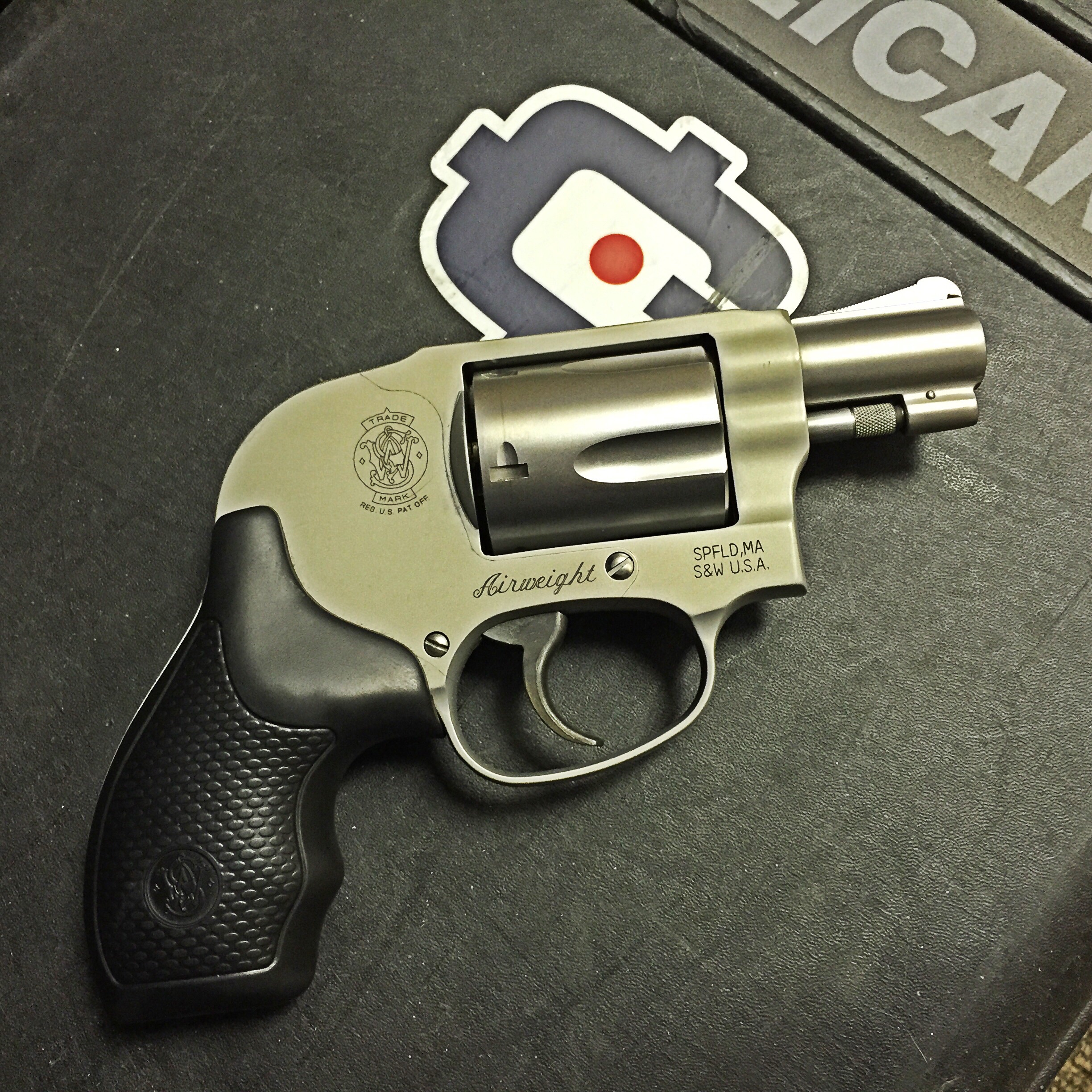
In the original picture for the Rule One Gun Roundup you’ll note that the picture includes a gun I haven’t written a Roundup post on yet: My J S&W 638. I’ve written about my acquisition and modification of the 638 previously, but the circumstances that brought me to the Roundup presented an opportunity to consider the J in context with the competition. By this point I’ve tried most of the Rule One Gun options on the market, so why do I still find myself carrying the J frame so often?
The Good
Power. The .38 special +P loaded with the right jacketed hollowpoint round gives terminal ballistic performance that none of the smaller calibers can hope to replicate. I’m personally fond of the Speer “BUG” load (Back Up Gun) with a 135 grain Gold Dot JHP, as it was developed specifically to meet FBI requirements from the J frame revolvers. While it’s possible to get .357 magnum J frames these days, I do not buy them. They tend to be considerably more expensive than the .38 revolvers rated for +P ammo. Stuffing actual .357 magnum ammunition in the little J frames just gives you a boat-load more recoil and blast without any significant increase in terminal effectiveness on the other end…and I can assure you that an airweight with .38 +P ammunition and concealment-friendly grips is already no picnic to shoot. Full .357 loads in a revolver as big as an N frame are pretty zippy…you do not want to try shooting them in a J frame sized revolver that weighs under a pound equipped with typically used concealment-friendly grips. If I found a .357 J at an attractive price with desirable features like significantly improved sights, I’d happily buy one but it would only be fired with .38 special ammunition.
The function of a double action revolver relies primarily upon your trigger finger. If your finger can pull the trigger, the cylinder will turn and the weapon will fire. Small semi-autos require enough clear space and grip for the slide to move freely for reliable function. I want to pause here and remind everyone how easy it is to stop the slide of a semi-auto from working:
While the demonstration was done with a Glock 17, smaller semi-autos are even more vulnerable to being choked than a reliable service pistol like the G17. One a typical range day this really doesn’t matter, but in a defensive scenario where you may be required to literally shoot someone off of you it can make a considerable difference. The J frame can be repeatedly fired through a pocket. It won’t go out of battery if pressed up against the anatomy of an assailant. If you’re fighting for control of the gun the cylinder will likely still turn if the person you’re fighting with isn’t able to apply sufficient pressure to the cylinder to prevent movement. These are all reasons why the J frame has been a popular backup gun in law enforcement for decades. I trained with an officer from a large metropolitan area who was attacked by a 300 pound former college football player turned drug dealer. During a traffic stop the guy literally picked the officer up and power-slammed him into the pavement.
It’s impossible for the English language to adequately convey just how much force you are dealing with from that type of assault. A hit like that can break ribs, collapse lungs, crack vertebrae, or kill outright. The officer was dazed and barely conscious, but he did realize that the violent felon was trying to get his sidearm out of his security holster. The officer took advantage of the bad guy’s tool fixation to draw the J frame he kept as a backup gun. He grabbed the guy by his hair and to borrow the officer’s exact phrasing “screwed the barrel into his head” and pulled the trigger multiple times, stopping the assault.
The Not-So-Good:
As I’ve written before, the J is probably the most difficult handgun on the market to shoot well and this, in my mind at least, is the primary strike against it. A very heavy trigger relative to the size of the gun and tiny sights does not make the gun easy to shoot well at speed. There’s no such thing as a free lunch: the things that make the J frame safe and convenient to carry also make it difficult to shoot well. The power (again relative to size) of the revolver makes it challenging and frankly fatiguing to perform serious live fire practice with, especially if you’re using an Airweight or lighter revolver.
The Tactical Professor’s DVDs on the snub revolver are a worthwhile investment for those curious about snubs.
To have any hope of using the little revolver effectively you will have to make a pretty serious commitment to train with it…but how? Thankfully there are still some folks out there like Claude Werner, The Tactical Professor, to give useful guidance on that. Claude has a couple of DVD’s that cover most of what you need to know to use a J frame effectively as a defensive implement that I would recommend to anyone who wants to learn more about the J frame. I have to depart from Claude’s advised practices on a few things (I use a different trigger finger placement than he advises because of the size of my hands, for example) but the discs are solid content that will steer you in the right direction.
Capacity is often mentioned as a limitation on the J frame, but in the context of other Rule One Guns the 5 shot capacity of the typical small revolver isn’t too bad. Just to give you a ballpark, the Glock 42 holds two more shots (6 in the magazine plus one in the chamber) than my 638. Reloads with the Glock are certainly easier for most, but none of the Rule One Guns are going to be reloaded at the speeds you see with the larger pistols like the Glock 19, S&W M&P, Sig, Beretta, etc. With the right equipment and some training, reloads of the J frame can be accomplished more quickly than you might think. I like the Safariland loaders for the J frame as I’ve found them to be a good blend of size, simplicity of use, and durability in daily carry. Claude’s DVDs cover other worthwhile options for carrying extra ammunition that might suit your needs better.
Overall:
I find that the J frame is extremely easy to carry. It can be carried unobtrusively in a small holster just about anywhere on the waistline in perfect comfort, but is equally happy in a good pocket holster like the Desantis Nemesis. I’ve spent years carrying a J frame either as a backup or a low profile primary gun, and even though I have other Rule One Guns readily available I still find that I’m sliding the 638 in my pocket most days. Perhaps it’s just habit…do something long enough and you’ll keep doing it even if it doesn’t make sense. I’m by no means an expert marksman with a J frame even though I’ve trained with one quite a bit over the years. Nevertheless, I know I can use it well enough to get the hits I’m most likely to need.
It’s by no means my ideal handgun, and yet it fits a niche for me so nicely with a blend of desirable features that I don’t really feel any need to replace it. It is kind of weird to have so many issues with a gun and yet when it comes down to it to really like it so much.
I don’t really recommend the J frame to many people. There is a pretty steep learning curve involved in using the little revolver well and I don’t think most are willing to put in the work to really get the benefit out of the little revolver…but for those that do the J seems to develop quite a hold on them.
If you are a regular reader of the site, you may have deduced that I have a certain fondness for the Beretta 92 pistol. I have used the Beretta 92 quite a bit over the years and the specimens I own have always performed extremely well. The 92 fits my hands nicely. The controls of the pistol all seem to be in just the right place. I’ve never had a feed-way stoppage with a 92 pistol, even when firing the gun in tropical storm conditions with a magazine that was packed with thick mud. The only issue I ever really had with the 92 was that the trigger return spring tended to break frequently if you attempted serious dryfire training. I solved that by installing the Wolff Trigger Control Unit for the 92 family of pistols in my guns.
Even though I like the 92 quite a bit, there are things about it I would change. I vastly prefer the decocker-only G model pistols to the standard FS equipped guns because performing immediate action drills with an FS often leads to unintentional activation of the safety. On one rather embarrassing occasion I didn’t fully seat the magazine when I swapped magazines with the weapon still in the holster prior to a drill and when I got the beep I pulled the pistol and got one shot then a click. I tapped, racked, and went to pull the trigger and got nothing…so I performed the same action three more times. The third time I watched a perfectly good round eject out of the pistol it occurred to me that I had accidentally engaged the safety during the first tap/rack/bang.
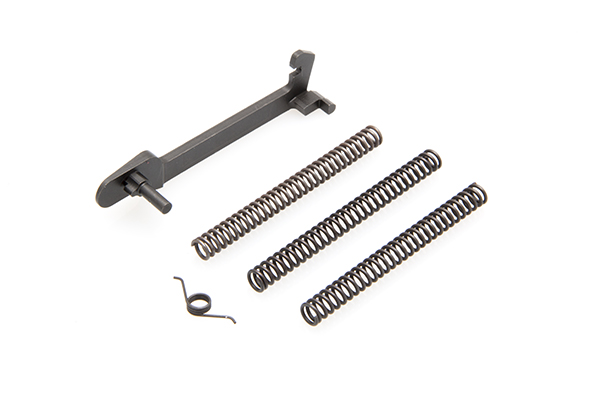
The Wilson Combat Beretta Action Tune Kit
The second most commonly complained about feature of the 92 has to be the heavy double action trigger pull. The 92 family of pistols are built largely around the design specifications of the M9 military sidearm. One of the requirements for the M9 is for the weapon to bust extremely hard primers reliably. This means putting a pretty stout main spring/hammer spring (the spring that actually propels the hammer) in the pistol to ensure that the hammer will fall with enough force to reliably set off even the hardest primers. The downside of that kind of ultra-reliable ignition is that the trigger pull has to compress that 20 pound (weight of the spring’s tension, not the spring’s actual weight) hammer spring somehow to cock the hammer. Most Beretta 90 series guns ship from the factory with that ultra-reliable, but very heavy trigger arrangement. Shooters with smaller hands struggle with the combination of the Beretta’s grip and the long, heavy trigger pull made necessary by the military primer requirement.
One of the most frequently performed modifications to the 92 family of pistols is installation of the hammer spring from the double-action-only model Beretta 92D. Often referred to simply as the “D spring”, this spring is rated at 16 pounds and with a standard 92 series hammer still provides reliable ignition with most ammunition even if it wouldn’t pass the military’s stringent primer requirements. It is possible to install even lower weight hammer springs in the weapon, but generally anything below the “D spring” specification would result in spotty ignition reliability. As it goes with most double-action semi automatic pistols, the hammer and the trigger of the Beretta 90 series pistols are joined by a trigger bar. Pulling the trigger pulls the trigger bar forward which, in turn, pulls the hammer backwards until it hits a release point.
Ernest Langdon and the folks at Wilson Combat took a hard look at the trigger bar on the Beretta and thought that if they could modify the design of the trigger bar a bit they could get reliable ignition with lighter hammer springs. I heard tales of this new trigger bar and the excellent trigger pull it could yield for the better part of a year. Then one day back in June I happened to be on the Wilson site looking at getting some new grips for one of my 92 pistols and I saw that they had quietly added the “Action Tune Kit” to the store…including the new trigger bar. I ordered two kits immediately.
Wilson states plainly that some minor gunsmithing is necessary to install the Action Tune Kit, and when I installed the kit on my Wilson Beretta 92 Brigadier Tactical I found that to be true. If you look carefully at the photo at the base of the round pin on the front of the trigger bar (that pin actually runs through the top of the trigger) there is a small protrusion pointing toward where the muzzle of the gun will be. This is an over-travel stop. It bumps into the frame and limits how far forward the trigger bar can go, in turn limiting how far backwards the trigger can go.
I have only tested this part on three 92 series pistols to this point, but based on what I’ve learned from others I think it’s safe to say that at a minimum you will have to fit the over-travel stop for the part to work. As it comes from Wilson, the stop stuck out far enough to prevent the trigger bar from moving sufficiently forward to fully release the sear. Fitting the part to the pistol was simple: File on the over-travel stop with a jewler’s file for a bit to remove some metal, then install it back into the pistol and test the function. The goal is to remove as little of the over-travel stop as possible while still allowing the rear of the trigger bar to reliably release the sear. On my Brig Tac this process of repeatedly filing and checking the fit took less than fifteen minutes.
If you’ve never worked on a Beretta before, here’s a very useful video that demonstrates complete disassembly and reassembly of the pistol. You don’t have to completely disassemble the entire pistol to install the kit, but it shows a good breakdown of removing the grips, the trigger bar, and the trigger bar spring. (DO NOT FORGET THE TRIGGER BAR SPRING!) Be warned: There is chanting and pan-flute music in this video. I strongly encourage watching this with the sound muted and something good playing.
The Action Tune Kit comes with three different hammer springs, weighted at 12, 13, and 14 pounds. This allows you to tune the action for reliable ignition. I had already installed a 13 pound hammer spring in my Brig Tac previously so I left it in the gun when installing the new trigger bar. Having used the pistol with just the 13 pound hammer spring and with the addition of the new trigger bar, I can report that the trigger bar on it’s own made a tremendous difference in the felt weight of the trigger pull. It is the lightest Beretta 92 trigger I have ever used and it’s the lightest true double-action trigger I’ve encountered on any semi automatic pistol full stop. In terms of weight and feel it’s more akin to the lightened triggers you get on H&K’s LEM system or the Sig DAK system than what you would expect on a Beretta 90 series gun.
Because I had the 13 pound spring in the gun before getting the trigger bar, I can also tell you that the new trigger bar improves the reliability of ignition with lighter weight springs. Prior to the installation of the new Wilson trigger bar I experienced multiple failures to fire with just the 13 pound spring in the gun. Since installing the trigger bar I’ve tried multiple types of FMJ and defensive-grade JHP ammunition in the pistol and all have gone bang on the first try.
I’m certain that one of Wilson’s talented gunsmiths could further refine the fit and the overall feel of the trigger, but with minimal skill and minimal time I was able to make a very significant difference in the weight and feel of the trigger by installing one part I’d done a little bit of filing on.
If you like your Beretta, the Action Tune Kit from Wilson is a superb investment. For 80 bucks you can completely transform the trigger in your gun. I’m a very satisfied customer and if you’ve got a 92 that needs some love I think you will be too.
In the last seven days I have encountered several instances of some truly terrible self defense “advice”, all of it attributable to one of the most common bad idea boogie men of the gun world: “a cop buddy.”
“A cop buddy of mine told me that if you have to shoot someone, make sure you empty a whole clip into ’em so they’re good and dead because you don’t want them to be able to sue you!”
“A cop buddy of mine told me that anyone who is more than ten feet away from you isn’t a threat and it’s illegal to do anything to them.”
“A cop buddy of mine said that if you use hollowpoint bullets when you shoot somebody the law will automatically award a civil suit to the person you shot.”
…and I could go on, but those statements (used verbatim) represent the choicest examples of mind-bending nonsense attributable to the mysterious “cop buddy.”
Gott in himmel
Many members of the public labor under the misapprehension that police officers, by virtue of simply being a police officer, are experts in a number of subjects including first aid, law, combatives, and firearms. Since most members of the public have next to no knowledge about those topics it can certainly seem like the police, who receive at least some training in most of those areas, are experts.
The unfortunate reality is police training is often minimal (sometimes nonexistent) in those topics, and rarely will anything an officer encounters in police academy training be sufficient to make him/her a genuine expert on the subject. I’ve heard some spectacularly bad advice given out by sworn law enforcement officers. My favorite direct experience was hearing a deputy (in uniform) advise someone at a gun store that if they ever had to shoot someone on their property in self defense, drag the deceased into the house before calling the police. I’m sure the deputy meant well, but that deputy had never once worked a homicide investigation in his (to that point) relatively short career. He wasn’t a trained investigator. To that point the bulk of his career had been writing traffic citations and occasionally providing perimeter security at a crime scene. He’d certainly never done an investigation of a legitimate lethal force self defense claim before. I’m certainly not an expert in homicide investigation, but I am pretty certain that a self defense claim is not bolstered by moving the corpse of your claimed assailant to a different location. Because it’s not like police departments have detectives and forensic experts working for them right? They’ll never know!
In my experience that particular deputy is more the exception than the rule. Often the bad information is, at best, third hand and the attribution is to “a cop buddy” that I’m reasonably sure does not actually exist. I’m fairly certain that “a cop buddy” is usually invented to add credibility to an idea that is, on the face of it, pretty damn goofy but that fits with prejudices and fears many have about the complexity and incomprehensibility of the law. We’re all familiar with the idea of a legal “loophole” and we’re conditioned to think that the foibles and flaws of the written laws make for some pretty strange outcomes:
The law is complex and it does do strange things at times, but it is not so badly structured and incomprehensible that executing an assailant who is no longer threatening is rewarded. (At least not unless you can convince Judge Micheal Gary that you’re a child at 22 and society somehow failed you and that’s why you tried to murder four people) The whole “make sure they’re dead!” thing has been tried before. It turns out that making sure the criminal is dead turned a perfectly legit self defense shooting into a first degree murder conviction complete with life sentence.
Legitimate self defense, you see, is based on an exigency. You are resorting to the use of significant violence (including lethal force) because your life and physical well being is endangered by a criminal assault. When the danger passes, so does the justification for the use of that force. Using the convicted pharmacist cited in the last paragraph as an example, when he fired his initial shots at two mobile robbers he was legally in the clear. The hit he delivered that rendered one of the robbers unconscious was a perfectly legitimate use of force. When he decided to stand over the top of the unconscious criminal and shoot him in the head, though, there was no longer an imminent threat to his life. Note that this change did not take hours. The exigency that justifies pulling the trigger usually lasts only a few seconds. Use lethal force beyond those few critical seconds and you can utterly ruin your life. Generally speaking, ruining your life isn’t really compatible with the goals of self defense.
Self defense is a serious subject and it’s worth investing your time and effort into learning more about the legal requirements surrounding it. Your life and your future are too precious to trust to the gossipy nonsense attributed to “a cop buddy” (be he real or invented) or gunstore lawyers.
We use cookies to optimize our website and our service.
Functional
Always active
The technical storage or access is strictly necessary for the legitimate purpose of enabling the use of a specific service explicitly requested by the subscriber or user, or for the sole purpose of carrying out the transmission of a communication over an electronic communications network.
Preferences
The technical storage or access is necessary for the legitimate purpose of storing preferences that are not requested by the subscriber or user.
Statistics
The technical storage or access that is used exclusively for statistical purposes.The technical storage or access that is used exclusively for anonymous statistical purposes. Without a subpoena, voluntary compliance on the part of your Internet Service Provider, or additional records from a third party, information stored or retrieved for this purpose alone cannot usually be used to identify you.
Marketing
The technical storage or access is required to create user profiles to send advertising, or to track the user on a website or across several websites for similar marketing purposes.