The Top 10 Greatest Handgun Cartridges of all time

After literally minutes of research, the team here at Gun Nuts has put together what is the most exhaustive list of pistol cartridges and their place in history. Want to settle a 9mm vs. .45 ACP argument? Here’s your list. Want to gloat about your pet cartridge was number 1 of all time? Here’s your list. And now, the 10 greatest handgun cartridges of all time.
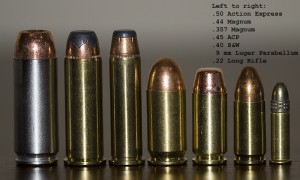
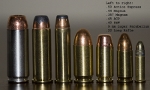
CartridgeComparison

#10 – 10mm
10mm makes the list, but only just barely because it is an interesting historical curiosity in the development of modern handgun ammo. Its history is a complex one full of misinformation, bad science, and government incompetence. To this day, it has a small, but dedicated and often insanely loyal following who still cling to the dying fire of the 10mm.

#9 – .38 S&W
Why is .38 S&W on this list? Not because of its popularity in America, but because under the name .38/200 it served for over 30 years in the holsters of the British and Commonwealth military forces, and soldiered on for years after that as the police revolver of those same nations. It was eventually phased out in Commonwealth use for the 9mm cartridge fired from the BHP. The .38/200 was chambered in a number of revolvers during WW2, with the most notable being the Webley Mk IV and the Enfield No. 2.

#8 – .380 ACP
The .380 makes the list for one simple reason. It is arguably responsible for more indirect fatalities than any other round; as a .380 was used to assassinate Franz Ferdinand and kick off World War 1. It’s an interesting design, and one of the family of “ACP” cartridges invented by the great John Moses Browning, but if it weren’t for that little historical note, wouldn’t have made our list.

#7 – .45 Colt
There are few more evocative phrases in the firearms community than “Colt 45”. Depending on the era, you could be referring either to a 1911, or to the original .45 caliber service pistol, the Colt Single Action Army. The .45 Colt cartridge fired out of the SAA was adopted in 1873 and served for almost 20 years. 140 years later, it’s still a viable choice for handgun hunting, self-defense, and competition shooting. One of the world’s all-time great cartridges, and one of the most versatile.

#6 – .38 Special
I don’t really have to justify the .38 Special making this list, but perhaps I’d have to justify why it’s not in the top 5. While it’s dropped down to number six in favor of other cartridges, one could easily make the argument over brown liquor that it, and not the cartridge selected is the greatest handgun cartridge of all time. Certainly, there is no more ubiquitous revolver cartridge than the .38 Special, and over the 115 years of its existence it has certainly put a lot of food on tables and bodies in the dirt. Like others on the list, despite its age, it is still a viable choice for self-defense even to this day.

#5 – .455 Webley
The cartridge of an Empire. Served from 1891 until World War II, and was used in the legendary and iconic Webley revolvers. It’s been around forever, and at least for me is mentally linked to some of the most interesting periods in history, which are frequently glossed over by American firearms enthusiasts. When I think of the .455 Webley, I think of box formations of British infantrymen fighting off hordes of spear-chucking tribals, with officers standing in the midst of the formations calmly firing their Webleys at targets of opportunity.

#4 – .44 Magnum
“Do you feel lucky?” “Go ahead, make my day.” The .44 Magnum is quite simply, legendary. Its use by Clint Eastwood in the Dirty Harry movies catapulted it from obscure hunting cartridge to American icon, and it’s remained such ever since. Sure, there are handgun cartridges that are better for hunting, and cartridges better for self-defense, but the .44 Magnum is simply one of the greatest cartridges ever.

#3 – .45 ACP
The .45 ACP coming in at #3 will either make people nod their heads in agreement, or howl in indignation that it’s only #3. The .45 ACP was a return to our large caliber roots in the military, replacing a slew of less effective .38 cartridges that the military deemed insufficiently powerful. From its adoption in 1911 until being phased out in favor of the 9mm, the .45 ACP traveled the world and killed interesting people. It’s as American as apple pie and punching hippies.

#2 – .357 Magnum
These days, most guns chambered in .357 Magnum will likely see only a handful of true magnum loads. Most will be shot with .38 Special +P their entire lives, and never see the wear and tear of true magnum force. But the .357 Magnum is perhaps the most versatile cartridge in existence today. Loaded up with 200 grain hardcast bullets and it will kill most things that walk in North America, and yet loaded with 158 grain JHP it’s an effective and controllable self-defense round. Only its relatively short service life keeps it out of the number one spot.

#1 – 9mm Parabellum
You know it had to be the 9mm. It’s 111 years old, and it’s still the caliber of choice for the armies of the first world and discerning law enforcement agencies. Quite simply, for self-defense and law enforcement, the 9mm Luger is the only cartridge you’ll ever need. With modern hollowpoint bullets its terminal performance is the same as other calibers. Despite the complaints, 9mm ball ammo has put a lot of bodies in the dirt over the last 110 years as well. The 9mm Luger is the greatest handgun cartridge of all time.

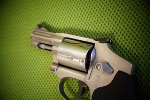
Good J-Frame Sights

Later this year I’ll be shooting my Smith & Wesson 640 Pro Series at the 1st ever IDPA BUG Championships. So I’ve actually been training with my J-Frame, and one of the things I’ve really come to appreciate is how good the sights are, and how those sights make the gun so much better to shoot.

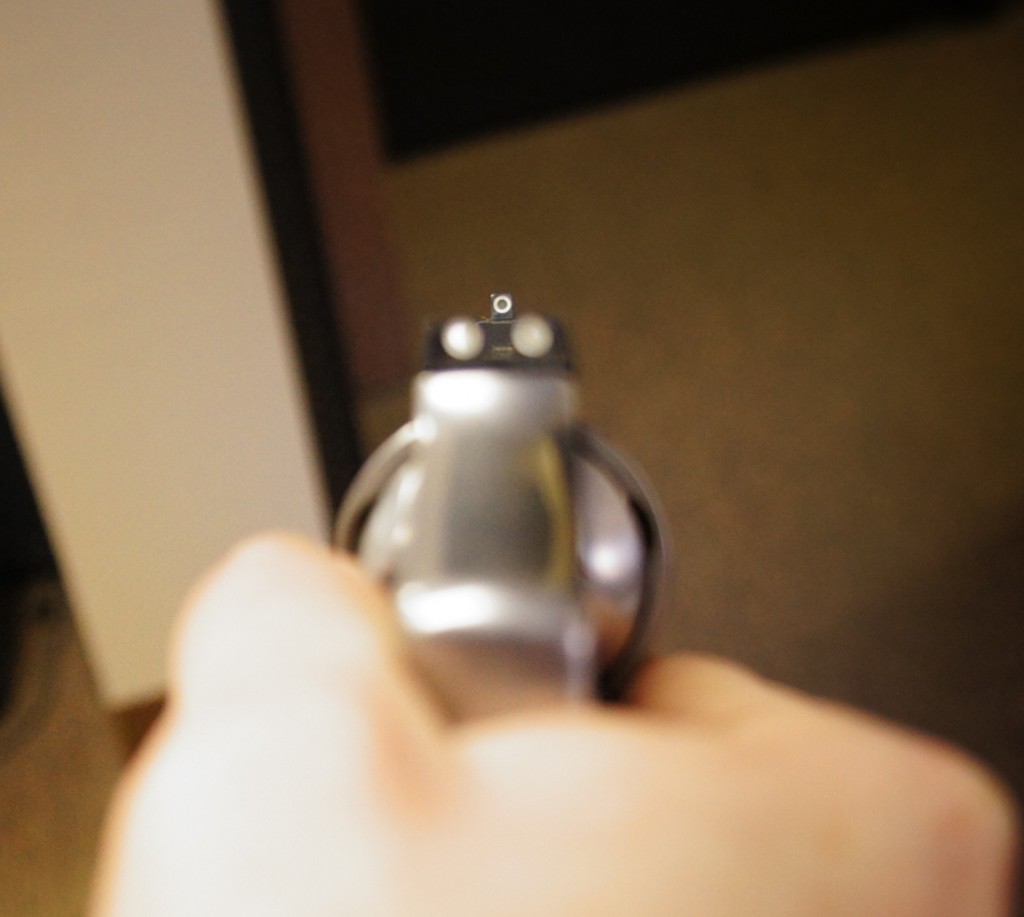
640 Pro front sight

I don’t normally like 3-dot sights, but when compared to the usual fare that you get on compact pocket guns, the Novaks on the 640 Pro Series are awesome. I get a nice clean sight picture in most lighting conditions, and in low light I have the advantage of the tritium inserts in all three sights. The front tritium dot is noticeably larger than the back two dots, and so even in pitch darkness I can see which dot is the front sight and align it. Of course, in pitch blackness I can’t see the target, but that’s not really the issue here.

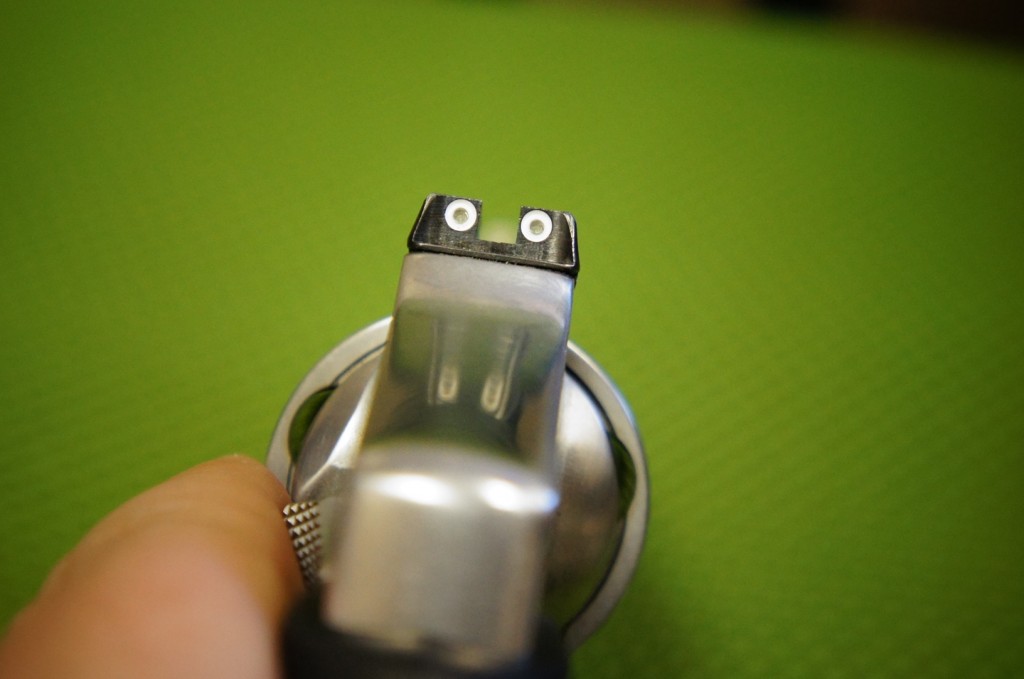
640 Pro Series rear sight

These are definitely the best sights I’ve ever seen on a j-frame…but they could be a little bit better. The rear notch could stand to be wider and allow a little more light around the front sight post, and of course I’d prefer a Straight-8 dot configuration to the 3-dot. But beggars cannot be choosers, and as I’ve said these are a quantum leap better than what you’d get on most other j-frames, including the standard (non-Pro Series) 640. Of course, I also understand why you don’t see more small, compact revolvers set up like this – it costs money to machine the frame to accept these sights. And to be honest, most people that carry a j-frame aren’t going to push the shooting envelope with it to the point that they’d want these sights. Put a Crimson Trace lasergrip on your j-frame and call it good, and you’ll probably never need really good night sights.

But for the discerning consumer, the shooter that wants a little bit more on their carry gun, it’s nice to know that the option is there.

Photo of the day: Taurus 85 Protector Polymer

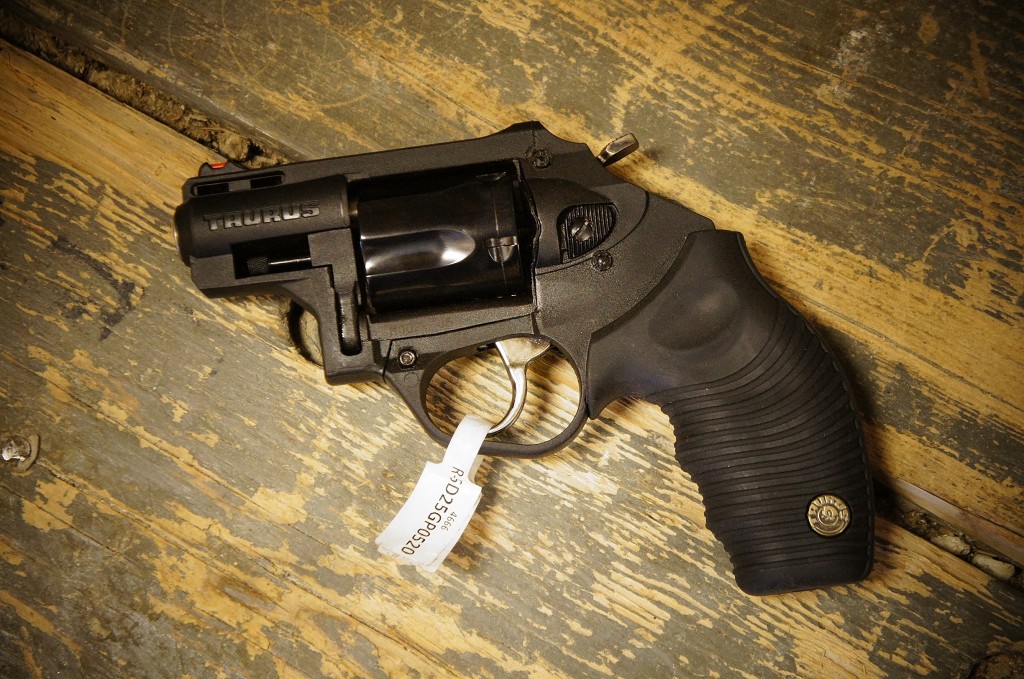
Taurus 85 Polymer

This Taurus Model 85 Polymer came through the retail side of GunUp and…I just don’t know what to make of it. It’s really cool looking in a futuristic sort of way, and it definitely accomplishes the goal of being light and concealable. It’s just kind of weird. I’d actually much rather have the aluminum framed Taurus that’s also in the shop.

Finding Gun Lovers in Unexpected Places

20130905-115308.jpgThis weekend I helped put on a Jewish life and learning festival in the North Georgia mountains. It was a complete success and Immvery proud to be involved with the organization. People came from as far as South Africa but the majority of folks were Atlantans. Maybe it is the setting of the event, but every year this annual weekend long celebration, tends to attract a strong contingent of liberal hippie types. Because of this, I have been repeatedly warned, “don’t over-do the gun talk…” Or “you may not find too many people who agree with your gun politics at this event…” Of corse, I’m prepared for this, I grew up in New York City after all, and go back there often.
Continue reading →

Fun guns: Double Action .22LR Revolvers

My interest in firearms is multi-faceted. A significant chunk of my interest is in the use of a firearm as a tool of personal defense. I’d rather avoid shooting people if at all possible, but there are some people who insist on threatening the lives of others and for such people there is no more effective medicine than a bullet to the face. Apart from that, I have an appreciation for the firearm as a machine. I’m the sort of guy who likes taking a Garand apart and looking at how all the pieces fit together and interact with each other to make up the extraordinary capability we see in the repeating firearm. Sure, it’s old hat to us now, but for most of human history that Garand was beyond human ability to produce. Now I can hold it in my hands, made from good walnut and the highest quality ordnance grade steel, and it works beautifully. I own firearms that I’ve never fired or even bought a round of ammunition for solely because I found some aspect of their function or design to be interesting. When I was a kid one of my favorite shows was The A-Team, and my abiding memory of that show is watching the Mini-14’s they were using cycling. Not Mr. T’s chains, or the van, or Hannibal’s one liners…watching their guns work fascinated me more than anything else. As a reformed history major, I also have an appreciation for firearms as instruments of history. I may not be able to understand the plight of the average British soldier at Verdun, but when I pick up an old surplus Enfield it’s almost like making physical contact with the history that the weapon has lived.

Guns can also be a hell of a lot of fun. Throwing an 870 Wingmaster up on the shoulder trying to catch a bead on a woodcock you rustled out of the brush. Buzzing through a mag from an MP5 on full-auto, or a belt through an M60E3. Firing a Colt Anaconda at a coconut. Showing my buddy Scott what happens when you fire a .223 V-Max round into a big generic can of a substance dubiously labeled “BBQ BEEF”. All were an absolute hoot.

I know some folks like to believe that everything related to firearms has to be super, duper, uber serious all the time, but let’s face facts: Shooting stuff is fun. There’s nothing wrong with having fun. A bunch of the dudes making serious faces in their multicam at whatever ultra high-speed carbine course they’re doing this week might wish to deny it, but they’re probably there because they’re having fun. Their tricked out mid-length carbine with the lightest rail system in existence and two stage trigger system made of adamantium is certainly a capable weapon, but their primary use of the thing brings it more into kinship with a nice set of golf clubs than the tools of violence relied on by the sort of guys who hunt down Osama Bin Laden.

and there’s nothing wrong with that. One’s manhood does not diminish because he likes buying AR’s and kitting them out, even if you’re doing it in a zombie green theme. You don’t become a social leper if you enjoy a firearm or a class that has no practical relevance to your daily life. Or, rather, if you do then it’s a sign you were hanging out with some people who have severe personality problems and you’re better off without their company. Trust me.

So having established that it’s perfectly OK to own guns for purposes other than shooting tangos in the face, are there firearms that exist solely for general merriment? Absolutely. One of my absolute favorites is the double-action .22LR revolver.

One of the most sought-after DA .22 revolvers, the S&W Model 18

I have a thing for revolvers that borders on the unhealthy. I’m often on the gun auction sites late at night just ogling older production blued double-action revolvers, usually in .357 Magnum, .44 Magnum, or .22LR. For general merriment nothing beats using a good .22LR revolver on tin cans, or poker chips, or trying to light a strike-anywhere match using a .22LR bullet fired from a revolver. It sort of makes you feel a bit like Ed McGivern or Tom Knapp. If you’re really feeling saucy, you can try hunting squirrels with an iron-sighted double action .22LR revolver.

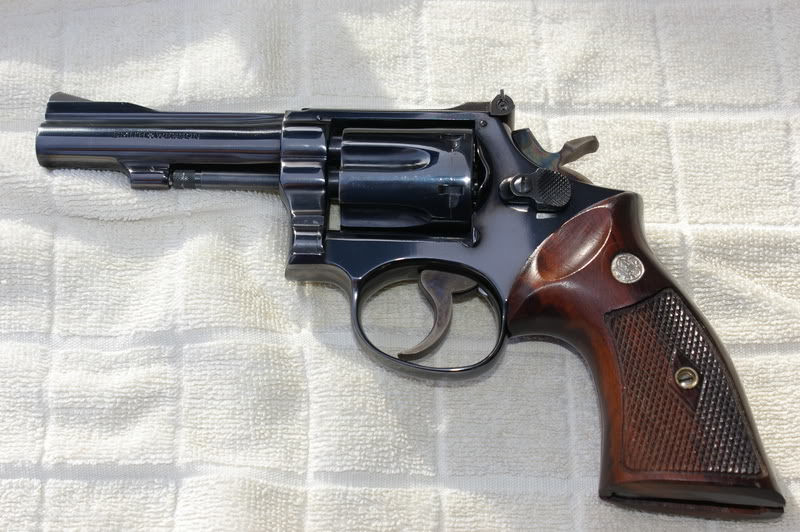
Most of the .22LR double action revolvers you can find are based on revolvers in “real” calibers. Smith & Wesson, for example, has built J and K framed .22LR revolvers that handle very much like bigger-bore revolvers. Pictured is a Smith & Wesson model 18, a .22LR revolver designed to mimic the feel and handling of a S&W model 19, the Bill Jordan inspired combat magnum that saw heavy adoption by law enforcement in the US and elsewhere. The model 18 allowed for more economical practice on a revolver that offered the same sight picture and trigger pull a police officer would find on his duty sidearm, and regular practice with one translated directly to his ability to shoot the issued weapon with proficiency.

Sadly I had to let go of mine because it had a problem with the barrel, but it has since been replaced with a S&W model 34 “Kit gun” and a recent production model 317. I shoot them both as often as possible because they’re an absolute blast whether I’m trying for the best possible bullseye accuracy at 25 yards or trying (emphasis on the word trying, there) to hit a horsefly that’s been foolish enough to land on the target while you still have ammo. One of the best range outings I ever had was arriving at the outdoor range to find it absolutely crawling with a swarm of grasshoppers. As I was the only vertebrate around, everything was safe and so I decided that this was the perfect job for a .22LR. I spent the better part of two hours popping grasshoppers. With a handgun! Sure, by trying to hit such a tiny target I was practicing the skills of obtaining a very precise sight picture and good trigger control, but it really doesn’t seem much like work when you’re doing all of that so you can watch a fat grasshopper explode.

…and that’s the really great thing about a .22LR revolver. Not only are they cool in their own right and an absolute blast to use, there’s no finer tool in the world for teaching the shooting fundamentals. The person who learns how to shoot the double action revolver well can pick up any handgun they like and, from an accuracy perspective at least, acquit themselves nicely on just about any shooting task. I always try to get new shooters to do some work with a rimfire revolver because they find the lack of recoil soothing and I find that it helps them understand a good trigger pull better than any other handgun. I’ve taken people who could barely hit paper and in an afternoon heavily featuring a rimfire revolver I’ve had them down to hitting 1″ squares on command at 7 yards.

The .22LR revolver lends itself to use with rewarding targets like in-the-husk walnuts or in-the-shell pecans. If you have a garden and right now you’ve got more tomatoes than you can eat or give away, the ones that are a bit past their prime make for excellent rimfire targets. I’ve even gotten self-labeled gun-hating hippies to giggle when they experienced the joy of watching a crab apple explode when hit with a round from my revolver.

Revolvers today are sort of seen as a bit of an anachronism, but for general fun and merriment I enjoy shooting a revolver more than I do just about anything that doesn’t have a full-auto setting. Do you have kids? Do you have friends that want to go with you to the range? Then consider maybe skipping that next AR build and buy yourself a nice old double action .22LR revolver and make going to the range a social thing.

…just don’t stay up later than me putting in bids on the ones I’m trying to buy, OK? That just wouldn’t be cool.

Gun control wish-list: Deregulate the NFA

Ownership of NFA items is a small niche in the overall firearms community, but it’s also a very profitable and growing niche. For those not in the loop, “NFA” stands for National Firearms Act, and “NFA-item” is a catch all term for various types of guns that are regulated by that act. Those guns include:

  • All civilian legal (pre-1986) machine guns/fully automatic weapons
  • Short barreled rifles and shotguns (rifles with a barrel length less than 16 inches, shotguns less than 18)
  • Any Other Weapons (a catch all for guns like Serbu Shorties, and other oddball stuff)
  • Suppressors

NFA also regulates some other stuff like destructive devices, but that’s not within the scope of this article. The political purpose of the NFA when it was passed in the 30s was to effectively ban machine guns, SBRs, and suppressors from civilian possession by imposing a $200 tax on their ownership. Adjusted for inflation, $200 in 1934 would be about $5,000 today, which would make NFA items prohibitively expensive for the vast majority of casual owners.

Walther Colt M4 SBR

As mentioned above, in the past five years in the firearms community, there has been an explosion in NFA ownership, especially with regards to suppressors and short barreled rifles. Suppressors are great tools for introducing new shooters to shooting without needing ear protection in some cases, and short barreled rifles are handy defensive tools for civilian home-defense. As a nation, we’re well past the days of Chicagoland gangsters shooting it out over booze with Thompson SMGs and short barreled BARs, so what can we do to get certain items off the NFA?

Be realistic
The first thing to do is set realistic goals. We are likely never going to get machine guns deregulated, because they’re machine guns. Fully automatic weapons are quite likely a political no-go, so calling for the entire NFA to be tossed out the window probably isn’t going to happen. But suppressors and short barreled rifles? That we could probably actually get to happen. I go back and forth on whether or not short barreled shotguns could make the cut, because on the one hand just like SBR it’s simply an arbitrary length of metal. But the media has portrayed short barreled shotguns as these tools of massive death and destruction, and the pejorative term “sawed-off shotgun” resonates strongly with a lot of middle America. Short barreled rifles have never been really demonized, and instead the site of a (digital) SBR is quite common to the new generation of video game playing gun owners. So for the time being, I’d focus solely on suppressors and SBR.

Be willing to compromise
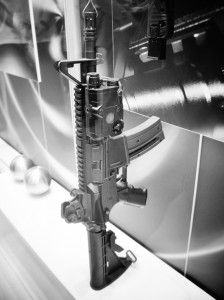
What would you be willing to give up to get suppressors and SBR off the NFA and treated like regular firearms? To be able to walk into your local fun-shop and buy the Walther manufactured Colt M4-22 SBR pictured and a Gemtech .22 LR can for it, and just have to fill out a 4473 and undergo a NICS check? There are some things I’d be willing to give up, and some things that I’d definitely not. But what sort of compromise would be a fair trade for deregulating the NFA?

I kick it around in my head, and the problem that I come up with is that there isn’t a whole lot I’m willing to give up to get NFA items deregulated. Magazine cap limits? No way. Limits on CCW? Nope. What I would look at would be an expanded background check law – not the defacto gun registration proposed by the administration, but a law that says any private party transfers other than within families must be run through NICS, then set up a simple web service that allows anyone, for a fee of $20 to log in and run an electronic NICS check. Gun control-nazis get their universal background checks, and we get short barreled rifles and suppressors taken off the NFA. That is a compromise I’d be generally willing to accept, with the obvious caveat that the law has to be written well.

However, the reality may be that I don’t need to accept a compromise on this issue at all. As we continue to advance the gun rights ball down the field, there is an ever-growing possibility that suppressors will be deregulated anyway. We’ll have to see how that one plays out. What would you be willing to give up to get suppressors moved off the NFA and regulated like firearms (4473, etc)? What about short barreled rifles?