Here’s the 90 Second Gun Review for the Lionheart LH9, one of the most interesting new guns to hit the scene recently!
I finally found a way to enjoy dry-fire
I hate dry fire. It’s boring, repetitive, and I really don’t enjoy doing it. That’s a big part of why I don’t dry fire as much as I should, because it’s just not fun. I had a short conversation recently with OrigamiAK, the King of All Junk Carry and Wizard of Oregon about dry fire, and how he’s come to enjoy it. He sees it as part of the challenge of getting a good hit in live fire, and for him that drives him to dry fire more. The other day, I was doing something I enjoy, and while resting between sets I picked up my gun and did a little dry fire. As it turns out, if I introduce push-ups into the mix, I like dry fire a lot more.
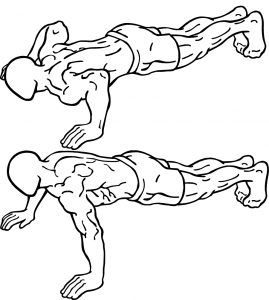
Right now, I’m on my “in-season/road friendly” training plan, because I’m at the point of the year where regularly finding a gym can be problematic. So workouts are as simple as I can make them – focusing on push-ups, pull-ups, squats, and running. These are things that I can do in pretty much any gym or hotel room. Yesterday, I started mixing dry fire into the equation. Resting between sets up to 90 seconds gives me ample time to put on my CR Speed belt and do a few draws or reloads.
What I like about the dry fire during PT is that it forces me to focus. Changing gears from blasting out push-ups to focusing on executing a clean reload isn’t easy, and it forces me to train to do a fine motor skill (reloading) while I’m under physical stress. It’s a lot easier to get a perfect trigger pull or a perfect reload when I’m calm and relaxed. That was one of the frustrations I had with dry fire training – I’d be able to whack sub second reloads all the time in dry fire, but under match conditions I’d come apart. Inducing actual stress into my dry fire training has me hoping that I’ll see less skill degradation under match conditions.
So far, dry fire + PT is working for me as a way to keep me interested in dry fire. Trying to stick a reload in under 1.2 seconds is a lot harder after 50 push-ups, and for the first time I’m really enjoying dry fire training.
Using Sig’s Arm Brace to Poke the ATF
 While working on my interior design degree I saw a lot of unrealistic projects. Often, students who attempted to create something utterly original, forgot about things like gravity and good taste. My perusuit of an education in an applied design (instead of a major like painting or sculpture), was specifically chosen to avoid such work. Continue reading →
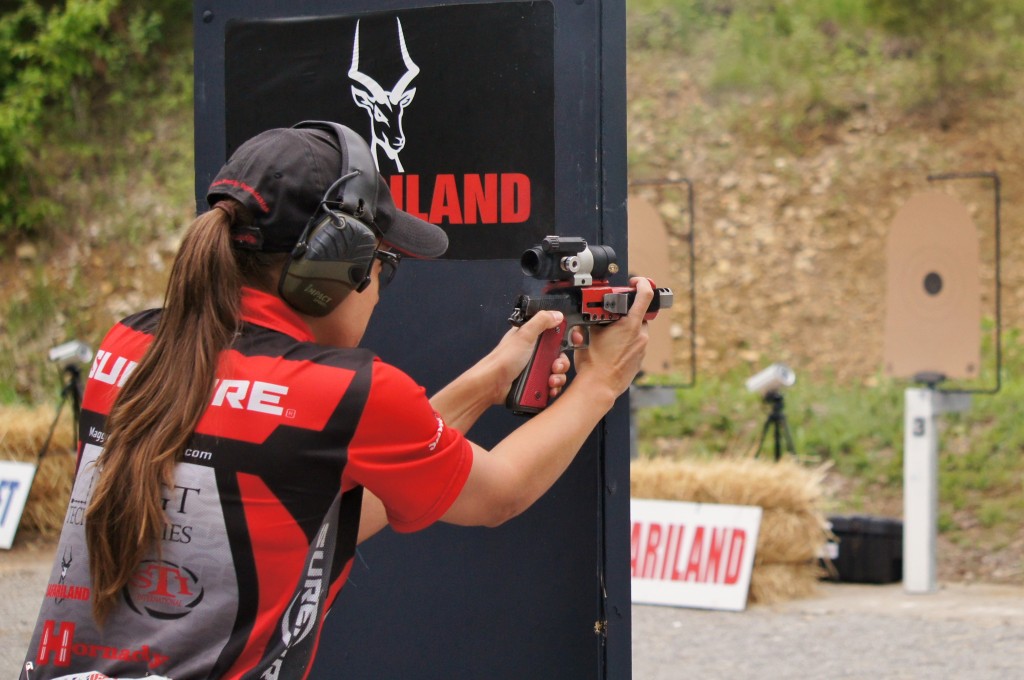
Photo of the day: Maggie
6 guns you have to own
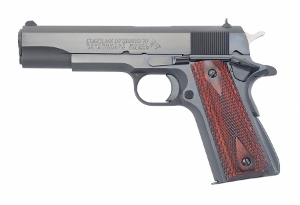
Guns come and go. Through most gun owner’s lives, they’ll own tons of guns. Some they’ll keep, some they won’t, and some they’ll regret selling. Sure, we all have our favorites, but there are few guns that every gun owner should own at least once. It doesn’t matter if you keep them or sell them, just to have owned them is special in itself.
1. A Colt 1911
1911s are not created equal. You can buy a cheap, off-brand 1911 for $500 and you will get 500 dollars worth of 1911. That’s not very much. But the real 1911 experience, to actually own a part of the legacy that made the 1911, that can only be had when you own a 1911 with a prancing pony logo and the word “Colt” stamped on the slide. Preferably a Series 70.
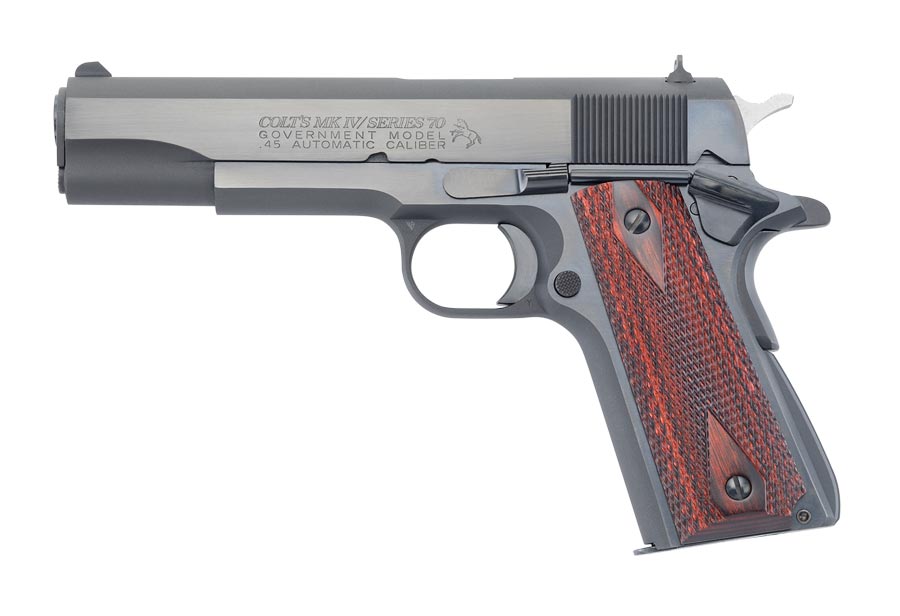
2. A Ruger Vaquero
Why a Ruger and not the classic example? Because a classic SAA is ridiculously expensive, and the Vaquero is beautiful, shootable, and excellent in every way. It gives all the sensation of the classic single action six-shooter without having to drop over a thousand dollars, and you can get one in .357 Magnum. You shouldn’t though, you should get it in .45 Colt.
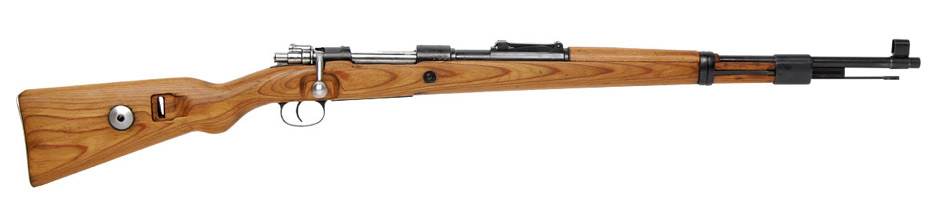
3. An 8mm Yugo Mauser
It’s not an expensive custom rifle by any means; but it is the surplus rifle that everyone should buy. Why? It’s less than 250 dollars, it has the Mauser bolt action, and 8mm Mauser ammo is quite affordable. Plus, and most importantly, it’s a Mauser action. I know we’ve mentioned that before, but the Mauser 98 is one of the best bolt action designs in history. For less than 250 bucks, you can and should own one of these rifles.
4. A quality AR15
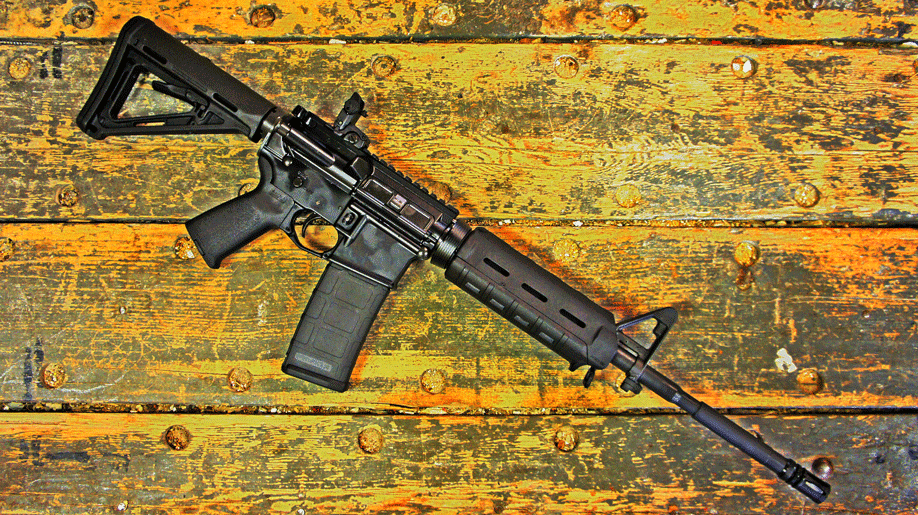
There are a billion different AR manufacturers out there. Buy a well set up gun from a quality manufacturer like Colt, Daniel Defense, Smith & Wesson, etc and you’ll be perfectly happy. It’s the most popular rifle in America for good reason, and I think that everyone should own one at least once in their life.
5. Remington 870 shotgun
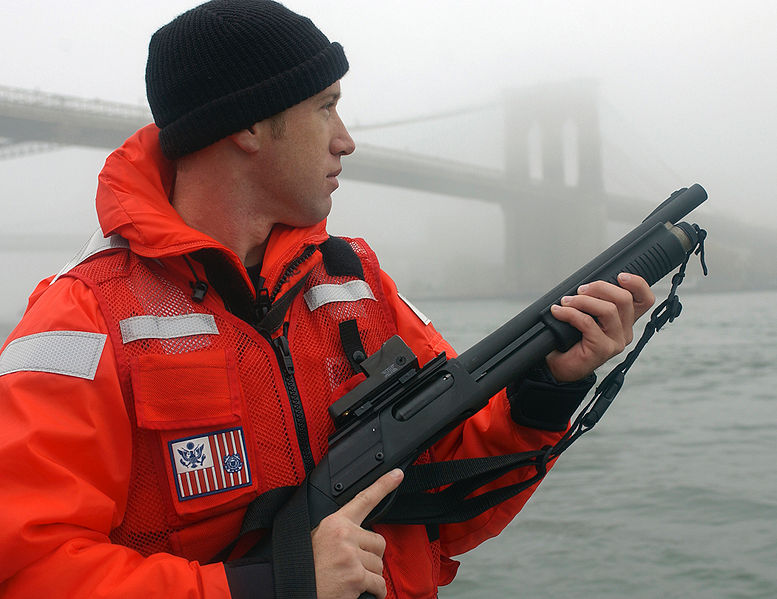
“And on the 8th day, God said, let there be scatterguns. And God created the Remington 870, and gave it unto his children in cop cars, and it slew many badguys.” Pump action shotguns are cool, and if you’re going to own a pump gun, you want a Remington 870. It’s the pump gun that all other pump guns want to be when they grow up. The only caveat is that if you already own a vintage ’97 Winchester, you’re good. So we could call this one a tie, but for everyone else: get an 870.
6. A traditional muzzleloading rifle
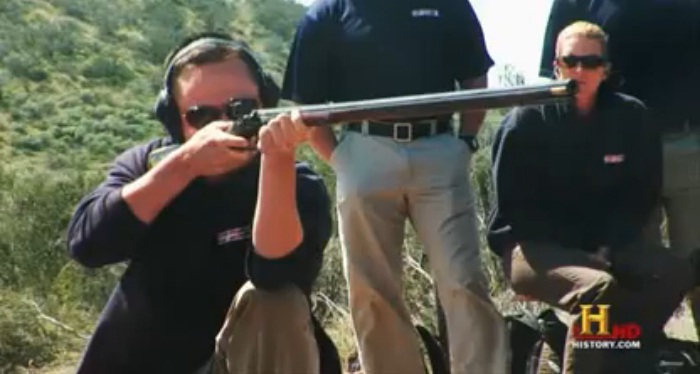
It’s important to understand the roots and history of marksmanship in the United States. My earliest introduction to this was through muzzleloading rifles, and I’m glad it was. It creates and understanding of the importance of making your very first shot count, because frequently that would be the only shot you’d get. Modern muzzleloaders are nice, but they rob you of the sensation and the delicacy of the process. “Powder…patch…ball” you’ll chant during each loading cycle, then ease the rifle to your should, pull the set trigger to the rear, then just gently touch the main trigger and you’re rewarded with a cloud of smoke and pleasant thump of recoil…if you did everything right.
Gun humor: what caliber for Cylons?
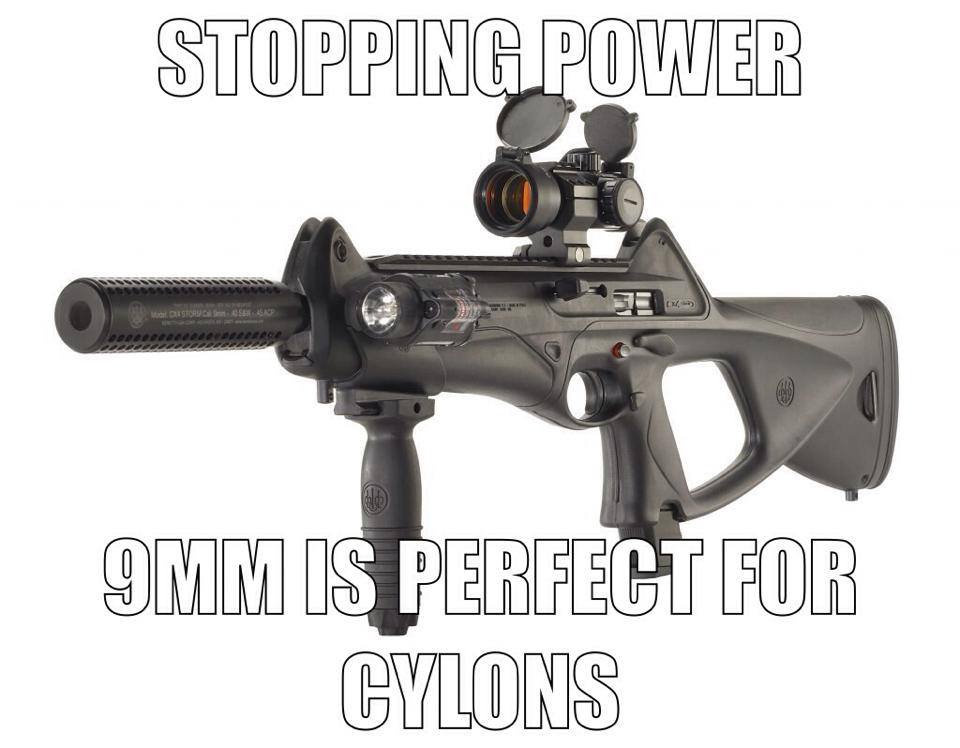
Yesterday in the Space Gun Showdown the Beretta Cx4 Storm edged out the FN P90 as the more practical choice in the real world. I always thought it was amusing watching BSG that their guns of choice for shooting 8 foot tall killer robots were 5.7 pistols with underbarrel “grenade” launchers, and a pistol caliber carbine. I suppose that’s why they call it “fiction” though.
First Look: SIRT Pro Training Pistol
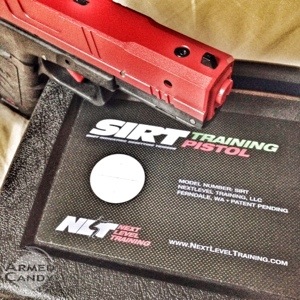
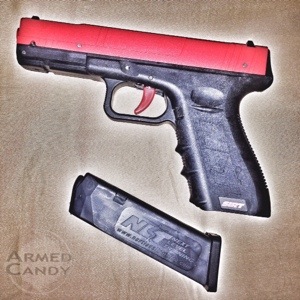 After reviewing a number of laser training systems, I now have the pleasure of testing Next Level Training’s SIRT Pro Training Pistol. I got a few minutes with this tool at SHOTShow 2014, and was very impressed with the realism of the product. The SIRT Pro is shaped just like a Glock 17. The slide is metal and the frame plastic, just like the real thing. Even the weight is similar and it has a detachable weighted magazine. The SIRT has two built-in lasers. The laser that comes from within the muzzel is green and appears when the trigger is fully depressed. A red laser appears from just below the muzzel and is activated anytime the trigger is touched. It is called the “trigger prep laser”. A small switch on the top of the slide allows the user to turn the trigger prep laser on or off. These are the only function options the SIRT offers. Why would you want the trigger prep laser on or off? Well, if you want to see the difference in the movement of the gun from the beginning to end of your trigger press, the first light can be helpful. It can also be useful to an instructor who is watching over your shoulder.
I am planning to compare the SIRT to some of the other laser training systems that I have previously reviewed, and even how they can be combined for more training options, but we will save that for another post. For now we will take a first look at the SIRT Pistol as well as discuss the future, as Next Level Training sees it.
Photo of the day: FN PS90

The FN PS90 is a thoroughly modern gun in every way. This photo came about because I thought it made a great contrast with JoAnn (of GunUp the Magazine) and her retro outfit.
The workspace reload
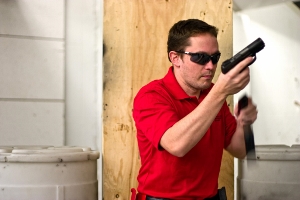
After seven months of working exclusively with wheelguns, it’s time to get serious with semi-auto pistols again. One of the most important pistol skills for competition shooters in the Production and Single Stack divisions is the reload. An average USPSA stage will have 2-4 reloads, IDPA stages will usually have at least one. My reload technique has evolved over time, today we’re looking at the “workspace” reload.
For novice shooters, your “workspace” is the area directly in front of your face – it’s the stuff you can see without moving your head up or down. Keeping the gun “up in your workspace” is considered an advantage by some tactical trainers so that you can keep your eyes downrange even while looking the magazine home into the gun. Here’s a pretty good photo of me reloading in my workspace.
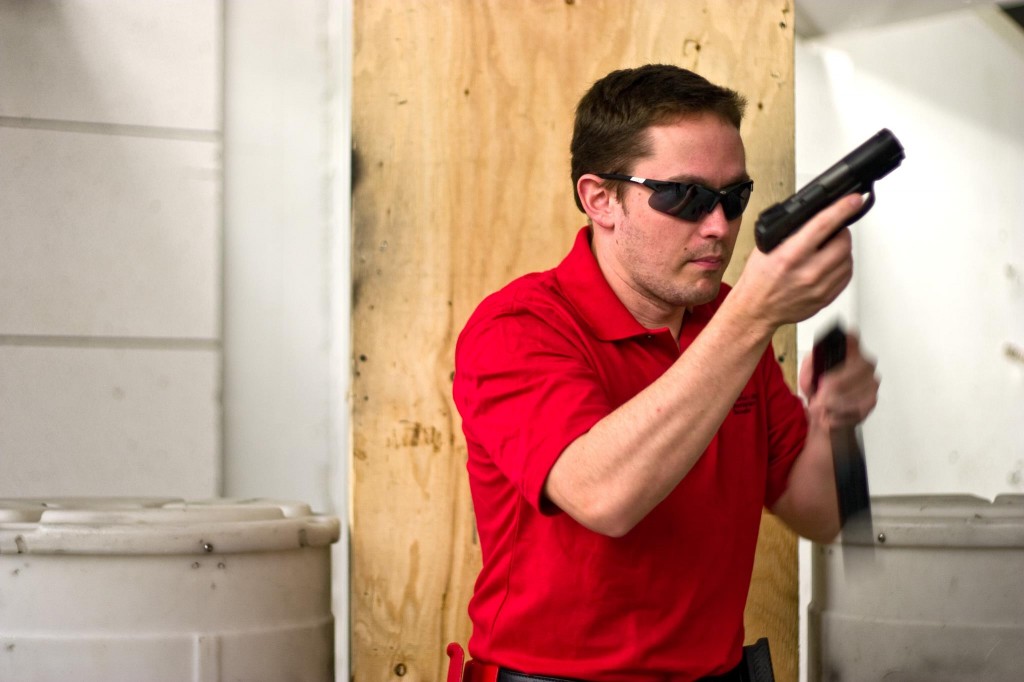
I got pretty good at reloading up high like that, and could consistently stick reloads around 1 second from an open mag pouch. The advantage to reloading up high like that is that you don’t have to look down – even if you take your eyes off the target to look the magazine into the gun (like you should) your head is still up, making it easier to see important stuff downrange when you finish the reload.
The disadvantage to reload up so high is that as it turns out, it’s slower. It may only be a half a second or so, when compared to bringing the gun down lower, but a half-second is a long time, especially in a match. Let’s say that a major IDPA match has an average of 1.5 reloads over the course of 12 stages. That half-second per reload turns into a six second swing, which can easily be the difference between winning and losing. Since IDPA reloads must all now be static, sticking the load quickly becomes even more important to a successful stage, because you can’t move until the gun is loaded. It’s a little more flexible in USPSA, as the ability to reload while moving between positions gives you the change to take your reload as a free action on the move; but you still don’t want to have a slow load.
Ultimately, reloading in the workspace vs. a little lower isn’t a hill worth dying on. If you reload up high and like it, keep doing it. I would say that if you’re PURELY focused on shooting for self-defense and don’t care about competition, the visual advantages of having the gun up high are preferable, so work that workspace reload like a boss. Just don’t get too crazy with like some instructors teach where the gun is straight up and down, or the magwell is up in your eyeballs.