The Open Carry Experience, Part 1

It’s no secret that I have been extremely critical of the Open Carry movement in the past. For the most part, I find OC “activists” to be nothing more than attention seeking troublemakers, who are at best a nuisance, and in the case of Open Carry Texas are actually helping the other side win mass media victories. But on Sunday, when I got up and put my gun on, I did something a little different. I decided to OC, because it occurred to me that if I really wanted to understand the open carry “community” I should make an active effort to actually open carry.

So for the remainder of the month of June, I’m going to use open carry as my primary method of carry. Here are the ground rules:

  • OC wherever it’s legal with certain exceptions (I won’t OC at church, for example, because it’s rude)
  • Don’t be a dick
  • Dress like an adult
  • Use a grown-up gun in a retention holster

A couple of things right off the bat – I will not be carrying a gun at people. I’m just carrying a gun, and going about my regular daily activities. So if I have to run an errand or perform a task, it will be exactly the same as it would have been if was carrying concealed, I’ll just be carrying the gun in the open. I’m not going to walk around and wait for the cops to show up, this isn’t some kind of asshole political statement. I am just going to carry a gun…openly.

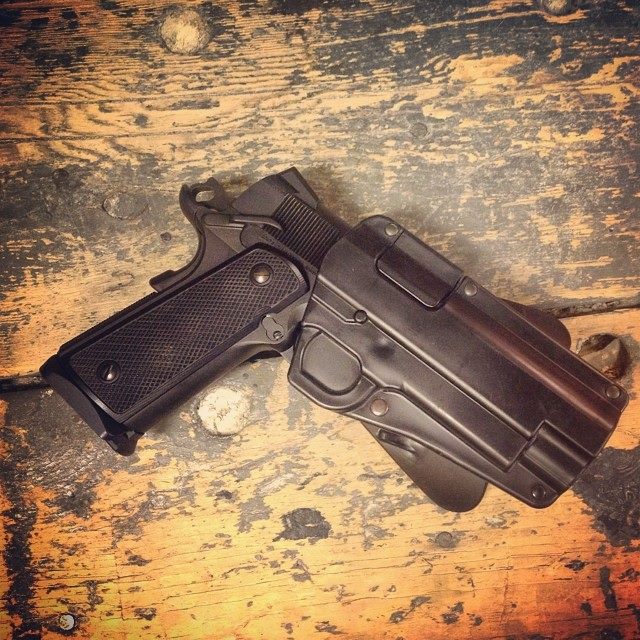
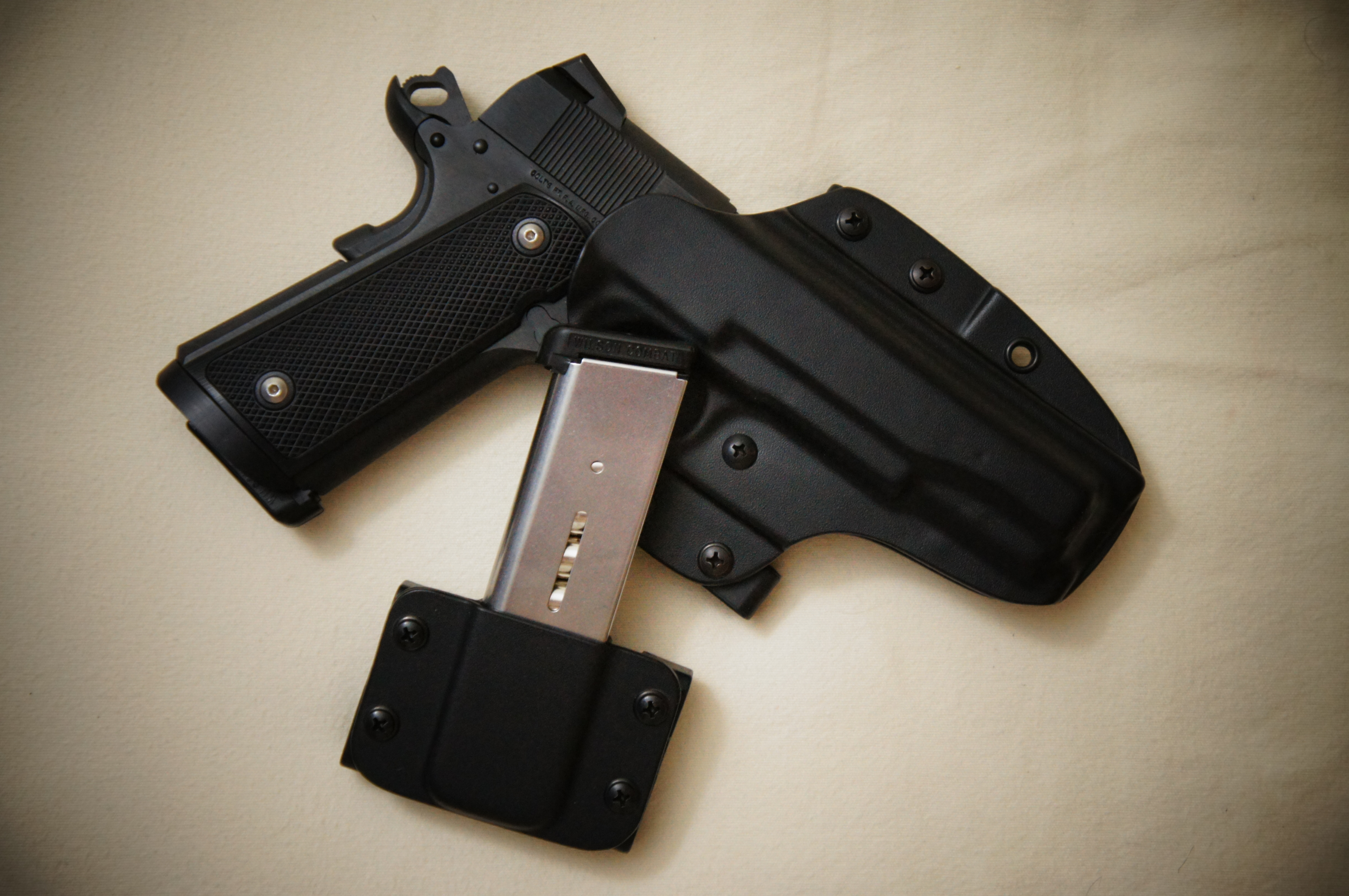
I realized yesterday when getting ready that the only gun I had a proper retention holster for was my 1911, so right now I’m carrying a 5 inch 1911 in a Galco M4 autolocking paddle holster. I’m also wearing a tucked in polo, a nice belt, and clean shoes.

Colt 1911 Galco M4 holster

Each day, I’ll update the series with notes from my OC experience. Yesterday was pretty boring, went for a hike in the state park. I have to say the most striking thing about OC vs CC is I feel weird. It feels strange and unusual to not bother to conceal my gun, especially since I’m not at a match. I do have to be concious of something else – at matches, where I am by default openly carrying, I have the habit of resting my strong hand on my gun. I can’t do that in public, because it would look REALLY weird.

Ultimately, the goal of this is simple: just carry my gun like I would any other day, just not concealed. I’m not going on OC walks, I’m not wandering around with a rifle slung over my shoulder, I’m just a dude dressed like a grownup going about his business. With a gun.

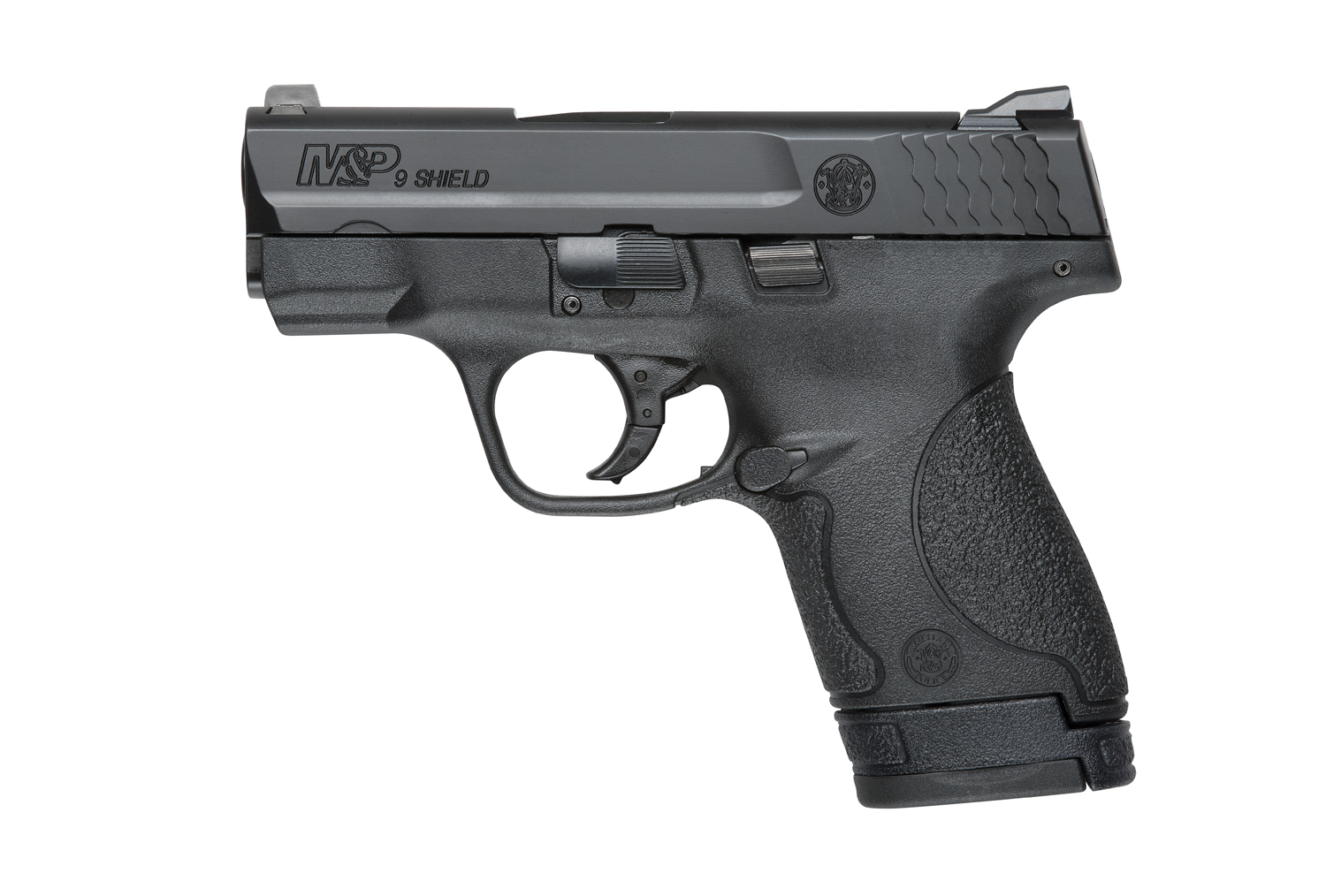
Smith & Wesson® M&P® Shield(TM) Pistol Now Available Without Thumb Safety

New M&P Shield Pistols Chambered in 9mm and .40 S&W Available Without Single-Sided Thumb Safety

SPRINGFIELD, Mass. (June 5, 2014) — Smith & Wesson Corp. announced today that it is now offering versions of its popular M&P Shield™ pistol in both 9mm and .40 S&W without the single-sided thumb safety. Brought to market after numerous requests from private citizens, law enforcement professionals and firearm retailers, the new models retain original design features that have helped to solidify the M&P Shield’s reputation in the marketplace as a reliable, accurate self-defense firearm. Whether deployed as a backup sidearm for police personnel, a deep concealment pistol for plain-clothes officers or an every-day firearm for concealed carry permit holders, the M&P Shield has been met with wide approval.

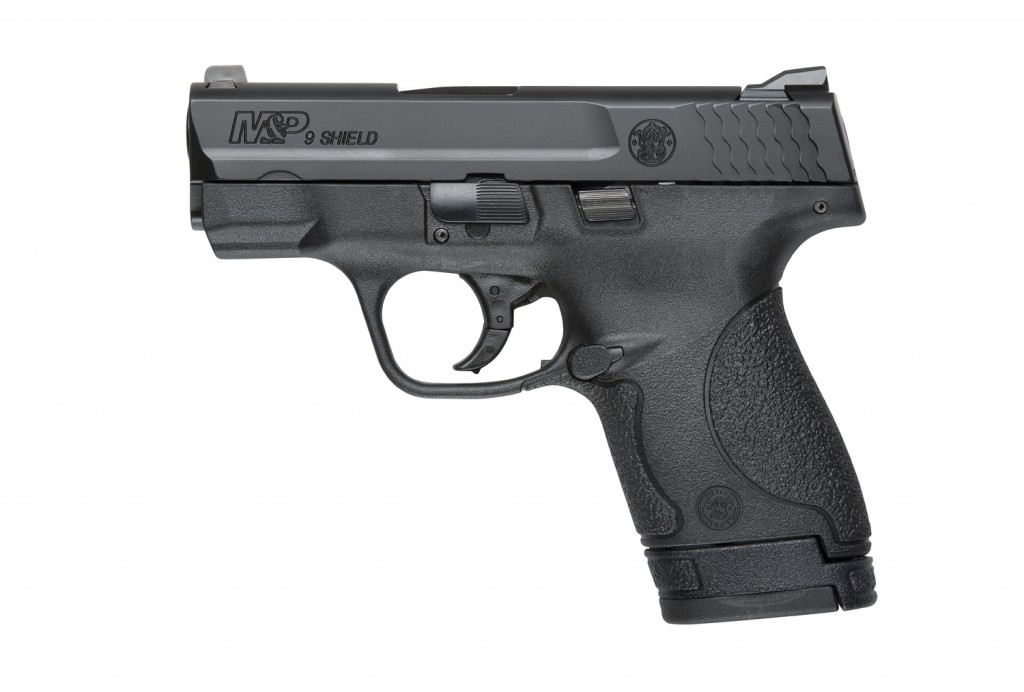
MP Shield no thumb safety

At the core of the M&P Shield resides its slim, lightweight, high-strength polymer frame measuring .95-inches in width coupled with an unloaded weight of less than 19 ounces. Across the frame, the M&P Shield is standard with a 3.1 inch barrel that contributes to compact overall length of 6.1 inches. On the left side of the frame, the M&P Shield is fitted with familiar operational controls including a simple takedown lever, flat profile slide stop and magazine release. For optimal firearm control, the M&P Shield is standard with an 18-degree grip angle and a fixed textured backstrap with additional texturing at the forward portion of the grip. An extended trigger guard allows for operation of the pistol with or without gloves.

On top of the stainless-steel slide and barrel, the M&P Shield is standard with a 5.3-inch sight radius along with a white dot stainless-steel front sight and a white two-dot stainless-steel rear sight. For consistent and accurate shot placement, the pistol features a short, consistent trigger pull measuring 6.5 pounds that has been further enhanced with a quick and audible reset made possible by the striker-fired action.

Internal features of the new M&P Shield mirror the standard M&P Series. Its stainless-steel internal chassis reduces flex while providing a stable shooting platform and its low-bore axis helps maintain ease-of-use and a comfortable feel. A passive trigger safety prevents the pistol from firing if dropped and a sear release lever eliminates the need to press the trigger in order to disassemble the firearm. A loaded chamber indicator is located on top of the barrel. The M&P Shield is shipped with both an extended and flat magazine offering consumers the ability to customize the length of the grip. The 9mm M&P Shield offers an 8+1 or 7+1 magazine capacity while the .40 S&W M&P Shield is standard with either a 7+1 or 6+1 magazine capacity. Both the 9mm and .40 S&W M&P Shield carry an MSRP of $449 and are backed by Smith & Wesson’s Lifetime Service policy. State compliant models of the M&P Shield with no thumb safety are also available.

For more information on the new M&P Shield pistols without a thumb safety visit www.smith-wesson.com.

About Smith & Wesson
Smith & Wesson Holding Corporation (NASDAQ Global Select: SWHC) is a U.S.-based leader in firearm manufacturing and design, delivering a broad portfolio of quality firearms, related products and training to the consumer, law enforcement, and military markets. The company’s brands include Smith & Wesson®, M&P® and Thompson/Center Arms™. Smith & Wesson facilities are located in Massachusetts and Maine. For more information on Smith & Wesson, call (800) 331-0852 or log on to www.smith-wesson.com.

The business of the shooting sports: NRA Action Pistol and ICORE

Today is our final installment in the business of the shooting sports series. Previous articles covered 3Gun, USPSA, IDPA, and the general trends in the sport. In our final piece, we’ll have a bit of a double feature, covering two sports. NRA Action Pistol and ICORE. NRA Action Pistol is the sanctioning body for the Bianchi Cup, and ICORE is the International Confederation of Revolver Enthusiasts.

12-BianchiLogo

NRA Action Pistol
NRA Action Pistol is one of the oldest shooting sports; its championship the Bianchi Cup recently celebrated its 35 anniversary. We have covered Bianchi Cup extensively here on Gun Nuts, and will recap that coverage very shortly here. The Cup went through troubled times, but has recently reasserted itself as the premiere pistol championship in terms of sponsorships and media coverage. Attendance has been up for the past five years, and the Cup is showing no signs of stalling out.

But the sport of NRA Action Pistol is largely sustained by this one match. There is a world championship held every two years, with the most recent one this year in Rockcastle, KY. There are also a few regional matches, with the most well known being the Flagler Cup, which goes down the week before Bianchi Cup each year and is often used as a tune-up for the big match itself. There are also regional and state matches in Michigan and Virginia. There are almost no club level NRA AP matches, which for any other sport would be a problem, but not necessarily for NRA Action Pistol. As long as the Cup itself is successful, the sport as it is will continue to be successful.

The success of the Cup is also its greatest weakness for the sport, because NRA AP without a robust and successful Bianchi Cup would simply disappear. As long as the Cup continues to prosper and attract new shooters, the sport will prosper. While I would love to see more clubs putting in NRA AP matches, it’s actually not necessary for the sport to be successful. Because they’ve defined success as having a few big major matches, it’s really all about a successful Bianchi Cup each year.

ICORE
ICORE is also an interesting animal, in that it’s an all volunteer organization defined largely by its biggest match, the International Revolver Championships held each year in the prettiest place on earth, the Central California coast. Unlike NRA AP, ICORE does have established club level participation, with 59 clubs scattered across the USA. They have a classification system, and various regional, area, and state championships. The truth is ICORE isn’t really in any kind danger or flux – there is a steady and consistent population of wheelgun shooters and dabblers that will likely continue to support the sport for times to come.

Really, the greatest danger to ICORE is the fact that it’s an all volunteer organization. Burnout, aging volunteers, and a lack of suitable replacements is a huge concern for all of the shooting sports, but especially an organization that’s entirely dependent on volunteers. But on the flipside, ICORE’s been making it work since 1992, and because it’s such a niche sport the volunteers tend to be passionate enthusiasts about it. I do have an ICORE life membership, it’s worth noting, and yet I’ve never shot the IRC. One of these years…

As we wrap up our look at the shooting sports, there’s really only one conclusion to that I can arrive at. Despite the challenges facing all of the major games, we are absolutely in a golden age for shooting sports right now. There are more matches, more dollars, more media, more coverage, and just more opportunities to get your trigger finger going nationwide than there have been in the past. If you want to shoot a traditional concealed carry rig, you can. If you want to race your guns, you can do that. If you want to shoot a Glock 19 with an RDS, a tactical shotgun, and a Colt 6920, you can. That’s the great thing about this time – there is a sport that will take you, no matter what your gun and gear is. So get out there, and go shooting. There are few things more fun than running around with a gun in your hand shooting at stuff.

The Guns of D-Day

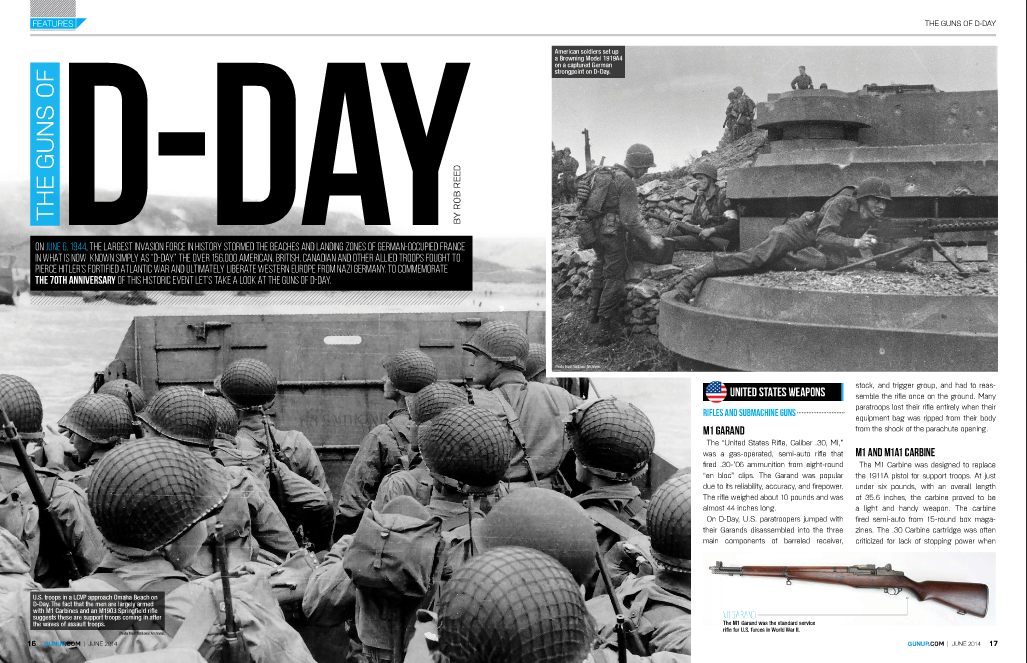
guns of d-day

Today is the 70th Anniversary of D-Day. The world we live in today is free because the men of that time put their lives on the line to keep is free from evil. I cannot think of words to properly due justice to what they accomplished. Each time I read about another veteran of World War 2 passing, I know that we are diminished as a country. But today is not a day for sadness, but rather a day for celebration, because through their sacrifice and heroism we live free of foreign tyranny today.

If you’d like to learn more about the guns used on D-Day, click the links for more.

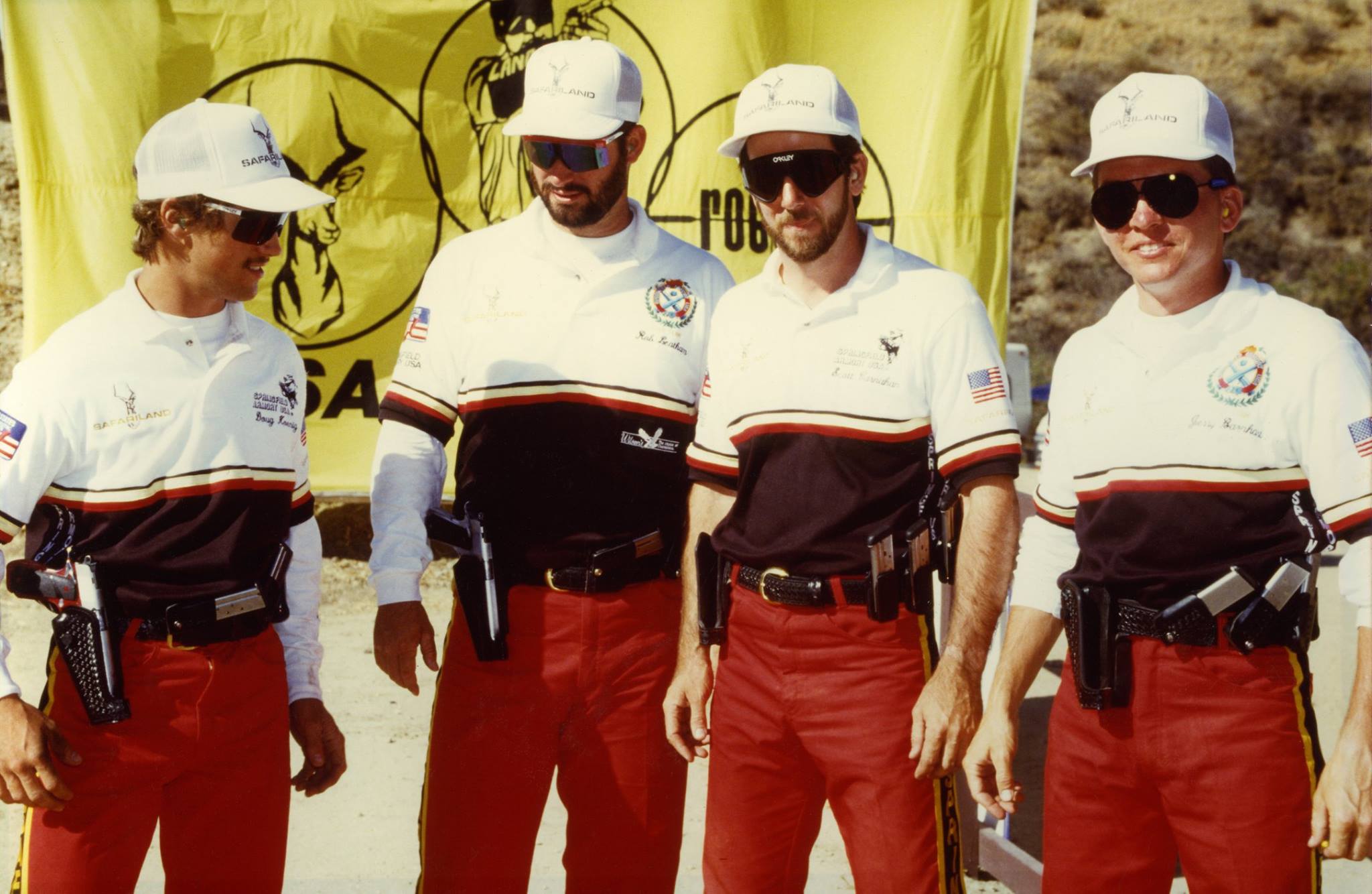
Quick Photo: OG Team Safariland

Original Team Safariland

Photo courtesy Safariland – this photo was shown to contestants at Bianchi Cup this year, and it shows the original Team Safariland wearing what was the very first “shooting uniform.” It’s AWESOME – matching pants and shirts, and the pants even have a gold stripe down the side. I wish people at matches on teams still dressed like that. If you look at this photo too long, your face will melt from all the swag.

From left to right: Doug Koenig, Rob Leatham, Scott Carnahan, Jerry Barnhart.

Reasonable precautions, victim shaming, and violence against women

In the wake of the spree killing in California, there has been considerable discussion online and in the media about violence towards women. This is somewhat odd, since 50% of the killer’s victims were male, but whatever. Because his manifestos were littered with rants against women, it has become quite a topic of late. One of the things that’s caused me no small amount of consternation has been the topic of victim shaming/blaming. For those not hip to the lingo, victim blaming is pretty much what it sounds like, blaming the victim of a crime for allowing, or encouraging the crime to happen. An example that’s cropped up recently: “she deserved to get raped because she was dressed like a slut.”

The reason this has become frustrating though is that of late, even making reasonable suggestions about situational awareness and self-defense are immediately shouted down with “victim blaming” regardless of whether or not that’s the case or intent. As an example, I was discussing this topic somewhere else, and suggested that perhaps a young lady should not be walking home by herself at 2am with her face buried in her iPhone, all while drunk. I was immediately accused of victim blaming, when in reality the point of that is suggesting that being drunk and walking home alone at 2am while not paying attention your surroundings is stupid regardless of your gender.

Praetor Defense Holster

The problem of course is that there is a huge difference between victim blaming and suggesting reasonable precautions. No one says that you’re “contributing to the car violence culture” if you tell someone to look both ways before they cross the street, but if you tell a 24 year old woman that maybe she should take her iPod earbuds out when she’s walking home at night, you’re contributing to rape culture.

Here’s the part where I get personally frustrated: the sort of advice we’re talking about here is completely gender neutral. I don’t care what sort of equipment you have downstairs: Don’t do stupid things in stupid places with stupid people at stupid hours of the day. To paraphrase a comedian, no one ever took 400 dollars out of an ATM at 2am for something good. When you’re out in public, regardless of the time, pay attention to what’s going on around you. There are times and places where it’s okay to go into condition white, however on a public street feeding a parking meter isn’t one of them. It’s shocking how completely oblivious so many people are to their surroundings. Get your head out of your phone, look around. Earlier this year, I went and visited the campus at Purdue; just to see what had changed in 10 years. Campus looked largely the same, but the students were different. Even as little as 10 years ago, not everyone had cell phones. The iPhone didn’t even come out until 2007, kicking off the smartphone revolution. But on campus, it was weird – every single student we saw was walking around with his or her head buried in their phones. Except for the two guys on skateboards, who were quite situationally aware, actually.

This is a frustrating rant. It reflects my frustrating with the nature of the online conversation in many places, where “PLEASE STOP” has replaced reasonable conversation, and where people are more concerned with confirming their biases than listening to other people’s opinions. It’s honestly why I rarely engage in discussions online any more; it usually ends with two people, myself included, unwilling to compromise in any way for fear of losing imagine internet points.

On the topic of self defense, I’ll repeat myself from earlier. Regardless of whether you’re a hulking power-lifting dude, a shredded Crossfit lady, a 90-pound weakling, or scientifically enhanced blonde woman, this advice applies across the board. Don’t do stupid things, at stupid hours of the day, with stupid people, in stupid places.

The business of the shooting sports: 3-Gun

Now we arrive at the new hotness of the action shooting sports: 3-Gun. We’ve covered USPSA, IDPA, and general trends, so now it’s time to turn our attention to the sport that seems to be grabbing the lion’s share of media attention and sponsor dollars. These days, when people think “3Gun” they’re probably thinking about 3 Gun Nation, which has risen from nothing to become the absolute top dog of the 3 Gun community. For clarity’s sake, we’ll use the abbreviation 3GN when referring to 3 Gun Nation specifically, and use 3Gun as a general term for other 3Gun stuff.

To look at the world of 3Gun, one does need to break it into two categories: 3 Gun Nation and, well to be honest, everything else. That’s not to take away from the non-3GN events, because there are quite a few of them, ranging in quality from “just okay” to “pretty awesome.” Some of the ones that will likely be recognizable to most shooters are the Ironman, Crimson Trace Midnight 3 Gun, Superstition Mountain, and the Brownells/Rockcastle ProAm. Regardless of whether you’re discussing 3GN or the outlaw events, there’s no denying that 3Gun is the hotness right now – the coolest of the shooting sports.

Now, when you’re talking about the current success of 3Gun, what you’re really talking about is the success of 3 Gun Nation and how 3GN has driven participation across the board in the multigun sports. It is a tale of both convenient timing and clever marketing. 3GN hit the scene around the same time that everyone and their sister were buying AR15 pattern rifles. They started off using the existing outlaw matches as sanctioned events, working towards the unified championship, so existing 3Gun shooters were obviously enticed to attend and shoot. On top of all of that, their TV show was actually entertaining to watch. So out of the gate they were already hitting on all cylinders. They even managed to survive getting yanked from NBC Sports in the wake of the Sandy Hook shootings.

Now, 3GN is its own sanctioning body, and has grown into the premiere 3Gun event/series in the nation. In 2014, they decided to eschew the use of the classic outlaw matches, instead hosting their own 3GN Regionals are various ranges. But what’s interesting is that this hasn’t hurt the popularity of the outlaw matches at all, which are still filling up and still seeing great prize tables and shooter attendance. This is actually one of the biggest general successes of 3Gun at large: great prize tables and sponsor involvement. Because the matches consist of shooting three different guns (duh), the potential for sponsor involvement increases significantly outside of what you’d see at a pistol match. Companies that are traditionally oriented towards the LE/military community suddenly have an interest in the competition shooting world specifically because of what’s being done in 3Gun with rifles, and to a certain extent, shotguns.

On the marketing front, 3Gun has been well marketing, again primarily by 3GN, whose man-on-man shootoff is the most exciting televised bit of shooting all year. Because the targets are reactive and it’s two shooters going head to head, there is a sense of drama, and at the same time the casual viewer can easily understand who’s winning and why. Also part of the image of 3Gun is the carefully cultivated sense of it being the extreme sport of the shooting sports. Climbing barricades, running with rifles, and in some cases shooting actual machine guns or suppressed firearms makes the game itself edgier than its competitors.

So, if 3 Gun is well marketed, and the main 3GN series is well managed, what challenges does the sport face? The first is obvious, and it’s the relatively high cost of entry. Unlike USPSA, which is where 3Gun seems to be poaching the most shooters from, you need more than a pistol and 5 mags to compete. You need a rifle, you need a shotgun. Manufacturers are catching on that 3Gun competitors want “ready” shotguns out of the box, which is why you’ve seen Mossberg, Remington, Benelli, Beretta, and now even CZ offering guns out of the box that are ready to go for 3Gun competition. But you’re still looking at $600 (on the low end) up to north of a grand for your 3Gun shotgun, plus shell caddies. Then there’s the rifle, and yes while you can go shoot 3Gun with a vanilla 16 inch Colt 6920, it’s not an ideal set-up. Again, manufacturers get this, and there are plenty of options for 3Gun ready rifles..but you’re looking again at a grand or so out the door. Plus magazines and pouches for those. So even if you just shoot a Glock 34, your initial start up cost in guns alone is going to be $2500-3000.

The biggest problem facing 3Gun as a sport is sustainability. We’re not talking about hippie environmental sustainability, but rather the incredible growth its seen in the past couple of years. The thing is that time, specifically the time of the shooters and volunteers is a zero-sum game. The more time a shooter spends on 3Gun, that’s time being taken away from somewhere else. It stands to reason that 3Gun will eventually reach a tipping point where growth slows to a more reasonable pace, and you see some sponsors go find other things to do with their money, and volunteers drift away. A likely scenario we discussed is that you’ll see a contraction first in the outlaw matches, as dollars and media attention get pushed to 3GN, then a drawback in prize tables or cash payouts from the Pro Series itself.

At least for now, 3 Gun as a sport is showing no signs of slowing down. The 3 Gun Nation series of matches is an excellent example of a well run, well thought out organization that absolutely has a plan and a vision for where it wants to go. 3 Gun as a community is going strong, with tons of great matches outside the 3GN banner; while there are obvious challenges on the horizon, barring a major political event that affects the availability of AR15s and ammo, I don’t see 3 Gun pumping the brakes for at least another 2 years.

No, H&K can’t make the P7 anymore…but that’s not a bad thing

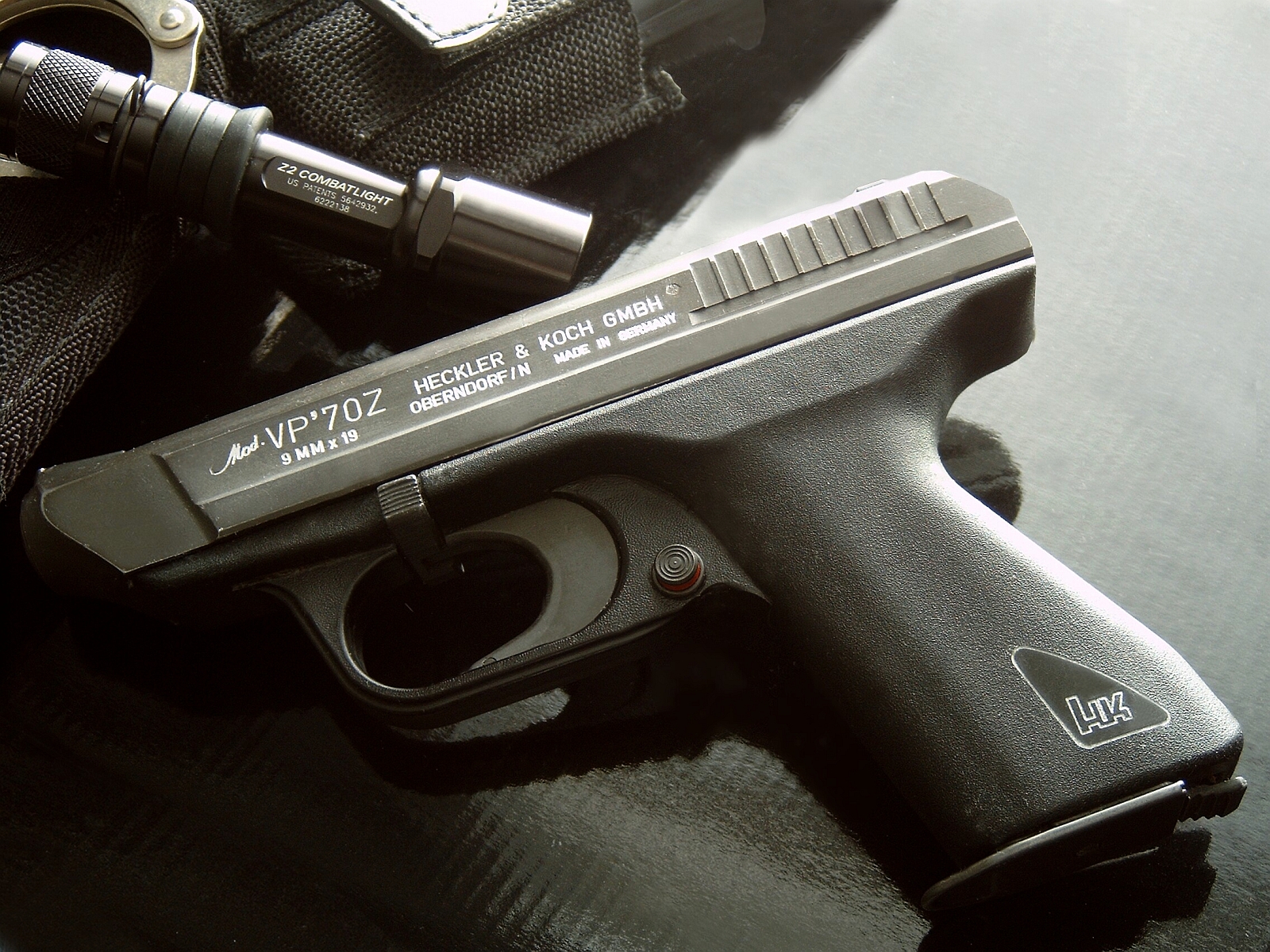
This week details about H&K’s latest polymer striker-fired handgun have hit the gunternet and it seems to have people chatting quite a bit. I say “latest” here because many people don’t realize H&K actually made the very first polymer framed, striker-fired handgun in the world: The VP70. No, folks, Gaston Glock didn’t invent the basic Glock formula for “perfection”…H&K did. The VP70 is often forgotten because it wasn’t a commercial success for H&K. Aside from appearing somewhat ungainly, the VP70 was saddled with a very heavy trigger pull (18 pounds, if I remember correctly, heavier than most DA revolver trigger pulls) and a magazine latch in the heel of the pistol, features that have never gone over terribly well with American shooters.

H&K actually pioneered the formula Glock later made a fortune from.

The VP70 was designed to be considerably cheaper to manufacture than H&K’s other offerings at the time which included the magnificent P7 family of handguns. I happen to be a big fan of the P7 pistols because I spent some of my formative years seeing the New Jersey State Police carrying the P7M8 and P7M13 variants as their duty sidearms. The first time I saw one on the hip of a NJ trooper I remembered wondering where the rest of the gun was. It looked like they were just carrying the grip frame of a half assembled pistol to my young mind. Since I didn’t yet have 5 editions of Small Arms of the World I didn’t know anything about the P7 family of pistols and I sure as heck had never seen one in a gunstore before.

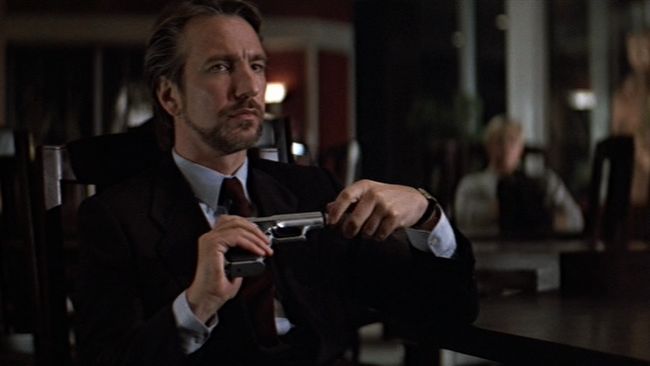
I hadn’t encountered one in a gunstore because the P7, like the VP70, wasn’t a big hit in the market. By all rights it should have been given the pistol’s compact size and brilliantly engineered squeeze-cocking safety system. Unfortunately all that brilliant engineering and being made out of high quality steel to high quality control standards resulted in a pistol that was extremely expensive. The ventricle-popping price of the pistols overshadowed all the good points of the guns (which have always had a reputation for reliability and durability) and kept them out of the hands of most police departments and regular joes. The price tag that made them a rare bird probably contributed significantly to the P7’s prolific movie career. If there’s a movie bad guy in a tailored suit odds are he’s packing a P7 of some sort because it just…fits. The look of the pistol, the compact size, and the rarely-seen-in-the-wild nature of the pistol all combined to make it a natural choice for the well-dressed sociopath.

Intended to be a police weapon, the cost of the P7 family meant that the gun was made  more famous by the movie bad guys that used it than the police.
Intended to be a police weapon, the cost of the P7 family meant that the gun was made more famous by the movie bad guys that used it than the police.

The relative rarity of the P7 combined with the unique features of the pistol and plenty of screen time in blockbuster movies made the P7 into a legend. Few people have ever handled one or spent any time shooting one, but darn near everybody wants one because they’re just so darn cool. Hans used one, for Pete’s sake. The web is full of people who remember the legend and lament that H&K doesn’t make the P7 anymore, and some of them seem particularly upset that their new striker-fired offering isn’t a P7.

…but it can’t be. The P7 was ridiculously expensive to manufacture and while the compact size of the pistol was excellent from a carry perspective it achieved those dimensions with a gas-powered operating system that heats the gun up like a soldering iron when you put more than a few magazines worth of ammo through the gun in a relatively short period. My first real shooting exposure to the P7 family was during a 4,000 round handgun course where someone was shooting his beloved P7M13. Despite the heat shield those things got quite hot during that week. I say “those things” because he didn’t have a P7M13, he had four of them. He had to constantly rotate his pistols to keep up with the rest of us shooting something more pedestrian like my Beretta 92. When we shot on the reactive steel range, even with four pistols to rotate, he had to quit quite a bit before the rest of us because his pistols were simply too hot to hold anymore.

As much as I love the P7, they had some flaws and were entirely too expensive even in the pre-Glock world. Post Glock there’s absolutely no hope for them. Folks don’t seem to realize that Glock changed the entire firearms market. H&K made the VP70 because they were trying to find a way to put out a reliable handgun at a significantly lower cost. The use of injection-molded polymer for parts of the weapon and minimally machined steel for other parts were intended to make a (relatively) cheap gun that works. Glock took that formula and refined it. A Glock requires minimal machining for the major components allowing them to drop the per-unit cost of a pistol to such a low number that they could sell them cheaper than most other guns on the market and still make a tidy margin on each one. This is, in fact, one of the primary reasons why Glock took the law enforcement world by storm: They could sell guns at such a low price while still making a profit that they were able to offer sweetheart trade-in deals that got budget-conscious police administrators feeling dizzy. Throw in some snazzy demonstrations to get the troops over any objection to “plastic” guns and viola! Gaston Glock is worth almost 2 billion dollars.

H&K got back into the polymer game with the USP line of pistols and has expanded the lineup to the P2000, HK45, and P30 handguns…but none of them have been what you’d call cheap. Part of that is due to design, but part of it is also due to the way they insist on making guns. To the best of my knowledge they are the only mass manufacturer left who still makes all their parts in house. They have a very high level of quality control relative to other manufacturers in the business. They’re picky about the materials they use to make their guns. All of this is expensive and if you’ve ever wondered why an H&K sits on the gunstore shelf for $150+ more than comparable guns now you know.

The VP9 seems to be H&K’s attempt to find efficiencies in design that lets them drop the selling price of the pistol without sacrificing the way they make guns…and that’s to be commended because H&K actually seems to do a pretty good job of delivering a gun to the customer that will work reliably out of the box and for many thousands of rounds after that with little maintenance. They certainly aren’t perfect, but they seem to do a better job of it than many of their competitors. H&K can’t make the P7 anymore, but what they make today in the HK45 and the P30 are far better weapons by any objective measurement. If they’ve applied the same engineering know-how to the VP9 then odds are it will be a very reliable, durable handgun within the reach of most buyers in the market…and another good option for the consumer is a good thing.