MSW takes a look at the leaked info on the new striker fired HK, the VP9.
Troy Battlemag Torture Test Part 2
Today, we’re testing the Battlemag’s ability to withstand a pistol round. In our next installment, we’ll feed one to Godzilla.
The business of the shooting sports: United States Practical Shooting Association
Today in part 3 of our coverage of the business of the shooting sports, we look at the smaller (in terms of membership) of the two practical, pistol only shooting sports, the United States Practical Shooting Association. Part one covered general trends, and part two covered IDPA. A discussion of USPSA must be extension include a small discussion of the international version of the sport, IPSC, as well as a look at Steel Challenge, which is owned entirely by USPSA.
Less than a month ago, I took a hard look at USPSA and was concerned about the organization, because it appears that USPSA is losing shooters, sponsorship dollars, and media coverage to the current hot-rod sport, 3-Gun. But at the same time, participation in USPSA matches at the club, area, and national level is strong. MDs from local clubs I’ve talked to indicate they’re getting more shooters at their local matches, and a quick check of the various Area matches shows strong participation there as well. This all raises the question, what’s up with USPSA?
Unlike IDPA, it is organized as a 501c(3) not-for-profit corporation. The leadership is composed of an elected Board, an elected President, and non-elected administrative staff, the head of which is the Executive Director (ED). Since 2008, when we launched this site in its current form, USPSA has only had two presidents and two executive directors. The presidents have been Mike Voight and Phil Strader, the EDs have been Dave Thomas and Kim Williams. Phil and Kim are currently serving, and Phil has indicated he not seek re-election. It is an election year for USPSA, with multiple contenders vying for the role of USPSA President, which is voted upon by the members of the sport. Revenue for USPSA is generated via membership dues, club activity fees, sponsorship dollars, and advertising sales in Front Sight (their in house publication).
In the past two years, one of the biggest successes for USPSA has been the revitalization and salvation of the Revolver division and national championship. In 2013, the match was moved to the same location as Single Stack Nationals, and held back-to-back with SS Nats. In its first year, it attracted over 100 shooters to the one day format, a huge increase over the 20-and-change that attended the 2012 match. In 2014, the second year for the back to back format, it attracted over 100 shooters again, and filled to match capacity. The back to back classic Nationals have been an unequivocal success for USPSA.
What has not been a success has been the absolutely decimation of the Steel Challenge World Championships. In 2011, the match was held in Piru, CA for the last time. It attracted ~300 entrants, was held on a great facility, and generally had the feel of an important, World level championship. In 2012 and 2013, the match moved to Universal Shooting Academy in Frostproof, FL. Participation fell each year, to the point where the 2013 match had fewer than 100 individual entrants. For 2014, the match has been moved again, this time to Utah, the same range that hosted one of the Nationals last year and is home to the Area 1 championship. As of this writing, we are approximately 20 days from the match starting, and as of last count, there were 30-40 entries. That’s not good.
That brings us to the current state of USPSA. As an organization over the past five years, it has had a mixed bag of success and failure. Successes include growth at all the major National Championships, the fact that it alone of the pistol sports attracts the absolute top tier in shooting talent, and Revolver Nationals. Failures include Steel Challenge, and losing an opportunity to be a meaningful influence in the 3-Gun world despite having rules and hosting a multi-gun championship. Here’s a summary of the State of The Sport in USPSA’s own words, taken directly from their 2014 report to members:
Here’s A Look Back:
- 2013 was the second year in a row that we entered more than 100,000 scores. A comparison to 20 years ago? In 1993, USPSA entered just a little over 66,000 in two divisions. Even just five years ago we only entered 88,000 in six divisions. That’s growth we can get behind. Perhaps in 2014 we can top 120,000.
- We beat our 1998 record high of 400 active clubs. We’re currently right at 412 and have no intentions of slowing down.
- Over 65 major matches were posted to the USPSA online calendar. From coast to coast and beyond, over 22,000 active members were busy throwing some serious lead downrange.
- Nearly $400,000 in cash and prizes was awarded at our National Championships, to say nothing of our Area Championships. Our sponsors and partners continue to impress and amaze with their unprecedented support of our organization. Please continue to support those companies who so graciously support you.
- We now have nearly 100,000 followers on Facebook – that’s from just a little over 14,000 in January, 2013. Everyone’s talking and we hope you’ll join the conversation.
Let’s take an hard look at those numbers for a second. 22,000 members is good, that’s excellent. However, the growth in “scores entered” and active clubs isn’t really that significant. If five years ago they entered 88,000 scores, and in 2013 entered 100,000, that’s only an increase of 2,400 scores (not shooters, scores) per year. Club growth is similar and shows a trend that everyone should be concerned about: churn. If in 1998, 16 years ago, there were 400 active clubs and now there are 412, that means there has been a net gain of 0.75 clubs per year. That’s either indicative of extremely slow growth, or considerable amounts of churn.
Now let’s shift topics a little bit, and talk about the sport itself. USPSA is absolutely the best pistol sport in terms of product. Unlike IDPA, I can go to any USPSA match in the country and expect that the rules will be enforced fairly, impartially, and exactly the same as they’d be enforced at a club on the other side of the country. While local club culture is a strong driver in stage design and match administration, it doesn’t affect how the rules are enforced. USPSA has done a fantastic job of instituting stability of rules and enforcement across the entire nation. Their matches are the most fun pistol matches to shoot, and outside of Bianchi Cup present the toughest challenges of marksmanship for pistol shooters as well.
What appears to be the greatest challenge for USPSA is an apparent lack of vision for the organization. When you compare it to the other organizations discussed this week, USPSA lacks a coherent marketing message; a message which should indicate its vision and direction. IDPA has that – “We are the shooter friendly sport for CCW.” 3-Gun has it: “We are the X Games of the shooting sports.” Even ICORE has a consistent and well expressed vision. But USPSA, which has the best product of the pistol sports, doesn’t. It’s an organization that experiences major successes and major failures simultaneous, that delivers the best product in the pistol sports and can’t express a vision for that product. USPSA is a lot like having a super hot but super crazy girlfriend, to draw a vulgar analogy. She’s great to look at, great in the sack, but she’s emotionally unstable.
When kicking around how USPSA should market itself, it occurs to us that USPSA should embrace the fact that its matches are tougher, it has more top tier competition, and in general its product is better. “We are the Formula 1 of gun games” would be a perfectly reasonable message, and stress that at the state and area level, it is perfectly possible in USPSA to do the equivalent of drive next to Lewis Hamilton. That would be a strong message that resonates both with USPSA shooters, and is perfectly understandable to people not involved in the sport already. Maybe change it to NASCAR for clubs in the south, but you get the idea.
Later this year, USPSA will host the IPSC World Shoot. As the sanctioning body for the US arm of IPSC, this will be either a huge feather in USPSA’s cap, or…well, you know the “or.” It’s being held at Frostproof, and will attract shooters from all over the world. There is a tremendous opportunity for USPSA to use the World Shoot to showcase the national and international talent that attends this match, to make a proper grand spectacle of the sport that looks, feels, and is special. It could go either way, and our hope is that it is a triumph for USPSA. We want the sport to be grand and exciting.
At the end of the day, USPSA seems to be an organization of contradictions. The best product, the worst marketing, brilliant match successes, incredible failures. Tremendous shooter participation and engagement, slow growth. USPSA, in an election year, with participation in the shooting sports on the rise across the board, may find itself at the crossroads.
Tomorrow we’ll take a look at 3-Gun, and on Friday we’ll wrap up with NRA AP and ICORE.
Shooting a stock Glock 34 at Bianchi Cup
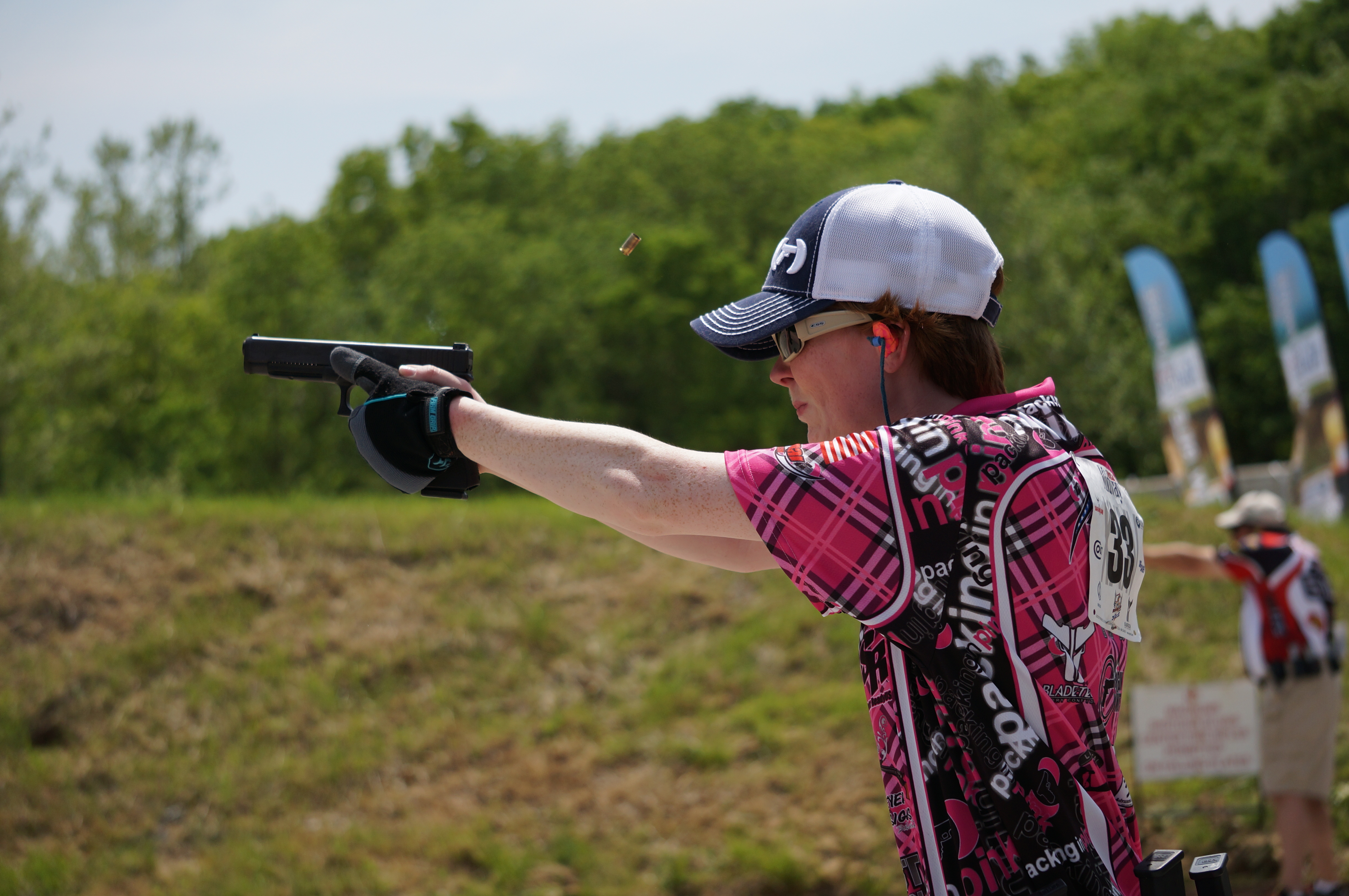
This year, I shot Bianchi Cup with a Glock 34 – absolutely stock. Stock trigger, stock sights, everything fresh out of the box. I only put about 50 rounds through the gun before heading down to Missouri. Continue reading →
More 3gun drills
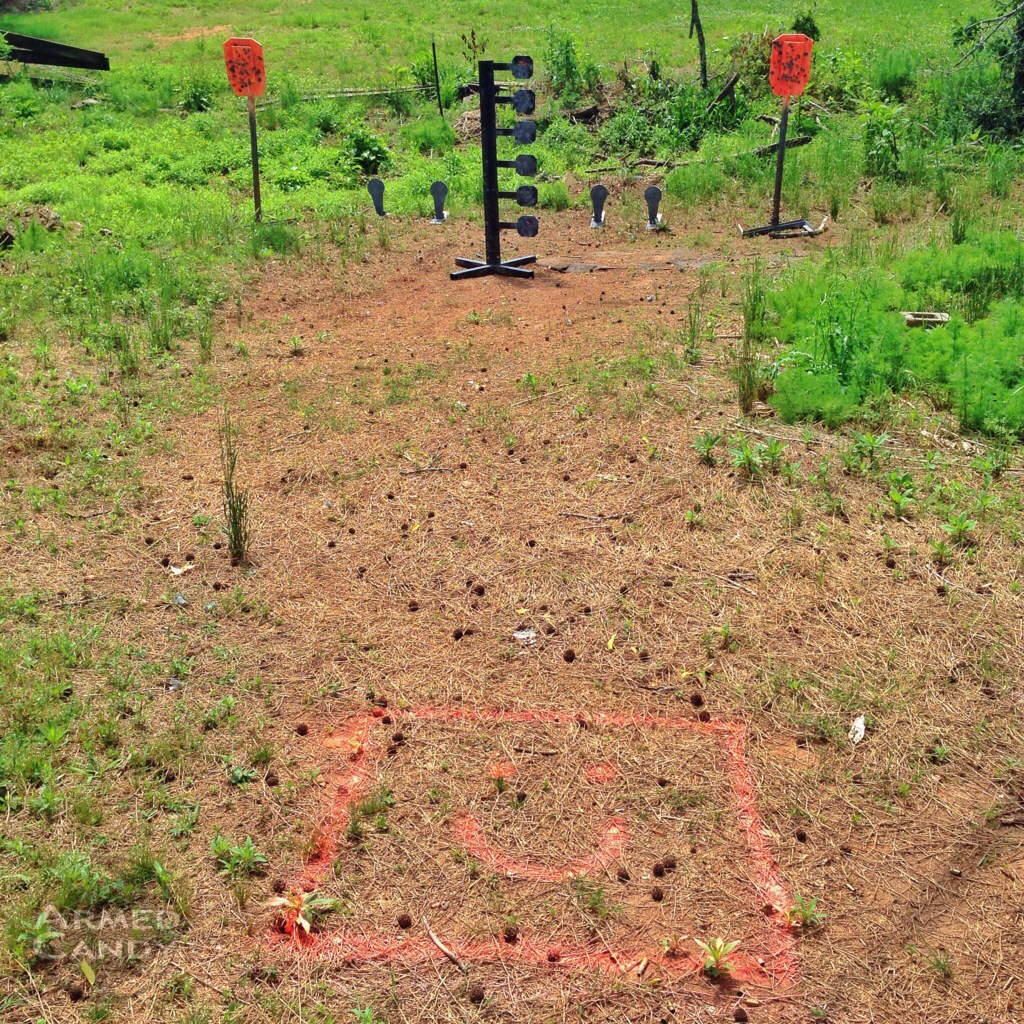
 My coaches, James Casanova and Janna Reeves, are awesome! Last weekend the left me a course all set up and a handful of drills to keep me busy while they were at the Benelli Rockcastle match. The specific drills they chose, were based on two factors. One, after my performance at the USPSA club match the previous weekend, some skills were clearly in need of attention. Two, being alone in their backyard range, I had to be able to coach myself to a certain degree. In other words, with no one calling my shots, I would have to be able to self correct and then repeat, correctly.
Photo of the day: Third Century NRA features Shelley Rae

GunUp the Magazine editor and Gun Nuts Co VP of Awesome Shelley Rae is the latest awesome person to be featured in the Third Century NRA.
Photo credit: Reistroffer Design http://www.reistrofferdesign.com/
The top five gun control lies

Fact: the national right to keep and bear arms movement is winning. Two Supreme Court decisions, Illinois now has shall-issue CCW, and more and more people are buying guns and carrying guns. There has been an absolutely explosion in awareness of 2nd Amendment rights and gun ownership. If you’d told me in 2004 that we’d be where we are right now, I’d have laughed in your face. And yet with all our victory, and indeed perhaps because of it, the anti-gun factions keep lying, and keep pushing their nonsense. It’s like they see they’re on the brink of total defeat, so they’ve doubled down on their lies even harder. Here are their five favorite lies.
1. The Gun Show Loophole
What they say: Anti-gun activists will tell you until you’re bored to death about the gun show loophole. To hear them tell it, all across America are these Khyber Pass style bazaars full of shady dudes selling machine guns to anyone with cash on hand, no questions asked.
Why it’s a lie: The truth of course is that gun shows are very strictly controlled. Most sellers at gun shows are Federal Firearms Licensees (FFL) who are required by federal law to conduct a background check on any firearms sale, regardless of the location where they conduct the sale. That means if you buy a gun from an FFL at a gun shop or a show, they have to do a background check. There are private sellers at gun shows, these are usually collectors and hobbyists looking to clear out part of their collection. It is not a loophole for an individual to sell a gun to another individual, it is complying with the law. So long as the person making the sale is reasonably sure that the buyer is not a prohibited person, the transaction is perfectly legal.
2. A gun in the home is more likely to hurt you than save you
What they say: According to anti-gun people if you keep a gun in your home for defense, you’re more likely to be killed or injured with that gun than you are to use it defending yourself against a home invasion.
Why it’s a lie: This one is actually fairly clever, and should be exposed. Their statement takes a wide definition of what counts as having your own gun used against you, to include suicide. It is a fact that guns are a common choice for committing suicide, especially with males. Because suicides with firearms are more common than in-home defensive shootings, they twist this tragic statistic to their own ends to portray a home defense gun as a lurking cobra under the couch, waiting to strike and murder the home’s occupants. But the truth is that if you remove suicide from the equation, a gun kept in the house for home defense is quite likely to never be fired in anger at all.
3. A majority of Americans support stronger gun laws
What they say: You’ve probably heard this one recently, especially after the Sandy Hook murders. It was mostly used as a way to emotionally bully people who were on the fence about gun control – “everyone else agrees with us, and you do want to be liked, right?”
Why it’s a lie: The truth is that the majority of Americans don’t have the faintest clue what our gun laws are. Try this experiment: find someone you know who is not involved in the gun control debate at all. Describe the current state of all gun laws to them, federal all the way down to state restrictions. Background checks, licensed dealers with federal government oversight, a registry for items like machine guns and suppressors, the whole nine yards. Tell them what makes someone a prohibited person. Then ask them if they think we need more gun laws. The reason that the anti-gunners were able to get their “majority of Americans” lie started in the first place was based on an incredibly misleading poll that asked low information voters whether or not they supported “background checks for all gun purchases.”
4. Assault weapons
What they say: “OMG BLACK RIFLES ARE EVIL OH GOD OH GOD OH GOD TOO MANY BULLETS EVIL” /runs away crying
Why it’s a lie: While we’ve lost the language battle on the phrase “assault rifle”, we’re winning the battle on the guns themselves. In fact, this one has been so thoroughly smashed that there’s no need for us to deal with it. Simple fact: an AR15 or AK47 is no more or less dangerous than the .30-06 your grandfather used to hunt with.
5. The gun culture is dying out
What they say: To hear it told, fewer Americans are buying guns, and the reason that more guns than ever are being sold is because a few (million) gun owners are buying them in case lots and hoarding them. Gun owners are a dying breed!
Why it’s a lie: The numbers just don’t match up. Guns have been selling for the past 8 years in record numbers, in numbers that couldn’t possibly be accounted for by existing gun owners adding to their collections. Plus, concealed carry permit applications have spiked across the country, and you can’t possibly believe that’s all because some guy has owned guns his entire life and suddenly now wants a permit. No, the majority of those CCW permits are new gun owners. Participation in training classes is off the charts across the country, and many of those attending are first timers. The gun culture may be changing away from hunters in duck blinds…now it’s soccer moms with M&Ps and accountants with 1911s.
The real truth is that anti-gun advocates can’t win without lying. The truth just isn’t on their side. Hopefully you’ll get a change to use this list next time you’re having a conversation with someone who’s on the fence and is merely repeating talking points he heard on CNN. Be gentle, be polite, but be persuasive. And don’t waste your time arguing with the truly anti-gun, because they’re a lost cause, doomed to the eventual dustbin of history alongside similar organizations like the KKK, Holocaust deniers, and 9/11 Truthers.
The business of the shooting sports: International Defensive Pistol Association

Today in part two of our series on the business of the shooting sports, we’ll take a look at the International Defensive Pistol Association. Click here for part one, The business of the shooting sports, general trends.
To understand where IDPA is right now, you have to understand the beginnings of the sport. It was originally founded almost 20 years ago in response to the trend in IPSC/USPSA away from the “practical” guns and towards raceguns and gamesmanship. The name of the organization speaks volumes about the goals, “Defensive” is right there in the title, after all. In the past four years, IDPA has experienced tremendous membership growth, as well as increase in sponsorship dollars, media attention, and international recognition.
At the national level, IDPA is organized as a for profit company, with Joyce Wilson as the Executive Director. There is also a board of directors, which is responsible for selecting the various Area Coordinators, volunteers who oversee IDPA at the state and regional level. Area Coordinators, or AC for short, are extremely influential figures in driving the local culture of IDPA clubs in their area. A good AC can make or break club culture. While ACs don’t directly select individual Match Directors (MD) at clubs, they do have influence on the process, and as the AC is to an area, so is the MD to a club. Clubs with good MDs and good volunteers prosper and grow.
First, let’s talk about the success IDPA has had, especially in the last four to five years. There are three major areas where IDPA has played smart, and seen dramatic gains as a result. The first that we’ll talk about is probably the most important, and that’s membership growth. IDPA currently sits at approximately 25,000 members, making it the largest of the practical handgun sports in terms of membership. It has achieved this growth in a considerable degree by marketing itself as the handgun sport for defensive/CCW minded shooters. Additionally, IDPA’s trophy/award policy is extremely friendly to the weekend warrior type of shooter – the guy who owns an M&P Pro and enjoys shooting it, but doesn’t take shooting competitions as seriously as a Master class shooter. The casual Marksman and Sharpshooter, for example. In fact, if you look at results from IDPA matches, the bulk of the shooters are in those two classes, and that’s something IDPA understands and encourages.
The second area where IDPA has seen tremendous success has been in their sponsorship growth for major matches. Their longstanding partnership with Smith & Wesson has grown even closer, as S&W has shown some very smart marketing sense in using IDPA matches as a vehicle to help market their defensive and competition products. IDPA also treats the sponsors of their major national matches very well, which is an important factor in bringing more sponsors to the table. Everyone knows everyone else in this industry, and good treatment gets around. The increase in sponsorships is connected to the growth in members – companies want to get their brand in front of the people who will actually buy and use it, and in many cases those people are shooting IDPA. (disclosure – GunUp Publishing and Gun Nuts Media are both sponsors of major IDPA matches)
3rd, and inextricably intertwined with the other two major successes has been the spike in media coverage focused on IDPA. At the recent Indoor Nationals, there were representatives from Shooting USA, Shooting Gallery, Impossible Shots, bloggers, print magazine writers, youtube personalities, and even the mainstream media in the form of Katie Pavlich from Townhall. You can follow Katie on twitter here. Many of the media outlets at Indoor Nationals were creating integrated content around the match – not just filming and writing, but shooting it as well. IDPA has made media access very easy, and also makes it easy for shooting sports journalists to create stories around their matches and participation.
As we can see, IDPA has been very successful of late. Their marketing has been on point to attract the sort of shooters necessary to grow as an organization, and their corporate decisions have worked very well for the organization. However, like all the shooting sports they face unique challenges that will require careful leadership decisions in the future. They do have the advantage that none of their challenges are of the immediate crisis nature, but rather gradual shifts that can be addressed thoughtfully over time.
The first major challenge that IDPA faces is membership churn. Churn is the act of replacing departing members with new members; a neutral churn would be if a member leaves IDPA, a new member joins so the net loss is zero. Negative churn is 2 members leave and one joins, positive churn is 1 member leaves and 2 join. In any case, having a significant amount of churn is hard on an organization’s growth plans, because attracting new members is theoretically harder than keeping existing members. In other business, a good churn model should aim for 80% retention of existing customers. It is worth noting that this is a problem both IDPA and USPSA face because they are member oriented organizations.
A more interesting conundrum faced by IDPA is related to the cultural shift that’s happening in the mainstream gun culture away from “traditional” guns and towards more black rifles and cool-guy gear. The culture of concealed carry in the nation is changing, driven both by video games, the latest tactical fads, and the ability of shooters to connect to one another on the internet. When IDPA was founded as the concealed carry sport in the 90s, the internet as we have it today simply didn’t exist. The founding fathers of IDPA were absolutely the thought leaders of the day in the self-defense community; as we near the midpoint of the second decade of the 21st century, there are new thoughts and new technologies appearing on the concealed carry scene. Red dot pistols, laser, weapon mounted lights, and many other technological improvements are becoming increasingly common on self-defense guns. IDPA has begun to address this at the local level by adding the “not for score” or outlaw category at club matches, where shooters can compete with their non-legal carry gear, such as RDS equipped guns.
Over the past couple of years, IDPA has been going through the process of refining their rulebook; which became the official rules in November of 2013. IDPA has instituted several new policies, some of which were controversial, but with the primary goal of eliminating some of the subjectivity of rulings inherent in the sport. While some of the decisions, such as the elimination of reloads on the move, were met with resistance, others were quite popular. Popular decisions that spring immediately to mind was the elimination of the terrible round-dumping rule, which could penalize shooters for thought-crime and required safety officers to be mind readers. However, the final challenge facing IDPA that we’ll look at today is something that the new rulebook hasn’t fully addressed, which is the fractured nature of the club level IDPA experience. Because IDPA is an international organization, shooters should be able to fly to any match in the country and expect the rules to be enforced exactly the same regardless of whether you’re shooting a match in Washington or Florida. The reality is that has not been the case in the past, and while the new rulebook takes steps to address that, the subjective nature of IDPA’s most common penalty (the cover call) will still allow for differing levels of enforcement/adherence depending on the club and its culture.
When you look at where IDPA is right now, it’s hard to not be impressed. Huge membership, selling out major matches in minutes, and loads of media attention show that IDPA is travelling a good trajectory. While the sport does have challenges on the radar, they are neither grave nor insurmountable. By positioning itself as the sport for novice CCW holders and newer shooters, they’ve been able to tap into the huge pool of new CCW permit holders. In short, IDPA is a smartly run business with a vision on what it wants to accomplish and a plan on how to get there.
Tomorrow’s installment will discuss the United States Practical Shooting Association and Steel Challenge; Thursday will feature the world of 3Gun and on Friday we’ll cover NRA Action Pistol and ICORE in a double feature.
Amusing google searches
One of the search terms that’s brought people to the site today is “what’s the speed of a 38 caliber bullet?” I’m not going to lie, the first thing I thought when I saw that was “African or European?”
NRA-ILA talks about Texas Open Carry
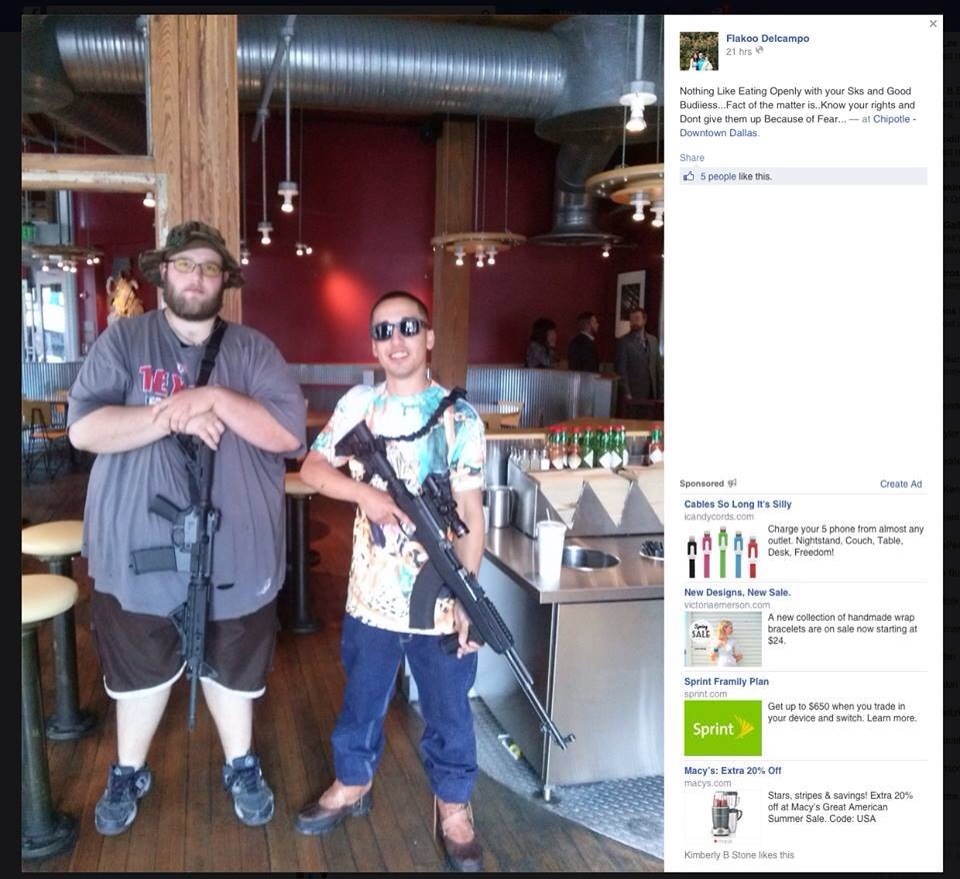
The NRA-ILA (Institute for Legislative Action) released an article today discussing the concept of being “Good Citizens” of the shooting community. The article addressed both topics of smart guns and the one on everyone’s mind, Texas Open Carry and the recent shenanigans by the OC group. Here is a link to the complete article. The discussion on Texas OC happens about halfway through the article. The one part that struck me as most relevant was this:
Recently, demonstrators have been showing up in various public places, including coffee shops and fast food restaurants, openly toting a variety of tactical long guns. Unlicensed open carry of handguns is legal in about half the U.S. states, and it is relatively common and uncontroversial in some places.
Yet while unlicensed open carry of long guns is also typically legal in most places, it is a rare sight to see someone sidle up next to you in line for lunch with a 7.62 rifle slung across his chest, much less a whole gaggle of folks descending on the same public venue with similar arms.
Let’s not mince words, not only is it rare, it’s downright weird and certainly not a practical way to go normally about your business while being prepared to defend yourself. To those who are not acquainted with the dubious practice of using public displays of firearms as a means to draw attention to oneself or one’s cause, it can be downright scary. It makes folks who might normally be perfectly open-minded about firearms feel uncomfortable and question the motives of pro-gun advocates.
I agree with this piece, and the rest of the article 100%. OC of handguns is a relatively normal and benign thing. When I see a dude OC’ing, I usually don’t even give it two thoughts, because a dude with a pistol is just a dude. However, a dude wandering around with a loaded rifle is unusual, and like ILA says, a little weird.
I’m glad to see that NRA has officially weighed in here; and I hope that the few OC hacktivists causing all these problems understand the rebuke inherent in NRA’s article.