It’s no wonder kids don’t know anything about guns

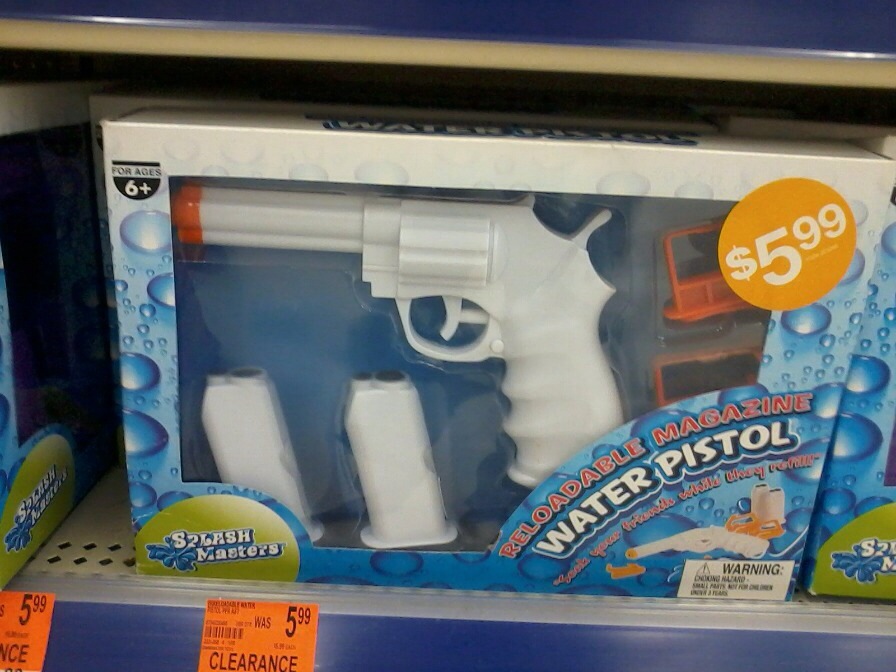
If this is the quality of the toy they’re expected to play with.

20140724-093112-34272213.jpg

Reader Eric saw that for sale in a store in Chicagoland and sent the photo in. It’s pretty funny, in a tragic sort of way. Sure, it’s just a kid’s toy, but a magazine fed revolver? This is what happens when you outsource your gun shaped toys to China! A country with no gun ownership doesn’t know what they’re doing, we need to preserve our great cultural legacy of realistic toy guns and bring our water pistol manufacturing back home. American jobs for American Workers! MURICA!

I hate finger groove grips

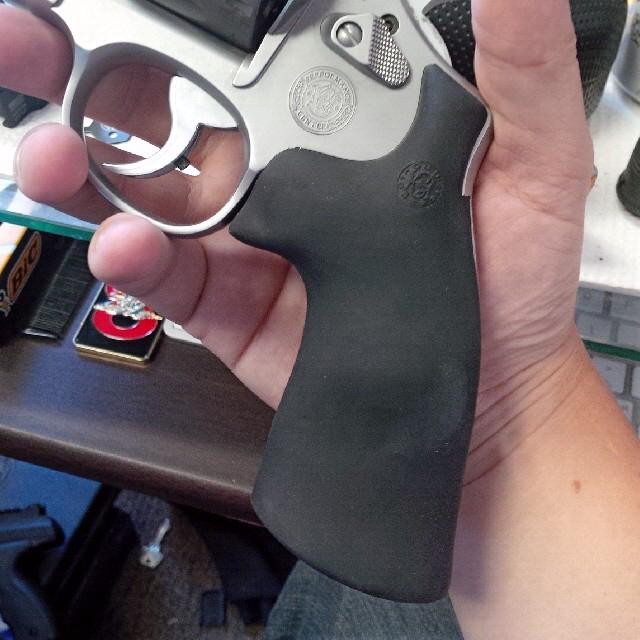
Smith & Wesson and Ruger both ship most of their revolvers with this grip, or a grip very similar to it:

IMG_20140723_111808

What I don’t get is why they keep doing that, because this grip sucks. It doesn’t fit the majority of shooters, it looks kind of dopey, and if it doesn’t fit your hand it’s going to push your hand lower on the grip than you’d really want. So why? Was there a conference the 70s where a bunch of dudes with hands even bigger than mine were all “ALL REVOS SHOULD HAVE THESE TERRIBLOR GRIPS ON THEM” or are they on guns because gun owners think they want them?

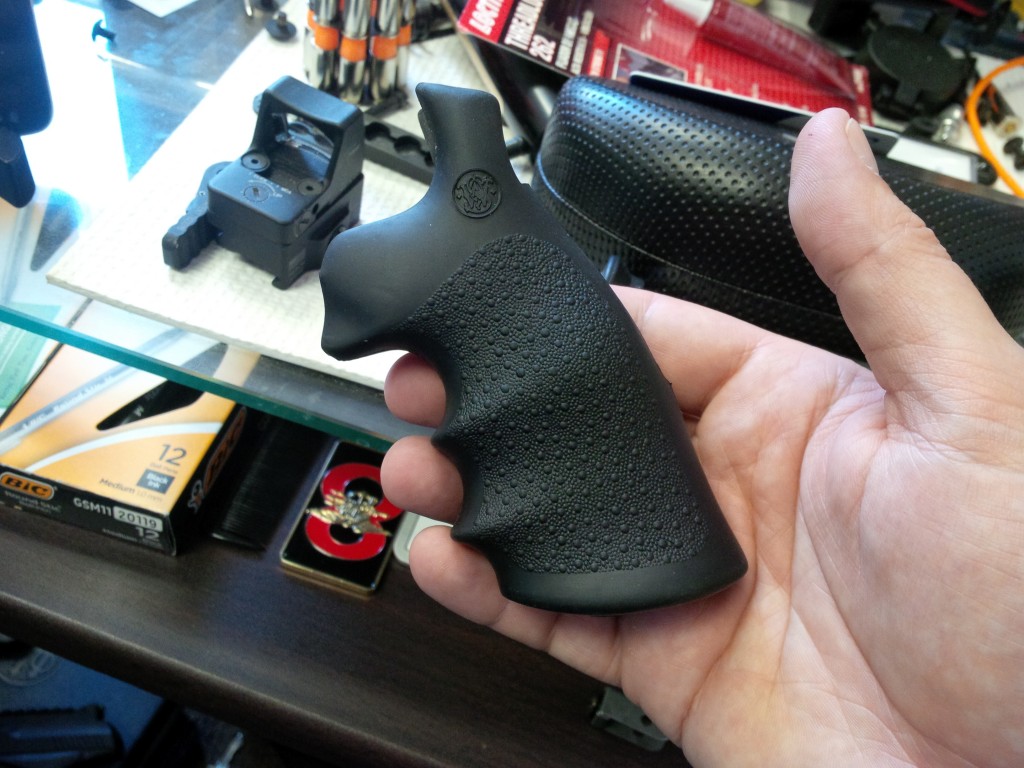
Because I know it’s not a cost issue. You know how I know it’s not a cost issue? These stocks are made by Hogue, and Hogue also makes this:

10517516_758144037582364_6622855658219228132_n

That’s a Hogue rubber grip on my 929, and it doesn’t have finger grooves. It’s nice and grippy, it’s large enough to hold on to, and most importantly it doesn’t have those stupid finger grooves on it. It costs about the same at retail as the finger groove grips, so it would be easy to ship wheelguns with these instead of the finger grooves. Hell, I’d be willing to pay a little more at retail for guns that shipped with both – just throw the good grips in the box and let shooters pick which one they’d rather have on their guns.

Maybe I’m out to lunch on this one, but is there anyone out there who genuinely prefers to have the finger grooves on their gun? I have to admit that I do have one gun with finger grooves that I like, it’s a Security Six set up for bullseye/Bianchi Cup with wood stocks that I shaped to fit my hand. So that’s one thing. But out of the box, these rubber finger groove grips just seem terrible. If you like them and think I’m crazy, let me know, because I’d love to see a convincing case for grooves instead the vastly superior in every way rubber stocks without the finger grooves.

Tales From a 3gun Beginner: Thinking Like a 3gunner

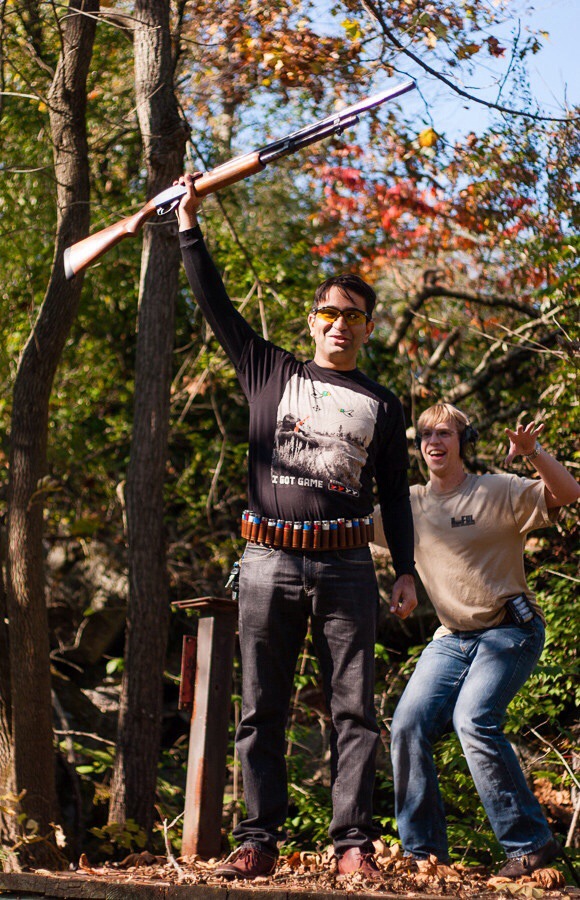
20140723-114644-42404887.jpgAfter training with top 3 gun pro-shooters for months now, I have begun to understand their methodology. I like 3gun as a shooting competition, because it’s all about assessing a situation and thinking on your feet. Every stage can be tackled a number of different ways and every shooter will have their own technique for approaching one. At this past weekends ATL3Gun match, a shotgun-only stage had my squad a bit puzzled. There were 18 clays spread throughout a “jungle” environment. Some clays were hidden behind trees and could only been seen from specific angles. Further, there was no obvious path through the shooting area.

Continue reading →

90 Second Gun Review: Remington 870 Magpul

In honor of #pumpday I did a 90 second (and change) review of the Remington Magpul 870 Tactical FDE Express. Wait, that’s out of order. It’s the Remington 870 Express Tactical Magpul FDE. That is the longest name for a pretty rad shotgun. For a more in-depth look, check out the Remington 870 Magpul Review.

Photo of the day: Smith & Wesson high capacity clips!

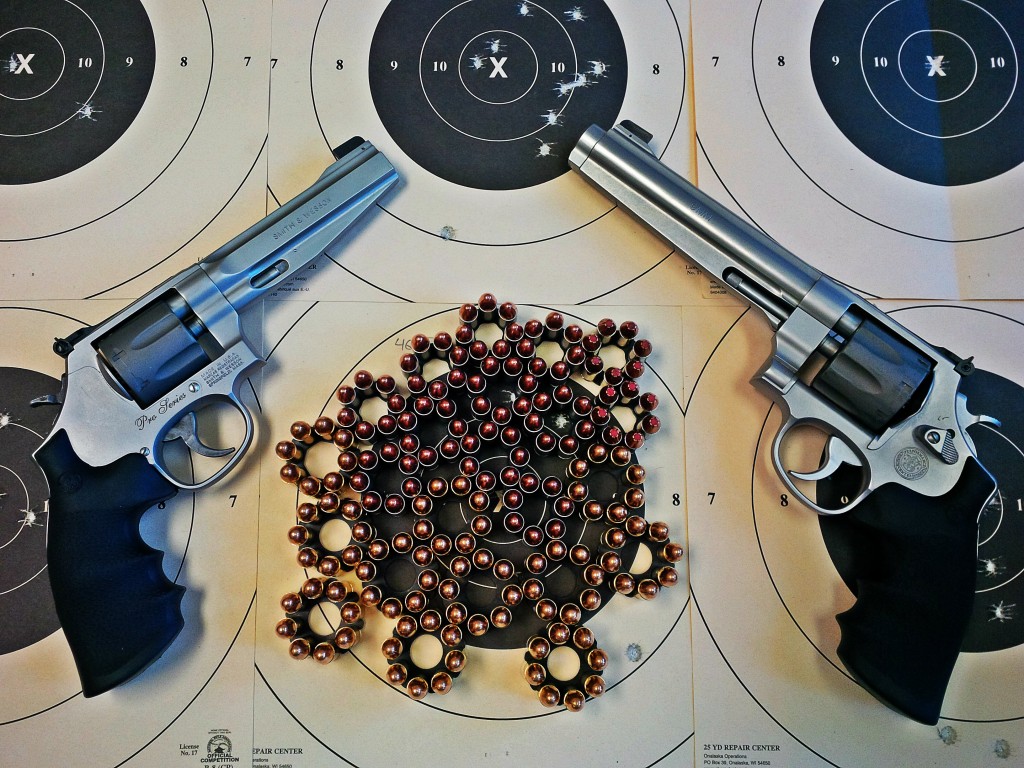
moonclip revolvers

Since a “regular” revolver’s capacity is 6, I’m pretty sure that makes these 7 and 8 shot clips “high” capacity. Also, I mentioned this on my Facebook page, but I love shooting moonclip guns because it gives me an excuse to say “clips” about ammo containing devices and be correct. “MY CLIPS ARE EMPTY!”

Going back to the Area 3 Championship this year

Last year, I shot the USPSA Area 3 Championship in a single day in Single Stack division. Last year, I was really impressed with the facility and the catering, but I thought the stages were a little heavy towards high round counts. Plus, I made the huge mistake of shooting the entire match in a single day, so I was totally and completely wiped out by the end of it.

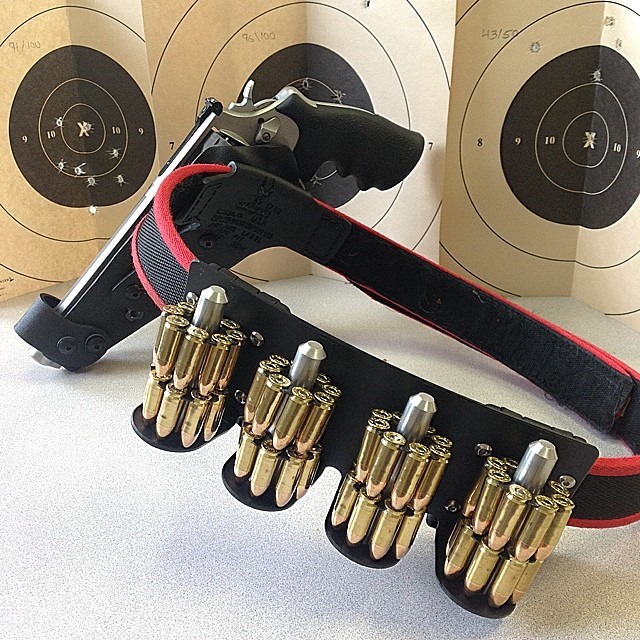
S&W 929 9mm revolver competition holster

So when the opportunity presented itself to go back this year and shoot revolver, I was ALL OVER IT. Thanks to USPSA’s new rules, I can run my new 929 9mm revolver in Revolver division, and I (probably) won’t have to do a bunch of static reloads like I would if I was running a six-shooter. I was also smarter this year, and squadded myself up for Sat/Sun shooting instead of all day Friday, because 14 stages in a single day really was pretty awful.

Here’s my mindset for the match: “Don’t get DQ’d.” Honestly, this is a no-expectation sort of match for me, there are a couple of pretty good revo guys at this match so I certainly don’t expect to win, plus the fact that it’s two weeks away and I’ve practiced exactly zero reloads. Basically I’m going down to Nebraska to hang out for a couple of days, shoot my 929 a bunch, and have a good time. I do actually want to get back to shooting revolvers, I’d taken a break for a while because I was testing guns and doing some other stuff, but I always seem to enjoy my time with wheelguns more.

Let me know if you’re coming to Area 3 in the comments, and if you’re not squadded up there’s plenty of room in squad 41.

Why do people hit performance plateaus?

In my quick post analyzing my classifier performance at yesterday’s USPSA match, I noted that my shooting hasn’t really gotten any better or worse in the last couple of years. I’ve been aware of this plateau for a while now, and have from time to time batted around ideas for getting off it and improving my shooting. The truth is that I know what I need to do if I really wanted to step my game up past the B/A class level – I’d need to devote significant amounts of time and energy to actually practicing. Madness, I know. But that’s a different post, because today I want to talk about what causes people’s gains to go flat over time. There are quite a few different things that can cause it, and in many cases it’s a combination of factors.

1. Lack of a next goal after achieving the initial goal
I’ll use myself as an example because it’s comfortable: in 2011-2012 I was really focused on making 5-Gun Master in IDPA. Regardless of how you feel about IDPA classifications, it was a clear goal with a clear trajectory to accomplishing it. To get there I shot a lot of IDPA classifiers in practice and a lot of IDPA specific drills. After I got my 5-gun ticket punched, my next goal was to make A-class in USPSA, because I was sponsored at the time, I had to do it in Limited 10. After I accomplished that, I’ve not really had any specific sort of performance goals. Sure, there are things I’d like to do, such as break 1800 at the Cup with an iron sight gun, but I’ve not really invested the time and energy necessary into getting there. There’s a reason for that, and it’s number 2 on our list.

2. Time is a zero-sum game
This should really be the number 1 reason people hit plateaus. As you get better at a thing, whether it’s running, weight-lifting, or shooting, incremental gains require a greater amount of time to reach them. For example: it’s harder to go from a 22:30 5K run to a 21:00 5K than it is to go from a 45 minute 5k down to a 30 minute time. The same applies to shooting as well: it’s harder to go from A-class to GM class than it is to go from C-class to A-class. Because it’s harder, it requires more time invested, which means that people who aren’t deeply invested in improving their performance in that specific activity will frequently invest only the amount of time necessary to keep their skills from falling off.

3. People only want to do something in their free time as long as it’s fun
For most people, shooting/running/eating contests are just a hobby. It’s the thing you do when you’re not at work that you do because you enjoy it. When that thing, whatever it is, becomes like work, it’s very easy to stall out and go do something that’s actually fun. For example: dry fire. I have mentioned how boring and tedious I find dry fire; I would rather pound out miles on the track than dry fire. Running is more fun for me than dry fire (which has had the side benefit of improving my cardio quite a bit lately).

Now that we’ve looked at what causes performance plateaus, tomorrow we can talk about how to address them and get off the flattop.

Mindset

Mindset is important. Under stress the human body is capable of amazing things. But you can have all the mindset in the world and still have your body fail because it lacks the physical capacity to accomplish the task you’ve set out. I can have all the mindset in the world to run a marathon, but if I haven’t trained my body I’ll fail. I have the right mindset to dead lift 350 pounds, but if I try it tomorrow I’ll fail because I’m quite literally not strong enough.

Caleb Area 3

Mindset is hugely important. But the kind of people who say that mindset can overcome a lack of physical ability and training are the sort of people who’ve never spent any real time testing and improving their physical abilities. Bottom line: I can have the right mindset to shoot a 4.00 second El Pres but if I don’t put in the time and training to get there, “mindset” just becomes a code word for self-delusion.

There are two overarching types of mindset, positive and negative. The “I think I can” vs “I think I can’t” and for the purpose of this discussion we’ll eliminate the negative mindset entirely. It is an absolute truth that if you believe you can’t do something, you won’t. But because the negative mind is so powerful, people often assume that the inverse is true: if I believe I can do something, I will! This sort of Little Engine that Could philosophy is fine for 2nd graders, but it doesn’t have a place in performance training. What mindset should do, what the right mindset will do is allow you to unlock the limits of your trained physical capacity. Here are two examples pulled from running:

  1. I want to run a 25k race. My training plan never has me run more than 5k. But I BELIEVE I can run 25k. On race day, at 5k I tell myself “you can do this” and push myself past what I’ve trained to do. I reach 10k, and I then I fail because mindset doesn’t push blood into my legs.
  2. I want to run a 5k race. My training plan has me run various distances, up to and including 5k. On race day, I say “I want to run this race in under 30 minutes” even though my best time in practice for an entire 5k is 30:30. But I also know I can run a 3k race in 15 minutes, and I can run a single kilometer as fast as 4:30. So on race day, I go out knowing my performance capabilities, and push a little harder to string together 5 consecutive legs of 5:45 kilometers, and I accomplish my goal with a 28:45.

In both instances I had “good” mindset, but in the first I was just deluding myself because I had no idea what my actual performance capabilities were. The same applies to shooting, and I’ll use an actual real example of myself. In 2013, I shot Single Stack Nationals for the first time. I wanted to win B-class, and I believed that I had the necessary shooting skills to pull it off. I was wrong, and finished 6th in my class. I didn’t fail because of my mindset, I failed because I wasn’t good enough at shooting. I lacked the physical skills to accomplish my goal, in part because I didn’t understand the level I needed to be able to perform to in order to win.

“But Caleb”, you’re saying “What about those soldiers who overcome incredible odds in spite of serious injuries to prevail?” Oh, you mean those guys whose job and training revolves around being able to defeat a determined foe in the worst conditions? Yes, they had great mindset…because they understood what they were capable of under optimal circumstances and were able to adapt when the situation went pear shaped. That’s the key thing to remember about mindset: you can have all the positive mindset in the world, but unless you know what you’re capable of under optimal circumstances, having a good mindset won’t help you when you’re under stress.

Mindset allows you to access your maximum trained potential. If you don’t know how fast you can run a mile, all the mindset in the world won’t help you run a marathon. Mindset isn’t some magical thinking that turns average, doughy citizens into SheepDog Warrior Protectors. It’s a function of a disciplined mind and a solid training regimen.

SilencerCo Announces First Commercial Shotgun Suppressor

WEST VALLEY CITY, UTAH – July 21, 2014 | Confirming its place as a trailblazer in the firearms industry, suppressor manufacturer SilencerCo has unveiled the first commercially-viable shotgun silencer ever produced. The company made the announcement today at an exclusive event near its Utah headquarters.

Continue reading →