- BB calibration: 607 fps, 3.4″
- Impact velocity: 1,182 fps
- Penetration: 22.1″
- Retained weight: 157.3 gr
- Max expansion: 0.398″
- Min expansion: 0.363″
Almost had a dynamic critical incident the other day
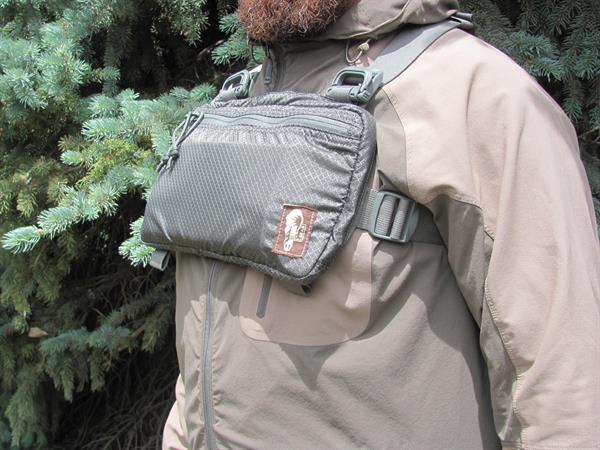
As I was going for a run through on the lovely Sioux Falls river trail the other day, I had a random encounter with a bum. From 5 yards away and down-wind, I could smell the booze on him. He made aggressive eye contact with me as I ran past, so I immediately went into condition black, drew my Bren Ten from Hill People Gear Chest bag, and blasted him out of his socks.
No, of course not. I just kept running. I also would never wear one of those chest bags, because it’s somehow even dorkier than wearing a fanny pack. Seriously, have you seen these? It’s like a giant, ugly fanny pack that you wear across your chest. It should come with a sticker that says “virginity protector.”
But back to the actual incident, I kept running past the drunken bum. My usual route is an out-and-back, so I return along the same path and I see the guy getting aggressive with three older dudes sitting on a park bench. As I get closer, the aggressive stuff turns into shoving, which escalates into a kind of slapfight/shoving/maybe punching match. I didn’t stick around to see the results, because I have no desire to get involved in someone else’s fight. My escape and evasion plan of “keep running” worked pretty well, though.
Now, while this kind of a humorous article, the topic of self-defense while running is a serious one. My standard plan is “since I’m running, I think I’ll just run faster.” I don’t ever run with headphones in, because I actually like to experience my environment when I’m out on the trails. I’ve never really found an acceptable carry solution for running – belly bands move around too much, fanny packs are fanny packs, and I’ve made my feelings about that chest bag pretty plain (I should note, I think it’s actually a great product, it’s just a little too dorky to wear while running. Hiking around in the woods? Sure). But my self-defense plan for when I’m running is pretty simple: I don’t run at night, and I don’t run in shady places. Yes, I know that no man knows the day or hour when the balloon will go up while they see the elephant, but I reckon I can minimize my chances by not going to places where that sort of thing happens. It’s why I run in the nice park, and not in Van Epps Park, aka Stabbing Time Station.
That’s the most effective self-defense tool of them all. Don’t go to stupid places at stupid times, and even if you’re in a nice place, keep your head up. Stay alert. Don’t be afraid to cross the street to get away from shady mofos.
Quark Tactical QTL
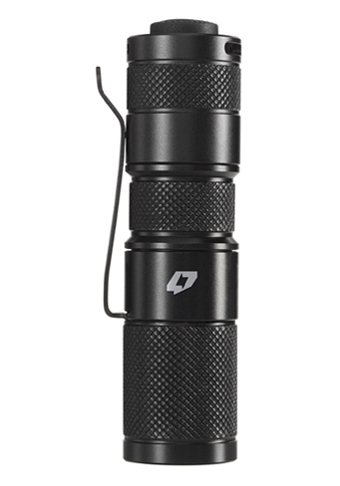
One of the questions I’m most frequently asked is what I use for EDC, or Every Day Carry by folks looking for advice on concealed carry and self defense. While a serviceable firearm is certainly a priority for EDC, it’s not the only tool I keep handy. The EDC item I use more than any other, thankfully, is a flashlight. The flashlight is a magnificently useful little tool and ready access to one has made life easier or helped solve a major problem on more than one occasion.
In the old days there were basically three flashlights. The military’s goose-necked flashlight, a $3 plastic flashlight you could buy at any drug store that had about as much power as a lit match, and the Mag-Lite. The Mag-Lite was the king of the flashlight world for many years because it was extremely durable. It was so durable that many a police officer discovered it made one hell of a good impact weapon and would even keep working after being used to subdue a violent felon. The size and weight of the light worked well for putting the hurt on carjackers, but it made the thing difficult to carry and even more difficult to use with a handgun. The average Joe typically kept one in the trunk in case of emergency, but having one on your person at all times was quite inconvenient.
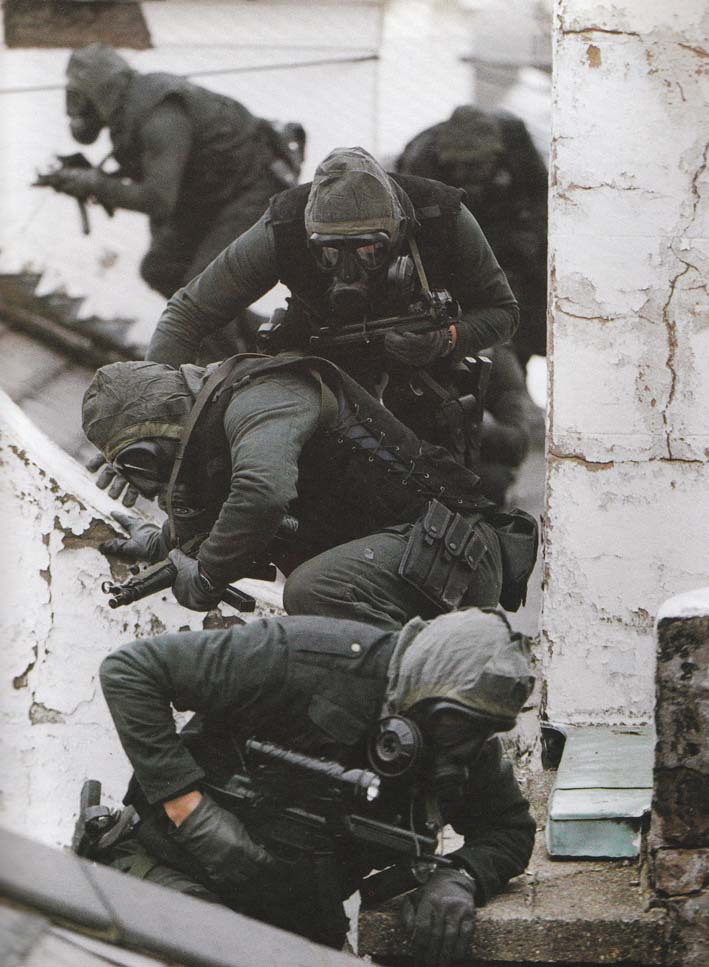
Various elite law enforcement and military units found that they needed to have a white light mounted to their weapons, and in the old days they would use hose clamps and duct-tape to mount a Mag-Lite. The iconic press images of the British SAS raiding the Iranian embassy include a number of troops armed with H&K MP5 sub-machineguns with the big lights attached to them rather crudely. It worked, but was far from optimal. These groups sought more powerful, more compact lights to mount to their weapons and that search set off a revolution in flashlight technology. By the late 1990’s Surefire had come to prominence for making lights small enough to mount on weapons and yet powerful enough to light up most of a room. The combination of reliability, compactness, and power that they offered made them the gold standard. The appeal went far beyond those who carried guns for a living and just about everyone who up to that point had been carrying a mini Mag-Lite bought themselves a Surefire.
I’ve been using Surefire products faithfully since the late 1990’s because they simply worked and did so better than anything else I tried. They were expensive, certainly, but I was willing to pay a bit of a premium for reliability. Every now and then I’d buy one of the Chinese manufactured LED lights people raved about but I never found them to be as reliable or easy to use as the Surefire products…especially since many of those lights had a bunch of different functions on them that were pretty neat if you are into flashlight geekery but are just annoying if you want to use the light as a tool rather than regard it as a personal novelty.
On the recommendation of some friends (I’m privileged to have some pretty awesome friends who have a lot of experience and in-depth knowledge of gear) I strayed once again from the Surefire fold and purchased a Quark Tactical QTL. It’s a tiny little light that runs off of a single CR123A battery. It’s powerful enough to light up a large room but small enough to fit in your pocket or on a keychain without being out of place.
The light has a number of different modes which can be “programmed” into it by a process that I won’t even attempt to describe here. Suffice it to say it involves twisting the bezel of the light in a certain pattern to program in a primary and secondary function and that it took me a few tries to get the hang of it. I have mine set to strobe as a primary function and constant-on as a secondary function. Where most lights make you cycle through the functions of the light with the activation button, Quark’s neat little light allows you to switch between the primary and secondary functions by twisting the bezel half a turn. I greatly prefer this system because it allows me to know exactly what I’m going to get when I draw the light. If I’m doing mundane chore stuff that requires a light, I set it to the constant-on setting and go. When I’m out and about with use against potential bad guys first in my mind, I set it to the strobe. If I need to convert from the strobe to constant-on, twisting the bezel is a breeze.
I’ve been using the light pretty heavily for almost two months now and so far the only complaint I have is the rather awkward initial programming sequence. The light is strong, it’s still using the original battery, the pocket clip seems to be sturdy and shows no sign of breaking. So far, I’m pleasantly surprised. This little Quark is a cut above the other Surefire competitors that I’ve tried. The Quark Tactical QTL retails for around $50, which is a darn good price for such an item. Maybe my age is showing, but I remember when the only halfway practical multi-function light on the market was the Gladius and that thing cost over $300. This little light is smaller, more powerful, more reliable, works better, and comes in at 1/6th of the cost. Not bad.
If you are serious about self defense, a good light should be a priority item for you. If you don’t already have a good light or you’re looking for something that’s very compact, powerful, and reliable I think the Quark QTL is worth a look. For $50 it’s hard to go wrong with this little light. I’m not quite ready to abandon Surefire, as I still own several of their products and will continue to use them well into the future. I’d argue nobody makes a better weapon light than the X300U, for instance…but for the light I carry on my person every day the Quark QTL might just be the better mousetrap.
Photo of the day: More light is better
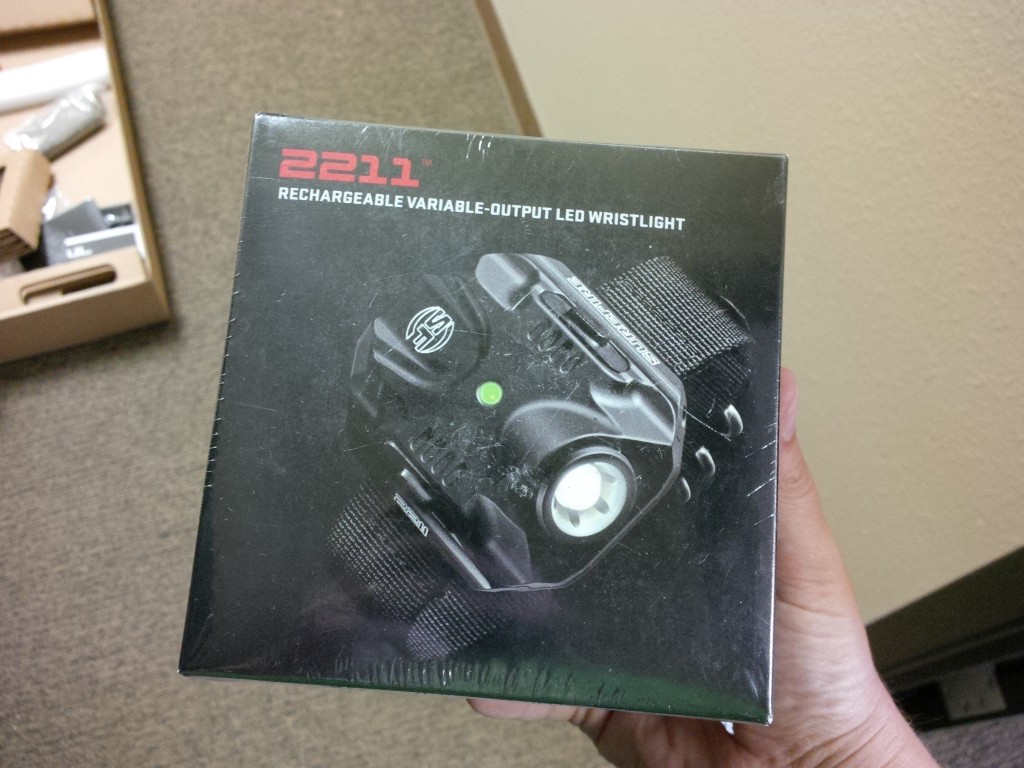
Got a new toy for M3GI…
Midnight 3-Gun is around the corner!
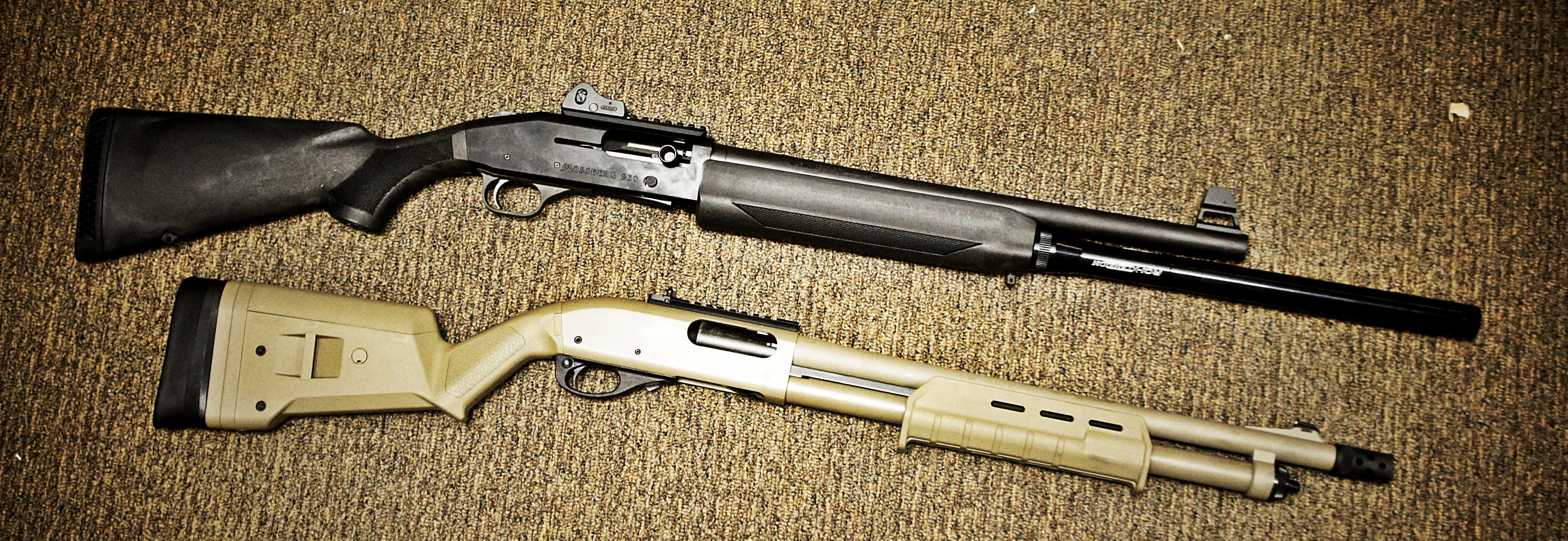
One of the coolest matches of the year is right around the corner, and I’m excited to get the chance to head out and shoot the Crimson Trace M3GI again. It’s basically the only 3-gun match I shoot each year, and I like to use it as an opportunity to test guns and gear that I’d use in an actual self-defense situation. This year I’ll be shooting my Troy Defense Lamb Carbine, my Remington 870 Magpul FDE, and (probably) the HK VP9.
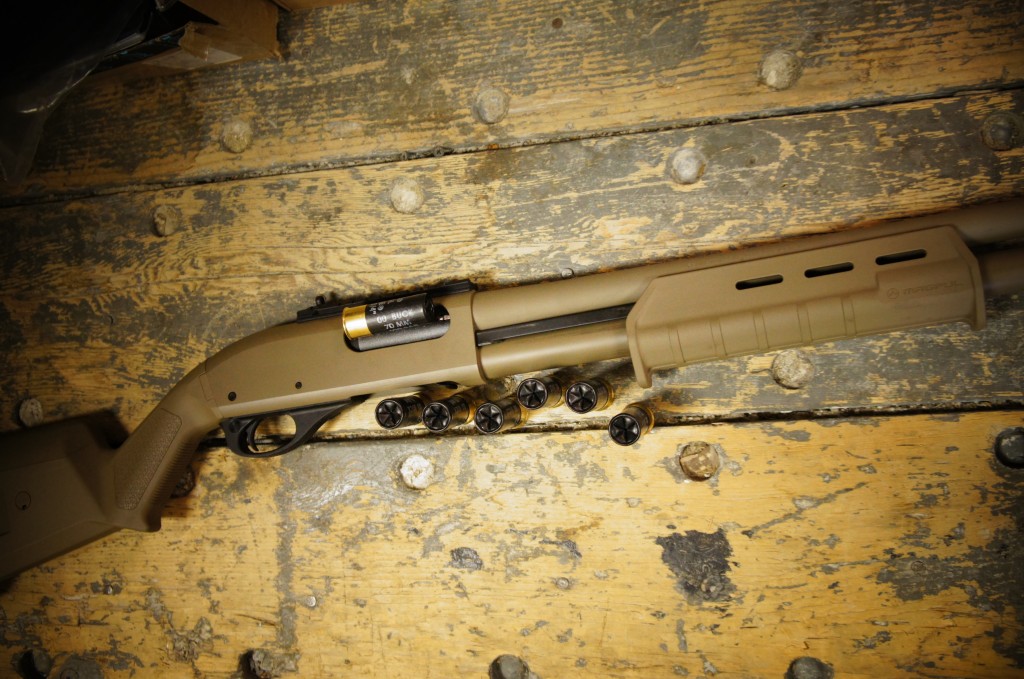
Crimson Trace puts on a great match, the facilities are excellent, the stages are fun, and the added element of shooting in the dark actually makes the match a lot more applicable than most other 3-gun matches. Let’s face it, if I ever have to shoot someone with a shotgun, it’s probably going to be at 2am when they’re kicking down the door of my condo. If I can get my defensive gear set up to hit a clay bird 10 yards away at 2am, hitting a person shouldn’t be a problem.
The question for you, dear readers is this: what coverage would you like to see from M3GI? It’s actually…kind of a difficult match to cover as a reporter, because it’s in the dark. So there’s not a lot of great photography, and video is similarly difficult. That’s why I’m open to suggestions. What would you like to have us make? Podcasts? Photos during the day, and some stuff from the night? This one is all your court, gunternet. Make it count!
Federal American Eagle 124 grain 9mm
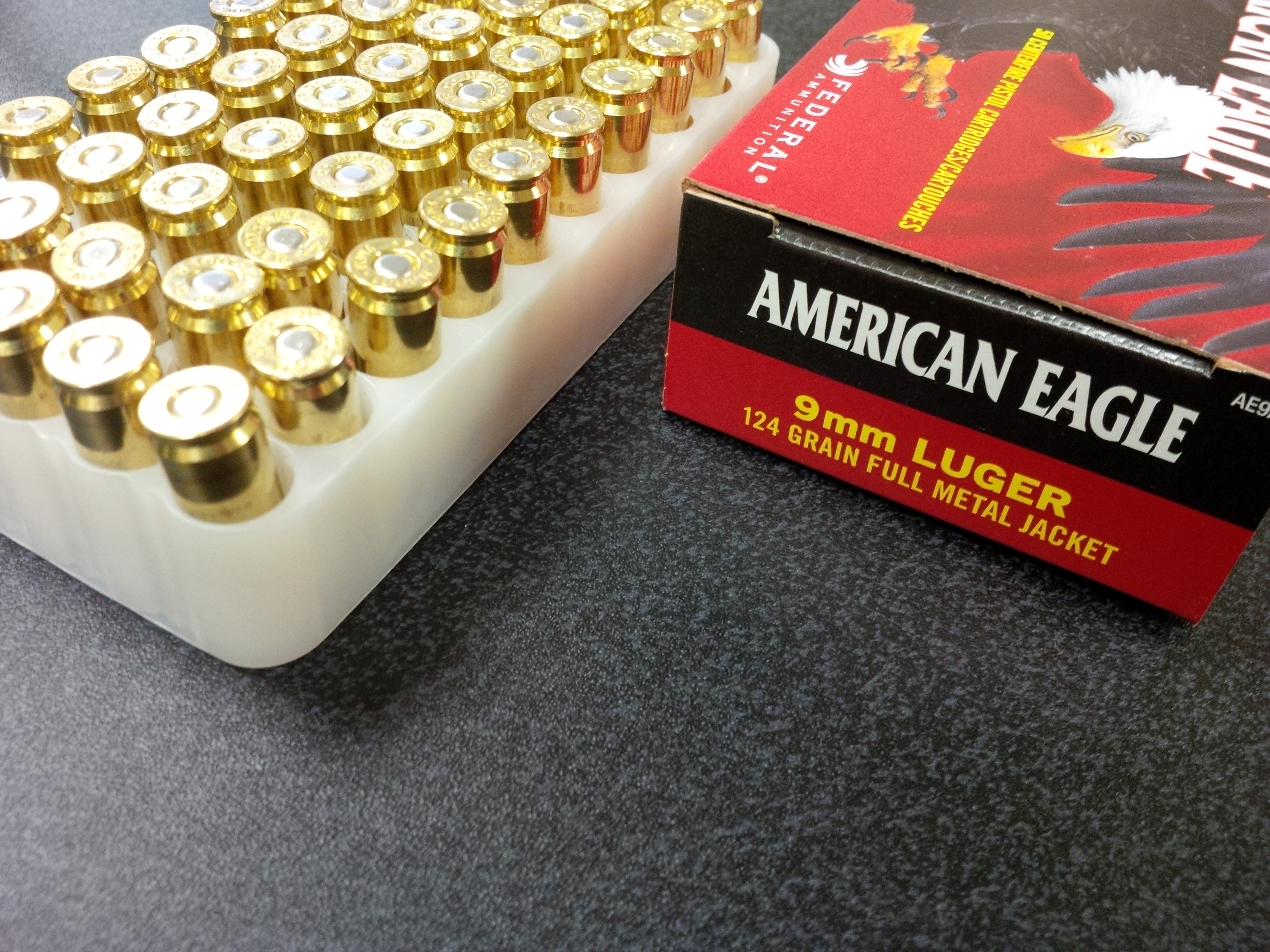
At last weekend’s Area 3 Championship, I spent the entire match shooting Federal American Eagle 124 grain 9mm ammo. Federal has been a great supporter of the blog and GunUp the Magazine, and provided the ammo for us to use for testing and evaluation. I shot the entire match with this ammo, and I wanted to make a brief post about it, because it was excellent.
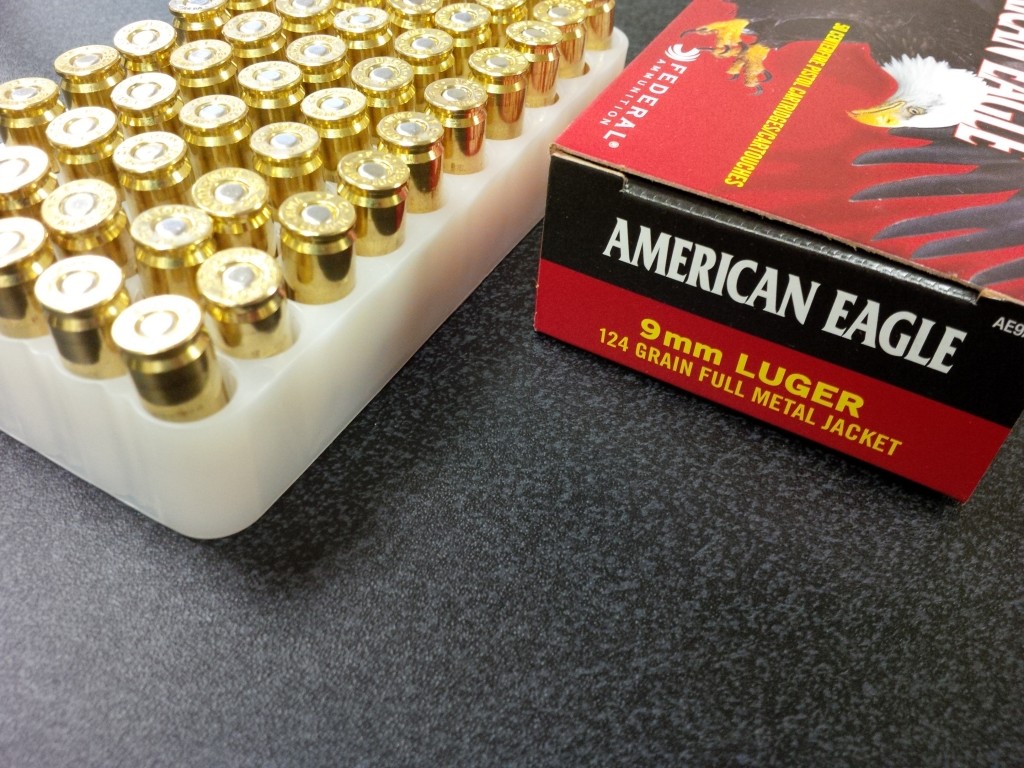
When I actually did this crazy thing called “aiming” the rounds were plenty accurate for the game; what was really impressive to me was their consistency. For those not familiar, major matches like Area 3 have an equipment check station, where your ammunition is checked to make sure it meets the rules for the game. They take a random sample, pull a bullet, weigh it, and then chrono three rounds. The average of those three rounds velocity is used to calculate your power factor. For USPSA, the minimum PF is 125, which with a 124 grain bullet, I would need a muzzle velocity of about 1010 FPS. I like to shoot rounds around 130/135ish power factor. The American Eagle ammo had three rounds through the chrono that went at the following numbers: 1108, 1109, and 1098. That gives me an average of 1105 for a power factor of 137. That will put steel down.
I thought it was neat that the standard deviation of the three rounds was 6, and how consistent they were. It’s nice to see that some factory ammo is still being held to high standards of quality control. I generally recommend American Eagle for high volume practice ammo, and this only reinforces that recommendation.
USPSA Area 3 full match with commentary
Plain shooting videos can be kind of boring sometimes. I watch a lot of video game videos where they play the game and have commentary over the top of it, so I wanted to give it a try with shooting videos. Instead of just watching me shoot, this gives us a chance to get inside the shooter’s head, and hopefully laugh a little bit.
LAPD Retired Officer CCW Qualification Course
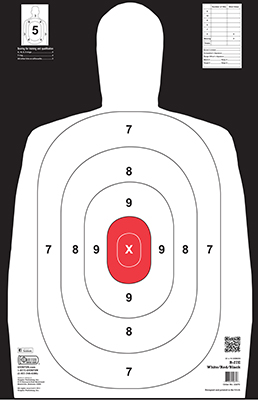
To comply with the Law Enforcement Officers Safety Act (LEOSA) which allows retired cops to carry concealed legally across the nation, LAPD instituted a qualification course for granting CCW to their retired personnel. The course is fired at a B-27 target at a distance of 7 yards, there is no time limit.
Here is the full course of fire, taken from the LAPD Manual:
The starting position for this qualifying course of fire will begin at the 7 Yard Line. When the target faces, the shooter will draw and fire 10 rounds at a single silhouette target. A score of 70 percent is required to pass the qualification. All rounds impacting anywhere on the body and head will receive full value and rounds impacting upon the arms are half value.
There is no time limit, so all you need to do is hit 7/10 shots in the torso or head of the target. It’s a pretty easy test, and yet I think it’s also a really good drill to run at the beginning of a basic pistol class.
Think about it, if you’re teaching an “introduction/fundamental/basic CCW” course, this wouldn’t be a bad drill to start with at the beginning of the class. Once you go over safe gunhandling, you get everyone on the line, and then go down the line student by student and have them execute this drill. You’ll be able to get a get a pretty good grasp of individual shooting skills based on how quickly and accurately people shoot the drill.
What do you think? I know we have some instructors that read the blog, would you use this drill as a basic fundamental skills test for new shooters in a basic class?
It shoots through schools
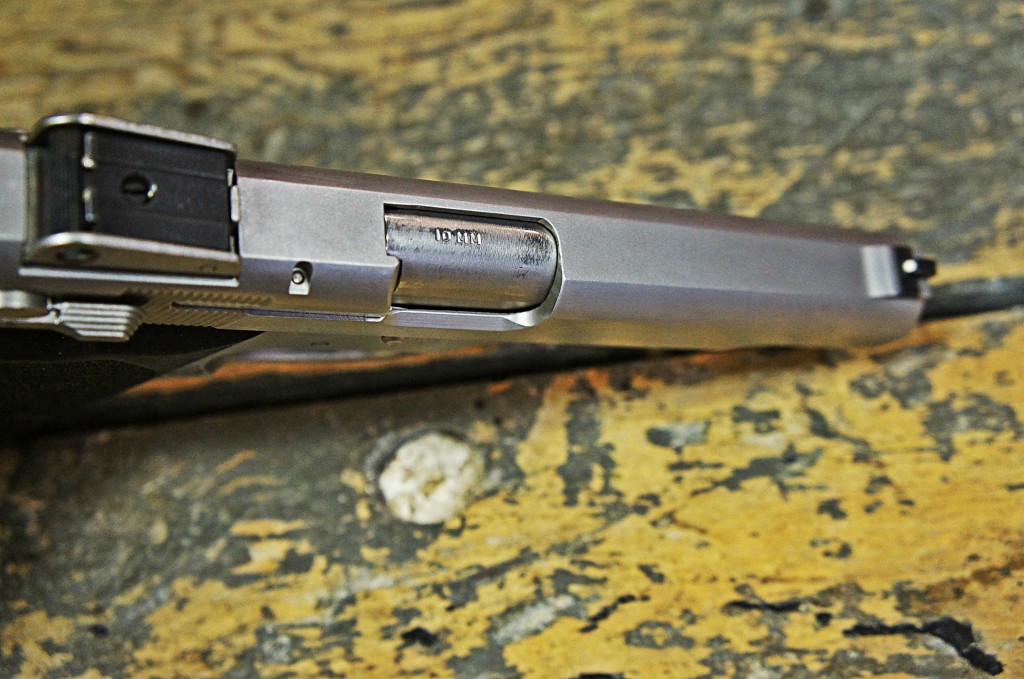
One of the coolest guns ever made, the Smith & Wesson Model 1006. The coolest 10mm ever (because the Bren 10 never really existed outside of Miami Vice), this gun and its cartridge is responsible for more internet fights about stopping power than I’d care to imagine. More photos below the jump!
1000 yard revolver shot with Jerry Miculek
Of course it’s Jerry Miculek. Of course it’s 1000 yards. Ridiculous. Amazing. This is what a lifetime of practice and training gets you: superhuman abilities. I couldn’t make that hit in 2 shots with a rifle from a bipod, and Jerry just whacks it with a wheelgun carrying an itty bitty red dot.