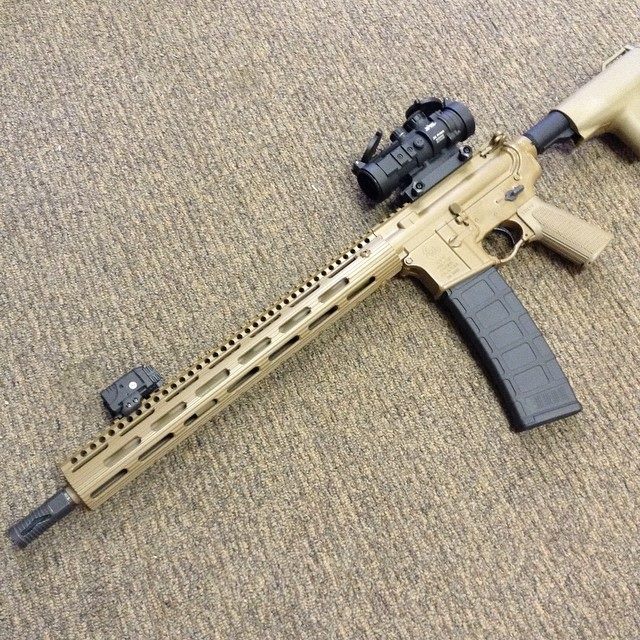
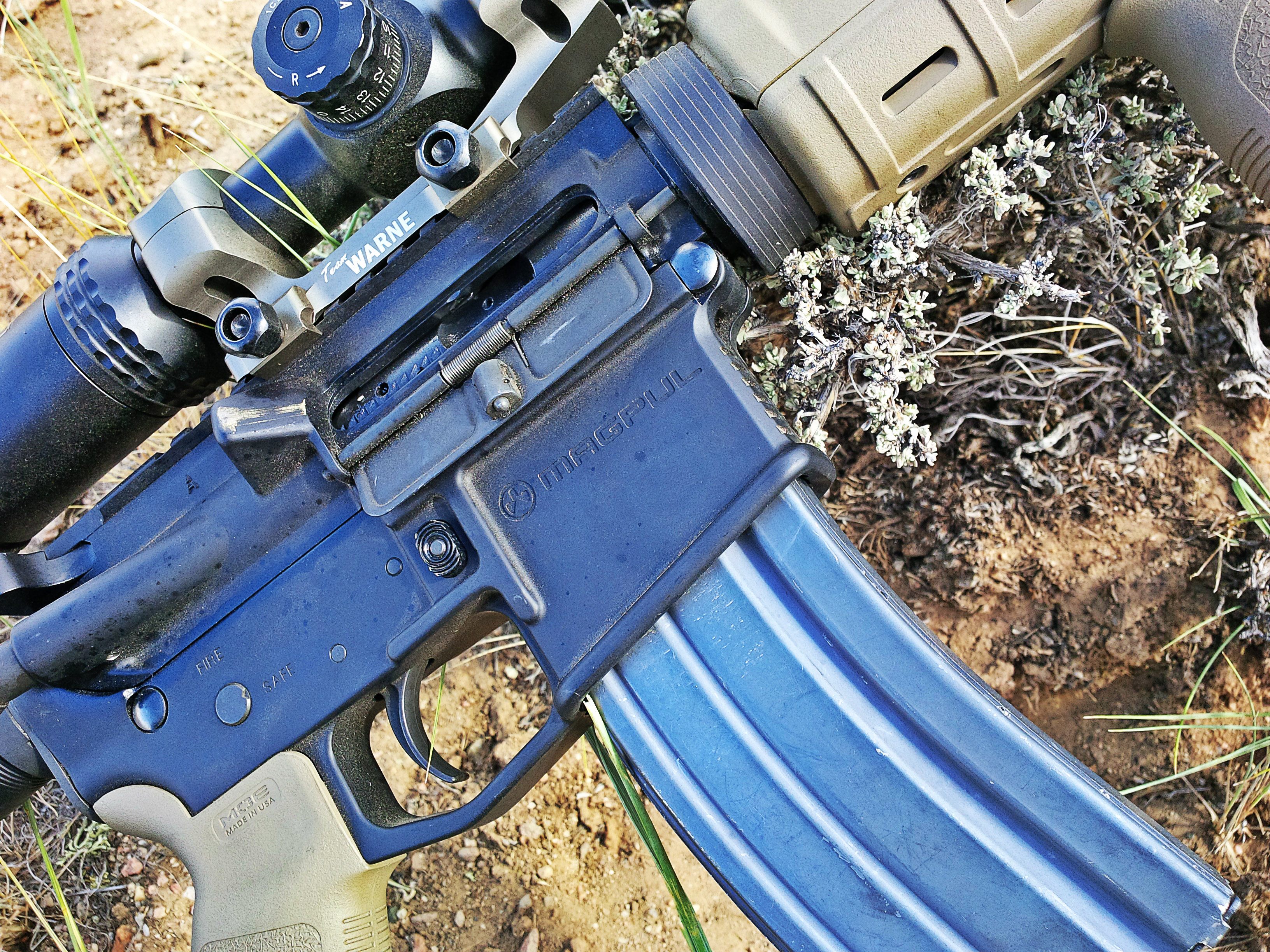
The last of my M3GI guns:
- Troy Defense Lamb Carbine
- Burris Optics 332 Prismatic Scope
- Magpul 40 round Pmag (because reloading is stupid)
SHOOOOOT HEEEERRRRRR
The last of my M3GI guns:
SHOOOOOT HEEEERRRRRR
On Facebook, there is a discussion of some upcoming ballot initiatives in Washington State. The initiatives are I-591 and I-594. 591 is Pro-Gun and limits the state’s ability to confiscate firearms, and 594 is anti-gun, and sets up a draconian background check law that would make Bloomberg proud. There are some complaints that NRA isn’t getting involved, because a lot of gun owners tend to view NRA as this giant, monolithic organization with nearly unlimited resources. Of course it’s not, but it seems that whenever there is a local gun rights battle at the state level and NRA doesn’t get involved, people are quick to scream “where is the NRA?”
The truth of the matter is that some battles are better left to state level organizations. When you’re talking about gun rights, there are two board sorts of fights, the strategic level stuff, such as national legislation and Supreme Court cases. Victories or losses at the strategic level strongly influence the fights at the tactical level; state wide initiatives, state and local elections, that sort of thing. For example, Heller and McDonald, both big strategic wins paved the way for tactical wins in Illinois, DC, etc.
NRA’s role at the state level is dependent on a multitude of factors. First, ILA employs lobbyists for each state, but those state level lobbyists are usually assigned to more than one state. For example a lobbyist could be responsible for state legislation in Indiana, Missouri, and Oklahoma. The lobbyist in WA is probably responsible for California and Oregon as well (talk about a rough gig).
The second factor for NRA’s effective at the local level is dependent entirely on the volunteer network, which is run by Election Volunteer Coordinators. EVCs are the backbone of NRA in local fights, because they’re the volunteers on the ground that actually get people together to make phone calls, do door knocks, and distribute political information. If you don’t have good EVCs on the ground, you don’t win.
A third weapon in the NRA’s bag are contractors, usually called Campaign Field Reps. I was a CFR for NRA in Washington State in 2010. CFR’s primarily responsibility is Get Out the Vote activities. They’ll organize phone banks, distribute literature, organize door knocks, etc. They’re limited in scope to only representing the campaigns that NRA has endorsed in their area. A good CFR can have a huge impact on an election or initiative.
Speaking of initiatives, those represent an interesting problem. Fighting for or against a ballot initiative is like trying to win an election. It’s all about boots on the ground, traditional GOTV (get out the vote) activities. It’s different from fighting a piece of legislation, because a lobbyist fighting for or against legislation has a pretty good idea of where the votes are going to come from. To win an election or fight a ballot initiative, you have to make sure that your base, the people who are motivated on your topic are 1) aware of the issue and 2) motivated to vote.
Washington is a special case for gun rights; while the state west of the Cascades trends blue/liberal, there is a strong gun owning community in what is a democrat stronghold. East of the mountains, the political landscape is largely conservative. But that conservative population frequently feels disenfranchised, because many of them have bought into the narrative that they can’t outvote King/Pierce Counties. That’s sort of true – with average voter turnout numbers, they can’t. But if the east-range area were to have, say 80% voter turnout and the King/Pierce area were to have its regular turnout, Washington would be a red state.
Which is why GOTV activities are so important. It’s really not about winning people’s hearts and minds. This is ground level tactical stuff: 1) find the people who would vote for you, 2) make sure they do. That’s it. That’s how you defeat or win a ballot initiative. One of the best examples how to do this in Washington was put on a couple of years ago by Cosco, who successfully had a ballot initiative go through to allow for liquor sales by private companies. It took a ton of legwork and a ton of money, but they got it done.
If you want to defeat a ballot initiative, or get a ballot initiative passed, the question isn’t “where is the NRA.” The question you should be asking is “how can I set up a phone bank?” Get a skype account, get a list of gun club members or something, and start calling people. No one is stopping you from doing that. Local elections and ballot initiatives are tactical fights, and they’re won and lost at the grassroots level.
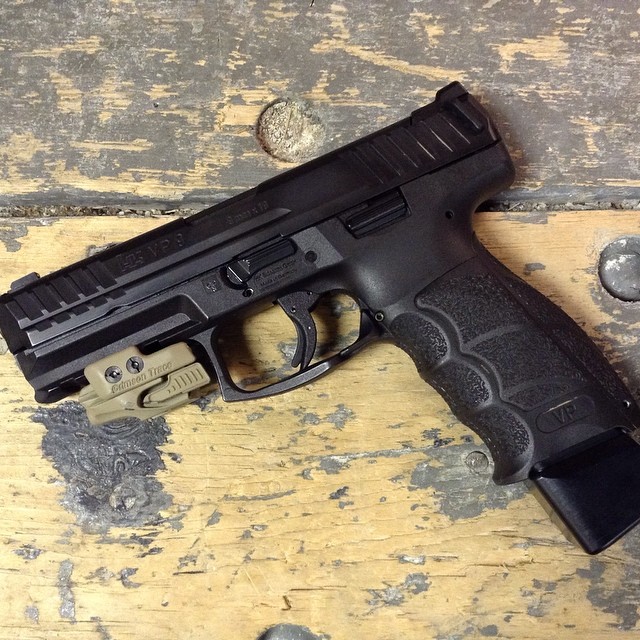
My handgun choice for M3GI went around a few different tracks. I really wanted to run an all Beretta rig, with the same PX4 that I shot at Bianchi, coupled up with an ARX and a 1301. Unfortunately that wasn’t able to come together, and then Troy graciously hooked me up with the sweet Lamb carbine I’ll be using. So what to do for a handgun? Well well well, how about the HK VP9?
The only problem with the VP9 for three-gun is the capacity. It’s a 15 round gun, and I ran a 15 round gun last year (Sig P229). I didn’t like having to reload in the dark, so to fix that problem I added a sweet Taylor Freelance +5 basepad to the VP9. I also put a laser on it, which will solve the other problem I had last year: no really good night shooting device on the Sig. The sights are also different, instead of the night sights that come with the gun, they’re now 10-8 Performance brass bead front sight with a black rear sight. While I’m losing the “night visibility” of the other sights, I’ll have enough light on my body that I should be able to see them just fine. And also, that’s what the laser is for. White light to see the target, red laser to hose it.
I do like the VP9, and I think for the price point it’s a competitive choice with a Glock 19 or an M&P for a daily carry/duty gun. I do hope they’ll make a long-slide version sooner than later, because having a 4.5 or even a 5 inch version of the gun would probably go a long way towards taming the kind of bouncy recoil characteristics. But back to the point at hand, I’m genuinely excited this year for M3GI, mostly because our gear is so much better set up for the match than it was last year.
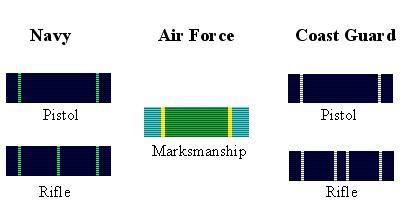
At least according to wikipedia, they don’t. I was doing some research, and in the article about Navy Recruit training, it mentioned that the marksmanship training that naval recruits receive consists of training on the M9 and a Mossberg 500, but not the M16. Initially, my reaction was surprise, but as I spent some time thinking it actually made a lot of sense. Of course, if there are any recent graduates of Navy boot camp that did train with the M16 in boot camp, please let me know in the comments.
But, to the point of the article, it does actually make sense to not bother training recruits in boot camp on the M16, because most sailors are never, ever going to need to be able to use an M16. And so, the small percentage of the Navy that does need to be able to use M16s can probably get training later in their career field. Boot camp probably isn’t the best place for it, because in boot camp they’re trying to jam as much information into your tiny little (likely) teenage head as possible, so why waste a sailor’s time with something they’re likely to never need. Hell, I’d probably need three weeks alone just trying to figure out how to tie that neckerchief correctly.
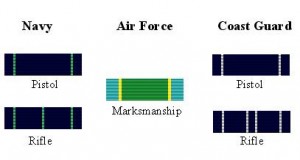
Obviously different branches of the service have different marksmanship standards, and of course the Marines as an institution genuinely care about rifle marksmanship. As recent conflicts have shown, it makes sense for people in non-combat MOS in the Army, Marines, and even the Air Force to be familiar with the M16 when they’re deployed. But for dudes that are going to spend their entire career sitting on the inside of a tin can looking at a radar screen? Probably not. Do they still call destroyers tin cans? Or is that no longer the turn of phrase?
This really is just an observational post; when most people think of the military they tend to think of the sexy jobs; infantry, artillery, fighter pilots and boarding teams. They don’t often think that the vast majority of people in the military are in non-combat positions – cooks and accountants, radar operations, machinists, just regular jobs that happen to have a bit more risk than you’d encounter in the civilian community.
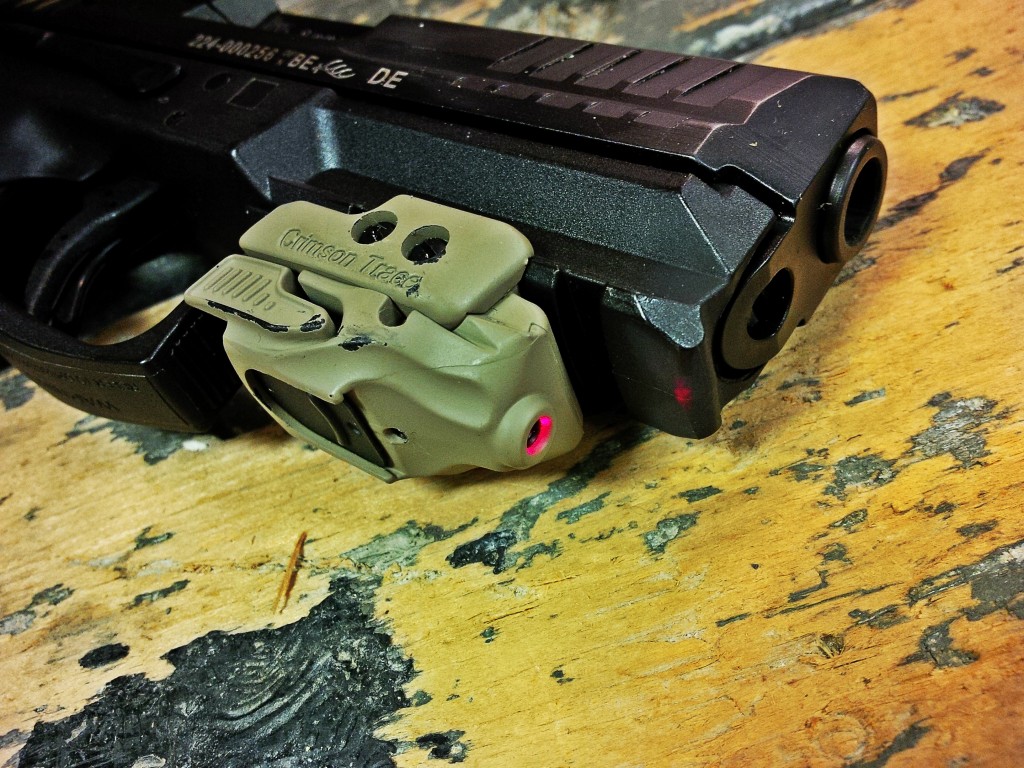
This set up, along with a Surefire wrist light and a 20 round mag are my keys to achieving something other than mediocrity at M3GI this year. Well, and a shotgun that holds more than 7 rounds.
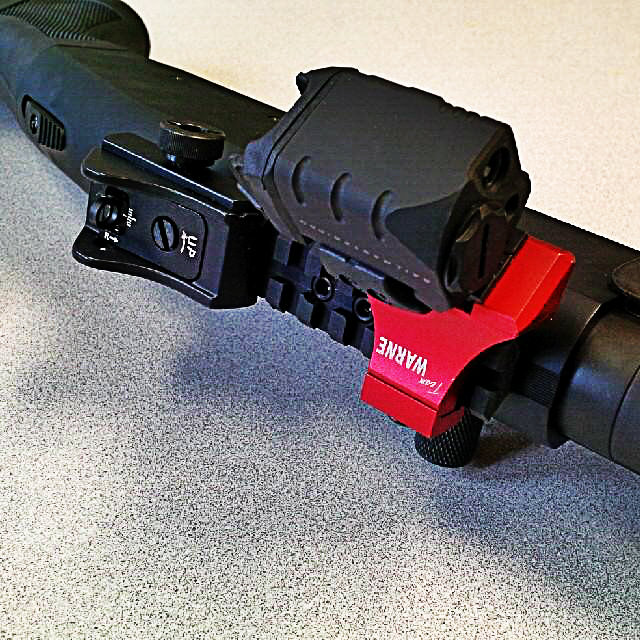
Getting guns ready for Crimson Trace M3GI is always an interesting prospect. Ideally, I’d be able to set everything up with a light and a laser, but that’s not always feasible. Some guns lack the rail space for both, or in the case of my VP9 it’s impossible to find a holster that fits. However, sometimes I get creative with mounts:
That’s a Crimson Trace Railmaster Pro mounted upside down on a Warne 45 degree off-set mount. If it looks derpy to you, don’t feel bad. It looks derpy to me. The problem with the 930 SPX is that there’s no forward rail space on the handguard, so I couldn’t slap the light/laser combo on further down the gun. I obviously couldn’t mount it on the top of the rail without obstructing the sights. I have a different mount for a traditional flashlight that goes on the magazine tube…but the tube is too thick for the mount.
So out comes the Warne 45 mount, and on goes the Railmaster. Now, I should note that I haven’t shot it yet, and I’ve certainly not used it in low/no light. So I don’t know how well it’s actually going to work. One of the things that happens a lot is a light set-up seems perfectly reasonable during the day, but then when you use it at night you suddenly get a ton of light bounce and can’t see anything. That’s a very real concern with this set-up.
I’ll find out for sure once I get to Oregon next week! Here are the guns and light/laser combos the team will be running at M3GI:
I’ll also bring along my trusty Winchester 1300 as a back-up gun for the SPX should something go wrong, but I don’t plan on using it in the match. This really is the only 3-gun match I shoot each year, and it’s one of the best events in the shooting sports. Crimson Trace gets great range staff, sets up great stages, and generally runs an absolutely top notch event.
On the days of August 2nd and 3rd, 2014; I attended EAG Tactical’s Basic Carbine Class at Echo Valley Training Center in West Virginia. Presented as a “Two Day, Low to Moderate Intensity class with the emphasis on the basics of marksmanship and manipulation,” made my non tactical, cake eating ears perk up and I decided to go as “slick” as possible with regards to gear choices. More on that later. The class had military veterans, law enforcement, federal employees, and active duty military attending.


MAUMEE, Ohio (August 8, 2014) — The Scholastic Shooting Sports Foundation has contracted with the World Shooting and Recreational Complex (WSRC) to hold its National Team Championships at the Sparta, Illinois facility through 2017. Ben Berka, SSSF President and Executive Director, and Art Ashbrook, WSRC Executive Director, signed the agreement recently to formalize the three-year extension of the foundation’s relationship with the complex.
“We are pleased to call Sparta ‘Home of the SSSF National Championships’ and look forward to meeting our SSSF extended family there each year during the second full week of July,” said Berka. “The Illinois Department of Natural Resources staff at the World Shooting and Recreational Complex are great to work with and are committed to working together with the SSSF to accommodate our growth, both in numbers of participants and in the diversity of events we are offering.”
WSRA’s Ashbrook echoed those sentiments. “The World Shooting and Recreational Complex and the IDNR are extremely pleased by the commitment of the SSSF to hold its National Championships here for the next three years, and hopefully for the next 100,” said Ashbrook. “We think we work very well together, serving the community and young shooters alike.”
More than 10,000 people came to Sparta for the 2014 Scholastic Clay Target Program National Team Championship and Scholastic Pistol Program Junior/Senior National Championship at the WSRC in July, including approximately 2500 shooters, plus coaches, family members, and other supporters.
The Scholastic Shooting Sports Foundation (SSSF) is responsible for all aspects of the Scholastic Clay Target Program (SCTP) and Scholastic Pistol Program (SPP) across the United States. SCTP and SPP are youth development programs in which adult coaches and volunteers use shooting sports to teach and to demonstrate sportsmanship, responsibility, honesty, ethics, integrity, teamwork, and other positive life skills.
SCTP was developed as a program of the National Shooting Sports Foundation (NSSF) until the SSSF was created in 2007 to operate the SCTP. In 2012, SSSF created the SPP and became the managing foundation of both programs.
For more information about SSSF, visit www.sssfonline.org. To learn more about the World Shooting and Recreational Complex, see www.dnr.illinois.gov/recreation/wsrc.
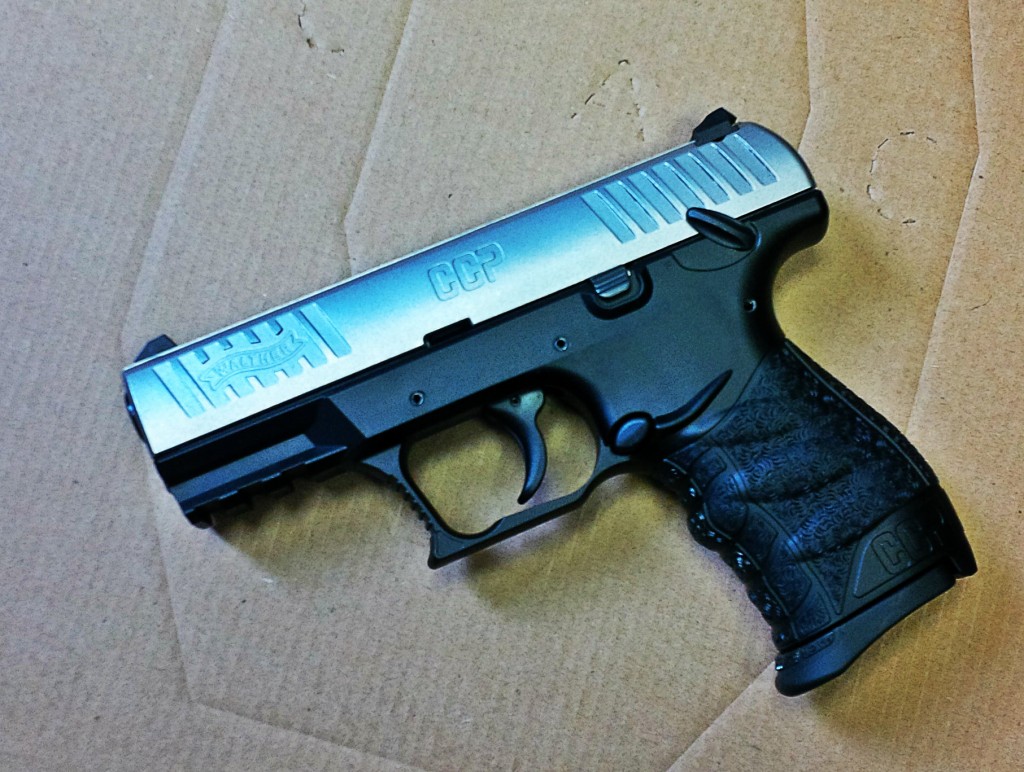
Well well well, look what we have here. A brand new Walther CCP. I guess I should probably take it to the range, right?