Graysplaining, or how to spot a silverback

In case you live under a rock, I’m going to introduce you to a term that’s been going around the internet: mansplain. Actually, because I’m feeling awfully lazy this morning, I’m going to copy/pasta the Urban Dictionary definition without linking to Urban Dictionary:

to delighting (sic) in condescending, inaccurate explanations delivered with rock solid confidence of rightness and that slimy certainty that of course he is right, because he is the man in this conversation

Even though he knew she had an advanced degree in neuroscience, he felt the need to mansplain “there are molecules in the brain called neurotransmitters”

Anyway, that’s mansplaining. It’s basically talking down to someone who’s equally or more qualified than you because you’re so sure of your opinion based on things that don’t matter, in this case gender. In the online gun community, there’s an equally annoying habit: graysplaining.

silverback gorilla

What’s graysplaining? Ever since Jeff Cooper died, a horde of old fuddy-duddies have attempted to fill his shoes as the Thoughtful Old Man of the Internet. They’ve mostly failed, but what they have accomplished is creating a ton of content that is based around the premise that “I’m old, and therefore I’m right.” Here’s some graysplaining for you:

I’ve watched even highly-trained and experienced shooters forget to deactivate the safety on their autopistols when faced with a new and distracting shooting challenge. I’ve also seen them forget to activate that safety and negligently discharge their guns. These aren’t people who are new to the guns, either. I’m talking about people with hundreds of hours of formal training, some of them police officers who are tasked with training their fellow officers. The more complicated something is, the easier it is to forget something when you’re distracted.

There’s the implication in the quoted piece that the author, in his infinite wisdom, will not make these mistakes, because he is speaking from high atop Silverback mountain, stroking his ancient beard of wisdom. Never mind that at times his “wisdom” runs counter to the actual experience of people, that’s not how it was done “in his day.” Silverbacks aren’t really that bad, once you learn to recognize them. They can even be kind of useful if you’re looking for information on TTPs from 1973. So to make things easier, here are Gun Nuts Three Steps to Spotting a Silverback.

1. Name dropping people from the previous millennium: “Well, when I was training with Jeff Cooper we did things this way.”
It’s just a version of the old appeal to authority, where the ancient silverback will attempt to defuse disagreements by trotting out the names of people who were relevant 30 years ago. Now before you crucify me for impugning the great name of Jeff Cooper, I think his writings on mindset and awareness are just as valid today as they were when he wrote them down. We’ve definitely moved past Weaver though as the most effective way to get a pistol into a fight.

2. Point-shooting.
I’m serious! The most dedicated advocates of point-shooting are always graysplaining how “Col Applegate” did it this way. Regardless of the fact that when Applegate formulated his methods of point shooting, guns has sights on them that could be best describe as “vestigial”. The vast majority of point shooting advocates will sit there, stroking their beards and talking about WW2 combatives.

3. Dismissing any experienced opinion that runs contrary to theirs.
This one is my favorite. I’ve literally seen old fuddy-duddies dismiss the experience and observations of cops, soldiers with multiple deployments, and even civilians who’ve been in actual shootings. Because those people aren’t old enough to really know, I guess. It’s insane. But it’s also hilarious, because they get shut down pretty quick.

So there you go, three simple steps to spot a silverback. Watch for it, learn to laugh at it. If you see some guy talking down to other people on the internet because he’s clearly the old voice of wisdom, the self-anointed successor to Jeff Cooper, you’ve seen a Silverback. If you have any examples of graysplaining, feel free to drop them in the comments!
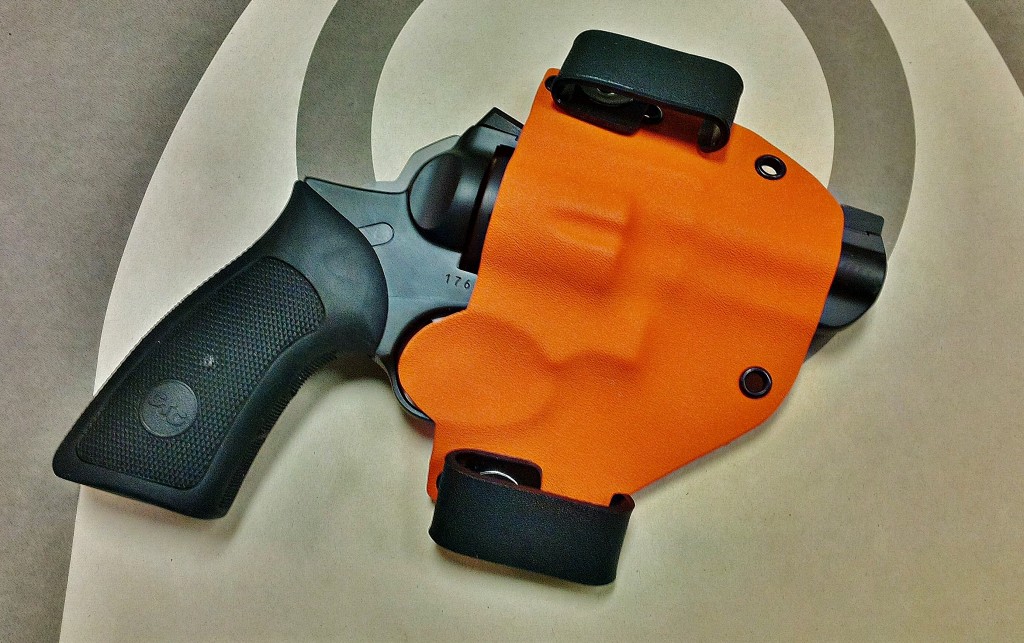
Holster showdown: leather vs kydex for IWB revolver carry

I really like a good plastic holster for competition and OWB carry. But for IWB carry? Not so much. If the holster is going inside my waistband, leather is better. Now, when we’re talking about leather holsters, I’m not talking about cheap, floppy 25 dollar leather holsters. If you’re going to use a leather holster for IWB, it needs to be well made from quality leather by a reputable company. Also, a lot of the points in this article don’t apply if you’re carrying a flat gun, because it has fewer protuberances than a spinny-middle gun.

Galco IWB

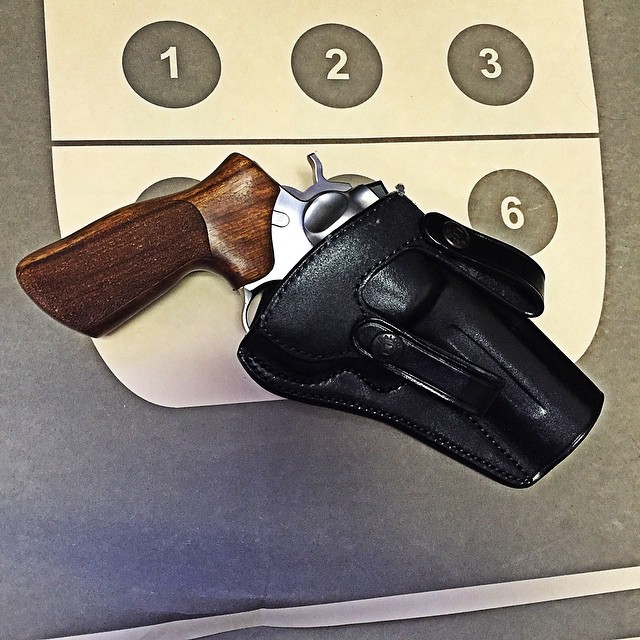
I’ve been carrying a full size Ruger GP100 in this Galco Summer Comfort for a while now. When I’m not carrying that, I’ve been rolling with an SP101 in a Blade-Tech kydex IWB holster. While the SP101 in the smaller Blade-Tech is easier to conceal, the full size GP100 in the leather Galco is more comfortable for all day wear, and it’s because of the way the holsters are made.

Kydex holsters are molded for that specific gun; if you look at a kydex revolver holster such as the one pictured below, you’ll notice that the cylinder bulge is molded into the holster. Depending on how the holster’s made and your carry position, this cylinder bulge can cause a number of issues for comfort or concealment. On the leather Galco holster, the cylinder is positioned above the belt line, which makes the holster slightly top heavy and more difficult to conceal, but extremely comfortable for all day wear.

GP100 AIWB

If the cylinder bulge on a kydex holster is positioned directly under the belt line, it can act as a lever that will push the muzzle end of the holster hard into your leg, regardless of your carry position. I’ve forsaken AIWB and gone back to traditional strong-side, behind the hip, IWB carry. In this carry position, every kydex revolver holster I’ve used pushes the muzzle into my fanny/leg area, resulting in a bruise forming after about 4 hours of wear. Needless to say, I’m not into wearing holsters that do that.

If the cylinder rides below the belt line, the gun will have maximum concealability, but then the cylinder bulge itself can act as a pretty awful pressure point, plus the grip on the gun will be dangerously close to the belt line, which will make establishing a full firing grip difficult. All of these experiences with kydex revolver holsters leave me at the conclusion that for concealed carry, leather is better. Now I say that with a sample size of exactly one leather IWB holster, the Galco Summer Comfort. But it’s also the first time I’ve bought a holster for a CCW gun and thought “man I got this right on the first try.” My sample size for kydex IWB has been a lot larger, and I’ve honestly not found a great kydex IWB solution for the round gun. I have a lot of Kydex holsters that I really, really like for OWB carry and competition, just not for IWB revolver carry.

Gun Nuts Movie Reviews: The Purge, or “How to fail at home security”

Wow what a terrible movie that was. I have to confess, I was somewhat interested in the fictional universe presented by the backstory of The Purge, set in a future America where one night a year, all crime is legal. This usually centers around murdering folk, and it’s generally suggested that the people usually targeted for murder are lower class/poor folk. Get rid of those undesirables, and whatnot. Anyway the movie is total garbage, and if you want to see everything wrong with The Purge, check out CinemaSins.

ThePurgeTaurusRagingBull3

Back to the movie itself, it’s awful to watch. The only good thing about the movie is Lena Headey, and the scene where Ethan Hawke shoots his teenage daughter’s boyfriend, because who hasn’t wanted to do that, right? (I do not have teenage daughters) But the movie itself is sort of useful to gun nuts, because it presents the total breakdown in a home defense strategy and several really good examples of “how to get everyone killed in a home invasion.” So instead of reviewing the movie, we’re going to take a look at the tactical mistakes made by the main characters in the film.

1. They let the family scatter after the lockdown
In the film, Hawke’s family has this banging home-security system with big steel doors and shutters that makes their house relatively safe. However, after they go into lockdown, they’re lulled into a false sense of security by the big steel doors, and the entire family of four disperses over the large house, which allows the youngest child to temporarily lower their defenses, leading to the movie’s central conflict.

The fix for this is simple, and common sense: if you’re under imminent threat, you get everyone in a central, easily defended location. I would consider the house to be under imminent threat for the entire 12 hours of the Purge, so before the event started, everyone would be ushered into the safe-room/bunker, which would be nicely equipped with cots, video games, food, weapons, and security monitors, and we’d all stay there. For 12 hours. Spending 12 hours with your family is a small price to pay for not getting murdered.

2. Don’t divide your forces
But of course they don’t do that, and everything goes TU, so they have to fight to defend themselves, at which point Ethan Hawke gives his trembling, scared wife a gun and says “go find our daughter” while he goes off to kill badguys in their house.

He gets killed and Lena Headey gets captured. THIS IS MY SHOCKED FACE. If you have to go retrieve a child in that situation, either go alone and leave someone to defend the safe-room, or take as much force with you. Don’t split up and send two people out into the house by themselves to confront an unknown number of intruders. Come one.

3. Don’t trust mechanical systems
The biggest point of the film is that their security system is defeated; and the badguys gain easy entry after that. I like security systems, they’re very handy for warning that there’s an intruder in the house and alerting the cops that you need help if 911 isn’t available. But they’re not going to save your life. No ADT system in the world ever shot a determined invader in the face, which is why the most important part of a real home security system is having a smart plan.

That’s where the main characters in the film really failed, and the most important lesson of all. They believed “this can’t happen to us” so when the moment came where it did happen, there was a lot of lost strategic time due to panic. There was no plan, because they figured they were safe behind their steel doors. Locks are great, secure buildings are great, but don’t let them lull you into a false sense of security. Sometimes bad things happen to good people. Not just home invasions, but fires, natural disasters, and all kinds of things like that.

Have a plan. Stick to your plan.

And if you’re in a horror movie, DON’T SPLIT UP.

Why you should never buy a Taurus revolver, part 1

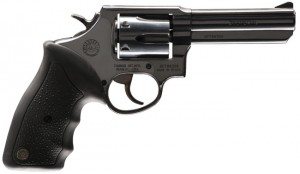
I get accused of being a gun snob pretty frequently. In order to create a fair test, I decided to buy, with actual cash money, a Taurus 82 revolver. This is about as close to the concept of “revolver, blue 6-shot” as you can get without being the preferable S&W Model 10; but what I wanted to do was really explain to shooters why if you’re looking for a defensive wheelgun, your search should proceed alphabetically, and never go further than the “S” section.

taurus-1-tau_2_820041

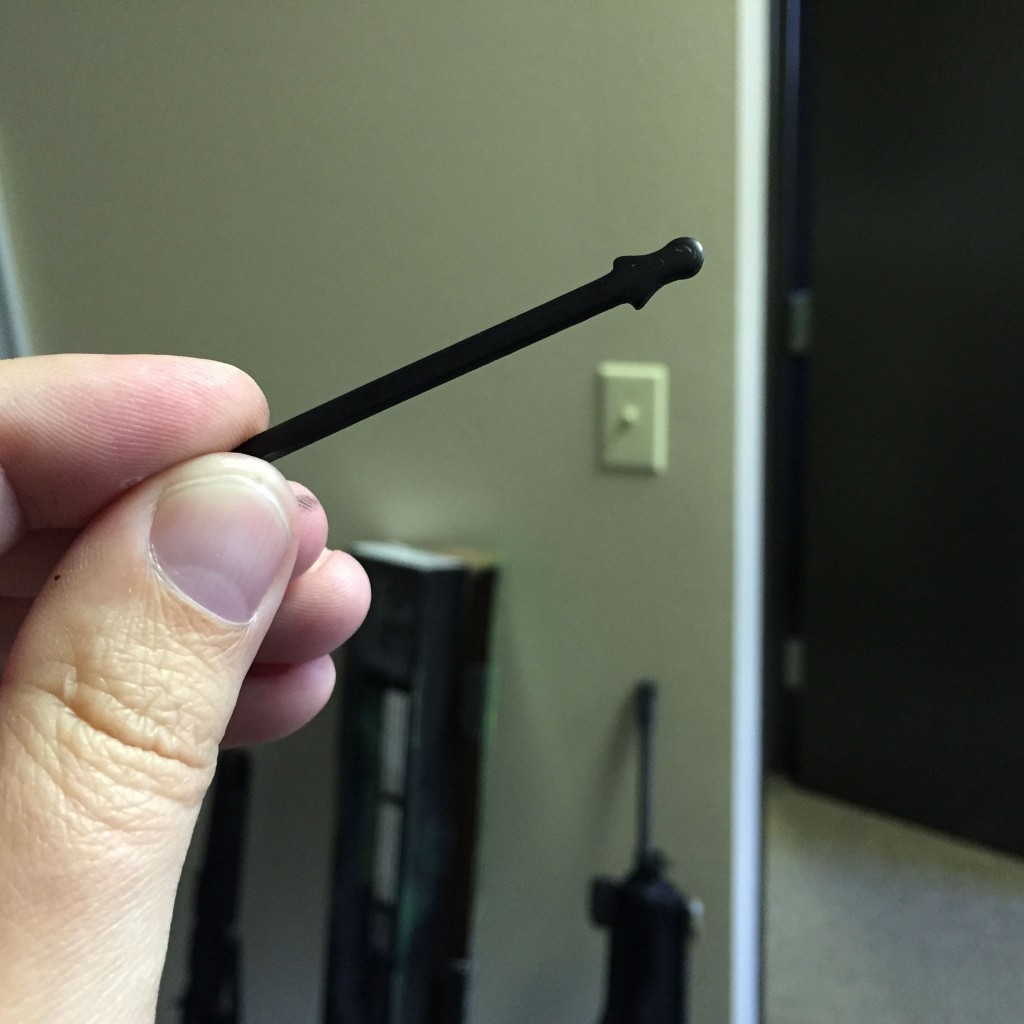
When I first got the gun, the best way to describe the trigger pull was like pulling a rusty pipe over a field of gravel. It wasn’t good. Being familiar enough with Ruger and S&W revolvers to perform basic action work and armorer level tasks, I decided to pull the sideplate off the Taurus. This was not a good idea for my sanity, as I was greeted with a carnival of horrors and engineering decisions that make basically no sense. Let’s first look at the mainspring strut, which is, as the kids say, “kind of important.”

Fixing a Taurus (2)

The mainspring rides on this strut; the round end of the strut goes into a small slot on the back of the hammer. Pulling the trigger compresses the spring, blah blah blah guns happen. Now, I’m not an engineer, but I was somewhat surprised to find that the strut was bent when I took it out of the gun. It had a nice little bow in it, which means that when you pulled the trigger, the spring was dragging on the side of the strut in a way that is…less than ideal. Ruger uses a strut and coil spring system for their mainsprings, and I checked a reasonable sample of Ruger wheelies, none of which had bent struts.

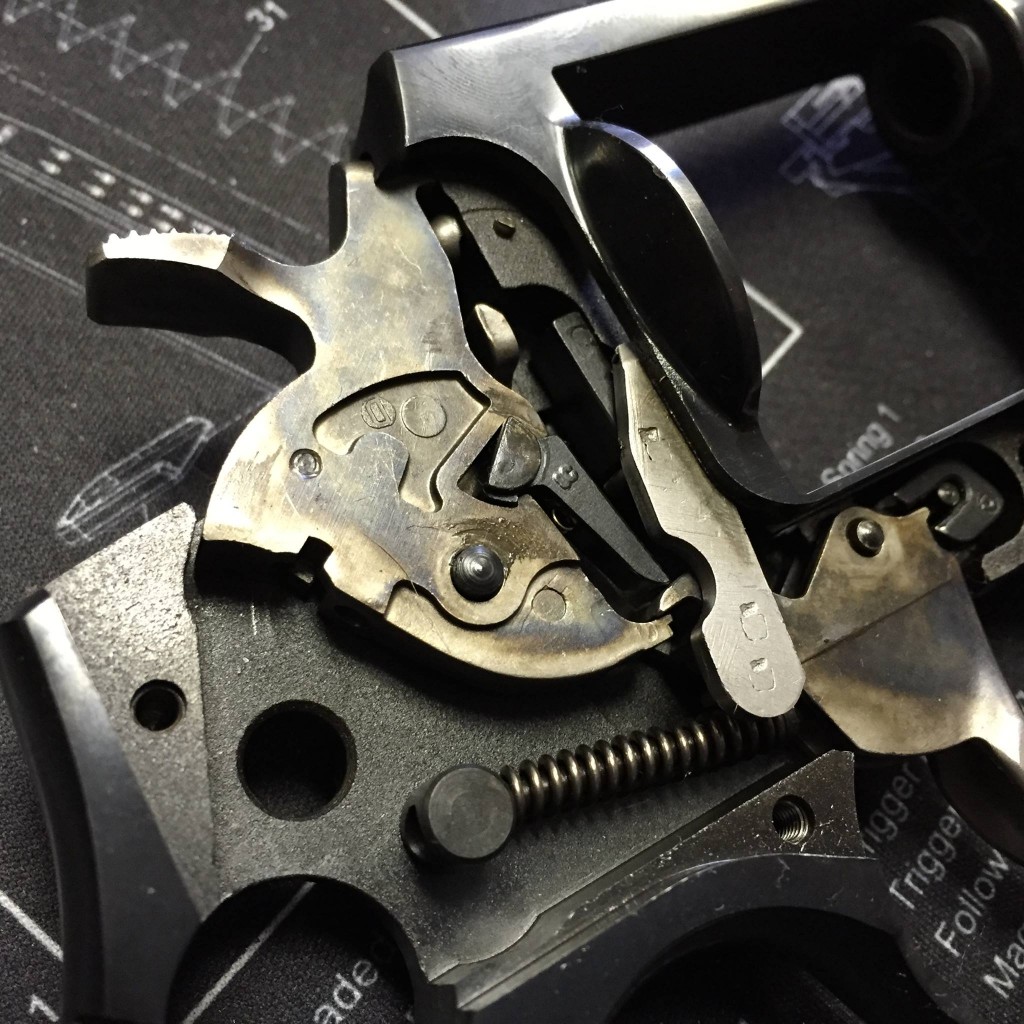
Moving on to other parts of the gun, we have the lockwork itself. It’s obviously very roughly finished, which isn’t particularly unusual. Most revolvers are kind of rough on the inside once you get their skirts off, but what really struck me about the lockwork on the Taurus was how haphazard everything appeared.

Fixing a Taurus (3)

I mentioned the rebound spring previously, but I want to sit on that for a moment. It’s anchored to this protrusion in the frame, and the anchor point is held in place by a pin that’s just pressed into the frame. So it’s not exactly what I’d call “sturdy.” In fact, it’s actually the sort of bit that’s very sensitive to good metallurgy, which isn’t something Taurus is known for. Being as this is a .38 Special revolver, it’s probably not going to shear off and completely tie up the gun, but it’s also not exactly something I want to see.

Tomorrow we’re going to look at part 2, where I’ll examine why Taurus’ various engineering choices make the guns suck so much. We’ll also later this week pull the sideplate on a comparable S&W revolver and get into the guts of a Ruger to show how it’s done.

Improving the J frame – Wilson Combat Custom Tune Spring Kit

Handguns are, by a wide margin, the most difficult firearms to shoot accurately due in part to their relatively small size and the inability to stabilize them against larger structures of the body. They become more difficult to shoot as they get smaller and the trigger pull gets heavier. The typical J frame has a trigger pull that is several times the weight of the revolver itself and is usually carried with a very small “boot” style grip. This translates to the application of comparatively enormous levels of torque on a handgun with very little room for a grip that will resist that torque.

Making the trigger pull lighter helps ameliorate this somewhat, but unfortunately there is no free lunch. The J frame requires a pretty stiff hammer spring to achieve reliable ignition since the hammer itself has such little mass. Due to this I never really bothered trying to do any trigger work on my J frames before, but with the purchase of the 638 I decided I would try out the Wilson Combat Custom Tune spring kit. The Wilson kit seems to be well regarded by folks who know the J frame well and I’ve yet to hear a report of unreliable ignition with the Wilson kit.

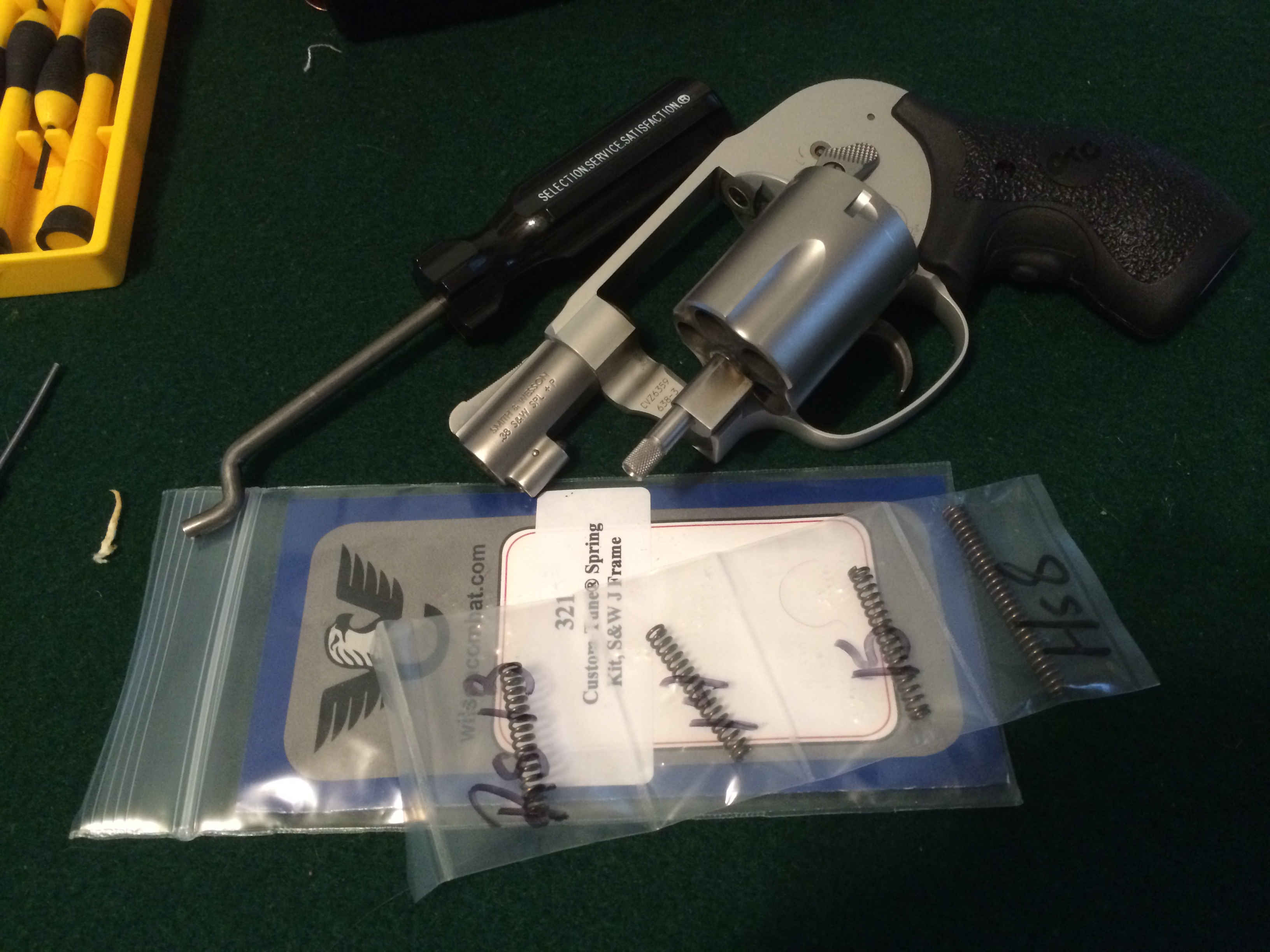
The kit includes 4 springs, a hammer spring and 3 different weight trigger return springs you can use to get the trigger feel you want.

The Wilson Custom Tune spring kit comes with 4 springs, a single hammer spring that is lighter than the stock spring and three trigger return springs. The idea is you select the trigger return spring that gives you the trigger feel you prefer. (I used the lightest one) When you pull the trigger on a J frame you are working against the pressure of both of these springs, so by making them lighter you can reduce the weight of the trigger pull. Replacing two little springs sure sounds simple enough, right?

It is…mostly. Even a simple job on a very well documented gun can turn into a soul-crushing experience if you don’t do the research and gather the right tools. One of the “right tools” I’ve been too lazy to acquire for myself before now is a good set of gunsmith’s screwdrivers or screw-driver bits. Contrary to popular belief, all screwdrivers are not created equal and use of the usual sort of tapered screwdrivers on guns often results in damaging screws or even damaging the finish of the weapon itself. Keep in mind that with the Airweight revolvers you are working on a frame that is made of a metal which is considerably softer than that of the screwdriver you’re using, and so if your taper-ground driver slips out of the screw slot you’ve just dug a nice trench in your new gun’s finish.

While I was buying the spring kit I also bought the Brownells rebound slide tool pictured. The rebound slide spring bumps up against a stud made into the frame that’s aluminum on the Airweight revolvers. I hoped that using the proper tool would reduce the chances of snapping that little stud off…which could be a pretty expensive mistake. Unfortunately either Brownells got the spec on the tools wrong or S&W changed the dimensions on the studs on some of their revolvers because the opening in the tool was too narrow to fit around the stud properly. I put the 13 pound return spring in the rebound side and with careful finagling and holding my mouth just right I managed to use the tool to get the rebound slide back into place without incident.

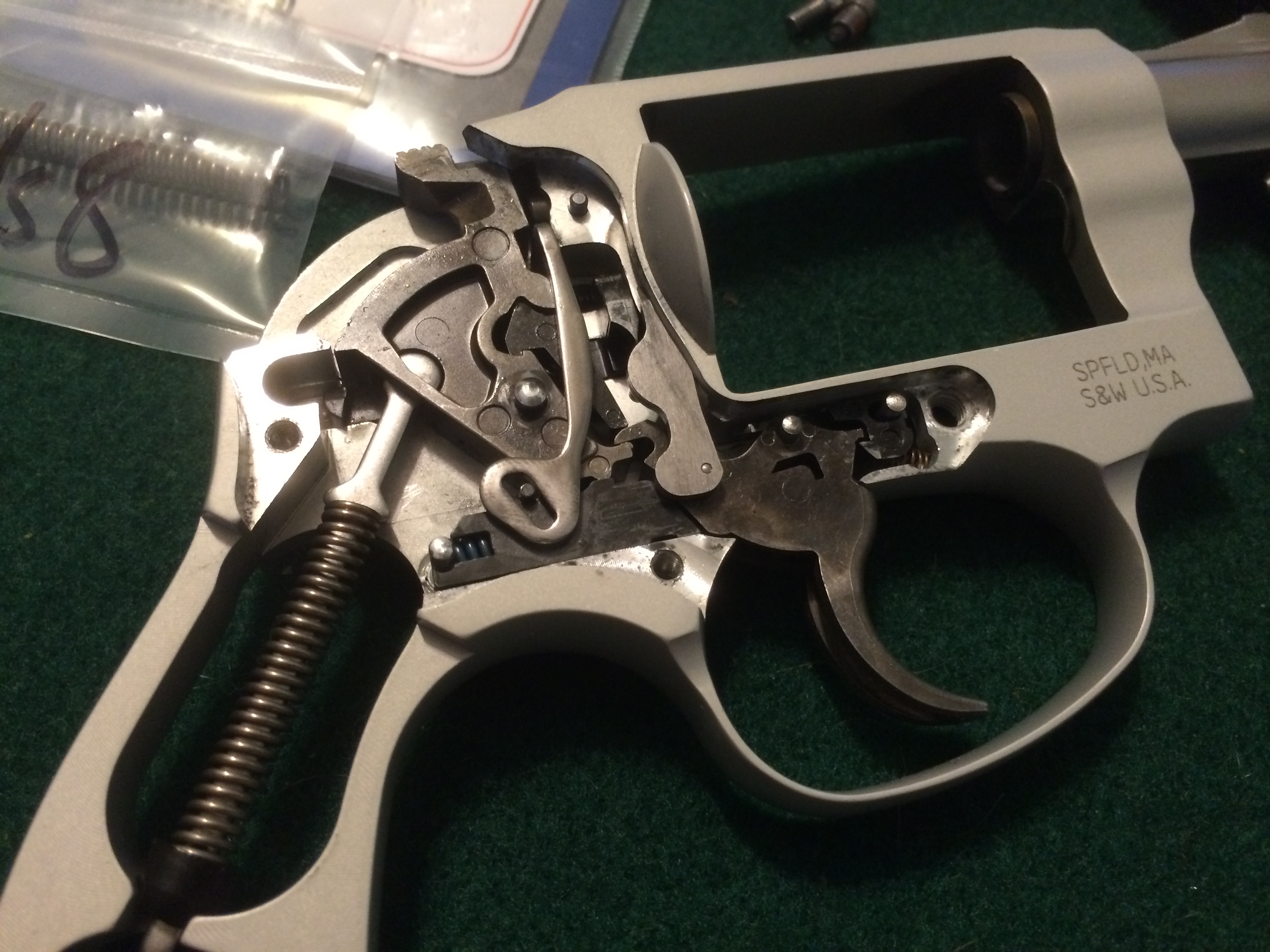
The J frame's internals are actually pretty simple to work on if you have a little bit of knowledge, the right tools, and some patience.
The J frame’s internals are actually pretty simple to work on if you have a little bit of knowledge, the right tools, and some patience.

The hammer spring/main spring is considerably easier to deal with…you just need a paperclip or a very small punch to capture the spring in a compressed state so you can remove the end cap that holds it into the frame. Getting the spring cap back on with the new spring is a little bit more tricky. If you are going to do a job like this I’d suggest doing so in a place where you have plenty of room and with no nooks and crannies that a little black piece of plastic can disappear into after it’s been unexpectedly sent on a ballistic trajectory by a spring.

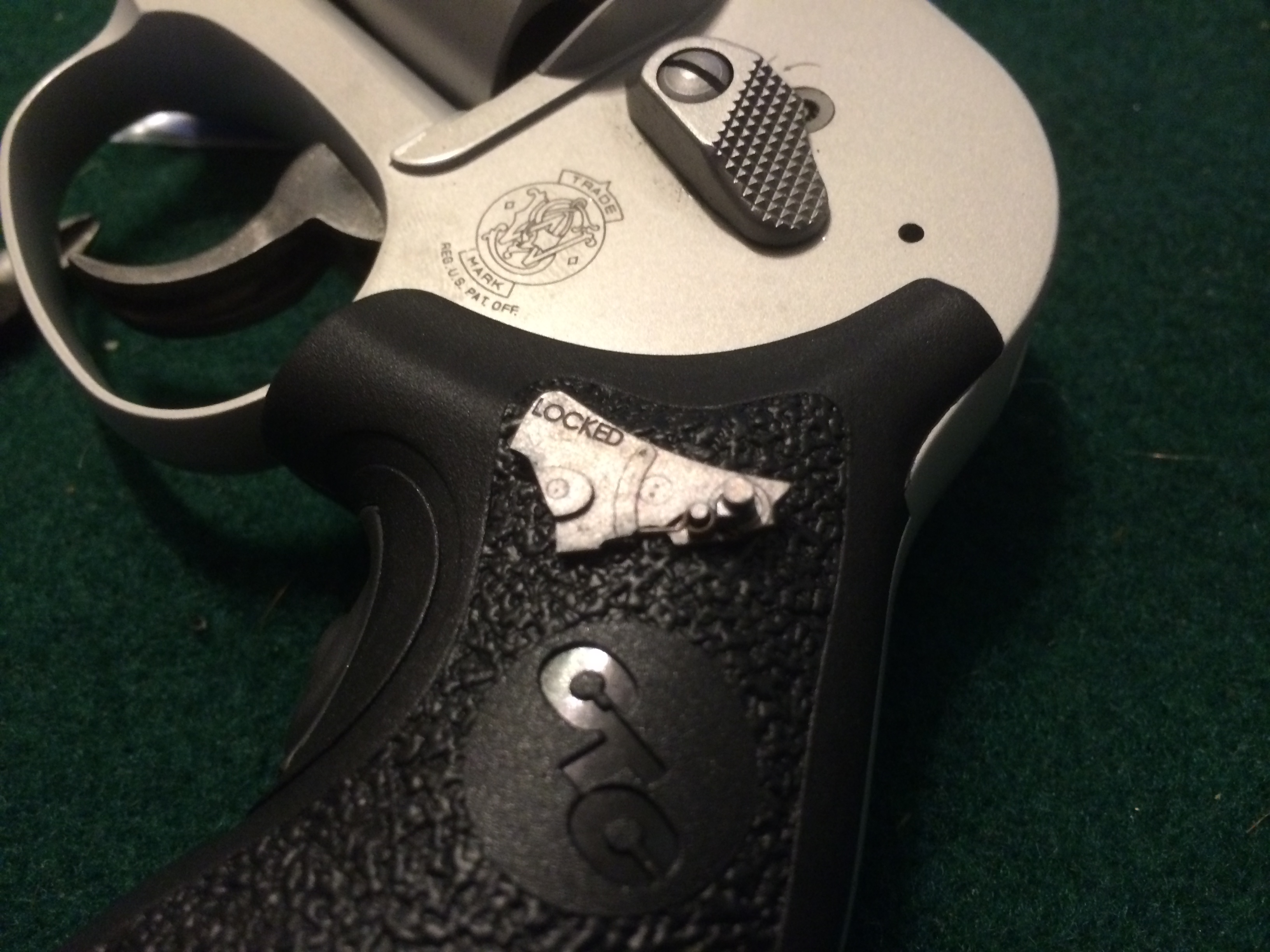
While I had the little revolver’s guts exposed I figured I’d perform an additional task unrelated to the spring changes: Removing the lawyer lock.

When you bring up the topic of S&W revolvers you will hear folks speak about “pre-lock” guns quite frequently. In the early days of our new millennium S&W decided to integrate a locking mechanism into their revolvers which would prevent the revolver from being fired when engaged. Much wailing and gnashing of teeth has happened over this decision partially because it was the result of some Clinton-era political pressure (S&W has new owners now who had nothing to do with that nonsense, by the way) and partially because it’s not aesthetically pleasing to see that lock zit sitting on the sideplate of the revolver.

I have a different reason for loathing the lock, though: Under the right circumstances the lock can spontaneously engage. Initially it was thought to be something that could primarily happen with the extremely light titanium and scandium frame revolvers in heavy calibers, but over time credible reports have accumulated on good old fashioned steel-framed guns in common calibers as well. This assertion is highly controversial because most people have never actually seen it happen. I have, though. I’ve experienced a partial lock engagement on another S&W revolver I own and as a result I get rid of them on guns I carry. Opinions vary on how one should go about getting rid of the lock, but I’m content to simply remove the bit that actually prevents the hammer from moving when engaged. The other pieces stay put nicely, in my experience.

I hate you. So. Very. Much.

I know why S&W started including the locks on their revolvers, but I’d absolutely love to see them be rid of the bloody things. They made revolvers for almost a century and a half without any silly locks and you can still buy some of their revolvers without locks…so why not just ditch it altogether, Smith?

After putting everything back together and doing some quick function checks, I found a noticeably improved trigger pull with a slightly slower trigger return speed…which is to be expected when you reduce the power of the trigger return spring. I didn’t hear angels singing or anything, but I didn’t go in expecting a miracle. I just wanted to make the trigger pull a little bit lighter. The difference is most noticeable when dry-firing with just the left hand, as I tend to need to apply less torque and as a result I don’t get as much lateral movement during the trigger pull. When it comes to shooting a handgun little things make a big difference and that goes double for little handguns like the J.

Given the price of the Wilson spring kit and the ease of installation, I’m pretty pleased with the purchase. I’m confident Wilson has done enough homework on the J frame to put together a spring kit that will function reliably. I’m sure it’s possible to go a bit lighter than the Wilson kit with some other option but I’m certain that the Wilson kit will work when I need it to…and that’s critical for a revolver like this one. If you have to pull a revolver like this you are already having a bad day and you need it to do its job properly.