Don’t scare the white people

I have two humorous anecdotes that when tied together create a narrative that applies to our continued right to bear arms, and how we are frequently our most effective enemy. The first is a bit of self-mockery, as you know I live in South Dakota, and it gets cold here. I also have a dog, who needs to be walked. I am a dirty hipster and live in a downtown loft with no yard.

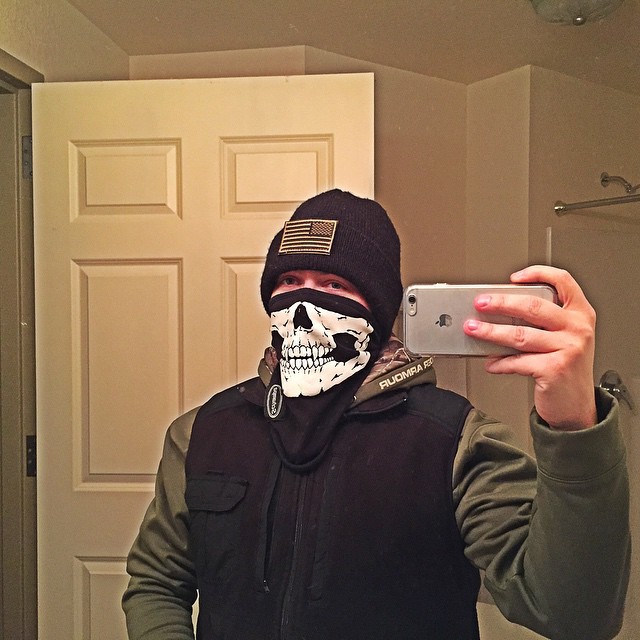
up to no good skull mask

Because it’s windy, and half of the time I’m walking my dog directly into the wind, I grab my facemask, which I normally wear when I’m coyote hunting and generally not around people. I really didn’t think twice about it, because I’m walking the dog and it’s 10 degrees before windchill. Anyway, I’m out with the dog in front of my building on the public sidewalk, and I see a car stopped in the suicide lane, just…stopped. Which is unusual. I keep walking, I walk past the car, and I let the dog keep smelling, hoping he finds a spot to take care of business so I can go inside and commence the bourboning. About 2 minutes later, I get lit up from behind by an unusually bright light, turn around and see a cop car behind me. He slows down, cruises past me and checks me, then flips a u-turn and pulls over the car that’s STILL sitting in the suicide line. Right about then the dog does his business, so I turn around and head home, which gives me the opportunity to see the middle aged white people sitting in the SUV just mean mugging me. Since I now have the wind at my back, I’ve pulled down my facemask.

I concluded from context that the busybodies in the SUV saw me out walking the dog, concluded from my attire that I was up to no good, and called the one-time to report a suspicious bro. Which honestly is fair, because I’m 2500 meters from a park, and Albert House is katty-corner from our building. So there are shady dudes in that area at times, and with the skull mask up I looked the part. The cop saw me once I had pulled the mask down and he clearly saw the dog, so to him I’m just another urban hipster jerk walking his dog.

The point though is that I made a cardinal mistake: I scared the white people. Sometimes I’m the white people, and other times I’m the dude in the facemask with the scary pitbull. So I got the cops called on me, and had that offer not exercised good judgement, my night could have gone a whole lot worse.

The second anecdote is related, and takes a little explaining. I like video games, and I enjoying watching the Achievement Hunter Let’s Plays. For my older readers, I watch a bunch of people play video games and comment on the game/other things. It’s like a podcast with GTA Online in the background. Anyway, I was watching the latest GTA Let’s Play when one of the dudes, Jack, mentions how he was in the security line at the airport behind someone who was wearing an empty holster, and predictably being a total jackass about it. What’s interesting then is the byplay, because the people on the show are exactly the sort of people we don’t want to alienate. They all think guns are cool, and spend considerable amounts of time playing with pretend guns – we should be recruiting these people. But instead, their perception of 2nd Amendment activists is shaped by some SHALL NOT BE INFRINGED idiot in an airport who decided to do an empty holster protest. True fact: pissing people off and making them wait in long security lines because you want to wear your shitty DERPA holster to “educate the sheeple” isn’t going to win friends or political debates.

There’s a moral to this story, and how it relates to what I was doing. I was practicing a lesser form of idiocy, but idiocy nonetheless. I wasn’t thinking about how my actions, in this case my manner of dress, would be perceived by the monkeys outside my tribe. The same goes for Empty Holster Douche; although in his case I’d suspect that he was intentionally trying to provoke the other monkeys. But we both had the same result, we ended up frightening or annoying people that we shouldn’t want to alienate. It’s important to remember that as activists, and as people, our actions have consequences beyond what we can imagine or predict.

In closing: try to not do dumb things. Definitely don’t do dumb things on purpose, and if you’re caught being dumb, don’t be a hat made of asses about it. Actually, just ask yourself in any situation, What would Kory Watkins do? Then do the opposite of that.

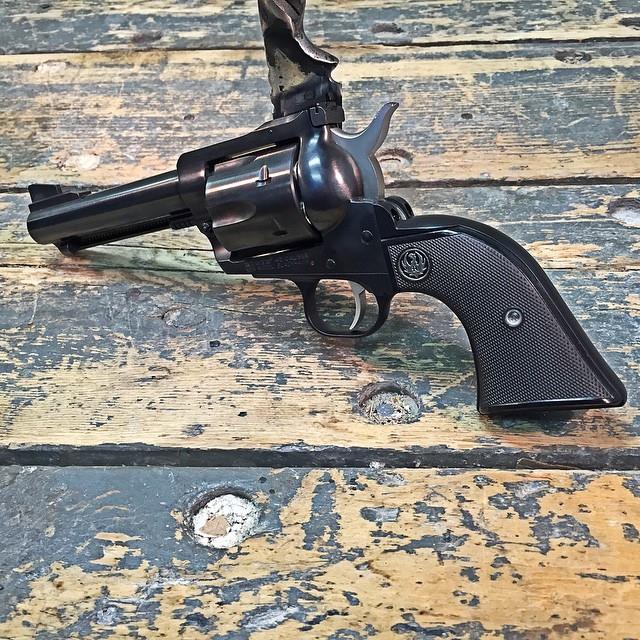
Revolver Tour #16: Ruger Blackhawk .45 Colt

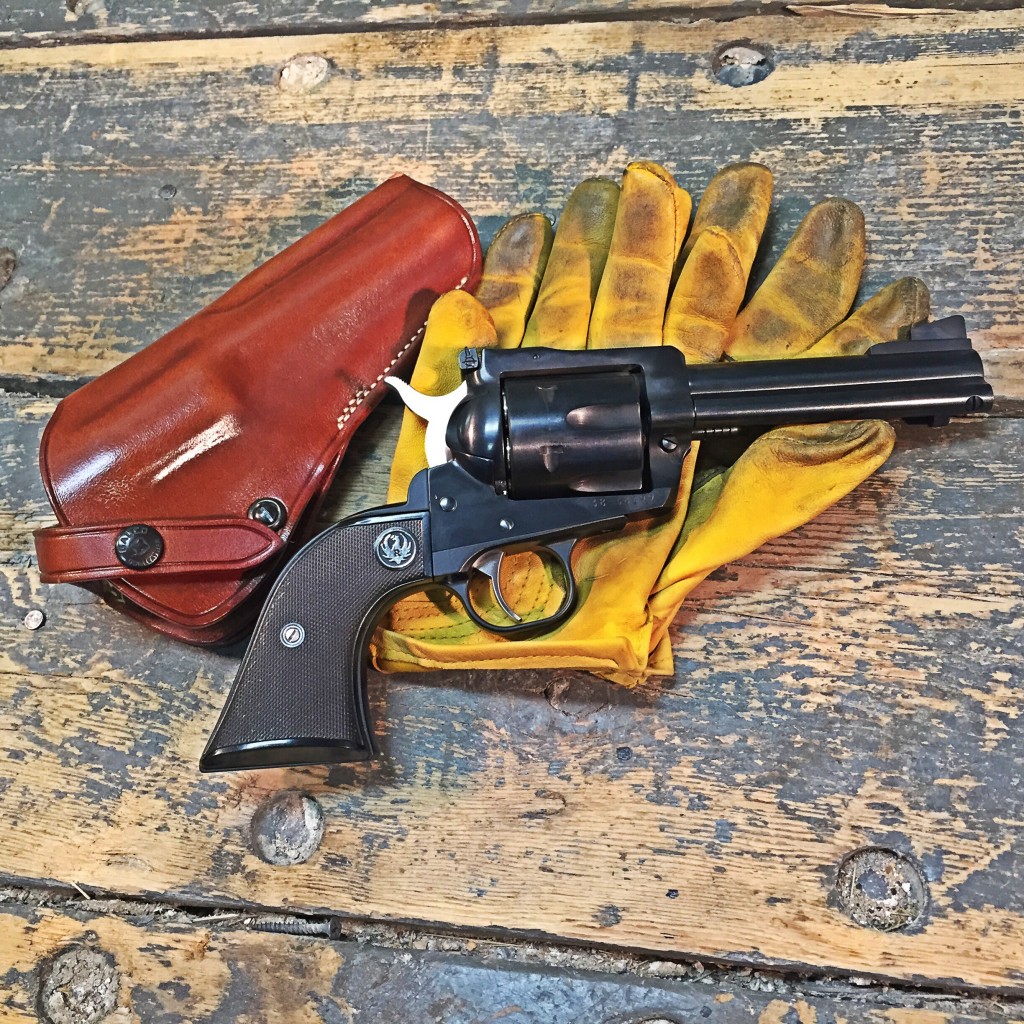
Ruger Blackhawk .45 Colt with Galco Holster

The phrase “handle with kid gloves” comes from the type of leather used, traditionally goatskin, specifically from a young goat or “kid.” Kidskin was valued for gloves because it was strong and resilient without being rough. In this photo are actual kid gloves designed for rope work, along with a Ruger Blackhawk in .45 Colt and a Galco holster. I’ve had my kid gloves for years, and they’ve developed that perfect, hard-use look, because that’s exactly what I’ve used them for. My goal with the Blackhawk is much the same – wear that nice blue in by carrying it, shooting it, and having it live a real six-gun’s life.

Continue reading →

Beginner’s Guide to CCW: Buying your first pistol

I find myself encountering more and more people who ask me for advice on getting their first pistol for self defense or, more usually, concealed carry. I’ve repeated the advice so many times at this point that I thought it would be wiser just to write it all down and send them a link instead of trying to explain it in person or over the phone. Now I know what some readers may be thinking…”Aren’t there about a billion blog posts on getting started with CCW out there?” and that may be true. I don’t read a lot of blogs, personally, but I’m sure I’m not the first person to tackle the issue. I do know that I regularly encounter some spectacularly awful advice being given out by people with lots of enthusiasm but absolutely no damn clue what they are talking about…so clearly what some would consider to be common sense isn’t really all that common.

So let’s start with Step 1: Buying your first pistol

There are a bunch of handguns on the market these days in all sorts of different calibers, configurations, and even colors. Picking one out of the vast number of options may seem like a pretty daunting task but take it from a guy who has bought more handguns than any human being could ever possibly need: It’s not that hard. All you have to do is keep focus on the requirements of your purchase. I highlight the word “your” there because if you ask people for advice you will often get their version of the gospel rather than what you actually need.

You don’t need to buy the same gun that the SEALs use.

You don’t need to buy the same gun that competition shooter X uses.

You don’t need to buy the gun currently endorsed by Tactical Youtube Celebrity whatever.

You don’t need to buy the gun some clueless neckbearded dork in a crappy gunshop tells you is the BESTEST EVER.

Etc.

Yes, you may be new and people who have been gun owners “for years” may seem like they know what they are doing, but consider this: How long have you owned a car? Has owning that car for however many years made you able to drop the transmission out of it and rebuild it today? Does it mean you could drive it around a track faster than, say, a Formula 1 world champion? Same with firearms. The fact that someone has owned one for years doesn’t mean they have the slightest clue how it actually performs, how to actually fix it, or how to use it properly. I know it might sound smug, but the number of times I’ve witnessed violations of even the most basic firearms safety rules (like DO NOT POINT GUNS AT PEOPLE YOU DON’T INTEND TO KILL) on the range or in gun stores indicates that the batting average out there is pretty low.

There are plenty of knowledgeable people out there. There are also plenty of people who are dumber than a sack full of hammers. There are also people who have the very best of intentions and wish to be helpful but who just don’t know what they don’t know. If you start out thinking that you’d like to purchase something relatively small and easy to carry with the requirements of your lifestyle and the way you have to dress, do not let the advice of others talk you into buying a pistol you will leave at home the majority of the time because you can’t effectively conceal it. Having the most tactically awesome handgun ever made sitting at home does precisely zero for you when you’re staring down the wrong end of a felon’s Hi-Point in a supermarket parking lot.

So with all of that being said, what should you buy?

Something that’s reliable. 

Something you can afford to practice with.

Something that’s easy for you to carry. 

Something that’s relatively easy to customize. 

Note what isn’t on that list. I didn’t mention caliber, or brand, or polymer vs. metal. I didn’t even mention bore axis. Here’s a top tip for you as a beginner: If you are asking for advice on your first pistol or your first concealed carry piece and somebody mentions bore axis, go ahead and envision that person wearing a dunce cap and clown shoes because it’s about the same thing.

I would love to tell you to just go out and buy a hi-cap 9mm service pistol, but I know for a fact that a lot of you out there in reader-land can’t carry that kind of pistol every day. I try pretty hard and even I can’t carry that kind of pistol in every situation of my life. The Glock 17 is a superior weapon to the Glock 42 in every way…but the Glock 42 can go places that the G17 can’t.

Some gun is always better than no gun. Get as much gun as you can because unfortunately you don’t get to dictate the terms of a gunfight, but don’t become so fixated on buying a pistol that will let you survive the zombie apocalypse that you buy one you can’t keep on you to stop the street assault you’re much more likely to face. Choosing a handgun is a compromise between competing factors and you’re really the only person who knows enough about your situation to accurately weigh all of them and come up with a reasonable solution. There are enough handguns on the market that whatever you conclude you need, somebody likely makes it.

When you really sit down and think through your circumstances I think you’ll find that the vast handgun market is whittled down pretty quickly to a relatively small number of options…and then you can focus your research on those possibilities.


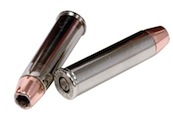
.327 Federal: the little cartridge that should have made it

Very briefly in yesterday’s post on the Ruger SP101, I mentioned the .327 Federal, what is now a boutique revolver cartridge. I loved the idea of the .327 Federal when it was introduced as a joint venture between Ruger and Federal, and I’ve always nursed a bit of disappointment that it never really caught on.

327Federal

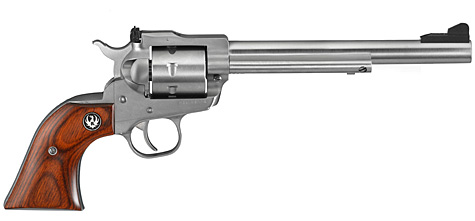
These days, the only company still making .327 is Federal/ATK, and you can have it in whatever flavor you like, so long as you like either Speer JHP, Hydra-Shok JHPs, or American Eagle soft points. New manufactured guns are almost all Rugers, on their small frame single action package with a seventh shot thrown in. The Single Seven, as it’s called, is available as a distributor exclusive through Lipseys and comes with either a 4.63 inch barrel, a 5.5 inch barrel, or a 7.5 inch barrel.

Ruger Single Seven 7.5 inch barrel

It seems that the .327 has settled down into a niche as a solid small game cartridge, even through the preponderance of available loads are catered towards self-defense. Today I want to look at why the .327 never really caught on – in many ways it’s the .357 Sig of revolver rounds. A modern invention with a lot of potential that never really went anywhere. To understand the .327 Federal, you have to look at its parent cartridge, the .32 H&R Magnum, which was itself a stretched and upgraded version of .32 S&W Long. In fact, you can shoot any of those cartridges in a .327 Federal revolver, although with the .32 S&W you’re going to be jumping so much freebore your rounds will think they’re Tony Hawk.

Back to the cartridge itself, it was originally launched with a Ruger SP101 that held six shots, and a GP100 that held seven. The .327 Federal actually did offer a ballistic upgrade over .38 Special as well; while my memory of 8 years ago is a little hazy, I seem to recall ballistic tests showing that it outperformed most .38 Special loads out of the SP101, but not quite up to the snuff of a full house .357 Magnum. It was easy to shoot as well, it was accurate, and as I’ve mentioned repeatedly you could hold one more round in the gun. More ammo is better, right? So why didn’t it catch on?

We actually have a long history with .32 caliber cartridges that don’t quite get there. The .32-20, the .32 Magnum itself, and then the .327 Federal are all great examples. The Federal, in my opinion, suffered from being an answer to a question people didn’t know they should be asking. Like the .32 Magnum before it, most people who carried revolvers looked at the .327 and said “what does this do that my .38 doesn’t?” Because the cost of getting into a new cartridge, buying expensive new ammo/reloading supplies, and searching for important defensive accessories like speedloaders or speed strips wasn’t really worth it just to get one more round in the gun. And really, that makes economic sense. A 10 or 15% increase in terminal performance doesn’t really justify getting into a boutique cartridge.

So the .327 quietly became a small-market round mostly used for hunting. It’s legal for deer in some states, and Buffalo Bore produces pretty hot ammo for it. I do think that if Ruger wanted to try for a comeback on the little round, they should chamber an LCR for it. The .327 Federal and the super-light, super compact LCR would be a pretty good match. It would also be pretty neat to be packaged with a rotary magazine and the Ruger American rifle, but that crosses into the land of “things Caleb likes to imagine.”

Revolver Tour #15: Ruger SP101 Wiley Clapp

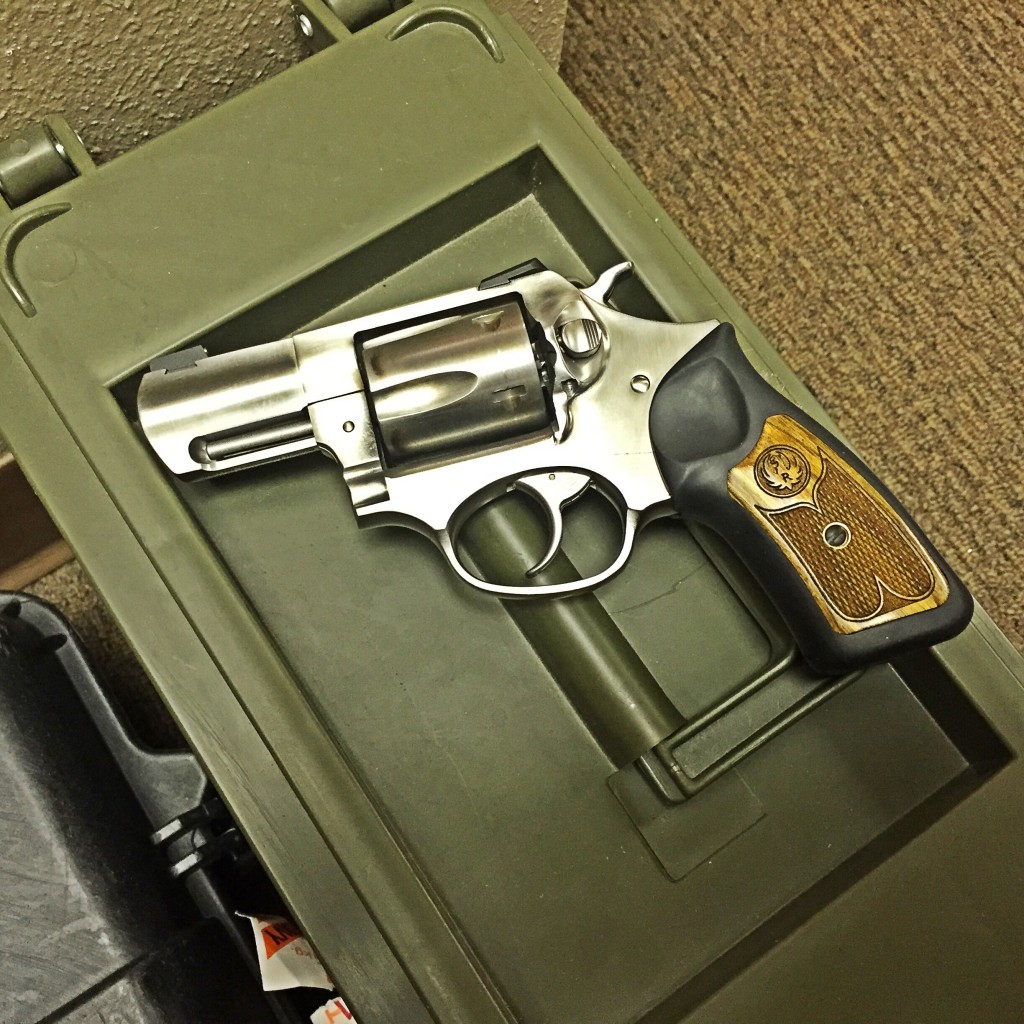
Ruger SP101 Wiley Clapp

True statement: the Ruger SP101 is the only small frame revolver that I’ll voluntarily shoot any volume of heavy magnum ammo out of. Like all Ruger revolvers, it embraces over-engineering as a good thing, and while I wouldn’t call it “pleasant” to shoot with hot ammo, it’s certainly more fun to shoot than anything else in its size class.

Continue reading →

Remington Announces Para Integration

Press Release
February 9, 2015: At Remington Outdoor Company (“ROC”) we develop, manufacture and market the highest quality firearms, ammunition, and related products. We have built ROC by acquiring and cultivating great brands and products, such as the Remington 870 and 700, DPMS rifles, AAC suppressors, Barnes Bullets ammunition, Para USA handguns, and more while continuously investing in our people and facilities. In 2011 Remington re-entered the handgun market with the critically acclaimed R1 1911, an updated version of the 1911 Remington made for the US government in World War I. Most of ROC’s new product launches and acquisitions have gone well, but they aren’t always perfect and, candidly, we did a poor job with the Marlin factory relocation and the R51 launch. These were expensive but valuable lessons.

In 2012, with a goal of expanding its handgun line, ROC acquired Para USA (“Para”), a company that specialized in the production of competition, high capacity, and double action 1911-style pistols. Following Remington’s acquisition, Para, which had been experiencing quality control issues, saw a steep decline in warranty claims.

In 2014, ROC announced its new, world-class firearms center of excellence in Huntsville, Alabama. Here, Remington is integrating product development, engineering, production, and quality control – a first in Remington’s 200-year history. The integration of modern sporting rifles, suppressors, and Remington pistols commenced immediately, and Para is scheduled to move to Huntsville next month.

Para’s products have a strong following due to their key technical and performance features, which are different than many 1911s, including Remington’s own R1 line. ROC intends to keep these features and benefits that our customers have come to trust, while transferring Para’s operations to Huntsville and rebranding Para to Remington. We have learned from our mistakes, listened to our customers, and have a clear plan to smoothly integrate Para. This includes keeping popular Para products, characteristics, and names such as the “Warthog,” while improving quality with state-of-the art machining and engineering in Huntsville, AL.

Further, ROC will recognize and continue to support Para’s Lifetime Warranty promise on all Para handguns.

For assistance with Para warranty inquires, please call 888-999-9386 or email us at [email protected].

About Remington Outdoor Company
ROC, headquartered in Madison, N.C., designs products for the hunting, shooting, self-defense, military, and law enforcement markets. Founded in 1816, ROC is the nation’s oldest gun maker and one of the largest domestic producers of firearms and ammunition. ROC employs over 3,500 people and distributes its products throughout the U.S. and over 55 countries. ROC includes globally recognized brands such as Remington®, 1816®, Bushmaster®, DPMS®, Marlin®, H&R 1871®, Mountain Khakis®, Advanced Armament Corp. ®, Dakota®, Nesika™, Storm Lake Barrels,® and Barnes®.

More information about the Company can be found at www.remington.com.

Practical Pistol Show Podcast

Language warning: I say the f-word a lot.

Watch me discuss the finer points of dry fire, being a gamer, and burnout with the USPSA Production Champion Ben Stoeger and his producer Candice who seems like a very nice lady. I should also point out that Candice is (I think) the only female 5 gun master. So that’s pretty rad.

Here’s a link to the post of mine we discuss: Winning is the only thing

And a link to Jeff Gonzalez’s post: Dry Fire, the Big Lie