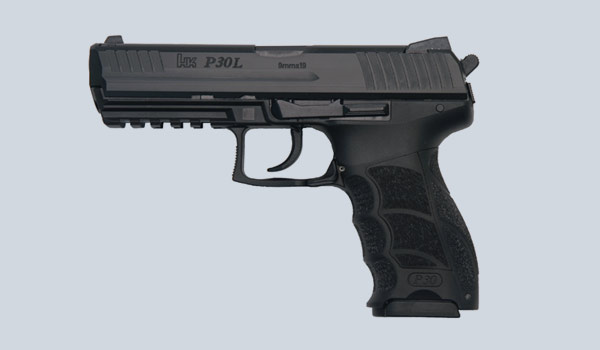
Wow.

It’s not often that simply picking up a gun impresses me, however I had the chance the other night to play a little bit with an HK P30L.  That of course is the “long slide” version of the HK P30 (long being relative, as it’s only a 4.5 inch barrel on the L).  I’ve been told this is the most ergonomic 9mm on earth, and now I get it. I have never picked up a gun off the table, set it in my hand and said “hey, that’s perfect”.  Small enough that I was able to reach the DA trigger with ease, large enough to give my hand plenty of gun to hold on to, I mean really I hate to sound like an HK fanboy here but my goodness.
I haven’t been provided with any kind of promotional compensation for this; but it’s rare that I have a visceral reaction to a firearm and I felt as though that was something to be shared with my fellow gun nuts.  The only thing I’m not a huge fan of on the P30 is the paddle style mag release, however as I’ve often said on other things, that’s a training issue, not a gun issue.

Will the HK P30L become my Bianchi Cup Production gun?  Will I forsake ESP and Single Stack for Production and SSP?  I don’t know, but I do know that I’m definitely going to get more rounds through one of these, and soon.

EPA Lead Ammo ban

I am definitely not the first to mention this – however it’s worth examining the coverage that the ban has received.  According to the NSSF, the EPA wants to ban all traditional lead core ammunition under the Toxic Substances Act.  Honestly, my first reaction to seeing this was “that has got to be a hoax, there is no way the EPA is that stupid”.  Sadly I was wrong.

Reaction has been predictable; it’s been pointed out that the EPA lacks the authority to do this, even though that probably won’t stop them.  Other have expressed the point that banning lead ammo is actually a really good way to get a bunch of people who are not invested in this fight to become suddenly and aggressively invested.  Lots and lots of people have commented on how this is the administrations way of taking a run at gun owners – which coincidentally is similar to line in a Chris Rock comedy bit where he proposed keeping guns legal but making each bullet cost $500 (or something along those lines, it’s been a while).  The point obviously is that a ban on traditional lead core ammo would devastate the shooting community.  Non-lead ammo such as mild steel is already illegal as it’s classified as armor piercing, and sintered copper/tin projectiles are prohibitively expensive for most shooters.

So what can we do about it?  Obviously, since the EPA restriction is open for public comment, click this link to submit a comment.  NSSF has recommended some talking points for said comment:

* There is no scientific evidence that the use of traditional ammunition is having an adverse impact on wildlife populations.

* Wildlife management is the proper jurisdiction of the U.S. Fish and Wildlife Service and the 50 state wildlife agencies.

* A 2008 study by the U.S. Centers for Disease Control and Prevention on blood lead levels of North Dakota hunters confirmed that consuming game harvested with traditional ammunition does not pose a human health risk.

* A ban on traditional ammunition would have a negative impact on wildlife conservation. The federal excise tax that manufacturers pay on the sale of the ammunition (11 percent) is a primary source of wildlife conservation funding. The bald eagle’s recovery, considered to be a great conservation success story, was made possible and funded by hunters using traditional ammunition – the very ammunition organizations like the CBD are now demonizing.

* Recent statistics from the United States Fish and Wildlife Service show that from 1981 to 2006 the number of breeding pairs of bald eagles in the United States increased 724 percent. And much like the bald eagle, raptor populations throughout the United States are soaring.

Additionally, contact your Senators and Congressman.  While this isn’t yet a legislative issue, blowing up the phone lines on Cap Hill never hurt our team, and now would be a good time to do it.  Finally, contact the person at EPA responsible for all of this, Lisa Jackson.  Her email address is [email protected] and I’d encourage you to use the talking points listed above in your communication.

One final point – when contacting you Senators and Congressman, find out if they’re up for re-election.  If they are, very politely remind them that this EPA has to make a decision on this the day before election day, and your Senator/Congressman’s strong and vocal opposition to a lead ammo ban will go a long way towards guaranteeing a vote from a happy(ish) constituent.

Living with sub-compact guns

I’ve been running the Ruger SR9c in competition and as my carry gun for almost two months now, and I’ve fired just short of 2000 rounds through the gun.  In that time, I’ve had the opportunity to encounter a lot of the myths about sub-compact guns that you’ll run in to, as well as some of the performance shortcomings that can be ameliorated with training and practice.

One of the big myths is that a sub-compact is less accurate than a fullsize gun.  That’s just plain old nonsense.  Sub compact guns are often just as mechanically accurate as their full-sized counterparts, what makes them “less” accurate is that a shorter sight radius and increased recoil often make them more difficult for shooters to master.  Of course, the “increased” recoil is another semi-myth.  I’ve shot the full-size SR9, and I’ve shot the compact SR9c.  The SR9c uses a different recoil spring system than the fullsize gun – a dual captive spring system goes a long way towards soaking up felt recoil.  I have probably said this 100 times, but the SR9c is the softest shooting sub-compact gun I’ve ever played with.  I’ve heard similar reports about the Gen4 Glock 19s, which also use Glock’s new dual spring set up.  There’s no reason in this modern day and age for a sub-compact 9mm to dish out punishing recoil to the shooter.

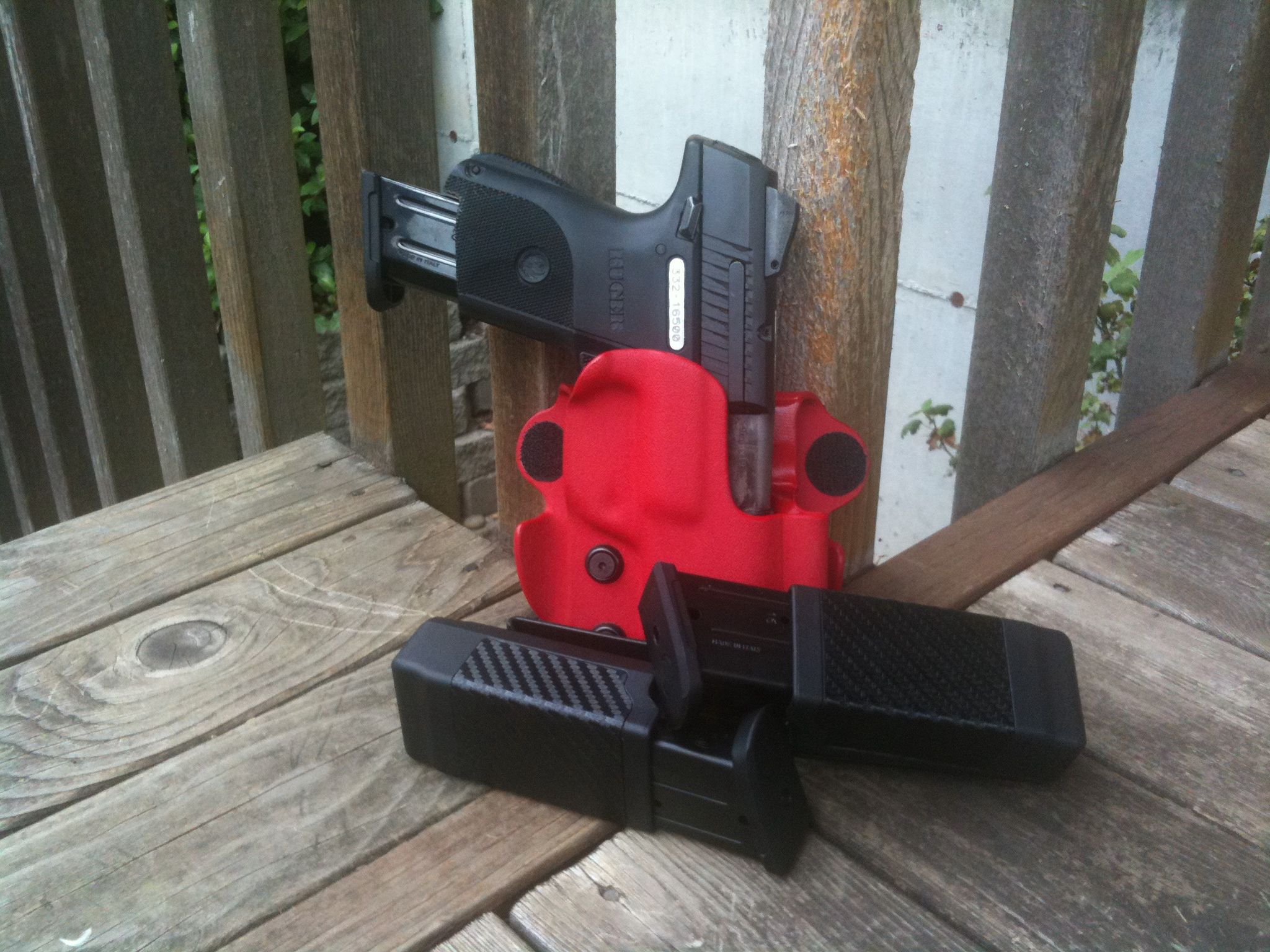
That’s important, because there is one thing that’s true about sub-compact guns – it takes more practice with a smaller gun to build up the same skill level that is built in less rounds with a fullsize gun.  The abbreviated grip and shorter sight radius have a lot to do with this.  A smaller grip can prevent you from grabbing the gun correctly straight out of the holster, which means the sights won’t be lined up quite right, which adds time, etc – I has having this problem the other day on my disastrous classifier run.  However, one area that the subcompact does help make up for that is in how fast it clears the holster.  In the picture above, my SR9c is riding in its Comp-Tac Speed Paddle, and IDPA legal holster.  Because I only have to raise the gun 2 inches to clear the barrel of the holster, it’s wickedly fast on the draw.  I’ve managed to hit a 0.87 draw to a -0 hit in practice with this, and in actual competition my first shots are usually 0.10-0.15 seconds faster with this gun, assuming I grip it correctly and get the sights lined up.

One thing to bear in mind when you’re carrying a compact is the muzzle velocity you’re going to lose out of that shorter barrel.  147 grain CCI Blazer ammo, which is listed at the factory as 950 FPS muzzle velocity only chronographed at 870 FPS from this gun.  With an gun where the barrel length is less than 4 inches, you’ll need to weight that loss in velocity into account when you’re selecting carry ammo.

Ultimately though, if there’s anything that lots of drills have taught me the last couple of months is that you can shoot a sub-compact just as well as you can shoot a fullsize gun – it just takes more practice.  I’d encourage you to shoot IDPA or USPSA matches with your carry guns, whether it’s a Glock 26 or a S&W M&P Compact.  The benefit of employing your defensive firearm under simulated stress is incredible, and with practice you’ll be just as competitive.  Don’t believe me?  I finished 12th at a major USPSA match shooting the Ruger SR9c against full on race guns and race gear, and with the handicap of scoring minor.  So grab your compact guns and get out to a match!

Ruger introduces SR-556 in 6.8 SPC

Ruger has announced that the piston driven AR-15 style SR-556 will be available in 6.8 Remington SPC.  I want an SR-556, because I think it would make an excellent 3-gun rifle, plus I like piston guns.  Don’t hate on me.  The SR-556/6.8 is intriguing to me because the 6.8 SPC is a much higher performing cartridge in terminal ballistics on game animals, and while I’m not much of a hunter I do want to take Frank James up on his invitation to go slaughter some feral hogs.  The 6.8 SPC is a much better hog-whacker than a 5.56.  The nice thing about the Ruger SR-556?  It’s not an entry level gun.  The parts on it are all quality aftermarket parts from the sights to the rails, which means from the factory you get a rifle that’s ready to rock a 3-Gun match, take down feral hogs, or serve as a top notch home defense carbine.

FTC Disclaimer: Ruger Firearms is currently sponsoring the Quest for Master Class, an ongoing project hosted here and on Downrange.TV.

A sad announcement about Gun Nuts Radio

I really didn’t want to write this post, but after evaluating all the options, this seems to be the best course of action.  Gun Nuts Radio will be going on hiatus effective immediately through November 3rd; at which time I’ll re-evaluate whether or not it will be able to continue.  Unfortunately, the demands of my current job place a high premium on time, and coupled with the new projects I’ve taken on such as the Quest for Master Class and several other upcoming items, the time simply isn’t there for everything that I need to be doing.

This makes me sad, as Gun Nuts Radio was always one of my favorite projects.  Over the past 2.5 years it’s been one of the greatest pleasures of my life to bring you the latest in guns, gear, political and shooting sports news – and watching the show grow in to the number 1 shooting sports podcast on iTunes has been awesome.

I cannot thank everyone that’s been a part of Gun Nuts enough for everything they’ve done to support the show.  My great guests, ranging from local activists and politicians, to friends of the show, and shooting sports superstars have always brought a smile to my face.  Having shared in their knowledge and brought that out to where everyone can listen to it has been a wonderful experience.

This wouldn’t be complete with thanking people that have invested their time in Gun Nuts either.  One of the factors that directly contributed to the growth of Gun Nuts Radio was the hard work put in by Breda as my co-host for the majority of the time the show was on the air.  I’ve been described by friends as “a shooter who happens to blog”, which is a fair description.  I’ve never been much of a political guy, and left to my own devices could talk about guns for hours and hours – Breda brought a much needed thoughtful political mind to the show, which allowed it to grow in to a much larger audience; for that I’m deeply grateful.  I wish her the best of luck with B-B and Guns, as BlogTalkRadio as a network can always use another reasoned conservative voice.

Again, as I step away from the show temporarily I want to thank everyone that’s been a part of it, whether as a guest, a colleague, or a listener.  For the listeners, thank you for letting me in to your homes and your cars – I hope to be able to return to Gun Nuts after November with a renewed sense of purpose!

Obviously, the blog will continue – the website was here first and will stay; the Quest for Master Class is currently an ongoing project that will be continuing as well, and in the near future look for more projects from Gun Nuts Media with my name attached to them!  It’s a great time in the shooting sports, and there are a lot of wide open doors!

Illuminating

I haven’t had much opportunity to shoot in low light conditions lately, however I just recently had the chance at a local IDPA club.  They shoot at an indoor range, and will frequently run the stages with the lights off except for ambient light to simulate a low light shooting incident.

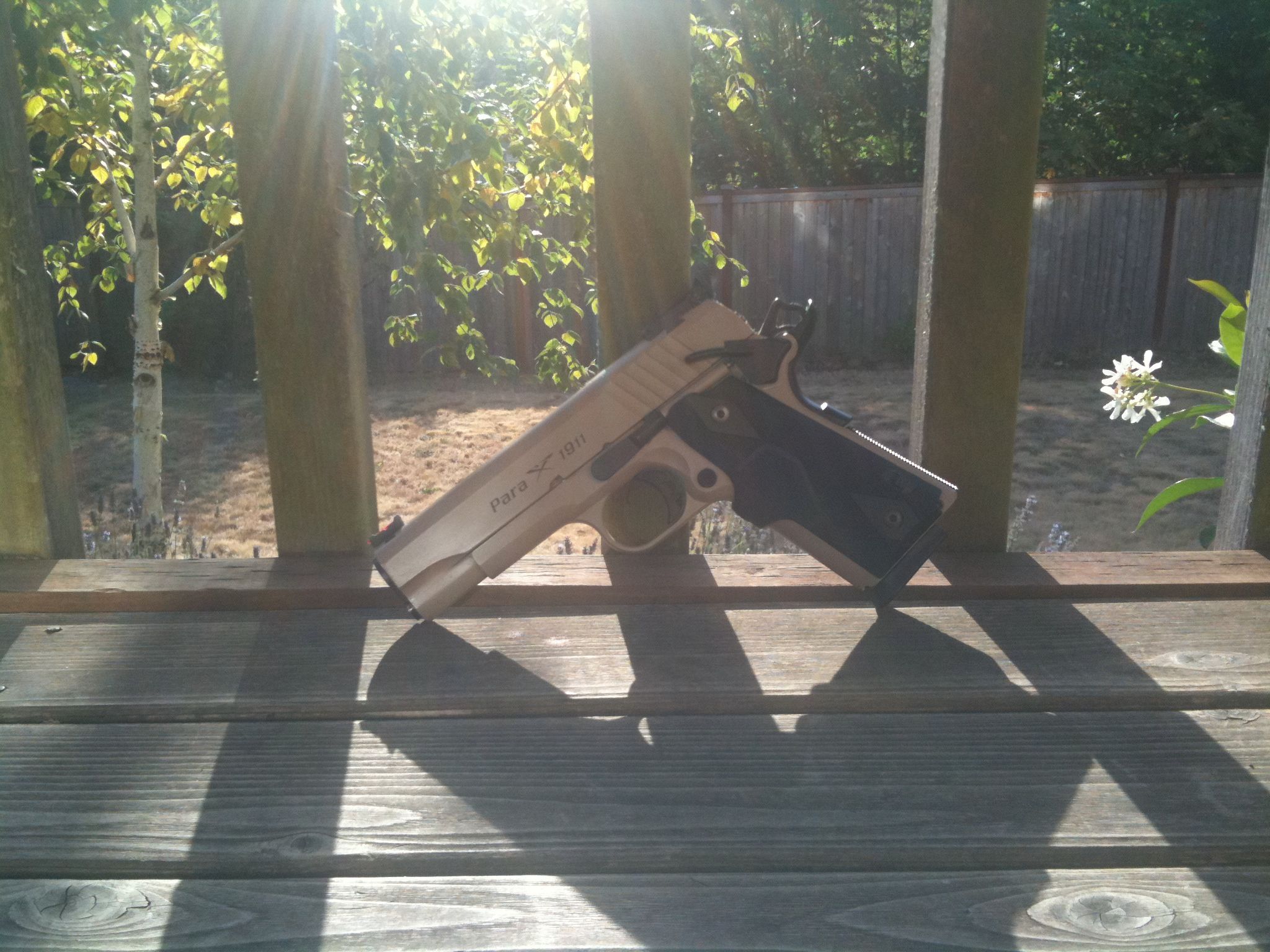
Knowing that, I hauled my ParaUSA LTC with Crimson Trace Laser Grips out to the range to run it in exactly the sort of environment that the laser was designed for.  The laser isn’t great for total darkness, as it doesn’t provide a lot of illumination, but in low light it quite literally shines.  What was most interesting to me was how much light on the target the laser did provide though – splash from the dot lit up the entire -0 of an IDPA target, allowing me to see the area around the dot and in one case identify hard cover and re-adjust my aim to get a hit where I needed it.

Of course, me being a fan of lasers for defensive firearms and training purposes shouldn’t be a surprise to anyone.  While the laser isn’t a substitute for the sights on the gun, there are times where you simply won’t be able to use your sights, whether due to lighting conditions, body mechanics, or whatever – in those situations a Crimson Trace laser becomes an invaluable tool as it allows you to still precisely designate your target and get fast hits.  Crimson Trace, in addition to being a good company that makes the best laser products on the market has also been phenomenal at engaging with direct media.  I enthusiastically recommend their gear to anyone serious about putting a laser on a defensive firearm.  Sure, you could get a guide rod laser, or one of those absurd “rear-sight lasers”, but all of those lack the intuitive activation and grip integration of the Crimson Trace Laser.

If you don’t believe me, try one out!  Find a range that will let you shoot in low light situations, maybe turn the lights off in your booth or shoot outdoors right around dusk.  Use of the laser in a low light combat situation greatly improves your ability to get rapid hits on target, which is exactly what you’ll need to win the fight.

Continue reading →

Feed your children well

It’s apparently 1911 day today.  Ladies and gents, don’t buy crappy magazines for competition or personal defense guns.  I could write another 700 or 800 words just on that, but bottom line the majority of malfunctions in modern semi-automatic pistols are caused by the magazine.  Get good magazines.

You can also buy crappy magazines, because everyone should practice malfunction clearance drills, but if you shoot a “public domain” platform like an AR15 or 1911, buy good quality magazines for serious work.  I can’t tell you how many malfs I’ve seen at matches in 1911 that are 100% the fault of the gun-show special mags and were eliminated when the shooter switched to Chip McCormick/Metalform/Wilson Combat magazines.

Oh, and to answer your question – I use Chip McCormick mags exclusively in my 1911s chambered for .45 ACP.