Gun Nuts Reviews: Nitecore SRT3 Defender

This is the first of what will be many truthful review.  These reviews are for items I bought my own hard-earned cash, meaning I am beholden to no one.  With that established, I present you with a brief review of the Nitecore SRT3 flashlight.

The SRT3 is a flashlight I bought with a specific purpose in mind.  In my job I use a flashlight quite often, several times a day actually and for the last 2 years I have used a no name AA battery flashlight I bought at the Boy Scout store.  It served me quite well, but life in my pocket took its toll on the lens and the scratches led to a muted, dim light pattern.  Thus I began a search for a replacement.  I wanted more lumens than the 80 my current light had and I always prefer AA batteries, finally it needed to be small and reliable.  Let me digress here and say yes, I know I should have bought a Streamlight Protac 1L (more on that at a later date), but alas, I did not.  Instead I bought the Nitecore SRT3.  I had found it on sale; it has oodles of lumens, I loved the pocket clip, and it used AA’s.  Like a hungry Largemouth Bass I bit – hard.

The Nitecore SRT3 Defender is really marketed as a “defensive” flashlight.  It has quite a few options that I never look for in a flashlight.  They include: a strike bezel, a strobe, a dimmer, a red LED, a blue LED, a combo red/blue LED flash mode, an SOS mode and finally a “location beacon” which is similar to a “don’t hit me” light you might find on a jogger or a bike rider after dusk.

Here are the some of the key specs for the manufacturer’s website.

  • Max Output: 550 lumens
  • Max Beam Distance: 134 m
  • Max Beam Intensity: 4500 cd
  • Max Run time: 200 h 0 m / 8.33 d
  • Special Modes: Location Beacon, Red/Blue Warning Light, SOS, Strobe
  • Length: 100 mm / 3.94 in
  • Weight: 73 g / 2.57 oz

After carrying the flashlight for 2 months I have some insight to offer.  As normal, I’ll start with the good.

Pros

The flashlight is bright!  Very bright!  In fact, on a couple of occasions the light reflected off bare aluminum surfaces and washed out the area I was trying to focus on.  I absolutely don’t want to sound like I am complaining that its brightness was a bad thing, but one needs to be aware of its brightness when using in confined spaces, i.e.: the overhead baggage area of a Bell 407.

The finish is very durable.  Durable to the point I was actually shocked at how well it has held up in my pocket.  Normally I destroy the finish on flashlights rather quickly, but this one held up fine.

Finally, the belt clip is amazing for my method of carry; which consist of clipping it onto the edge of my weak hand pocket, similar to a pocket knife.  It is easily the best belt clip I have experienced on a flashlight

Cons

It is quite a bit larger than the photos on the Nitecore website lead on.  The hand model they used must wear XXL gloves when compared to the size in my hand.  I wear medium gloves if you’re curious.

Those modes!  All of those ridiculous modes!  I am sure someone has a use for the red and blue warning light, but I can’t imagine what that use might be.  I showed several people this flashlight and every one of them agreed the red/blue light was a waste of design space and money.  In addition to the unnecessary blue and red warning mode I had issues with the location beacon mode.  On five different occasions I was able to change the flash pattern (tempo) and once I even turned the mode off by simply tapping the light with my weak hand.  This leads to what I feel is the units ultimate flaw.
Nitecore Article

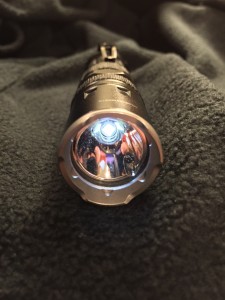
Here you can see the Red/Blue LED inserted into the reflector.

The unit isn’t all that durable.  At work I accidentally dropped it off a four-foot ladder and it turned itself off.  When I picked it up, it instantly turned itself back on.  Ever since the “great fall” the tail cap switch is finicky.  A four-foot drop is not that far and gives me serious reservations as to the overall long-term durability.  This is even more glaring when you consider it has an SOS mode for camping/hunting use.  Clearly you don’t want a fragile flashlight if you are lost in the woods and in a survival situation, nor do you want a fragile flashlight in a self-defense struggle. It would seem this is the Humpty Dumpty of LED flashlights.

All in all, I believe Nitecore missed the mark with this flashlight, especially when you consider the cost of the unit and what you can get something similar from Fenix and Streamlight for equal or less money.  I no longer carry this unit and have relegated it to emergency roadside duty in my truck, although I can’t be positive I will keep it for that.  For EDC and work I replaced it with the awesome Streamlight 1L Protac.  For the first time find myself with a  flashlight that I wish I hadn’t of bought.  This was my first experience with Nitecore and in all honesty, I wish I had my money back.

Caveat emptor!

USPSA training stage

Since we’ve been focusing pretty hard on 1911 lately, I’ve been revisiting a lot of my old 1911 content. Here’s a video from the Automatic Accuracy class I took back in 2013 with Ben Stoeger and Matt Mink as I was training up for Single Stack Nationals. The gun is a Colt 1911 CCG in .45 ACP. Mags are Wilson ETM, belt/holster is all Safariland.

Should you carry OC spray?

I’m often asked by folks new to concealed carry or self defense in general about OC or “pepper” spray and whether or not they should consider carrying it.
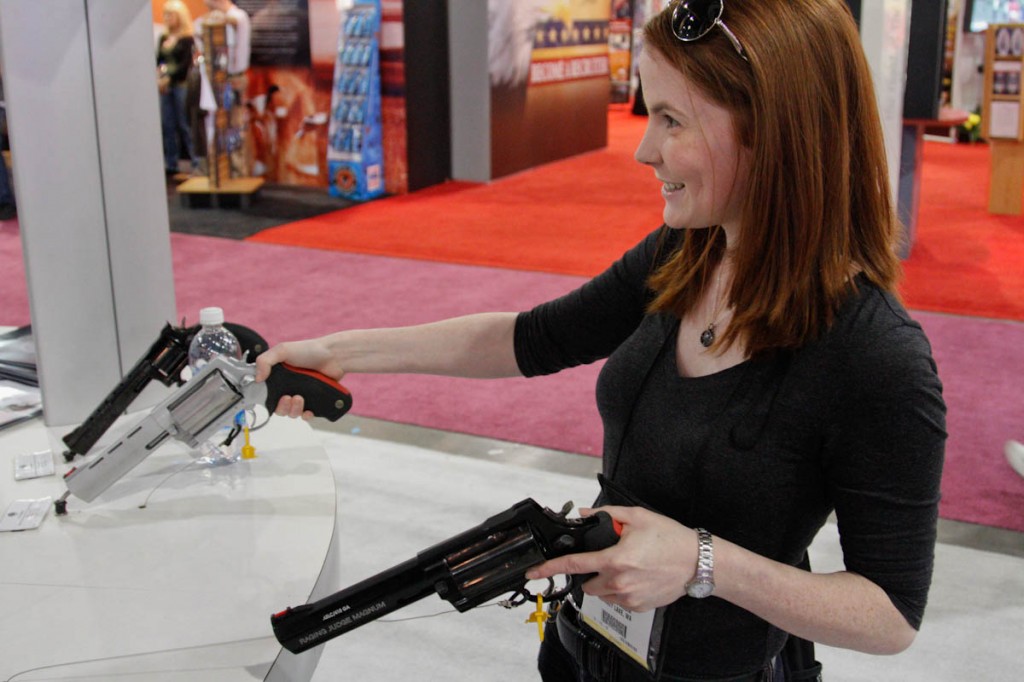
I’m by no means anything close to being the leading expert on the utility and use of OC spray. (Chuck Haggard of Agile Training and Consulting puts on some splendid classes about OC spray) That being said, I see OC spray as a valuable defensive tool for the average citizen and I encourage people to carry it.

To explain why, let me tell you about a situation where it came in handy for me.

A few months ago I pulled out of a parking lot on to the main road. Shortly after I pulled out a woman in an older Ford pickup pulled out from a parking lot across the same road and began flashing her lights and swerving around behind me. She was visibly very agitated and pounding on the steering wheel of her old truck as she got right on my bumper. When stopped at the next stop light, she laid on her horn behind me and continued to flash her lights, apparently screaming the whole time. I’m not much of a lip reader, but the bits and pieces I could make out through my rear view mirror were not very lady-like.

I had absolutely no idea why on earth this woman was in a tirade behind me but I had no desire to figure it out. When I see storm clouds of stupidity forming I’m not going to stick around to see if the funnel cloud is heading for my trailer park, you know? When the light changed I used the traffic around us to get distance from her old truck. I used a couple of last minute turns and some quick lane changes to get her out of sight. Then I drove on to the store I was originally going to when this all started. I got out of the car and was heading into the store when I saw her truck pull into the parking lot.

The store had some of those concrete pylons in front of it designed to prevent thieves from smashing through the store front, so I placed those between myself and her truck because I had a very real worry at that moment that she was going to try and run me over. Her behavior to that point didn’t make me think that she had doggedly followed me for at least ten minutes so she could tell me about Jesus.

She pulled right up to the pylons, screeching her truck to a halt and got out of it screaming obscenities at me for, in her mind anyway, cutting her off. This woman was in her late forties or early fifties and from her dress and demeanor I got the impression that she was a couple of ants shy of a picnic. Other people going into and out of the store stop in their tracks wondering what in the world is happening. At this point the woman balls up a fist and approaches screaming her intention to physically assault me.

Let’s ponder the situation this presents me: I’m larger, stronger, younger, and clearly saner than this woman. Even though I’ve done absolutely nothing to provoke this behavior from her, who do you suppose society at large will place the burden of responsibility on? I’m not legally required to let this woman hit me, but laying hands on this crazy witch is highly likely to be a losing proposition for me. In the moment I got the impression that she wanted me to get physical and that she would immediately try to play the victim to bystanders and the inevitable law enforcement response. Like the computer once said:

At that point I aimed my little canister of Sabre Red at her. This movement surprised her and she stopped in her tracks. I very calmly told her that if she took another step in my direction I was going to blast her in the face with this OC spray and then press assault charges on her when the police got there.

She reacted to this by getting even louder…but crucially, she backed away from me, got in her old truck and took off. The bewildered bystanders were sympathetic. “If that had been me, I would have punched her right in the face!” I’m quite certain the bystander who told me that would not have been as sympathetic had I actually decked her.

There are situations where the only option available to you is to draw a lethal weapon and use it with as much violent intent as you can muster…but those situations will not be the only ones you face. Sooner or later in life you will likely encounter some form of belligerent idiot intent on doing you some level of harm, but not enough harm to justify pulling a gun on them. If confronted with that sort of belligerent idiot the ability to spray some liquid pain and then get yourself away from them has a pretty high chance of successfully stopping their attack with the absolute minimum risk of serious injury to you or said idiot.

Manufacturers of OC spray products are making potent products in any number of convenient carry-friendly configurations these days, and I’m sure at least one of them would work out for you. I’ve found the little Sabre Red “Spitfire” pictured and linked in this article is convenient to carry and requires the right sort of deliberate effort to trigger. It even survived an (accidental) trip through the washing machine and worked afterwards.

Our goal in self defense is to preserve our life and the quality of it from criminal assault. We rightly spend a lot of time thinking about the most violent and threatening sorts of criminal injury that can be visited upon us, but it is also worthwhile to have a plan for dealing with less severe problems that still require using some level of force in response. For those problems that don’t require using your gun but do require doing something more than calling the police, OC spray is, I believe, a worthwhile investment.

David Petzal doesn’t seem to like change very much

For a guy that calls himself a “gun nut,” David Petzal sure didn’t seem to enjoy the largest gun show on planet earth very much. If you dig into his recent column on SHOT Show there are multiple interesting threads that could be followed. His column could have been a great launching point to discuss how the firearms market has changed; we could look at the influences of 15 years of war on guns and gear, we could examine the relentless PC war on hunting, but no. Instead we can just complain about how “everything is tactical now.”

shot2012_day4-1-2

Unfortunately, any good point David could have made just kind of got lost in the sauce, as the article comes off like “old man yells at clouds.” See, it gets hard to take his column seriously when he runs lines like this: “[SHOT Show] has now become so heavily militarized that you have to look fairly hard for something designed to kill animals instead of people.” Really? I mean it’s not like Thompson/Center introduced a new hunting rifle this year…oh wait they did. Ruger also introduced a new model of the American Rifle, and Kimber dropped new rifles as well. So yes, while tactical/ccw guns and gear still rule the roost, there’s certainly no lack of hunting specific gear.

But that sort of brings me around to another point about that line in specific, because the phrase “designed to kill animals instead of people” is pretty dumb. I’ve never used an AR15 to kill people. I have used them to kill animals, and I know a lot of other people who’ve used them for the same thing. Just because it doesn’t look like what Petzal would imagine a hunting rifle should look like shouldn’t mean it’s not a hunting rifle.

Unfortunately, there’s a lot in David’s article that I could address. His apparent bemoaning of the lack of booth babes, for instance; complaining about the number of dogs there (seriously? Who doesn’t like dogs?), but what I ultimately want to pound on is the fact that what we’re seeing here is the result of a hugely successful expansion of the gun culture. Even in my lifetime alone, I’ve seen the gun culture change tremendously, and so for someone like David, I can’t even imagine how different things look now than when he was my age. We’ve been at various levels of war for the last 15 years, the firearms industry employs a disproportionate number of veterans compared to other industries, available lands for hunting have been shrinking at the same time as the government and media wages a relentless war on hunting, and more often than note, people are getting their first exposure to firearms via video games and media instead of their family members.

Those factors have driven real change in the industry, the products are more focused on shooting enthusiasts and concealed carry than on hunting. People who are new to guns are far more likely to go to their local range and rent an AR15 and shoot that; they’re going to buy a Glock 19 for concealed carry or home defense. That’s what the industry is, and it’s where David misses the mark. You see, if it wasn’t for my passion for shooting, I never would have gone hunting. I’m not from a family that hunts, so it wasn’t part of my childhood. But as an adult, as someone who’s been shooting most of my life, I’ve been introduced to hunting via people in the industry who are passionate about it.

That’s what people like David Petzal and others who are passionate about hunting should be doing. Looking at this new culture of gun enthusiasts with their AR15s and tactical gear and introducing them to hunting. A .300 Blackout makes a pretty bitchin’ deer rifle, and a regular old 16 inch vanilla AR is a great gun for prairie dogs, coyotes, and all kinds of other game. There is tremendous value in hunting, in shooting at something that moves and thinks and has a mind of its own, even if it’s just for the inherent marksmanship challenge of hitting a moving target. Lifelong hunters like Petzal should be reaching out to tactical enthusiasts and trying to bridge the culture gap.

Instead, we get lines like this: “Everyone who makes guns is selling everything they can produce, which stifles the need for innovation and takes the emphasis off firearms that would not be useful during the Latter Days.” I wanted to be mad about his article, I really did. I wanted to get riled up about how the Fudds are this and that and blah blah, but ultimately I’m not. What I am, and what I feel while I’m writing this is disappointment. David Petzal has a great voice and a huge platform that he could use to preserve the future of hunting by reaching out to the newest members of gun culture. It’s a pity he doesn’t see fit to do that.

Springfield 1911 9mm Range Officer update

Dropped another 260 rounds through the Springfield Armory 9mm Range Officer, which brings the running total to 510 rounds. Current malfunctions are three failures to extract experienced during the 10-8 Performance Function Test. The gun has had no issues beyond that. If you follow me on instagram, you might have seen I did run into an issue with the pistol, but not one that’s going to cost it any points.

buggered 1911 grip screws

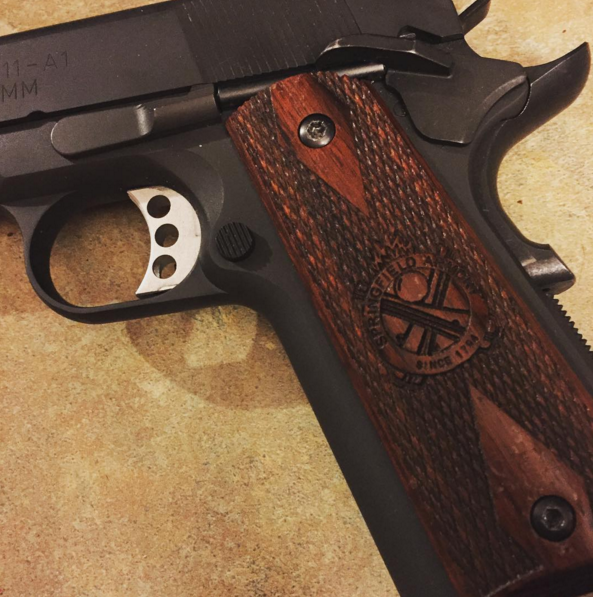
I’ve been carrying the Springfield, because it’s accurate, reliable, and hella fun to shoot, but in my desire to make it a better for carry I decided to put my Crimson Trace 1911 Lasergrip on it. Unfortunately, the previous owner of the pistol (yes it’s a used gun) decided it would be awesome to 1) loctite the grip screws in place, which isn’t always a bad idea, however for whatever reason said previous owner also decided to 2) totally strip the screws out. Why? I have no idea. I suspect that the loctite and the stripping were 100% related, but it still drives me nuts. So to remove the completely buggered allen head screws, I need to get some hex bits, so I can pound one in there and hopefully get enough traction to get these ****ing things out. Then I can put my sweet beams on.
The moral of the story? One, anything other than slotted screws on a 1911 is an abomination unto the Lord and John Moses Browning; two, if you’re going to loctite your grip screws use blue loctite, not red. And don’t strip the ****ing heads!

Mitigating A Training Scar With A Deliberate Pause

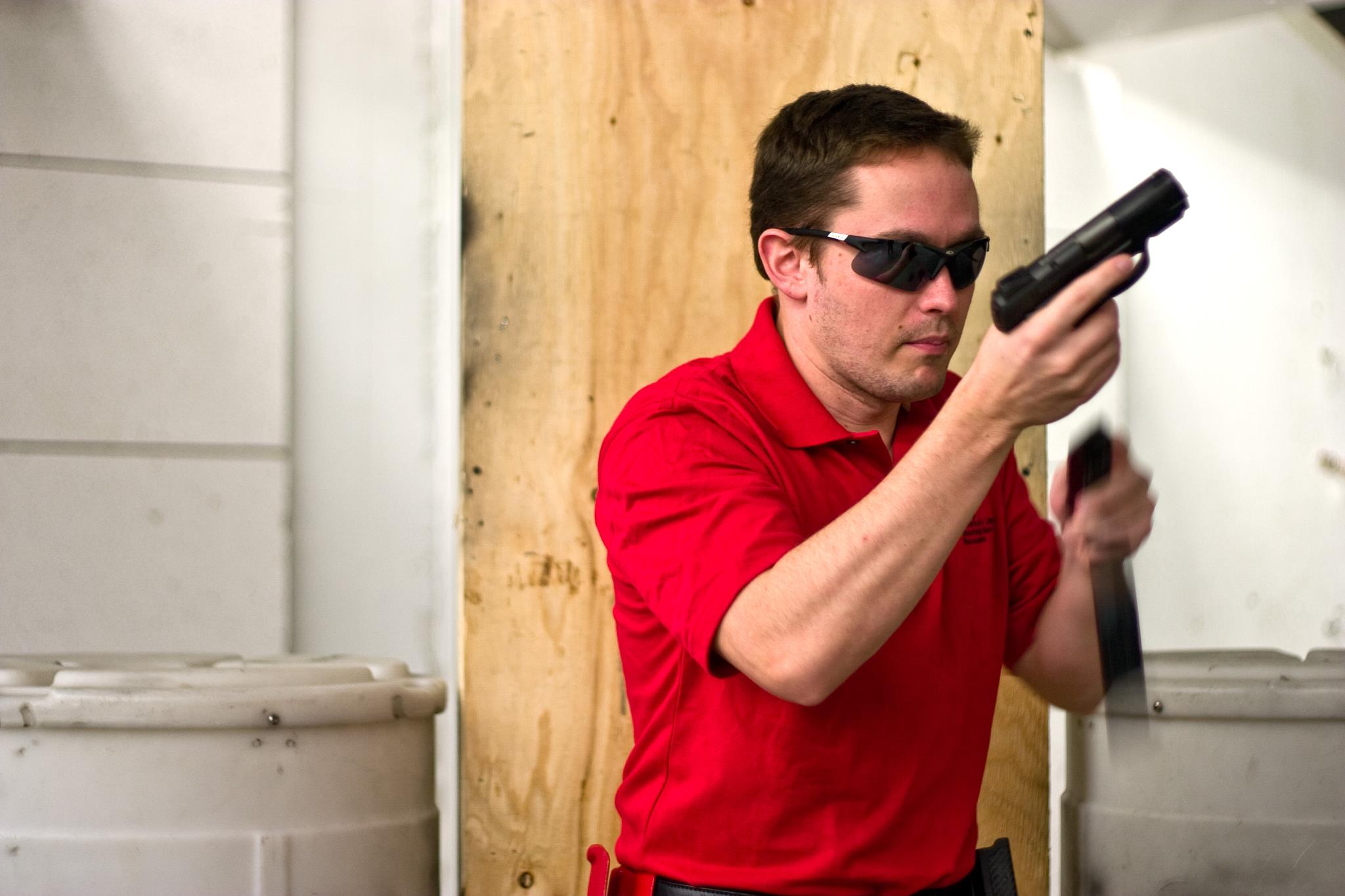
Anyone that has dry fired any appreciable amount of time has likely run into the scenario were you are in a hurry between reps (or timer beeps) to the point you are quickly releasing mags and/or re-holstering to reset for the next rep. This can be a bad habit, and as much as I hate to say it, it can lead to training scars. If you do enough dry fire you might find yourself doing such actions without even thinking. Lest you think it is not a training scar you should read this article by Mike Seeklander. In the article Mike goes into great detail of experimenting during his classes and being able to trigger this training scar time after time. This is not a good thing, especially if you ever strap on a concealed handgun.

Here is a very telling excerpt from the article:

Again the next several groups go through the drill and you can probably guess by now what happens…multiple students finish the drill, and UNLOAD their gun!   How can this be?  Are they unruly and disregarding my instructions?   No, they are not.   They are going through a stress induced anomaly that comes out when the brain is reaching for something to do.   At this point in the class I stop the group and point it out, as well as some other observations and mistakes they are making during the drill that NEVER happened during the previous training drills.    The teaching point is clear, stress causes things to happen that you might not predict.  Most of which are caused by the brain searching for something to do.   This is one of the reasons it is so critical to make sure during training to follow a set of logical and effective processes during each repetition of your training drills.   The processes should be designed and to increase your chances of survival in the event of a defensive shooting.   Training these processes must be done consistently during your training drills.  

In the article Mike discusses requirement that we should be able to “observe and realize the next logical step” in a situation. So it is with that thought I offer one way that you can work to break the habit.

A Pause – a simple 1 second break following a drill done in dry fire, or even live fire, can allow you to determine your next move; but there is so much more you can do. Let’s look at a scenario:

You are ready to dry fire. You have the gear you will be using (CCW or competition), a shot timer with par time and you have your smart phone open to the countdown timer. You are ready to do some drills, maybe it is Four Aces, either way you are going to perform that drill for 4 minutes. After a couple of reps you are dropping the mag from the gun back into your hand and holstering the instant your par time beeps and the drill is finished. What if you take 2 seconds to pause and reflect, instead of racing to re-holster and reset?

Dry Fire Array

There can be some serious benefits in the pause. In addition to determining the “next logical step” you could delve deeper and reflect on your own performance. Was your draw good? Did you see the sights or were you cheating yourself? How was your grip?  When did you place your finger on the trigger? In short, you can identify areas for improvement?  If you are honest with yourself there is quite a bit of improvement to be identified during that 2 second pause.

Of course there is no free lunch and the pause will lead to fewer reps in your allotted practice time. It is also worth mentioning that personally, I have to consciously think about the pause each time, otherwise I go back to my own accelerated Unload and Show Clear procedure.

In the end, a brief pause after you finish a rep will cost virtually nothing and offers quite a few positives, including breaking a training scar that Mike Seeklander has proven to be real. The next time you are practicing, either dry or live fire, give the pause a chance. You might be surprised what you learn.


Single stack 9mm pistols for concealed carry

Three different approaches to single stack 9mm pistols for concealed carry in this photo. From top left we have the Glock 43, set up with Sevigny night sights in a BLACKHAWK Ambidextrous Appendix Reversible Carry. Moving clockwise, we have the current 1911 test gun, a Springfield Armory Range Officer in 9mm. The RO is riding in a Custom Carry Concepts Shaggy, which is honestly the most comfortable AIWB holster for a full-size 1911 I’ve ever owned. Last but not least is the Performance Center M&P Shield, which features high-visibility fiber optic sights and a ported barrel. It’s riding in a first generation Phlster skeleton. I have a later version of the Skeleton for my full-size M&P, and I absolutely love it.

Right now, I’m carrying the 1911, because it’s part of the Great 1911 project I’m working on this year. With the Shaggy, the 1911 rides nice and high allowing for a full grip on the draw. I haven’t used the ARC from Blackhawk much, but Shelley Rae swears by it. The Skeleton is set up for deep concealment; which is where I like to use the Shield anyway. It’s a small gun, and if I’m carrying in an environment where being made could have potentially negative consequences, the Shield and Skeleton combo reduces any “printing” the gun may have down to zero.

Three different guns, three different approaches to AIWB.