Walther P38K

20130902-110459.jpg

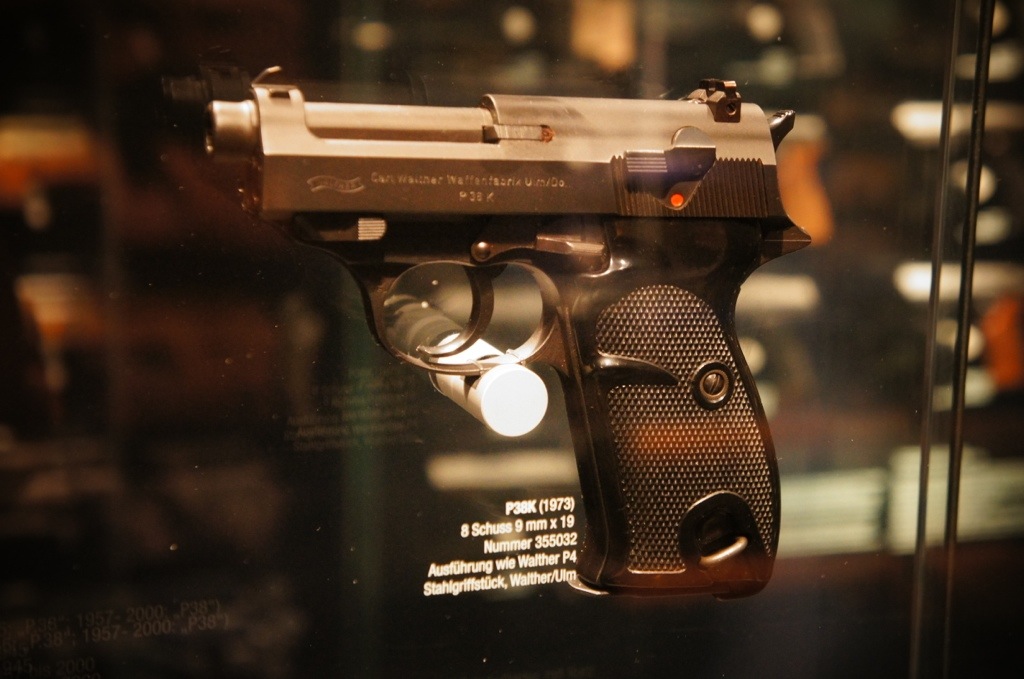
One of my favorite looking guns from history, the Walther P38k (for Kurz) is exactly what it looks like – a chopped down version of the venerable Walther P4 in 9×19. Interestingly, the P38k is not actually a chopped down P38. Rather, it’s a chopped down P4, which itself was a shortened/compact version of the P1. The primary difference between the P1 and the P38 was that the frames on the P1 models were constructed out of aluminum rather than steel.

Team Captain Julie Golob Marks 7th Anniversary With Smith & Wesson® By Receiving Top NRA Action Pistol Distinction

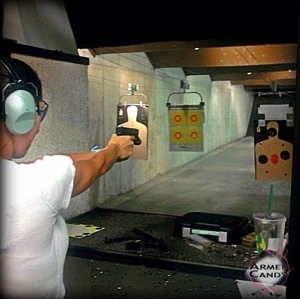
SPRINGFIELD, Mass. (August 29, 2013) — Smith & Wesson Corp. announced today that seven-year Smith & Wesson Shooting Team Captain Julie Golob has recently been awarded the National Rifle Association (NRA) Action Pistol Distinguished Badge, one of the NRA’s most prestigious shooting awards A member of Smith & Wesson’s elite shooting team since 2006, Golob is one of just four women who have earned this coveted award designed to recognize excellence in the area of competitive shooting.

A three-time NRA Action Pistol Women’s Champion, Golob’s fierce determination and remarkable skill set has made her a familiar face in the winner’s circle at many of the sport’s premiere events. Throughout her noteworthy career, Golob has established an NRA Action Pistol Women’s National record on the Moving Target course of fire as well as being named a four time Military and Women’s Shoot Off Champion.

Golob made time to sit down with Paul Pluff, Director of Marketing Communications for Smith & Wesson, and reflect upon her storybook career.

PP: Julie, first off, congratulations on receiving the NRA’s Action Pistol’s Distinguished Badge. By now, your trophy shelf has turned into more of a closet, but this is certainly one honor that we know means a lot to you.
JG: Thank you. I’m extremely honored to join the ranks of the incredibly talented shooters who have earned this distinction. It has been on my bucket list since I started competing in the Bianchi Cup and I’m very proud of this accomplishment.

PP: Anyone who follows competitive shooting understands that this is an award that can often take several years to accomplish, sometimes even a career, but you were able to accomplish it much sooner than most. What do you value most about this award?
JG: To me, the Distinguished Badge represents dedication and longevity in one of my favorite shooting disciplines. So many great shooters have earned this award and to be associated with these top shooters, like my teammates Doug Koenig and Jerry Miculek, is something that I will always cherish.

PP: In 2006, you donned the Smith & Wesson blue for the first time and instantly took the reins as Team Captain. What were some the factors that led to your decision to join the team?
JG: My first sponsor as a junior competitor was Smith & Wesson and because of that I have always appreciated the company’s commitment to youth programs. When the opportunity to work for Smith & Wesson came up, I jumped at it. I knew right away that this was a position, which would further help me grow within the industry. Regardless of what I’m doing, I love flying the Smith & Wesson blue. The pride I feel at being able to showcase the product that so many dedicated employees worked to produce is indescribable.

PP: During your time as Team Captain, you’ve had the opportunity to shoot several products in competition. How has this aided your success?
JG: It’s every shooter’s dream to be able to have so many excellent firearm options for competition. Because of Smith & Wesson I have been able to compete with everything from revolvers to M&P15 rifles. I especially love the SW1911 line. I grew up with the 1911 platform so it is naturally one of my favorites, but it’s certainly in close competition with the M&P pistol. I’ve been fortunate to work with the company on new additions, like the M&P9 JG and I firmly believe the M&P pistol is the next step in the evolution of the polymer pistol. It’s so comfortable and so dependable that I love shooting it in competition.

PP: Even when you are not competing, you always seem to find a new way to use your voice as a shooting celebrity. Through your writing, personal engagements, or social media, your message is always positive and welcoming. What do you hope those listening are able to take away from your most recent accomplishment.
JG: I hope others, especially those young women who are competing in the sport, looking to experience competitive shooting for the first time or perhaps just enjoying the shooting sports in general, understand that there are no limits to the accomplishments they can achieve. This goes for not just shooting but for their personal lives and any career path they choose to follow. The shooting sports have been a great teacher and the confidence it bestows is one of those universal benefits that we can all use. The great things in life are very rarely achieved without some sacrifice and hard work. Give your best 100% of the time and remember to enjoy it!

Smith & Wesson is proud to continue its promotion of the shooting sports through a variety of sponsorships and programs within the industry. Through its dedication and that of its shooting team members such as Julie Golob, the company has renewed it’s commitment for 2013 by acting as the title sponsor of the NRA Women’s Television Network, various women’s shooting programs and the certified NRA Pistol Instructor’s Program.

About Smith & Wesson
Smith & Wesson Holding Corporation (NASDAQ Global Select: SWHC) is a U.S.-based leader in firearm manufacturing and design, delivering a broad portfolio of quality firearms, related products and training to the consumer, law enforcement, and military markets. The company’s brands include Smith & Wesson®, M&P® and Thompson/Center Arms(TM). Smith & Wesson facilities are located in Massachusetts and Maine. For more information on Smith & Wesson, call (800) 331-0852 or log on to www.smith-wesson.com.

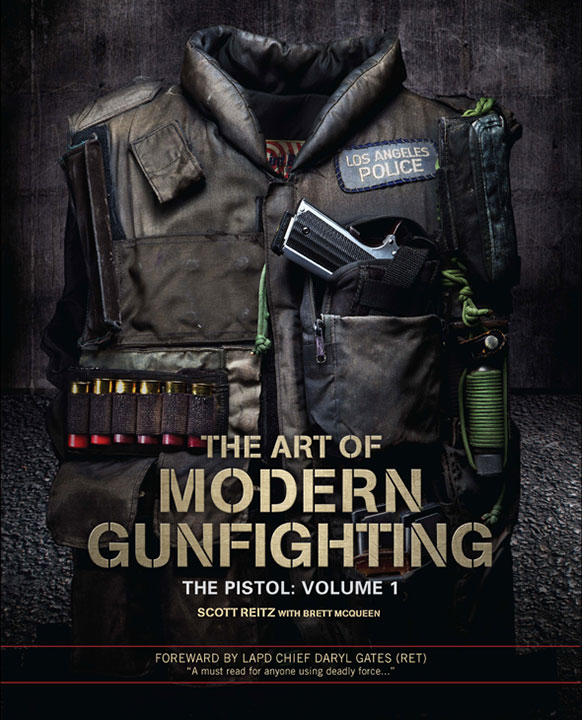
Book Review: The Art of Modern Gunfighting, Volume 1 by Scott Reitz

A couple of weeks ago I went on a bit of a rant about people I termed “gunstore lawyers”, those who pontificate on the legal concerns surrounding the use of force without having any actual study, or relevant background that makes their opinion valid in an objective sense. In the article I linked to a book written by Scott Reitz as an indication of input from someone who actually does have the requisite experience and background to make his opinions worthy of consideration. I figured instead of just linking to the book I probably should do a proper review, so here goes:

Scott Reitz was a member of the Los Angeles Police Department, joining in the late 1970’s and retiring in 2006. He cut his teeth on the streets of Los Angeles in the bad old days  during the explosion of gang and drug activity in LA that accompanied the crack epidemic. Southern California law enforcement has always been pretty sporty due to a number of factors (not least of which is proximity to Mexico) but this period saw a dramatic uptick of criminal violence even by SoCal standards. Scott advanced in the LAPD eventually moving to the Metro Division and eventually into “D Platoon”, better known to the rest of the world as LAPD SWAT. The Los Angeles police department pioneered the development of SWAT and over the years has built the reputation of being one of the world’s finest tactical units with a broad range of experience, high standards for conduct and proficiency, and a knack for developing effective means of battling criminals with minimal loss of life. Other organizations from around the world have come to Los Angeles to learn from LAPD SWAT, giving a local police unit a much bigger influence on the globe than you would ordinarily believe to be possible.

This is an excellent foundational guide for those interested in self defense.

Scott begins his book by qualifying his experience and discussing his overall philosophy: “There are no masters in gunfighting, only students, and that includes myself. One can perform flawlessly in one instance and in another instance make one or more simple mistakes and everything will break down.” He bases this statement on not only his own experiences, but on having investigated on-duty shootings by other police officers and on having had a role in training literally hundreds of police officers that had to use lethal force in the course of their career on the street. When it comes to obtaining repeatable results, sample size is everything. Anything can work once or twice, but something that succeeds over and over again in a number of different circumstances with lots of different people is more than just luck. Mr. Reitz draws upon everything he saw while serving with the LAPD as well as his own experiences in the use of lethal force to inform the approach to gunfighting he goes on to discuss later in the book.

An entire chapter of the book is dedicated to recounting the lethal force events he was personally involved in while on duty. An easily digestible narrative of each shooting is provided along with lessons learned from each. They range from the sort of shooting you’d expect when serving search warrants to the truly surreal and bizarre. Scott was on LAPD SWAT during the LA Riots of 1992. I remember watching the news coverage of the riots and thinking it was pretty bad, but Scott’s first-hand account of the events paint a picture far worse than those of us watching on the news knew. His description would probably line up with eerie symmetry to accounts coming out of Baghdad in terms of the dangers and behaviors of the gangbangers that were practically hunting police officers at the time.

From a description of his personal experiences he transitions to detailing his understanding of gunfighting including describing the nature of gunfights, the universal truths of gunfighting, a description of the physiological effects of extreme stress, and a bit of insight into the sort of person the law-abiding good guy is likely to need a gun to deal with. After that comes a brief chapter on the legal considerations of deadly force. While it is a brief section and it is generalized for a wide audience (it would be unreasonable to expect Mr. Reitz to comment on the specific laws and court decisions in my jurisdiction) the information presented is none-the-less valuable. Deadly force is presented as a last resort only used when certain sensible circumstances are met. He defines what a “reasonable fear” of death or grave injury looks like and discusses what the ability and intent to use lethal force means in practical terms that are easy to understand. While laws and jurisprudence varies across the country, these basics are a cornerstone of sound self defense doctrine everywhere.

The book then transitions into discussing the technical details of manipulating and using a handgun (sections for semi-autos and revolvers are included) successfully and safely. Of particular interest to me was the considerable amount of time Mr. Reitz spent discussing the use of sights and the utility of sighted fire in general. Often on the internet we hear people insist that you can’t use sights effectively in combat situations. Indeed, some people have made an entire training doctrine out of the idea that sights don’t work under stress. Mr. Reitz would beg to differ with them, as he used sighted fire successfully in combat situations and helped build a training doctrine that relied on sighted fire and has proven to give excellent results on the street. Other experiences SoCal law enforcement officers and trainers (like Daryl Bolke) have also testified to the effectiveness of teaching sighted fire.

I don’t agree with everything that Mr. Reitz talks about in the book in terms of the technical details of grip or drawstroke or manipulations, but while I may do some things differently I can safely say that what he presents in the book is going to be effective (and has proven so) even if I don’t do it exactly the same way.

This is a solid work with a great deal of useful information for the defense-minded individual, especially if they haven’t done a lot of independent study and formal training yet. Often people who are new to use of a firearm for self defense wonder where they should start. I believe a book like this would lay an excellent foundation, as it covers all the relevant bases from proper safety procedures to combat mindset and reliable weapon manipulations. If someone reads and digests the information in the book they will have a more sophisticated understanding of the important things and, in turn, will become a more informed consumer of equipment and of training opportunities.

For those who have a bit more study under their belt, some of the sections covering details of manipulations may seem basic, but the book still holds plenty of value for even the experienced or well trained individual, particularly the sections on gunfighting and combat mindset.

I purchased the Kindle Edition of the book from Amazon for just under $20.00, and I’m quite pleased with the value I’ve gotten from the book. If you’re looking for a book to place in the hands of a beginner or for a solid reference to better understand the nature of using a firearm in self defense, this book has a lot to offer you. I recommend it highly.


Walther’s Tactical .22s

20130829-165338.jpg

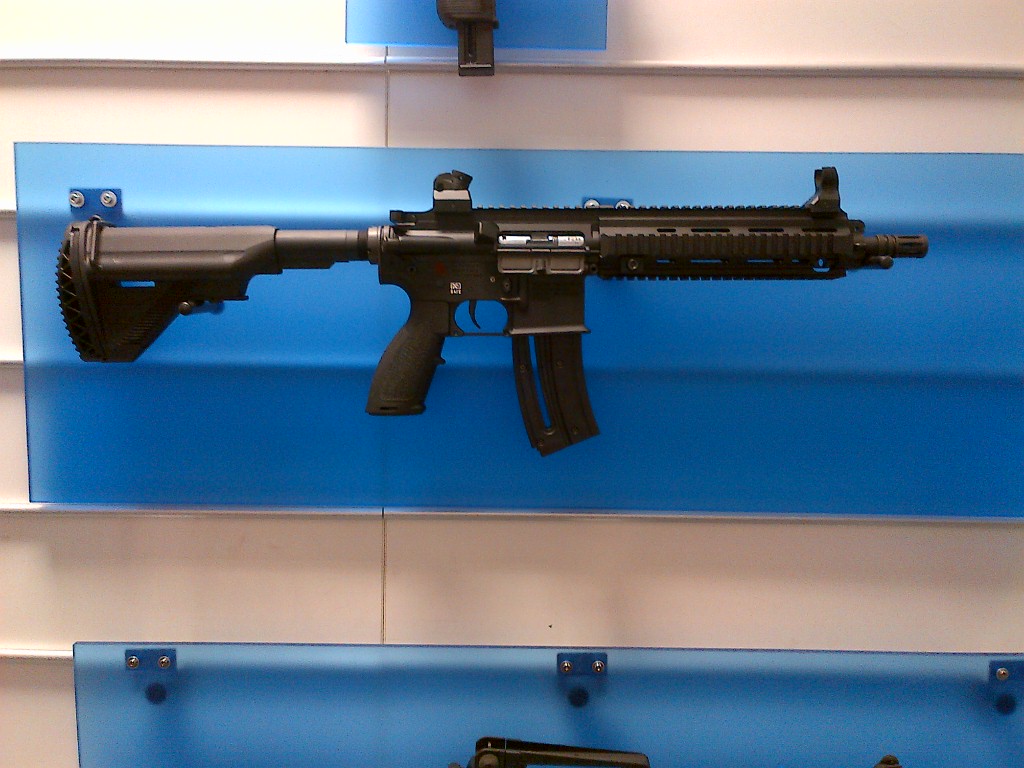
Walther’s line of tactical .22 rifles and pistols are manufactured at the Umarex facility in Arnsberg, Germany. I had the chance today to see the guns being manufactured and processed, as well as to spend some trigger time on a few of the .22s. In the past I’ve talked about a .22 as a possible defensive rifle for someone with a disability or financial issue that prevents them from owning a real .223 rifle or 9mm carbine, and we’ll actually flesh that idea out more through 2014.

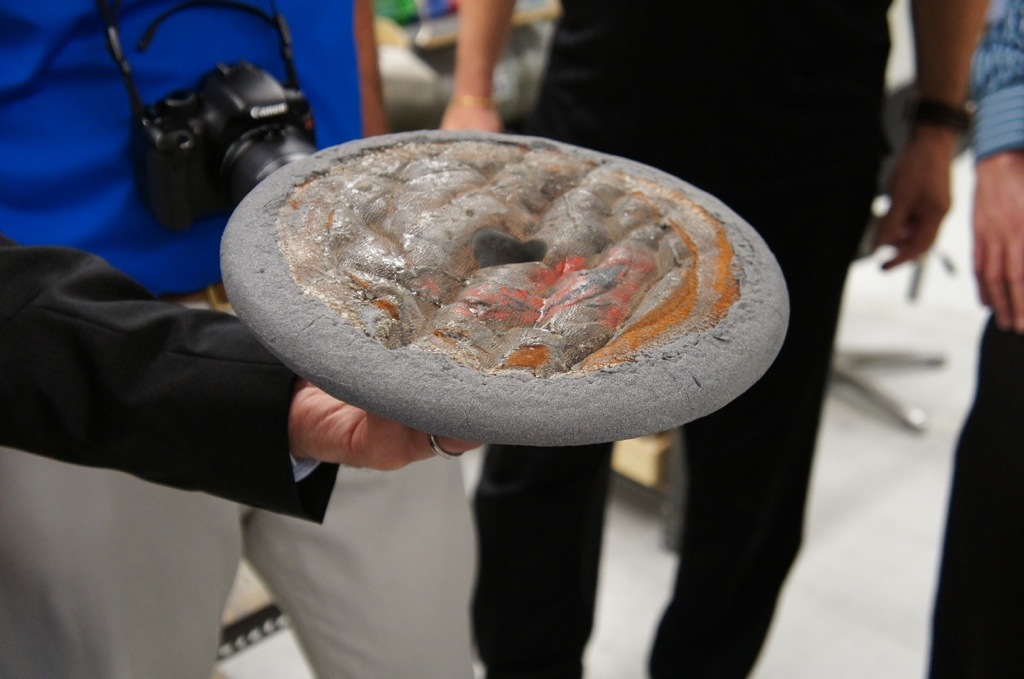
One of the interesting things I learned was that Walther has the same CIP testing standards applied to their rimfire guns as they do their centerfire guns. That means that every gun that leaves the Arnsberg factory is first pressure tested with two .22 LR rounds that are loaded 30% over the maximum specified CIP pressure, and then has a full magazine fired through it as well. For some reason, I had assumed that rimfire guns would be exempted from the CIP standards, but I was incorrect. The Umarex/Walther facility here in Arnsberg produces a considerable number of guns, some for Walther such as the P22, PK380, and new PPk .22; and also under license agreements for HK and Colt.

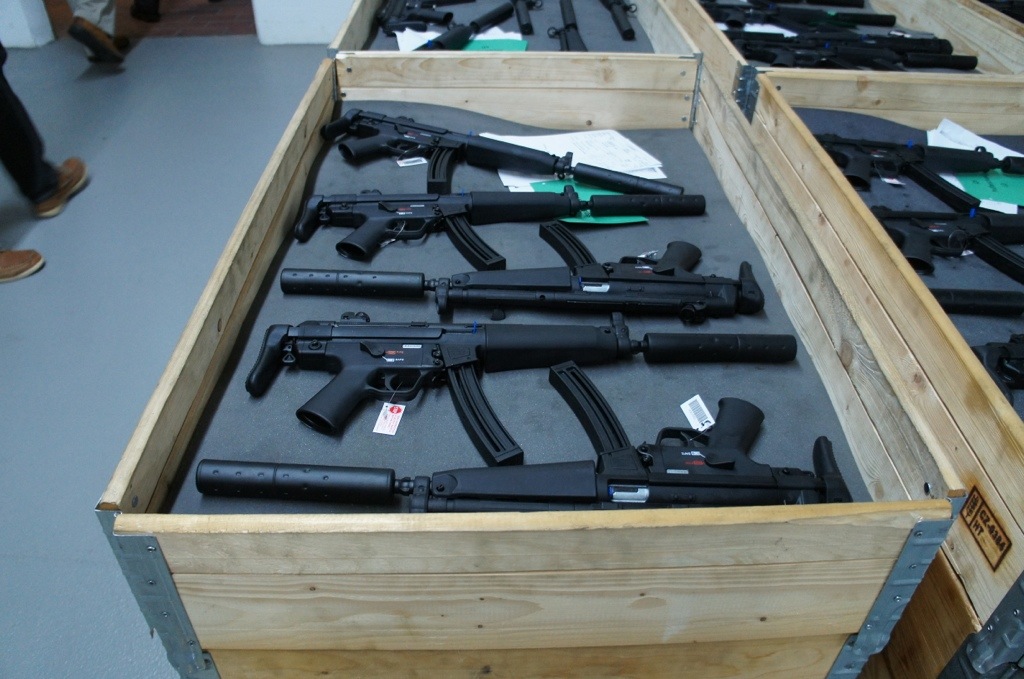
Some of the guns aren’t even available in the US, and it’s entirely because of our gun laws. For example, tell me that you don’t think an 8.5 inch barrel SBR Colt M4 .22 LR would be awesome. I can tell you that it is awesome, because I shot it. I couldn’t stop giggling. Or a 1-to-1 scale MP5-22, right down to the HK style takedown pins. German gun laws don’t differentiate between a short barreled rifle and a regular rifle, so overseas you can buy these guns. Thanks to our gun laws, because they’re SBRs, it’s not worth the expense of importing them to the States, thus the only way to get an HK4516 .22LR SBR is to legally convert it and pay the $200 tax stamp.

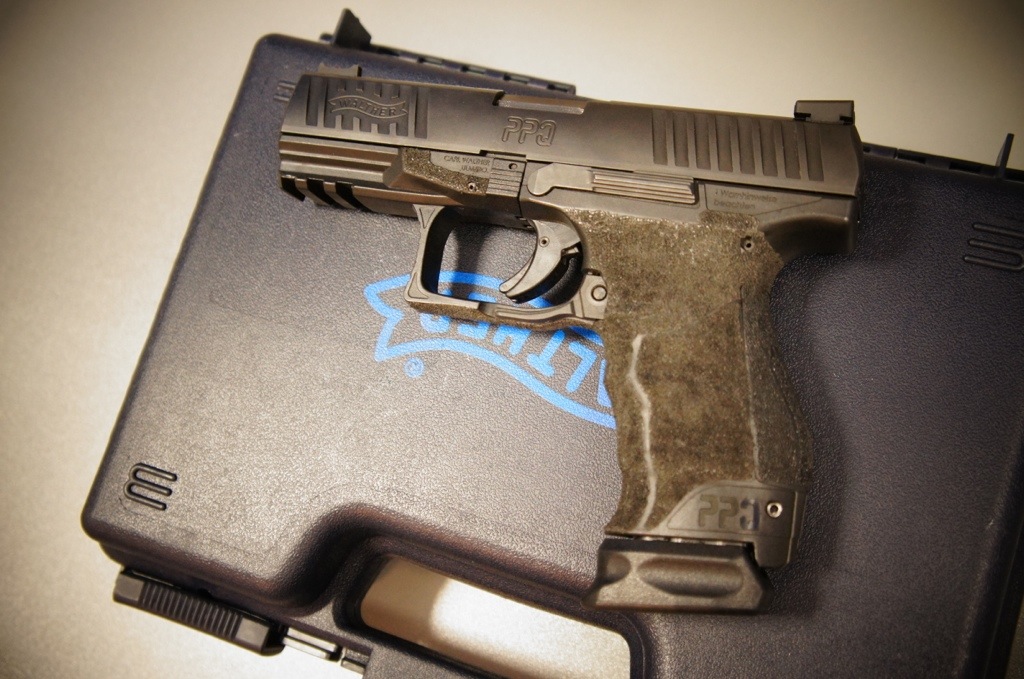
Of course, no discussion of Walther’s .22s would be complete without a look at the new Walther PPK/S .22, which is a gun that’s been a long time coming. See, if you want a new manufacture PPK/S that’s actually made by Walther, you need one of these .22s. What it reminds me of is a modern reincarnation of one of my favorite old school guns, the Walther TPH. The TPH was a tiny little gun that resembled a shrunken PPk and was chambered in either .25 ACP or .22 LR. I had an 70s era TPH in .22 that I loved dearly and sold many years ago. While the new .22 PPK/S is bigger than the old TPH was, it’s close enough to immediately endear to me. Plus, it’s a PPK/S that says “Made in Germany” on the slide, and to me, that matters.

I could talk for some time about how .22 rifles and pistols that mimic full size guns are good training tools, and useful for shooters with issues manipulating guns in centerfire calibers, and all of those would be good and reasonable motives for owning one. But the real truth is even simpler than that. .22s are fun. .22s that look like really cool guns are even more fun to shoot. I couldn’t quantify why an SBR M4 .22 LR is so much fun to shoot, even more so than an SBR in a proper caliber. It just is; and that’s really the best reason to own one. With .22 LR ammo finally on the rebound, maybe it’s time to start buying guns because they’re just good old fashioned fun to shoot again.

Walther Factory Tour: Attention to Detail

20130827-225222.jpg

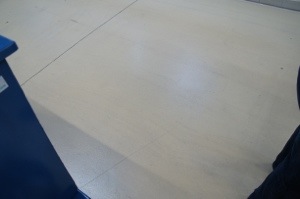
That image to you may look like a boring, clean piece of tile floor. In many ways, that’s exactly what it is. But it’s also a symbol, because in it being a piece of clean tile floor, it represents much more than that. Today I had the chance to tour the main Walther manufacturing facility in Ulm, Germany. This facility is where the current PPQ, PPX, and PPS pistols are manufactured, as well as Walther’s line of high quality Olympic level target rifles and pistols. To call the facility immaculate doesn’t being to do it justice. I have walked through a lot of factories and facilities, not all of them gun factories either, and I’d never been a shop environment this clean. See, that piece of clean, white tile isn’t in some rarely trafficked executive hallway, it’s on the production floor. I was standing next to a CNC machine when I took that shot, and all around me the ground looked the same. Clean.

To me, during the tour that cleanliness became a symbol for Walther’s attention to detail. That truly stood out for me on the tour, was the constant emphasis on quality control and attention to detail. For example; every single Walther handgun that leaves the factory is pressure tested with two rounds that are loaded to 30% above the C.I.P. (similar to SAAMI) maximum pressure? That means if you buy a Walther handgun, they tried to blow it up and failed just to make sure it was good enough to leave the building. Noodle on that for a second, because that level of quality control isn’t required to sell guns on the US market. Every gun that comes out of the Walther factory is test fired for a group, and if it’s for a police contract, they’ll test fire it with the ammo that police agency uses as their carry/duty ammo. The attention to detail and quality control is, for lack of a better word, maniacal. As a consumer, I appreciate that. I like knowing that my guns have been rigorously tested before they end up in my holster.

I saw some very impressive things walking the floor today at Walther. While there are only so many ways to build a gun, because at the end of the day cutting steel is cutting steel, what I was really impressed with was the sincere dedication on the part of the Walther employees to both putting out a quality product and taking pride of ownership in their own working environment. Employee workstations were neat, organized, and efficient – and watching them build a gun in that environment was a genuine treat for me. I’ve always been fascinated with the “business/industrial” side of the gun community, and seeing it come together with fastidious attention to detail was absolutely amazing.