Ruger SR-762

Ruger Introduces the SR-762 Piston-Driven Rifle Chambered in .308 Win./7.62 NATO

Sturm, Ruger & Company, Inc. (NYSE: RGR) is pleased to announce the new Ruger® SR-762™, bringing the .308 Win./7.62 NATO cartridge to the popular SR-556® family of rifles. The SR-762™ offers the downrange authority of the .308 cartridge in a two-stage, piston-driven rifle that runs cooler and cleaner than traditional gas-driven AR-style rifles.

Ruger SR-762 Profile

The SR-762™ is an ideal rifle for those who appreciate the familiar and ergonomic AR-style platform. The .308 Win./7.62 NATO cartridge is perfect for hunting medium and most large-sized game and enhances the capability of the AR-style platform in defensive or tactical roles.

The SR-762™ retains the features of the original SR-556® that make it a solid performer among AR-style rifles. The patent-pending, two-stage piston delivers a smooth power stroke to the one-piece bolt carrier, which reduces felt recoil and improves the rifle’s durability. The four-position gas regulator allows the shooter to tune the rifle to function reliably with a broad variety of ammunition and in varying environmental conditions.

Ruger SR-762 alt

A heavy contour, 16.12” chrome-lined, cold hammer forged barrel with a 1:10” twist features exterior fluting to minimize weight, yet provides outstanding accuracy. With the Ruger® Lightweight Adaptable handguard in place, the SR-762™ weighs 8.6 pounds and balances comfortably.

Three 20-round MAGPUL® PMAG® magazines are provided with the SR-762™. Folding backup iron sights, a Hogue® Monogrip®, Picatinny rail sections and rail covers add considerable value to the package, as does the six-position stock, sight adjustment tool, and a soft-sided carry case.

The Ruger® SR-762™ has a suggested retail price of $2,195.

For more information on the new Ruger® SR-762™, or to learn about the extensive line of award-winning Ruger® firearms, visit Ruger.com or Facebook.com/Ruger. To find accessories for the Ruger® SR-762™, visit ShopRuger.com.

About Sturm, Ruger & Co., Inc.
Sturm, Ruger & Co., Inc. is one of the nation’s leading manufacturers of rugged, reliable firearms for the commercial sporting market. The only full-line manufacturer of American-made firearms, Ruger offers consumers over 400 variations of more than 30 product lines. For more than 60 years, Ruger has been a model of corporate and community responsibility. Our motto, “Arms Makers for Responsible Citizens,” echoes the importance of these principles as we work hard to deliver quality and innovative firearms.

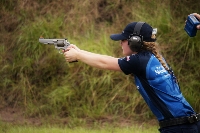
The shooting sports are better for children than traditional sports

Kids these days are playing youth soccer, baseball, football, etc at prodigious rates. But while those sports certainly can supply athletic accomplishments and physical condition, they’re not as good mentally for a child as the shooting sports.

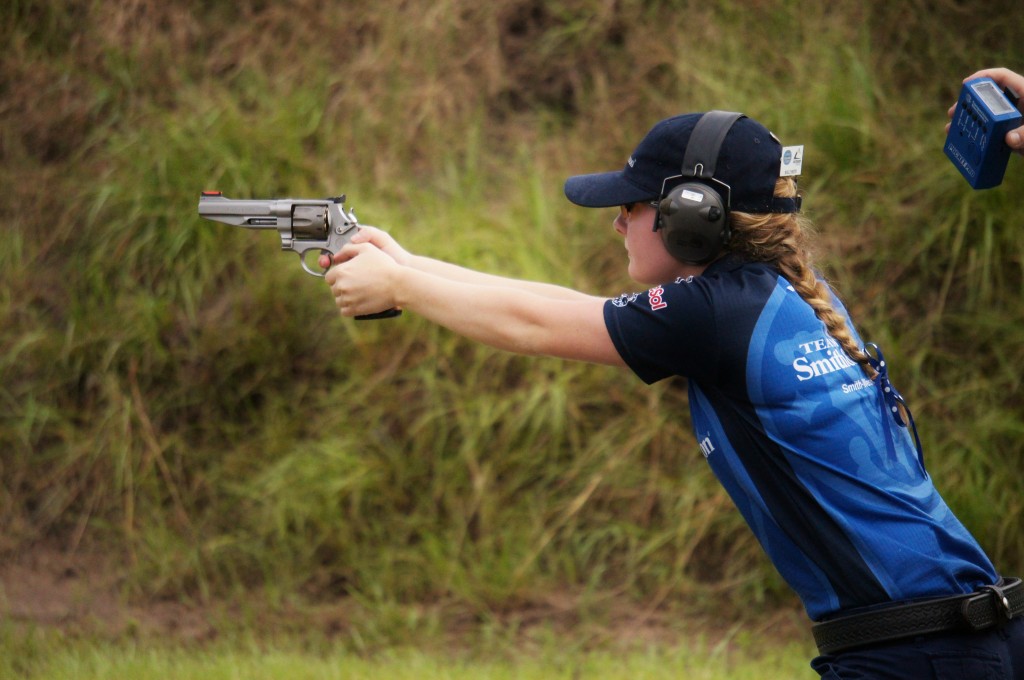
Molly Smith

Because in the shooting sports, your child will never get a participation trophy. You can argue all you want about whether IDPA awards too many classification plaques or on the legitimacy of a category “championship” in USPSA, but the bottom line is that a child that competes in the shooting sports is going to lose a lot more than they win. They’ll receive positive encouragement from older shooters, they’ll receive training and support from skilled shooters, but no one is going to say “hey, it’s great that you showed up, here’s a trophy!”

Winning high Junior at a match is a legitimate accomplishment that a teenage or youngster can be proud of, and it’s important that the sport continue to recognize those categories.

You could argue that traditional sports teach all the same positive character traits that the shooting sports teach, and while that may be true, the shooting sports teach two things that you won’t find in football or baseball. The first of those is a real sense of responsibility, because of the nature of the sport. We all agree guns are dangerous, and so the level of responsibility that is taught to juniors in the shooting sports isn’t mirrored anywhere else. We’re playing with guns, and that’s a tremendous responsibility.

The second, and even more important skill that juniors in the shooting sports learn is something that I think is very important: how to talk to grownups. When I was a youth, my parents raised me to be able to talk to adults; this became an important skill when I magically became an adult and had learned important social interactions as a child. By and large, the juniors I meet in the shooting sports are extremely well versed at talking to adults; which in this modern era of insulating children from the world with iPopTarts in their ears is unusual.

Now, all of this theory is coming from someone who isn’t a parent, and is based entirely on my fairly traditional upbringing and my interactions with junior shooters during my career. But I have to say, that if I had kids, I’d much rather they took up IDPA and Bianchi Cup than baseball. That’s not to say there isn’t value in the traditional sports, and baseball is awesome.

Shooting sports ethics, part 2

Yesterday I asked you a hypothetical question based on a scenario some people have encountered in the shooting sports, where you noticed a hit on a no-shoot that neither the shooter nor the RO had noticed.

bobadontcare

Yesterday’s post was a bit of a set-up to open two different questions about the shooting sports, and ethical behavior in our sport as it differs from “real” sports. So let us dig in to this fairly meaty question of ethics; and use some examples from real world sports as well.

The first thing to note, is that the shooting sports are very much unlike real sports in one major aspect: in football, baseball, boxing, etc the referees are competing against the very people they’re supposed to be officiating. While on the surface, this would appear to create a conflict of interest, it generally doesn’t. My experience with the vast majority of ROs and SOs in the sport has been that they are ethical to a fault. Do they miss calls? Certainly. Do some RO/SOs give favorable calls to their buddies? Sure, it happens but it’s not frequent enough to be a problem.

The second point that’s important to establish is that people who compete in the shooting sports are people in every sense of that word. Now, perhaps it’s because the shooting sports draws primarily from the generally ethical gun culture, but shooters do tend to be a better class of people than you’d find at a beer league softball game. Nothing against beer league softball, but it’s a different culture. That being said, we would be foolish to assume that everyone in the shooting sports is a saint, because we all know that some people in the sport aren’t. We’ve all seen examples of it; and while we may not like it, it’s there. Human nature is as much a part of the shooting sports as any endeavor.

With that established, we’re back to the original hypothetical situation, except now you’re the shooter. You pop a no-shoot at a match, and while you’re walking through your targets with the RO on his scoring pass, you notice your hit that the RO doesn’t see. We all know what the right thing to do in this situation is: you tell the RO, “hey brah, you missed this no-shoot that I tagged.” That’s a clear-cut right/wrong decision.

Or is it? If an NFL cornerback commits pass interference but doesn’t get flagged for it, he’s certainly not going to say to the ref that he should be penalized on that play. If a runner is stealing second base and gets tagged out before he touches the base, but the umpire calls him safe, he’s not going to pop up and say “actually, I was out” and walk off the field. It’s unheard of “real” sports. You could make the argument that those players are choosing to act in the best interests of their team, which I’d generally accept, but it’s also evident in individual sports as well. One has to look no further than the Olympics to see examples.

So how then does this apply to the shooting sports? Am I suggesting that just because NFL and MLB players will cheat “just a little bit” that we should follow their example? Actually, quite the opposite.

You are responsible for your own ethics. I know that may seem obvious, but it’s the central point of today’s post. You, and only you are responsible for your actions on the range. You’re not responsible for the actions of other people, whether it’s another shooter, the RO, or the scorekeeper. While you’re not responsible for their actions, that also means you can’t pass the buck to them. “Oh, the RO didn’t call that no-shoot, not my problem” is a justification. If you hit the no-shoot, you earned that penalty.

The bottom line of this post is simple: do the right thing. It doesn’t matter if NFL players don’t, or if another shooter on your squad is a d-bag – you’re responsible for your own ethics, and you’re responsible for your actions.

Now that we’ve covered black-and-white situations, tomorrow we’ll take a look at the much more complicated gray areas: procedurals, 180s, and potential DQs.

The Capacity Question – part 1

Last week Caleb posted a little article on the obsolescence of revolvers that mentioned the capacity of the revolver as one of the factors working against it in the modern market. Capacity often comes up in discussions that involve concealed carry but, at least in my experience, it’s usually not really explored in a satisfactory way. So taking a cue from Caleb’s writeup, let’s try and bring the capacity question into focus.

I often encounter the sentiment that the ~ 15 round magazine capacity that’s typical of a double-stack semi-automatic pistol these days is “a lot” of ammunition to have in a firearm. People often have this belief because of their typical shooting experience. If the totality of your shooting experience is firing a shot every couple of seconds at a stationary bullseye on a sunny Sunday afternoon, it can certainly seem like 15 rounds in the magazine plus another in the chamber is “a lot” of ammunition. Gunfights, unfortunately, bear no resemblance to that sunny Sunday range outing.

Video footage shows rather conclusively that when someone believes they are faced with an existential threat, they aren’t firing their weapon at the relaxed pace you often see people using on the range. More than likely they will be pulling the trigger as fast as they can (whether they can hit anything that way reliably or not) in a frantic effort to stop the person who is trying to kill them. With that sort of motivation the 15+1 round capacity of a typical double-stack 9mm handgun is exhausted in just a few short seconds. Somewhere a group of smart people set about to study gunfight footage and during the course of examining as much video of shootouts as they could, determined that the average rate of fire for a person in an exchange was 1 shot every 1/4 of a second. You can go on Youtube and look up footage from dashcams and stop’n’robs to try and work that out for yourself, and more often than not you’ll see the 1/4 second rule in play. In the initial salvo of the gunfight above, the officer’s rate of fire was right around 4 shots per second until the vehicle moved away and he slowed down to get better accuracy as the distance increased. Faced with just one dude who wanted to kill him, the officer fired 14 shots…almost the entire on-board payload of his sidearm.

It didn’t take a zombie apocalypse or a roving gang of thugs to make him shoot almost to slidelock. Just one person who wants to kill you is plenty of motivation to point the weapon in the general direction of the threat and pull the trigger as fast as you can.

One of the benefits of taking training seriously and training oneself to high standards of competence (or even excellence) is that under stress the well-trained person will act in a more disciplined, controlled fashion than the person with less trainig…but this doesn’t necessarily translate into a slower rate of fire. A well trained person who has spent considerable time on the range honing their skill might well pull the trigger even faster than the average person under stress, but will typically have much better control and will deliver hits. There’s an old joke about bullets that have someone’s name on them versus those labeled “To Whom it may concern…” which fits here. The average untrained person is going to point the weapon in the general direction of the threat, will have their focus on the threat, and will pull the trigger as fast as they can to make the bad man stop. They are typically firing more in hope than in expectation.

The trained person, on the other hand, will aim the weapon at specific parts of the bad guy’s anatomy and will be using the sights to intelligently direct fire where it will do some good. Even so, they will be pulling the trigger multiple times because of gunfight conditions and knowledge that any threat worth shooting is worth shooting more than once. I can cite multiple instances of a well trained shooter who delivered mortal wounds to a threat but without the threat visibly reacting to it or going down. With careful training on the range they developed the ability to deliver excellent accuracy at high speed and when faced with a real threat often delivered mortal wounds with the first shots they fired, but continued to fire either because the bad guy didn’t visibly react or was still on his feet. In the real thing it’s not always easy to tell where you hit someone or what effect the bullet you just fired will eventually have. Especially if there are rounds incoming. You’re left with a very binary mental assessment. Until your brain recognizes that the bad guy is on the ground doing nothing more dangerous than bleeding, the urge for self preservation will have you on the trigger. You don’t wait and hope that the bullet you just fired into the center of that guy’s chest will take effect. You keep launching bullets into him until he’s no longer able to kill you. If you’re exceptionally well trained, you may transition from shooting at the triangle of doom between the nipples and the adam’s apple up to shooting at the head of the threat.

…but you’re going to keep shooting.

Knowing that it will probably take more than one shot, and knowing that the well-trained and the average person alike are likely to expend ammunition fast in the real thing, I tend to view capacity as opportunity. Using the 1/4 second per shot average deduced from study of real gunfights as a guide, it’s possible to express capacity as time. With a S&W J frame I have 1.25 seconds of cyclic-rate fire to stop whatever threat I’m facing. With my P30 (15+1 capacity) I have 4 seconds. That means I’m able to keep shooting 3.25 times longer with my P30 than my S&W 442.

Invariably someone will read that and start yelling at the screen about just reloading the revolver. Let me be perfectly clear about this: You aren’t likely to reload a revolver in a gunfight. I say that because reloading a revolver, even with a speed loader, often takes longer than the fight is going to last. Yes, Jerry Miculek can reload a revolver with phenomenal speed from his competition gear:


When I saw that footage originally it was on an old program hosted by Jim Scoutten that included an interview with Mr. Miculek. When asked how he learned to reload a revolver so fast he responded that 2-3 hours a night of practice for 20 years, full moon clips, and chamfered chambers in the revolver’s cylinder pretty much did the trick. Jerry can reload his competition revolver setup faster than most really good shooters can reload a semi-automatic from a competition rig, and that’s an awesome testament to Jerry’s skill.

That’s Jerry’s skill. Not yours or mine. The average dude with a J frame and a speed loader in his pocket isn’t going to come close to replicating the speed in that video. The New York Reload didn’t come into being because people enjoyed the sensation of carrying multiple firearms. People like Jim Cirillo who did their homework on the range figured out that even with a speedloader, in a gunfight getting the revolver back into action was going to take longer than the fight was likely to last. So he and many others made a practice of carrying multiple revolvers.

Of course, there are other factors worth considering related to the capacity question…which we will discuss later.


Shooting sports ethics

Let’s say you’re at a major IDPA or USPSA match; and the following happens. A shooter goes through the COF and hits a no-shoot target, however the RO doesn’t notice the hit on non-threat while he or she is making his scoring pass. You however do notice it. At this point, you’re faced with your first decision tree, with three options:

  1. Say nothing and let it play out
  2. Tell the shooter, “hey bro you tagged a no-shoot”
  3. Tell the RO/SO, “hey, you missed a no-shoot that so-and-so hit.”

I generally feel that #3 is kind of a d-bag move, and myself would go with #2. If I tell the shooter, then it’s on the shooter to do “the right thing”, whatever that is. Option 1 is also a perfectly acceptable option if you’re from the “not-my-problem” school of thought. I think though that #2 is the closest to the “right” thing to do in this situation.

Choosing Option 1 is problematic for a couple of other reasons, because you’re then faced with another decision: do you tape the no-shoot and go on with your business, or do you leave it un-taped and hope someone else catches it? These are kind of trouble because if no one has hit the no-shoot yet, someone is going to notice a fresh paster on the target. Even worse though is if you don’t tape the no-shoot, and then some other shooter gets tagged for a penalty. The combination of “not saying anything” + “not taping it” is absolutely a jerk move.

Option 3 is right out because no one likes a tattletale.

So we’re left with #2 as our “best” choice, which could then lead to another decision. So you tell the shooter that he or she tagged the no-shoot, and then they say “thanks” and proceed to not do ANYTHING. The “honest” action here would be for the shooter to go to the RO and say “hey, I drilled the no-shoot, put that penalty on my scoresheet.” But what if they don’t? Here’s your new decision tree based on the shooter not owning up to their penalty:

  1. Say something to the RO
  2. Do nothing, it’s not your problem
  3. Do something so you don’t look like a dirtbag

Again, saying something directly to the RO is still kind of a tattletale move. Doing nothing in this case seems like a bad idea as well, because then someone else is getting away with cheating. The most entertaining way I’ve personally seen this handled was a match where Shooter B told Shooter A about hitting a no-shoot, Shooter A did nothing, so Shooter B waited a second before asking “hey, does anyone have any pasters for this no-shoot?” It produced the desired result without looking too much like a narc.

The fourth option, which I intentionally didn’t list is to wait until the score-sheet is signed and then paste the target.

But the real ethical question here is simple: to what end are competitors responsible for enforcing the rules? You could argue quite convincingly that if the RO doesn’t see it, then it’s not a penalty. Everyone I know has had situations where they’ve gotten away with a 180 or some other violation because the RO didn’t see it. Happens in real sports all the time as well.

So the question from this post is for the readers: to what extent do you fee shooters (not the RO) are responsible for enforcing the rules? And if put in this situation, what would you do?

First Time Moving and Shooting

When I began shooting I didn’t take lessons, I simply took advice. A friend would show my a new grip or stance, and I would try them out and then adopt things that worked for me. (It’s interesting to go back and look at some of my early videos and notice techniques that previously “worked” for me.) Fortunately, I got really good advice and when I finally did get professional instruction, I was told, “Good fundamentals. Now let’s get faster.” (My instructor wasn’t much for praising students.) Unfortunately, almost all of my shooting for my first two years, was done indoors in a 3’ wide booth. When I was recently given the opportunity to make-my-own-range, my imagination ran wild with all the possibilities.

Continue reading →

Top 5 Movie Revolvers

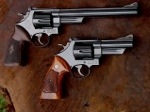
The most famous gun in movie history is a revolver. Clint Eastwood’s S&W Model 29 inspired of a generation of enthusiasts, and sold a ton of guns for S&W. The lines and the visuals associated with that gun are forever burned into our collective pop culture memory, to the point that when new gun owners first pick up a .44 Magnum of any type, they say “go ahead, make my day.” You can’t help it. But what about other famous wheelguns from the movies? Here’s a list of the Top 5 Movie Revolvers, starting of course with Dirty Harry.

1. The Smith & Wesson Model 29
For all the reasons mentioned above, Dirty Harry’s famous Model 29 leads the pack. People who don’t know anything about guns know that Dirty Harry carried a Model 29, and even the most gun-ignorant consumer of pop culture knows it was a .44 Magnum.

20131016-092130.jpg

2. The Colt Single Action Army
To be fair to the Colt Single Action Army, aka the Peacemaker, it was almost number 1 on the list. You could easily make a case for it as the most famous revolver in American pop culture, due to its total dominance of the western genre. In fact, many early films used Peacemakers when it wasn’t even period correct for the characters to use them. A major reason the classic Colt isn’t number 1 is due to the decline in popularity of the western in recent years. On top of that, in recent times the propmasters of modern westerns are arming their character with a more diverse collection of period correct guns, meaning you’re just as likely to see a Schofield as you are a Colt.

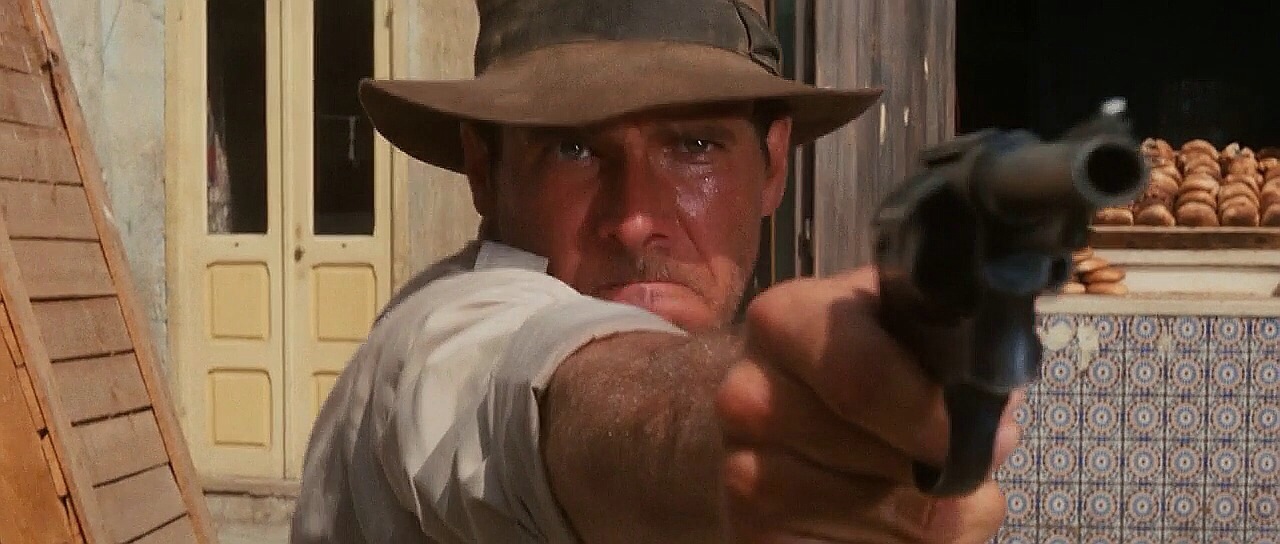
3. Smith & Wesson Hand Mk II Hand Ejector
I’ll make this one simple: it’s the gun Indiana Jones used to shoot the sword wielding badguy in Raiders of the Lost Ark.

20131016-094035.jpg

The memory of Indy casually drawing his gun and putting an end to his attacker with a simple shrug will forever serve as a perfect example of why you don’t bring a knife (or a sword) to a gunfight.

4. The Webley Revolvers
Also used by Indiana Jones, the family of Webley revolvers could be compared to the Colt SAA in terms of ubiquity; but only when the film’s subject is the British Empire/Commonwealth. Most common is the .455 Mark VI, which was used by the British military from WWI all the way through the end of WWII in some quantities. It continued to soldier on in far flung locales for years after that. The .455 Mark VI’s most famous appearance is Zulu, and also appeared in Breaker Morant and 2011’s War Horse.

5. The Smith & Wesson Military & Police/Model 10
Again, an entry that needs no explanation. While modern readers likely associate M&P with the current line of S&W semi-automatic pistols, the original M&P was a .38 caliber revolver. It was eventually renamed the Model 10 to fit with S&W’s arcane model number system. It’s a K-frame revolver that was a police staple for ages, and as a result has appeared in countless movies and films.

Honorable Mention: The Colt Official Police
For the same reasons as the S&W Model 10, really. However, the Colt Official Police wasn’t quite as popular or produced for quite as long a time as the Model 10. However, I’d still take one over a Model 10, because there’s something about Colt wheelguns that really does it for me.

There are your top 5 movie revolvers! What do you think should have made the list that didn’t?