Defeating the “need” argument

I touched on this briefly yesterday, but today I wanted to expand it into a post all its own. Whenever someone starts ringing the gun control bell, you’ll have the inevitable anti-gun editorials talking about how “no one needs a semi-automatic rifle”, or “no one needs more than 10 rounds” etc.

20131022-092234.jpg

The pro-gun responses to these arguments usually aren’t that great, because they don’t address the subtle trickery of the question. Usually, the pro-gun response to the question of need is to try and find a justification for the need, or to prove that what the anti-gun twerps are suggestion is just as bad. An example would be arguing that you can change mags on a 10 round gun almost as fast as you can change mags on a 30 round gun, making the capacity limits meaningless because a fast mag change gets you shooting again. Not really an effective argument. Similarly ineffective is trying to justify the need for certain guns and gear based on hypothetical scenarios.

Probably the best answer comes from my friend and Southern Philosophizer, Say Uncle. His usual response is “because F*** you, is why.” Which eloquently sums up the argument that because gun ownership is a Constitutionally protected right, there’s no need for me to justify wanting a gun any more than I need to justify wanting to practice my freedom of religion.

Here’s the thing – lots of people who own guns will never “need” a gun. They own them because they’re fun to shoot, because they want to protect their families, but most of those guns will sit for an entire lifetime and never need to be fired in anger, and that’s a good thing. It would be a very bad time for all of us if we needed our guns on the reg. But need has nothing to do with it, and that’s the important argument.

Gun ownership is a Constitutionally protected right, and that’s the foundation of our arguments and defense. From that ground come all the other reasons to own a gun, self-defense, sport, target shooting, hunting, etc. Not the other way around. By trying to justify our way into gun ownership, we end up playing into the hands of the anti-gunners.

Rifle capacity question

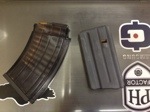
20131021-110006.jpg

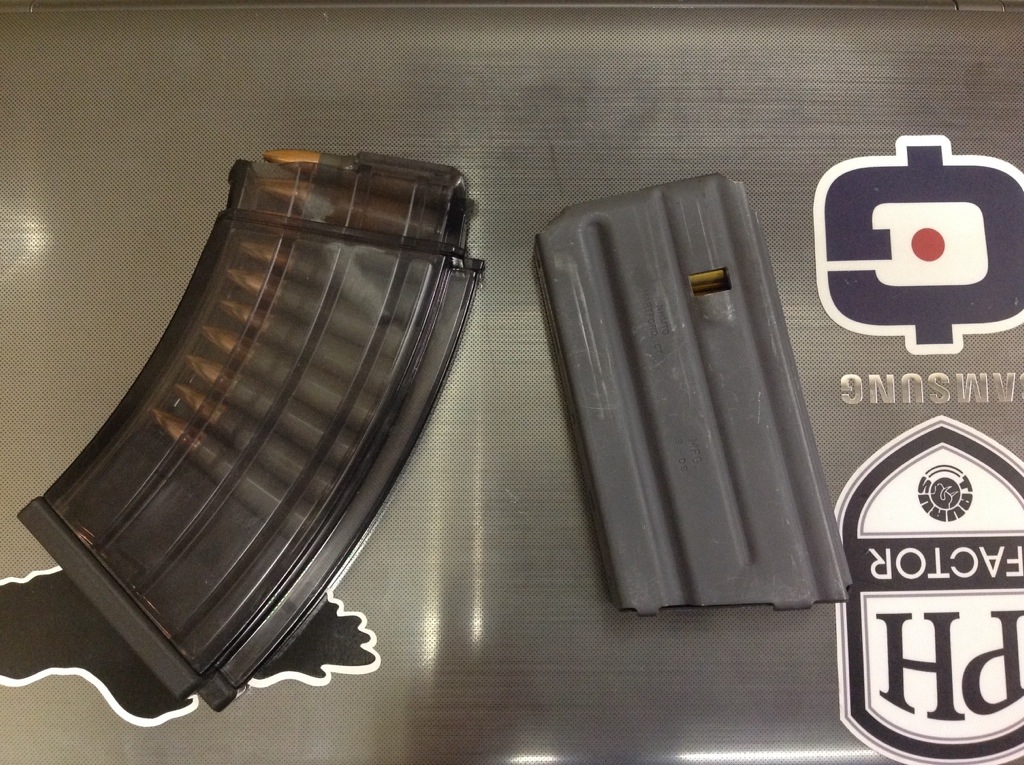
On the left we have a non-scary, Clinton-approved 10 round magazine for a VZ-58 Sporter. On the right is a scary, illegal in some places, evil 20 round magazine for an AR15 style rifle. One of these magazines is arbitrarily bad, and one is not.

Gun control advocates are forever going on about “need” as though it matters; we all know that “need” has nothing to do with the exercise of a Constitutional right. We also know that if we ever needed a rifle, more is better than less, a truth that’s been born out by the evolution of modern warfare.

That’s not to say that a lower capacity rifle is useless, either. I am hard pressed to think of a situation as a civilian that I couldn’t solve with 10 rounds of 7.62×39 ammo; but at the same time I’m thinking of those situations, I can’t seem to think of one where I’d also not want even more ammo. That’s the thing about long guns – using them is quite likely going to be a very rare event indeed. Yes, everyone should own a rifle and a shotgun because long guns are excellent and useful tools (they’re also fun), but the reality of the situation is that suburban and urban gun owners are probably never going to need a long gun.

This changes if you live out of the city limits in a rural area of course, in which case a long gun makes a lot of sense. But for me and people like me, I have rifles because they’re cool. Not because I think Red Dawn is going to happen.

I will say that one advantage to the 10 round magazines in my VZ-58 is it keeps the rifle nice and light. Fully loaded, the VZ-58 weighs right around 7 pounds, making it quite handy to tote around. Of course, my AR with a 20 round mag weighs the same…and has double the ammo.

2013 USPSA Production Nationals Results

The 2013 USPSA Production Division National Championship was held last week in Tulsa, OK. Here are your winners.

Overall

  1. Eric Grauffel*
  2. Ben Stoeger
  3. Dave Sevigny
  4. Rob Leatham

Category Winners

  • High Junior: Jacob H
  • High Lady: Randi Rogers
  • High Senior: Randy C

*Note: While Eric Grauffel finished 1st in the overall scores, according to USPSA rules he is ineligible to win the American National Championship due to being a foreign citizen. Thus, Ben Stoeger repeats as “National Champion”.

Visit USPSA to see the full results.

First Time Gun Purchaser Asks for Advice, Then Ignores

Gabby gives her best advice for a new gun buyerOne of my very best friends called the other night , for advice for a friend of his. This girl in her early twenties was about to purchase a handgun and wanted to clear some questions. First, she wanted to know about a gun she’d found at a pawn shop and whether it was a good price. The information she could give me was the brand and the caliber, no model number, but she had been told the the gun was “new in the box”. Continue reading →

TV Gun Gripe

I was watching the otherwise excellent TV series Longmire the other night on Netflix, and they kept doing one of those little “Hollywood” things that drives me nuts. To give the readers a little backstory, Longmire is set in the fictional Absaroka County of Wyoming, which in the show’s setting is located about two miles from the front gates of BFE.

20131021-091658.jpg

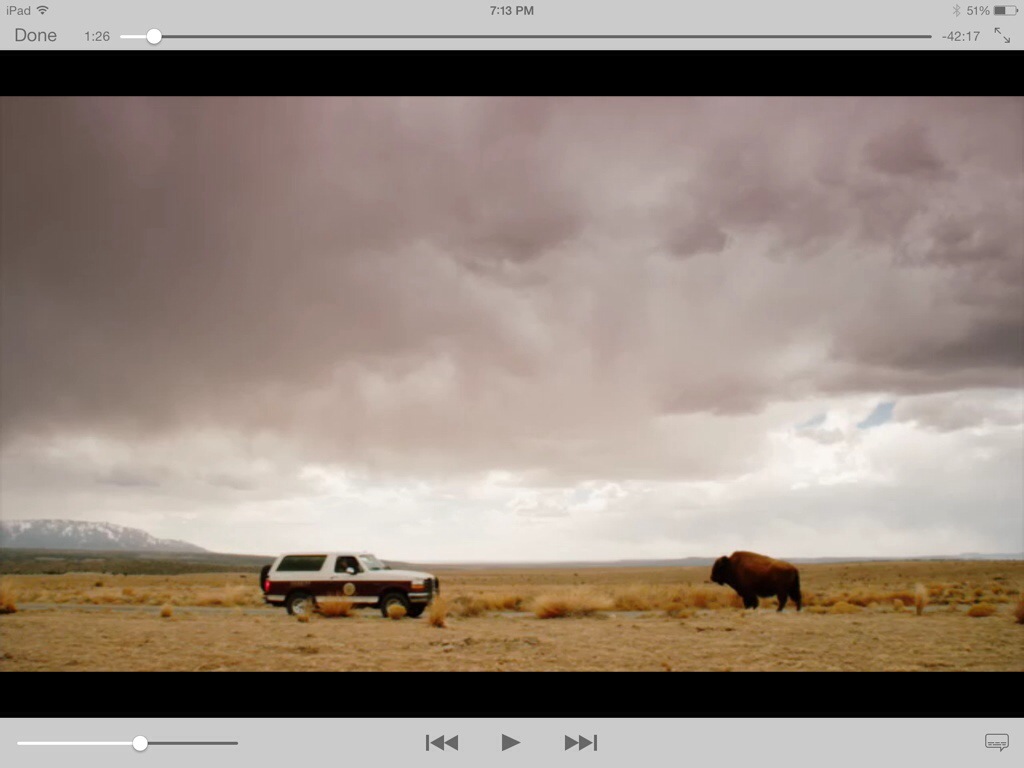
Depicted is the show’s definition of a traffic jam, which also displays the gorgeous rugged terrain and for the most part, the rural setting of the show. It is such then that the following nit bothers me so greatly: multiple times in the show, characters in the show, both LE characters and non-LE characters referred to privately owned guns as “registered” or “not registered.”

Which, every time that happens makes me want to shout at my iPad “WYOMING DOESN’T HAVE A GUN REGISTRY!” In fact, a quick check of Wyoming’s gun laws indicate that it’s a pretty casual state, with very few restrictions on gun ownership, period. Which would be expected from the actual Wild West.

But this does get me around to the point of this; which is twofold. First, little things like that really take me out of the show. If your main character is the sheriff of a rural county, he and his deputies would know damn well that there’s no gun registry in Wyoming, and that Wyoming has strong state preemption that would prevent a county or city from establishing a gun registry.

Secondly, I don’t think that it’s malice on the part of the show’s writers. I’ve seen suggestions on the internet that when they do that, the “Hollywood liberals” are trying to “normalize a gun registry” or something like that. I don’t believe that’s the case, I think it’s a matter of simple ignorance. Most TV writers would be shocked to find out that there isn’t California style gun registration in every state in the nation, because they’re kind of insulated.

Don’t let this little rant turn you off from watching Longmire, though. I think it’s a great show, it’s well acted and very well written, with of course the obvious caveat generated by this post. Sure, they cram a lifetime’s worth of law enforcement excitement into 2 seasons so far, but a show about sitting around a rural sheriff’s office talking about cows wouldn’t be very exciting.

The Gun Movie Throwdown!

What’s the greatest movie for Gun Nuts ever? That question comes up all the time, so we’re going to settle it. We’ll do a 32 film bracket, based on four major movie categories. As the originator of this idea, I’ll nominate six films in each category, then the readers will provide the remaining eight films via the comments.

The categories we’re going to use are simple. We’ll have a category for War/Military films, so for example Black Hawk Down or Tears of the Sun would be in this category. Up next, Western/Period films, like Silverado, Zulu, or Last of the Mohicans. The third category is Action/Sci-Fi, where you’ll find Bad Boys 2 and Terminator 2. Final category would be Thriller/Drama, with Collateral or Ronin serving as examples.

Here are my six nominees for all the categories, now it’s up to you to provide the remaining two in each category! They’ll be selected based on number of comments submitted. Then from there we’ll have throwdowns in each bracket daily until we get to the final Four. TV Shows and mini-series are not eligible, that’s a whole different series of posts!

Bracket 1, War/Military

  1. Saving Private Ryan
  2. Black Hawk Down
  3. The Dirty Dozen
  4. Enemy at the Gates
  5. Red Dawn (original)
  6. Act of Valor
  7. ?
  8. ?

Bracket 2, Western/Period

  1. Zulu
  2. Last of the Mohicans
  3. Shane
  4. Open Range
  5. A Fistful of Dollars
  6. 3:10 to Yuma (Christian Bale)
  7. ?
  8. ?

Bracket 3, Action/Sci-Fi

  1. Terminator 2
  2. The Expendables
  3. Bad Boys 2
  4. Die Hard
  5. The Matrix
  6. Tremors
  7. ?
  8. ?

Bracket 4, Thriller/Drama

  1. Heat
  2. Collateral
  3. The Kingdom
  4. Ronin
  5. Hard Boiled
  6. Lethal Weapon
  7. ?
  8. ?

Nominate your choices in comments below, make sure to identify which bracket they belong to!

Shooting sports ethics, part 3

“Winning isn’t everything, it’s the only thing.” – Vince Lombardi
“If winning isn’t everything, why do they keep score?” – Vince Lombardi
“The only thing I’m addicted to is winning.” – Charlie Sheen
“It kills me to lose.” – Jackie Robinson
“A person who says ‘winning isn’t everything’ never won anything.” – Mia Hamm
“I’d run over my mother to win the Super Bowl.” – Russ Grimm

Winning is hugely important in our culture. We put sports champions up on pedestals, excuse their bad off-field behavior, and look the other way as long as they’re winning. Sports fans see this all the time and make the mental justifications: “Oh sure, Ben Wafflesburger raped some people but he’s won the Super Bowl twice!” All in the name of winning.

How does that mindset translate to the shooting sports? It’s interesting, because in many cases it doesn’t. In the NFL and MLB, all the players are professionals. Their job and livelihood is directly tied to victory on the field. A .250 hitting middle infielder with a great glove is a lot more likely to have continued employment on a good team than he is on a team that’s looking for a solution to their woes. But in the shooting sports, the vast majority of the shooters aren’t professional shooters. For the sake of this post, the term professional shooter will be applied to people who make most or all of their living from employment in the firearms industry and performance in shooting matches figures in to their compensation and employment duties. But that’s not the point; because the “win at all cost” mindset is actually pretty pervasive, and it leads to the really sticky ethical situations.

Yesterday, we looked at obvious penalties like shooting a no-shoot. But what about the less obvious stuff? Here are three simple examples:

  • You break the 180 doing a reload, but the RO doesn’t see it.
  • You break cover at an IDPA match and shoot but the SO doesn’t call it
  • You have an ND that you know is an ND, but the RO doesn’t call it because it went in the general direction of the target.

Situation 1, what’s the “right thing?” If you go the RO and say “hey, I totally broke the 180 on that reload” there is a very real chance you could get DQ’d. I can’t tell you what the right choice is, but I’ve had it happen. I had a match where I broke the 180, didn’t get called for it, and finished the stage. After I’d be scored, one of my shooting buddies told me that I broke the 180, and I said “yeah, I know. I got away with one there.” I didn’t say anything, but I did learn from it, and have been very conscientious of the 180 line ever since then.

Situation 2, we’ve all had that happen. It usually happens so fast that it’s a “bang-bang” play as they call it in the NFL. Everyone at every IDPA match ever gets away with one or two cover violations.

Situation 3: I’ve seen some shooters self-DQ for that, where they’ll have an ND that they know is an ND, and stop themselves and unload and show clear. I’ve also seen shooters just keep on keeping on, because since the round went in the general direction of the target they were engaging and didn’t meet the specific requirements for a DQ, they hadn’t broken a rule.

The reason I want to talk about these situations is that these are the ethical questions that are a lot more common than shooting a no-shoot that no one sees. These are the little decisions that are easy to justify in the name of winning, or sometimes just not getting DQ’d.

There is also a huge difference between actions that would negatively affect you (DQ’s) and actions that would negative affect the integrity of the match like procedurals or penalties. On top of that, we all seem to agree that some forms of cheating are worse than others. Here are two more examples:

  • Using a gun that’s illegal for your division due to competitive modifications, because you know there won’t be an equipment check.
  • Committing a foot-fault on accident and not getting called for it

Everyone would agree that the first example is bad, because it’s intentionally cheating. You’re breaking the rules and you know it, and you’re doing it to gain an advantage. No one would sanction that kind of behavior. But the in the second example, you’re still breaking the rules, just this time it’s on accident. But no one is going to think that you’re an evil cheater if the RO doesn’t call a foot fault and you don’t fess up to it, because it was accidental. Yes, it’s a double standard, and it’s one that creates the gray areas that this post deals with.

I can’t control other people’s actions. I’m also not very smart, so I like to keep my decisions simple. An action taken with the intent to circumvent the rules and gain an advantage is wrong, and should be penalized in every instance possible. That’s cheating. If I won a match with illegal equipment, it wouldn’t be a real win even if I got away with it.

When you commit an objective penalty like hitting a no-shoot or a foot fault in USPSA, own it.

When you commit a subjective penalty like maybe breaking the 180, or a cover violation in IDPA, it’s up to you to decide what’s right or not. I’m not in the business of judging people, so if you chose to let it slide, I’d understand that. If you chose to self-report to the RO, I respect that as well. For the guys like me, who let the “little things” slide, we run the very real risk of then justifying further bad behavior. The only way to prevent that is to make sure that when you “get away with one”, you learn from it. I’m maniacal about paying attention to my 180s now, because I got away with one once. If you don’t learn it from, you’ll end up rolling down a slippery-slope, and at the bottom of that hill is Cheater Land. Don’t go there.

And whatever you do, don’t ever argue that a shot is a perfect double when you know it’s actually 1 hit and a miss.

The Gun films of Michael Mann

Gun nuts, we need to have a talk. After some truly deep thinking and a review of much of his work, I’ve realized something: Heat isn’t that good.

For those that don’t know what I’m talking about, I’m of course referring to the films of Michael Mann, one of very few Hollywood directors that takes his gunhandling seriously. He’s directed 5 movies that are generally held in high regard by gun nuts for their technical expertise in gunhandling. I’m including Last of the Mohicans in that five because black powder fans need lovin’ too. Here are the five films in order from most recent to oldest:

  • Public Enemies
  • Miami Vice
  • Collateral
  • Heat
  • The Last of the Mohicans

You might be able to argue for the inclusion of 1986’s Manhunter on the list, but we’ll leave it off for now. I had a moment of clarity last night while watching Collateral and Public Enemies back to back – those are good movies. And they’re a lot better than Heat.

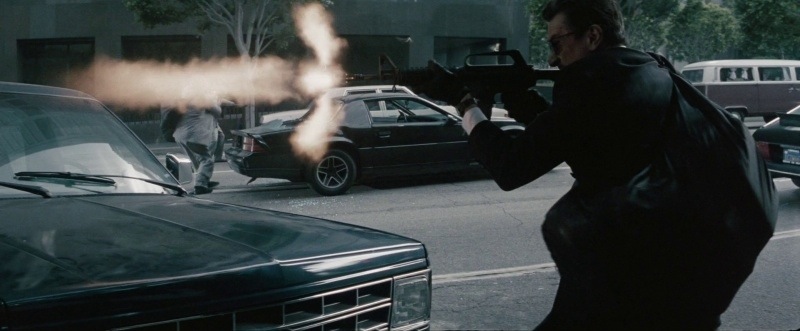
20131018-092050.jpg

Let’s break down Heat for just a second – the story is convoluted and doesn’t make a lot of sense, there are plot holes and character inconsistencies you could drive a fire truck through, and Al Pacino spends the entire movie chewing the scenery and shouting. It’s basically a loosely constructed vehicle to get Robert DeNiro and Al Pacino into various scenes together. It’s not a bad movie by any stretch, but it’s also not that good.

So why does Heat get held in such high regard by gun nuts? Because it was special at the time. Heat came out in 1995 (noodle on that for a moment, that movie is old enough to vote). Here’s a short list of other action/thrillers that came out that year: Bad Boys, Assassins, Congo (I saw that in the theatre), Goldeneye, Desperado, Judge Dredd, and Die Hard 3. While some of those movies are really awesome movies, you can’t really characterize the action sequences in any of them as “gritty” or “realistic.” Heat gave us a film with gritty, realistic, and technically excellent gun handling in an era of chopping gorillas in half with a diamond powered laser and Pierce Brosnan driving a tank around Russia wrecking stuff.

So Heat gets a pass from us because it was different from all the other action going on at the time. Which is great, but I don’t think Heat holds up as well. Here’s The Gun Nuts List of Best to Worst in Michael Man’s Gun Nut Movies:

  1. Collateral: This movie has spawned more IDPA stages than any other film, ever. Great performances by Jamie Foxx and Tom Cruise carry this movie, and the taught action with a little bit of levity makes it the best of the lot. “Yo homey, is that my briefcase?”
  2. Public Enemies: While the movie takes a considerable amount of historical license with the events surrounding John Dillinger’s life and eventual death, it never stalls out. You feel like you’re along for the ride with Dillinger and crew as they’re pursued by Batman Agent Purvis as played by Christian Bale. It’s a tight story with incredible action sequences.
  3. The Last of the Mohicans: I admit, I didn’t like this movie at first, because it was nothing like the book. Once I got over that though, this is a really excellent movie. Mohicans probably gets rated higher than it deserves on my list because of the amazing, driving soundtrack during the final action sequence.
  4. Heat: Heat’s biggest weakness is the story. There’s too much going on, and too many sideplots. It stalls out in places as a result of this, and you feel like you’re waiting around for the stuff that’s interesting to happen again. Heat would be the number 1 movie on the list if you deleted the side plot with Amy Brenneman’s character entirely and the side plot with Al Pacino’s step-daughter entirely.
  5. Miami Vice: This is not a good movie. Yes, the action sequences are vintage Michael Mann, and the final boatyard shootout is awesome, but this movie is just not very good. It’s basically Romeo and Juliet with machine guns and go-fast boats. Seriously, think about it – Crockett is Romeo, and chick is Juliet. They’re from rival houses, and everyone dies.

We hope you enjoyed this brief look into the films of Michael Mann. For more movies and TV, check out the November issue of GunUp the Magazine, featuring the Guns of Strike Back!