When I built my tactical turquoise AR-15 last year, I had no idea that this year I would be preparing to use it for a 3gun competition. What I built is a fun, pretty gun, that is nice and light and easy for a beginner to pick up and try out. However, I have a feeling some changes should be made.
Currently, my AR has a 14.5″ gov’t profile barrel with a 2″ compensator pinned to it. The gas system is mid-length as is the free floating hand guard. I installed very little Picatinny, but now have backup front and rear, flip up sights and a tiny Burris red dot attacked to the upper reciever. The lower is billet with a deluxe LWRC kit installed. The Ergo grip and Mission First Tactical stock are still my favorites. I doubt those need changing, but I’m questioning almost everything else.
So what do you think? I’ve been told that a competition trigger is a must. What weight would you consider “best” and let’s talk “favorite” brands. I am questioning the need for a longer heavier barrel and a serious muzzle device. This would probably mean the need for a whole new upper, but I am looking forward to your input before I get started.
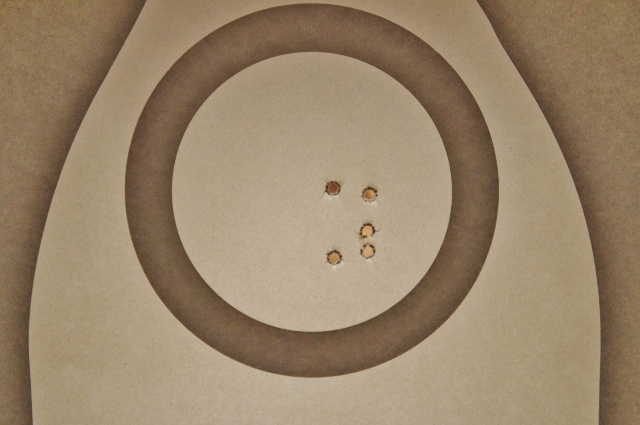
I’m a fairly accurate shooter. Thanks to my introduction to shooting coming from the traditional bullseye sports, I can shoot pretty consistent groups on the reg, which is a valuable skill to have when I’m testing and evaluating guns. It’s also a huge mental crutch for me, because it’s my default setting for when I can’t think of anything better to practice.
See, if I’m actually practicing, I need to be practicing the things that I suck at, not the stuff I’m already good at. Spending my practice sessions shooting tight groups in controlled slow fire doesn’t really make me better at anything other than shooting tight groups in controlled slow fire. Which is a cool skill and everything, but it’s not really applicable to my personal shooting goals.
To really get the most out of your practice session you need to find a balance point of “doing hard stuff” and “reinforce stuff you’re good at.” I don’t believe that you should ever practice for the shooting sports with a session that does nothing but frustrate you. A baseball coach once told me “never end batting practice on a bad swing”, the rationale behind that is that if your last rep is garbage, you’re going to spend the rest of your day thinking about that one garbage rep and what you did wrong instead of what you did right on the other 20 swings.
That doesn’t mean you should lie to yourself about mistakes. I keep a hand-written training log with me when I practice. That way I can keep track of scores and times on key drills and understand where I’m improving or where I need more work. The reverse of the “bad swing” is where you shoot a Bill Drill in 1.89 Seconds and miss half your shots, but congratulate yourself on a “really fast time.” Balance. All training is about balance.
If you’re a serious shooting athlete though, this gets a little more complicated. Because if you’re really serious, you’re going to have bad training days. You’re going to have rough sessions where you slog through your drills. It’s frustrating, but it’s the truth. Learning to manage those sessions is important as well. It is a lot like exercise in some ways. There are days when I’m well rested, ate right all day, nice and hydrated, and I can blast through three miles and 100 pushups like it’s nothing. There are other days, maybe I had a couple more drinks the night before, maybe the dog kept me up that 3 miles is a long way to go, and 100 pushups just isn’t happening. You can’t expect every day to be a new personal best. It’s not realistic. That’s why the training log is important, because it allows you to see increased performance over time.
I personally tend to default towards “having fun” with my training. Because if I’m not having fun training, I should probably go to the batting cages or something instead. But maybe you want to grind it out, which is awesome too. Just find your balance and kick ass!
The other day, I wrote a post about how .22 LR is back and how people should calm down and stop panic buying every box they see. That led to a bunch of comments that all start with “well I went to Wal-Mart and they” etc.
The real idea of that post was to talk about how the price of .22 will never likely be as low as it was before the triple panics, and hopefully get people to calm down and stop buying every box of .22 they see. How silly of me. But that does bring me ’round to my main point, which is “why are so many people getting their ammo from Wal-Mart?” I understand that in some small towns Wal-Mart (or Walmart as they now prefer) is your only option. But that’s not true, because I know for a fact that if you’re on this blog telling me in comments that “Walmart is my only hope” you have access to this magnificent invention called “the internet.”
It took me mere seconds to find a 525 value pack of Federal .22 LR for about 85 dollars. Is that a price I’d have paid before 2008, 2012, and Sandy Hook? No, of course not. But those times are gone and they’re never coming back. Really, that’s the drum I want to hit some more today.
Do you know why there’s no .22 LR ammo at Walmart? It’s not because the ammo companies aren’t making new product. It’s not because Bob’s Clownshow Gunshop in Topekaha, BFE is hoarding ammo and charging people 20 bucks for a baggie of .22 LR rounds. It’s because as a community we cannot accept simple economics when it applies to the cost of our ammo. Stuff is more expensive now. Our money has declined in value while at the same time there has been an increased demand for all the stuff that ammo is made out of. It’s going to be more expensive. It just is. So yeah, when Walmart has boxes of .22 for $5, everyone goes bananas and buys it out in 10 seconds. Then half that ammo ends up on Gunbroker anyway.
For whatever reason, this issue frustrates me at a fundamental level. I would love to go back to the good old days of bulk-packs of .22 for 10 bucks, and I know that the increased cost of .22 ammo has hurt sales of .22 rimfire firearms. We’ve quite literally had people through the GunUp retail shop that say “what’s the point in buying a .22 if I can’t get ammo”, which I understand.
The problem is that you can get ammo. We just need to take a deep breath and accept that it’s going to cost a little bit more to do that. Just like I need to quit complaining about how expensive .38 Special and 9mm ammo is.
Buying guns is frequently an emotional choice, and people tend to get wrapped up in those choices. However, since here at Gun Nuts part of mission is to tell the actual truth about guns, it’s important to sometimes remind people that some guns are just better than other guns. But maybe not in the way you think…
Yes, there are the obvious “things that are better”: Glock is better than Taurus, Colt is better than Kimber, etc. But that’s not what we’re talking about here – what I’m actually talking about is letting your mission dictate your gear. For example, let’s say your mission is to become a Production Grandmaster in USPSA (a noble goal): your “best” gun won’t be the same as someone’s whose goal is kill a bear with a handgun. For example, a Glock 34 is certainly better than a Ruger Redhawk for USPSA competition, but the Redhawk is better if you’re going hiking in places with things that like to eat people. There are even situations where a Hi-Point could be the best choice. In fact, if someone is searching for a cheap pistol because they need a gun absolutely right now, Hi-Point is the only brand I’d be comfortable with recommending. Immediacy has a value all its own.
To determine what gun is best, we must first determine what our mission is. Every gun has a mission, even if that mission is “make loud noises at the range.” We can talk about the importance and validity of certain missions later, and to truly let the gun’s intended mission drive your choice requires a certain amount of emotional honest that some people aren’t capable of. The reason that honest is important is that it can keep you from wasting money on purchases that aren’t necessarily optimal.
I can speak from personal and continuing experience that I have traveled the road of gun derp over the years. I’ve collected obscure Berettas, I’ve owned Taurus upon Taurus, and in my competition shooting I tend to bounce from platform to platform because I’m easily bored with guns. My weakness is gun ADD, and although I always seem to come back to revolvers, I do wander around from gun to gun.
The next time you’re contemplating a purchase, ask yourself “what is this for?” That self-analysis can help guide your purchase on to the path of awesomeness. And reminder “because I want it” is a totally valid reason as well.
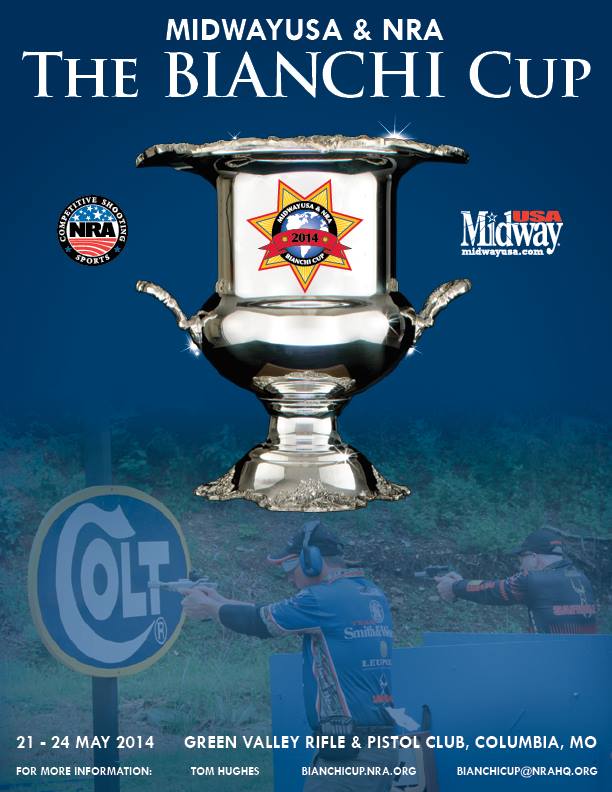
10 years ago, Bianchi Cup was in danger. The match had fallen from its former glory as one of the crown jewels of the shooting sports into a specialist’s match with limited participation. Now, fast forward to 2014, and the Cup is bigger and better than ever. It has resumed its place at the top of the heap of the pistol sports, with a massive prize table, cash prizes, and the sort of pageantry you would expect from a national championship. What changed?
It’s hard to say exactly what changed, but the most obvious contributing factor to the revitalization of the Cup is good leadership. The man behind the curtain is Tom Hughes, and he and his team have poured more blood, sweat, and tears into making the Cup into the pinnacle of pistol shooting championships in a few years than other organizations invest in a lifetime. I attended my very first Bianchi Cup in 2009, and in a short five years I’ve seen participation grow massively among shooters, media coverage has increased tremendously, and of course sponsorship dollars are rolling in as well.
In 2014, it’s a pretty easy statement to say that the Bianchi Cup is at the absolute top of the heap of practical pistol matches. Let’s take a look at the other majors that could challenge it:
IDPA Nationals
Steel Challenge
USPSA Nationals
All of those matches have individual elements to them, but no match combines them like the Cup. In 2011 I would have called it a tie between Steel Challenge and Bianchi Cup, but the current state of Steel Challenge removes it from contention with Bianchi Cup. To illustrate that point, in 2013 Bianchi Cup had more shooters in Open than Steel Challenge had total entrants. What about the other matches? IDPA Nationals has sufficient pageantry and the proper feel of a National level match, but obviously lacks the prize table and cash awards at Bianchi Cup. The many USPSA National matches do have prize tables, but nothing in comparison to Bianchi’s prize table.
Bianchi Cup sits comfortably as king of the practical pistol matches. It’s still growing, with new shooters attending the match each year in ever increasing numbers. With smart leadership, dedicated volunteers, and passionate shooters (such as myself) the future of Bianchi Cup is looking brighter than ever.
A while back I used this space to discuss thinking critically about what we’re doing when handling a firearm, inspired by a discussion of someone who had an accidental discharge during a match. Safety is always a good topic for discussion, but a few things have happened lately that makes it timely for us to revisit the topic now. We’ll start with this:
Frequently when you see discussions of firearms safety online you’ll hear people repeat something about keeping one’s “booger hook” (finger) off the “bang switch” (trigger) and that seems to be as deep as the discussion goes. Any attempt to mention that perhaps there are more concerns than that when one is carrying a handgun with a roughly 7 pound trigger and no manual safety is usually met with dismissal. People seem immune to the idea that something other than a finger can find its way into the trigger guard of a handgun. Well, ladies and gentlemen, there’s video proof that stuff other than trigger fingers can get inside the trigger guard and can cause the gun to go off. (Credit to Todd Green’s blog for bringing this video to my attention.)
As Tam so capably points out, the design of the firearm wasn’t the sole culprit in this. There were multiple issues leading up to the point where tugging on the jacket resulted in a (thankfully minor) gunshot wound. That is usually how these things happen. There are people who spend their entire professional lives studying accidents and disasters in an effort to learn as much as they can about the causes. If one knows why the bad thing happened, then it might be possible to make some changes to keep it from happening again in the future. One of the best strategies for safety is to think about it in terms of layers.
What is the primary safety system in your vehicle? You, of course. That being said, you are fallible and capable of making mistakes. People make mistakes behind the wheel all the time, sometimes with fatal results. If you go to buy a new car today you’ll find that they all have anti-lock brakes, multiple air bags, some form of traction and perhaps even stability control to try and prevent any situation where the car gets beyond your ability to control it, and the car itself has been designed to a pretty high safety standard to protect you from serious injury should you hit something. There are layers at work, designed to put as much distance between you and a bad outcome as possible.
While you can put a computer in a car that will detect wheel spin and apply the brakes or cut the power to keep traction regardless of what the driver is doing with the gas pedal, you can’t put a computer in a firearm that will second guess a trigger pull. The layers of safety for handling firearms have to come directly from the person who has their hands on it. We have to be actively thinking about what we’re doing with a gun in our hand. Everybody likes to think they’re doing that when handling a gun, but there’s plenty of evidence to the contrary.
It’s also worth noting that all firearms are not created equal in terms of safety. Some of them by virtue of their design have a larger margin of error than others. A double-action semi-auto pistol like the Sig P22x family or the Beretta 92 likely would not have gone off in the holster like that. A longer, heavier trigger pull is not a substitute for proper trigger discipline, certainly, but the fact remains that it takes more force to cycle a 12 pound trigger than a 7 pound trigger. The extra force required to pull a double-action trigger can mean the difference between a close call and a gunshot wound whether it’s your finger involved or a drawstring from a jacket.
One of the big danger zones for accidents with firearms is when it comes time for cleaning. People attempt to disassemble weapons for maintenance and fire a shot unintentionally fairly regularly. Firearms that require a trigger pull to disassemble are a particular worry in that regard. To take a Glock or Springfield XD or an original Walther P99 down for cleaning you actually have to pull the trigger. On a Sig P22x or a 1911 you have to lock the slide to the rear to take the pistol apart, which gives a greater margin of error. I’ve witnessed this personally, and I’m telling you straight up that it’s a hell of a lot better for someone to find out that a gun is actually still loaded when they pull the slide back and see a live round fall out than to discover that the gun is loaded when they pull the trigger and get a loud noise.
This doesn’t mean we necessarily avoid a pistol like the Glock, (I own two at the moment) but we need to honestly assess the potential safety implications of the weapon’s design if we’re going to create a properly layered safety protocol. We have to think critically about the gun and what we’re doing with it. Little changes to the way we do things can make a big difference in the likelihood of an accident. Let’s take the following scenario:
And consider how it would be different if this individual had made racking the slide multiple times before pulling the trigger to disassemble a habit. Had he racked the slide multiple times with the weapon in a safe direction, he would have seen live rounds ejecting from the weapon and that would have been a clue that something was amiss before it reached the point where he got a loud noise and a gunshot wound. Thinking critically about our firearm and our handling habits allows us to create a layered approach to safety that places barriers to an accident.
Accidents, be they with automobiles or firearms, generally do not happen when people are at their best. They typically happen when there has been some lapse in attention due to circumstances or complacency. It’s in this compromised state where layers come to the rescue. The four major rules of firearms safety are, essentially, layers designed to prevent tragedy. If you think critically about your gun, your environment, and your habits you can add some personal layers (like cutting the drawstrings off your jacket, only using blue guns for classroom demonstrations, or adding steps to your clearing process when you’re breaking your carry gun down for cleaning) that will help keep you from ending up in the news.
If you follow my Facebook page, you’ll know that I recently added a new member to the team. He’s a boxer/pitbull mix that we named Ruger, because that’s just a great name for a dog.
This brought up an interesting conversation on lethal force, pets, and animals. There are a lot of different directions to go with this, and we’ll probably revisit this conversation again later. There are four parts of this topic that I’ve identified:
Using force to defend your pet from other animals
Using force to defend your pet from people
Using force to defend yourself against someone’s animal
Using force to defend yourself against an animal’s owner
There are sub-tangents in those, but today I want to tackle number one and two. I’m doing this with the clear statement that I am not a lawyer, so what I want to do is have a discussion of deadly force and provide you with my opinion, based on conversations and research. Definitely not legal advice. So first we’ll look at defending your pet from other animals.
There roughly two categories of “other animals” that could attack your pet. The first are actual wild animals, such as coyotes, mountain lions, racoons, etc. While there may be game regulations around shooting those animals, generally speaking if they’re on your property and attacking a domestic pet you’re probably okay. Note the qualifiers “generally” and “probably.” Be knowledgeable of your local game ordinances. A far more likely scenario is that you’ll be out walking your dog (or cat, if you’re a weirdo because who walks their cat) and encounter an aggressive off-leash dog whose owner isn’t paying attention.
Again, in general most deadly force statutes allow you to use justifiable force in your own defense or the defense of other human beings. While letting an aggressive dog run around off-leash is irresponsible, it is quite likely not a legally justifiable reason for you to draw your gun. Don’t shoot people’s dogs unless that dog is presenting a credible threat of danger to you or someone you’re with. This is however a good reason to carry some sort of OC/pepper spray. Pepper spray is a very effective deterrent against hostile dogs, frequently moreso than it is on humans. If your dog is being charged by an aggressive off-leash dog, it’s a much better choice for everyone involve to OC the dog.
Now, the hard part. Defending your dog against hostile people. My dog is a pitbull, which means he attracts attention from people who would like to use him for things that are frequently illegal. If I’m walking with my dog on a leash, and someone attempts to attack my dog/steal my dog, they would have to also inflict considerable injury on me, because I don’t want my dog stolen. In this case, you’re looking at someone committing assault and robbery against you, regardless of the item they’re attempting to steal. If you’re in credible fear of death or grievous bodily harm in that situation, then you are likely justified using deadly force.
The items discussed today are pretty straightforward. To condense them to basics guidelines: 1) Don’t shoot other people’s pets, no matter how undisciplined they are, and 2) If someone is attacking/stealing your dog while you’re walking the dog, they’re probably attacking you too.
Again, I’m not a lawyer. These are my opinions, not sound legal advice. Don’t go around looking for people to shoot. Every gunfight that never happens is a gunfight you won.
We use cookies to optimize our website and our service.
Functional
Always active
The technical storage or access is strictly necessary for the legitimate purpose of enabling the use of a specific service explicitly requested by the subscriber or user, or for the sole purpose of carrying out the transmission of a communication over an electronic communications network.
Preferences
The technical storage or access is necessary for the legitimate purpose of storing preferences that are not requested by the subscriber or user.
Statistics
The technical storage or access that is used exclusively for statistical purposes.The technical storage or access that is used exclusively for anonymous statistical purposes. Without a subpoena, voluntary compliance on the part of your Internet Service Provider, or additional records from a third party, information stored or retrieved for this purpose alone cannot usually be used to identify you.
Marketing
The technical storage or access is required to create user profiles to send advertising, or to track the user on a website or across several websites for similar marketing purposes.
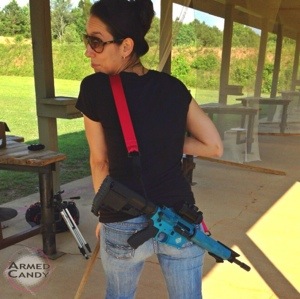
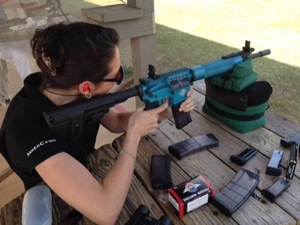 When I built my tactical turquoise AR-15 last year, I had no idea that this year I would be preparing to use it for a 3gun competition. What I built is a fun, pretty gun, that is nice and light and easy for a beginner to pick up and try out. However, I have a feeling some changes should be made.