.38 Special Man would like to wish everyone a happy hump day!
.38 Special Man would like to wish everyone a happy hump day!
There are lots of little things you can do to make carrying concealed easier on a day to day basis. When I first started out carrying, there were quite a few things that I wish I had known at the time.
1. Try new guns and holsters out around the house before you wear them out in public
Whether you’re getting ready for your first CCW or switching gear, it’s a good idea to take it for a test run around the house on a weekend. This way you know how the gun/holster combo works when you have to perform regular actions like bending/sitting/going to the bathroom.
2. No one can see you gun, but they can see you fiddling with your shirt
People obsess about concealment. We worry about printing a lot, when the real truth of the matter is that most people won’t notice your gun. What people will notice is you fiddling with your shirt and constantly picking at the tail of it to make sure your gun stays concealed. Relax and stop picking at your shirt.
3. Actually practice with your carry gear before you wear it “for real”
Remember, we’re betting on this gear to save our life in an emergency. Never carry an untested gun/holster combo, because in the terrible moment where you need it, untested gear is more likely to fail than tried and true kit. I’d never carry a gun/holster combo that I hadn’t practiced with.
4. Don’t dry fire then immediately load up again
After you finish a dry fire practice session, take a 10 minute break before you reload and put your gun back on. The idea behind this is to create a mental separation between unloaded practice and actually carrying a loaded gun.
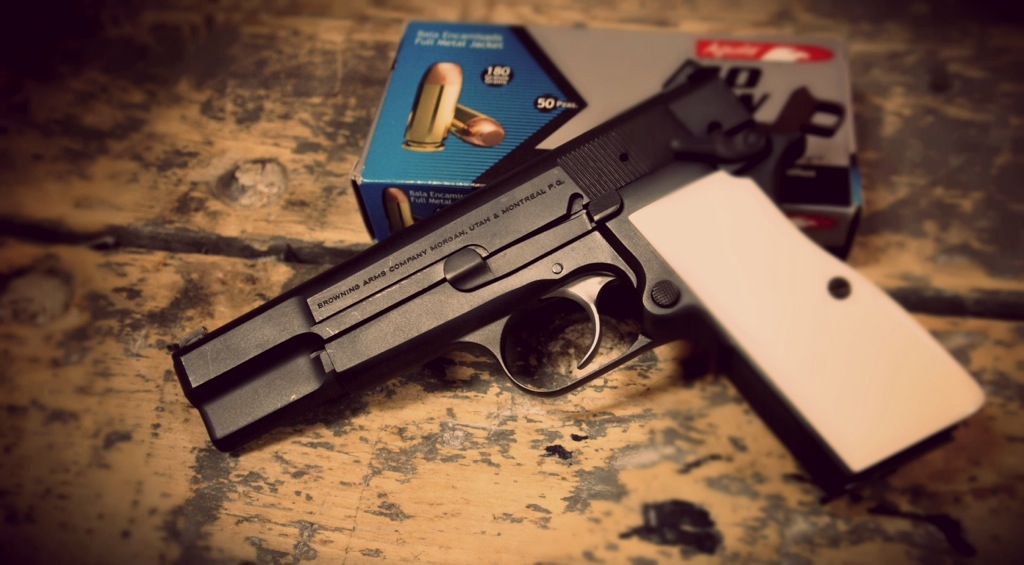
5. Don’t act like you have a gun
“Keep your distance, Chewie. But don’t look like you’re keeping your distance, I don’t know, fly casual!” There are times where newbie CCWs will very obviously look like they’re carrying a gun. Hyper vigilance, the aforementioned shirt picking, just acting nervous in general. Relax, as long as you’re obeying the law, you’re good to go.
Follow these five tips and your concealed carry experience will go nice and smooth.
 Does expensive gear make you a better competitive shooter? We’ve all seen that guy, rolling up in a zombie hunter H3, is always buying guns, but never actually goes to the range to shoot. It’s easy to get into all the gear, especially in 3Gun, but knowing how to use it is key when the buzzer sounds. Should a beginner spend a few thousand on their first long gun so they can get into competing or just a few hundred and then dive into training? Extended controls and low drag whatsits may make a person appear knowledge-able, but will they shave seconds off your time, like they do for the pros?
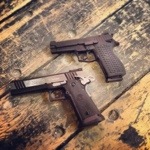
I choose to carry a gun to defend myself. I choose to exercise. I choose to not always eat like a 20 year old. All of these are choices.
Self defense is all about choices. By carrying a gun and getting training, I’m choosing to violently resist anyone’s attempts to do me harm. But my choices aren’t your choices. For example, I choose to exercise because strong, fit people are harder to kill and generally more capable. But I also choose to eat pizza and drink beer because pizza and beer are delicious. Again, choices.
I know people who don’t drink alcohol. Choices. I know people who don’t drink coffee, and while I assume those people are monsters, I respect their choices. And that brings us to the concept of respecting choices, something we struggle with a lot. If you choose to carry a Hi-Point and get training at the DerpShow Academy, I respect that it’s your right to make whatever choices you want, but that doesn’t mean I agree with them. There is a difference between respecting a choice as someone’s right, and validating a bad choice with support.
Not everyone’s choices are equal. There are good choices and bad choices. We crusade against bad choices by providing education about guns, gear and training, but ultimately it’s up to the individual to make good decisions. It is their right to do whatever they want, and we can only hope to steer our friends in the right direction.
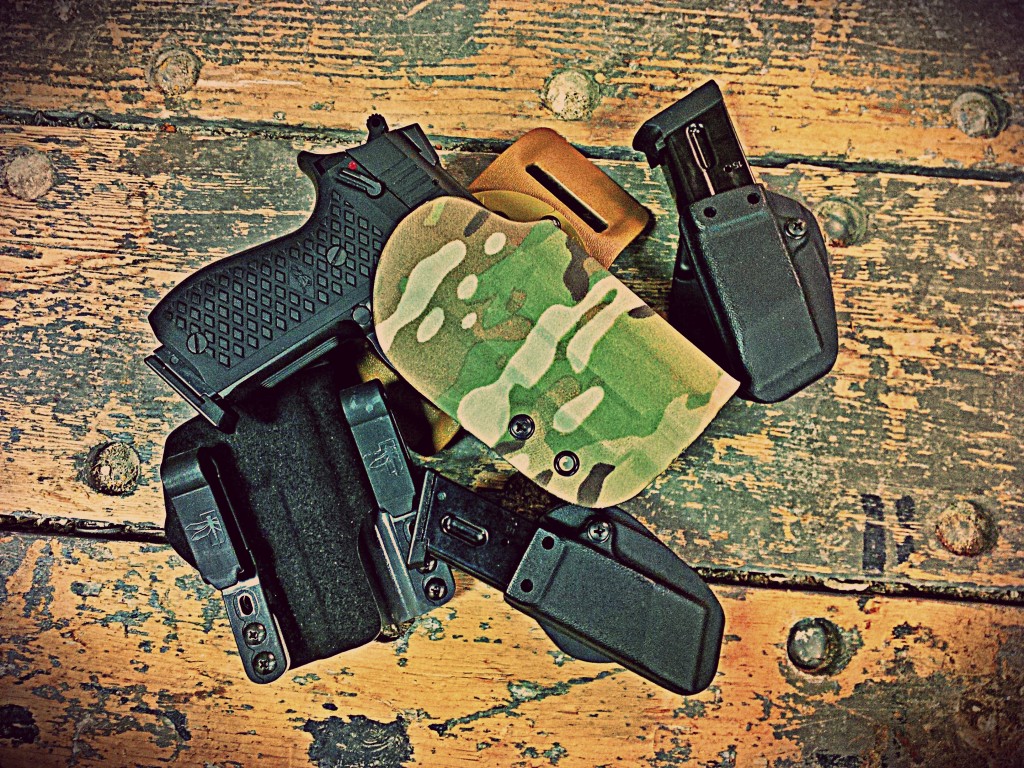
Lionheart LH9 in G-Code OSH RTI holster with Haley Strategic INCOG and G-Code single magazine pouches. The single mag pouches are a lot better than the double pouch that came with the gun, and once I backed the retention off allowed fast reloads and easy on/off for the belt.
Ammoland has the story of how past champion Vera Koo is walking the hard road back to Bianchi Cup after breaking her leg.
Many members of the shooting world are aware that last year I did not defend my Bianchi title. I was not even in Missouri during my favorite event of the year. I was in California, attempting to re-learn how to walk.
In 2013, just a few weeks before the Bianchi Cup, I broke my leg, a spiral fracture of my right fibula and tibia. My doctor felt it would take 6 months until I could walk normally, and a full year for the swelling to reduce, as I mentioned in my inaugural column for The WON. But, while I lay in a Missouri hospital, I had the same tunnel vision that I have while competing. I knew that in less than 1 year, I needed to be completely recovered from a potentially permanently debilitating injury, so I mapped out my plan for a full recovery from my hospital bed.
Lighten up, Francis. It’s great to train and take your self defense seriously, but I can’t imagine how exhausting it must be to make your entire lifestyle revolve around always being ready for a fight that probably isn’t going to happen.
A good friend of mine recently said “Not every gun has to be for jumping out of an airplane with a knife in your teeth” which is pretty good advice right there. It’s all about balance. I’ll pull a parallel example from the world of fitness. It is a perfectly acceptable and laudable goal to run a marathon or bench four plates or have a perfect six pack. It’s also a perfectly reasonable goal to work out just to be healthier but still have pizza and beer, because pizza and beer is delicious. The guy who wants to run a 5k under 21 minutes and trains obssesively for that is going to have a different definition of “success” than the guy who wants to run a 5k under 35 minutes because it’s good for him.
So hey. Maybe you don’t have to make your entire life about being ready for the fight. Maybe you could take up fishing, or playing video games or something. All of these are acceptable hobbies and uses of your time. Or, if you really are serious about the whole Sheepdoge (Such awareness) mentality, that’s cool too. Just…don’t force your lifestyle choices on other people. Because not everyone wants to press 4 plates or do 100 pushups. Some people just want to be healthier and fitter.
The dangerous slippery slope of this argument is when it’s used to justify not training at all. Of course we don’t want that, because carrying a gun is actually serious business, and if you carry a gun to defend your life, you should probably know how to use it reasonably well. So get some training, and shoot some matches. But if you can only make it to one class a year and shoot a match every other month, that doesn’t make you a terrible person. Those of us that do this professionally (shoot/train/etc) sometimes get tunnel vision on how much we want to shoot and train, and then we go telling everyone else that you should be shooting 1,000 rounds a month and traveling to matches. If that doesn’t blow you skirt up, don’t worry about it.
Get some training. Learn to use your gun well. But don’t stress out if you don’t find yourself constantly obsessing about your EDC or scanning for threats in the mall. Just enjoy that ice cream cone, because ice cream is delicious. The maybe tomorrow don’t eat ice cream and do some dry fire, and go for a run.
We’ve got jokes!
I’m disturbed by the number of times I’ve heard people tell new shooters who are cross-eye dominant that the shooter should switch hands to match their eye dominance when shooting handguns. It’s mind boggling.
Those words of wisdom come from former heavyweight boxing champion Mike Tyson, and while he in later life may have encountered some struggles, he is 100% correct about that. To circle back to last week’s post on Krav Maga, many people questioned why hold up contact sports like BJJ, american Boxing, or modern MMA as the best options for self defense training. The answer is the same reason I encourage anyone who’s serious about their self-defense to shoot competitions. Competition shooting is the only venue where you can test the entire range of your gun handling skills under the stress of a timer, audience, and scoring. It is not a real gunfight, but it is as close as you can probably get short of joining the military.
Similarly, while contact fighting in boxing/mma and grappling in BJJ aren’t “real” fights, what you get when you strap on the gloves is an opponent who is fully committed to opposing your will with violence of their own. Yes, there are rules – but anyone who has stood in the ring and taken a punch has a much more intimate understanding of violence than someone who has only ever had an instructor teach them walk-through techniques. “Here’s how you defend against a reverse bear hug” with a compliant and willing partner, that sort of thing.
That’s important. I honestly believe that if you’re really serious about unarmed self-defense, you should take classes that involve full-contact sparring (or grappling for BJJ). There is a tremendous amount of personal value in knowing how your body reacts when you take a punch, and knowing how hard you can deliver a punch right back. I’m not saying you should try and win the Golden Gloves, just like I don’t think you need to be a USPSA Grandmaster to successful defend yourself. But the value available in inducing stress into your training is huge. If you’re not shooting at least 1 or 2 matches, you’re cheating your development as a shooter. Similarly, if your unarmed training doesn’t involve someone who is genuinely trying to hit you, you’re cheating your growth as well. There is some value to be had in working through techniques with a compliant partner – that’s how we learn stuff. But if you can’t test that stuff out against someone who wants to oppose your will? It’s just fancy wrist-lock kata.