Hand to hand with Cecil Burch

Editor’s note: today’s guest post is by Cecil Burch, renowned martial artist and self-defense instructor. You’ll see his posts appearing here on Gun Nuts from time to time.

I have been training some form of Martial Art/H2H fighting method for almost thirty five years of constant work, always under the direct eye of a knowledgeable instructor. I have been shooting for even longer. For most of that time, it was really strange to have a foot in both camps.
Generally, I was the odd duck. If I mentioned firearms to most martial artists, I was treated as if I had just said “Heil Hitler”. And if I brought up H2H work to the typical gun enthusiast, I got to hear the refrain along the lines of “I carry a gun so I don’t need that ka-rotty stuff”.

Fortunately, over the past few years, there has been a nice change. Certainly in the Tactical Gun world, where it is much more accepted that there can be a good use for H2H skills, even in a weapons based environment. At least now, when I write something on social media or on a discussion forum, the bulk of the time is spent less on justification, and more on application. This is certainly a more productive use of time!
One of the side effects of all this is a number of trainers who now offer coursework that addresses this need. The flagship of course (and in my opinion, the one that did the most to make people realize the need for it) is Craig Douglas’ ECQC. When he started teaching open enrollment work in 2005, he helped set the groundwork for all that came after. He is still going strong, and has been joined by a number of people who bring their own experiences and ideas with them. While this is a positive thing, it brings with it some problems.

Just as the explosion in CCW permits and gun sales brought the opportunity for less than qualified instructors attempting to cash in, so does an increasing acceptance and search for H2H teaching open the way for poor or incomplete knowledge hitting the marketplace. In an area where this type of thing is new, how can we know if what we are getting is good to go? As someone who has been obsessed with what is fighting functional in the real world my entire martial life, I will bring up some things in this series of articles that I have found to help guide my own journey.

The number one, over riding thing a H2H instructor must bring to the table is pressure tested material; not what he likes, but what he has found what works in the heat of the crucible. The problem right now is that the term “pressure testing” is getting co-opted by instructors with an agenda, and is making the phrase meaningless by changing how it is derived. Like the Scientific Method, it must have defined and repeatable characteristics.
So what does constitute real pressure testing? Here is what I believe is the most proven way of defining it. This definition was a collaborative effort by a number of people on the discussion forum Total Protection Interactive. While I had a hand in it, there was a lot of input from incredibly experienced instructors. I t consists of four parts.

First, you must have a Physically Resisting Opponent. He must be an active barrier to what you are trying to accomplish.
Second, the opponent must have Opposing Will. It is not enough that he is going through the motions of resistance; he must have the will of doing so to fuel the physical action.

Thirdly, the opponent must have Malevolent Intent. Essentially this means he must want to not only stop you and your actions, but he must want you to lose and be put in a worse place than where you started. For example, if we are testing our technique of getting out of a wrist grab, not only does our partner have to try and stop us; he must also want to make us either get stuck in the grab or even end up on the ground totally under the attacker’s control.

And finally, there must be Freedom of Action by the opponent. This is where most martial artists and Combatives people fail. It is relatively easy to “win” if we know that our opponent can only do one thing. Again, as in the above example of countering a wrist grab, if all the attacker can do is hold on, it is not going to be that tough to escape. However, if we let the opponent also throw strikes, drag us around, and try to knock us to the ground, suddenly our problem becomes more complex. More importantly, it becomes more real.

Before we just accept that something has been pressure tested, we need to ensure that the pressure testing meets a logical, defined standard.
The Unthinkable in Texas

I was busy on the range most of the weekend. Saturday evening after returning home after a long, sunburned day I find out that a free speech event had been attacked by two AK-wielding islamists intent on murdering everyone there. It was just a couple of weeks ago that I was in a class with Greg Ellifritz and William Aprill that covered the possibility of active shooters and suicide bombers…and some people invariably questioned the validity of covering that material in an open enrollment course. Is it possible to look at what happened in Texas…or Oklahoma, or Boston, or New York, or…and still believe that the course content has no application for the average Joe/Jane?

There are many lessons we can glean from what happened in Texas…

1. We have yet another example of a good guy with a handgun stopping a slaughter 

The national media has gone to great lengths to try and discount the potential impact of someone with a firearm and the knowledge to use it making any positive difference in an intended mass-casualty event, but every time there is armed resistance present at the opening stages of an intended slaughter it turns out completely different to the plans of the bad guys. A sixty year old off-duty police officer armed with a handgun saw these two chuckleheads roll up and open fire…and apparently without hesitation he pulled his pistol out and used it to excellent effect. Kudos, sir. I hope you remain anonymous for the sake of your personal safety, but I think I speak for tens of millions of people when I say I’d like to buy you a beer and a few boxes of ammo. You. Rock. 

2. Accurate fire is a force multiplier

Two dudes with AKs bent on slaughter versus one guy with a pistol is some pretty bad math on paper…but violence doesn’t happen on paper. In the real world the ability to put a bullet exactly where it needs to be exactly when it needs to be there can make the critical difference. From what I’m hearing, the good guy here fired his weapon with exceptional accuracy delivering hits on both terrorists that were almost instantaneously physiologically debilitating if not instantly mortal. If you want a handgun to make someone stop their violent actions, you have to put the bullets in important bits of their anatomy. There’s no better way to overcome being outnumbered and outgunned than putting bullets into the hearts and central nervous systems of the bad guys with lethal efficiency. 

3. Bad guys travel in packs

The more dastardly the deed, the more likely the bastard wanting to do it will have help. Always assume there is one more.

4. You don’t get to pick when you need to use your gun. The bad guys decide when you need to use your gun

Granted the nature of this event made the possibility of a violent attack a bit more visible, but I’d wager that the officer working security that morning probably didn’t expect that with all the SWAT studs in attendance that he would be the guy dropping the hammer on a couple of terrorists if any showed up. Life dropped a big ol’ bucket of jihad right in his lap and to his credit he responded immediately and effectively. Again, sir, bravo. If we had scorecards, even the French judges would be holding up 10.0.

5. The people on the front lines of these type of events are often pretty “ordinary” folks

If this were a movie, the terrorists would have been engaged by well-equipped SWAT officers in a dramatic shootout complete with lots of pyrotechnics and a bitchin’ electric guitar solo in the background. In reality it was a traffic officer not too far from retirement age that was confronted with the need to do battle with ISIS-inspired scumbags. Extraordinary violence almost always happens to ordinary people. So to believe that only ninjas have to worry about being able to make an accurate shot under a pretty stiff time constraint, or that only SWAT/JSOC studs need to have ready access to the tools and knowledge to deal with casualties and potential explosive devices seems pretty silly to me. If stuff goes down in front of you, you are on your own for what may well be the rest of your life.

I have a lot of questions about this event, too…like how a dude who has already been convicted on terrorism related charges is walking around a free enough man to get guns and tweet about attacking this event without our massive surveillance state doing anything proactively to prevent him from doing so…but that’s another rant. Erm, “article” for another time.

For now, I encourage you to look hard at the “unthinkable” elements from this event. Those who think it’s “unthinkable” that they would ever be in the middle of a terrorist attack should probably reconsider given that the scumbags busy cutting a murderous rampage across the globe have promised more. Those who believe it is “unthinkable” that one guy with a pistol can make a difference in such an event should probably get their head right, too.


Today on “Dumb guns I want”

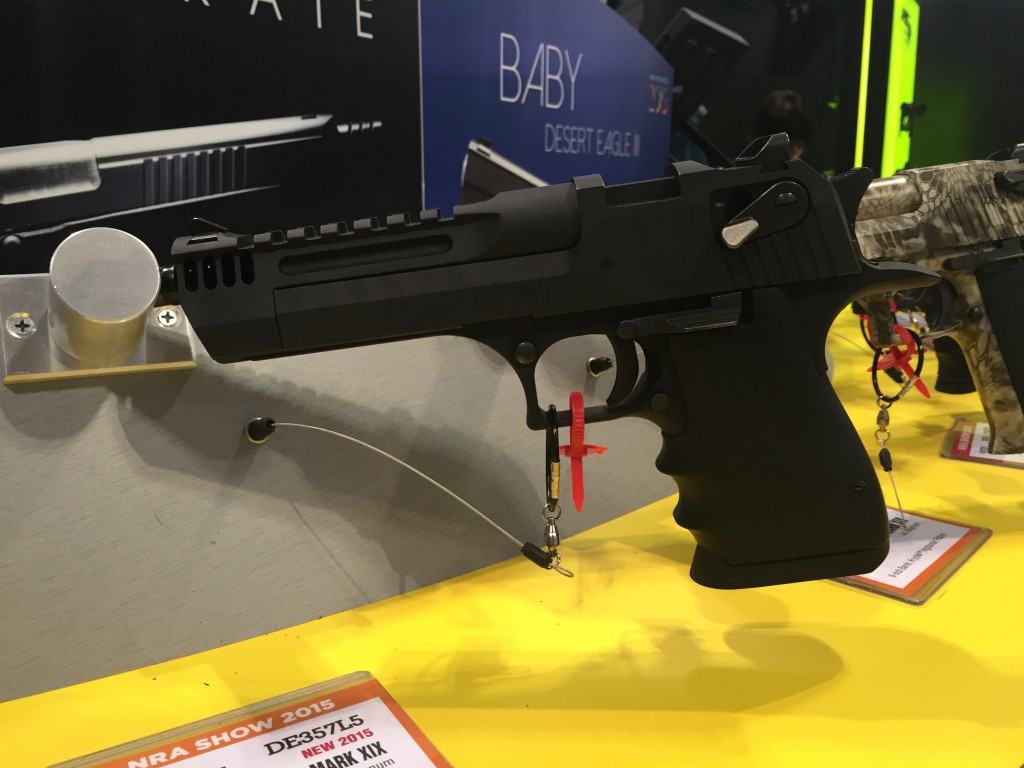
Deagle brand deagle

A ported Deagle brand Deagle? Yes please. Can you imagine how rad/stupid this would be with an Aimpoint H1 in a low mount clamped on to the forward rail? Plus, this one is a .357 Magnum, so you know with that weird brake/porting assembly up front it’s just going to shoot fire everywhere, be loud as f***, and completely retarded and totally awesome.

The Ultimate IDPA gun?

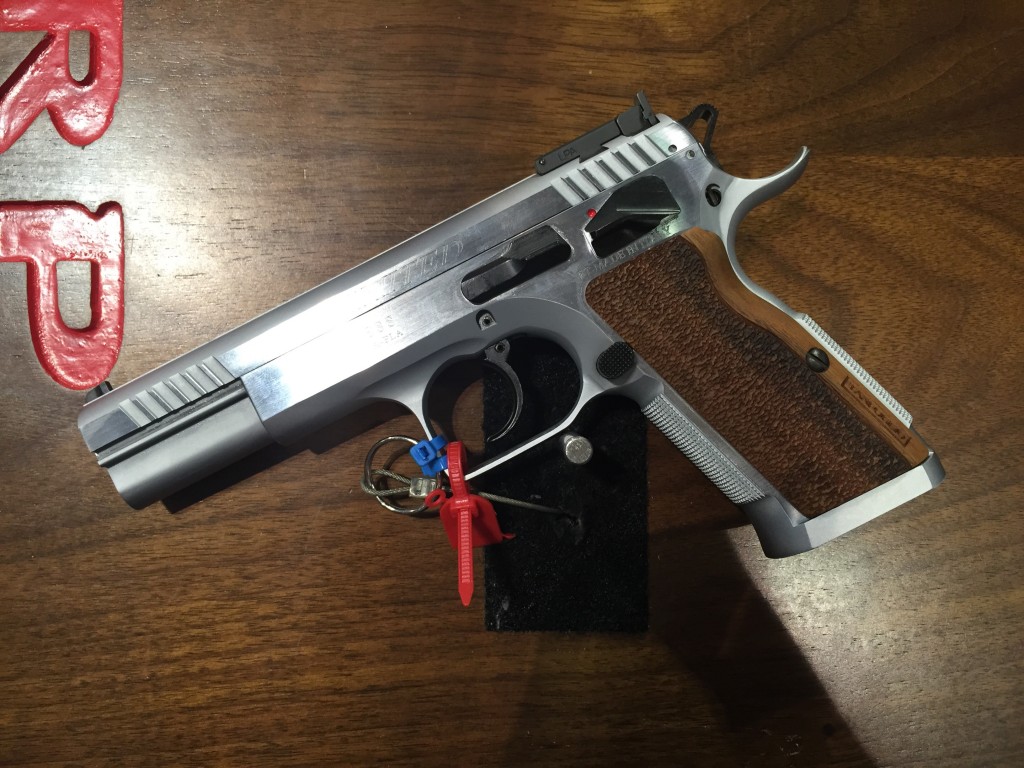
Tanfoglio Limited Stock

Ever since I made the Tanfoglio cool by shooting it at Bianchi Cup in 2012, the Stock/Elite line of guns has been taking off in USPSA Production division. But it hasn’t really been adopted by IDPA shooters, partly because it weighs approximately 1.8 million pounds and was hard to sneak under IDPA’s weight requirements.

Continue reading →

USPSA Single Stack Ready: Kimber Team Match II

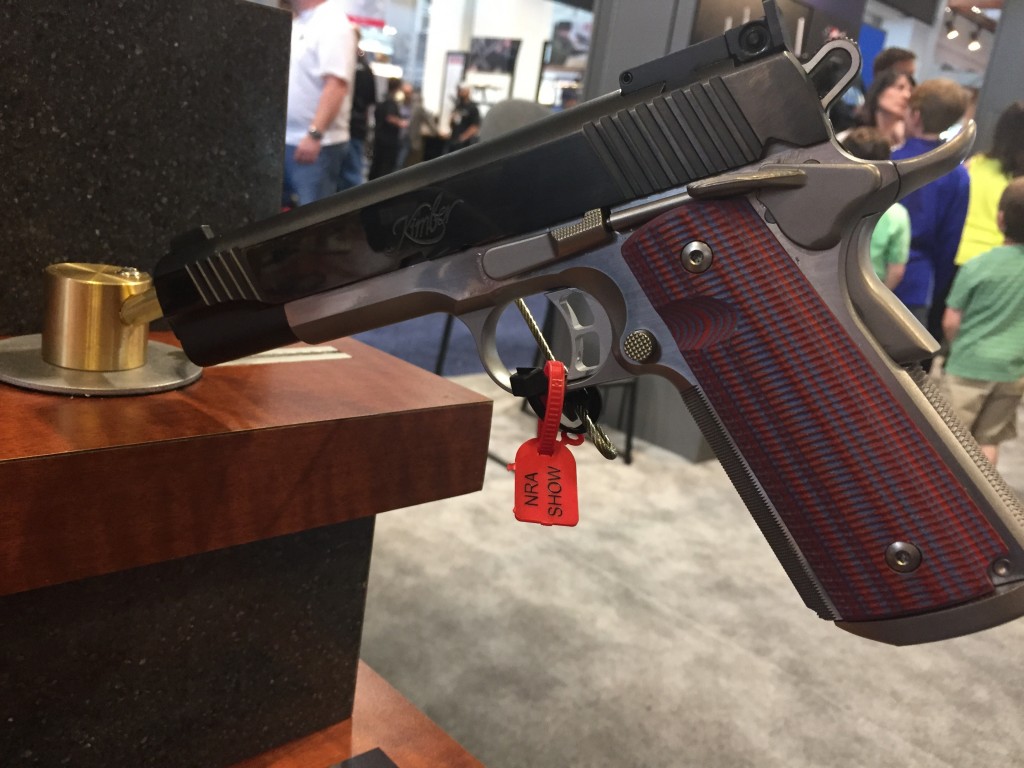
Kimber Team Match II

I’m thinking of getting back into either Single Stack or L10 later this year. Those have always been my favorite semi-auto divisions, because the equipment you can run in them is frequently more relevant to what people carry every day than Production is anymore. Now that Production is being overtaken by 43 ounce DA/SA steel pastablasters, maybe it’s time to go old school.

Continue reading →

Helping someone buy a gun

If you’ve been paying attention to the news lately, you’ve doubtlessly seen images of carnage and destruction coming out of Baltimore. You may have even heard the mayor of Baltimore let this little gem fly:


This quite naturally brings some level of discomfort to normal law-abiding, tax-paying citizens who do not expect the authorities to give people “space to destroy” their property and livelihood. Every time something like Baltimore hits the news, at least 3 or 4 people come out of the woodwork asking me to help them acquire a firearm for personal protection. If you’re the kind of person who reads a site like this, odds are you will encounter the same sort of thing sooner or later…and it poses a bit of a problem.

I came to the firearms and equipment that I use regularly through a long process of research, experimentation, and training based on my own perception of need/desirability informed by that long process. What I have works for me, and I can argue pretty objectively that what I’ve come to works pretty well full stop in a general consideration of self defense. A lot of that, though, isn’t applicable to the sort of people who approach me for advice or assistance in acquiring a firearm. Their equation is different and that means that the right answer for them could be different, too. So how can we offer intelligent advice to someone without unconsciously but inappropriately projecting our situation onto theirs?

1. Be Realistic

I would love to see every person who comes to me for advice about owning a gun be willing to put in as much time and effort as I have into understanding the question of self defense and firearms ownership. I know that few, if any, ever will. I generally have some level of knowledge about the person asking the question and I can use a few simple exercises to figure out where they are in terms of commitment to help guide the answers that I give them. It’s critical to be realistic about what you believe this person is willing and able to do if you want to be helpful. Don’t project what you hope is true about them…assess what’s really true about them and work from there.

2. Be Reasonable

While you want to give useful guidance, it’s impossible to do that if you aren’t willing to engage within at least some of the limits the person is dealing with. Just as an example, I personally don’t care for the .380 ACP as a primary carry cartridge…but I recognize that there are people who have physical limitations that make shooting a weapon with better terminal ballistics painful or outright impossible. If I’m dealing with such a person I am not going to tell them that if they aren’t packing a high-cap 9mm loaded with at least 16 hollowpoints and a reload that they might as well give up. You’re not shooting for ideal, here, you’re shooting for likely good enough. It’s true that in many circumstances “good enough” is an excuse for damnably low standards, but in many others good enough really is good enough…as in the best you can do under the constraints you are working with. A person who has no gun right now but who acquires and regularly carries a Beretta 21 next week has improved their situation considerably. No, it isn’t ideal. It’s better though, and that opens the door to further improvements down the road. Being dogmatic in the early stages, even if you believe you are doing the Lord’s work at the time, often shuts the process down completely and alienates the person to boot.

3. Present options, not necessarily opinions

One of my favorite approaches to these sorts of questions is to bring the person asking to a gun store or the range and present them a number of different firearms that they can interact with. I like to present the firearm in a pretty agnostic way allowing them to lead the discussion with questions while I respond as factually as possible. At a recent range outing with a young couple looking for their first gun I pulled out several different handguns and let them experience all of them after a safety brief on each. As they were looking at the Glock 34 and the S&W M&P the male half asked “So from your description, these two seem very similar…what’s the difference between them?” That’s the kind of interaction I’m looking for. When I demonstrated take-down of both weapons mentioning that the Glock requires a trigger pull to disassemble, the male half asked “Wait, couldn’t that be a problem?” YES. IT MOST CERTAINLY COULD BE. That’s precisely the sort of critical thinking I’m hoping to elicit in this process. When they understand that every weapon has its good points and bad points, and understand that their task is to choose the set of compromises that best suits their particular situation odds are that they will achieve a happy result for themselves. That won’t happen if I spend the whole time lecturing on The Gun World According To Tim. I may guide the conversation here or there and I will certainly clear up any outright factual errors encountered along the way, but I want their brain to be doing most of the work. They, after all, have to live with their decision. What I like may not be what they need, and I have to be intelligent enough to get out of the way and let their needs drive the process.

4. Keep it fun

The subject matter is very serious, but that doesn’t mean we have to wear sack cloth and ashes the whole time. You can have fun with guns, too. It’s possible to make the process fun and interesting without compromising on the important parts like safe handling habits, proper marksmanship fundamentals, etc. Citing the young couple again, after familiarizing them with a number of different pistols I set up a little competition between them where they could use whatever pistols we had worked with up to that point to go against the other. This, from their perspective, was fun. It was also an introduction to using a gun under some level of stress with something on the line to loose. They enjoyed the experience AND learned a little bit about using a pistol under some level of stress at the same time. Win/win.

This isn’t an exhaustive list, by any means, but if you keep these four principles in mind and use them in your approach I’ll wager you will get the same excellent results I usually get…and you might even enjoy the process yourself.

Stay safe…


The best I’ve ever shot

We all have that moment – the sun is shining, birds are singing, your sights look good, the trigger feels just right, and you shoot better than you’ve ever shot anything before, or maybe ever again. I’ve seen guys at that moment, and I was fortunate to capture my personal experience with that moment on video.

To this day, that Tanfo Stock II in .38 Super is the best pure competition gun I’ve ever shot.