0.99 Second draw from a retention holster

While working on draws the other day with my Safariland ALS 1911 holster I spent some time working on raw speed, trying to get the gun out as fast as possible. I managed a few 0.99 draws; this one happened to be my very first rep. Mobile users view the video here.

The point of this kind of practice is that it’s part of a progression. I don’t do a lot of single shot draws because it’s easy to cheat your grip or other things in the hopes of going a little faster if you’re chasing a number on a timer; however there are times when you need to chase that number. Last night’s practice session I was working on 2 shots to the A-zone at 10 yards, and my draw was consistently a 1.40-1.50 on the first shot. In order to get faster, I needed to go faster. So I moved the target in to 5 yards and did a few of these one shot reps just as fast as I can move the gun. Consistent times in the 0.99-1.05 range, but accuracy was awful. After a few reps, move the target back out to 10 yards and then apply the same “go faster” mentality but allow myself enough time to pick up the sights and make good hits. All of a sudden my first dropped to the 1.15-1.25 range from the retention holster.

Whenever you do “max speed” work like this, it’s important to remember the point. Pushing sub-1 second draws is where my accuracy starts to really suffer, but if you don’t sometimes push your speed to the point where the wheels fall off, you’ll never be able to go faster.

2016 training goals

Yesterday, CJ had a post up about setting realistic training goals; which is an excellent thing for people to do. One of the issues I’ve encountered in the past is I’ve set goals which appeared realistic when I set them in January or February, but then life happened and by the end of the year they weren’t so realistic any more. For example, I’ve set the goal of making USPSA GM a couple of times, and it hasn’t happened. So this year I wanted to take a realistic look at my training goals and try to do something that I can accomplish, then if I’m successful, move forward and set new goals from there.

Shooting Goals

Again, the goal here is to keep things realistic. I don’t want to set a goal of getting my GM card and shooting 15 major matches like I did back in 2011 where my primary job was “be a sponsored shooter.” That’s not my primary job any more, and basing performance expectations of what I could do when I had unlimited range time and ammo isn’t smart. So, let’s keep it simple for 2016.

  1. Make Master in a division: It looks like the best bet for that will be Single Stack, since I’m spending a huge part of the year working on creating an extensive catalog of 1911 reviews. I’m currently B-class in SS, so I’ve got a lot of work to do there.
  2. Shoot at least 3 majors: The two most likely matches I’ll shoot are the Great Plains Sectional and Area 3, and the third is open for guesses. I’m dialing back match travel and participation a lot this year and trying to focus on skill building instead of shooting matches for matches sake.
  3. Attend at least two advanced shooting classes: I really, really, really want to take a class from Ernest Landgon, because everyone I know who has taken one said it’s awesome. And ENPS is bringing Manny Bragg in this year for a class, which would be high on my to do list as well.

Now, shooting goals are great. But you guys know me, and you know I’m about more than just shooting here on Gun Nuts. One of my big focuses is fitness, and we have goals for that as well. I will sacrifice dry fire for gym time any day of the week, because uh duh, lifting is awesome.

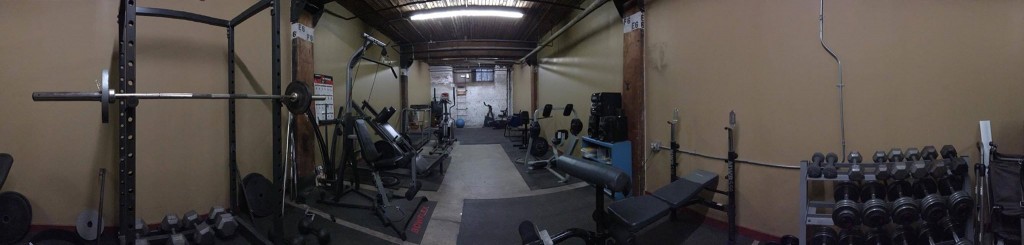
basement gym

Fitness Goals

Again, we want to keep these goals realistic and based of past performance abilities. I can’t just go out and say “I want to deadlift 400 pounds” if I’ve never lifted a day in my life. So, realistic goals are important.

  1. Maintain sub-15% bodyfat: I’ll be honest, my diet has gotten worse since I came back from training over the summer. As it turns out, living a spartan life of training, exercise and not drinking is pretty good, since coming back I’ve gone up about 10 pounds to 155, and most of the weight hasn’t been good weight. I don’t mind my weight fluctuating, what’s a lot more important is the % body fat.
  2. 100 consecutive pushups: my current PR on uninterrupted pushups is 62. I figure I can tack on another 38 somewhere.
  3. 20 consecutive pullups: I struggle with pullups, I always have. PR here is 10, and that was when I was at 145.
  4. Bench 225: I have never ever benched more than 185 for reps. I suck at it, it’s my worst exercise, and it has constantly flummoxed me.
  5. OHP 135: Current PR on OHP is 125, which I feel I should be able to get back to pretty easily. OHP is my favorite lift, and unlike bench I’ve always been pretty good at it.
  6. Squat 315: Squat PR before I started trying to cut weight to attend training was 250.
  7. Deadlift 405: This one would be huge. My max deadlift was in 2012 where I hit 350. This is by far the most difficult goal I have on this list, shooting or fitness. 400+ DL is no joke.

Yes, those goals are all in increments of 90 pounds, which seems like a fairly reasonable progression to me. Of the training goals I have, the weights are where I’m most willing to make adjustments, as I know I’ll have to go through a plateau and de-load cycle on each exercise at least once or twice. I also need to bear in mind staying in shape for my AF PT tests, which means I’ll have to mix running in there as well; which is rough for the Gain Train. One of the reasons I’m trying to cut back travel this year is because traveling really interferes with training. It’s hard to dry fire or hit the gym when you’re on the road for 100 days out of the year.

But there it is; simple, achievable goals for the 2016 season. I’m going to bookmark this post and see what I can come up with during the year. Which reminds me, I need to check the dates for the GP Sectional and Area 3 and make sure they don’t conflict with work.

CCW game on point

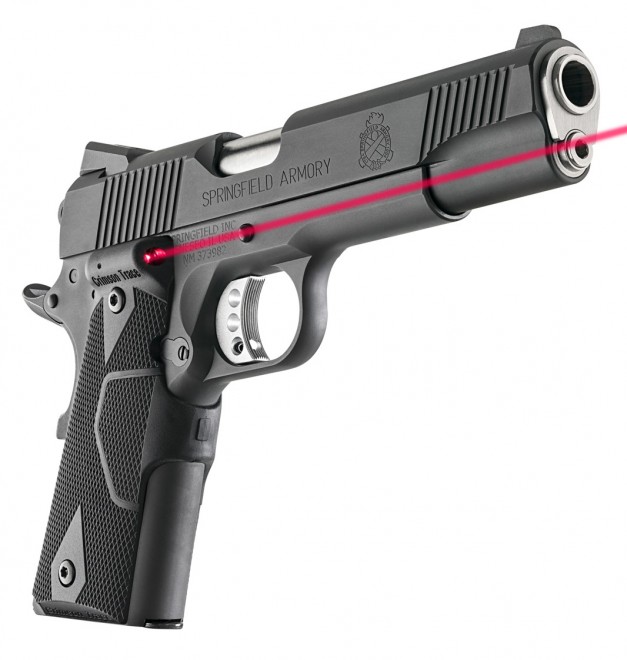
Who says you can’t carry a good gun and look awesome at the same time? Now that the grip screw situation has been solved, I can set up my Springfield Armory RO with my red Crimson Trace 20th Anniversary Master Series grips. This grips…man they just look amazing. The best part is that they still perfectly perform their intended function as an aiming device.

Concealed carry buyer’s guide

Here’s an uncomfortable fact: a lot of gun stores are pretty terrible. The problem is that most gun stores are started up by gun people, not business people, which means that things like “customer service” frequently aren’t a priority. There are exceptions to this rule, and whenever I find them I make sure to patronize them. However, that’s not what we’re talking about today, because we live in the future. You see, you can actually buy a complete CCW set-up (except for the gun) off Amazon. So here’s how to do just that.

1. Holsters

IWB: OWB:

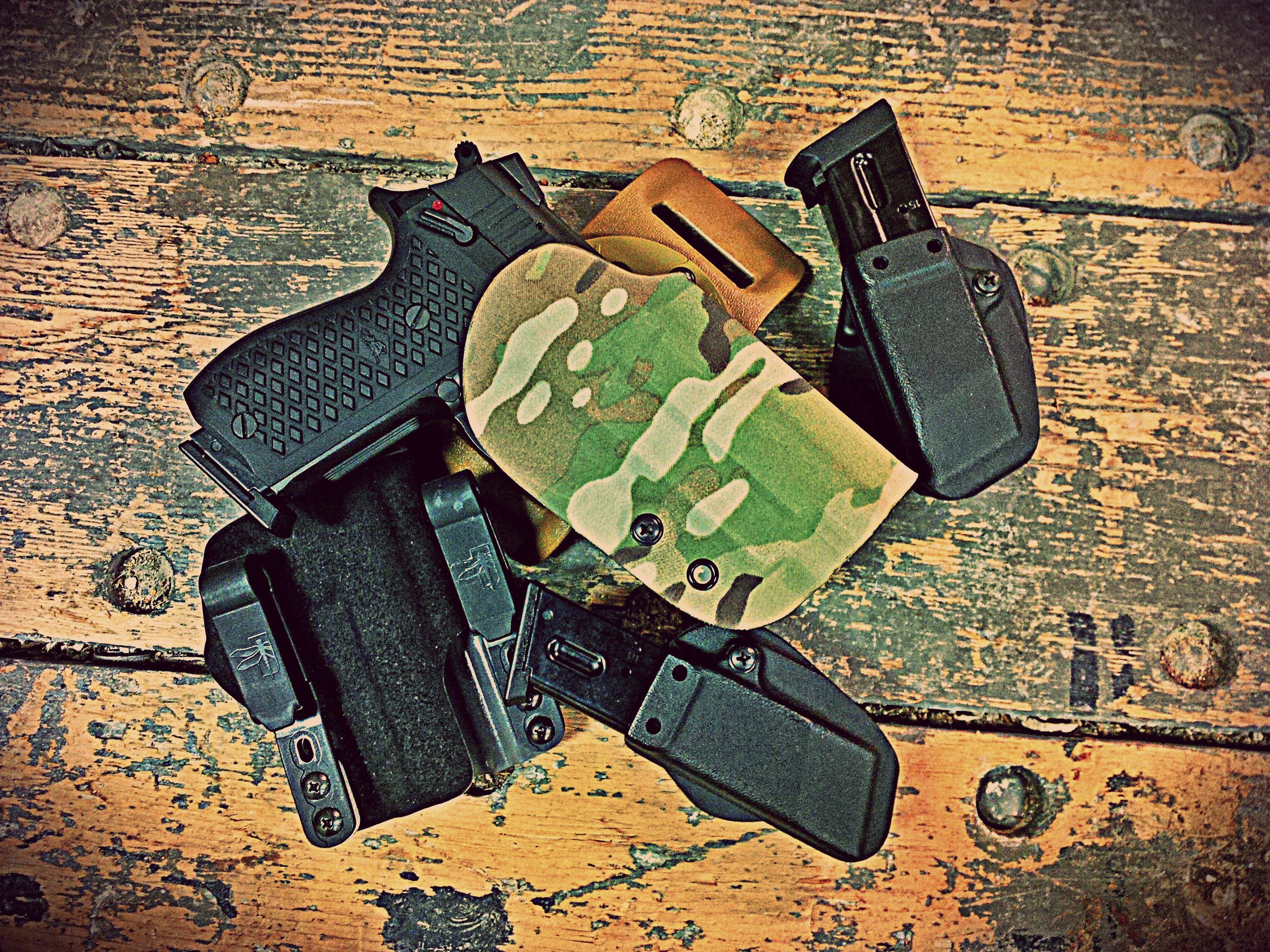
There are plenty of styles out there as well, so long as you carry a relatively common gun. If you’re rocking an M&P, a Glock, or a 1911 then you’re in luck. Safariland probably has a holster on Amazon for it. The model 27 is just about as generic an IWB holster as you can get, but it’s a much better choice than those awful nylon pieces of garbage. The ALS OWB holster is an absolute must-have if you plan on OC at any point. It’s a proven retention system that has saved people’s lives, and doesn’t really sacrifice a ton of speed. It’s also popular with 3-gun shooters because it offers excellent handgun retention during movement.

2. Belts

Tactical: Casual:

A lot of time belts get overlooked as a piece of carry gear. People often will throw their gun and holster on to whatever crappy wal-mart belt they have, and the results are predictably terrible. Above I have two solid options for carry, one is a Blackhawk rigger’s/instructor belt, which I have several examples of and have used extensively. It’s a good choice if you’re not concerned about looking “tactical,” as it supports all sorts of guns very well. The Galco option is what I’d recommend if you need to actually look like a grownup – assume you’re going to be seen with your shirt tucked in and don’t want people to think you’re some kind of a tactical hobo.

3. Ear protection

If you don’t need electronic ears and will primarily be shooting outdoors, get the Peltor Shotgunners. They’re great earpro, I have a pair that I’ve used for years.

The shotgunners will work on an indoor range as well, but I’d strongly recommend doubling up and using some foam plugs under the shotgunners to really make sure your ears are protected.

4. Eye protection

You’ll need two kinds of eye protection. I have sunglasses for outdoor, and clears for indoor/cloudy days of outdoor shooting. Here I’m just going to post what I use because it’s easy.

Boom. Get your eyepro.

Now you’ve got your holster, your belt, earpro and eyepro for the range. There are a lot of pieces of ancillary gear we could get into here as well like magazine pouches, range bags, we could have a really long discussion about which kind of eye protection is best. The goal of these buyer’s guides is to give new shooters/CCW permit holders/competition shooters the ability to “one stop shop” for the basics that they need to get started.

Setting (and Tracking) Realistic, Attainable Goals

As a shooter you might have watched some videos of other shooters and thought, “man that was fast, I could never do that.” I am here to say you can!  With this post I want to discuss goals, but from a different perspective than you might be used too. Whether you are only concerned with CCW, only competition, or both CCW and competition, we should all have realistic goals that each person reading this can work toward and attain. Goals allow you to judge yourself and your improvement against yourself and not just other shooters; this is a good thing.

Anyone that has listened to Dave Ramsey discuss his baby steps to get out of debt understands the concept. Realistic attainable goals keeps us motivated and excited. If we look at all of our debt at once it can be overwhelming, but if we start small and build momentum we stay focused and the task is less daunting. The same thing applies to weapons training. Someone that just learned to shoot last week should not have the immediate (or only) goal of competing on the same level as Max Michel or responding to a threat like Frank Proctor or Mike Pannone. Those might be your ultimate goals, but temper your enthusiasm with realism; depending on your skill, disposable income, and spare time you might gear there quickly, but it will still take steps and a plan.

We should judge ourselves, with in our own skill level, with different baselines that match our goals.  For instance, using distance to target as one example, we might have close range skills, medium range skills and long-range precision skills. I will elaborate on my range/skill parameters in a bit, but being fast and accurate at 3 yards does not automatically mean you will be fast an accurate at 25 yards.  You might be accurate at 25 yards doing sloooow fire, but that doesn’t equate to being fast at that distance.  Remember, everyone can be fast and miss at any distance.

In a nutshell, this is how I identify skill set weakness and set goals for practice, and in the future I will post some drills I use at each distance.  I try to choose drills, which reinforce skills, that are transferable between my CCW and my USPSA Production gear. The biggest difference between the two is the quickness of the draw from concealment and the need for a more refined sight picture with the shorter CCW weapon. But for this post, the actual drills aren’t important, the methodology is.  The concept of tracking and measuring improvement against yourself is the what I hope you take away from this post – the need for realistic goals.

I want to clarify something before moving on; I am not implying you need only work one skill set to perfection before moving on, but I do feel it is best to decide what your range practice session will entail and stick to one skill or goal set.  We can all agree that at times a trip to the range is for fun and noise, no practice or excuse needed; but when you set out to actually get better, make sure you are clear on what your range trip is for.

I mentioned different distances previously, so let’s break those down now while considering our pistol skills.

I believe the close range skill set is for distances of 7 yards or less. Some readers may find this appalling and they may consider that medium or even long-range. I understand! Once upon a time I considered 7 yards medium range, then I got training and shot my first match. Equally, if you say 7 yards is far away, it tells me two things; one, you need to practice more and two, you have never shot a competition – any competition. If you can’t keep slow fire 10 rounds into a 2 inch circle at 7 yards you need to work on fundamentals. That 10 inch group you just shot at 7 yards is pathetic! Quit getting positive reinforcement by comparing your group to other shooters that fling similar sized groups onto the target.

Yoda

Medium range skills, in my world, would be anything between 7 and 25 yards. For those bad at math, 15 yards is forty-five feet; and while that may sound like a long distance, what is the furthest shot you might have to take inside your house? Not just across a bedroom, but maybe out of one bedroom and down the hall into another room. 25-30 feet is possible, isn’t it? Now imagine that shot, in low light, while drowsy, and under stress? Suddenly the 15 yard shot, in broad daylight, while wide awake, and possibly wearing corrective lenses, seems easy. Competition shooting aside, if you can’t slow fire a full magazine’s worth of ammo and keep them on a humanoid silhouette target at 15 yards you are NOT a good shot. The truth hurts, sorry.

What about long-range? I view that as anything over 25 yards. The likelihood of needing to make that shot in self-defense is extremely low; but it still exist. With no time limit, can you draw your weapon and put one shot into a 8 inch pie plate at 25 yards? If you have the fundamentals down, your answer should be a resounding yes. If you shoot USPSA you are already familiar with the requirements you must meet to successfully make the 25 yard shot. What about 40 yards? 60 yards? I am not saying you will need to make a 60 yard shot to defend yourself – although you might.  I am saying people who can make the 60 yard shot with no time limit have a much greater chance of making that 7 yard shot under stress.

Time limits are the one thing I haven’t discussed. I am a big fan of a shot timer (no secret there) and I believe you should use it in all of your training outside of static slow fire sessions. You can use a timer to get some baseline numbers for common drills, and while you could compare the times with your peers or even your hero’s on the internet and YouTube, the real value is when you can go back and compare with yourself on previous runs.  It doesn’t matter if you can’t do a certain drill at the same speed as your training hero; it only matters that your times are dropping!

Tracking my skill development is why I keep a log book. With the proliferation of smart phones there is literally no reason you can’t open a notes app and write down your times for review later. If you shot some Bill drills, write down the best time and the average time. Alternately, you can use a written log book like I do. There are several available for purchase, but I made up my own in Microsoft Word and put together a binder.  The one unspoken benefit of the timer is for when you don’t train for extended periods of time.  You can go back and see how much skill you have lost and identify the low hanging fruit.

Like Dave Ramsey’s baby steps, setting realistic goals and then achieving them will help you track your improvements, and the realization of improvement is what keeps things interesting.

Maryland Assault Weapons Ban in jeopardy after Court of Appeals ruling

Yesterday, the 4th Circuit Appeals Court ruled 2-1 to remand a case reviewing Maryland’s AWB back to the District court and for the District court to apply a more stringent standard of review to the case. In the majority opinion, Chief Judge William B. Traxler Jr stated that the Maryland AWB “significantly burdens the exercise of the right to arm oneself at home.”

Maryland had originally passed their assault weapons ban in the wake of the Sandy Hook shootings. The ban regulated over 40 specific guns by name, and as many such bans do, limited the possession and access to magazines with a capacity higher than 10 rounds. The law was challenged by a group of plaintiffs that included national organizations such as the NSSF; they were met with defeat at the US District Court level, when that court ruled that Maryland’s law was in fact Constitutional.

The victory at the Court of Appeals level means that the case will get sent back to the District Court for review. The Appeals court has found that Maryland’s law does violate the Constitution and that the District Court should apply strict scrutiny. The Maryland DA has said that he plans to seek an en banc or Supreme Court appeal to reverse the Appeal Court’s decision.

For a more detailed analysis from an actual legal expert, please visit the Volokh Conspiracy.

The 5 worst examples of gun buying advice

We’ve all done it. A friend, colleague, relative, someone who is new to guns comes to us to get advice on buying their first gun, because we’re their token “gun-friend.” It happens, and hopefully we haven’t jacked people up too much. However, when you’ve been doing this for a while, you start to hear common examples of advice that people are given. Often I hear them when someone comes through a class and I ask why in heaven’s name they have that particular piece of gear. After sitting down, I picked the first worst (best?) examples. If someone comes to you for advice, don’t do this.

5. Get the biggest caliber you can control
Sigh. I’ve probably said this at some point in my past, and for that I’m very, very sorry. This nonsense is how untalented, brand spanking new shooters end up with tiny carry guns chambered in .40 S&W and .45 ACP, which results in them developing a wicked flinch whenever they go and fire it. Think about it: someone with no real gun experience goes and buys a Glock 27 because it’s small, and chambered in a “powerful” cartridge. They go the range and it’s all sturm and drang and sharp recoil, so they’re disinterested in future practice with it.

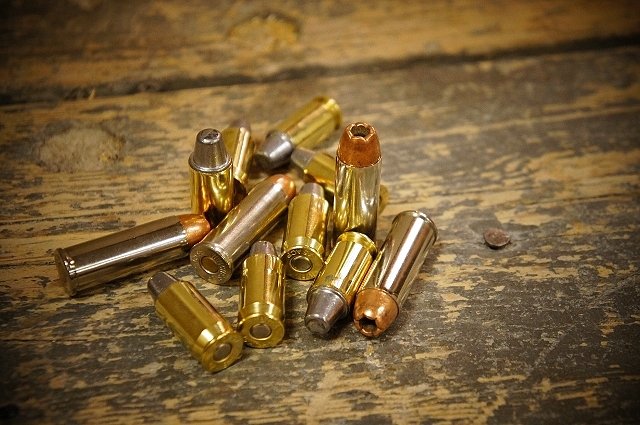
45s

In this scenario, there are two options for good advice. If you think the person is interested in actually becoming a shooter, tell them to get a friggin’ .22 LR. Then they can actually learn stuff instead of just hammering bullets low and to left in a B27. However, if you don’t think they’re really interested in guns as a hobby and just want something for home protection, just tell them to get a full size 9mm service pistol. Be a good friend and explain that handgun stopping power is a myth, and there is not significant difference in terminal ballistics between any of the service cartridges.

4. Get a pocket gun because most self-defense situations you don’t need to shoot
This one drives me up the wall, but I’ve heard more than a few people say it. The line of reasoning is that since you probably won’t need to shoot your gun, the best idea is to get something that is completely unobtrusive, that you won’t have to put any effort into carrying. The thing that obviously drives me nuts about this is that it kicks off a logical progression that if followed to its only conclusion is that you don’t really need to carry a gun at all, all you need is a gun-shaped object.

Here’s the problem: what if your gunfight is an actual gunfight? What if you actually need to shoot someone? All of a sudden that little .380 with crappy sights and a heavy trigger isn’t so optimal, is it? No one who’s ever been in a real fight wished they had a smaller gun or less ammo; so why would you intentionally compromise your choices?

3. Get a revolver because they never jam

wiley clapp feature revolver

This one is a personal pet peeve of mine. I love revolvers. I think they’re great. They’re mechanical interesting, they challenge me as a shooter, and they connect us to history, just a little bit. They also absolutely do fail mechanically, and when they do it frequently requires tools to fix.

I get the reasoning behind this one though, because it assumes the novice is going to want something that is easy to deal with if something goes wrong. Yes, it’s true that if you get a light primer hit on a wheelgun, the fix is simple: pull the trigger. But there are plenty of things that could happen to a wheelgun that aren’t light primer hits, and fixing those is a lot more complicated than “just pull the trigger.” Especially if you can’t pull the trigger, because I’ve seen that happen.

2. Get whatever your local police department uses
I personally have fallen prey to this one on multiple occasions, because the logic behind it is so appealing. On surface it makes sense, because the odds are that your local PD isn’t going to be carrying some derpy POS around. But the flip side of that is that a gun selected by a committee that is largely disinterested in anything other the price, and intended to be carried around on a duty belt for 12 hours a day unconcealed may not be the best choice for concealed carry.

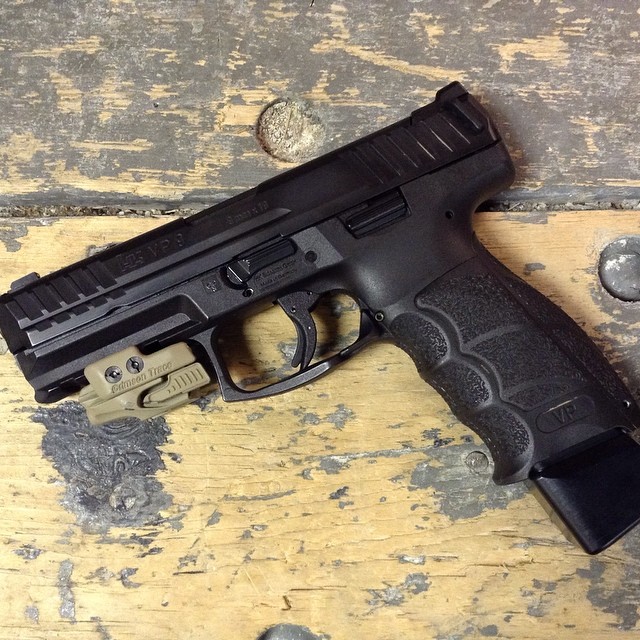
HK VP9

Additionally, political administrators frequently like to saddle their officers with trigger mechanisms that are intended to inhibit negligent discharges, but all they really accomplish making the gun more difficult to shoot should you actually need it.

1. Get whatever feels best in your hand
This piece of advice however is the worst of them all. It rules the roost of bad gun buying advice, because what you’re asking a newbie with little understand of guns to do is select a piece of life saving equipment based purely on how it feels in your hand. Let me tell you something, cochise. There are a lot of aggressively shitty guns that feel wonderful when you hold them, but that can’t get through a box of ammo without crapping out.

That’s really the problem. I’ve had lots of people complain that Glocks don’t “feel good” in their hand. Tough noogies, because they’re awesome. Thankfully, I’ve almost never heard the same thing about M&Ps, which are also awesome, and generally have “feel good.” But just relying on how a gun “feels” in your hand is the peak of bad advice. It doesn’t inform you on how the gun functions, how accurate it is, how reliable it is, or even if it’s comfortable when you start to shoot it. There are guns that feel great when you’re just holding them, but when you start putting rounds down range you discover that recoil changes things. A great example of this is the Ruger SR40, which I generally like, but when I started shooting it a lot, the safety ended up chewing a hole in my hand.

The point of all of this is to not give people bad advice. When someone who isn’t a gun person comes to you for advice, they’re in the awful situation of not knowing what they don’t know; and they’re likely relying on your opinion to steer them in the right direction. What can you do to help them? The best advice possible is to try and get them to take one of the many “introduction” classes, where you don’t need a gun to attend, because the range provides all of that. If that’s not an option, help them pick a reliable, concealable defensive handgun chambered in 9mm. Like a Glock 19. Or an M&P Compact.