Should major matches use stage guns?

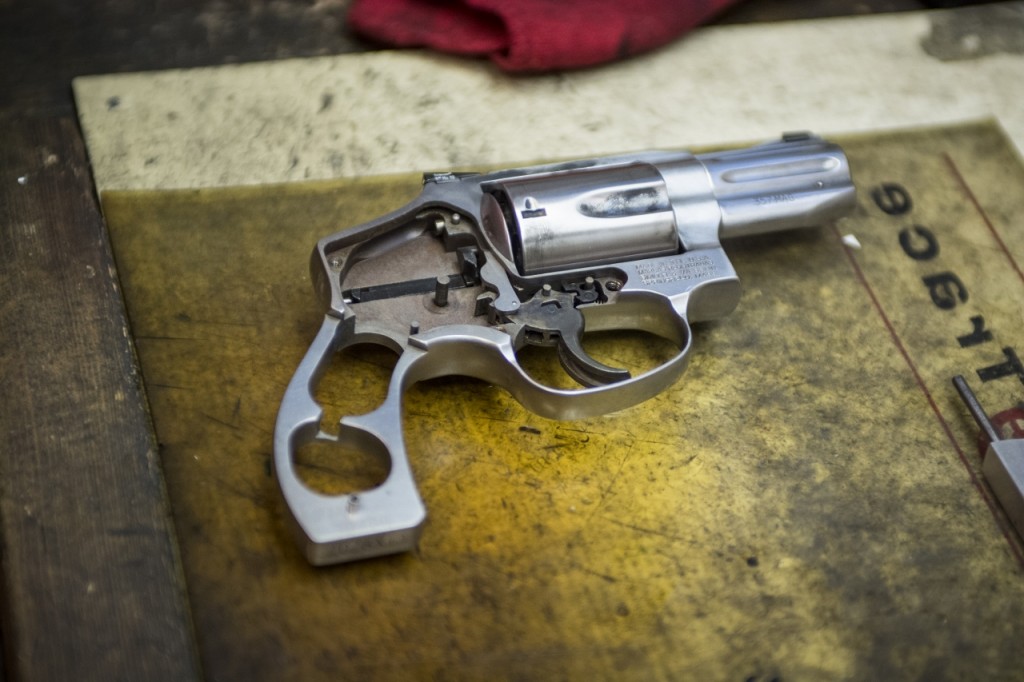
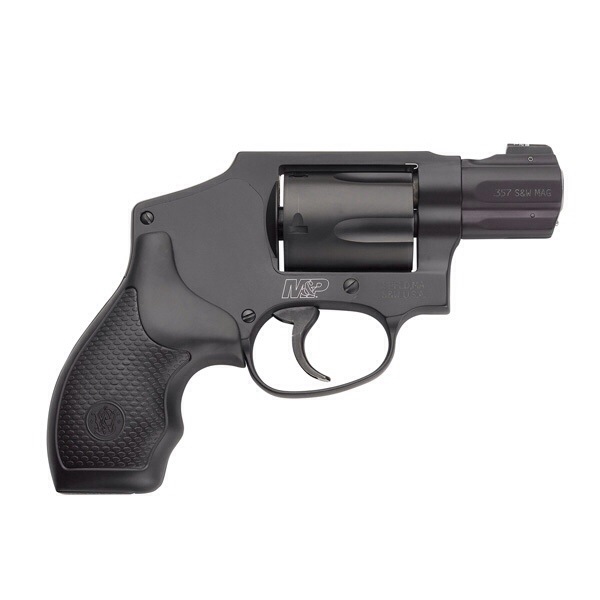
Stage 5 at the 2013 IDPA BUG Nationals used two pick-up guns to complete the stage. Each shooter started with their own gun, and engaged five targets with one round each, then finished the stage using two pick up guns. Each gun was shot 5 times each. On this particular stage, the pick-up guns were a Smith & Wesson M&P340 in .357 Magnum and a Shield in 9mm.
20131120-090735.jpg

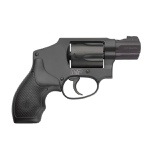
The 340, which is a Scandium j-frame with a gutter rear sight and an XS Big Dot front sight caused problems for more than a few shooters. One shooter was allegedly DQ’d for sailing a round into the ceiling with the 340, and another shooter was flinching so hard rounds were going into the floor.

That opens up the conversation about whether or not you should have pick-up guns in major matches, and if so, how they should be administered. I’ll confess, I’m pretty neutral on the topic myself. Pick up guns are pretty common at IDPA matches, and they’ve never really been an issue for me personally, but I do know other shooters who’ve had issues with them.

My thoughts on pick-up guns are simple: if they are going to be in a match, they need to be treated like a stage prop. That means that a malfunction with the stage gun is a stage equipment malfunction, and guarantees the shooter a reshoot. Additionally, no shooter should ever be penalized for not knowing how to shoot a stage gun. Which means of course, no weird exotic guns. For example, putting a Chiappa Rhino on a stage would be a bad idea, because many people don’t know that you have to fold your thumbs over to avoid being burnt/injured by gas from the cylinder.

In short, for stage guns to be fair, they have to be a gun that every single shooter at the match is going to be able to manipulate and shoot without giving unfair advantages to other shooters. A perfect example of this is the only stage where I’ve ever beaten Bob Vogel, at the 2012 IDPA Indoor Nats. This stage had an S&W Governor as a pick-up gun; I know from previous experience that if you’re shooting .45 Colt through it they shoot high, so I buried the front sight and had a reasonable score. Bob had never picked up a Governor before, and ended up tossing some misses on the stage as a result.

I do think that pick-up guns can create an interesting stage and add flair to IDPA’s themed stages. Having a pick-up Glock 19 on a stage makes sense depending on the scenario, or having the shooter start with a long gun in their hands that has to be disposed of during the stage.

Actually, that gives me an idea for a cool stage: start with a shotgun blue gun in both hands, then transition the shotgun to the weak-hand only. Draw and complete the stage while holding the shotgun in your weak hand.

But back to the topic at hand, what are your thoughts on pick-up guns at major matches?
Project Scout Rifle Update

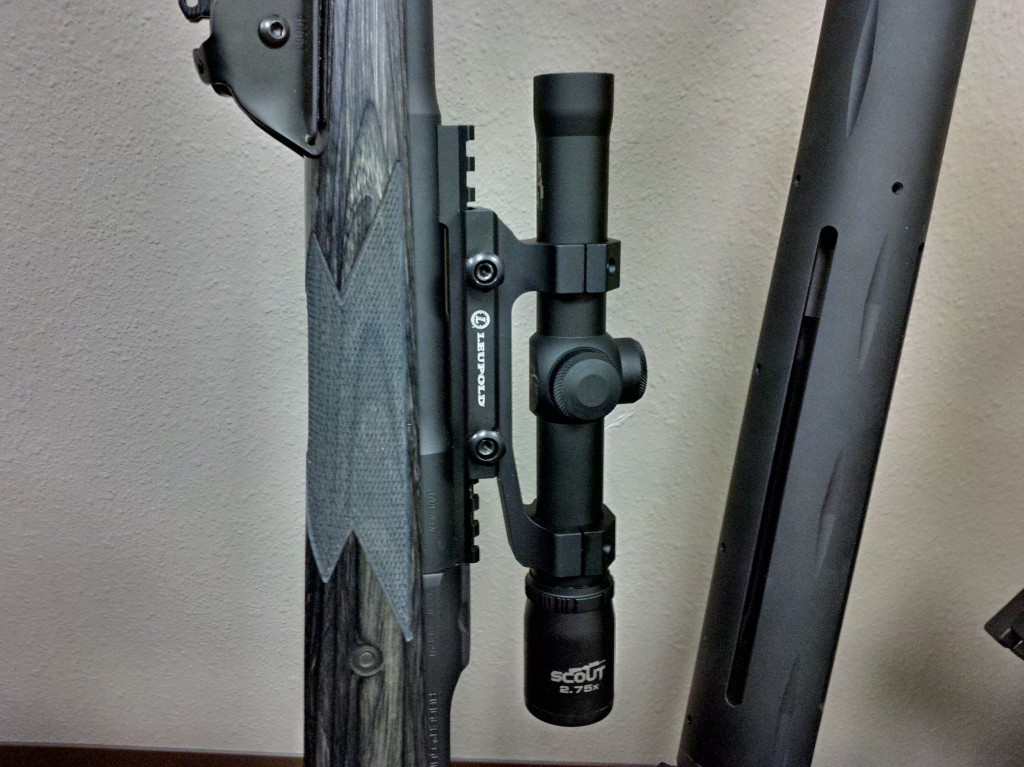
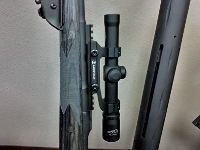
A quick update on the Scout Rifle project for those that are following it. Two scopes in now, a Burris 2.75 and a Leupold 2.5 power, both are “Scout” models. Chucked both scopes in a Leupold mount (pictured below) and immediately discovered that the Leupold mount I had on hand placed the height over bore of the sight too high for me to get a proper cheek weld on the stock.

Burris scope in Leupold mount

So, the next step will be to order a set of Warne scope rings. Instead of using the AR-style mount we have, the hope is that more traditional scope rings will position the optic closer to the bore, allowing for a correct cheek weld. Getting a good cheek weld is important on this gun because the last thing I want to do is let the gun run back into my face during recoil. So, with Warne rings ordered in “medium” height, I’m hoping that we can get the optic mounted ASAP.

In other news, I’m still working out the sling issue. I’m close, but not quite there yet. I can’t decide between a traditional Ching sling, a Rhodesian from Andy’s Leather, or somehow modding the gun to take a Magpul MS3.

And the final update: today the Blackout flash hider came in from AAC. I’m not saying that I’m going to mount a can on this gun eventually, but I’m probably going to mount a can on this gun eventually.

More updates as the work continues!

Three ways to improve your handgun grip

Stippling jobs are all the rage on modern polymer pistols right now. Having a gun that’s grippy enough so that your hands don’t lose traction if they’re sweaty, wet, or bloody is important for “tactical athletes.” It’s also important for competition shooters, since we don’t issue rain delays in IDPA or USPSA. The reason that a positive grip is important is that grip is the most important factor in reducing recoil. A good strong grip keeps recoil down, which makes follow-up shots quicker. Here are three quick ways to improve your grip, and thus your recoil reduction. We are assuming that you already know how to properly grip a handgun, by the way.

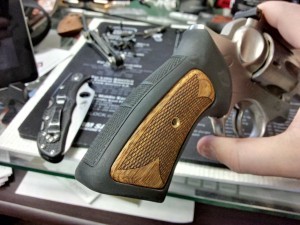
Altamont Ruger GP100 stocks

1. Grip your gun harder.
Bob Vogel is one of the best competition shooters on the planet. He also has a grip that can bend Glock frames. When Chuck Norris can’t open a jar, he calls Bob Vogel. Doing various hand and forearm strength exercises can genuinely improve your ability to grip the pistol, and the harder you grip the gun the more you’re able to reduce recoil. Of course, you can absolutely grip it too hard, so it’s important to know where that line is. Good advice is grip the gun as hard as you can without disrupting the sight picture.

2. Keep your hands dry
Dry hands grip better than moist hands. There are various methods for accomplishing this. You can use talcum powder, chalk, Pro-Grip, or even alcohol based hand sanitizer. All of these products reduce moisture in the hands, which means you’re able to get and establish a positive grip on the gun. However, over application of Pro-Grip in the wrong place can actually retard slide velocity. We recommend chalk, because it’s the best.

3. Checker or stipple your gun
This is the mechanical method of improving your grip. A little well applied checkering, stippling, or skateboard tape in the right place can really help your grip on a gun. However, the one danger of checkering or stippling is that if it’s too aggressive it can catch your hand on a bad draw and you’ll have a hard time fixing your grip on the fly. World champion Jerry Miculek doesn’t use checkered grips on his wheelguns for exactly that reason. We like a little bit of checkering on revolver grips, or to just go ugly early and put skate tape on a wood revolver grip.

Using these three methods in whatever amounts you see fit will help you improve your grip and get that beloved faster follow-up shot. For self-defense, you probably won’t walk around with chalk on your hands, so a combination of improving your grip strength and checkering your gun is probably going to be your best bet. Competition shooters can definitely use chalk and pro-grip, and also will benefit from the other methods listed.

The future of the IDPA BUG Nationals

IDPA hit a home run with the inaugural Back-Up Gun Nationals. The Courses of Fire were largely good, the officiating was even and fair, and the competitors seemed to genuinely have a blast at the match. Obviously, for the first ever national match there are going to be a few bugs to work out, and so here are three simple suggestions for next year’s match.

1. Tighten up the definition of a Back-Up Gun.
A Springfield XDm 3.8 with the full size grip isn’t really a BUG and we all know that. Neither is a L-frame 686 with a 3 inch barrel. While yes, these guns are legal they’re precisely in the spirit of what a BUG is intended. That’s fine; because playing the game by the rules to gain maximum advantage is totally awesome and is something that Gun Nuts heartily endorses. However, to grow this match and maximize its potential, it makes sense to tighten up what is and isn’t a BUG.

2. Create a new division for laser equipped guns
With the above in mind, it also makes sense to add a 3rd division to the match. At the inaugural, there were only 2 divisions: Semi-auto and revolver. A third division, Laser-Equipped could be added to grow the spirit of the match which seems to be to allowing people to compete with their actual carry gear. The Laser division would be simple: guns must conform to the BUG rules, and must be equipped with a laser sighting device. Doesn’t matter what action type, so semi-autos and revolvers would compete side by side in this division. I would imagine that finding sponsorship for this division would be pretty easy. It would also provide interesting data on the application of lasers in self-defense. The S&W Shooting Center’s lighting conditions are such that you’d be able to realistically use the laser on every stage, meaning that the match would create side by side data on the use of laser-equipped guns vs. guns without lasers.

3. More movement and fewer five shot strings
The only criticism of the stage design at the BUG match was that there wasn’t a lot of movement and very few strings were less than five shots. Stage 1 was probably the best stage in the match, and it’s no coincidence that it had the most movement and two strings that were four and 3 shots respectively. By creating strings that are four rounds, or that involve movement, stage designers can actually place a higher emphasis on accuracy by bringing back the Failure to Neutralize penalty. Because the inaugural match had many strings that were by rule Limited Vickers, targets that would normally be assessed and FTN were not.

Bonus: Allow reloads on the clock
No COF at a BUG match should require a reload. But I think reloads should be allowed at the shooter’s discretion.

The first ever IDPA BUG Nationals was a hit. This was an excellent match, and one of the most fun IDPA matches ever. As it goes forward and grows, hopefully it will continue to innovate and do new and creative things to keep the format and the shooting fresh.

2013 IDPA BUG Nationals

The first ever IDPA BUG Nationals are now wrapped up, and the general consensus was that this was an excellent match. Like many shooters, I went into the match wondering what IDPA could do with the five shot per string limitation to make the match interesting, and they definitely showed us. First, let’s take a look at the winners. A note on the scores: the scores of the Distinguished Masters are not reflected in the finals unless they were the division champ.

Stock Service Revolver Champion:

  1. Jerry Miculek

SSR Master:

  1. Simon Golob
  2. Caleb Giddings
  3. Warren Baker

SSR Expert:

  1. Kristofer Sines
  2. Kenneth Ortbach
  3. Wil Cournoyer

SSR Sharpshooter:

  1. Michael French
  2. Samuel Stein
  3. Greg Hayes

SSR Marksman:

  1. James McLean
  2. Peter Goloski
  3. Lou Denys

Stock Service Pistol Master

  1. Mike Seeklander (also Division Champion)
  2. Dave Harrington
  3. Dylan Kenneson
  4. Jason Koon

SSP Expert

  1. Tim Arnold
  2. Thomas Bast
  3. Robert Ray

SSP Sharpshooter

  1. Pasquile Vitetta, Jr
  2. Clark Coneby
  3. John Hamel

SSR Marksman

  1. Justin Fitch
  2. John Ware
  3. Jonathan Dietrich

Special Categoris

  • Distinguished Senior: Paul Chamberlin
  • Industry: Dave Harrington
  • Junior: Clark Coneby
  • Lady: Randi Rogers
  • LE: James Meyers
  • Military: Chad Barber
  • Military Veteran: Dave Harrington
  • Press: Mike Seeklander
  • Senior: Jerry Miculek

Here’s a look at the first stage of the match:

Most of the stages were a combination of 2-4 strings of five rounds each. Stage 1, designed by the USCGA Combat Arms team was one of the better stages, as it had a good amount of movement, disappearing targets, and not all five round strings. For next year’s match, I’d like to see more stages like this. Overall the stage design was pretty strong, I’d give it a solid B+.

One of the most interesting things about the match were the different types of guns. In the semi-auto division, there were Shields everywhere, and the SSP division champ used a 3 inch Rock Island 1911. Jerry, who won revolver and the overall fastest was using a 686+ with a 2 inch barrel. The most common gun in the revolver division was probably a 2 or 3 inch k-frame, with a few mega-studs shooting J-frames or LCRs. There was a rumor going around after the match that for next year’s BUG Nationals, IDPA is going to tighten up the definition of a back-up gun, likely in response to the number of full size L and K frames floating around this year. Next year, I’d probably come back with a 2.25 inch DAO SP101.

This was actually a pretty tough match. Removing the ability to take make-up shots really forced you to aim your ass off on certain stages. I dropped a colossal number of points (71) adding a super rad 35.5 seconds to my raw time.

I think IDPA is really off to a great start with this match. I’m looking forward to seeing how it progresses next year.

Why are Gun People Nice, but Instructors so Mean?

20131118-093607.jpgI recently received an email from a woman who had been put off by her first shooting lesson. She had been visiting the range for a while and enjoyed a little plinking with her girl friends, but had decided it was time to get more serious. A local female instructor had been recommended and seemed nice when they met prior to the lesson.

Continue reading →

The Springfield Armory National Museum

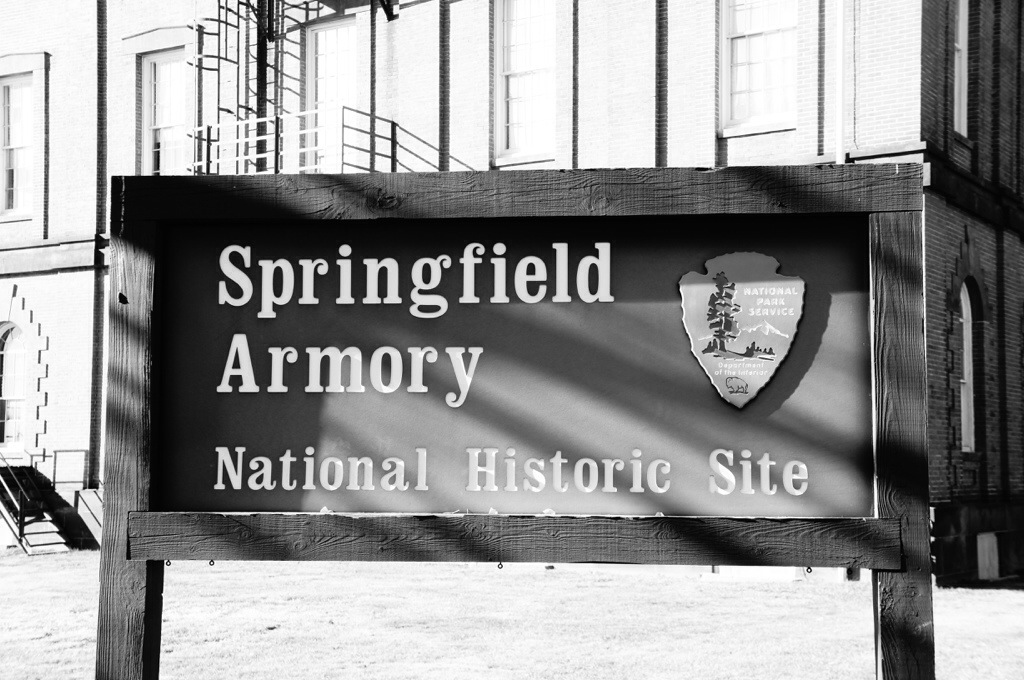
No, not the company that imports the XD pistol from Croatia, I’m talking about The Springfield Armory, the organization which used to be the primary supplier of small arms to the US Army until 1968. Today, all that’s left is a fascinating museum in Springfield MA, with the former production facilities now occupied by a college campus.

20131118-092858.jpg

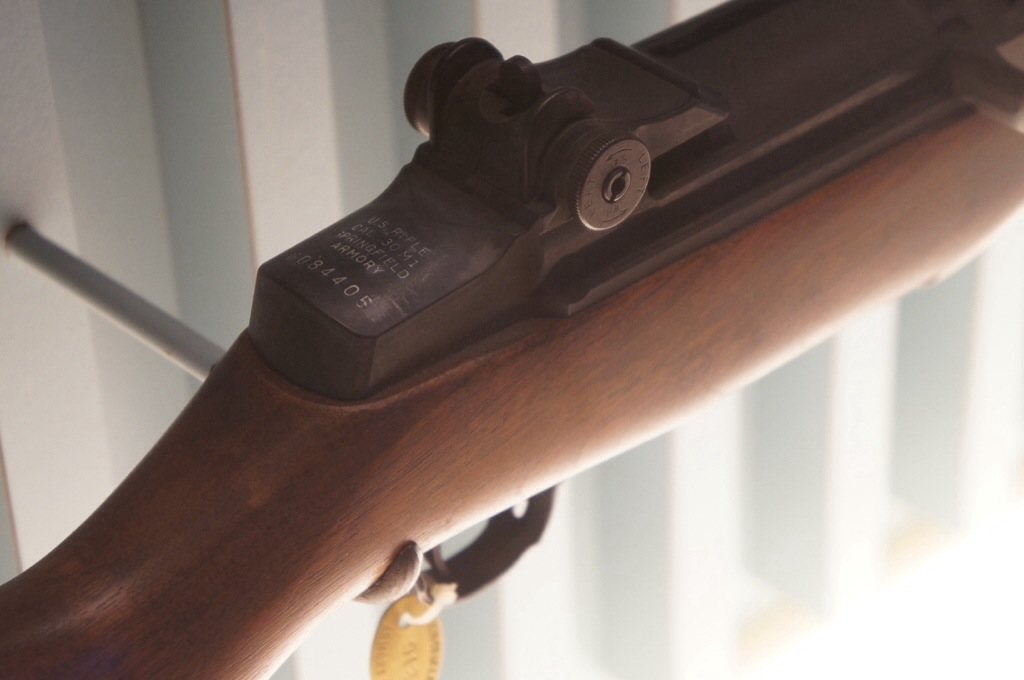
The facility today, which occupies less square footage than my old house in Indiana can barely do justice to the history of military arms in the nation, and yet it does an excellent job with what it does have. Exhibits generally follow a logical progression on the “left” side of the building; starting with the history of firearms development, and proceeding all the way through the last gun to ever be built in the Armory. On your way through the museum, you’ll see the development of the Trapdoor Springfield, the Krag-Jorgenssen, the ’03 Springfield, and of course the famous M1 Garand. One of the museum pieces is the last Garand off the production line.

20131118-093244.jpg

Over 6,000,000 guns made, and this is the last one. Pretty rad. But with that in mind, it’s hard to not have a slight sense of melancholy when you’re in the museum, because as I mentioned the Armory hasn’t made a new gun since the late 60s. It was closed when then SecDef Robert McNamara decided that private companies could be more efficient to produce weapons for the military. While I’m normally a big fan of privatiaztion, I’m also a big fan of history and tradition. But for the Armory, that tradition is stopped.

But the history continues, and it’s available for free. In fact, you can visit the Springfield Armory without giving a single red cent to the People’s Republic of MA. Here’s how: fly to Hartford, CT. Stay in Hartford. Dive 30 minutes north to Springfield, visit the Armory (it’s free), and then drive back to Connecticutt. Or, you could just not worry about it and visit the Armory anyway because it’s amazing.

For the rest of the week, we’ll be featuring photos and cool guns found in the Armory here on Gun Nuts, with a little bit of the history behind each piece.

2013 Inaugural IDPA BUG Nationals – quick recap

Yesterday, I shot through the entire 13 stage match at the 2013 IDPA BUG Nationals. Going into the match, I didn’t honestly know what to expect, because I knew that all the strings of fire were limited to five rounds. I thought, “what can you do with five rounds to present an interesting shooting challenge?”

As it turns out, the answer to that is quite a bit. The match was set up in 13 stages, most of which were divided into individual strings of five shots each. There were two strings of fire on stage one that were 4 and 3 shots respectively, which also represented the only Vickers count stages of the match. All other strings of fire were Limited Vickers. Limited Vickers scoring has two interesting side effects: 1) you really have to aim your ass off, and 2) it eliminates penalties for Failure to Neutralize. So for the course of the match, the only two real penalties on the table are procedurals (got one) and hit on non-threat (got one of those too).

What I liked: I really enjoyed the stages. I thought that for the most part, they were creative, and really forced shooters in some cases to push these little back-up guns to the limits of their performance envelopes. I know for a fact that if I’d brought something like an LCP, I would have been properly hosed on some of the stages that required actual shooting.

I also liked that the stages showed at times just what these little guns are capable of. Nothing crazy, no 25 yard shots or something like that; but there were plenty of stages where you really had to bear down and aim. Lots of partial targets, lots of low or no-light meant you really had to bring your accuracy game.

What I didn’t like: I did feel like there were a few too many strings that were “shoot five on this target”. I understand why that happens, because this is the very first match of this type, so there are inevitably going to be bugs in stage design that need to be worked out.

As far as my performance goes, I shot okay. Not great, not terrible. I made a couple of simple mistakes in the early running that cost me some points down, and later I picked up a no-shoot and a procedural. It happens, and I moved on. I mostly just had a lot of fun shooting this match, despite having some really…interesting stages. I’m looking forward to coming back to this next year and shooting it again…with a different gun, I think.