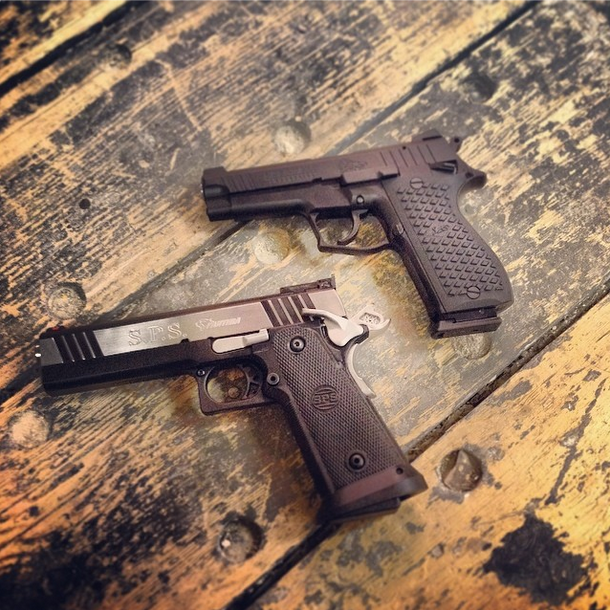
The SPS Pantera and Lionheart LH9. Range reports coming soon!
The SPS Pantera and Lionheart LH9. Range reports coming soon!

Everyone is buzzing about Facebook’s non-statement on people using FB and Instagram to post pictures of guns for sale. Moms Demand Mayoral Action is claiming victory, the Brady Campaign is declaring a loss, the NRA and NSSF have published statements, and gun owners can’t seem to decide whether to spike the football or boycott Facebook. Here’s the actual important text from Facebook:
Today, we are introducing a series of new educational and enforcement efforts for people discussing the private sale of regulated items:
- Any time we receive a report on Facebook about a post promoting the private sale of a commonly regulated item, we will send a message to that person reminding him or her to comply with relevant laws and regulations. We will also limit access to that post to people over the age of 18.
- We will require Pages that are primarily used by people to promote the private sale of commonly regulated goods or services to include language that clearly reminds people of the importance of understanding and complying with relevant laws and regulations, and limit access to people over the age of 18 or older if required by applicable law.
- We will provide special in-app education on Instagram for those who search for sales or promotions of firearms.
- We will not permit people to post offers to sell regulated items that indicate a willingness to evade or help others evade the law. For example, private sellers of firearms in the U.S. will not be permitted to specify “no background check required,” nor can they offer to transact across state lines without a licensed firearms dealer.
In case you rode a different bus to school than the other kids, the Gun Nuts Translation Service is available. Here’s what Facebook said in plain english: “If some whiny bitchboy reports a post because it has icky guns in it, we’ll send a message to the poster reminding them to obey the law. Also, please don’t say stuff on facebook that violates the law like “no background checks” or that you’ll sell a gun across state lines.”
Basically, what Facebook has said is “don’t use our toys to break the f***ing law and we’re cool” which seems like a pretty reasonable policy. Remember, Facebook is a business that’s out to make money, and advertising dollars from gunbros are just as green as those from non-gunbros. Now, the tough thing will be to resist the temptation to Starbucks ourselves on this one. If you’ll remember, the whole OC clownshow with Starbucks started when they issued a very similar non-statement saying “hey, if ya’ll obey the law we don’t care” which resulted in OC smacktards carrying rifles in Starbucks and forcing their corporate office to issue a very clear “please don’t bring your guns in here” policy.
So to the anti-gun people I say “ha-ha sucks to be you” and to the gunbros and ladygunbros I say “hey, let’s just enjoy the fact that Facebook likes our money.”
In Thursday’s Tactical Wire (03/06/2014) Tiger McKee is talking about mastering the revolver trigger. It’s a very good article, so I’ve linked it. However, there’s one thing Tiger says that I just don’t get, and I want someone to explain this to me:
You should not be walking ’round inside your home in the middle of the night with the hammer cocked. However, having said that, there have been and will be situations when the solution is to fire in single-action so it is something that should be practiced. (emphasis added)
WHEN? Seriously, this is something that drives me nuts, because every person who says that I shouldn’t bob the hammers on my guns brings this up. But no one has ever presented a situation where using the SA function on a defensive revolver is a better idea than practicing with the DA function.
So, let’s see when you’d want to use the SA function: you have to make a tight, precision shot on a partial target? Okay, so why not practice tough shots in DA mode so when the time comes you don’t have to cock the gun? Or learn to stage the trigger for those really tough shots? I seriously don’t get it.
Am I just out to lunch here? I mean, in matches (which I know aren’t the real dynamic operations of the streets) I make tough shots all the time in DA mode. So does every other serious revolver shooter. If I had to take a shot “for realsies” with a revolver, I’d take it DA. So maybe someone can explain to me what these super-secret situations are where you’d be better off shooting single action? Practicing DA mode so you don’t need to use SA for tough shots seems like a much better solution.
But then again, I’m just a competition shooter, so I don’t know anything about real fighting as done by warriors. Also, please don’t take anything in this article as disparaging Tiger McKee, I think he’s a rad bro and would totally take a class from him. I just don’t understand the whole “you might need SA so you should practice it” comment.
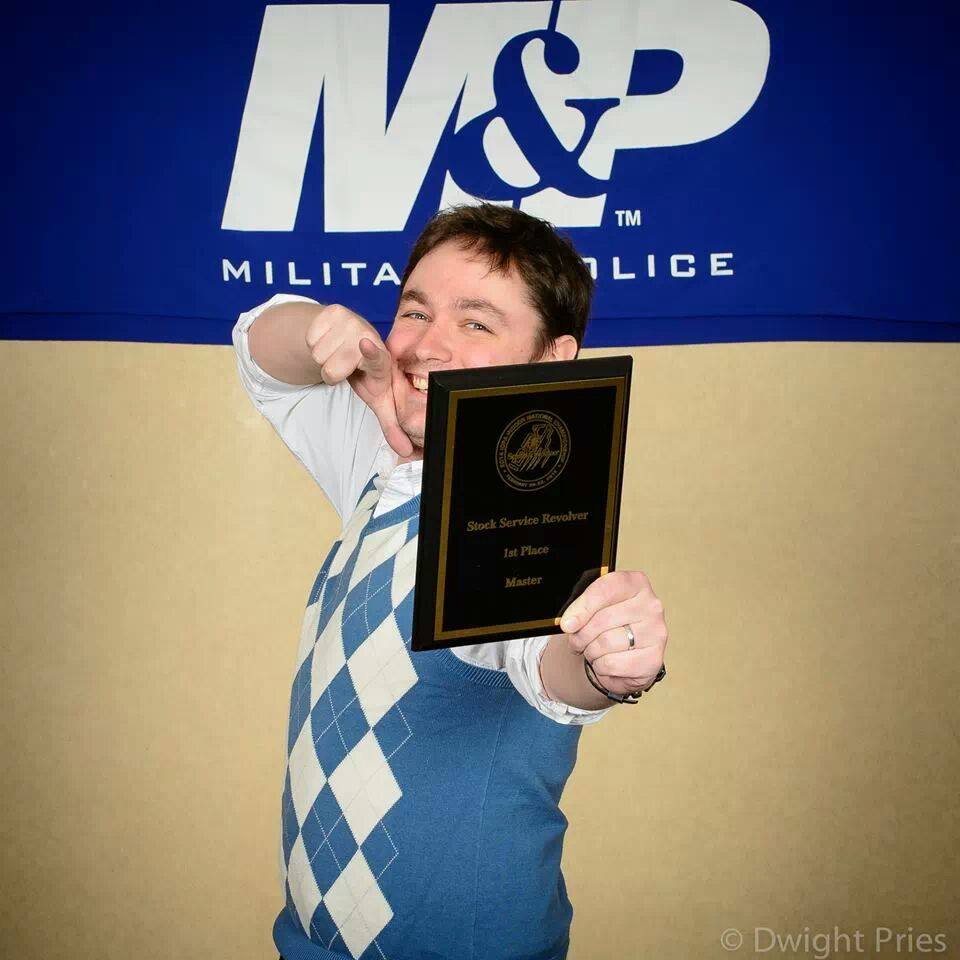
At National level IDPA matches, following the awards banquet those that have won plaques trophies get their photos taken. Everyone always does the same super “I won, let’s stand here and gaze upon my plaque” face. I don’t.
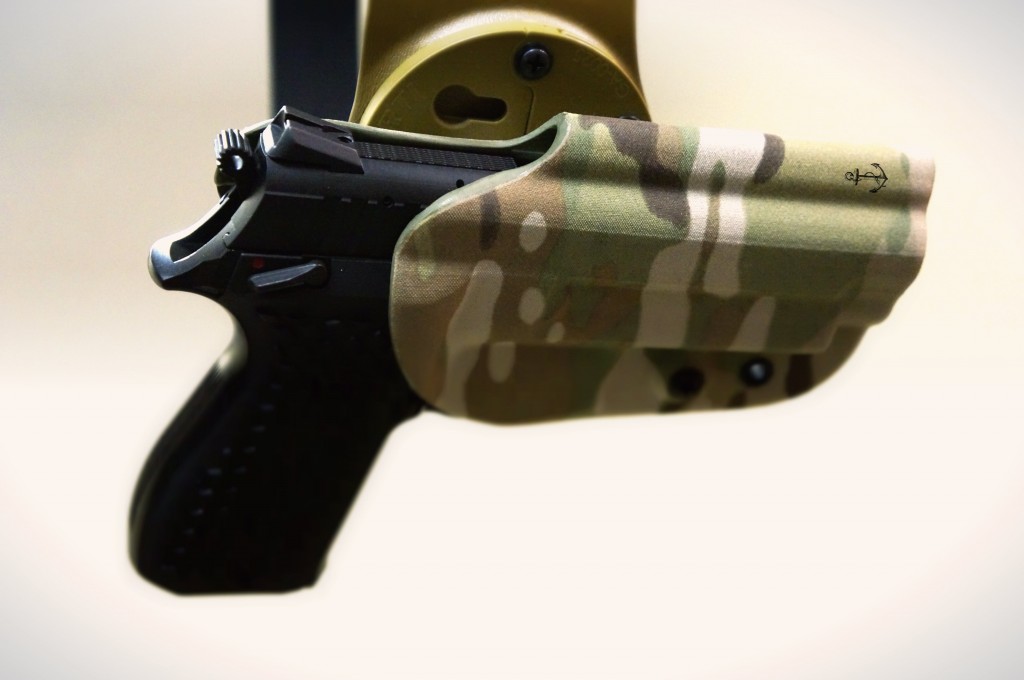
This image displays one of the neat features on the LH9 – the glare reducing pattern that runs down the top of the slide of the gun, as well as the excellent Novak rear sights.

School of thought number 1: “This gun is always the best and if you buy anything other than this gun you’re dumb and stupid.
School of thought number 2: “What works for me is best and you have no right to tell me that things are better than my choices because I’m a beautiful individual snowflake.”
As it turns out, both of those schools of thought are stupid. First, we’ll address school 1. This operates on the premise that all situations are roughly identical. It takes the concept of “this gear is generally better” and takes it to the extreme. It’s how you end up with toolbags saying “All guns should be Glocks and all Glocks should be Glock 19s.” It’s a close minded way to recommend gear to people, because let’s be honest, people are different. I have different sized hands than you, and different levels of strength, vision, etc.
Unfortunately, school of thought 2 has come into existence as a negative reaction to school 1. This is where people will justify buying shitty gear because “it works for me” and use that as justification for why they have garbage kit. This is also stupid, because it operates off the assumption that “works for me” is the end goal, and that better kit couldn’t possibly work better than whatever clownshow of optics and dog-leash slings you’ve assembled on your gun.
Fact: Some guns are better than other guns.
Fact: People are different.
School 1 believes that because some guns are better than other guns, than those guns are always the right answer. School 2 believes that because people are different, it’s okay to buy garbage because you’re a pretty individual snowflake. They’re both wrong.
Let’s look at a Joe Gundood. Joe wants a gun for concealed carry. School 1 says “Get a Glock 19 or an M&P, if you get anything else you’re dumb.” They might be right, because Glocks and M&Ps are good choices. School 2 says “Get whatever feels best in your hand and works for you, because just because all those really smart people like Glocks and M&Ps doesn’t mean those are best.”
School 1 gets hung up on maximizing performance, and School 2 gets hung up on being a snowflake. So how do you balance the two? Well, Joe Gundood discovers that he really doesn’t like Glocks. For whatever reason, he just thinks that they suck. But he really wants a striker fired, double stack gun, so he ends up buying an M&P Compact. Joe Gundood made a good decision.
For the School 2 people, there is still room for individual expression inside the envelope of quality products. Here’s a short list of handgun manufacturers that all make products I have or would carry:
In those brands there is plenty of room for personal expression. Want a striker fired gun? Glock, S&W, Springfield, Kahr and Ruger make guns. Want a hammer fired DA gun? Sig and Beretta have you covered. Want a 1911? Colt or Springfield. Want a wheelgun? Ruger or S&W. The point here for school 2 is that there’s no reason to carry garbage. If you’re justifying your Kel-Tec PF9 purchase because “it works for me” than what you’re really saying is “I was too cheap to save up for a better gun.”
For School 1, the reminder here is that just because you carry a Glock 19 appendix every single day doesn’t mean that’s optimal for everyone. Some people want to carry behind the hip with a DA gun in a leather holster, and as long as they buy quality gear, it doesn’t matter.
Moral of the story for both schools: everyone should buy quality gear. I like wheelguns and DA/SA autos. Just because I like those doesn’t mean they’re the best choice for everyone though. However, just because “they work for me” doesn’t mean I went out and bought some cheap Eastern European wheely. I bought the right kit.
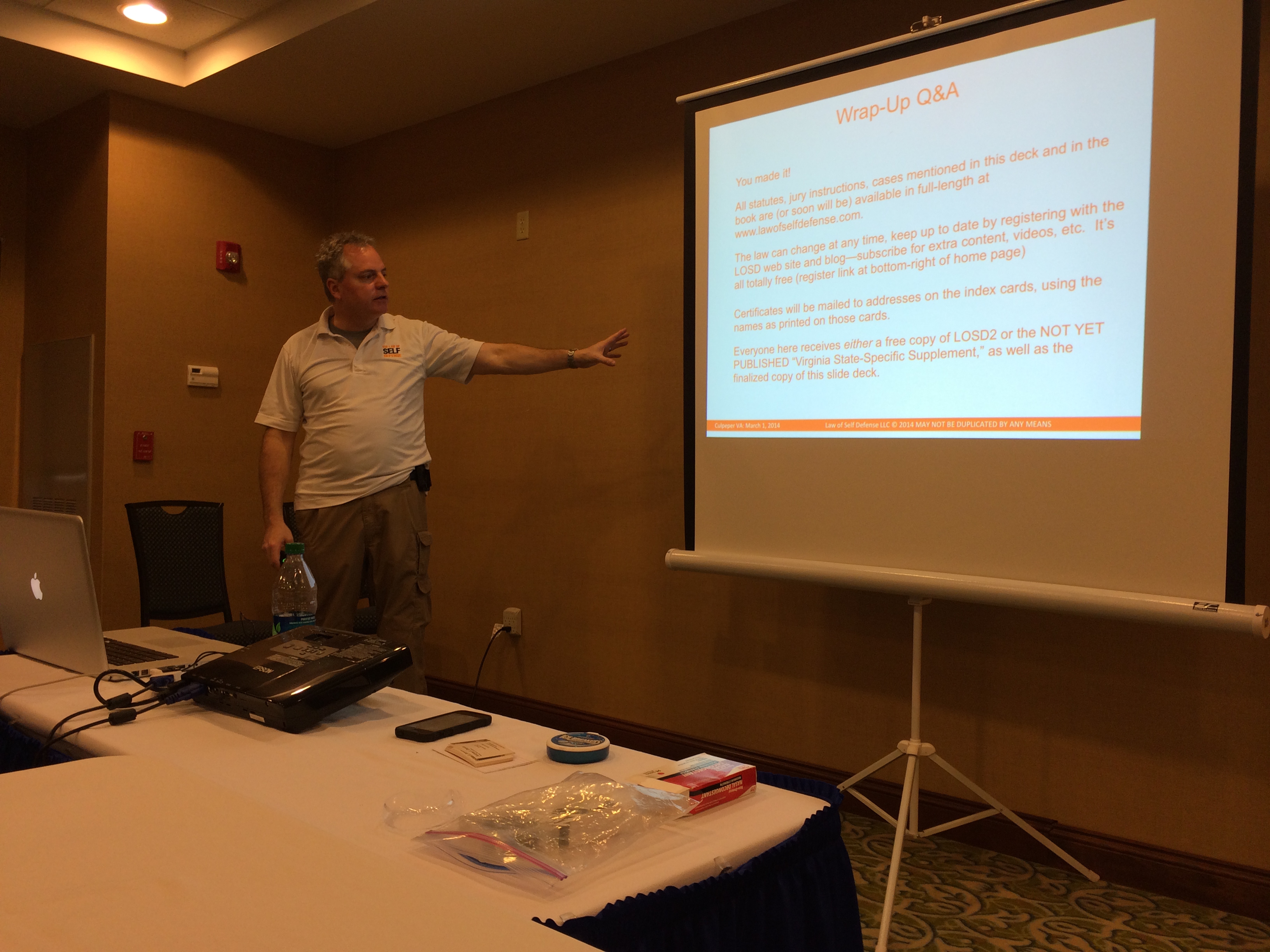
A little while ago I got ticked off about annoying gunstore lawyers, people who have no real understanding of the laws or jurisprudence governing the use of force in self defense who nevertheless feel compelled to “share” their ignorant suppositions anyway. In the comments on that article Andrew Branca, author of The Law of Self Defense and proprietor of the Law of Self Defense blog contacted me and offered to send me his book for a review. I liked the book quite a bit and I’ve given a copy to some folks I know who were looking for good legal guidance.
Late last week John Murphy of FPF Training told me he was hosting Andrew for one of his seminars and there was a last minute opening. A part of my brain (the part that thought buying Apple and Google stock 15 years ago was a stupid idea) said “You’ve read the book. What could you possibly get out of attending the seminar that wasn’t in the book?” The rest of my brain thankfully overruled the moron within and I bought in to the open slot. It was a good investment. Maybe not quite Apple at 12 bucks a share good, but still a darn good use of time and money.
Having already read Andrew’s book, the primary benefit I got out of the seminar was the specific coverage of the laws and jurisprudence on self defense in my home state of Virginia. In his presentation, Andrew cited the major important cases that defines Virginias traditions on self defense (because Virginia doesn’t have actual language in the code covering the use of force in self defense…it’s all defined through established precedent in court decisions) including citation from the actual standardized jury instructions in use in the Commonwealth.
The academic discussion of the law was fast paced, fact filled, and sobering. As he did in the book, Andrew laid out the function of the criminal justice system and explained how police investigators and prosecutors can look at a set of facts and come to a very different conclusion about the meaning of them than you, the person who just defended himself from a lethal attack.
The average law abiding citizen who pays their taxes and stops at red lights and spends their life trying to do well for their family goes through life believing that the criminal justice system and all those operating within it will see them as the good guy and will protect them when they are at their most vulnerable. Unfortunately this isn’t necessarily the case. Andrew repeatedly stated that prosecutors look at fact patterns for a “compelling narrative of guilt” and will sometimes proceed with that narrative whether or not it actually matches up with what really happened. The George Zimmerman episode is a perfect example of that, a blatantly politically motivated prosecution that had little to do with the actual bare facts of the case.
The Zimmerman fiasco combined with a growing mistrust of government authority seems to be driving defense minded individuals to explore the legal side of the equation more than they have in the past. It’s one thing to hear about the theoretical possibility of getting screwed over by the people who swore an oath to act honorably, but when you can actually see it happening in Technicolor it tends to bring the reality home in a more tangible way.
I expect there to be a number of attorneys across the country looking to do presentations on self defense in the very near future, giving Andrew some competition. I think the LOSD seminar stands out for a few reasons:
1. Andrew Branca has been researching this topic as it relates to law-abiding citizens for a very long time. This isn’t a topic he picked up recently due to noticing an increase in interest lately…it’s something he’s been passionately pursuing for a couple of decades.
2. Andrew is one of us…a gun guy. He holds IDPA member number 13 and has attended classes with a number of top notch firearms instructors. As one of us, he understands our motivations and intentions better than most outsiders would. He carries regularly…and was carrying at our class. Most criminal defense attorneys have no idea what the Tueller Drill is, but Andrew does because he’s a native to our culture.
3. All self defense cases are not created equal, and believe it or not actual criminals make specious and weak claims of self defense for violent acts fairly often. Genuine instances of self defense by good guys tend to be a very different animal. Andrew understands this, having worked on both types of self defense cases.
I found the book very useful and informative, but I found the seminar to be even moreso. Partially because of the very specific, knowledgeable discussion of the law in my area, and also because of seeing the impact the presentation was having on the other students. There were moments during the presentation when you could feel the air getting sucked out of the room as Andrew laid out some unpleasant truths about interaction with the legal system. This was obviously new information to many in the room and the looks on their faces told the story of preconceived notions being blown to kingdom come.
During a break in the presentation John Murphy, the class host, asked me what I thought. My exact response was wishing I could have had this class as my very first training course rather than the thoroughly awful first course I took umpteen years ago. That class consisted of a 3 hour video on the history of firearms, a brief safety lecture, a handout, and 50 rounds shot at an FBI Q target at 5 yards. It was functionally useless, and cost more then than Andrew’s exceptionally informative course costs now. I wanted to go back in time and drag my younger self into that classroom because he desperately needed the information being presented. Current me is a lot smarter than the younger me, but I still found myself learning things or considering things I hadn’t really thought about before all through the lecture.
Let me get on my soapbox for a minute:
I think courses like the LOSD Seminar should be a something you should get yourself into with all possible speed. I don’t claim to be an expert on the criminal justice system, but I have a bunch of people that actually are in my phone’s contacts list and I could tell you real-life tales from the criminal justice system that would make your blood run cold. Most people really don’t know what they don’t know, and in this context that is an invitation to disaster. Take the time to learn the law, the legal precedent that’s authoritative in your area, and the process you’re likely to go through if you ever have to use force. Just being the good guy isn’t always enough. Take the time to inform yourself and use that base of information to craft a reasonable self defense strategy that minimizes your danger on the street and in the courtroom. If you’re the average joe, you need this kind of class.
Ignorance on this topic isn’t bliss, folks. It’s a threat. The Law of Self Defense seminar is a supremely efficient method for curing that ignorance. Look for opportunities to get yourself into one of these presentations as soon as possible, folks.
Pros: It’s awesome, it’s a single stack 9mm, and it rules face.
Cons: It’s impossible to find, and magazines cost eleventy-billion dollars when you can find them.
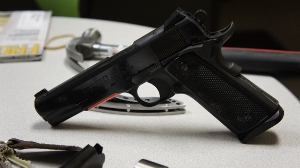
In a great post at Modern Service Weapons, Hilton talks about his path away from the 1911.
It is easy to get caught up in the mystique and history of the 1911, but the design is over 100 years old, and we have learned a few things about designing and manufacturing since then.
…
However, if training, shooting, and performance is your primary goal and you lack the resources, time, patience, or knowledge to keep after a 1911, then be realistic and choose something more modern.
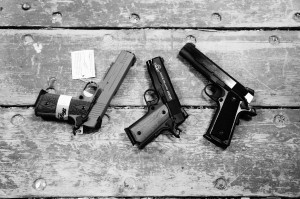
It’s interesting whenever people discuss topics like this, because it reminds me that no matter how seriously we take our training, whether it be for competition or self-defense, that we sometimes forget that “fun” is an important part of it. If you’re burned out on 1911s, you’re quite likely to view shooting them as a chore, and make excuses to not go to the range and train. I’ve felt that way, where shooting was a chore and not something I enjoyed. A big part of what’s gotten me revitalized in shooting is shooting guns I find interesting, like revolvers. I’m much more likely to hit the range and train with a six-gun than I am with another disposable flat-black people-popper semi-auto.
Passion isn’t everything. But it is important, and it’s most important when you’re trying to avoid critical burnout. Remember that even when we’re training for blood or money, if you can’t look at an afternoon shooting guns as a good day, you might be doing something wrong. It’s not always easy for me to remember that, so don’t feel bad if you don’t always either. Train hard, and take your training seriously. But don’t let it burn you out because it’s not any fun, either.

Yesterday, my good friend Richard Mann put up a very thought-provoking post called “Where have all the great gun writers gone” in which he examined the current state of gun writing and its lack of great writers such as Jeff Cooper, Jack O’Connor, and Elmer Keith, to name a few. I agree with Richard; I grew up in the sport reading those same writers, and they were a huge inspiration in my getting into writing. I said as much on Richard’s facebook page. My comment was immediately followed up with this:
John Wydra
Being in my sixties I am well acquainted with most of the writers you mentioned. I feel the internet has diluted the quality. Quite a few of these young welps have actually disparaged the writing of those men. Yes what they wrote those many years ago still hold true today. But some of these internet warriors feel they have the new answers due to the change of tactics and equipment. Kicking dirt on the faces of those that preceded them. While these new writers lack experience as well as respect for those gun writers of long ago. Their lack of experience hasn’t slowed their opinionated writings.
My first thought was, “Well, that didn’t take long.” My next thought was a truly deep sense of frustration, because Richard’s article wasn’t about tearing anyone down. It was asking a question. I was frustrated and dismayed that John decided to go negative so quickly, and tear down and entire generation of up-and-coming writers and speakers for no actual reason.
There are great communicators out there in the gun community, and many of them are online. They stand on the shoulders of giants like Jeff Cooper and Elmer Keith, but they also don’t accept that just because something was said by one of the greats that it’s still applicable today. Techniques have evolved, tactics have changed, and guns have gotten better. What may have been the best ideas during the dawning of the Modern Technique may not be the best today, as tactics and techniques must adapt to a changing world. We have experts and warriors who’ve been tested in over a decade of warfare, competition shooters who can shoot to a level that would be unimaginable to the greats in days of yore, and yet to question them is seen as sacrilege to many.
My generation of writers, communicators and trainers stand on the shoulders of great men like Jeff Cooper. Every single defensive pistol instructor uses some bits of what Jeff Cooper began so many years ago. Every single modern action pistol shooter owes a debt to the original Southwestern Combat Pistol League. But that doesn’t mean that we or anyone should mindlessly genuflect to the ideas of the greats simply because they were great. If we don’t question assumptions, we become stagnant. We stop learning. If Rob Leatham and Brian Enos hadn’t questioned the assumption that Weaver was The Way, we’d not have the superior Modern Isosceles technique. If Gaston Glock hadn’t questioned the way guns are made, we wouldn’t have the modern age of polymer pistols. Jeff Cooper was a great, brilliant mind. But he also said that it was acceptable to toss your first DA shot in the dirt to “skip” to the SA trigger on a DA/SA gun. That’s not great or brilliant.
My generation of writers has many great communicators. I’m not one of them; I’m just an average IDPA shooter that happens to blog. But people like my friend Natalie Foster are bringing the gun culture’s message to an entire new generation of shooters and gun owners. Ryan Gresham is following in the footsteps of his father and grandfather, and there are countless other writers, bloggers, and youtube personalities out there producing smart, insightful comment. Sure, there are plenty of clowns and jokers, and yes the internet has given them a voice as well. The benefit of that is we live in a world where it’s easier than ever to find information on guns, shooting, hunting, and defensive firearms use. If the trade-off for that is having to be a little more careful with information selection than you were during the age of the magazine, I’ll take that any day of the week.
I’ve said it several times now, and I’ll say it one last time in conclusion. My generation of communicators stands on the shoulders of giants. Without Jeff Cooper, Jack O’Connor, Elmer Keith, and the other great writers it is entirely possible that we wouldn’t have anything to write about at all. But in standing on their shoulders, we also question assumptions, and by so doing we create a stronger and more vibrant culture than they could have possibly imagined. No community is enriched when ideas and assumptions go unchallenged and are not discussed out of deference for their progenitors; instead it grows only when people are free to question the ideas of the greats. By doing that, we have continued to grow a gun culture that today stands larger and more powerful than it has ever been. If I have to question the ideas of my heroes to get that result, I’ll do it gladly.