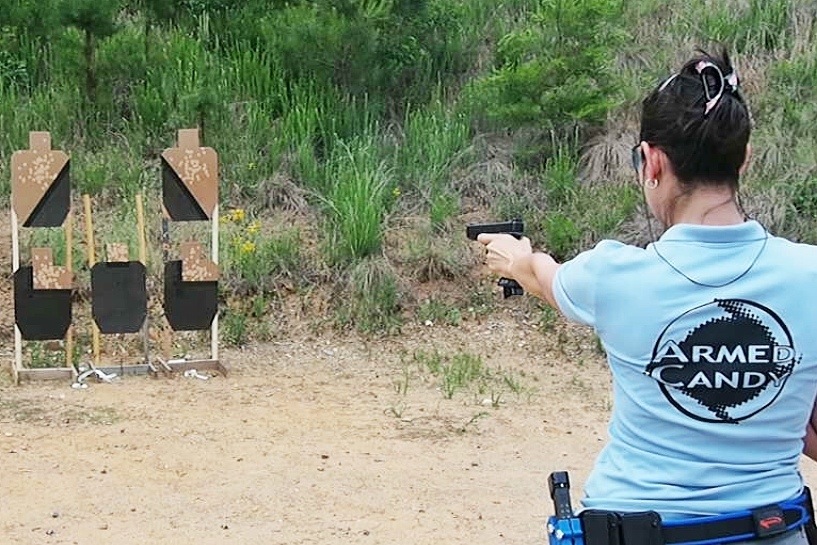
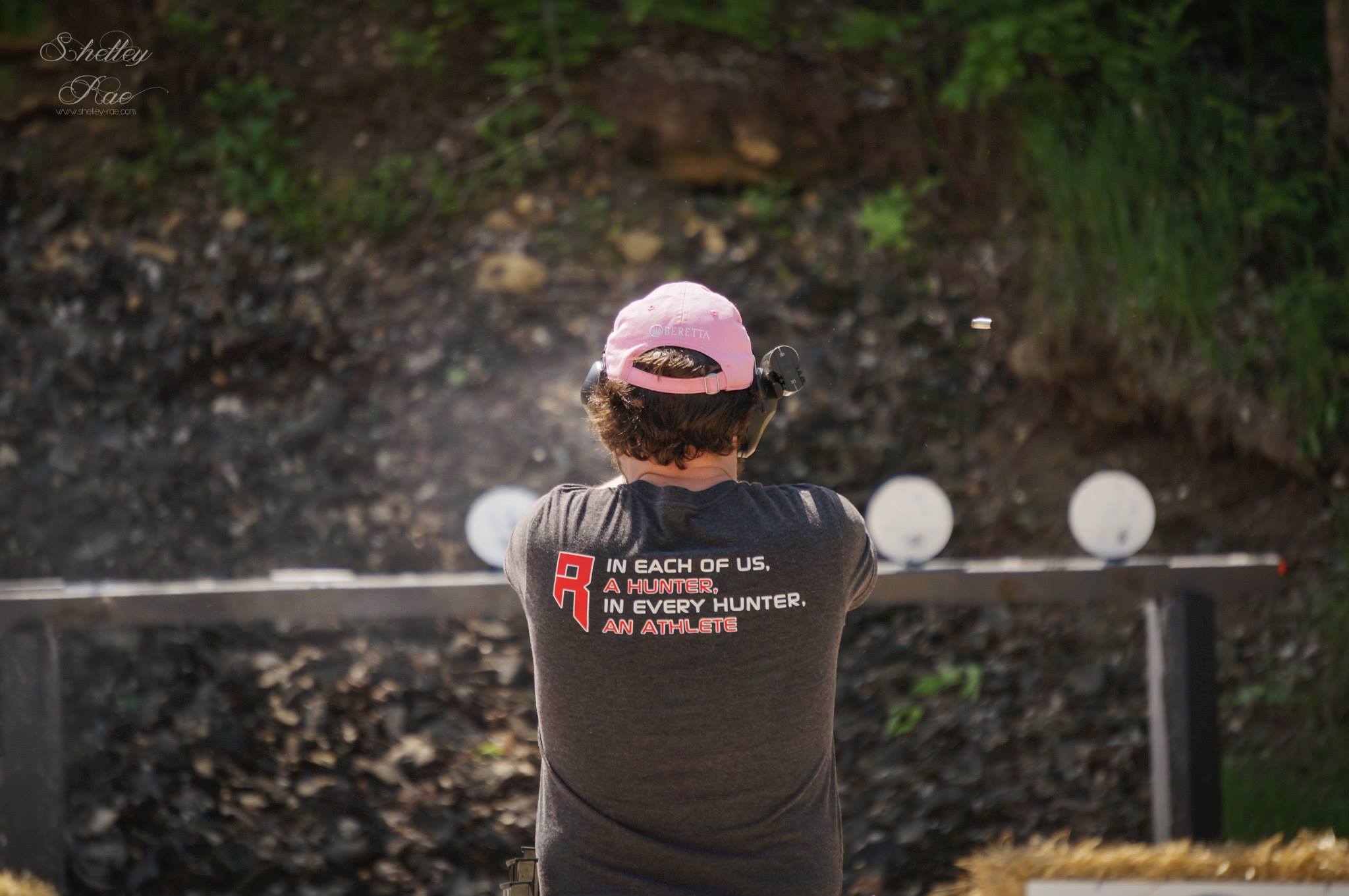
This past weekend I shot in my first pistol match. It was a no-frills USPSA club match in north Georgia. It was a last minute decision to accompany my friend, Janna Reeves at this match, when she promised me it would be a “no-pressure” environment. I signed up on Friday night and early Saturday morning I was rushing to the Riverbend Gun Club. As I left my house and got in the car, I was running behind, but even in my haste I grabbed the Zev Technologies Glock 34 that Janna loaned me. I was surprised, during the almost two hour long drive to the range, at my lack of nervousness. It could have been that I did not have enough time to develop butterflies, but I’m sure it wasn’t a feeling of being completely prepared, because I was acutely aware of how little I knew about USPSA matches. I parked my car, just as Janna pulled into the range’s parking lot, and that’s when it hit me; I had brought absolutely ZERO ammunition.
If you pay attention to gun stuff on the web, every now and then you’ll encounter a debate about “point” shooting. The exact definition of “point” shooting varies considerably depending on who is talking about it so discussing things can get sticky as people argue about completely different pictures of what’s happening in their heads. For our purposes I’ll define “point” shooting as any form of shooting that does not involve deliberate use of a weapon’s sights.
The human being is a remarkable entity capable of adapting to perform complex tasks requiring mental calculation and physical manipulation of objects or machinery with incredible precision. Let me illustrate:
That’s Ayrton Senna, one of the legends of Formula 1 racing, driving a Honda NSX around the Suzuka circuit in Japan. The video footage shows Senna operating the throttle, clutch, brakes, and steering of the car (sometimes using all three pedals at the same time with only two feet) at speeds so high they’re not even visible on the speedometer. As one of the people who helped refine the handling and performance of the NSX, he had lots of seat time in the car in addition to having spent the majority of his life (Senna started racing as a young teenager) racing them. In all of that practice he had gained the ability to make seemingly instantaneous mental calculations and physical manipulations to keep the car under control. Several times in the video you see him snap the steering wheel to the right even though he’s in a left-hand turn. He’s correcting an oversteer condition that, if not corrected, would spin the car.
Shooting requires a similar blend of mental calculation and physical manipulation that, with practice, can be refined to a high level. Someone who spends time seriously working on their presentation to a typical shilouette target will eventually reach the point where they could draw and fire a shot blindfolded and still hit the target just due to learning the body mechanics of a proper draw. Some point shooting systems try to capitalize on this, teaching a set of body mechanic dependent movements to index on a target…to wit:
At about the 4:30 mark in the old FBI training film above they cover some point shooting techniques that depend on body mechanics and positioning to aim the gun. That looks pretty good in the video, but note a few things – the shooter is stationary, the target is stationary, and the target is also huge. There are other “point” shooting techniques which involve bringing the handgun up into the line of sight much like you would do if you were pointing your finger at something. These tend to be more easily learned and more accurate than the techniques that rely on body mechanics, but they also tend to have the same limitations. They are often demonstrated from static positions on fairly large static targets with abundant light.
“Point” shooting demonstrations wouldn’t look nearly as good if it was dark and both the shooter and intended target were moving. Yes, yes…a number of very serious people back in the day taught point shooting for combat application. They did so for a few crucial reasons:
Equipment – Look at the sights on a 1911 manufactured in 1941. They are difficult to use in perfect conditions and utterly useless in low light.
Training – most of the people toting handguns back in the day didn’t have an abundance of time or resources for training and a “point” shooting system could be taught quickly enough to get them a shot at hitting a man-sized target somewhere at speed.
Lack of alternatives – Given the limitations of equipment and that the only other training of the day was centered around bullseye drills conducted at a pace much slower than gunfights tended to happen at, anything that taught speed and violence of action with a handgun was to be greatly preferred.
In other words, they used it back in the day because it was the best they could come up with given the constraints they had to work under. Today we don’t have the same constraints. Rex Applegate didn’t have the benefit of tritium sights, lasers, or red dot optics. We do…so while the very concept of sighted fire in low light was impossible in Rex’s day it’s something absolutely possible in ours.
Point shooting is a limited technique. In some circumstances it may be the best that one can do, but most of us aren’t forced to be in those circumstances. So why not use something more precise, more efficient, and that has proven to deliver better results under stress? Why not use the sights? Note that people who do this stuff seriously at the highest level from LAPD’s D platoon to Super-Squaders like Jerry Miculeck and Rob Leatham uses their sights…perhaps because they get a better result that way.
So will you if you use the sights. It doesn’t take anything away from those hard dudes from way back when to acknowledge that we have better equipment and training today than they did. They accomplished a lot despite those limitations so my hat’s off…but I don’t want to be stuck with their shooting techniques any more than I want to be stuck with their medical or communications technology. We have better options now…so let’s use them.
Hit the range yesterday for my first post-Bianchi Cup training session. I wanted to get into some of the issues I had at the cup with long range pistol accuracy and see if I could diagnose what caused me to drop such a large number of points on the Practical at this year’s match. To do this, I shot the entire COF twice, but removed the par times allowing for maximum accuracy. By removing the par, I can take all the time I need and focus on getting good clean hits on target.
To set this drill up, you’ll need a range that goes back at least 50 yards. Your strings of fire happen at 10, 15, 25, and 50. At each yard line, you’ll have three strings that repeat: 1 on each target (2 shots), 2 on each target (4 shots), and 3 on each target (6 shots). The total is 48 rounds. At the 10 yard line, the 3 per target string is shot weak hand only by drawing the gun and switching it to your weak hand. 10 and 15 yards are relatively easy in the untimed version of the drill, although it’s easy to get tempted to rush your sight picture and go too fast. Remember, the goal is maximum accuracy, which means you want to shoot as many 10X as possible.
Running this yesterday, I was clean at 10 and 15, with a total score of 240-20x. All of my first 24 shots were 10s, and most of them were X’s as well. So I moved back to 25, where I dropped my first 8 of the day, but still show mostly clean. After 25 yards I was sitting on a 358-28x. I recommend changing the targets or taping after the 25 yard string so you can get a really good idea of what you’re doing at 50.
The 50 yard part is the hardest part, for a lot of reasons. Small shifts that would be the difference between just a 10 or an X at 15 yards become the difference between a 10 and a 5; you need to do everything right to get a good hit. At 50, I was very happy with my sight picture and trigger pull, and in fact I didn’t pull or yank any shots. However, out of 12 rounds I shot six 5s and one additional 8. That gave me a total score of 446, which is in the ballpark for how I shoot this during practice on the clock.
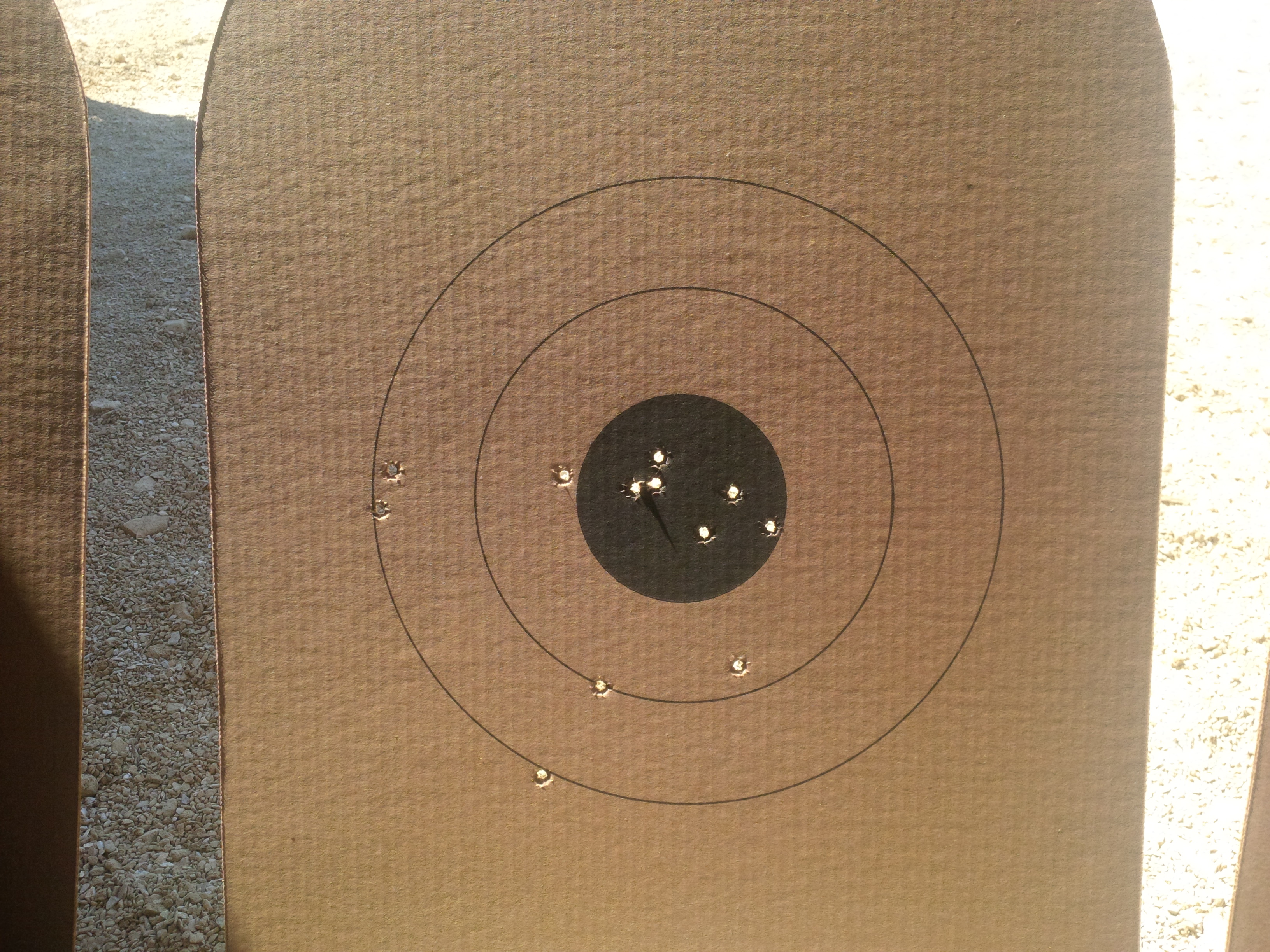
Because I’d shot so well through 25 yards, I needed to figure out what I’m doing wrong at 50. I don’t go prone at 50, which is a bit of a disadvantage because the gun isn’t as stable, but with the par times the match gives (7, 10, and 15 seconds) I have all the time in the world to make a clean shot at that range. What I noticed on the range yesterday was that my sight picture at 50 is harder to verify than at 25. I have my guns set up for a six o’clock hold on the x-ring, so the top of the front post should be directly under the X. At 25, even with a hard front sight focus, it’s easy to align the top of the post with the blurry x-ring. At 50, the X-ring is halved in visual size, and with a hard front sight focus becomes little more than a fuzzy dot. My operating theory is that because of that, I was letting the gun wander a little higher than my hold should have been.
The groups on target and match results back this up – all of the 5s I shot in practice yesterday were high, and most of the ones I shot at the matches were high as well. Now that I think I’ve diagnosed the problem, the only way I really know how to fix it is to spend a lot of time shooting at 50 yards and refining my sight picture until it’s perfect. Hooray for doing things are difficult.
It’s very interesting to watch how much the gun moves around under recoil. While shooting iron sights is still much more of a marksmanship challenge, actually watching what the gun does in recoil gives me a ton of respect for the open shooters.
For the second year in a row, the Women’s title at Bianchi Cup came down to a showdown on the Mover. Maggie Reese from Team Colt entered with a slim lead over Jessie Duff and Tiffany Piper, both sponsored by Leupold.
There was another mass killing this weekend. I found out about it on my way home from a pistol match, and as I thought about the events that transpired, I realized that we can’t just keep going on like this. Something has to be done, and we have to be willing to sacrifice some of our Constitutional rights to protect people. It’s time for a change. It’s time to accept responsibility. It’s time to put reasonable limits on the 1st Amendment and restrain the mass media that enables these killers to achieve the fame and notoriety they so desire.
The Founding Fathers couldn’t have possibly imagined a world where 24-hour news networks streamed coverage of these mass killers non-stop; they couldn’t have predicted that talking heads on cable news would repeat the names of vile murderers over and over again. They never would have imagined something like the internet, where future killers could research and see how much glorious, sweet attention previous murderers had gotten.
So America, I say it is time for a change. It’s time to restrict those dangerous freedoms that are placing innocent lives in jeopardy. The first and most important action should be for Congress to limit news coverage of mass killings to no more than 1 per day, per network. You don’t need more media coverage than that, right? After that, a joint effort with google would force anyone who googles mass killers and their names to pass an online background check before they’re allowed to see their search results.
I know it’s a small step, and some people will be inconvenienced. But if it only saves one life, it must be worth it.
I’m finally back from two weeks of living on the road shooting NRA Action Pistol, which means it’s time to take a hard look at my performance. We’ll start with the NRA World Action Pistol Championship, held May 16th and 17th in Rockcastle, KY. For a detailed look at the match itself, check out the match review. I didn’t have a lot of expectation going into the match, I hadn’t spent much time training for it, but I knew my holds and my gun was pretty well set up for it.
NRA WAPC: The Good
The best thing I did at the WAPC was shoot relaxed. Because I didn’t have a lot expectation for my performance, I was able to come in, shoot, and not really worry about what happened. The result of this was I put up a new main match Personal Best for the “classic” NRA AP stages (Practical, Barricade, Mover, Plates). Coming in at a 1717 for the match actually really made me happy, and coupling that with a top 10 finish in Production was just a great all-around feeling. I shot to event PRs at Rockcastle as well; a 442 on the Barricades and a 441 on the Mover. For the most part at this match, I shot relaxed, I was patient with my sights and trigger pull, and generally executed within the envelope of my ability.
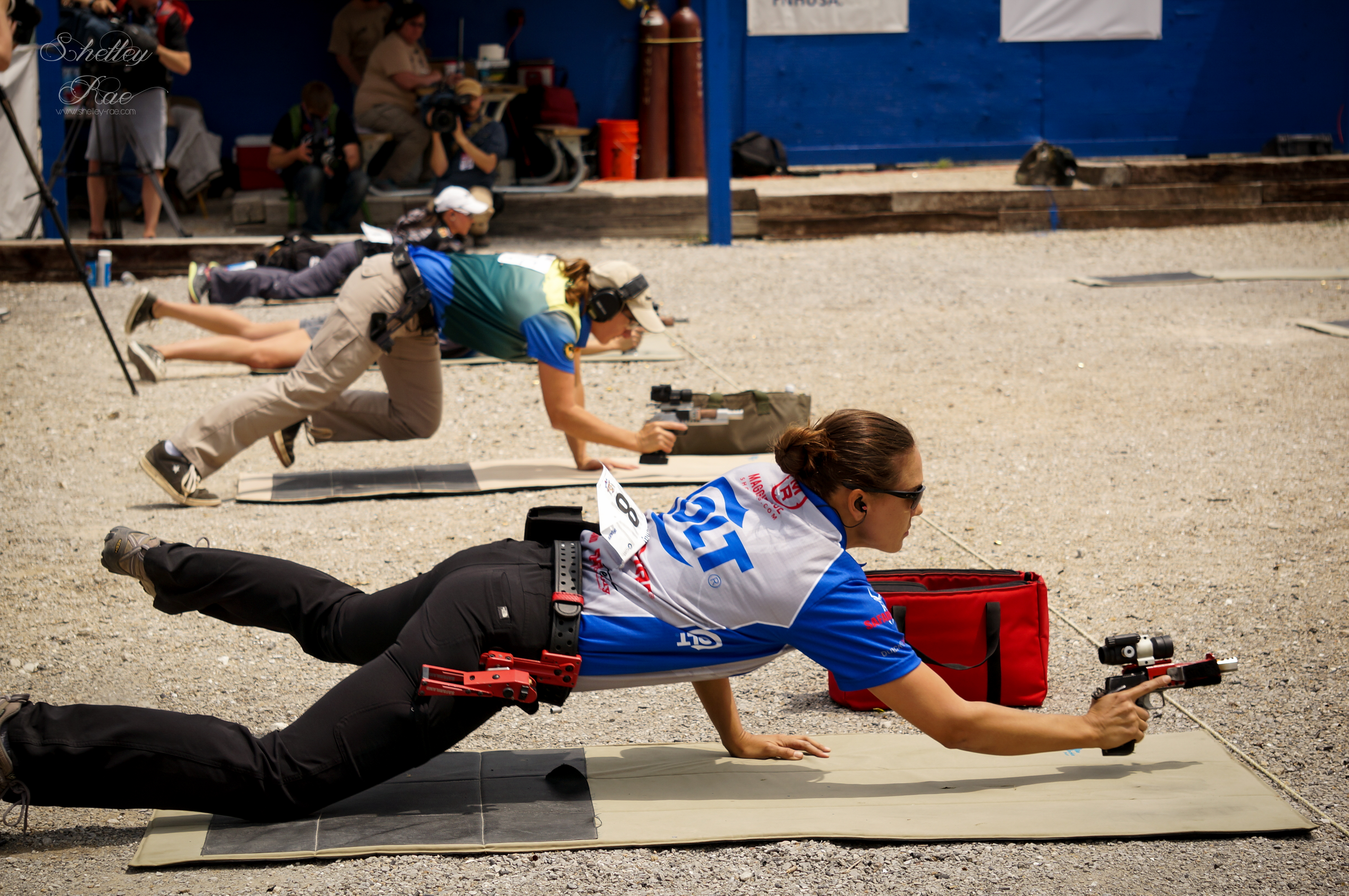
Photo by Shelley Rae
NRA WAPC: The Bad
As usual, I struggled on the Plates. There is something about that event that makes me get all stupid with my trigger and sights. My main match best on the Plates is 42/48, and once on the Agg I shot 47. At Rockcastle I got 41, which for me isn’t terrible in match conditions, but it’s also not as good as I can do. I also had some issues with the Practical, throwing a miss at 50 over the top of the target.
NRA WAPC: Conclusion
Honestly, I was pretty pleased with how I shot at WAPC. I shot better than I expected to, not as well as I’m capable of, but still set a personal best and finished in the top 10. It’s hard to not be happy with that.
NRA Bianchi Cup: The Good
About the only good thing in my performance at Bianchi was my Mover. I shot a 461, breaking the PR I set just a few days earlier at Rockcastle. A big part of that PR was that I knew my match was already tanked, so I might as well relax and just shoot it. On the Mover I did all the things I should have done on the other events: I was patient with my sights, I didn’t slap the trigger, I executed to the best of my ability. The rewards were obvious, I crushed my previous PR on the mover and set a new PR for highest score in one of the paper events.
NRA Bianchi Cup: The Bad
Unfortunately, my Mover score was too little, too late. My match had begun with disaster, dropping over 60 points on the Practical and Barricades the very first day. It’s easy to see where things went wrong, especially in comparison to the Mover; I didn’t wait for my sights, I wasn’t patient with my trigger pull. I took too many shots where the sight picture was “good enough,” which in Bianchi Cup is never a good idea. And then there were the plates…the plates. The f*cking plates. All week in practice I’d been lights out on the plates. Constantly shooting 44s or better. Just wrecking it. Sure, my plates in the agg hadn’t been great, but I wasn’t worried. So I get out to the line, and what happens? I drop plate 6 on my first run. The worst thing is I know exactly what I did. I managed to clean them at 15, no problem there. But then 20 and 25 yards, the wheels just came the rest of the way off. I ended up with a 36/480, my worst score on the plates since 2011.
NRA Bianchi Cup: Conclusion
It’s a little weird, but I’m less down about this year’s performance than I was about last year. I think the big reason is that I didn’t train as hard for the match this year, so failing to hit my goal doesn’t feel as bad? Or it could be that the blow is softened by what was a pretty decent performance at Rockcastle. I didn’t have any gear or ammo issues, so that wasn’t the problem. I just didn’t execute the fundamentals of marksmanship very well…except for the Mover.
As a fun exercise, I went back and totaled up all my PRs from the main matches, just to see what I’d score if I shot my very best scores all on the same day. Those PRs are: Practical-443, Barricades-442, Mover-461, Plates-420. That would give me a theoretical total of 1766 if I were ever able to pull it off in a match. At the WAPC a 1766 would have bumped me up to 8th in Production, and at Bianchi Cup I would have ended up 25th in Metallic, just sneaking into the top 25.
We use cookies to optimize our website and our service.
Functional
Always active
The technical storage or access is strictly necessary for the legitimate purpose of enabling the use of a specific service explicitly requested by the subscriber or user, or for the sole purpose of carrying out the transmission of a communication over an electronic communications network.
Preferences
The technical storage or access is necessary for the legitimate purpose of storing preferences that are not requested by the subscriber or user.
Statistics
The technical storage or access that is used exclusively for statistical purposes.The technical storage or access that is used exclusively for anonymous statistical purposes. Without a subpoena, voluntary compliance on the part of your Internet Service Provider, or additional records from a third party, information stored or retrieved for this purpose alone cannot usually be used to identify you.
Marketing
The technical storage or access is required to create user profiles to send advertising, or to track the user on a website or across several websites for similar marketing purposes.
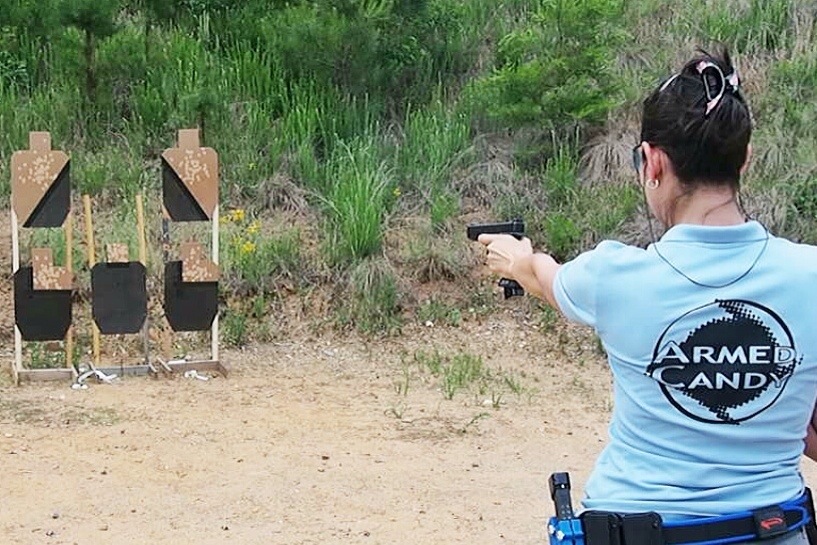 This past weekend I shot in my first pistol match. It was a no-frills USPSA club match in north Georgia. It was a last minute decision to accompany my friend, Janna Reeves at this match, when she promised me it would be a “no-pressure” environment. I signed up on Friday night and early Saturday morning I was rushing to the Riverbend Gun Club. As I left my house and got in the car, I was running behind, but even in my haste I grabbed the Zev Technologies Glock 34 that Janna loaned me. I was surprised, during the almost two hour long drive to the range, at my lack of nervousness. It could have been that I did not have enough time to develop butterflies, but I’m sure it wasn’t a feeling of being completely prepared, because I was acutely aware of how little I knew about USPSA matches. I parked my car, just as Janna pulled into the range’s parking lot, and that’s when it hit me; I had brought absolutely ZERO ammunition.