I am much more of a competition guy than a tactical guy. So I thought I would put forth some tips and tricks I have used to shave time off my stages. These are geared more toward the beginner; the person that wants to get better and is willing to train.
• For stage plans, watch the faster guys and mimic their plan; at least for now. When you get really good and you can estimate time better, you can work on options. Personally, I am not there yet, so why would I presume my plan is better than a GM’s? Find the smoothest way to get the most targets.
• Try to limit transitions to 20 degrees or less. This was a huge weakness of mine and it costs time, lots of it! This is amplified if you are running into a position, stopping and then having to transition 60 degrees.
• When you have a start at the center of a stage, don’t start on a target just because it is easy if you are going to come back by it again. I have played around with this in practice and have found starting on the “right” target vs the “easily accessible” target had roughly a 3 second difference in my time on a 22 round stage. The vast majority was spent on an extra reload.
• Remember: points per second. If you’re not shooting you’re losing points, in Production, if you’re not shooting you should probably be reloading.
• When moving short distances get low and take deliberate steps. I had a habit of hopping on short moves. Ben Stoeger calls it “tactical bunny hopping”. It kills stability and sight picture. Don’t do it in competition. Don’t do it in CCW training. Unless you are the Easter Bunny, don’t do it!
• When coming to a stop, after a sprint, I would stand upright and momentum would carry me onto toes. As I am neither svelte, nor a ballerina, there is zero stability in that maneuver. Instead, when entering a position, glide in horizontally; let the momentum plant your feet. This also helped with gains in accuracy and transitions.
• If you are moving less than 5 steps, KEEP THE GUN UP! It feels weird to move like that but is noticeably quicker and smoother on the timer.
• Similarly, if running past a barricade to a shooting position just on the other side of said barricade, get the gun on target before it disappears behind the barricade. When you clear the barricade, the gun is close to the target, you can quickly cleanup the sight picture and make noise.
• The old axiom, “Slow is Smooth, Smooth is Fast” is wrong! Smooth can be fast, slow is just slow.
Try these and you’ll realize some improvements in your game. I did.
Recently I mentioned a concealed carry holder might try competition because the stress of a timer is real. Along those same lines, you can induce stress in your own training if you are willing to forego some Pumpkin Spice Latte’s this fall and instead buy a decent shot timer.
You might be thinking, “I’ll just download an app” and for dry fire that is a serviceable solution. But for live fire, you really need a real deal, dedicated shot timer. Your phone’s speaker is not really suitable and it can result in, well, spotty results. Even for use in dry fire, I now recommend purchasing a real shot timer over an iPhone app.
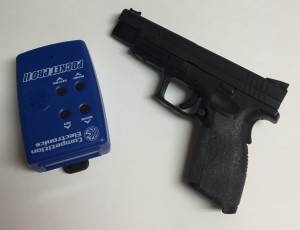
Why for dry fire? To be honest, I did not understand the difference, between real vs an iPhone app. I used what I felt was a decent iPhone app for dry fire and went about my practice willfully ignorant. Then I sold some crap and bought a Competition Electronics Pocket Pro II.
The first time I used the Pocket Pro II, was a wow moment!
In addition to being easier to use and quicker to reset, it was glaringly obvious the iPhone app I was using had a long drawn out beep (measured in hundredths of a second) while the Pocket Pro II has a loud, sharp and abrupt beep. Using my USPSA Production Gear and the iPhone app it appeared I was cutting 0.70 draws. Once I started using the Pocket Pro II, it became obvious that was not true. With the Pocket Pro II the best I have got is a 0.80 with most being a 0.90.
But what about stress and such for practice, you know, the thing I mentioned at the start of the article?
One word: DRILLS. Borrow or buy a timer, go to the range when you can be by yourself and work some drills against the timer using your CCW setup. Run some popular drills and us the PAR time feature. See how good you really are compared to common standards. It won’t take long before you find yourself getting “amped” up and trying to improve your times. That is good, just remember the goal is speed AND accuracy. Speed and Accuracy… a subject for different post.
So what’s the takeaway?
If you’re using an phone app you might be surprised to find you are slower than you thought, at least in dry fire.
If you haven’t ever shot your CCW rig under a timer, you might discover you fall apart under the pressure. I promise you, it is better to identify those weaknesses now versus standing in line at the fast food joint.
Don’t take my word for it. Prove it too yourself. I deal in truths that are proven by my own experimentation and study; so should you.
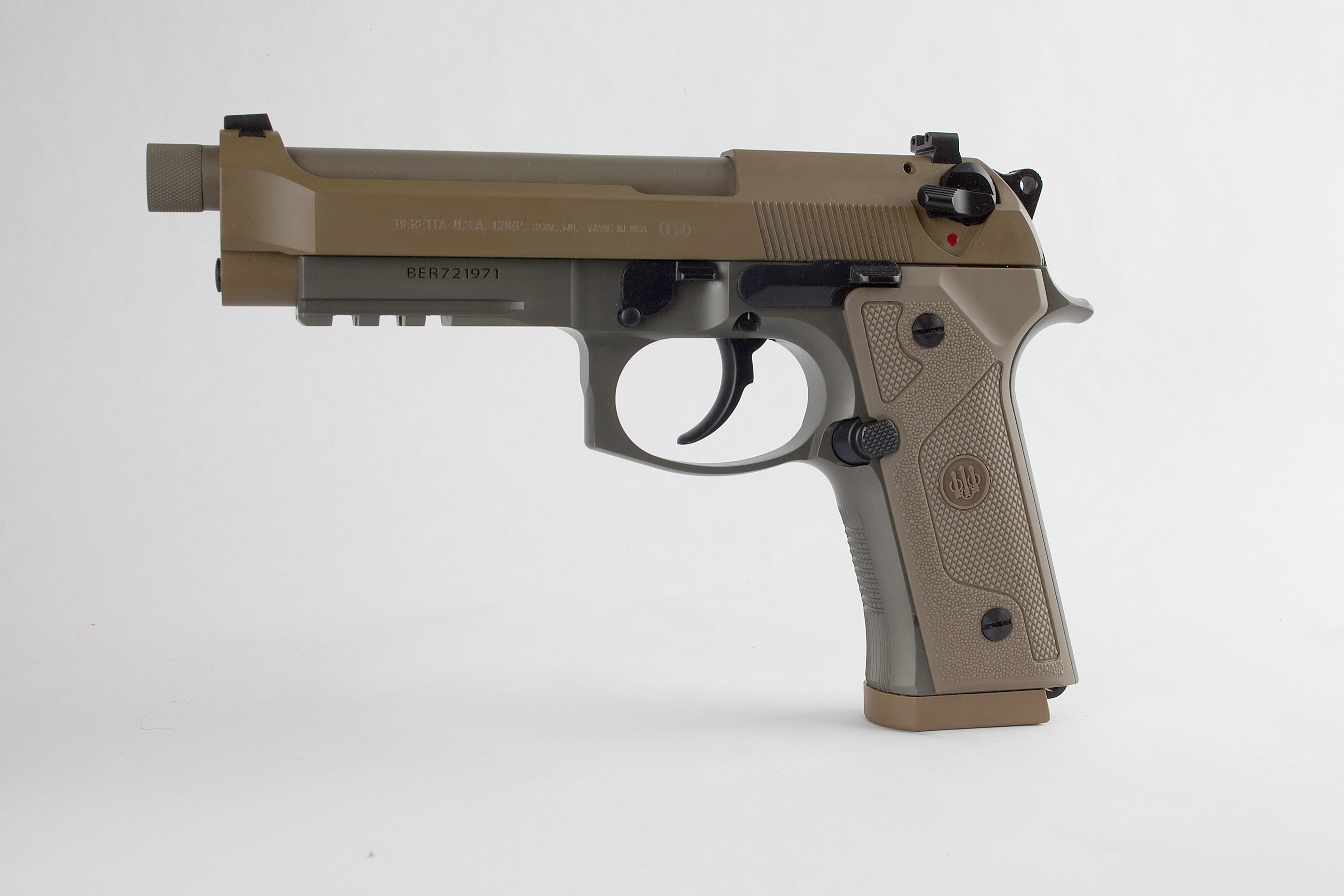
Accokeek, MD. (Nov 5, 2015) – Beretta Defense Technologies (BDT) is pleased to announce that the Beretta Model M9A3 semi-automatic pistol is now shipping to law enforcement dealers, law enforcement agencies and is now being offered to military customers worldwide. Built in the U.S., the M9A3 offers advances in pistol design and other enhancements that result in increased modularity, reliability, durability, and ergonomics.
“The M9A3 represents the next generation handgun utilizing the best attributes of the legacy M9 pistol combined with proven COTS modifications that increase performance and durability” stated Gabriele de Plano, Vice President of Military Marketing and Operations for Beretta Defense Technologies. Mr. de Plano added, “The U.S. Army, or any military or law enforcement service using M9s can adopt this weapon today with minimal impact to their training, in-service accessories (holsters, lights, etc.), integrated logistics support plan, and existing parts inventory.” Much like its counterpart legacy weapon systems (M2, M4, M16, M240, etc.), the M9A3 is upgraded through material and design changes.
“Combined with the U.S. Army’s recent decision to accept new, improved ammunition (specifically jacketed hollow point) for military applications, the M9A3 becomes a more lethal, ready-to-use now solution that is also a fiscally responsible option. Use of improved ammunition in the M9A3 will likely attain the desired lethality and penetration characteristics the U.S. Army is seeking today through its Modular Handgun System program at a fraction of the cost of replacing an entire weapon system, conducting new training and qualification, and buying all new accessories,” stated Gabe Bailey, Military Business Development Manager for Beretta Defense Technologies.
The M9A3 maintains 100% commonality with major components of the M9 and 76% commonality of individual parts. It meets 84% of the requirements for the Army’s latest Modular Handgun System requirement, and with only a few additional modifications can reach 92%. The M9A3 features a thin grip with a removable, modular wrap-around grip, MIL-STD-1913 accessory rail, removable front and rear tritium sights, extended and threaded barrel for suppressor use, 17-round sand resistant magazine, and numerous improved small components to increase durability and ergonomics, all in an earth tone finish.
Beretta USA offered the M9A3 to the U.S. Army via an ECP in December 2014, prior to that Service’s decision to allow use of more lethal 9mm ammunition.
Made in the U.S.A. by an American workforce since 1987, the M9 has been the sidearm of the U.S. Armed Forces for nearly 30 years; serving with U.S. Servicemen and Women in training and combat operations throughout the world. Currently manufactured at Beretta U.S.A.’s Maryland factory and soon to be made at the Company’s new Gallatin, Tennessee facility, he M9A3 employs cutting-edge technology in a proven weapon system, delivering 21st century capability and features while increasing usability and reliability.
About Beretta
Beretta, established in 1526, is the oldest industrial dynasty in the world tracing its roots through 16 generations of continuous family ownership. Firearms bearing the Beretta name have been sold for almost 500 years. Beretta USA Corp. was founded in 1977 in Accokeek, MD and supplies the standard sidearm to the U.S. Armed Forces. Today, Beretta manufactures, distributes and markets a complete line of firearms, accessories, and apparel. Beretta also owns and operates six retail Beretta Gallery stores worldwide. Beretta-owned companies employ nearly 600 individuals within the United States with locations in California, Colorado, Maryland, New York, Texas, and Virginia. For additional information visit www.Beretta.com.
About Beretta Defense Technologies
Beretta Defense Technologies (BDT) is the strategic alliance of four Beretta Group defense companies (including Beretta, Benelli, Sako, and Steiner/Steiner eOptics), providing products and services that enable superior performance by the Defense and Law Enforcement communities. State-of-the-art machinery, extensive research and development capabilities, and a long-standing worldwide experience allow BDT products to respond to the ever-changing needs of defense, law enforcement, and security personnel.
We all know that we always need to carry our damn guns. Concealed carry without the gun is just…a regular day, I guess? I don’t know, but I do know that a lot of people don’t think about what they’re carrying beyond the gun. I’m not talking about pointless tactical accessories here either; I don’t need an IFAK or 30 meters of 550 cord on a daily basis, I don’t carry three spare reloads and two extra guns. But here are the five things that I believe are must haves when I’m carrying concealed. I’m not going to put “a good holster” on the list, because you should know that already…
1. A good belt
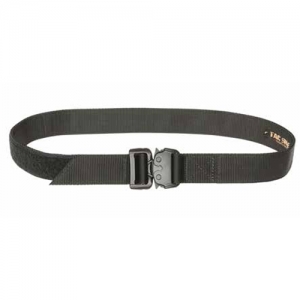
Right now, I’m wearing the TacShield Tactical Gun Belt, which was sent to us for review, and I really like it.
You don’t have to buy this specific belt, and if “tactical” belts aren’t your speed, there are plenty of good looking leather gunbelts out there that will also do the job. But a belt is important! When you’re carrying a gun, the belt is doing 90% of the work of keeping that gun where it’s supposed to be. A piece of s*** wal-mart belt isn’t going to do the job.
2. A cell phone
Everyone has a cell phone, right? But think about this. Let’s say you live in a metro area, a city, and you have a dog. You take your dog for a walk, and because you’re not a savage, you toss your G26 on when you go as well. Now, because we don’t carry out guns because we’re optimists, something bad happens and you need to dump a guy, or maybe you don’t, but you still need to draw your gun. You need to be your own first responder when that happens. It looks a lot different if the first 911 call after a DGU (whether or not you pull the trigger) comes from you and sounds like “Someone just tried to mug me at the corner of 38th and Whath, I am afraid for my life, please send help.” Because if that call doesn’t come from you, it may sound like “a guy just pulled a gun on some homeless dude, send ALL THE POLICE.”
3. A flashlight
I’m not necessarily talking about a face-melting 600 lumen lightsaber here, although those are awesome. I’m thinking for more practical purposes like “I dropped my keys in the parking garage.” For that, something as simple as a LED Lenser may be your best choice. However, you can get a light that will serve a tactical purpose for self-defense and still work as a general use flashlight as well. I carry a TerraLux TT2 all the time, and I love it.
4. A good wallet
“Caleb, what? A wallet? Everyone has a wallet.” Yeah, you’re right. Everyone has something they keep in their pocket that they tote credit cards and their ID around in, but have you ever needed something out of your wallet in a hurry? Like say, an ID and concealed carry permit to show to Officer Friendly when he’s debating internally as to whether or not he should put you in handcuffs and just do it himself? I don’t know about you, but I hate being in cuffs. Your wallet is actually important, and it’s also a sign that you’re an adult. If you’re rolling around with your credit cards and cash just sort of jumbled together, or even worse in one of those gauche little clips, you need to up your game and get a proper, grown up wallet.
5. A humble attitude
This probably should have been number 1, but I wanted to save it for the last because I believe it’s something we all overlook on a day to day basis. We can all admit to each other that there are days when we’ve wished a motherf***er would, but not because we’re a bunch of bloodthirsty maniacs. We sometimes want that because it’s normal, when you’ve invested time, effort, and money into growing a skill set to want to test that skill set out (which, by the way is why classes and competition are so important, but that’s a different post). However, if our goal is to defend ourselves, the best way to win a gunfight is to avoid it. Don’t be confrontational. Some dude cut you off in traffic? Let it ride. In a crowd and someone jostles and spills your delicious lemonade? Let it go. Because if there’s one thing I’ve learned over my short time on this planet, if you go out with a chip on your shoulder looking for trouble, it’s going to find you. Whether or not you admit you were looking for it.
You’ll probably notice one item I didn’t include on this list, and that’s “a knife.” Honestly, if you’re reading this site and you’re not carrying a knife…you might be in the wrong corner of the internets.
It’s fairly late, and I’m leaving a Chilli’s where I’ve been having dinner with some friends. It’s an area I’m not terribly familiar with and unfortunately the Eye of Sauron (aka Google) has not cast its gaze across the new construction recently finished in this area and as a result their maps app on my phone is giving some pretty bad directions. I finally sort out where I’m supposed to be going to hit the major thoroughfare that’s going to take me to the next major thoroughfare that actually gets me home when I notice that some jerk speeds up and gets right on my bumper. As in he’s so close his headlights are barely visible in my rear view mirror.
“I wonder what this dude’s malfunction is.” I say to myself.
As soon as the last letter passed my lips, an amazing technicolor light show begins to emanate from the vehicle behind me. Ah. So that’s why he’s on my bumper. I haven’t quite memorized the headlight profile of Ford’s latest interceptor vehicles so it catches me completely off guard. My brain still expects a Crown Vic. I signal, pull over to the shoulder, and put on my hazards.
One of the most common questions I get from folks new to concealed carry is how a concealed carrier interacts with a police officer without triggering a shooting. Some may think that sounds a bit paranoid but any time there is an interaction between a police officer and an armed citizen there is at least the possibility (however remote) for tragedy. It’s been a while since I looked at the stats, but I believe that the traffic stop is still the most common setting for a police use of lethal force. The police officer has no idea who he is pulling over and what their intentions are. It could be a car full of nuns on their way to a prayer meeting. Or it could be this:
Most stops are pretty routine but the officer who assumes that the next stop will be routine sets himself up for disaster. To him, you are an unknown contact. If you had to interact with an unknown contact who happened to be armed, how cautious would you be?
The citizen on the other side of the blue lights knows very little about the officer as a human being, but we have the luxury of knowing that police officers in a proper uniform driving a proper police car are more than likely not pulling us over so they can rob us. Good guys do not have halos, but a police uniform in the United States is about as close as you can get to a reliable visual indicator of “good guy”. When we’re stopped, we know more about him than he does about us.
So let’s talk a bit about what you can expect during a traffic stop and some techniques that I use to try and put the officer at ease.
When I am pulled over, I do the following
Pull over as quickly as it is practical to do so. Police officers will typically only hit the blue lights when they assess that it’s safe to actually conduct a stop, so I go with that.
Roll down my window. Should be pretty obvious as to why.
If it is dark out, I turn on my dome light. The more the officer can see, the better.
Before the officer approaches, I get my wallet out, open it on the dash, and get my driver’s license and CCW permit out. I can usually accomplish this before the officer approaches my car.
I keep my hands on the steering wheel, clearly visible to the officer at all times with my license and permit held in the fingers. Police officers are trained to watch someone’s hands. If mine stay in his sight he has less reason to be worried.
When asked for my license and registration, I will hand the officer my CCW permit on top of my license. Some states require permit holders to inform police officers that they are carrying a weapon. My home state of Virginia has no such requirement, but I believe it’s good to be in the habit of informing the officer right off the bat by presenting your permit. I even hand over my permit on occasions where I’m not actually carrying a weapon because in many states your driver’s license is flagged when you are issued a CCW permit. This means that when the officer runs a check on your license dispatch or his computer will tell him that you’ve been issued a permit. I’d rather be the one relating that information, personally.
After I’ve handed the officer my CCW permit on top of my license, I return my hand to the steering wheel. This is a biggie. I’ve just told the officer I’m carrying a weapon. I want him to process this information. I don’t want to start grabbing at stuff while he’s still figuring out what’s going on. I wait for the two inevitable questions.
When asked if I am armed and where I am carrying the weapon, I do not gesture toward the weapon with my hands! I use a verbal description of the weapon’s location like “Right side, appendix” to give the officer an idea of where the gun actually is…while my hands stay on the wheel. I have been asked these two questions on every stop I’ve experienced. It’s understandable…if I was stopping somebody with a gun I’d want to know where it is, too. I would also prefer if they didn’t move their hands near that weapon.
I will then ask for permission to retrieve my registration from the glove box. Even though the officer already asked for the registration earlier in the stop, the situation has changed dramatically since then. He now knows he’s dealing with an armed individual. Asking for permission to retrieve my registration serves to demonstrate my good intentions and keeps the officer feeling in control of the stop.
While my left hand stays on the wheel, I will retrieve my registration with my right hand and present it to the officer, and then I put my right hand back on the wheel.
Generally by this point in the stop the officer has figured out that even though I’m armed, I’m not a threat. So far I have never had an officer indicate any desire to actually disarm me during a stop. If it does happen, I’ll be nice and cooperative but I won’t touch my gun. If they want to disarm me, they’re going to have to do it.
The officer who stopped me after my trip to Chilli’s handled the stop well. He positioned his car to make maximum use of his spotlight. Between the light show from the various flashing lights on his cruiser and the almost painful number of lumens being put out by his spotlight, I couldn’t see a bloody thing until he was right on me. I only knew he was coming near the window when I heard his footsteps. He kept himself positioned so that I had to interact with him at an awkward angle. After I asked for permission to go to the glovebox and retrieve my registration, he followed my hand with his flashlight the whole way there and back. You should expect an officer to use these kind of procedures when they conduct a traffic stop because it gives them as much advantage as possible should they happen to pull over someone who means them harm.
After I handed over my registration, the officer asked me if I knew why I had been pulled over. I had just joined the highway and I hadn’t yet reached highway speed, so I knew I wasn’t speeding. I had absolutely no clue why he had pulled me over.
My car’s headlights have an “Auto” setting that is supposed to turn them on when the sensors on the car determine it is dark. The area I was in was so well lit that apparently the sensors didn’t see the need to turn the headlights on. I, being a dingus, didn’t double check.
“Often when we see someone driving without headlights…”
“They are inebriated.” I interrupted. The officer looked puzzled for a second. I’m guessing that the term “inebriated” isn’t often used with correct diction by people who are intoxicated. It’s late on a Saturday night and I’m driving without my headlights on. I can absolutely understand where he’s coming from.
“I’m not inebriated, sir. Just stupid.” I continued with a grin.
“So you’ve had nothing to drink tonight?”
“Nothing but iced tea.”
He checked my license to make sure I wasn’t a wanted man, then gave everything back to me and sent me on my way.
That leads me to the final element of what I do when I’m pulled over: Be nice.
I find that I get a lot farther with people when I don’t react to them out of pique even if I am not the least bit happy about the circumstances of our interaction. I don’t like getting pulled over. It’s always inconvenient and sometimes it’s damned expensive. Even so, being a jerk about things is not going to serve my interests. I’ve found that concealed carriers who are polite and show consideration for the officer’s position and situation often get verbal warnings instead of an actual citation.
If you haven’t developed a standard approach to being pulled over while carrying concealed, I humbly suggest adopting my strategy as outlined above. As a concealed carrier, your chances of being shot by the police during a traffic stop are pretty minimal, but it doesn’t hurt to adopt some simple practices designed to prevent any misunderstandings.
In my last post I presented my views that a CCW/CHL holder should view themselves as someone that reacts to a situation and uses the tools at hand to defend themselves and their loved ones. I used the term “Reactionary Defender”, not knowing the political connotation of the word Reactionary. So, let’s begin with a change in terminology – Reactive Defender.
This time I thought I would kick the hornets’ nest even more and discuss usable CCW training vs fun, or entertrainment as some have called it.
If you spend any amount of time on the forums, or gun range you will notice a great number of CCW/CHL holders take training classes that provide or build skills that have nothing to do with carrying a deadly weapon on a daily basis. If a person is not honest with themselves, this could only further the “sheep dog” mentality while not preparing them for the type of altercation they might actually encounter while getting a gallon of milk at the corner stop and rob.
First I need to be totally honest. A 3 day Carbine Assaulter Class sounds like an awesome time, but let’s temper our joy with a dose of reality. You are never going to need those skills while walking around in society or even your house. When you consider most people take those classes with “battle gear,” chest rigs, dump pouches, drop leg holsters and a knife that would make Rambo feel inferior. That is a far cry from walking through the parking lot of the mall with a LCP stuffed in the front pocket of your shorts.
Don’t mistake me, I am glad those classes are available to the general public. I am glad we have access such weaponry. As a student of the Constitution and the Founding Fathers the fact we have limitations on certain guns irks me, but I digress.
My point is simple: before you take that AR/Tier 1 hero class make sure your CCW skills squared away. If you are squared away and have the money, time and want to take them after you’re proficient with your carry weapon, but all means, go do it!
So what type of training might a Reactive Defender look into? Perhaps CPR Certification tied in with a good first aid class taught by medical professionals? How about situational awareness, threat avoidance and de-escalation techniques? Have you had low light training? Can you shoot your CCW on the move? Are you familiar with your State and local laws? What about a basic shooting class – fundamentals are fundamental. Dare I even say it… competition. The stress of the timer is real and you learn a lot about your skills under that stress.
A CCW/CHL allows you to have the best tool for self-defense in the gravest of extremes. You owe to those you plan on defending to take realistic training.
Here’s a quick note for my South Dakota readers: after a long hiatus, we’re finally offering training classes again. Because it’s SoDak and the weather is…fun, we’ve partnered with the Outdoor Adventure Center in Brookings to offer classes at their state of the art indoor range. The OAC is just 45 minutes north of Downtown Sioux Falls, and the facility is easily one of the nicest I’ve ever had the pleasure to shoot in. Right now, the only class I’ll be offering will be Fundamental Defensive Pistol on December 19th, more dates TBD. You can sign up for the class here:
Here’s the class description:
Fundamental Defensive Shooting
This class focuses on the fundamentals of marksmanship and firearms manipulation as applied to concealed carry.
Subjects include:
• Basic firearms handling and manipulation
• Accuracy and marksmanship
• Different concealment positions
• Holster and gear selection
• Drawing from a holster
• Reloading from a magazine pouch
• Multiple target engagements
• Post-shooting procedures
No Prerequisites.
Required Equipment:
• Reliable, functional handgun
• Rigid belt holster (non-collapsible) (IWB or OWB acceptable, no SERPA holsters)
• Rigid magazine pouch
• Sturdy belt/gun belt preferred
• 300 rounds of ammunition (minimum)
• 3 magazines (minimum)
• Concealment clothing (if desired)
• Eye and ear protection
• Water and snacks
In certain circles, it’s become kind of cool to pooh-pooh a type of firearms training class referred to as “operator fantasy camps.” You know the type of class I’m talking about, it’s full of accountants, plumbers, and mechanics dressed in MOLLE with plate carriers doing carbine drills that have basically zero application to civilian self-defense. Now, some of these classes are doing things that are legitimately dangerous, whether it’s through lax safety standards or running drills that are dangerous when combined with unskilled students. However, if an operator fantasy camp class isn’t doing anything unsafe, what’s the big deal?
Right now, someone is pushing their taped glasses up the bridge of their nose as he prepares to blast with me a comment about how I’ve been one of the people making fun of these fantasy camps. Yeah, he’d be right. I have in the past, and although I’d like to think that I’ve restricted my commentary to mocking safety violations, that’s probably not true. But what I’ve come around to realizing is that so long as the class is being safe, there’s literally no difference between taking a 1,000 round tactical carbine class or spending all your time learning to load your 3-gun shotgun better. Because as long as you, the person spending the money, buying the ammo and putting in the time are having fun, who cares? Sure, some tactards are going to mock USPSA shooters for being gamers running silly gear, and USPSA shooters are going to mock tactical dudes for being…overly tactical, but really what does it matter? It’s all fantasy anyway.
I mean, we live in a country where you can pay people real American cash money to pretend to be a fighter pilot, a race car driver, or a football player. So it makes perfect sense that we have camps set up where people can pretend to be a Navy SEAL, or at least train like a Navy SEAL. Like I said, it’s all fantasy anyway, and there isn’t anything wrong with that.
Here’s a word of caution, however. Know the training you’re signing up for. If you’re looking for a class to teach you the fundamentals of operating a carbine for home and self-defense, you probably don’t need to spend time rolling around in the dirt, breaching doors, and stacking up with 4 or 5 strangers. But maybe you’ve been taking classes and you’re kind of tired of the same old same old; you want to have some fun and you want to feel high speed. It’s no different than an auto enthusiast signing up to take a NASCAR Experience class or something like that. You go hard, you do stuff you wouldn’t get to do otherwise, and everyone has a good time.
Go have a good time. Be safe, keep training, yeeha.
This was edited on December 2, 2015 to read Reactive Defender instead of Reactionary, following some readers pointing out the word reactionary has a distinct political connotation.
I want to take a moment and discuss a subject and undertone that is present in a lot of concealed carry conversation. One that delves into what it really means to walk around with a firearm on our person, as civilians.
If you hear, read or watch anything related to concealed carry you will eventually hear the term “sheep dog.” Sheep dog is a rather innocuous term. It draws to mind a shaggy dog, maybe with hair in its eyes, overseeing a flock of sheep with the farmer nearby.
Unfortunately some have decided that carrying a concealed handgun makes them something akin to that docile canine overseeing the flock; except in their minds they are overseeing a flock of sheeple.
From Wikipedia: Sheeple (a portmanteau of “sheep” and “people”) is a derogatory term that highlights the herd behavior of people by likening them to sheep, a herd animal. The term is used to describe those who voluntarily acquiesce to a suggestion without critical analysis or research.)
I believe the sheep dog mentality is dangerous and even leads to bad habits. Why? Simply put, upon receiving my Texas CHL, I was not sworn to protect anyone or anything. I don’t carry a badge; I don’t have the weight of law behind me. I am an average guy that carries a firearm virtually everywhere I go. I do so to protect my family and those I love. If I happen to be somewhere and a bad situation develops in front of me and I can safely intervene to reduce the risk of injury, casualty or death, then I have the option; that does not grant me the latitude to go seek out criminal elements.
The civilian with a firearm carries it for defensive use. Law Enforcement, Military; they carry to protect themselves AND enter into harm’s way and hunt evil doers. That use by definition is both defensive and offensive. They are First Responders.
If I decide to start chasing down criminals without the legal authority to do so, I have become a vigilante.
So what do I consider those who chose the CCW/CHL lifestyle? Reactive Defender.
I can and will defend my life and those around me within my means. Carrying a gun is serious business and it should be treated as such. It is not a joke, it should not make you feel like Rambo, or cool, or anything else. It should be as mundane as carrying your wallet or a flashlight (you do carry a flashlight, right?), both of which you will use 99.99% more often than a firearm, gun range notwithstanding.
Reactive Defender. A term that I feel better aligns with why we actually carry and sounds less arrogant to those on the fence about gun control.
Give Thanks what you have, work for what you want and nourish what is important – family and friends.
About the hack author – After hounding Caleb for over a year, I finally got a chance to write for Gun Nuts Media. I am an helicopter mechanic turn manager by trade and hot rodder/car nut by birth. In addition to wasting money on hot rods I have always been a gun nut, have had a CCW for about 10 years and recently started competition shooting. I am an avid concealed carrier, but I don’t consider myself a Timmy. I like mechanical things, going fast, making noise and fabricating things with my hand. I fix stuff. I may explore some different subjects here, if Caleb lets me. Being of a mechanic background, I am not a writer by trade or training. You may find my post to be incoherent and poorly written or you may embrace them, rejoicing in the uniqueness and quality they add to your life. Either way, I had fun writing them and I am happy to be here.
We use cookies to optimize our website and our service.
Functional
Always active
The technical storage or access is strictly necessary for the legitimate purpose of enabling the use of a specific service explicitly requested by the subscriber or user, or for the sole purpose of carrying out the transmission of a communication over an electronic communications network.
Preferences
The technical storage or access is necessary for the legitimate purpose of storing preferences that are not requested by the subscriber or user.
Statistics
The technical storage or access that is used exclusively for statistical purposes.The technical storage or access that is used exclusively for anonymous statistical purposes. Without a subpoena, voluntary compliance on the part of your Internet Service Provider, or additional records from a third party, information stored or retrieved for this purpose alone cannot usually be used to identify you.
Marketing
The technical storage or access is required to create user profiles to send advertising, or to track the user on a website or across several websites for similar marketing purposes.
 may be your best choice. However, you can get a light that will serve a tactical purpose for self-defense and still work as a general use flashlight as well. I carry a TerraLux TT2 all the time, and I love it.