Umarex HPP BB Gun Review

Umarex HPP BB Gun

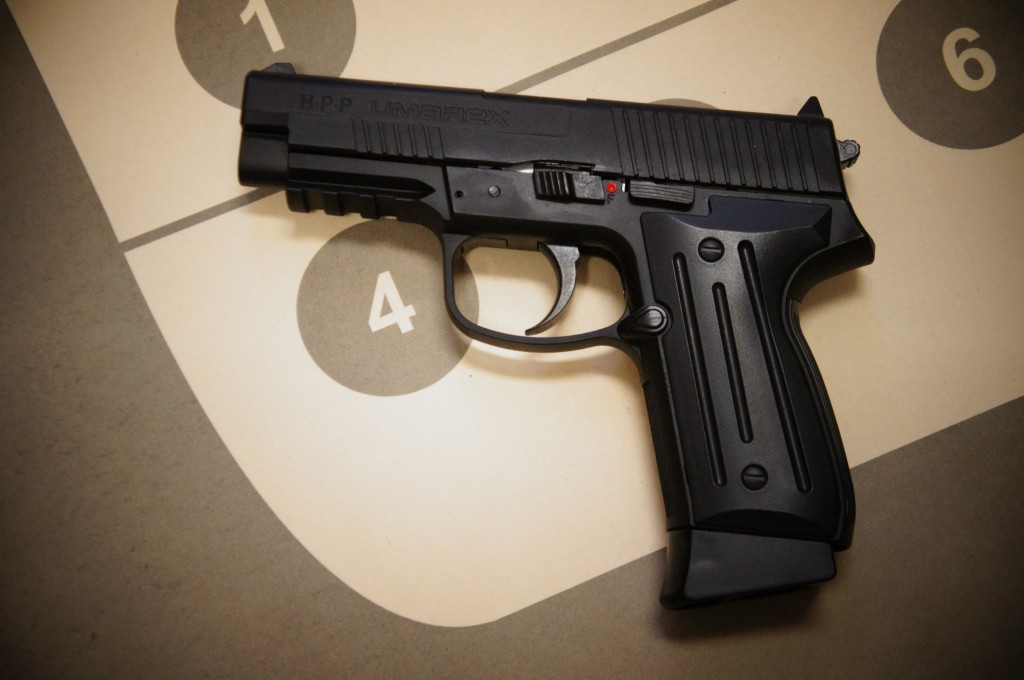
I’m fairly certain this is the first time I’ve ever reviewed a BB gun here on Gun Nuts, but there’s a first time for everything. Umarex sent over this cool little CO2 powered BB gun as part of a care package before our visit to Germany next week. It’s a gas blowback BB pistol that shoots the steel BBs that were such a staple of my, and many other people’s childhoods. This was before the days of airsoft, and I fondly remember getting my first BB rifle as a kid. The Umarex HPP is a bit more advanced than that.

The Good
It’s made out of metal, not plastic. You wouldn’t think that’s a big deal, but if you pick up the HPP with your eyes closed, you could easily be convinced that you’re hefting a small, compact semi-auto and not a BB gun. The controls all function as they would on a proper pistol as well, and while the safety is placed in an odd location, it does in fact work. The slide locks to the rear on the last round, and the slide stop will drop the slide and “chamber” a new BB when you put in a fresh magazine.

The Bad
The sights don’t put the BB anywhere near the center of the target. But that’s okay, because I can see the BBs in flight anyway.

The Verdict
Look, I’m not going to make the case that the Umarex HPP is a serious training tool to prepare you for victory in competition or to prevail during a fighting critical dynamic threat response while getting off the x. It’s not a cheap plastic toy like most airsoft, and you should observe reasonable safety precautions when shooting it. Make sure to have eye protection handy, and don’t shoot things other than proper targets.

So what’s it for? It’s for fun. Honestly, when I got this packet in the mail, I set up a little airgun range in my office and spent the day doing mag dumps until the CO2 cylinders were exhausted. I had more fun doing that than I’ve had going to the “for reals” range and doing “serious gun training” in a long time, because there is something inherently fun and entertaining about just shooting for the hell of it. That was the joy of shooting the Umarex HPP – blasting BBs into a carboard box from across the room. I have to give the Umarex HPP 6 points out of 6, because it was just plain old fashioned fun. If you want one, you can get a Umarex HPP CO2 BB Gun for about $70.00 shipped to your door. It’s totally worth it, because the giggle factor is off the charts.
Recall Alert: Smith & Wesson Shield Pistols

Smith & Wesson has announced a recall of their Shield line of pistols due to a concern that the trigger bar pin could render the drop-safety of the pistols non-functional under some circumstances. For those unfamiliar with the Shield and M&P line of pistols, Smith & Wesson uses a hinged trigger with the lower area of the trigger manufactured with a tab that locks up against the frame to keep the trigger from moving unless deliberate pressure is being applied to the trigger with your finger. Just like the little insert in a Glock’s trigger that locks against the frame, this is a drop safety designed to keep the trigger from moving to the rear if the pistol experiences a significant impact as it might from being dropped. Smith & Wesson has put out a video describing the inspection procedure for the Shield pistol to see if your particular specimen needs remedial action:

Obviously we would advise complying with the manufacturer’s described testing protocol and recall procedures if your gun exhibits the behavior.

Top Shot All-Stars Recap: Shooting Gallery

Spoiler alert! If you haven’t seen last night’s episode of Top Shot, don’t read this post. Also, Matt Damon dies at the end of Elysium.

I’m not going to do a run-on recap for this episode, or the finale because they deserve a full post going over the events of the show. This episode opens following the elimination from last week, and the shooters are confronted with the coolest gun of the show so far: The Browning M1919, which just so happens to featured on the cover of GunUp the Magazine this month. The shooters had to train with the M1919, and then for the challenge fire it off the back of a moving half-track at various target arrays. This was a pretty neat challenge, and presented an interesting view of the different shooter’s strategies. Phil managed to stay disciplined and in control of the gun for the most part and won the challenge; the other shooters had varying degrees of “weeeeeeee full auto” and ended up heading to the nomination range.

Image from wikipedia

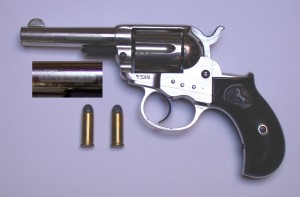
At the Proving Ground, Gary absolutely nailed a tough shot with a Colt Lightning revolver. This was following up great shots by Brian Zins and Chris Cerino, but at the end of the Proving Ground Gary was safe, and the elimination challenge shooters were Chris, Gunny, and William. Having seen previews for the episode, I knew that the elimination challenge would be the classic Shooting Gallery/HORSE game.

Sure enough, the shooters arrived at the shooting gallery. There was a nice twist…for the spectators. Gary and Phil got to enjoy a cold beer while watching their fellow shooters duke it out for a spot in the top four. As a viewer, I was hoping that this year on the shooting gallery at least one contestant would display a basic understanding of HORSE strategy, but I was disappointed. Allow me to digress for a moment and explain. When playing HORSE, the idea is that you call a shot, and if you miss it, your opponent can attempt the same shot. If they make it, you get a letter. First person to have enough letters to spell “HORSE” loses. Top Shot makes basic strategy even more important, because each shot is worth a point – if you make your called shot you get a point, and then your opponents have a change to make the same shot and earn points as well. That makes it imperative to hit your called shot otherwise your opponents will have a chance to pick up points on your. To take it back to the playground, you pick safe shots – ones you know you can make 95% of the time. Otherwise, you’re exposing yourself to more risk than is necessary.

Last night’s episode really bogged down when the competitors forgot this basic strategy and starting doing silly stuff like shooting an apple at 200 yards with the LaRue OBR. Three shooters, three misses. It was a fairly low scoring shoot-off, that finally resulted in Gunny Zins eliminating William and entering the top four.

Here are your final four that will run and gun for the title of Top Shot of Top Shots:

  • Chris Cerino
  • Brian Zins
  • Gary Quesenberry
  • Phil Morden

I’m genuinely excited for this finale. I like all of the contestants in the finale, and while I’ll be rooting for my buddy Chris, I won’t be disappointed with whoever wins the finale. Good luck to all the contestants!

GASTON J. GLOCK style LP Releases New Dark Green Hunting Jacket

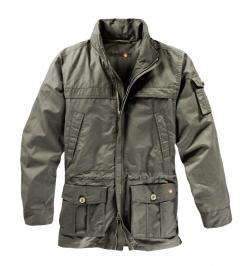
SMYRNA, GA – GASTON J. GLOCK style LP, the purveyors of fine quality hunting and shooting sports apparel and accessories, is pleased to announce that the newest addition to their hunting apparel line, the Dark Green Hunting Jacket, is now available for purchase. Made in Poland from a cotton blend, the functional and durable summery Hunting Jacket is ideal for hunting in warmer regions, such as on a Safari in Africa. The Hunting Jacket comes with a wax finish that aids in protection from wind and other elements, yet retains its breath-ability making it ideal for summer or warm weather hunts.

gaston glock hunting jacket

The Hunting Jackets contains many pockets that are perfect for storing essential hunting supplies. The Hunting Jacket includes two patch flap pockets with side openings and two inserted pockets, as well as two breast pockets, two interior pockets that offer additional room for personal documents and a large back pocket that can be reached from both sides and can accommodate many spare cartridges. The left sleeve also contains a small flap pocket.

In case of sporadic rain showers, the Hunting Jacket comes equipped with an emergency hood that is incorporated into the lower collar. The waist of the jacket can be adjusted with a drawstring and a mesh body lining ensure that the jacket fits perfectly.

The Dark Green Hunting Jacket is available for purchase on the website for $309.00 and comes in sizes S – 3XL for men and XS – 3XL for women.

About GASTON J. GLOCK style LP:
GASTON J. GLOCK style LP, headquartered in Smyrna, Georgia, is an online hunting and shooting apparel and accessories store built on the premise of providing customers with exceptional products made from natural and organic materials while enhancing their outdoor experiences. Gaston products are made by European and American craftsmen applying traditional craftsmanship to a whole new generation of outdoor enthusiasts. www.gastonglockstyle.com

Laura Burgess Marketing
Laura Burgess
PO Box 13978
New Bern, NC 28561
P: 252-288-5805
[email protected]

GASTON J. GLOCK style LP
3842 Highlands Parkway
PO Box D6
Smyrna, GA 30082
P: 678-236-9001
www.gastonglockstyle.com

Craig Buckland Wins Back-to-Back CDP Titles At IDPA’s New England Regional

HARVARD, Mass. – The Wolff Gunsprings/Tactical Defense Solutions shooter Craig Buckland picked up his second straight Custom Defensive Pistol title at the Smith & Wesson New England Regional IDPA Championship.

With division wins on half of the match’s 14 stages, Buckland, a Master class shooter, managed to outpace Team Colt’s Mark Redl by just over 12 seconds with his final winning time of 291.25 seconds and 57 points down.

“Craig shot a very strong match with Mark right on his heels. With two consecutive CDP victories in the books, it’s clear that Craig knows how to put together a winning run here at the New England Regional,” said Bob Biehl, match director for this year’s championship.

Redl placed second with five stage wins to take first Master with 303.86 seconds and 99 points down. Third place went to the first Expert, Aaron Haines, with 353.56 (105). Matthew Holmes, third Master, placed fourth with one stage win and 355.52 (87) while second Expert Bob Biehl who rounded out the top five with 368.22 (95).

Elsewhere in the division, Frank Palka, an Expert in the division, won High Distinguished Senior honors with a final time of 418.17 seconds and 57 points down. Kevin Wagner took first Sharpshooter with 435.36 (104) and Andy Holton claimed first Marksman with 489.83 (114).

Sanctioned by the International Defensive Pistol Association (IDPA) the Smith & Wesson New England Regional IDPA Championship was held Friday, Saturday and Sunday, August 16-18, at the Harvard Sportsmen’s Club located in Harvard, Massachusetts and drew 189 competitors.

Complete match results can be found online at MetroWestTactical.com.

For more information on IDPA, or to join the more than 22,000 members competing each week all across America, visit www.IDPA.com.

You can further connect with the IDPA community through IDPA’s social media, such as @OfficialIDPA on Twitter and ShootIDPA on Facebook, Instagram, Pinterest and Tumblr, or check for regular news and updates on the organization’s DOWN ZERO Blog.

– See more at: http://www.idpa.com/blog/post/2013/08/21/Craig-Buckland-Wins-Back-to-Back-CDP-Titles-At-IDPAs-New-England-Regional.aspx#sthash.uyd3MFds.dpuf

More discussion of night sights

Last week I tried to provide the conceptual framework for an individual to determine whether or not they need night sights. The piece was inspired by a good discussion on Pistol-Forum.com and some of the same ideas expressed on the forum showed up in the comments here on Gun Nuts…so let’s chat about some of those.

If there’s enough light to identify a threat, there’s enough light to see sights

The English language scarcely contains the verbiage necessary for me to convey how strongly I disagree with this sentiment. I spent a significant chunk of last week’s writeup covering the anatomy of low light vision in human beings and briefly discussing some of the factors that impact it including age, genetics, and in extreme cases even diet. I spent the time discussing the unique hardware through which we see the world to give some scientific backing for the idea that we each see the world uniquely.

Two people standing in the exact same lighting conditions will not necessarily be able to “see” the same amount of stuff. Meaning that person A may not be able to see much of anything while person B, because of better genetics, youth, etc, might be able to “see” quite a bit of information about his/her surroundings. It would be rather presumptuous of person A to insist that nothing can be seen because he can’t see it. I have a relatively common genetic visual impairment known as color blindness. This means that under some lighting conditions I am unable to recognize a difference in some colors. In high school I was scheduled to perform at a Christmas concert and was sitting backstage looking through the music before the show started when the homecoming queen (a friend) came up to me and mentioned that I was wearing two different colored socks. They both looked black to me, but to the rest of the world with normal eyesight one was black and the other was a dark navy blue.

It would have been rather foolish of me to insist that she was wrong because I couldn’t perceive a difference. The same thing applies when we’re discussing low light visual capabilities. Some people may be genuinely unable to positively identify a threat in the absence of light, but others might have superior vision and might well be able to determine that they need to pull the trigger without any additional light required.

Something else worthy of note: Lighting is not a static thing. It varies considerably from location to location based on the circumstances. Some time ago I took a class taught by Craig “SouthNarc” Douglas called Armed Movement In Structures that was held in the sort of place where people cook meth or smoke crack. It was a wasteland of urban decay where even at the peak of daylight there were nooks and crannies darker than the heart of Thulsa Doom. The entire course was force-on-force, meaning that both days of the course were chock full of shooting problems in varying light conditions. Attempting to accurately place fire on a moving, thinking, shooting target that was busy weaving and bobbing through all of the junk and clutter turned out to be exceptionally frustrating. Often when attempting to engage the opposing role player, I was on the move myself…and I found it exceptionally difficult to accurately place fire on the threat with the sims and airsoft weapons that had no night sighting capability. I encountered many occasions where I was able to clearly see the dude with the gun who was trying to shoot me, but could not get a good enough read on my sights to accurately place rounds on target. (With the “target” sometimes only being a sliver of the opfor’s face peeking around a corner) This reinforced previous experiences on the range and in shoothouses where I was able to positively identify a threat using only ambient light, but not able to get a useful aiming reference using the same.

Walking through daily life I am constantly identifying conditions where I would have plenty of light to identify a threat, and yet wouldn’t have enough light on my gun to get a solid read on my sights. That’s my assessment based on training and experience with my eyeballs. In my own house because of street lights or even moonlight, there is often enough light to clearly see a person and even what he/she may have in their hands, but not enough ambient light for me to pick up a good sight picture on black sights. Lt. Chuck Haggard pointed out in one of last week’s comments that on duty he has encountered similar situations, and sometimes it’s not even a function of just low light. He pointed out a situation where he had to draw on a suspect who was under a street light but the suspect was wearing dark clothing. I’ve encountered similar sighting experiences on the range where I was shooting from a shaded position on a black target. With solid black sights, at least with my vision, the sights blended in with the black target making an indecipherable blur. This is not really the situation you want to find yourself in when it’s an ex-con in a black hoodie instead of an NRA bullseye.

Do not believe for a second that if there is enough light to positively identify a threat that there is enough light to see your sights. That may be true for some people because of their vision, but do not assume it will be true with your vision and your circumstances. Test and evaluate for yourself.

Lasers are useless toys that will get you killed in a gunfight

This would come as a real shock to all the guys who have spent time killing bad guys in Iraq and Afghanistan using weapons equipped with lasers. If you look at the average door-kicker’s kit you will see lasers mounted to their weapons, primarily IR lasers for use with night vision. True, it’s not the exact same thing as a visible laser, but it’s still a laser and when the person wearing NV has to shoot something he needs to find the dot on the target. Units in law enforcement and the military that have to operate in HAZMAT or chem/bio suits often use a piece of equipment like the DBAL, a visible and IR laser integrated into a single compact box so that they can still get an accurate aiming reference while wearing the masks that go along with those suits.

I haven’t killed anyone with a laser, but I’ve tried to solve low-light shooting problems with and without lasers and I’m telling you straight up: It’s a lot easier to make a shot with a laser under low light conditions than it is to use any other sighting method. I’m not alone in making that observation. I attended a few low light courses taught by Ken Hackathorn and he had nothing but praise for the utility of the laser in low light conditions, readily admitting that experience actually using one converted him from a skeptic to a believer. One of the most graphic demonstrations of the benefits of the laser was attempting to engage a small steel plate at almost 40 yards with a Smith & Wesson 442 (J frame snub revolver with a 1 7/8″ barrel) and easily making solid hits using the laser that would have been difficult for most of the shooters had they attempted it with iron sights. We tried to make the same shot with full-sized service pistols equipped with tritium sights in the same low light circumstances and it was at best a 50/50 prospect. Pull out a smaller, much harder to shoot snub revolver and suddenly everybody was hitting with at least 4 of 5 shots.

No, lasers won’t get you killed because you’re too busy chasing the dot. On someone’s first exposure to a laser they might well be confused, but I’ve yet to see someone who could perfectly work a Glock upon first exposure to it…does that mean a Glock will get you killed in a gunfight? You need some practice to learn how to use the laser, but that’s true of any piece of equipment. Once you have that practice the use is second nature. When I’ve put people behind a laser-equipped handgun with just a couple of minutes of explaining how they work I’ve seen them deliver exceptional accuracy within a few shots. Having an aiming reference actually on the target is far easier than trying to line up sights on the pistol.

Frank Proctor training class review

Hilton Yam has a short but concise review of Frank Proctor’s carbine class up at Modern Service Weapons. I’ve been interested in taking one of Frank’s classes ever since I saw that he uses the same fruity running style I do of keeping the support hand high so it can receive the gun quicker when you get to a shooting position..

In all seriousness though, I think that training with Frank would be an excellent opportunity for any shooter, because he’s both a USPSA Grandmaster and an Army SF veteran. Some trainers have either one or the other backgrounds, and have difficulty transferring the concepts of competition shooting to self-defense or the concepts of military/tactical shooting to civilian CCW.

Hilton’s recommendation only ads more fuel to my desire to take a class from Frank, as Hilton is a pretty squared away dude and hasn’t yet steered me wrong with his recommendations, from Mexican food to 1911 parts.