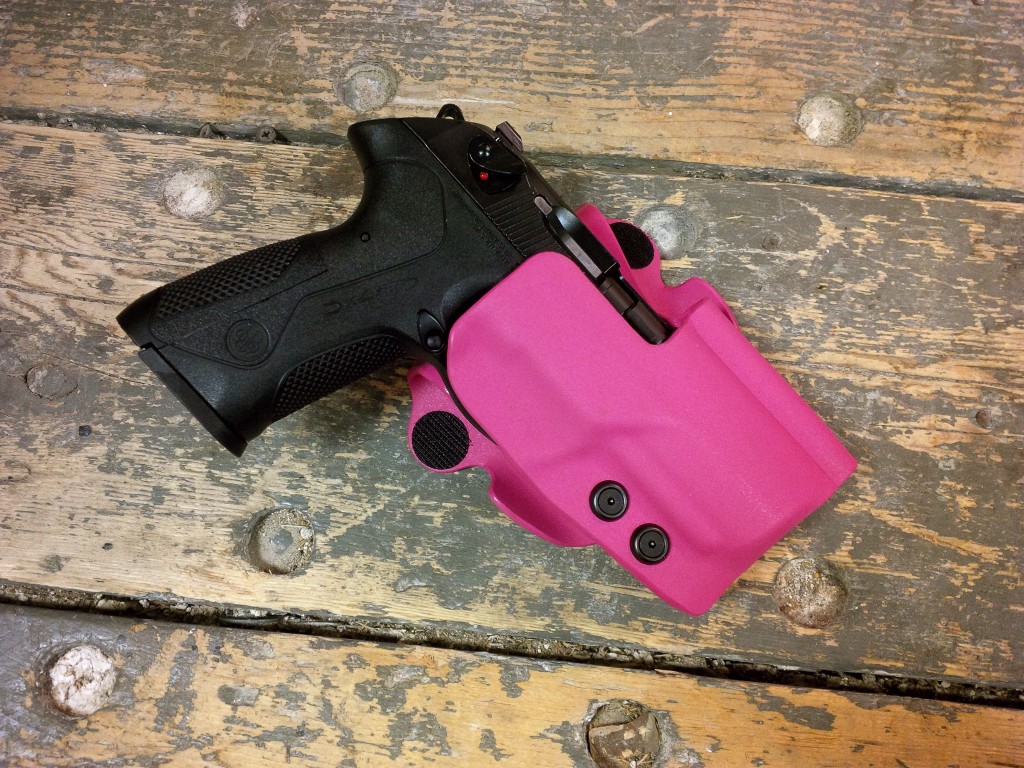
Want to dress basically however you want at a match? Do some charity work. It’s the perfect bullet-proof vest! “Why are you wearing that kilt to a match?” “It’s for prostate cancer research.” “Why is your holster pink?” “For breast cancer.” It’s perfect, because you get to feel self-righteous for basically doing nothing, and you get to make other people feel bad!
But in all seriousness, doing stuff to help raise money for good charities is always pretty rad.
Video games have been a huge part of my gun ownership experience, even since I was a little kid. While I couldn’t run out and buy the Stormtrooper carbine in Dark Forces, a little known LucasArts shooter called Outlaws helped fuel my love of western guns even to this day. In fact, the first shotgun I bought was a single shot NEF specifically because they had a single shot break action in Outlaws.
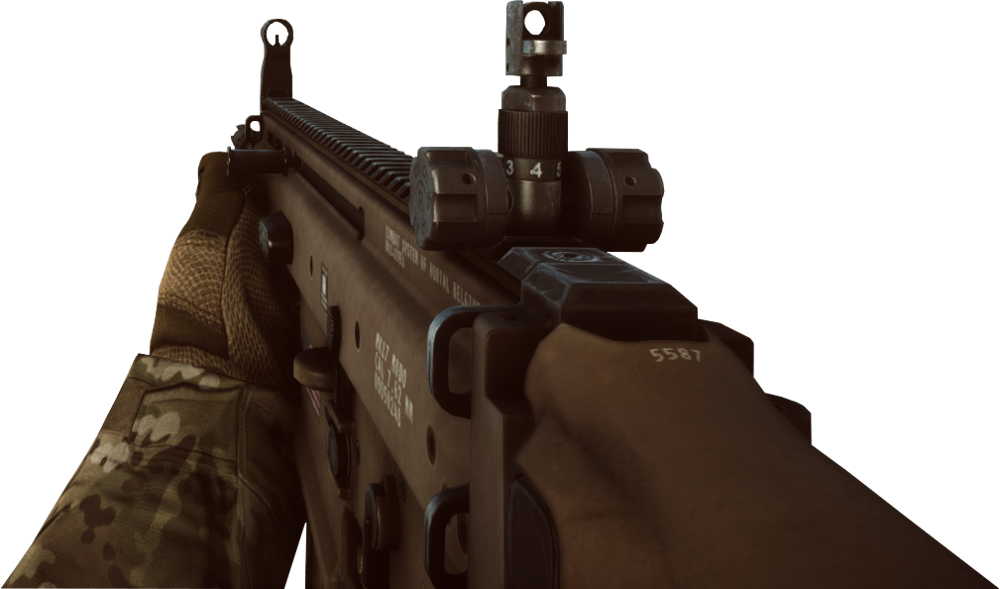
These days, I find myself doing the reverse. Instead of letting video games drive my real life purchases, my real life shooting habits are informing how I set my guns up in video games. Specifically, Battlefield 4. The way the game’s mechanics work allows you to customize your rifles, shotguns, carbines, SMGs, sniper rifles, DM Rifles, basically everything. If you look at my rifles, they’re almost all outfitted the same way as my real guns:
Light/laser
Fixed magnification optic (such as an ACOG)
Muzzle brake
Some kind of handstop/foregrip/AFG
It’s interesting, because there are times where my set-up isn’t “optimal” for the way the game’s combat system works, but I don’t care. I wouldn’t run a soup-sandwich rifle with a heavy barrel and a magnified red dot, because that doesn’t make any kind of sense. A 3x prismatic optic on the other hand makes all kinds of sense to me. Maybe I’m just weird, but I can’t bring myself to set up an imaginary rifle in a way that I wouldn’t set up a real rifle.
One of the struggles of being a blogger is knowing when it’s appropriate to be critical of a product or brand. One of the struggles of managing a brand/product is knowing how to respond to criticism. Today, we’re going to look at an example from the fitness industry to see how major brands should not handle criticism.
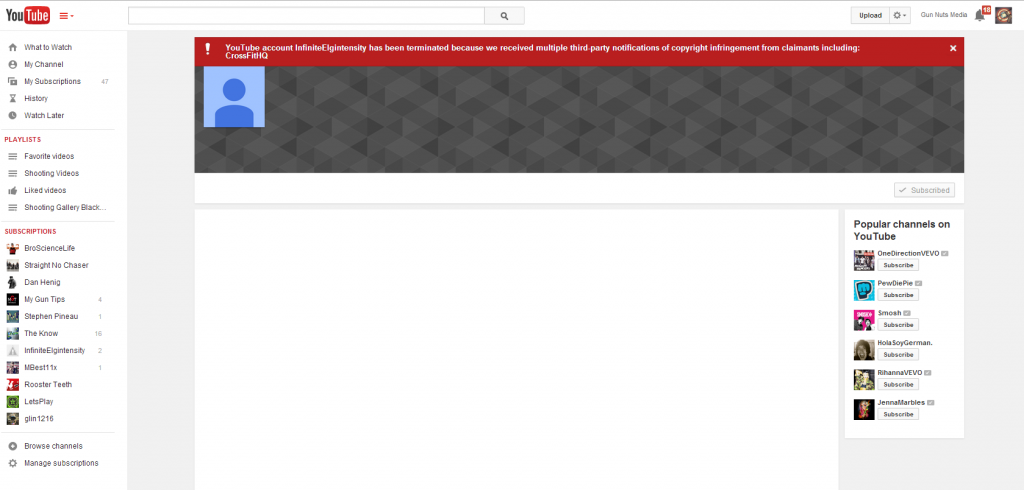
There once was a youtube channel called InfiniteElgintensity. It was a bodybuilding dude who made fun of terrible workout videos posted online, frequently targeting crossfit because hey, even though I love crossfit, sometimes it’s a little ridiculous. I went to check his channel this morning and saw this image.
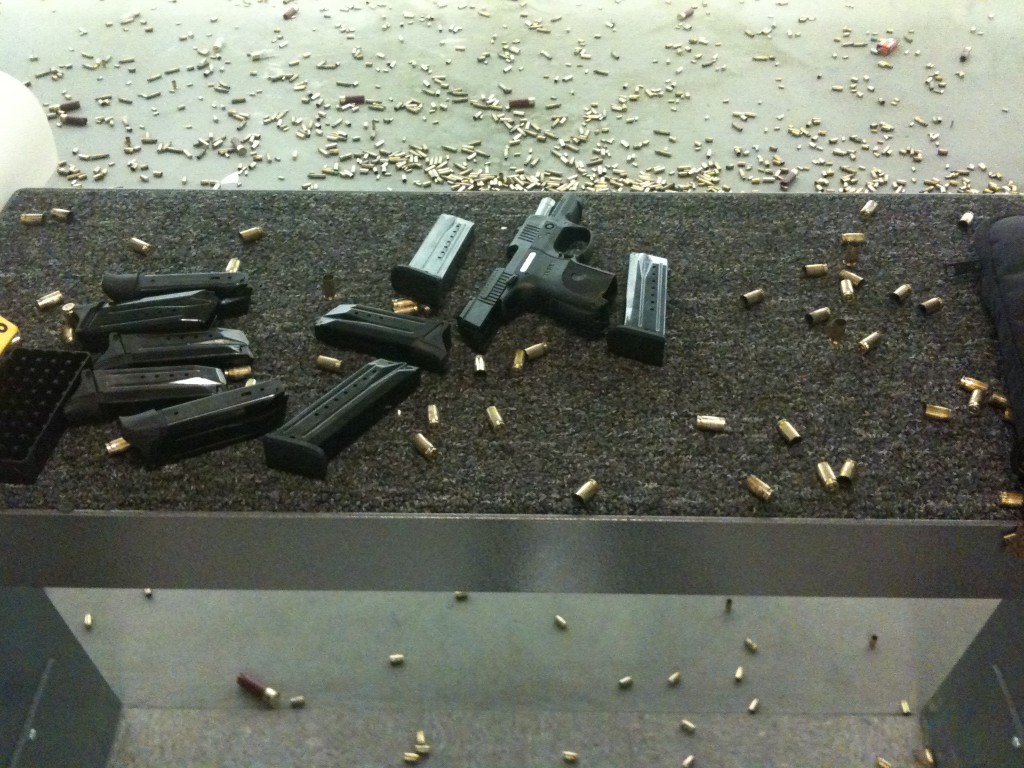
I took this photo after wrapping up a range session at my first ever visit to West Coast Armory in Bellevue. The range was fine, but there was a cute ginger working there, so I figured I should visit again. Seems to have worked out so far.
The success of the Glock family of pistols and the numerous variations on the polymer-framed, striker-fired theme that exist on the market today has led many to view the concept of a double action trigger as a bit of an anachronism. Jeff Cooper maligned double action semi-automatic pistols as “crunchentikers” many moons ago and the stigma has kind of stuck with them ever since. Folks who bring up that term today often forget that Cooper was involved with the 10mm Bren, which happened to be a double action pistol. The cool kids in the gun world shot custom 1911 pistols, often turning their nose up at the very idea of a double action auto, and those who embraced plastic went to Glocks fairly quickly after. As any simple Google search will demonstrate, some Glock and 1911 fans are often quite vocal about their preferred blaster and tend to proselytize fairly aggressively with a fairly good record for conversion. As a result, there’s not a lot of people out there who really understand double action triggers, how to run a double action trigger well, or what benefits they bring to the table.
I’ve come to appreciate the benefits of the double action trigger with training and experience
By the mid 1980’s it was clear to anyone who had their eyes open that the revolver’s days as the workhorse of law enforcement were over. The U.S. military had just adopted the Beretta 92 pistol. A lot of departments who had issued revolvers saw the double action automatic as likely to be an easy transition for their officers and so they bought up the Beretta as well as offerings from Sig Sauer, Smith & Wesson, and to a lesser extent Ruger. Even Colt saw the writing on the wall and made a few attempts at producing a double action semi auto. (Google the Colt Double Eagle…ain’t that a trip?)
Unfortunately it wasn’t an easy transition for everyone. Police revolvers were often issued with very small grip panels that were less than ideal for officers with big meaty paws but happened to be a positive boon for officers with smaller hands, like the many female officers who were just coming into the profession. With the small grip they could get their hand around the gun well enough to get decent leverage with the trigger finger and shoot well enough to qualify with minimal instruction. A semi-automatic pistol with a double stack magazine didn’t allow for the same flexibility in gripping the gun, which often left the officer struggling to get enough leverage on the trigger to work the double action pull properly. We like to think that “back in the day” everybody was an expertly trained marksman, but the truth is that police firearms training “back in the day” was typically poor. Then as now there were some excellent programs and instructors, but by in large the typical police firearms training was mediocre at best and it led to some pretty heinous results. Officers stuck with an ergonomically sub-optimal sidearm and poor quality instruction struggled to use the new pistols well and improvised methods of getting the job done well enough to qualify that didn’t serve them as well in the real thing. Often instructors sought the path of least resistance and would sometimes even encourage officers to cock the hammer of the pistol as they drew it, voting “present” on the concept of teaching the DA trigger. I’ve met more than one police officer who was taught to fire his first round into the dirt to get past the DA trigger pull and then start fighting with the gun in single action mode.
All of this combined with an ever growing acceptance of an Austrian pistol that shipped in what looked for all the world like a Tupperware box (Seriously. Google Glock box and you’ll see something you’d expect to pack leftovers in) started to give the double action trigger a bad rap. Folks seemed to forget that having a longer, heavier trigger pull for at least the first shot on a sidearm used in supremely stressful situations by people that were largely unfamiliar with functioning at that level of stress tended to cut down on accidents with a gun in the hand. (It certainly didn’t make it impossible, though.) That longer, heavier first shot tended to be more forgiving of handling mistakes like reholstering with one’s finger on the trigger. The typical hammer-fired DA gun also didn’t require a trigger pull to disassemble the weapon for cleaning. Many an unintentional discharge has happened when someone has been attempting to break a Glock down for cleaning. Proper procedures will certainly prevent that from happening, but when you run an organization with dozens of people in it you can be certain that there will always be a percentage of people who don’t follow proper procedures.
Contrary to all this accumulated lore, it is most definitely possible to run a double action pistol well. A few weeks ago I mentioned Ernie Langdon had teamed up with Wilson Combat to help them get their Beretta custom services off the ground. In that article I mentioned that Mr. Langdon had won a couple of championships with a Beretta. In truth Mr. Langdon’s contributions were a bit more important than that. Around the turn of the millennium (just hearing that phrase in my head makes me feel really old) conventional wisdom held that you just couldn’t get good results from a DA trigger. The handgun sports were all dominated by Glocks and 1911s. Mr. Langdon had spent years running the USMC’s High Risk Personnel program where he learned how to use the Beretta 92/M9 very well. He knew the Beretta so well, in fact, that he ended up going to work for Beretta as a rep to the military and law enforcement. Mr. Langdon started competing in the shooting sports with a Beretta and recruited other shooters for the company. More importantly, he started winning championships with the Beretta, putting a big dent in the idea that you can’t run one well. After leaving Beretta he went to work for Sig and won with their guns, too. So much for the DA sucks theory…
In truth you can use a DA semi-automatic very well if you get some instruction from somebody who knows how to use one. Mr. Langdon is getting back into offering classes these days and he’s even leveraging the power of the web to spread knowledge about running a DA pistol properly:
I’m not trying to argue that people who like their Glocks and shoot them well should drop them right now and go buy themselves a hammer-fired DA gun. If you like what you’re shooting, rock on. If you’ve been influenced by the conventional wisdom which argues that the DA trigger is vestigial or even counterproductive, hopefully you’ll be open minded enough to reconsider.
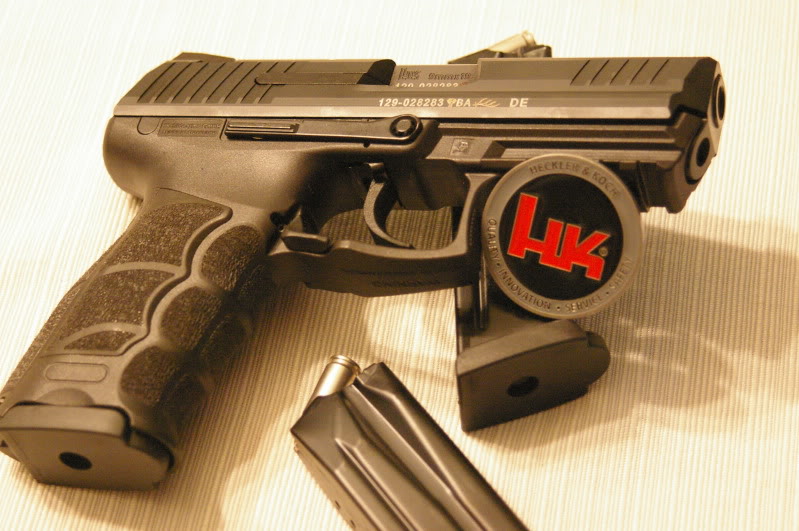
Personally speaking, I prefer guns with a double action trigger to striker-fired pistols. The gun I carry daily is a H&K P30 with the double action only LEM trigger system. When I first got into shooting I would have laughed at anyone who told me I’d be carrying a DAO 9mm pistol. I mean, come on….I’d read Cooper articles for years. Thankfully I was exposed to solid instructors who challenged some of my preconceived notions and showed me what you could really do with a good double action handgun.
So to borrow Mr. Langdon’s phrasing, fear not the double action shot. Heck, if you approach it with an open mind and use the tips Mr. Langdon mentions above, you might even like it!
Our friend Natalie from Girl’s Guide to Guns has her own show now, which is awesome. I’ve known Natalie for years now, and watching her rise to the top of the game in the firearms community has been absolutely awesome. This show is absolutely squared away as well, and I genuinely believe that it nails down “what we need” to bring more female shooters into the fold.
I really enjoy that NRA is absolutely bringing their A-game with their lineup of shows that are presented on youtube in an easily shared and accessed format. Traditional TV is great, but there is an entire generation of gun owners that goes straight to youtube first for their gun information. Shows like Love at First Shot and the upcoming Noir are going to be a great way to target (ha-ha) a generation of shooters that doesn’t know where Outdoor Channel is on their cable guide.
Watch me run around like an idiot! This drill has 56 yards of total movement, which is more than you’re likely to move in the entirety of an IDPA match. There are two scoring methods for this drill. The method depicted in the video is the “points only” method, where the time isn’t important, only the hits count. Based on that method, I would have scored a 7/10, because three shots fell out of the 8 inch circle.
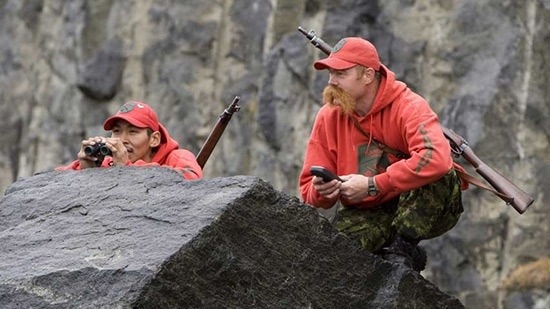
Found on The Chive a while ago; there are number of interesting things about this photo, not the least of which is the ginger gentleman’s tremendous facial appendenge. It appears that their rifles are British SMLEs, and that the sleeve of the ginger’s shirt says Canada on it. Any ideas what the context or where this is originally from would be appreciated.
Edit:It turns out they’re the Canadian Rangers, which as someone put it on Facebook “The Knight’s Watch in red hoodies.” They’re awesome.
This bad boy was on display at NRAAM in the Benelli/Ethos booth. It was apparently the land record speed holder for some time. It was quite popular with the attendees.
We use cookies to optimize our website and our service.
Functional
Always active
The technical storage or access is strictly necessary for the legitimate purpose of enabling the use of a specific service explicitly requested by the subscriber or user, or for the sole purpose of carrying out the transmission of a communication over an electronic communications network.
Preferences
The technical storage or access is necessary for the legitimate purpose of storing preferences that are not requested by the subscriber or user.
Statistics
The technical storage or access that is used exclusively for statistical purposes.The technical storage or access that is used exclusively for anonymous statistical purposes. Without a subpoena, voluntary compliance on the part of your Internet Service Provider, or additional records from a third party, information stored or retrieved for this purpose alone cannot usually be used to identify you.
Marketing
The technical storage or access is required to create user profiles to send advertising, or to track the user on a website or across several websites for similar marketing purposes.