Training for Match Mode – Part 1

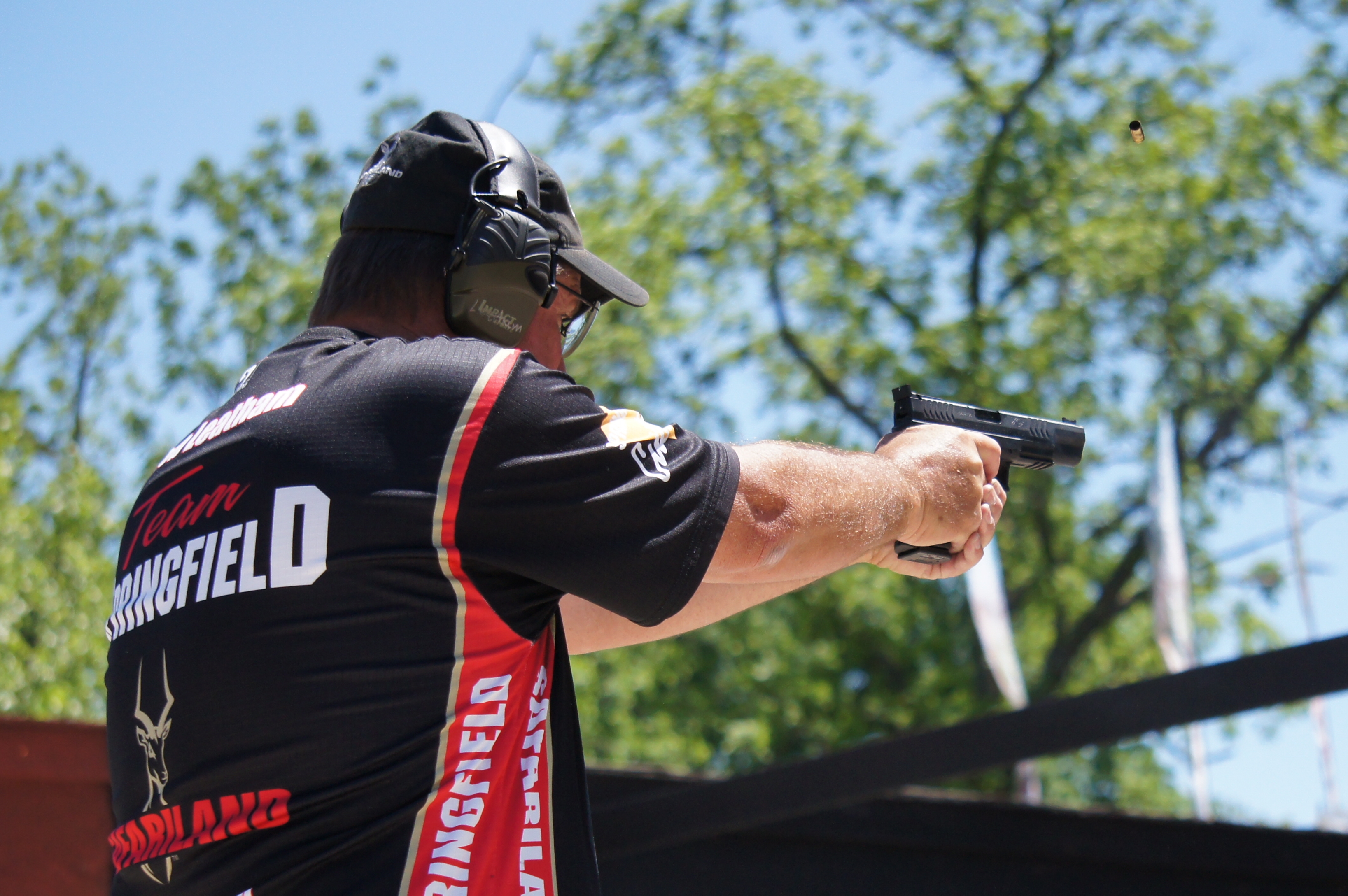
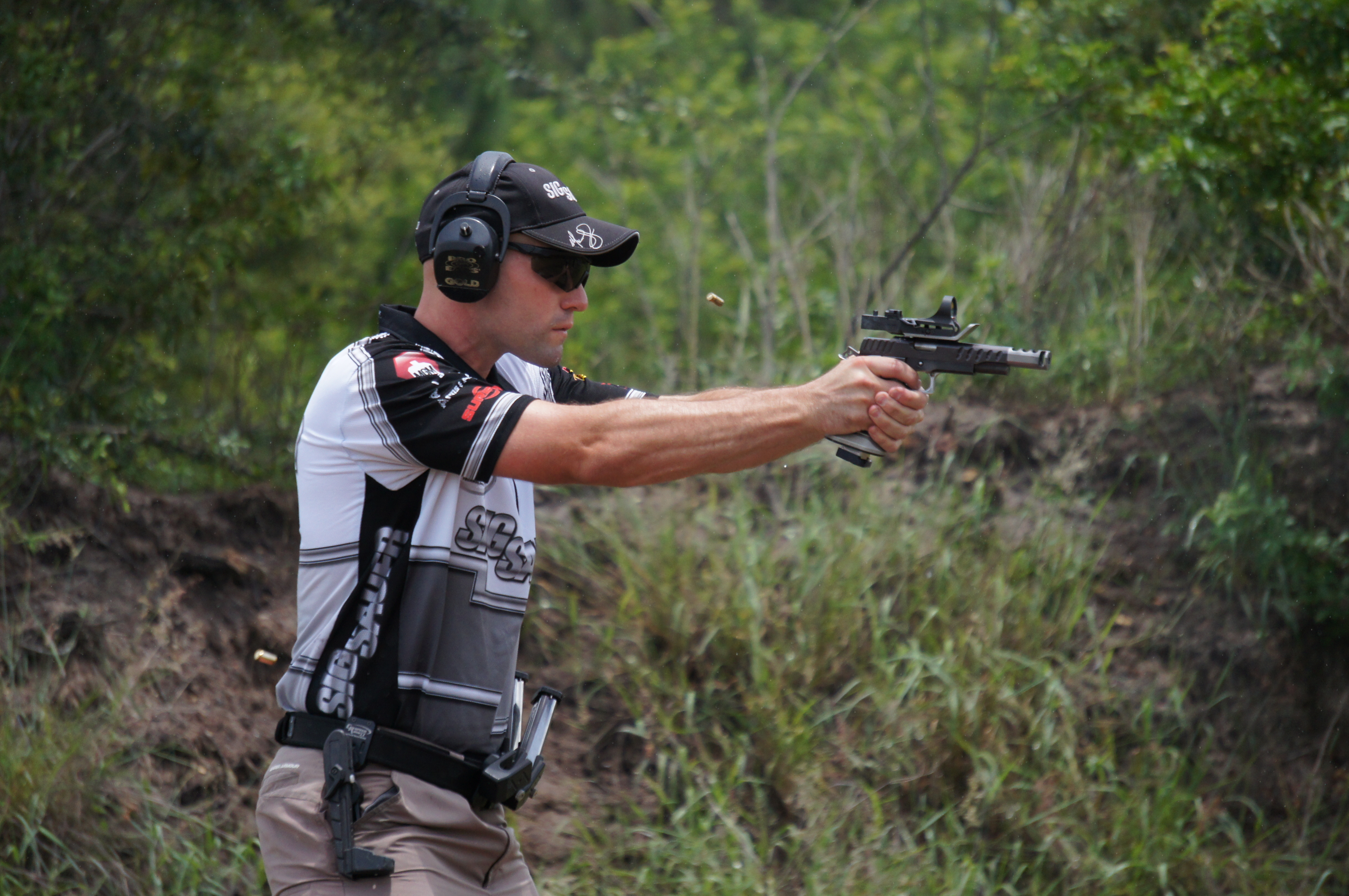
Before we delve into this subject I want to make it clear that what I am about to say is specific to competition and is something I been experimenting with and developing; and, it is based on Steve Anderson’s Match Mode, Speed Mode and Accuracy Mode concept. I offer this as food for thought and something you might want to experiment with.

Live fire training is a necessity for competitors. While dry fire practice is a great way to increase certain skills, you still need to feel the recoil of the gun. You need to hear the noise and you need to see the smoke. You can’t learn to mitigate the urge to blink and flinch in dry fire. You can’t learn how to watch the sights lift and settle in dry fire. Live fire training is a necessity for all competitors that care about improvement.

I put out an article recently discussing the concept of comparing your skill development to yourself through trending. I followed that up with two articles with a variety of drills to help you to increase your shooting ability. But what about trending ourselves on larger drills or mini-stages? We could perform a baseline run with the timer and then repeat the drill over and over. As long as you repeat the drill setup exactly every time and change nothing, then it is feasible. But let’s be realistic; the time trending on small drills works because the setup is repeatable. Once you get to drills larger than the El Presidente’ your trending is at the mercy of your accuracy with a tape measure, the sun, shadows cast on the target, ground elevation and even the ambient temperature.

But there is another issue at play. When we are practicing for time there is a tendency to go all out. This is actually a good thing and is what Steve Anderson calls Speed Mode. This is important because it allows the shooter to know what if feels like to “go fast”. But it has a humongous drawback – the tendency to train yourself to always go all out. In a match you should be shooting at the level you feel most comfortable and most consistent, you should level, not rushing and trying.   On bigger drills what is needed is a way to trend our improvement while also ensuring we are not rushing or “trying” to do more than our skill allows.

If trending time alone is less than practical on larger drills what are we to do? We score the drill, the same way we do in a match. We still use a timer but the only thing that is important is the start beep and the final number.   But let’s delve deeper and look at why this is important.

As noted above, Match Mode is a term that also comes from USPSA GM Steve Anderson and it makes total sense. If we want consistency in our match performance we need a method to train that consistency. When we score a drill and compute Hit Factor we are balancing speed and accuracy – exactly like in a match. We can take the hit factor data and see how we would have performed in a match.

Remember, in a match we should only shoot when the sights “tell” us the shot will be scored well. When we try to go faster we get poor shots, missing and a gaggle of no-shoots with holes in them. Trying to exceed our current level in a match is foolish.

Example: imagine we have two USPSA Metric targets in close proximity to each other that are 10 yards away from the shooter. Then we have a shooters box 10 yards to the right with two Metric targets 7 yards from the box. The shooter must engage the first targets then move to the shooter box and engage the second set of targets. It is fair to say that the first run people make will be the slowest, but using the method of tracking that is a good thing. After the run, score the targets and compute the hit factor.

If you are unfamiliar with Hit Factor you will find a really good article by Travis Tomasie here.

Hit Factor = Points Per Second

What does that mean?

Simply put, Hit Factor = Points / Time
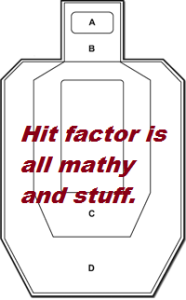
metrictarget

Now run the same drill 6-8 times. If you are like most people you will have one run that stands out from the rest – the YouTube run. For our purposes this run, your fastest run, is the stage winner. Now use the remaining hit factors (minus the fastest time) to calculate your average score. Comparing your average score to that one your fastest run you can see how far off your average is to absolute best.

Using this method we can trend the development of our match mode without having to mimic the same drill each time. Neither the raw time, nor the drill is important. The difference between the best run and your average is the key data point. With time you should see your average is closer to your peak run. The closer the average is to the best run the closer you are to performing at your peak level consistently.

I will stop here – for now. In Part 2 we will explore a couple of other benefits of this method and a way I have been able to equalize and bring our best and worst runs closer together.

Consistency – It Matters!

Basic Knife Skills for Concealed Carry with Greg Ellifritz

Odds are that a significant percentage of the readership of this site carries a knife of some sort on a regular or semi-regular basis. The odds are also pretty good that most who do regard the knife they carry as a potential defensive weapon for dire circumstances.

I suppose this dates me, but I remember the days when the “tactical folder” was becoming a big thing. The new “tactical folder” knives were optimized for sheath-less carry and quick one-handed opening. The ubiquitous Buck 110 style folder (which, back in the day, was a darn good general utility knife) or more traditional Case-style pocket knife was supplanted by a Spyderco, Benchmade, Emerson, or even a Cold Steel clipped to a pocket. It seemed like a pretty good idea to me too, so I bought one and carried it around in a pocket for years. Some time later it dawned on me that I really hadn’t the foggiest idea how to effectively use a knife as a defensive implement.

I’d dare say that most people are like me in that regard. They may have purchased a “tactical” knife designed as a defensive implement but they don’t have any relevant training or experience in actually using the knife as a last-ditch tool of self defense. What to do?

I found out a bit earlier in the year that FPF Training was bringing Greg Ellifritz down to teach a knife class oriented towards concealed carry. I’ve mentioned Greg several times in this space  so he shouldn’t be a stranger, but it’s worth mentioning here that Greg has been teaching knife classes to police officers and to motivated citizens for quite some time both in his capacity as a policeman and as a trainer working for TDI in Ohio. I’ve done a few classes with Greg and I’ve been reading his blog for some time and I generally like his take on things, so I was eager to see what he would present in a knife class.

The day started with a discussion of philosophy: Greg’s instruction focused on things that are easy to learn and I’ll refer to as “high percentage” in application. By that I mean techniques that are highly likely to be successful against most criminal assailants.

Knife use on the street rarely looks like what you see in the movies:

Two people do not square off and duel with knives any more than they square off and duel with firearms. The knife usually comes out in the initial stages of a criminal assault:

…or, in lawful use it comes out when the good guy is losing a physical fight to a superior opponent (either in size, strength, or skill) with the expectation of severe and potentially lethal consequences. Think of a police officer who is fighting with someone who is trying to take their sidearm, or the intended victim of a rape who uses a knife to cut her physically superior attacker off of her so she can escape.

After discussing his overall philosophical basis for the course and the realities of knife use in criminal assaults, Greg discussed hardware selection. He had a big bag full of knives representative of the options available on the market. I took a lot of notes on this section but instead of reproducing all of that here I’ll give you the Cliff’s Notes version:

  • Fixed blades are superior in every respect, most importantly in ease of access and speed of deployment.
  • Small fixed blades are extremely effective, especially when used intelligently. You don’t need huge blades…2.5 to 3″ is usually sufficient for most defensive purposes.
  • Fixed blades are also more legally restricted.
  • If you have to carry a folder because of the law, you want one with a strong lock. Frame locks, back locks, and pin style locks are typically the strongest. Liner locks the weakest.
  • Automatics have a bad habit of opening when you don’t want them to.
  • Assisted openers tend not to lock if they are even minimally obstructed.
  • You want an easily used ambidextrous opening mechanism and a decent choil to keep your hand from running up on the blade.

After the hardware discussion was over, we disarmed ourselves of any live weapons, buddy checked, and then started to work with training knives. Greg brought a bunch of fixed-blade trainers and folding trainers so everyone could get hands-on time with both types of knife. Those who had their own trainers were free to use those as well.

We spent quite a bit of time on what Greg said was the most important part of using the knife defensively: Access. It’s one thing to be able to draw the knife when you are standing and relaxed, but that is usually not when people reach for the knife. Usually it’s when there’s some bigger, stronger dude on top of them trying to beat them to death and in those circumstances accessing and drawing the knife can be incredibly difficult.

For access purposes, a small fixed blade carried on the centerline of the body is king, as five minutes of drilling against an opponent will teach you. It is possible to get the knife and use it effectively even if you are flat on your back locked in a bear hug. If you cannot carry a knife that way and are forced to carry a folder in a pocket, make sure you can reach it with either hand and that you can open it with one hand, preferably without having to rely on an inertia opening. (Flipping the knife open) As we practiced the techniques in class we got quite used to to seeing folders fly through the air after a failed inertial opening attempt.

Under Greg’s instruction, we worked with partners to give experience deploying and using the knife effectively under pressure. It was remarkable for me to see people who were showing visible trepidation early on transformed into people who were effectively accessing a knife and then using it to very quickly work over their opponent by the end of the day. One of the highlight exercises started with a group of students standing, hands at sides, with eyes closed. The other group would then randomly “attack” them. I “attacked” an inexperienced middle-aged woman with a double handed choke from the front, and without missing a beat she whipped out a fixed blade trainer and simulated a filleting of my forearm. As I moved to stop that, she transitioned to a stab attack under my arm aimed at my brachial artery. When I moved to stop that, she slashed at my jugular and then “stabbed” me in the groin…all improvised as she reacted to what I was doing.

I don’t think most bad guys are any better prepared to stop that kind of counter-assault than I was.

Greg concluded the day by discussing a few tricks he’s used to carry and use a knife in high threat areas where it wasn’t possible to have a gun, useful information for a number of students in the class who have to live or work in areas/countries where they cannot carry firearms but still face a very realistic threat of assault.

The class was fantastic. Greg has effectively distilled years of training and teaching this topic into an easily digestible program that just about anyone can pick up in short order…and it’s stuff that has a very high likelihood of success if the need to apply it ever manifests. Greg is good at what I call filling in the “cracks”: providing useful instruction aimed at the gaps most citizens and police officers have in their defensive game. This class won’t make you the world’s leading knife fighter, but it does a damn good job of filling that “crack” and giving you an effective plan B for those occasions where you don’t have or can’t get to your firearm to defend your life.

I took this class with a buddy of mine who recently retired after 25 years as a police officer. He told me afterwards that in the whole of his career he had never encountered any defensive tactics training that was even close to the quality or effectiveness of Greg’s instruction. He further offered that he couldn’t think of a single criminal he ever arrested who would have been prepared for just how dangerous the students in this class would be with a knife.

FAST Drill with the Springfield Armory Range Officer

The RO is over 1500 rounds now, and after being generously lubed and politely talked to, it made it an entire range session without a malfunction. Although the pin I noticed walking on a previous test continues to wander around, which is quite annoying. Here’s me running the FAST Test with the RO.

With regards to training, I’ve been focusing lately on working from my actual concealment rig; which means AIWB with a closed front garment. I’m ashamed to say I haven’t practiced with this set up nearly as often as I should, and it shows in my training. My draws are nothing spectacular, pretty pedestrain 1.50s to a headshot, but oh my lord my reloads are ass. Just hot, wretched ass for days and days. The best reload I pulled today was a 2.26. Mind you, with an open front concealment garment, I could get sub-2.00 reloads all day long and when I was hot could even get in the 1.5s. But this closed front thing? It’s the worst. Yes, it doesn’t help that I’m trying to reload a single stack without a magazine funnel on it, trust me I know.

I’ve wanted a FAST Coin for a long time. The last time I had a whack at one, I turned in a decent time in the mid-sixes, good enough for the Wall, but not good enough for a coin. Then it slipped from my focus for a while, and then I took all of last year off from shooting. Now I’m back behind the gun and training hard again, and it feels good. I’ve pushed my raw shooting skills back to where they were around 2011-2012 when I was at the peak of my game. With some more work I should be able to get consistent with my reloads from concealment again. Since Ernie Langdon has taken over the FAST torch from Todd, I might even have a chance.

Gamer, Timmy, Neither or Both?

I will likely offend legions of people with this post, but so be it, it’s an editorial and my current opinion. 

When I started shooting competition I had the intent to make IDPA Master in SSP and ESP.  That was in the fall of 2014; now it is 18 months later and I find myself no longer concerned about it.  Oh, it is still a goal of mine, but in working towards that goal I have learned a few things.  Things that have changed how I train, my gear and my overall point of view.  What follows are some things I wished people would have explained to me when I first started shooting competition along with some observations I have had.

I’ll start with International Defensive Pistol Association, or IDPA.  I will openly admit I have only shot a few IDPA club matches, but it left me cold.  Perhaps my exposure was an oddity, but nevertheless, it influenced me.  Here is what I have learned.

  1. The IDPA Classifier is a decent means to track skill growth and improvement, especially with a CCW weapon concealed under street clothes.
  2. The IDPA Classifier has virtually nothing to do with IDPA Match skills.
  3. Within the ranks of IDPA you will find good people; unfortunately you will also find Tactical Timmie’s of the highest order.  These are the people who consider it to be training for the streets – more on this later.
  4. IDPA is now, and always has been a game; although, a lot of the membership would seem to believe it is not, even though the rule book states it on the first page.
  5. USPSA shooters take themselves less seriously.

In my time shooting competition I have found myself identifying with the gamers more than the tactical guys. I do care about self-defense and defending both myself and my family.  I carry my CCW as often as permissible.  I also carry a flashlight and small locking folder because, unlike the CCW, I find myself using those items on a daily basis.  I do not live in fear of a ninja attack or zombie apocalypse but the simple fact is the firearm is the best tool to defend ones self, if circumstances both require and allow it. Thus I carry a firearm, but I digress.

Let me address those items I listed above in more detail.

The IDPA Classifier test multiple skills against a set time. You are only judged against the clock. There is very little movement and the Classifier never changes. This is good for tracking growth and skill development.  Oddly enough, you are not required to use a cover garment and most people seem to despise shooting the classifier.

In an IDPA match you will have no-shoots, hard targets, movement, swingers, ports to shoot through and a you often have to wear a concealment garment, which is normally the vest. The vest, I hate the damn vest! People have told me, to my face no less, that IDPA is proper training for CCW.  Perhaps so, if you wear a vest around town.  If there was ever a piece of shooting equipment specific to a game it is the IDPA vest.

I wonder if the founders of IDPA had a conversation similar to this, “Let’s all wear this vest and game concealed carry, then we’ll claim it is real and that we are different from those dirty IPSICK gamers.”

Let’s review:

  • Shoot USPSA while wearing Salomon shoes and khaki shorts? Sure!
  • Wear those same shoes and shorts on an informal date?  Sure!
  • Wear them while hiking? Absolutely!

When, oh when, do you wear the IDPA vest out in public?  Who’s the gamer????

Some people have actually told me that IDPA is training! Too my face! Yes, seriously! I responded by asking who the instructor was; which went over well. I was also informed that I was just a gamer and did not appreciate the concealed carry weapons skills that IDPA trained.

These same people who claim IDPA to be training are often seen competing with a specially designed IDPA vest concealing a Glock 34, S&W Pro, or some other gamer gun.  A gun that has a light weight trigger, held in a IDPA legal OWB “race” holster.   I will openly admit that would be perfect practice if that is how they actually carried, but it is not training.  For training you need an instructor.

In fact, the individual mentioned above, that commented on the training aspect, well he put his Ruger LCP back in his front pocket in the parking lot following the match.  I am sure he felt bravado and security in the training he had just received. Anyone else see holes in this thought process???

What about those dirty USPSA gamers? 

you play to win the game (300x225)

USPSA competitors are shooting in a game.  They know it, IDPA shooters knows it; hell, people that don’t know anything about guns can look at a photo of a USPSA competitor in mid-stride and recognize he is competing – IN A GAME!

USPSA shooters don’t take themselves seriously. Look at what some of them wear. Go to an IDPA match and you’ll see 5.11 pants, Blackhawk!, a great many shirts with logos or sayings from the Spartans, Trojans, Romans, etc. Go to a USPSA match and you’ll see cargo shorts, golf shorts, ugly shoes and comical tee shirts. Of course in both competitions you’ll find the person wearing a jersey because sponsors.

I am a gamer. It took me less than 3 IDPA matches to determine I am not a Tactical Timmy, which is odd because I do enjoy my AR and self-defense classes. But there is a time to be serious, a time to be realistic and a time to play the game.  You can be a student of self-defense without being an over the top Timmy.  Equally you can be a competitor and still take self-defense seriously.

From my view-point we have two action pistol shooting competitions that are diametrically opposed on how they view themselves. This is not to say there are not gamers in IDPA, because there are. But the real gamers generally migrate to USPSA.  As Caleb once said in a Ben Stoeger podcast, running and shooting a pistol is fun and USPSA does running and shooting better.

Since I have just expended 1000 words berating IDPA I must hate everything about IDPA, correct?  Actually no!  For actual gamerness (new word) and competition, yes, my focus is on USPSA.  As for IDPA, I plan on actually rejoining and shooting some matches using my real CCW, from my real carry holster, in my actual street clothes.  Being a person of logic I am going into those matches with the understanding that while IDPA is not training, it is a good means of practice with my carry gear. 

Practicing with the gear you actually plan on defending yourself with – that sounds an awful lot like the original intent of IDPA to me.

So what are your thoughts?  Do you think I am completely off base here?  Did I offend you?  Do you disagree?  Do I care?

9mm is the best caliber for the 1911

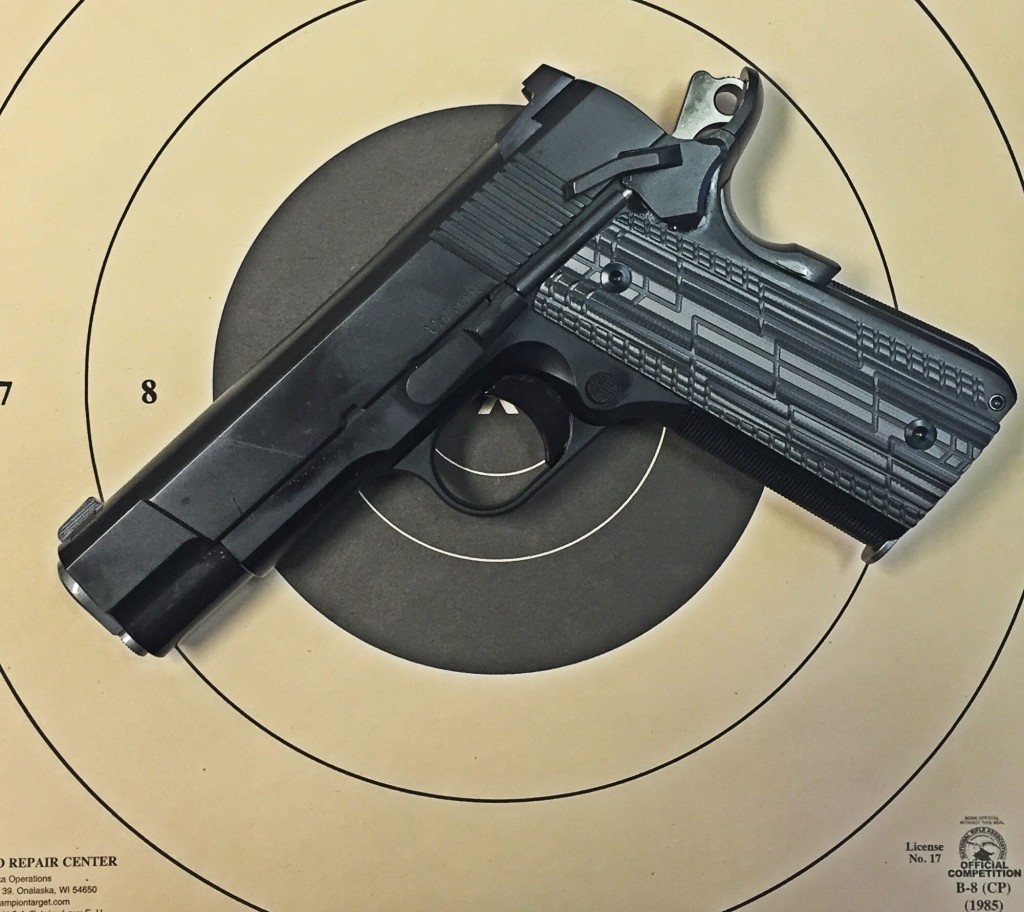
The 1911 is probably the most iconic handgun design ever. No pistol in history has done more – from battlefield to CCW to every single flavor of competition, there are 1911s. It’s just a great gun. It’s also at its finest when it’s chambered in a cartridge it wasn’t originally designed for: 9mm. Now, before you come burn my house down, hear me out because there’s a method to my madness. Yes, I know that it’s harder to make a 9mm 1911 run right than a .45. Yes, I know that the 1911 was originally designed for the .45 ACP cartridge, and that saying it’s better when chambered in 9mm is tantamount to heresy. But it’s heresy like Galileo’s heresy, because I’m actually right.

image

Let’s look at defensive uses first: we know for a fact that there’s no difference in terminal performance between .45 ACP and 9mm (cue the ballistards), so there’s no point in giving up 2-3 rounds of ammunition capacity, right? If you can carry more, do it. A 1911 with 11 rounds of 9mm on tap has 122% of the firepower of a .45 ACP with 9 rounds in it, and if that kind of made up number doesn’t change your mind, try this: 8 rounds of 185 grain JHP weighs 1480 grains, but 11 rounds of 147 grain 9mm JHP weighs 1617 grains. THAT’S MORE GRAINS! ALL ABOARD THE GRAIN TRAIN!

To bring things back to reality, consider ease of shooting. Everyone regards 1911s as being wonderfully easy to shoot, thanks to what are still some of the finest ergonomics ever found on a handgun. So what happens when you dump that uneccessarily large cartridge that doesn’t offer any performance advantages in favor of a light weight, soft shooting 9mm that works just as well? You get a gun that’s so stupid easy to shoot well it’s almost criminal. Honestly, one of my favorite things about testing all these 9mm 1911s is how easy they are to shoot. They’re heavy, they soak up what little recoil there is; and it’s really just a good old time.

Lastly, consider the following: in every single other platform, 9mm is better. 9mm Glocks? Best Glocks. 9mm sub-guns? Best sub-guns. So why not 1911s? Besides, think about this. When John Moses Browning designed his next pistol, he designed the gun that he would have made if the Army hadn’t insisted on certain design parameters. What was the result? A double stack 9mm pistol. Sure, the Belgians gayed it up with that magazine disconnect, but otherwise it’s perfect. Just like the 1911 in 9mm.

Mindless devotion to Jeff Cooper is stupid

Dr. Dre’s dead, he’s locked in my basement – so spoke the poet Eminem, using the metaphorical murder of one of the icons of hip-hop to signal the changing of the guard to a new generation of rappers. Unfortunately, no one ever wrote a similar line about the late Lieutenant Colonel Jeff Cooper, and such whenever discussions about “stopping power” or “DA/SA” or even AR15s come up, someone will always drop into the comments, genuflect towards Prescott, AZ and say “but Jeff Cooper said” blah blah blah.

Now before you burn my house down, Jeff Cooper has contributed more to the art of modern pistol shooting than I could in 5 lifetimes. Without Jeff Cooper and the Modern Technique, we’d probably still be still stuck with Applegate’s point shooting nonsense, and that would be awful. Furthermore, I still recommend Gunsite as my first choice for someone with no pistol/CCW experience to attend, because the immersive environment of a 250 goes much further beyond “just a pistol class.”

But not all of Jeff Cooper’s ideas were great. He was unequivocally wrong about 9mm, the AR15/.223 cartridge, and DA/SA autos. While as a young man he may have been an innovative, outside the box thinker; in his old age he became a bit of a hidebound traditionalist. Which is fine. I aspire myself to be a crotchety old man, sitting on my porch complaining that these dang laser guns with their electronic triggers can never stop a man like a good old 9mm.

That’s not what I’m talking about, thought. I’m talking about people whose knowledge of defense shooting and tactics starts and stops with the light colonel’s ideas. Look, the Modern Technique was awesome, but we’re way past that now. We’ve fought two enormous wars with poodle shooter rifles and crunchenticker pistols, and when our elected leaders let our warriors do their jobs, we actually did pretty well.

So what’s the point of this simple rant? Open your mind. After you read Jeff Cooper’s book Principles of Personal Defense, read something else. Read Your Defensive Handgun Training Program by Mike Seeklander and learn to shoot better than you ever could have using just the modern technique. I’m not saying we shouldn’t respect Jeff Cooper’s contribution, but at the same time we should apply some critical thinking. Just because he said it, doesn’t make it right.
Please don’t burn my house down.

Springfield Armory RO 9mm 1911 malfunction

The 100 round challenge is a function test I came up with a while ago to see how well a gun would operate if you got it, well pretty hot. Shooting 100 rounds through a pistol as fast as you can load is a good way to do that, and it can also be a fun test of your endurance. Here’s video of the me running the Springfield Armory Range Officer through the 100 round challenge…which it failed.

At 3 minutes into the video I experienced an unusual malfunction, where the gun returned partially to battery, but not all the way. When the trigger was pulled, the hammer fell to the half-cock notch, causing me to believe I’d had a light primer hit. It wasn’t attended I attempted to clear the gun and it was locked up tight that I realized I had something else entirely. The round in question had the correct dimensions, and successfully chambered and fired after clearing the gun. This was the second time that range session I’d had issues with the gun not returning to battery. After conferring with a well known 1911 expert, he let me know that this problem is commonly caused by a slide stop that isn’t quite correct, and the best fix is to replace it immediately. I’ve ordered a new slide stop from Brownells, and as a precaution some additional recoil springs as well.

However, because this is part that needs to be replaced at the armorer level; it is a -5 deduction for the gun. That brings the 1911 RO’s current score down to 78/100, which is still a respectable C+. With just a bit over 500 rounds left in the test, we’ll see where things go from here.

Pistol Drills 7 Yards and Beyond

For this post I decided to combine both medium and long distance pistol drills. For those confused please see this post for more information on what I am talking about regarding distance.

The simple fact is that a decent pistol shot can make hits at 7-10 yards even without having a perfect grasp of the fundamentals; but, the further out you go, the more important those fundamental skills become. Many, many people have a response of awe when I discuss making 15 yard hits on a 3”x 5” index card. IT IS NOT THAT HARD! Especially with no time limit! But I will admit it will require some practice and effort.

Remember that all of the close range drills in my last article can be performed at longer ranges, and I often do so. But some drills are just better suited for specific distances. You wouldn’t do the doubles at 50 yards with the same PAR time as say 3 yards.

Draw to One Shot

In my previous article I made mention that drawing to one shot leads to cheating, and through the lens of close range shooting I stand by that statement. However, the further back you go, the more you can learn from a one shot drill. At 3 yards you can sling a round at an IPSC Metric target (or IDPA target) and get close to the center. At 10 yards you might hit the target. At 25 yards you will miss. This is why we should understand the reason for each drill.

This drill is simple enough. You draw the gun and shoot one round at the target. I like to start doing this at 10 yards and if I clean it 6-8 times, I start walking back to the point of utter failure and practice at that distance. I also prefer to shoot steel to minimize walking to the target to verify hits. I have a 6” x 8” piece of steel on a pole that I use for this drill.  Below is a video of me running the drill once – it is worth mentioning that the piece of steel is 8″ squared in this video.  I have since torched 1 inch off the sides to better mimic an IPSC A Zone.

Head Boxes

This is similar to the Doubles drill in the first article, but we make it harder by moving further back and using the head box as the target. Starting at 10 yards the goal is to draw and put two rounds into the head box or similar sized target. If you can meet a reasonable PAR time at 10 yards, move back to 15 or 20. This drill is tough and that is the goal. You will have zero success even getting the rounds on target without a proper sight picture. Your trigger press must be spot on and a flinch or anticipation will lead to a miss.

When working this drill with my CCW I like to mix it up, with a minimum of 2 and sometime as many as 6 shots per run.   Don’t expect hero status the first time you do this drill, but keep at it and you will realize improvement. I can assure everyone reading this, solid head box hits at 15 yards will make a 5 yard center of mass hit seem like child’s play.

Bullseye

1904infaimpistol

15, 20 and 25 yards are great distances for working on untimed accuracy. You can purchase some NRA B8 targets or print out something similar.  Staple them up and have at it. The goal is simple – the smallest group possible with no time limit. Repeatability is king. I like to run four strings of five shots each and actually measure the group. I write down the average group size as well as the smallest size. Keep in mind that at 25 yards you might find yourself at the accuracy limit of your weapon, especially if it is a run of the mill service weapon or small CCW.

The name Bullseye might be misleading to some readers that are familiar with NRA Bullseye competition. I am not implying you shoot this drill in classical 25 yard Bullseye stance, but instead a normal two-handed grip. If you are feeling saucy, try it strong hand or weak hand only!

El Presidente’

I did not include this in the original article because frankly most ranges won’t allow it. But if you can perform a standard 7 yard El Presidente’ you should. But I also recommend you perform this drill at 14 and 21 yards, if you have the facilities.

The drill is simple. 3 targets, 1 yard apart edge to edge. The gun is loaded with six rounds and the shooter faces up range away from the target with their hands at the surrender position, or above the shoulders. As originally designed the gun would be concealed, although us dirty, dirty gamers don’t use concealment with our competition gear. At the beep the shooter turns, draws and engages each target with two shots, then you perform a slide lock reload and shoot each target with an additional two round.

This drill works many things, including target transitions and reloads. By stretching the distance we can really grasp the difference distance to target makes on transition speed and accuracy. In my personal experience my shot times are slower, but the transitions are quicker as I increase the distance.  The distance makes the required target to target weapon movement less than at closer ranges.

As I said above, all of the short-range drills can be performed at the medium and long-range distances, but I rarely shoot the drills above at less than 10 yards. I have some additional drills for those who shoot competition and I will cover them at a later date.

Whether a competition shooter or you are only interested in practicing for CCW or self-defense, you will likely find these drills will help build skill. If you can master the drills given here and in the short-range article you will likely be among the best shooters you know.  Now, get out there and burn some powder – with a purpose!

Every “which gun to buy” conversation I’ve had

When you’re the token gun guy and you have friends that aren’t, you get asked about “which gun should I buy for x” a lot. Frequently. For me it’s either “which gun should I get for competition” or “which gun should I get for CCW/home defense?” Here’s how each of the conversations almost always go.

Which gun for home defense/CCW

Friend: Hey Caleb, what gun should I get for home defense and CCW?

Me: Get a Glock 19.

Friend: Why?

Me: Because it’s small enough to conceal every day, large enough to shoot well with a modicum of effort, holds a reasonable amount of bullets, chambered in a proven cartridge, and has a reputation for hell and back reliability.

Friend: But I read on the internet blah blah blah grip angle?

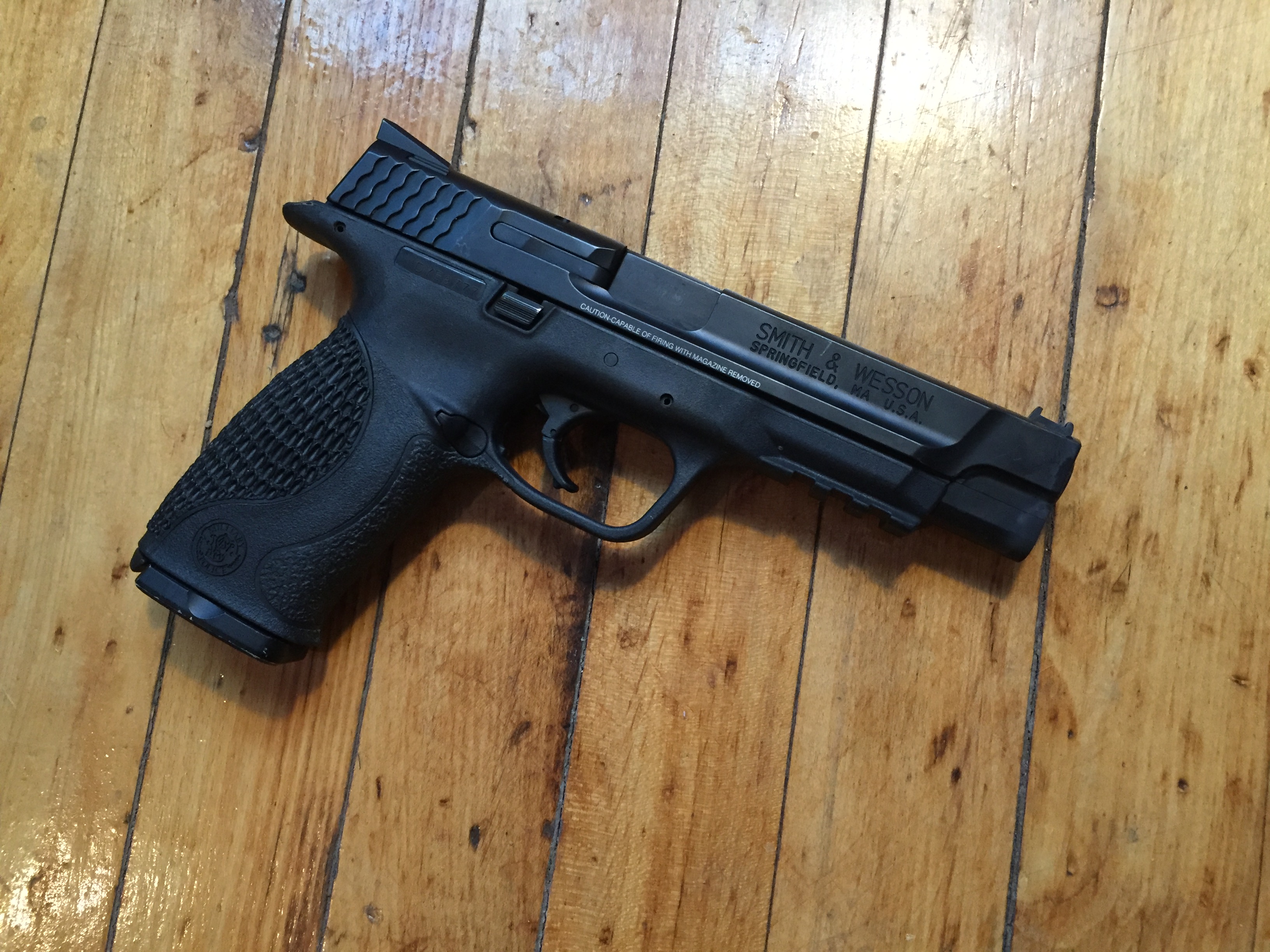
Me: Fine. Get an M&P9.

Friend: Why?

Me: Because it’s small enough to conceal every day, large enough to shoot well with a modicum of effort, holds a reasonable amount of bullets, chambered in a proven cartridge, and has a reputation for hell and back reliability, and doesn’t have the same grip angle as a Glock.

Friend: Oh, okay. So you carry one of those two?

Me: (sighs deeply) No, I carry a 1911.

Friend: Why?

Me: Because I have the time, resources, and most importantly interest in devoting a not insignificant part of my life to the study and practice of shooting, and because I like to maintain my guns beyond “squirt some lube on them and leave them be.” You should get a Glock 19, and after you’ve shot 10,000 rounds through it then decide if you like something else.

Some day I’ll have that conversation and my friend will just say “oh okay” and go buy a Glock 19, but probably not. Now it’s time for the competition gun conversation!

What gun to get for competition?

Friend: Hey Caleb, what gun should I buy for IDPA/USPSA competition?

Me: What do you carry?

Friend: A Glock 19/M&P.

Me: If you have enough magazines, shoot your first couple of matches with that, and decide whether or not you want to upgrade from there. You may not need a new gun if your focus is on practice with your carry gun.

Friend: But I want a new gun just for competing!

Me: (sighs deeply) Okay, get a Glock 34/M&P Pro.

Friend: Why?

Me: Because it has the exact same manual of arms as your carry gun, shares a caliber, and in some cases may even share magazines. It’s the easiest way to get started without spending a ton of money, and if you like shooting matches and want to upgrade you can always upgrade the existing competition gun or shop up for something more purpose built.

Friend: So what do you shoot?

Me: (answers with whatever I’m getting paid to shoot at the time)

Friend: Why?

Me: Because I’m getting paid to.

Now, that conversation has one variable; and that’s when the person has some kind of weird special snowflake carry gun that doesn’t enjoy massive aftermarket support. Then I tell them to get a Glock 34 or an M&P Pro right from the get-go.

I’d be willing to bet that a lot of my readers have had almost the exact same conversation. If so, let me know in the comments!