Unless you have been in a cave the last couple of days, you’ve probably seen the link to this new ammo called RIP, which stands for Radically Invasive Projectile. They have been running a truly impressive (and annoying, but more on that later) marketing campaign, to the point that their ammo has damn near gone viral. I’ve seen links to it on forums, facebook, had people email me and message me, so I guess it’s time to talk about the newest in trendy ammo. Let’s begin then with their own marketing video and go from there.
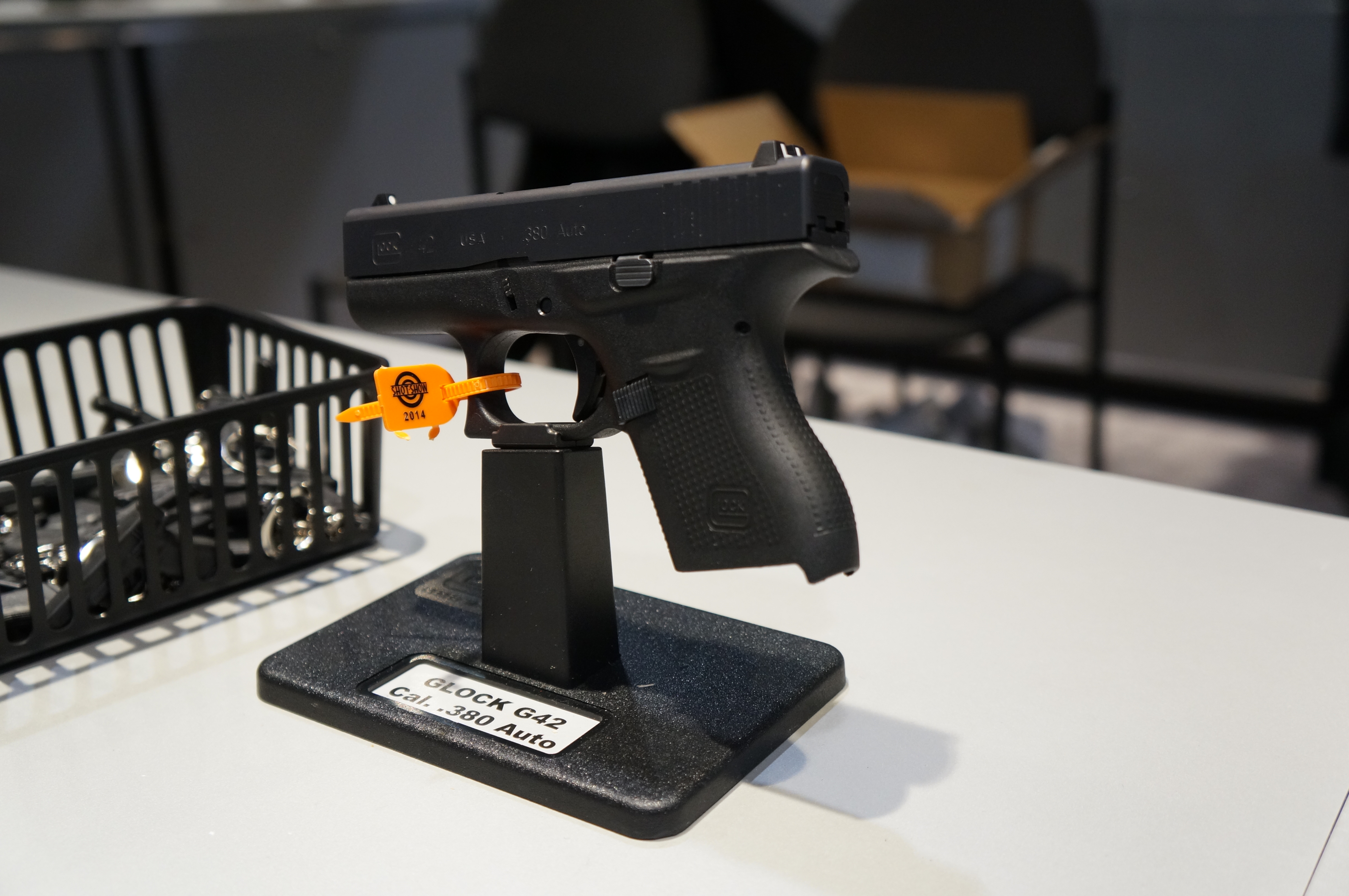
It seems lately everyone has been asking me what I think of Glock’s new slim-frame .380. I didn’t shoot it at Media Day and I only handled it briefly at SHOT. Why? Because it’s a Glock. Imagine a slim-frame Glock .380. Congratulations, you now have an idea of what the Glock 42 is like. Everyone I spoke to who shot the gun said the same thing. Of course, a Glock-y Glock is far from a bad thing.Continue reading →
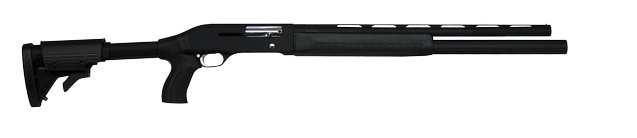 At the beginning of SHOT Show I made a bee line for the CZ-USA booth. The company has held a special place in my heart since I purchased my first pistol, a CZ 75 B, and they haven’t let me down since. I didn’t know it as I visited the CZ booth, but later that day I would find out that the first ever ladies only 3-gun major match was about to be announced. What made this news even more exciting was that it would occur in Covington, Georgia, surprisingly close to my home in Atlanta. Thus began my crash course in 3-gun competition. Back at the CZ booth I was shown their brand new 3-gun ready 712 Practical shotgun.
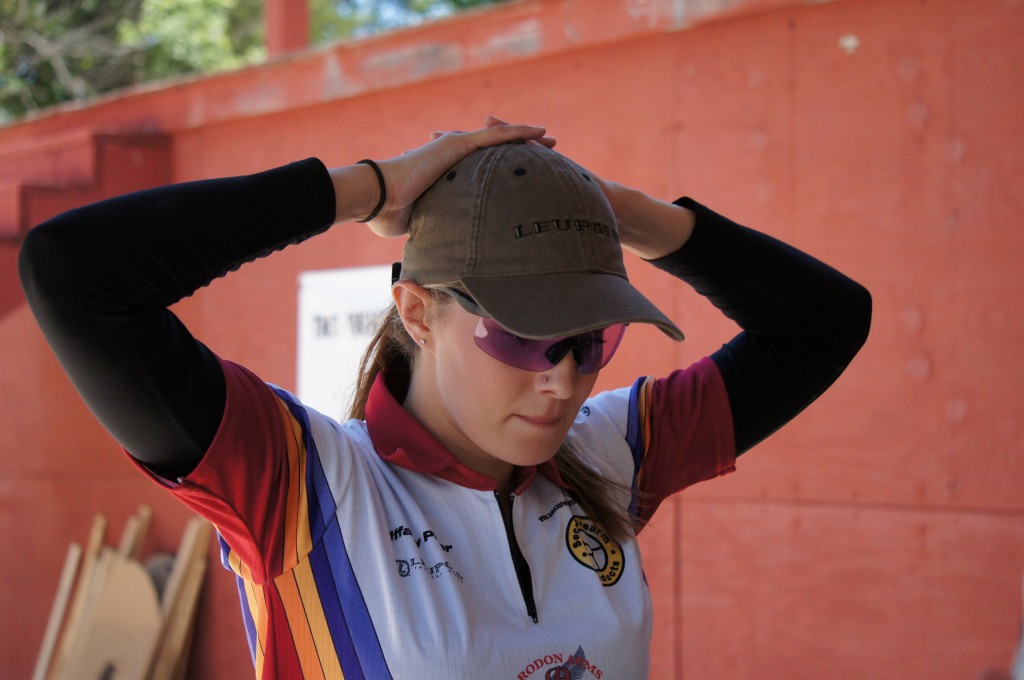
Bianchi Cup is one of the toughest tests of marksmanship in the shooting sports. It’s also an incredibly emotional sport. Here, Team Leupold shooter Tiffany Piper waits to see the hits in the 5 ring she knows will cost her a championship at the 2013 Bianchi Cup.
From someone who would know:
“I’m not convinced the ball ammo in use by our troops is necessarily “crappy”. Graveyards have been built over the last 12+ years due to the fatal wounds inflicted by 9mm NATO Ball.”
This is the corollary to Rule 1 of a Gunfight, which is of course “have a gun.” Rule 1A is “have ammo in your gun.” We talk a lot about making good choices for your defensive pistol and defensive ammo, but at the end of the day you’re better off with a pocket .380 loaded with ball ammo than you are with a sharp stick.
Please don’t mistake that statement to mean that I, or Gun Nuts thinks you should be carrying a pocket .380 with ball ammo as your primary. Everyone should carry full sized handguns in serious service calibers all the time; those guns should always be loaded with the latest and best in defensive ammo.
But at the end of the day, a .38 loaded with 158 grain LRN is better than your fists; and a 9mm loaded with ball ammo is better than a sharp stick. I’d much rather see someone carry an SD9 with ball ammo because they blew all their money on training and practice than someone with a $1,000 HK full of Ranger T-series who never trains.
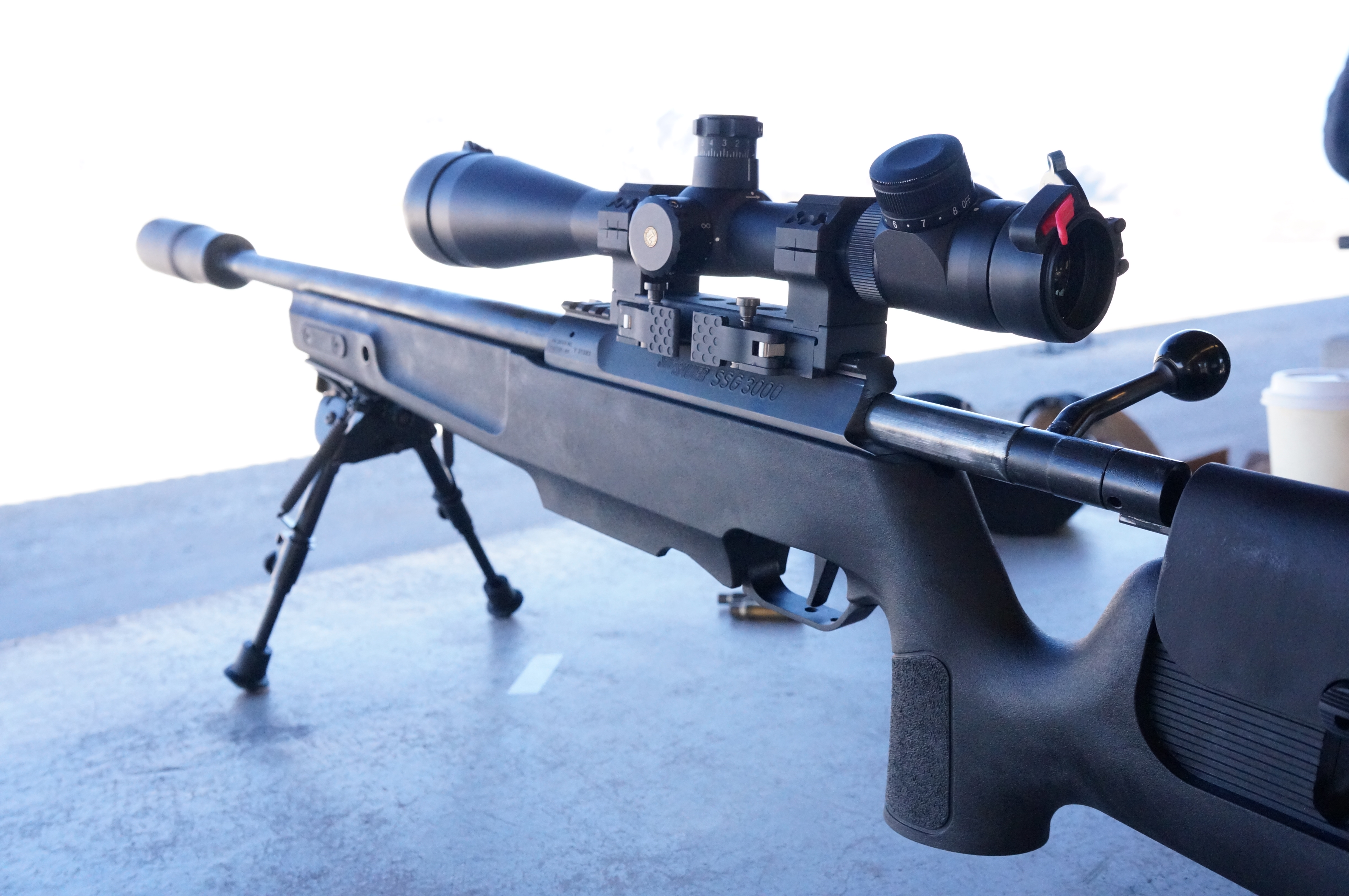
Before SHOT Show, I finally got the chance to take my Ruger Scout Rifle to the range and do some shooting. Not much, but enough to get a feel for the gun. The rifle is currently set up with the bipod and a Trijicon RMR as the optic. With the RMR, hits on a man-sized target out to 100 yards are easy, although I will need to get the rifle out and sight it in a bit better. I didn’t feel like doing a proper sighting session in four inches of snow.
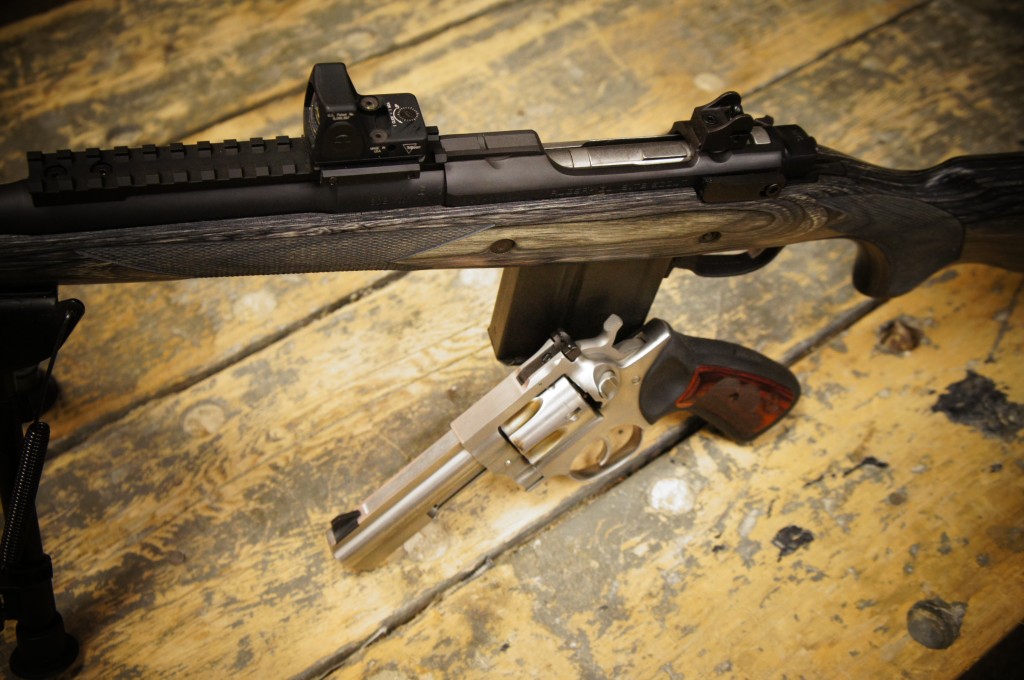
What I like
Felt recoil was minimal. The gun has a huge recoil pad which does a great job of soaking up .308 recoil, and it’s also kind of heavy – over 8 pounds when loaded. It’s not like shooting a 5 pound super lightweight .308 that beats you up, the gun is built in typical Ruger fashion to be tough.
I like the trigger as well. I am not a “rifle person” so I don’t complain about this or that feature when it comes to rifle triggers, I just want it to be light enough that I’m not going to struggle when I pull it. I don’t with the Ruger Scout Rifle, and the trigger breaks clean enough that I have no one to blame for misses other than me.
What I don’t like
Did I mention that it’s heavy? While I enjoy the pleasant recoil from shooting an 8 pound .308, I don’t think I’d want to carry this thing around for 8 or 9 hours without a really good sling. The magazines are marginally annoying to load, and I do wish every time I pick it up that they’d used FAL mags instead of AI mags.
One operational note that’s not a pro or a con – you cannot baby the bolt on this rifle and expect it to extract. It’s not a $2,000 sniper rifle where you can gently tease the bolt back and cartridges will flop demurely into your hand like Marilyn Monroe on a plush sofa. You have to pull that bolt back with authority and let it know who’s boss. Then it will send spent brass spinning merrily across the snow, to bury itself in white powder like Scarface’s nose.
The Verdict
I still don’t know what this gun is for, but I don’t care. It’s too heavy for an all day hunt, and for a DMR/home defense rifle I’d probably rather have Ruger’s new SR-762. But I like it, rather a lot. There is something satisfying about a bolt gun in the same way that driving a car with a manual transmission is satisfying. It feels right to press a clutch and change gears, and in the same way it feels good to operate the bolt vigorously while shooting. When you drive a sporty car with a manual, you can’t but help feel a little bit like a racecar driver. When you shoot a bolt gun rapidly, you feel like the ghost of Jeff Cooper is watching over you and smiling.

Every now and then when folks get to talking about pistol bullets and their terminal ballistics, someone will bring up an argument that goes like this: “Well I heard that BFE PD carries Round X in their guns, and they shot this guy in the head and the bullets didn’t penetrate his skull.”

This will always elicit an eye roll from me, because as it turns out the human skull is a pretty robust structure. It’s designed to protect the super-computer that keeps this show running, so it shouldn’t be a surprise when it does what it’s designed to do. Usually, when you hear about “failed” headshots on badguys, it’s because of one of the following circumstances:
Usually, the “creasing” headshot only happens when the shot is taken at the hardest part of the skull – the frontal area above the eyebrows. That’s one of the toughest bones in the body, the sloping shape of the frontal area can aid in causing projectiles to glance off the skull instead of hitting and sticking. I’ve read reports of just about every pistol round failing to penetrate the skull at one time or another: everything from .22 all the way to the “mighty” .45 ACP. I will say that I’ve never heard of a .44 Magnum failing to penetrate a human skull, but I can also say that I’ve not read too many coroner’s reports where a .44 Magnum was the weapon of choice, either.
The point being is that using “round so and so” failed to smash through one of the toughest bones in the body is a flawed argument when you’re talking about service caliber cartridges. Without knowing what type of ammo was used and the exact circumstances of the shooting, it’s pointless speculation. Let’s just accept the fact that the forehead and skull is a pretty tough bone, and sometimes under the right conditions it can even deflect bullets. Most major LET agencies know this, which is why they don’t train for the “Hollywood” forehead shot, and instead teach that if you’re taking a headshot, it should be in the magical T-zone.
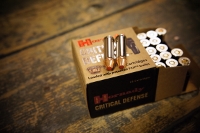
While there is no doubt that modern hollow-point bullets are scientifically better at incapacitating badguys and that no modern service caliber is “better” than any other, I have a pet theory that most pistol cartridges that have legendary reputations as poor performers don’t necessarily deserve that rep. The following theory doesn’t really apply to mousegun rounds like .25 ACP or .32 ACP, by the way.
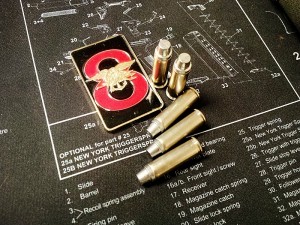
The Caleb Giddings Theory of Historical Stopping Power: Cartridges that have reputations as poor performers before the era of modern pistol-craft may not have been as bad as the legends would have you believe. Pistol marksmanship prior to the Modern Technique was mostly an afterthought, and guns of the era also had tiny, hard to use sights. For example, perhaps the 158 grain LRN .38 Special round wouldn’t be known on the internet as The Widowmaker if officers of its era had better training.
Discuss in comments!
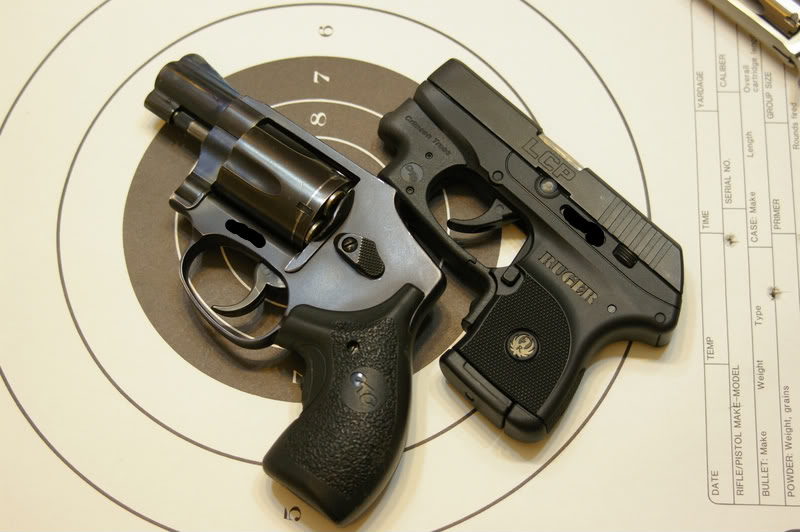
Last week the gun industry put on the SHOT show, a trade show where manufacturers and vendors can show their wares to industry buyers and the press. New products typically make their debut here, especially firearms from the larger manufacturers. If you look carefully at the product debuts and marketing efforts happening at SHOT you can get a read on trends within the industry and what manufacturers are seeing.
The talk of SHOT show this year hasn’t been long guns…it has been small handguns like the Glock 42 (Glock is going to sell those by the boatload) or the Remington R51. Manufacturers see that orders for black rifles are dwindling from the Obama-panic highs and they’re looking at what products they can get in consumer hands to keep the revenue flowing. Glock, who is rolling in money anyway, is betting big on a small .380 handgun. Remington is hopping back into the handgun market with their first original offering in almost a century…and it’s a compact (sort of) single-stack 9mm. S&W still seems to be selling every Shield they produce to the point where it’s nigh unto impossible to find 8 round magazines for the darn things in the wild.
An instructor friend of mine, Claude Werner, wrote a nice article on the trends he saw at SHOT and cited production statistics from the BATFE showing that Ruger has sold over a million of their little LCP pistols.
Why all this emphasis on little handguns?
When I first went to get my concealed carry permit in Virginia the local court clerk’s office had absolutely no idea what the devil I was talking about. I showed up with all my paperwork in proper order and the it took the office the better part of two hours to figure out that this was an actual thing they were supposed to handle and then how to handle it. The next couple of times I renewed my permit the story was much the same…but then the last time I renewed in person everything had changed. They had signs printed up giving directions, and even a special desk with a dedicated person just to handle permit applications. I asked her what led to this change. “We have been absolutely swamped with permit applications for the last few months. We had to completely reorganize the office just to deal with the demand.” Now renewals just require sending in the forms and the processing time has gone down to as little as a week and a half.
Whether it’s a direct response to an administration hostile to firearms rights or is the organic result of a lot of grass-roots work and changed minds I cannot say, but it seems clear that more people are interested in packing a pistol for self defense than at any time in modern history. The manufacturers have obviously been making moves to meet the demand for smaller, more conveniently carried firearms to fill this niche for some time…although they have been interrupted by the unexpected surges in demand that resulted from the administration’s crass politicization of tragedy.
When you realize that more and more people are wanting to carry, the small gun trend seen at SHOT this year makes sense.
I’m not going to get into a big deal on terminal ballistics because we’ve covered that ground before in this space and the information hasn’t changed. “Mouse gun” cartridges like the .380 ACP, .32 ACP, .25 ACP, or .22 LR simply do not deliver consistently good results in real life shootings, making them a poorer choice for the purpose of stopping bad guys than service calibers like the 9mm or .45 ACP. Still, rare is the person who can pack a Glock 21 and a couple of spare magazines every day of their lives.
I’m one of the apparently one million Ruger LCP owners out there. I bought my little Ruger because there are times (like when I’m at the gym lifting or on the treadmill) that a larger gun simply isn’t practical for what I’m doing. The Ruger fills a gap in my carry that allows me to have a gun on my person when I probably wouldn’t otherwise. The small gun trend at SHOT this year tells me that more people are doing the same thing, looking to carry guns more of the time.
Boiled down, this means that more good people will be armed when facing the threat of criminal violence. That means more bad guys are going to be staring down the wrong end of a gun. That is ultimately a very good thing. It would certainly be better if everyone could pack the equivalent of a Glock 19 loaded with quality ammunition, but the person packing the Glock 42 or the Ruger LCP isn’t usually packing that because it’s being chosen over the Glock 19. It’s usually being carried because the alternative is to carry nothing. My little LCP isn’t the greatest option available, but it’s better than fingernails. When I’m packing it as a primary fingernails are my other option.
The manufacturers are betting on small and I think it’s going to pay off. I expect Glock to move a lot of G42’s. Heck…I’ve thought about getting one myself. Would I prefer a 9mm version of that pistol? You betcha…but I can see it being easier to shoot and a bit less last-ditch than my LCP and perhaps worthy of replacing it as a backup or on those infrequent occasions where the LCP is my primary. More importantly, some people who don’t currently carry are going to handle a Glock 42, like it, and then start carrying it. I wouldn’t encourage people to settle for a Rule 1 gun (Rule 1 of a gunfight: Have. A. Gun.) in every circumstance, but there’s certainly a time and place for them.
In terms of practicality all my long guns put together aren’t as practical as my little LCP or a S&W J frame. I like my long guns as much as the next guy but I can’t go through my daily life with an AR strapped across my chest. People are starting to figure out that a .380 in the pocket is better than the best MK-18 build available sitting in the gunsafe.
If you have a Rule 1 gun or if you’re considering one and you haven’t trained with one before, consider contacting Claude Werner about that. I’ve done a block of instruction with him focused on small guns before and he’s good at teaching you how to get the most out of one. Something you carry and can use well, even if it’s in a sub-optimal caliber, is always going to trump something you can’t carry or don’t know how to use.
If you don’t already have a Rule 1 gun, maybe it’s time to give it some consideration. If you don’t carry regularly now because you think it’s too inconvenient or unworkable, take a hard look at some of the new small offerings on the market and see if you can’t find a way to carry one. Sure, I’d like to see you pack a pistol in a service caliber if possible, but I’m also a realist: I know that for some of you it’s either one of these little guys or no gun, and I’d much rather see you armed with something more effective than harsh language.