Lubricants

I saw this quote on a thread at PF.Com this morning:

I keep hearing and reading various lubricants and finishes “penetrate into the pores of the metal.”

How the heck did this get started? Does anyone actually think their gun has pores at its surface? Just for the sake of argument, lets say it does have microscopic pores (it doesn’t). And lets say the lube/finish (usually an epoxy based finish that continues to offer “corrosion protection” after it has worn off) does penetrate said pores….that mean the lubricant needs to have nearly no surface tension and no viscosity, both of which are necessary to act as a film layer lubricant. And if said oil has such a low viscosity, it will need to have a low molecular weight, meaning it will evaporate quickly. And this argument ignores the fact that the lubricant will need to overcome the bubble pressure of those microscopic pores before penetrating them (not gonna happen).

The author of said quote is a Certified Pocket Protector Science Bro; and an expert in the whole “metal stuff” field. I on the other hand am the gun industry Jeremy Clarkson, prattling about power while sliding around corners like a yobbo. “I don’t care why it does that James, only that it goes fast.”

Back to the point of lubrication and the sudden and massive increase in miracle gun lubes on the market. If someone is telling you that their new miracle lube “penetrates the metal’s pores” then they’re either 1) ignorant or 2) lying. Being ignorant isn’t so bad, because they’re probably just repeating the company line which is more marketing than science. Lying is pretty bad, and I generally don’t believe in attributing behaviors to bad intentions when incompetence is a better answer.

You miracle lube won’t penetrate the pores of your guns. In fact, your miracle lube probably isn’t better than engine oil at keeping your guns running, but don’t tell anyone that, because then they couldn’t sell you little bottles of ToadGoo for $20 for four ounces. Meanwhile, a quart of 5W-30 will do just as good a job at lubricating your gun and will last you nearly forever.


Is there any “Winning” in Shooting Competitions

20140212-112931.jpgI’ve been considering the idea of shooting competitions lately and have found a catch 22 that has my brain spinning. In the past, these events have been sold to me as great opportunities to practice self-defense techniques while putting the body under certain pressures it might experience in a real high-stress situation. At the same time, I recently had an instructor say to me, “Don’t worry about keeping your eye on the target (when reloading). This is competition, not war.” So I guess I’m a bit confused. Are we athletes, preppers, or maybe neither?

Continue reading →

The Modern Defensive Revolver

There are better choices for concealed carry than a wheelgun. Semi-automatic pistols are easier to shoot, easier to reload, and easier to manipulate. I am a huge revolver fanboy, but I’m also honest with the fact that a round-gun is not going to be optimal for most people. But if you are going to build a defensive revolver for carry, then here are a few things you must have.

The Modern Defensive Revolver has to be a gun that you’re going to actually carry, and is actually shootable enough that you’ll train with it. So, for starters it can’t be a flyweight micro-gun. The Ruger LCRs and S&W Airweights are great guns, but they’re not in the niche of what we’re looking for here because you’re not going to take a 500 round class with a Scandium J-Frame. So the first criteria of a Modern Defensive Revolver is this:

It must be comfortable to shoot with defensive .38 Special ammo
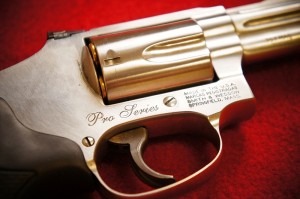
The bottom end of guns that are comfortable to shoot with full house .38 +P loads are the all-steel small guns like the Ruger SP101 or the steel J-Frames such as a the 640 Pro Series.

smith & wesson 640 pro series

The reason that we want an MDR to be a bit heavier than the airweight guns its because we’re not viewing this gun as a backup; the modern defensive revolver is your primary carry gun. Because it’s your primary, you should train and practice with it. That brings us to the next criteria for a Modern Defensive Revolver.

It must have good sights
The traditional revolver gutter rear sight with a black front post is fine for shooting paper on a well lit range, but it’s not ideal for shooting smelly badguys in the face at 2am. The gun should have some kind of illuminated sights; while night sights are the best choice, I’d be willing to accept fiber optic or gold bead sights as well. Something that allows you to have a shot (ha) at target acquisition in low-light. Which brings us to the third criteria.

It must have a laser
Defensive lasers on your wheelgun are a must. It’s just that simple. It’s an auxiliary sighting system that allows for precise shot placement in low-light or no light conditions and allows you to keep your eyes focused on the threat. Train with the “real” sights, but have the laser for when you need it. Every single revolver I own for social work has a set of Crimson Trace LaserGrips on it, because I know if I really need the gun it’s probably not going to be on a sunny afternoon.

It must be DAO with a bobbed hammer
Single action has no place on a defensive revolver. Neither do hammer spurs, which catch on stuff and are generally bad things. I don’t like them on any revolver, but they really shouldn’t be on defensive revolvers.

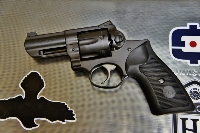
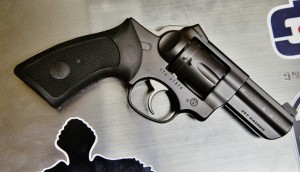
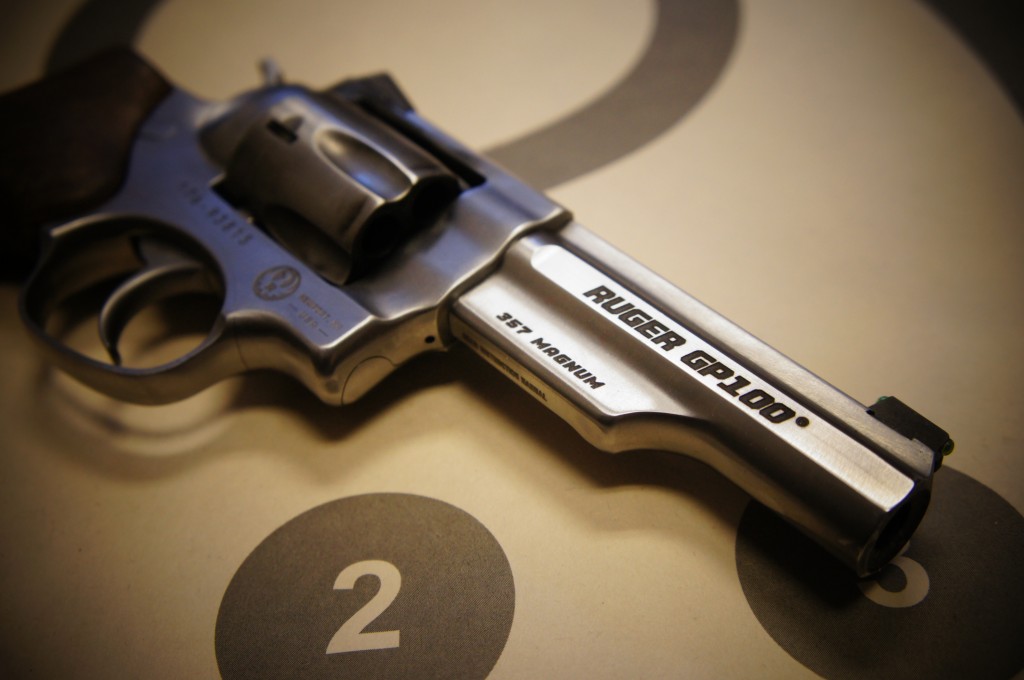
GP100 right side

It must have a good trigger
Bad triggers are the bane of a defensive revolver. Heavy, gritty triggers are far too common on wheelguns, and a good defensive gun shouldn’t have that. It should have a smooth trigger that doesn’t stack or creep at the end of the break; ideally it should have an overtravel stop at the end as well. Weight is less of an issue than the smoothness of the trigger pull, but you should make an effort to keep the pull weight under 12 pounds.

It should not require moonclips to function
I like moonclip guns. They’re great for competition, and great to shoot as well. They also create an additional potential failure point in the gun that you really don’t want in a defensive revolver. I’ve seen moonclips tie up guns in pretty dramatic ways, and I even had a slightly bent moonclip cause a really poor trigger pull at a match once. I love moonclips, but for defensive guns it’s speedloaders only.

The final criteria for the Modern Defensive Revolver is simple: It must be chambered in a caliber for which modern defensive ammo is available
I almost wrote this to say that .357 Magnum was the only acceptable chambering, but I relented primarily because of the existence of the excellent Winchester PDX ammo in .45 Colt. But really, if you can’t get it done with a .357 Magnum, it’s not the gun.

Do you think the Modern Defensive Revolver should have more criteria, or am I way off base with any of these?

Gamer flashlight technique

Speaking of IDPA flashlight techniques, here’s how I’ll be rolling at the upcoming Indoor Nationals. I use a Crimson Trace Railmaster light as a handheld light because it allows me to get a really positive master grip on the pistol.

Reloads with this grip are simple with a semi-auto pistol, just roll the light deeper into your hand. They’re a little more complicated with a speedloader, I need to shift the grip a little to make it work right.

US Postal Inspectors Need Ammo, internet goes crazy

Remember when DHS put that bid out to buy a bunch of ammo and the internet lost their collective mind? Even though the ammo shortage was not a conspiracy, that didn’t stop my Facebook Paranoia and Nonsense News Feed from being chock full of links to dubious sites about how DHS was buyin’ up all the boolits so they could put us in FEMA camps or something. Thankfully, that’s mostly died down and the people who believe it have gone back to catching rabbits and making tin-foil underoos to protect themselves from the government’s cancer rays (because prostate cancer is a government conspiracy).

That was until the increasingly irrelevant Drudge Report put a link up to a FedBizOps RFP from the US Postal Service to buy more ammo. I didn’t know anything about it, until I got this email today.

Caleb,
I hope you’ll share this link with your fans (link redacted because it’s awful – ed) about how the Post Office is purchasing ammo for SWAT Teams. Becaue the post office has employees out every day, they’re the perfect force to begin undercover ops on American soil.

It went on for a bit, but that’s the fun part.

USPIS_Patch

The US Postal Service is not buying ammo to put you in camps or do anything. They’re buying ammo for the United States Postal Inspection Service, which has about 4000 employees, of which approximately half are sworn/armed officers. The US Postal Inspection Service actually predates the Constitution. Before the Declaration of Independence, Benjamin Franklin was the Colonial Postmaster General. During his tenure, Franklin created the position of mail surveyor; the surveyors were responsible for auditing and regulating the mail in the American colonies. In the early 1800s, the position’s title was changed to Special Agent, and in the 1830s was organized into a more formal structure.

The Postal Inspectors are sort of the forgotten arm of federal law enforcement, despite having the daunting task of “protecting the mail” with less than 1/3rd the manpower of LAPD. What I’m saying here is that people need to chill out – the US Postal Service isn’t going to come to your house and spy on your for DHS or anything like that. They really just want to make sure you’re not sending child porn or drugs through the mail, or using postal money orders to launder money for your child porn and drugs.

You play to win the game!

Let’s talk about shooting sport rules! A recent thread on PF.com brought up the IDPA Flashlight rules. As all IDPA-related posts do, it eventually became a discussion of said rules, rather than how to train for victory within the rules. Tam followed this up with a post pointing out that her literal EDC gun is not IDPA legal, and that the average IDPA gun is a lot more “racegun” than EDC gun.

you play to win the game (300x225)

Here’s why discussions like this start whenever IDPA rules come up. IDPA as it was founded was intended to bring “practicality” back to the shooting game, requiring the use of concealment and “real-world” firearms. As it has grown, the rulebook has changed and been interpreted; however one thing has always remained constant: IDPA hates an equipment race. Now, we turn our attention to modern IDPA, which is quite a different sport in practice and execution than it was in 1996. From the new rulebook:

Founded in 1996 the International Defensive Pistol Association (IDPA) is the governing body for IDPA competition, a handgun-centric shooting sport based on simulated self-defense scenarios.

The IDPA competition format was designed to be enjoyable to all shooters of all skill levels, with a premium put on the social interaction and camaraderie of the members.

So, IDPA says in its opening paragraph that it’s a shooting sport. Let’s put all the “this is tactical training” nonsense to bed; IDPA is a game, and in any game what do you do? You play to win the game! So let’s bring that back to the flashlight discussion – IDPA’s flashlight rules prohibit any sort of method that attaches the light to your body. Why? It doesn’t matter. Stick with me here for a second – it doesn’t matter because those are the rules. A USPSA shooter complaining about IDPA rules is like a tennis player complaining that badminton’s rules are stupid. “Why do they have to use a shuttlecock, everyone knows that balls are better than cocks!”

Let’s stick with the tennis/badminton analogy for a second. See, in the shooting sports, especially in the handgun sports, there is this idea that “sport x’s rule is different from my sport, therefore it’s dumb and stupid.” Seriously, just because we all shoot handguns and wear holsters doesn’t mean the games are the same. Badminton and tennis are both played with racquets on courts, but tennis players don’t complain about badminton’s rules. It’s maddening when it happens in the shooting sports.

Caleb’s bottom line: if you think a rule in a shooting sport is dumb and arbitrary, that’s fine. No one is putting a gun to your head and forcing you to play that game. However, I would pose this theory: it doesn’t matter if a rule is arbitrary, like the IDPA flashlight rules. Those rules exist to prevent an equipment race, and that’s fine. The only thing that matters with any rule is that it is enforced evenly and fairly to all competitors.

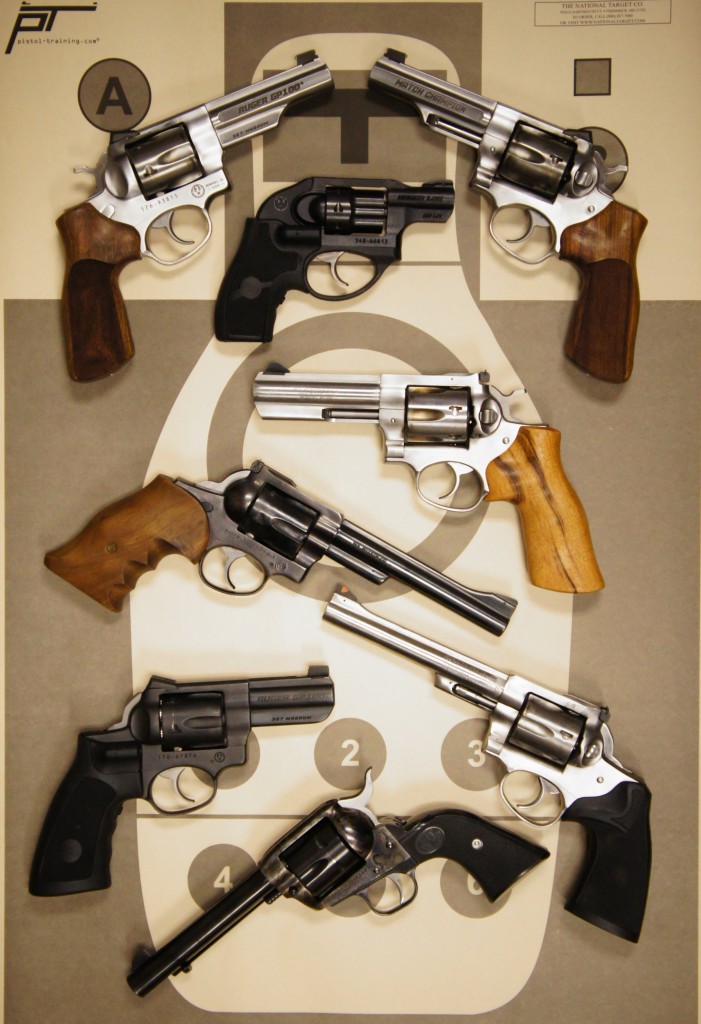
Photo of the day: A family of Rugers

Ruger Family

Top: Consecutive serial number GP100 Match Champions
Top Middle: LCR-22 for NPE/BUG
Center Right: 4 inch GP100 with Hogue stocks for stuff
Center Left: Six inch Security Six with Mustang stocks for Bianchi Cup/Bullseye
Bottom left: GP100 Wiley Clapp with CTC Lasergrips for carry
Bottom right: Six inch Security Six with Pachy stocks for things.
Bottom: 5.5 inch Vaquero so I can relieve my childhood.

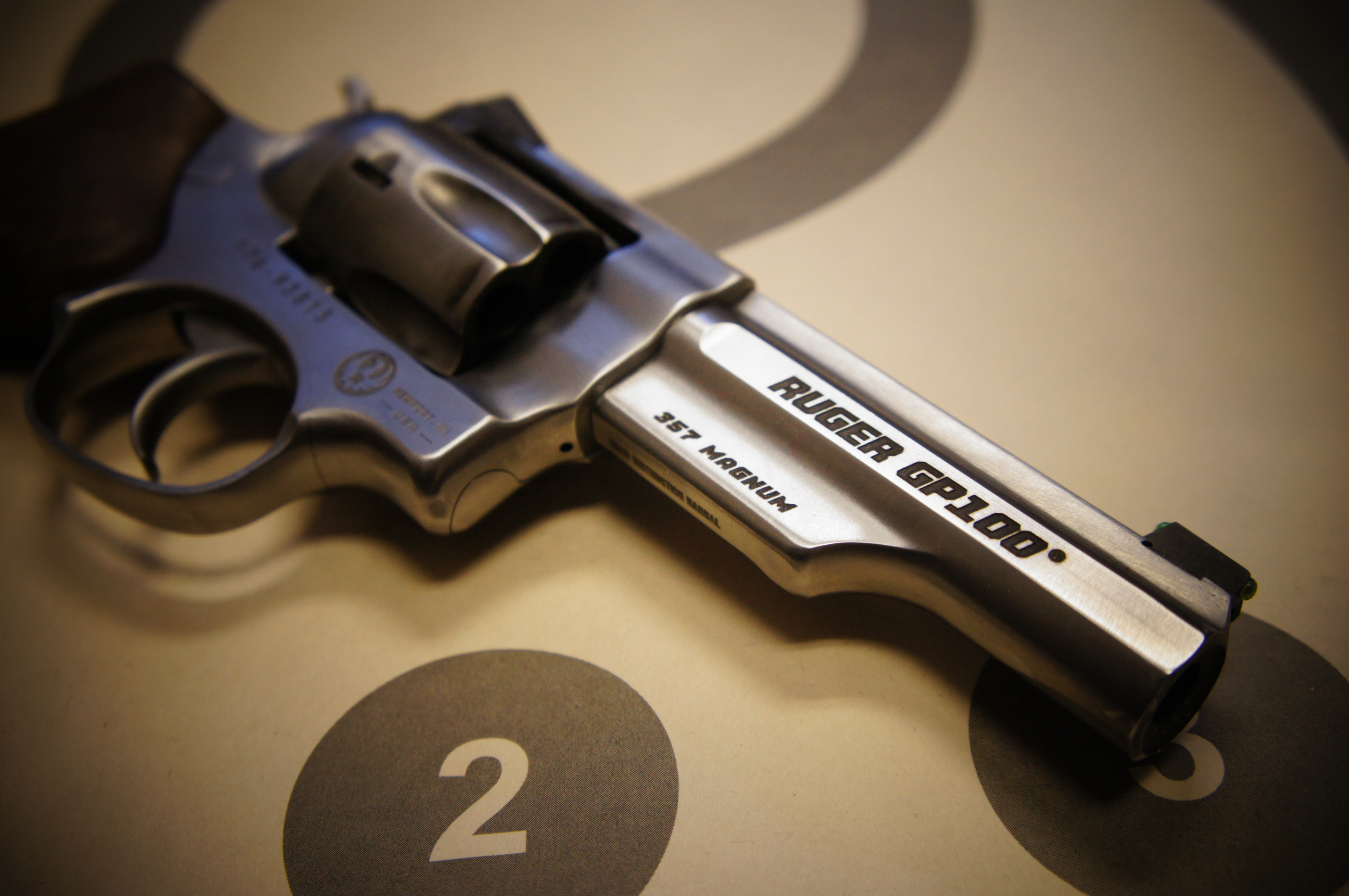
Ruger GP100 Match Champion First Shots

Finally time to get shooting the new Ruger GP100 Match Champions. We have two guns with consecutive serial numbers 814 and 815, respectively. The first thing to do is take the guns to the range and determine POA/POI and which is the most accurate. The second part of that goal is to make sure they’re reliable after receiving a CNG Custom action job.

Ruger GP100 MC

Whenever I do an initial test of a match gun, I’m going to be looking for a few things that I can’t find in dry fire. Obviously accuracy and reliability are two key factors, but other little things – how I interact with the sights, any issues with the stocks during recoil, sticky extraction, etc. A quick rundown on the guns:

  • Fixed Novak rear sights, fixed front green fiber optic
  • Action polish and tune to a ~10 lb trigger pull
  • Both guns have point of impact that’s slightly to the right of point of aim, 814 was about 1 inch at 20 yards, 815 was 2-3 inches.
  • Both guns have sights regulated for 158 grain bullets at a moderate velocity.
  • 814 was more accurate than 815.
  • 815 had intermittent sticky extraction issues
  • Neither guns extracted CCI Blazer aluminum ammo very well
  • The Hogue stocks are really good.

On the actual shooting, I was pleasantly surprised at how much I liked the Hogue stocks. Visual inspection and dry fire had me not liking them as much as the classic rubber insert grips, because they changed my hand position to a less aggressive grip. However, under live fire they actually worked better. Both guns were 100% reliable with Magtech 158 grain LRN, which is one of my favorite bullets for IDPA. It’s low flash, low smoke, and meets the extremely low SSR power factor of 105 easily. Off a sandbag at 20 yards, the guns produced some pretty solid groups with the Magtech.

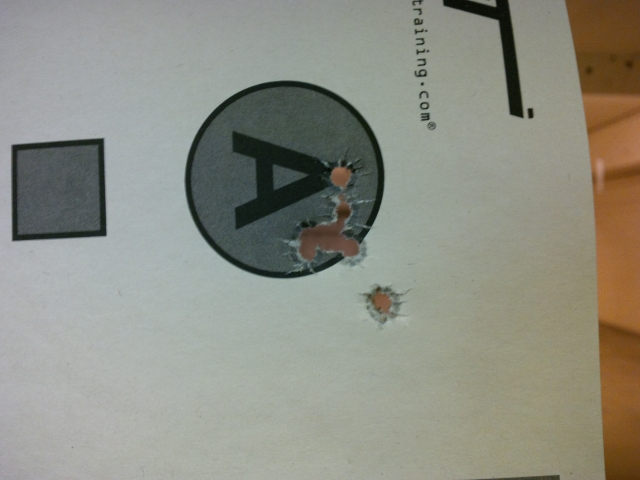
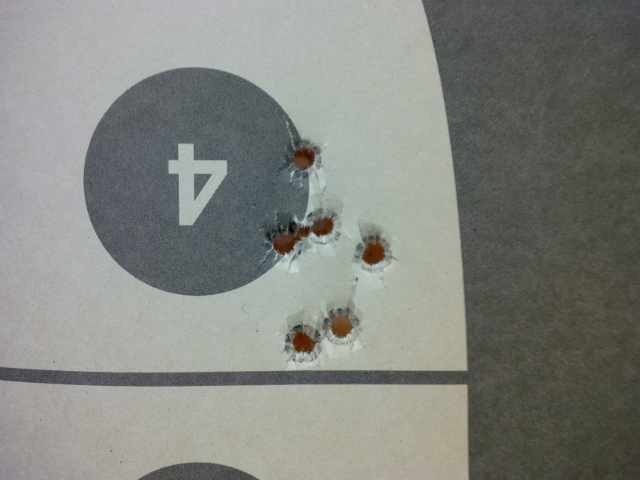
1.5 inch group from 814 with Magtech
2 inch group from 815, Magtech 158 grain LRN

Both guns were obviously pretty accurate, with 814 holding a slight edge. I’ll need to drift the rear sight a smidge on 815 to get it hitting where I want it, and I’ll do that with 814 as well, but just a little bit less. I do however need to clean up the chambers on 815; nothing crazy. I will chuck a brass cleaning brush in power drill, lube the chamber thoroughly and then just give her a buzz. This has solved any sticky extraction issue I’ve ever had.

Contrary to earlier posts, the charge holes on the guns are not chamfered, so I’ll need to send it off to get that done sometime before IDPA Nationals in September. They’ll do for now at Indoor Nats, but I definitely want to get that work done. The only issue I encountered with the guns were two rounds of Double Tap 158 grain LSWC that wouldn’t detonate in either of the GP100s or the Security Sixes I was also testing that day. Four different guns and four failures to detonate indicates a bad primer, so we’re not counting that against the guns.

More GP100 Match Champion coverage coming as the shooting season kicks off!