Don’t miss the ones you love.
Don’t miss the ones you love.
Reigning Production Half-Champion (because he lost to Eric Grauffel) Ben Stoeger is accepting donations to support the USPSA Junior’s Program. Donate here. You can also buy a t-shirt that will probably get you injured.

Buckle up kids, it’s time to rant. Welcome to Gun Things that Grind my Gears, or the alternate title “everything is stupid and dumb.” Whether it’s guns, gear, or people everyone has pet peeves. Here are some of mine.
Finger grooves on revolver grips
Who designed these? Seriously, whose idea was it to put a bunch of knucklebusters on revolver grips that only fit one guy with a very specific hand size? Do you have normal human sized hands? Tough noogies, these grips don’t fit you. Do you have freakish monkey-paws? These grips don’t fit. I can only assume that they were designed to fit the actual designer, and when he was done he was all “yeah, screw everyone else’s hands.”
People who say “I don’t want to rely on anything with batteries on my defensive firearm
Oh yeah, this makes loads of sense! We don’t want those fragile “electronics” on our guns! It’s 1988 and I’m scared of change! Seriously people, battery powered stuff is fine. When was the last time you heard about an Aimpoint crapping out, or a Crimson Trace laser failing? People who say “I don’t want to rely on batteries” are probably just too lazy to change the batteries twice a year. I bet their smoke detectors have dead batteries too.
Single action on DA revolvers
I’ve already covered this one.
most factory pistol sights
How hard is it to put good sights on your gun? Apparently quite difficult, because 99% of the time when I get a new pistol, the first thing I rip off are the sights. Sometimes manufacturers nail it, and then the rest of the time I guess they know that most people can’t shoot anyway, so they figure “screw it, let’s put these crappy sights on here.”

Tactical nuthuggers
“Oh man, Trainer X was a Tier Zero operator, so nothing he says could be wrong.” “That’s not how trainer X teaches it, and he was in Doorkickastan for 20 years shooting guys in the peehole!” There are plenty of trainers out there who have impressive military resumes and teach awesome stuff. There are also plenty of dudes who couldn’t teach their way out of a paper bag but surround themselves with uncritical yes-men to feed their ego. Here’s the only criteria that matters in a trainer: can they make you better?
Basically every shot timer on the market
How is that we can put a robot the size of a Mercedes-Benz on the surface of Mars but we can’t make a shot timer that’s worth a crap? I have a CED7000 that I’ve nicknamed Lazarus because I keep having to resurrect it.
People who open carry rifles in public to get attention
Stop it. I get that Daddy didn’t hug you enough or something, but now when you act out to get attention you’re making the rest of us look bad. You don’t need to OC your bubba’d SKS around, you need a good therapist to work out your abandonment issues.
Magazine disconnect safeties
Hey, I’ve got a great idea! Let’s design this gun so that you can totally and completely disable it by pressing one of the three major controls! That seems like an awesome idea. I totally love designs that can render my gun unshootable on accident.
And our final entry today: Arrogant bloggers who rant about stuff on the internet
God, is there anything worse than some pretentious douche who thinks he’s hot stuff because he has a blog that a few people read? He’s probably just some loser who can’t get laid writing angry rants while stuffing his face with Cheeto-crusted hot pockets. The only thing that could make these guys more annoying is if they had a brief stint as an also-ran contestant on some stupid reality show.
Of all the comments I made on my two recent revolver posts, the two have stirred up the most responses are my insistence that a proper fighting revolver be equipped with a laser and that a fighting revolver should be DAO. I’ll deal with the laser in a later post, however I will say this: no one has ever presented to me a convincing reason to not have a laser on a defensive handgun.
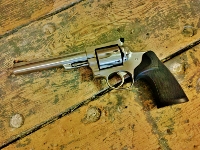
Now, on the DAO issue – I look at the SA function on a defensive revolver as some kind of evolutionary dead end. It’s like wisdom teeth for your gun – you don’t need them. We still have SA notches on defensive firearms because people don’t want to learn to shoot a gun in DA mode, because that’s hard or something. Let’s take a look at some DAO revolver shooting.
Not a single time would I have benefited from shooting that gun single action. The same goes for every single other revolver match I’ve shot; even “hard” shots. Shooting it DA is better. That argument is what really gets under my skin – that the SA function on a DA revolver is for “harder” shots. I call BS on that. If you can’t make the shot with the gun’s DA trigger pull, you don’t need to engage bitch-mode on your gun, you need to HTFU and get better at shooting you revolver in DA.
Single action does have a role however on some guns. It’s great for teaching small children the fundamentals of marksmanship with a rimfire revolver. It’s good on hunting guns too I guess, but if I’m going to shoot a large caliber revolver single action, I want to do it with a proper single action revolver, like a Ruger Blackhawk.
The crazy thing is that getting good at shooting your revolver in DA is one of those tasks that can be accomplished 99% in dry fire. A DA revolver is like a machine built for dry fire. Just dry fire the snot out of that thing until you can pull the trigger without disturbing the sights. As a bonus, you’ll also develop forearm strength, which is useful for things such as “shaking hands like a man.”
Don’t let the vestigial evolutionary tail of single action hold you back. Lace up your boots like a big boy and learn to shoot your defensive revolvers better in double action.
Breaking news: the 9th Circuit has ruled that the California May Issue law is not Constitutional. For more details see the entire decision here: http://cdn.ca9.uscourts.gov/datastore/opinions/2014/02/12/1056971.pdf
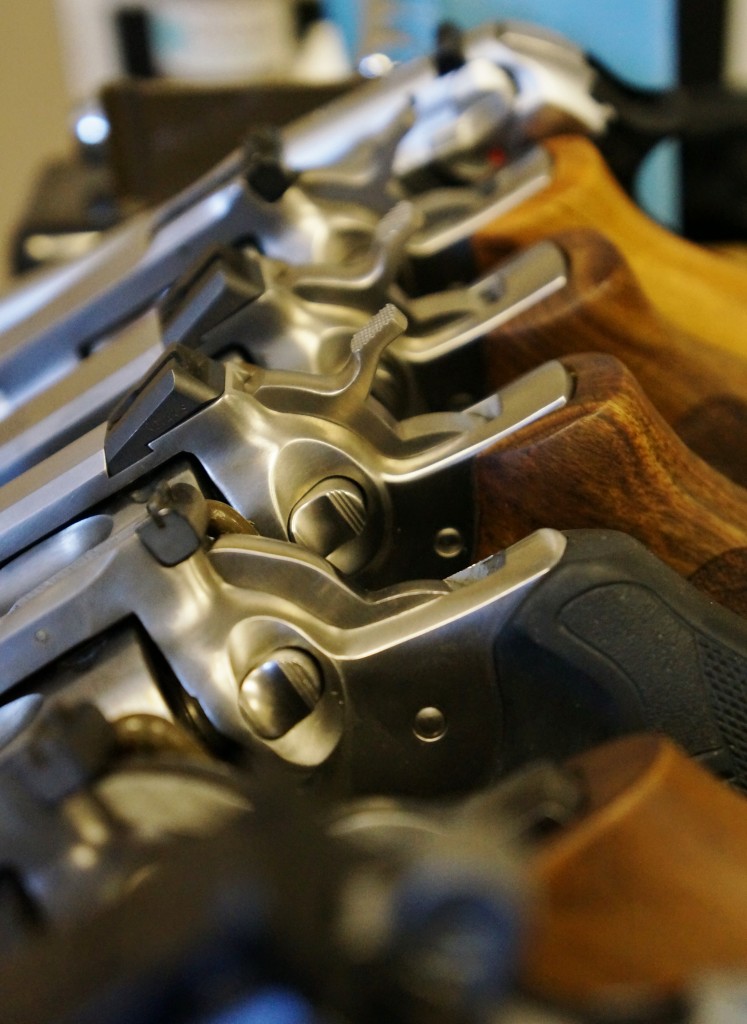
Photo by Shelley Rae of GunUp the Magazine.
Shouting is key. This is actually an outtake from a video I’ll be releasing next week on revolver reloads. I got a little silly.
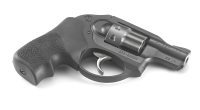
Yesterday, we took a look at the concept of the Modern Defensive Revolver. The simple definition of the MDR is a revolver designed to be your primary carry gun. A belt gun with good sights, a good DAO trigger, and that you would be willing to take a 2-day, 500+ round pistol class with.
Some people were confused on the concept as to why we excluded airweight and LCR style revolvers. Those are great guns, but the whole idea of the Modern Defensive Revolver is to update the concept of a revolver as a primary sidearm from where it’s been stuck in the 1970s. I love my Security Sixes, but when I look at them compared to my GP100 WC, they don’t really compare favorably. So to reiterate, the Modern Defensive Revolver is the wheelgun as a primary carry gun. To sum it up, it should be a medium frame, 6 shot revolver in .38 Special or .357 Magnum equipped with a DAO trigger, good sights, and a laser.
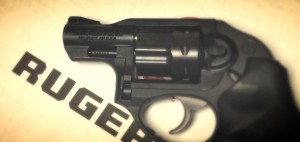
So where does that leave guns like the Ruger LCR? That’s where the Compact Defensive Revolver comes in. People have been carrying small-frame wheelguns for ages, but many of the guns on the market are like their larger cousins, stuck in the 1970s. Again, we want to take what is a familiar concept and update it to the 21st century using modern technology.
In general, a Compact Defensive Revolver should be light enough for pocket carry (assuming you have large enough pockets) and should be shootable with your defensive round of choice for at least 50 or so rounds. While you’re not going to take a huge class with a compact gun, you do still need to practice. Lots of pretty smart dudes recommend carrying 148 grain wadcutters in your defensive revolvers that are chambered in .38 Special – you won’t get any expansion, but it will cut a clean hole and penetrate well. Plus, the 148s are relatively easy to shoot.
Now let’s address the first area for a well set-up Compact Defensive Revolver: It must have some kind of high-visibility sighting system. On a full size MDR, we want both good sights and a Crimson Trace, on a smaller gun we’re willing to compromise and get one or the other. Because a lot of these guns come with fixed gutter style sights, your best bet will be to install a Crimson Trace LaserGrip for low-light sighting solutions. I know some shooters also will paint their front sight with luminescent paint as well.
It must be as snag free as possible
If your Compact Defensive Revolver is going to be carried in a pocket, it needs to be as free of potential snag areas as possible. Hammer spurs and other protuberances can interfere with a pocket draw. Ideally, a Compact Defensive Revolver would have a shrouded hammer like the LCR, but a bobbed hammer is okay.
The usual caveats about a good trigger apply here as well – a Compact Defensive Revolver really needs a good clean trigger. Despite what the internet thinks, you may have to use a Compact Defensive Revolver to actually shoot someone further than spitting distance. Because the guns are lightweight, a good trigger will really help make that job easier.
Here’s a list of a few guns that fit the criteria and a list of things I’d update on them:
There are obviously quite a few other guns out there that fit the criteria as well, including some out of production guns. I actually wish that Ruger and S&W would bring back their .32 Magnum chambered revolvers, because getting a 6 shot .32 in a J-frame package is pretty rad.
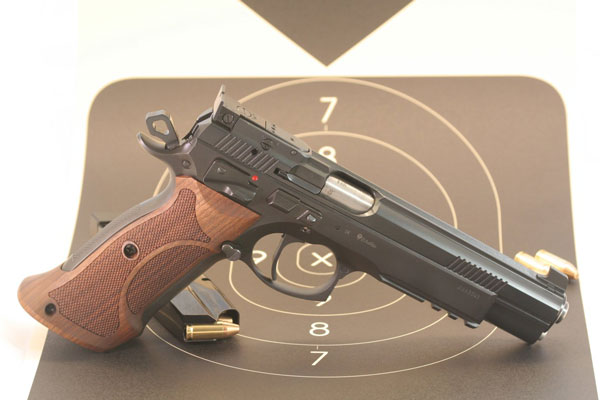
Last week I used Kim Rhodes’ custom Perazzi shotgun as an example of “gamer gear” because it’s a highly specialized firearm fitted to her specific needs and the shooting sport she’s competing in. It’s a magnificent tool for the task she’s asking of it, but it wouldn’t be a terribly good choice for other shooting tasks. Along those same lines there are other bits of competition equipment that don’t work well in other environments. Take a look at an open class handgun holster used in IPSC or USPSA and it’s pretty easy to see that it would be a particularly poor choice for a police officer who has to worry about weapon retention when fighting with a combative suspect, or a member of a tactical team who has to crawl through the rafters of a building or SCUBA dive to a boat and climb on it clandestinely to get the jump on some bad guys. .
What about the guns that sit in those holsters, though? Fundamentally the competitive shooter and the defense-minded individual want about the same thing from a high-capacity polymer and steel pistol like a 2011 or a Glock 17, right? They want accuracy, durability, and above all else, reliability…but those words may carry very different meanings in their respective context. If you are a competitive shooter competing for 100 grand in a shooting sport where X counts separate the winners and losers, your accuracy requirements are significantly higher than the minimally trained police officer who needs to be able to hit an adult male in the chest at 10 yards. Four inches at 25 yards won’t do if you want to bring home the Bianchi Cup, but it’s probably more than sufficient for most shooting tasks a law enforcement officer or private citizen will need to perform in a two-way exchange of gunfire.
Reliability is another fuzzy concept depending on which arena you’re discussing. In the competition arena you’re dealing with a scheduled event with a known number of rounds to be fired. With prizes of up to 100 grand on the line, no competitor wants to travel to a match, have their gun puke, and go home with nothing to show for their hard work. The competitor’s gun needs to work reliably in the match, and competitors often go to great lengths to give the best possible chance of success. They will replace and test springs in preparation for the match, clean magazines, and many load their own match ammo because they want to do their own quality control to make sure every last round has the best possible shot of working as expected. (Plus it’s probably a custom load they’ve developed for the demands of the specific match and the gun they are using)
The guy on a SWAT team has a very different reliability requirement. Typically your average defensive use of a sidearm is not a scheduled event. It happens by surprise and in a very compressed time frame and you’re playing for blood. A guy on a tactical team can be doing ropes work over a sand pit one minute and then rolling to a callout the next. If his pistol and magazines have sand in them because he took a tumble, the gun has to be able to function reliably without being cleaned. The competitive shooter probably has time to get all his equipment in top working order before he shows up to the match, but the person defending his/her life doesn’t have advanced notice that they’ll be in a fight for their life…their gun just needs to work. The competitor will shoot hundreds of rounds under match conditions, where most defensive uses of a sidearm will be contained within a magazine or two from a typical 9mm pistol’s capacity.
To an extent, this sort of mirrors the competence vs. excellence issue I’ve discussed in a previous column. The defensive sidearm needs to be competent over a broad spectrum of need where the competitor’s gun can be tailored for a specific task or discipline. The competitor’s gun may be measurably better at given series of shooting tasks than a good defensive sidearm, but frequently there are drawbacks that go along with the specialization. A 2011 with a 2 pound trigger and a fixed red dot optic is certainly going to be good for some action shooting sports and most people would probably find it easier to shoot a bad guy in the face with it, but will the expensive tuned magazines it needs still work if they’ve got mud and gravel in them?
Ideally one wouldn’t have crud in their magazines, but in the context of personal defense that’s not always in the control of the good guy. If your introduction to the fight was diving for the dirt to avoid incoming rounds you don’t really have the opportunity to clean your gear so it will run. A pistol that runs well when it’s been properly maintained, properly lubricated, and properly fed is a good thing…but for self defense most would rather have a pistol that runs when it’s been neglected, abused, and fed with junk ammo for the same reasons we’d all prefer our heart to keep beating even if our “exercise” is pressing the buttons on an X-box controller and our “diet” is comprised mainly of nacho cheese.
This is where it all gets rather complicated. When “tactical” people talk about a “gamer” gun they’re often picturing some sort of highly specialized 1911-ish pistol with a trigger pull that is measured in ounces and a load tuned for a specific style of match…because those things do exist. If you watch a major match you’ll probably see those guns, and at some point in the day you’ll probably see one break. The first true race gun I ever fired had a trigger that was under a pound, had barely any movement from recoil thanks to the compensator on it, and had a fixed red dot mount. I was in love with it 3 rounds into the first magazine I fired through it. The owner was kind enough to let me shoot a second mag through the gun and about 5 rounds in something broke and the gun went full-auto, emptying the next 15+ rounds entirely on its own.
Naturally a pistol that will go BATFE-unapproved on you isn’t something you really want in a defensive situation, but in today’s market there are plenty of other “game” oriented guns that don’t push the margins of safety or function to the limit like the open class hardware that’s normally what people think of as “gamer” gear. Beretta, Sig, Smith & Wesson and Glock all make or have made in the past versions of service weapons tailored to competition that retain all the major components that make the service guns work.
The most popular of the competition oriented factory guns are probably the Glock 34 and 35, with the great irony being that the 3rd generation Glock 35 (the “gamer” gun) was probably consistently the most reliable pistol Glock made in the .40 chambering. A number of tactical teams and individual police officers/agents/whathaveyou have used Glock’s “gamer” guns with success. Bob Vogel famously carries an identical gun to his competition piece when he is on duty as a police officer. I’ve got a Glock 34 myself, and I’ve written previously about modifying it. Based on the couple of thousand rounds I’ve fired through it, I wouldn’t hesitate to carry it. It’s often my “nightstand” gun with a Glock 18 magazine and a Surefire X300 mounted to it.
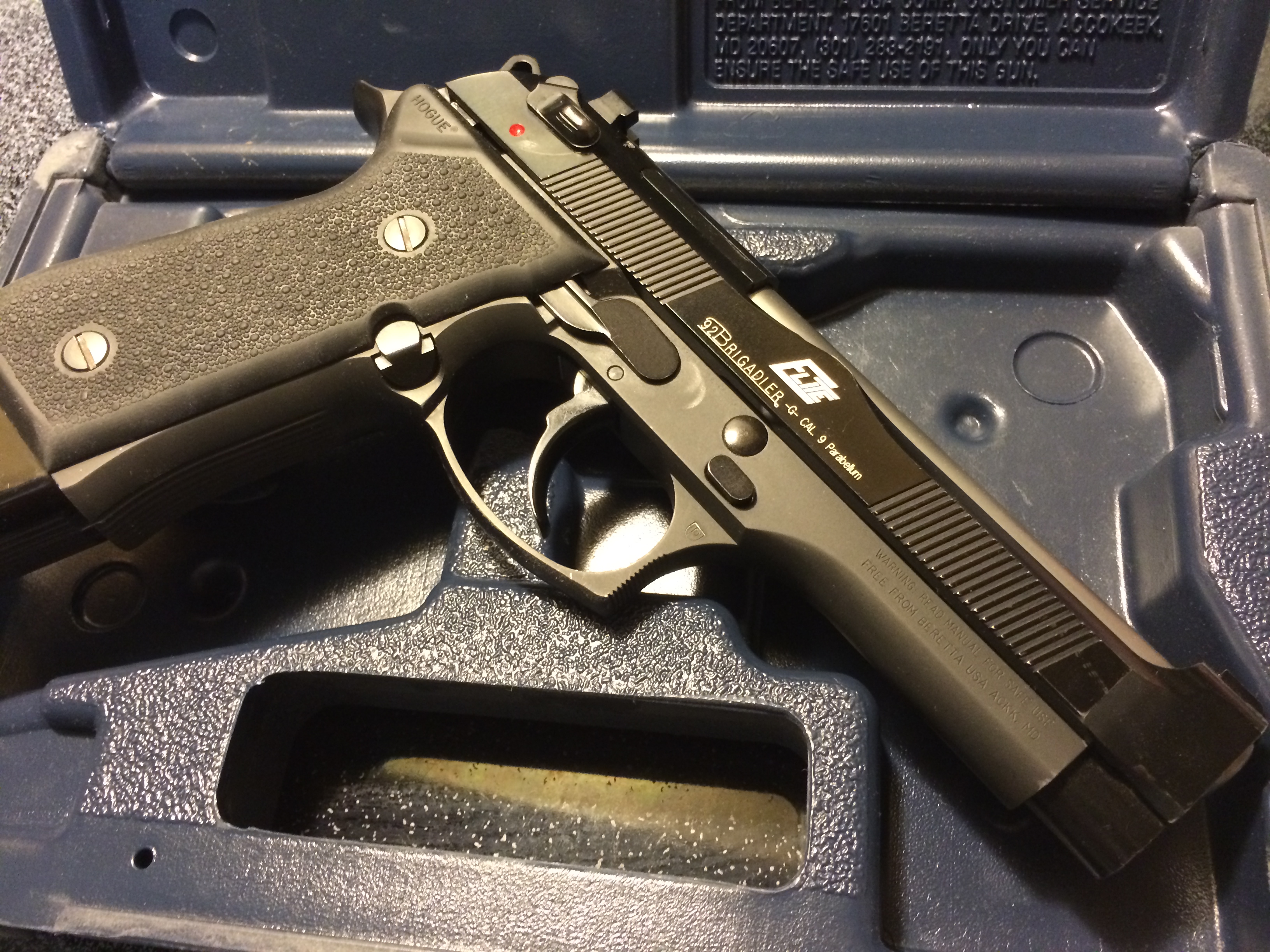
Sure, somebody may argue that if you get debris or loose coins in the top of my G34’s slide, it will stop working but a lot of very serious people have been using these factory “gamer” guns under some pretty adverse conditions without issue. For the record, I tried the coin trick and it took more than a couple of coins to stop my G34. I needed about a buck fifty in change down in the gun to actually stop the slide from cycling. If I’m ever in a gunfight at a coinshow I’ll have to watch out for that. I also own a first generation Beretta 92 Elite, a “gamer” gun that has a number of useful improvements. The heavier slide, dovetailed front sight, narrowed grip, wider mag well, and G configuration (decocker only) show benefit whether you’re carrying it for competition or as a sidearm for serious social purposes.
Accuracy, reliability, and durability may mean different things in the competition arena than in the “tactical” arena, but some bits of gear work pretty well no matter what context you use them in. Some bits don’t. If you keep your purpose and use in mind, and if you’re a generally sensible human being, you shouldn’t run into too many problems selecting your gear. When you get something, test it carefully to make sure it works for your needs. Don’t be in a hurry to bolt just any old thing on your gun or make a whole bunch of changes you don’t really understand because that can make a gun unreliable or even unsafe…but at the same time don’t be too worried about the Scarlet G some “tactical” guys use to dismiss stuff they don’t use or see a need for. If you can find a bit of “gamer” gear that makes the gun work better for you and doesn’t compromise reliability, by all means use it. If it works better for your circumstances, don’t trouble yourself too much over whether or not somebody on a youtube channel says it’s “tactical” enough.
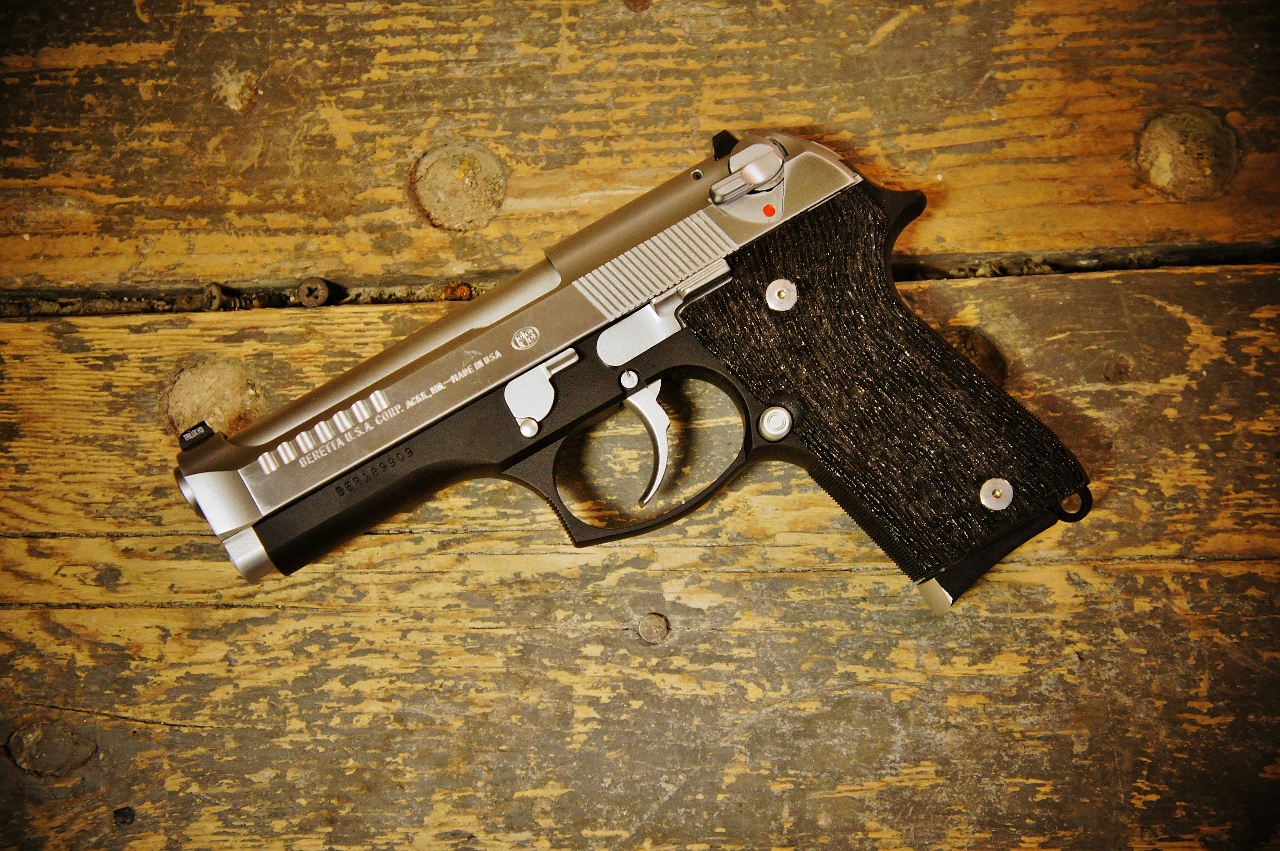
“Hey Caleb, what’s your new carry gun?”
“Oh, it’s a single stack 9mm from Beretta.”
“A Nano?”
“No, it’s a Beretta 92FS Compact Type M. You’ve probably never heard of it.”
MAXIMUM GUN HIPSTER STATUS ACHIEVED.