Gun control groups are changing their tactics

If there has been one constant on the gun control front in the past decade, it’s that we’re winning. Ever since the Assault Weapons Ban sunset in 2004, we have seen continued victories on the political front for the pro-gun movement. Sandy Hook was in many ways the Battle of the Bulge for the anti-gun side on the political front, and like the German Army they lost. In fact, the failure to pass any meaningful gun control legislation in the wake of Sandy Hook has caused the smarter anti-gun groups to pivot their actions into something they’re better at: pressuring corporations to ban guns.

starbucks logo

In the current gun control fight, we’re facing a much savvier enemy than the old incompetent Brady Campaign. Mayors against Guns and Moms Demand Action may not be an effective lobbying group, but they are well funded and pretty smart on how to engage with media. Make no mistake, Starbucks was a loss for us and a win for them; and it was one that we handed to them on a silver platter.

Following up on their Starbucks win, Mayors Against Illegal MILFs is now looking to pressure Facebook to ban sales of guns on the site. The messaging here is that FB is being used as an illegal gun bazaar, which we know isn’t true. There are pages on Facebook that act like a classified section, where group members can post guns they have for sale. Those pages don’t actually sell guns of course, but rather are used to facilitate face to face transfers.

It is actually against FB policy already to sell guns on the site. Ask anyone who’s used a FB page to promote a gun sale at a retail store, those posts get memory holed by FB pretty quickly. But it’s not a violation of FB policy to use the site to coordinate a face-to-face transfer. Remember, that’s MILFs demand Hot Mayor’s current goal: a total ban on private transfers. Note the messaging in the article, and how the anti-gun groups are presenting these perfectly legal transactions as grey market backdoor deals. If you just read the Forbes article, you would think that people are using Facebook to actually buy and sell guns, rather than a vehicle to facilitate face-to-face sales.

Here’s a quick review of the facts: it’s already illegal to sell a gun to a felon. It’s currently against Facebook policy to actually sell guns on the site; but listing items and using it as a sort of message board to facilitate face to face meet-ups for private transactions is generally okay. Here’s the messaging from Moms Demand Action in video form:

It’s actually a pretty decent video; it uses the same music as Facebook’s wildly successful “Look back” videos, and it presents the discussion as “people are using Facebook to get around background checks.”

The question is how do we fight against this? It’s actually easier to fight legislation, because that has to be lobbied for, voted on, and can be defeated through good volunteerism and smart activism. This is actually a lot harder to fight against, because Facebook as a publicly traded corporation isn’t beholden to voters, it’s only obligation is to its shareholders.

Obviously, education is important. We have to point out that nothing illegal is happening on Facebook. Just because a police department conducted a sting operation that caught one felon doesn’t mean that Facebook is some sort of Afghan Gun Bazaar; in fact it’s far from it. The second thing to do is remember that Facebook is public; and this one is on us. Don’t say flippant stuff like “no background checks” in a public forum like Facebook. When I sell guns face to face, I only sell them to people who have concealed carry permits, so I can verify that they’re not a felon.

In short, the best way to fight this kind of activism is to not shoot ourselves in the foot like we did with Starbucks. Facebook is content to leave us alone, and right now the money we generate via advertising is more valuable than kowtowing to a bunch of anti-gun kooks. Let’s keep it that way. Stay on our best behavior, don’t say dumb things in public, and educate when possible about the real nature of a face-to-face gun sale.
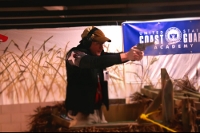
2014 Smith & Wesson IDPA Indoor Nationals

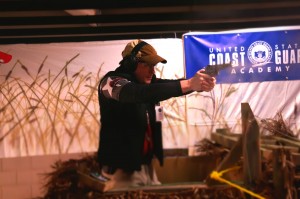
Every year in February, the top IDPA shooters gather for one of the premiere IDPA matches in country, the Smith & Wesson Indoor Nationals. This is one of two annual national level matches put on by IDPA, and is very popular, very difficult to get in to, and one of the most fun IDPA matches to shoot. This year was no different. The match is held each year at the S&W Shooting Center in Springfield, and is one of the only IDPA matches to incorporate low and no-light stages. To win, you must be able to handle shooting, moving, and reloading with a flashlight in your hand.

I remember the 2012 match very well, it was a fun match, but I wouldn’t call the shooting tough or technical. 2014 changed that dynamic up considerably, with some very tough shots and challenging stages. There were technical accuracy based stages, fast burn-’em-down stages, and of course the low light/no-light stages. Let’s start our look at the 2014 Indoor Nationals with a look at the stages.

Caleb Indoor Nats

The Stages
The Indoor Nationals consisted of 13 stages, three of which were low-light. On all low-light stages, use of the flashlight is optional, at the 2014 match the lighting conditions on two of the stages made using the light your best choice for victory. The remaining 11 stages were a mix of the usual national-level IDPA stages.

Compared to previous matches, I would rank the difficult of the stages as a bit higher than in the past. There were some tough shots on moving targets, lots of partial targets, and some cleverly placed no-shoots that meant you really had to aim hard to avoid getting a bonus 5 seconds added to your time.

The Officiating
You cannot discuss an IDPA match without discussing the officiating; this was the first national match held under the new rulebook, with its changes to certain rules such as reloads and other things. Now, I can only comment on the officiating that I observed personally. I saw two procedurals given out during the course of the match, one was clearly deserved cover violation that even I would have called. The other was questionable, a shooter on my squad received a PE for not firing while retreating – it was the sort of call that could have gone either way.

Overall, this was to date the most evenly officiated match I’ve attended. I had the opportunity to test that, when I asked for a re-shoot due to a range-equipment malfunction on one of the low-light stages. I did get my re-shoot, and everything was handled totally professionally.

My Performance
I came into this match from the off-season; I had spent a little bit of time this winter dry firing, and my match prep focused almost entirely on working with the flashlight in low-light and no light situations. I had a new gun for the match, the new Ruger GP100 Match Champion. I’d fired it a bit in training, but hadn’t worked it out under match conditions yet. Indoor Nationals was the first real test for this gun, and it passed with flying colors.

I’ll start with the good news: my goal going into the match had been to win SSR Master, that I accomplished. My secondary goal was to finish in the top 3 overall, I missed that. So I went .500 on performance goals for this match. To break down my performance a little further, the top 3 shooters dropped an average of 79 points, I dropped 125 (that’s a lot). My raw stage times were broadly the same as the 2nd and 3rd place shooters. 2nd through 4th were off the pace of Josh Lentz by about 2-3 seconds per stage.

The bright spot in my performance was the low light work. I won both of the low-light stages and generally shot pretty well when the lights were out. My training with the flashlight really paid off, and that was reflected in the scores. Also reflected in the scores was the rust I definitely need to shake off before I start hitting up other majors this year. Dropping 125 points when the other competitors in my division are dropping 80 is not good, and I had some issues during the match with mental focus as well.

I do want to take a moment before I wrap up and offer a shout-out to Ken Orbach, the 2nd overall finisher in SSR. Ken shot the match as an SSR-Expert, and he blew the doors off it. He finished 20 seconds off the overall winner’s time, and beat two Masters and a DM to get to his 2nd overall. He was also fortunate enough that there were 10 shooters in SSR-Expert, so he’s earned a much deserved promotion to SSR Master for future matches.

The Verdict
A tough match with interesting stages and good officiating is all a shooter can ever really hope for. We got that at the 2014 S&W Indoor Nationals. I’ll be back in Springfield later this year for the 2nd Annual BUG Match, and of course I’ll be shooting the Big Nationals later in Tulsa!

Women’s Outdoor & Shooting Industry Dinner at SHOTShow 2014

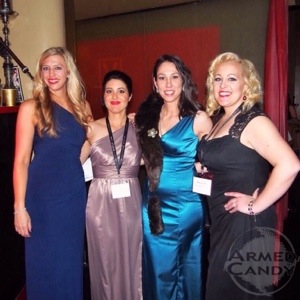
Natalie Foster, Jacquelyn Kelley Gabby Marcuus and Britney Starr at women's dinner at SHOTShowAt this year’s SHOTShow the Second Annual Women’s Outdoor & Shooting Industry Dinner was held. Put on by Britney Starr of Starr & Brodhill African Safaris and Jacquelyn Kelly of Armed in Heels, the event took place at V bar in the Venitian hotel. The theme was Old Hollywood Glamor and, as you can see, almost everyone ran with it! This year the gathering saw some new sponsors as well as a few familiar faces, including Laser Max and GunUp Magazine.

Continue reading →

The death of Steel Challenge

In its recent report to members, the US Practical Shooting Association announced that the Steel Challenge World Championships would be moving from its current location in Frostproof, FL to St. George, Utah for the 2014 match. Additionally, the Steel Challenge LLC will be absorbed by USPSA into one unified organization. Whether or not this will be enough to save the floundering match that was once the richest handgun tournament in the nation will remain to be seen.

Steel Challenge was created over 30 years ago in the vibrant (at the time) shooting culture of Southern California. Up until 2007, it was an independent match, not associated with any of the other major shooting sports. In the winter of 2007, it was sold for a considerable sum to USPSA, who took over the administration of the match. For the next four years it was largely unchanged, until in 2012 the match was moved from Piru, CA where it had been held for 30 years to Frostproof, Florida.

The first Frostproof match was a bit of a rough start. Participation dropped precipitously from the last match held in Piru, the traditional impact activated stop plates were abandoned, but for the most part the shooters and sponsors were happy with the match being held in Florida in November. After the match concluded, it was announced that the 2013 match would be moved to the middle of July, and bookened with the non-USPSA sanctioned ProAm match.

2013 was a rough year for Steel Challenge. The July time table saw terrible weather soak the shooters, and while organizers had hoped for an increase in attendance, it was down for the 2nd straight year in a row at the 2013 match. Media coverage was sparse, with few outlets reporting on the match, and even sponsors complained about the lack of representation in exchange for their sponsorship dollars. Steel Challenge was in serious danger. Add on top of that the 5 year contract USPSA had signed with the Universal Shooting Academy in Frostproof, and things were looking grim for the future of Steel Challenge.

Two straight years of declining participation in a match is a bad sign; especially at at time when ever other shooting sport is experiencing considerable growth. IDPA, 3Gun, and even NRA Action Pistol were experience major increases in shooter participation at their national level events, meanwhile the former crown jewel of the shooting sports was diminishing.

That brings things to where they stand now with Steel Challenge. Will a new location in St. George and new dates in June pump some much needed life back into this once great match? Or will the hassle of adding another city, another weekend to their travel plans put off the remaining 80 die-hard shooters that attended the match in 2013.

In 2010 and 2011, the last two years the match was held in Piru, there were over 200 entrants in the “Main Match” category. In 2012 in Frostproof, that number shrank to 132 entrants. In 2013, that number was down to just 104. That doesn’t tell the complete story though, because an single person at Steel Challenge can be entered in multiple divisions in the Main Match category. In 2013, the final year for Frostproof, there were approximately 80 shooters for the entire match. A World Championship match, formerly one of the most prestigious matches in the nation had shrunk in attendance size to the same as a well attended club level IDPA match.

What does the future hold for Steel Challenge? It appears that 2014 will likely be the deciding year. By absorbing the organizational structure of Steel Challenge into USPSA, this gives USPSA the ability to kill the match entirely if it doesn’t perform well in Utah. And perform well it must, because I don’t think the match could survive another year of falling shooter numbers and sponsorship dollars. If a new location and new dates can once again attract greater numbers of shooters, media, and sponsors, then perhaps we’ll see a renewed Steel Challenge.

As students of the history of the sport, and fans of the great shooting sports, that’s exactly what we’re hoping for. Perhaps USPSA will take a page from the NRA’s playbook, who have restored Bianchi Cup to its status as the most prestigious handgun tournament in America. It’s our hope that Steel Challenge will be able to shake off the last two years of missteps and once again be one of shining examples of what’s great about the shooting sports.

Low light training

One of the big reasons I’m such a huge fan of the S&W Indoor Nationals is that it’s one of the few times of the year where I can test out low-light shooting techniques under real match conditions. Blah blah blah matches aren’t combat blah blah blah; however the truth is that unless I want to go night hunting, shooting an IDPA match in a dark range is the best chance I’ll get to use guns and gear in a low-light environment.

Yes, there are special classes that I can take that would simulate this as well; and there are few good Force on Force instructors that teach excellent low-light stuff. For me however, the match stress induced by a National Championship is plenty of simulated stress to cause me to brain fart, or forget how to reload.

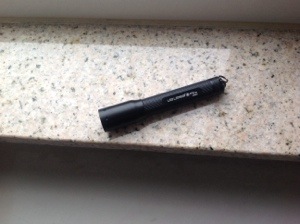
20140221-103234.jpg

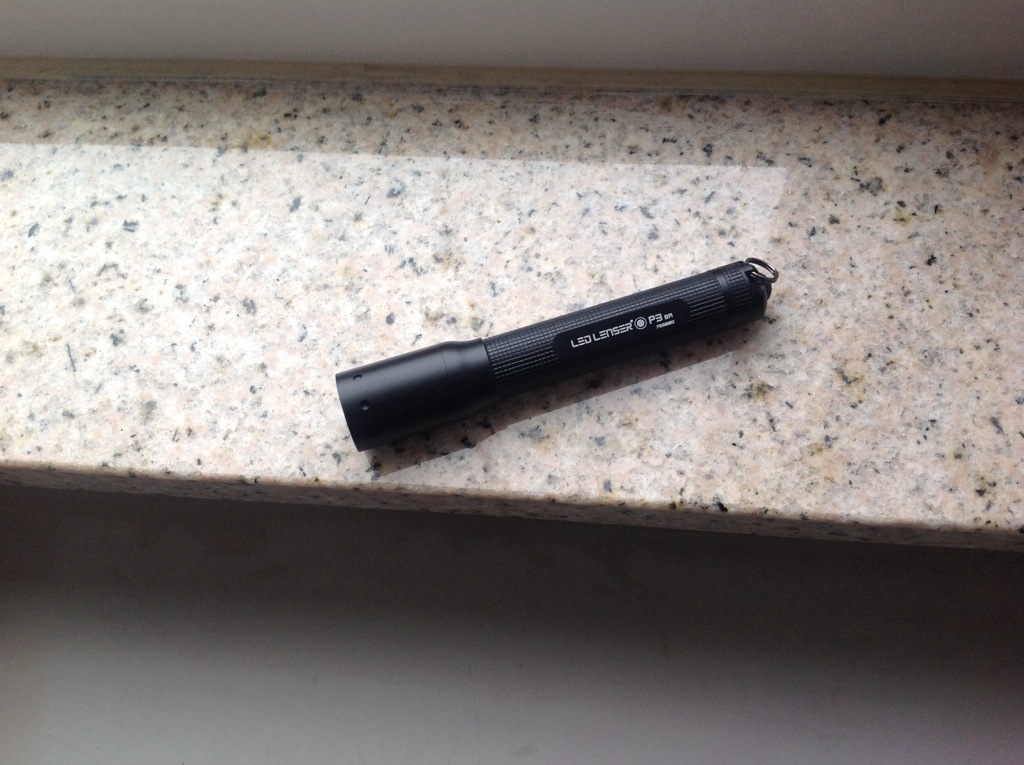
Pictured above is one of the three flashlights I have with me for the match, and it’s a light that I actually do carry every day. The LED Lenser is a 65 lumen pocket light that is basically the perfect little EDC flashlight. I like it so much I actually pay cash money for them. Truth be told, they’re so light and compact that they tend to grow legs and end up in other people’s pockets.

My other gear for the match is keeping it as real as possible. Because I carry a GP100 WC every day, I’m using a 4 inch GP100 as my match gun; the only difference between my match gun and my carry gun is that my carry gun has a shorter barrel and laser grips. Since lasers aren’t IDPA legal, I keep them off my match guns.

Also in the “keeping it real” category is my flashlight technique. I abandoned the gamey method I was using with a Crimson Trace railmaster in favor of something that’s actually practical for defensive revolver shooting. While the RM technique was excellent in the limited scope of playing the game, if I attempted to apply it to the real world, it sort of fell apart. So I switched my light to the TerraLux and LED Lenser, and changed my technique to make it more appropriate.

This is one of my favorite matches of the year. Between Indoor Nationals and the Crimson Trace M3GI, I get two really good opportunities each year to test real gear in the actual low light and no light conditions that it is likely to actually be used in.

How do you train for low light?

Off to Indoor Nationals!

I’m heading to Massachusetts today for my 2nd run at the IDPA Indoor Nationals. In 2012 I finished 4th Master in CDP, despite making some pretty comical errors. This year I’m shooting my favorite division, SSR with a really well set-up Ruger GP100 Match Champion.

I’m shooting all day Saturday. Standing between me and my National Championship goal are three of the best SSR shooters in the game: Josh Lentz, Kirk Crego, and Joe Linsky. If it was just one, I might be hopeful. 3 is a real murderer’s row of speed loading round gunners.

Should be a great match!

Lessons From the Real World – Chicago Gas Station Shooting

In my time writing for Gun Nuts I’ve tried to use video footage to illustrate points about self defense not for the sake of sensationalism, but to illustrate the principles I’m trying to convey with something that actually happened to another human being. In the last few days video footage has surfaced of violent criminal attacks successfully repelled by armed good guys, and I think there are some important lessons all of us can take away from these bits of footage.

Chicago Gas Station Shooting:


If you’ve paid any attention to the news in the last few years, you’ve learned that Chicago is a very violent city. I’d argue that one of the reasons it’s such a violent place is because more good people in Chicago don’t have the legal option to protect themselves like the off-duty police officer who was the intended victim in this video footage.

Note first the location: Everybody needs to stop at the gas station. The people who stop at gas stations have cars, wallets, and some form of portable electronics like a cell phone. The next time you’re at a gas station really stop and look around at your fellow patrons. How many of them are paying any attention? Aren’t most of them on their cell phone or fiddling around with something on the car? So you combine a place where everybody has to go sooner or later with the known presence of a lot of valuables held by victims who aren’t paying attention and it’s easy to see why criminals look at gas stations the same way lions look at watering holes on the Serengeti. Prey congregates there.

Note the approach the lead bad guy takes. Hoodie up, gun in the pocket, he waits until the innocent dude trying to pump gas has his back turned, fixated on his task. The bad guy closes distance rapidly and draws. The good guy turns just in time to see a gun being aimed at his face. Note the speed with which this occurs. Just a couple of seconds of being blind to those guys hanging out over there and wham: Now those guys have you cornered and you’re staring down the barrel of a gun. Some speak about situational awareness as if it’s some sort of superpower that repels bad guys. While it’s certainly possible that a bad guy will notice someone who is paying attention and leave them alone, in reality what it usually means is that you get a couple of extra seconds to see what’s coming so you can do something about it. In this instance it probably would have meant that the off-duty officer would have seen the robbery developing before the point where he’s looking down a muzzle. Police officers generally have better situational awareness than most, but as you can plainly see in the video a lapse of even a couple of seconds is enough to give the bad guy an opportunity.

When it comes to defending yourself against a violent crime like this one, every inch of distance and fraction of a second of time you can buy yourself is going to increase the odds of the situation turning out in your favor. Note that the police officer didn’t leave his driver’s door open as many do, which would have further boxed him in. The officer figures out something is up when the trap has already been sprung…and he plays the only hand left to him at that point. He feigns cooperation and tries to retake the initiative by getting the bad guys to fixate on something other than him. Note how he uses his gun hand to pass something to his weak hand, which makes that hand’s actions look less suspicious. He surreptitiously draws and then only makes a violent movement when he’s clear and ready to pull the trigger. The bad guys were focused on the haul for a brief couple of seconds…and he used them to regain the initiative. He picked his moment, moved decisively, and shot the gun-toting bad guy in the face.

Also note how the officer reacts after he fires his shot: With his head and his gun he tracks the bad guy with the gun to the ground, and after a brief pause starts looking for the other bad guys. Fixating on the guy you just shot and momentarily losing track of other threats sometimes happens, and sometimes with unfortunate consequences. Thankfully the officer emerged from the event unscathed. The armed perpetrator died on the scene. His two accomplices fled for their lives once the shooting started.

The officer was very fortunate, here. The three men who tried to rob him obviously had some experience as you can clearly see from the approach and relatively efficient division of labor during the robbery attempt. Still, it’s clear they weren’t the very top end of the violent criminal scale. It’s probably an approach that worked for them on previous occasions and they probably didn’t expect problems with this one any more than the officer expected to be robbed when he pulled into the gas station.

So what lessons can we take away from this incident?

1. While violent crime can happen anywhere at any time, predators tend to favor certain situations and times of day. If you find yourself at the modern urban equivalent of the “watering hole” during the hours when predators are hunting it pays to never let your guard down…not even for a couple of seconds.

2. Don’t make a bad guy’s job easier by boxing yourself into a location. Keep the ability to move a priority. Take every inch of space you can get, because sometimes life and death are defined by inches. (The Managing Unknown Contacts section of Extreme Close Quarters Concepts is magnificent for illustrating this)

3. It’s possible to reclaim the initiative mid-event if you pick your moment. Instructors sometimes refer to this as “talking your way to your gun”, feigning compliance while getting the bad guy to focus on something else just long enough to get your own gun involved in the fight.

4. When your moment comes, seize it…because you get maybe a moment or two when you can turn the tide in your favor. Don’t waste them.

5. Avoiding an armed robbery is always better than trying to shoot your way out of one. If you’re considering stopping at a gas station and something doesn’t sit right with you about those three dudes in hoodies hanging out there, just drive to another gas station. If something gives you that vague sense of discomfort then pay attention to it and just avoid the situation altogether. Listening to that instinct is what kept your ancestors from being eaten by a bear or murdered by a rival. You should listen to it, too.


America’s original extreme sport: hunting

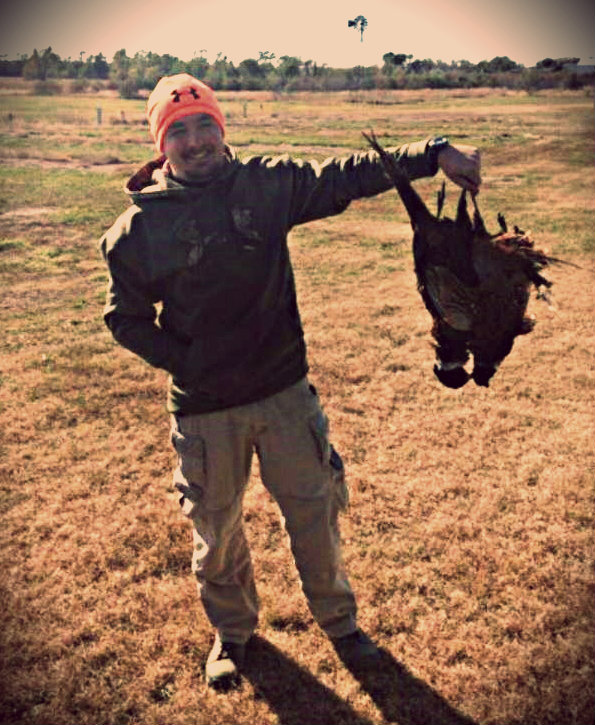
One of my goals for 2014 is to get more involved in hunting. I went on my first pheasant hunt last year and had a properly awesome time. I realized that there are lot of cross-training opportunities in tactical shooting and hunting; and I started talking to Jordan from Run 2 Gun about the fitness opportunities in hunting as well. That’s when I realized that hunting really is the original extreme sport. While we’ve mitigated some of the danger that hunting used to involve, it’s the only sport that you can legally participate in that allows you to test your marksmanship skills with blood on the line.

caleb with pheasants

That’s why one of the big goals I have for 2014 is to expand the blog’s coverage of hunting – but not “sit in a tree stand and whisper” hunting but more of the aforementioned Run2Gun “let’s get after it” hunting. While Shelley will be covering 3-Gun, I’ll be doing a lot more hunting coverage. In fact, I have my first hunt of 2014 already scheduled, I’ll be traveling to Nevada with Crimson Trace to do a coyote hunt, which should be a lot of fun. That will also give me a chance to test out the new Danner boots I got the other day, the High Ground RealTree Xtra GTX 1000G.

Back to the original topic of hunting as the original extreme sport, one of the biggest proponents of hunting as a valuable tool for defensive learning was Jeff Cooper himself. He believed, and rightly so, that the average CCW holder/armed citizen should avail themselves of every possible opportunity to shoot for blood. I agree that someone who can successfully kill an animal has at least a small mindset advantage over the average private citizen who hasn’t.

If you take people whose jobs entail shooting badguys (soldiers and LEOs) out of the equation, we believe that the best way an armed citizen can prepare for a defensive encounter is a balance of defensive firearms training, competition shooting, and hunting. Training to learn, competition to test skills, and hunting to learn mindset. I’ll be exploring that more this year, and I’m looking forward to sharing those experiences with you.